otherworldly
47 readers
18 users here now
Your hub for paranormal, conspiracy, urban explore and extraterrestrial. We also post about unsolved murders, hidden technologies, and any related subjects. Have fun and be nice.
founded 3 weeks ago
MODERATORS
1
2
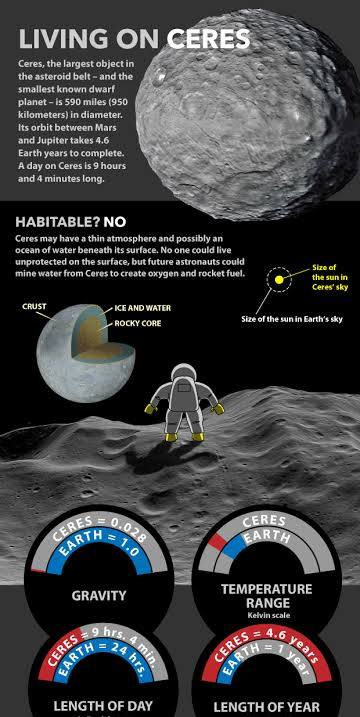
Ceres, the largest object in the asteroid belt and the smallest recognized dwarf planet in the solar system, has become an increasingly important focus in planetary science. Once believed to be little more than a large asteroid, Ceres has gradually revealed itself to be a far more complex world. Observations made by NASA’s Dawn spacecraft in the mid-2010s transformed scientific understanding of this distant body, showing that beneath its seemingly quiet surface lies evidence of water, salts, and geological processes that may still be active today. While Ceres is not currently considered as strong a candidate for life as some of the icy moons of the outer solar system, its unusual composition and internal structure make it one of the most intriguing objects between Mars and Jupiter.
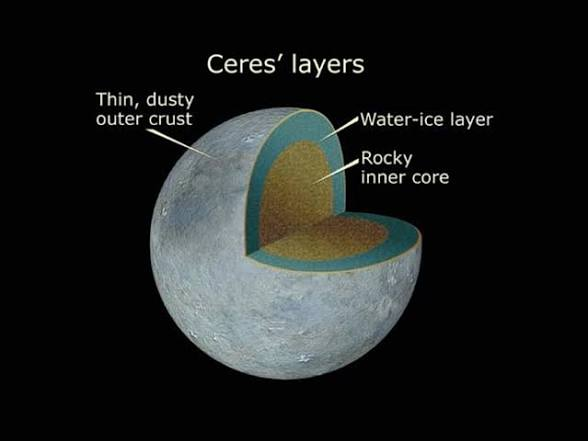
One of the most surprising discoveries about Ceres is the presence of water in multiple forms. The dwarf planet’s crust is believed to contain large quantities of water ice mixed with rock and minerals. Measurements of its density suggest that a significant portion of the interior is made of hydrated materials rather than solid stone. This has led scientists to conclude that Ceres likely formed with a substantial amount of water incorporated into its structure early in the history of the solar system. Beneath the outer crust, many researchers believe that Ceres once possessed, and may still contain in places, pockets of briny liquid water. Rather than a fully global ocean like those suspected on some icy moons, Ceres may harbor localized reservoirs of salty liquid trapped within its interior.
Evidence for these brines became clearer when Dawn observed the famous bright deposits scattered across parts of the dwarf planet’s surface. The most prominent of these deposits lies within Occator Crater, where a cluster of brilliant white patches reflects sunlight strongly against the darker terrain. Detailed analysis revealed that these deposits consist largely of sodium carbonate and other salts. Such materials are believed to have formed when salty liquid water from below the surface rose upward through fractures, reached the surface, and then evaporated in the vacuum of space. The remaining salt crystals formed the highly reflective patches that caught scientists’ attention when Ceres was first imaged up close.
The existence of these salt deposits suggests that Ceres experienced cryovolcanic activity in its relatively recent geological past. Cryovolcanism occurs when water, slush, or briny mixtures erupt instead of molten rock. One of the clearest examples of this process on Ceres is Ahuna Mons, a solitary mountain rising roughly four kilometers above the surrounding terrain. Its shape and structure strongly resemble a dome formed by material pushing upward from beneath the crust. Many scientists interpret Ahuna Mons as a cryovolcano, created when subsurface brines forced their way upward and solidified after reaching the cold surface.
The presence of salts, hydrated minerals, and possible subsurface brines indicates that Ceres once hosted an environment where water and rock interacted extensively. Such interactions are important because they drive chemical reactions that can produce complex compounds. In planetary science, these reactions are often viewed as key ingredients in the broader chemistry that precedes life. On Earth, water interacting with rock can release elements and minerals that support microbial ecosystems. While there is currently no evidence that such biological processes ever occurred on Ceres, the chemical activity implied by its geology shows that the dwarf planet is far from being an inert object.
Another important factor shaping Ceres is its location in the asteroid belt. This region contains remnants from the early solar system that never fully formed into planets. Because Ceres formed in this environment, it likely preserves materials dating back more than four billion years. Studying its composition helps scientists understand how water and organic compounds were distributed during the early stages of planetary formation. Some researchers even believe that objects similar to Ceres may have contributed water and chemical building blocks to the inner planets during the chaotic period when the solar system was still forming.
Despite its modest size, Ceres also appears to retain a surprising amount of internal heat. While it lacks the powerful tidal heating seen on moons such as Enceladus or Europa, the decay of radioactive elements within its interior may have helped maintain pockets of warmth for long periods. Combined with salts that lower the freezing point of water, this internal heat could allow briny liquids to persist beneath the surface much longer than previously expected.
The discovery of these internal processes has changed how scientists view the asteroid belt as a whole. Instead of being composed solely of dry, rocky debris, the region may contain bodies that once held significant quantities of water and potentially experienced complex geologic evolution. Ceres stands as the clearest example of this possibility. Its mixture of rock, ice, and salts places it somewhere between the rocky inner planets and the icy worlds of the outer solar system.
For this reason, Ceres is sometimes described as a transitional object. It shares characteristics with both asteroids and icy moons, making it an important laboratory for studying how small planetary bodies evolve. Although it does not currently rank among the most promising locations for extraterrestrial life, its chemistry and subsurface activity still provide valuable insight into the processes that shape habitable environments elsewhere.
Future missions may eventually return to Ceres to investigate its interior more closely. Scientists hope to better understand the extent of its subsurface brines, the timing of its cryovolcanic activity, and the role it may have played in delivering water and organic materials throughout the early solar system. Each new observation adds another piece to the puzzle of how this unusual dwarf planet formed and evolved.
What once appeared to be just another asteroid has instead proven to be a complex and dynamic world. Ceres reminds scientists that even small bodies in the solar system can possess rich geological histories, hidden reservoirs of water, and clues about the conditions that shaped the earliest chapters of planetary formation.

3
4
5
The Antônio Villas-Boas Encounter (Brazil, 1957)
The Antônio Villas-Boas Encounter (Brazil, 1957)
In the early hours of October 16, 1957—though some sources place it on the night of October 15—a young Brazilian farmer named Antônio Villas‑Boas reported experiencing one of the earliest and most unusual encounters ever associated with UFO literature. The event took place near the small rural community of São Francisco de Sales in the state of Minas Gerais. At the time, Villas-Boas was twenty-three years old and working on his family’s farm. Because of the intense daytime heat common to the region, farmers often carried out heavy labor at night, plowing fields under the open sky with tractors long after sunset.
According to Villas-Boas, he had been operating his tractor alone shortly after midnight when he noticed a bright red light appearing low in the sky. At first he assumed it might be a distant aircraft or an unusually bright star. Within moments, however, the light began moving rapidly toward his position. As it approached, he realized it was not a conventional aircraft at all but an elongated, egg-shaped object glowing with a pale reddish light. The craft descended slowly toward the field and appeared to hover briefly before extending three metallic supports and settling onto the ground roughly ten to fifteen meters in front of his tractor.
Alarmed by the sudden appearance of the object, Villas-Boas attempted to flee. He started the tractor and drove away across the field, but after only a short distance the engine and headlights abruptly failed. Forced to abandon the vehicle, he began running on foot across the plowed ground. Before he could escape, several small humanoid figures approached him quickly and silently. He later described them as roughly five feet tall and dressed in tight gray suits with helmet-like coverings that concealed their faces. Despite his attempts to resist, the beings reportedly overpowered him and carried him toward the craft.
The interior was brightly lit with a cold, even illumination from no visible source. The surfaces were smooth and metallic. The air carried an odd, sharp odor that irritated his eyes and made breathing difficult. The beings placed him on what he described as a low, narrow examination table or couch. They removed his clothing completely, despite his resistance. Two of the figures held his arms while others performed procedures. A device resembling a thin tube or probe was pressed against his chin, drawing blood; he felt a sharp sting and later noticed small puncture marks. A thick, clear gel-like substance was spread over much of his body—apparently for decontamination or some preparatory purpose. He was then left alone briefly in the small chamber. After a time, a different figure entered: a female humanoid who appeared more like a human woman than the others. She was of similar height, naked, with long platinum-blonde hair that fell past her shoulders. Her eyes were large and slanted, described as deep blue or cat-like. Her skin was fair, and the hair in her underarms and pubic region was strikingly bright red. She had a small, pointed chin and well-proportioned features that Villas-Boas found attractive. She approached him directly. Despite his fear and the earlier ordeal, he experienced an uncontrollable physical arousal—something he later attributed possibly to some external influence or drug administered during the examination. She embraced him, pressing her body fully against his. No words were exchanged; communication was through touch and gesture alone. They engaged in sexual intercourse on the couch-like surface. During the act, she did not kiss him on the mouth but instead nipped or bit lightly at his chin several times, leaving small marks. The encounter was brief but intense. When it concluded, she rose, placed a hand on her abdomen, and then pointed upward toward the ceiling or sky in a clear gesture. She smiled faintly before leaving the chamber. The original beings soon returned. They allowed Villas-Boas to dress and escorted him back outside without further resistance. He was released near his stalled tractor. The craft's hatch closed, the legs retracted, and the object rose silently, accelerating upward until it vanished into the night sky. Villas-Boas returned home in a state of exhaustion and confusion. In the following hours and days, he suffered nausea, severe headaches, loss of appetite, burning sensations in his eyes, dizziness, and skin lesions—small, raised, reddish nodules that appeared after minor bruises, some with central openings that discharged a thin, yellowish fluid. The surrounding skin showed violet-tinged discoloration. These symptoms persisted for weeks or months and were later examined by physicians, including Dr. Olavo Fontes, who noted similarities to mild radiation exposure. Villas-Boas maintained this account consistently in interviews, without apparent motive for fabrication or publicity. The case remains unverified and unexplained.









6
7
The idea of “free energy” has been around for a very long time. In the simplest sense, people use the term to describe machines or technologies that could generate energy without needing fuel or external input. Throughout history, inventors and thinkers have tried to design devices that could run forever or produce more energy than they consume. These ideas usually fall under the category of perpetual motion machines, and attempts to build them go back hundreds of years.
One of the earliest periods when these ideas appeared was during the Middle Ages. Engineers and inventors sometimes proposed mechanical wheels that would supposedly keep spinning indefinitely once they were started. These designs usually relied on shifting weights or clever arrangements of gears and levers. The hope was that gravity or motion could somehow keep the system running forever. Although these machines looked convincing in drawings, none of them actually worked when tested.
During the Renaissance and early modern period, interest in perpetual motion continued. Inventors occasionally claimed to have built working devices, and some demonstrations attracted public attention. However, as scientific understanding improved, physicists began realizing that such machines violated fundamental principles of energy and motion.
In the nineteenth century, the development of thermodynamics helped clarify why perpetual motion machines cannot function as proposed. Scientists discovered that energy cannot be created from nothing and that every process involves some loss of usable energy, usually as heat. These ideas became known as the laws of thermodynamics, which remain central to modern physics and engineering.
Despite this, the idea of free energy never completely disappeared. In the late nineteenth and early twentieth centuries, a number of inventors believed that new electrical technologies might unlock hidden sources of power. One of the most famous figures often mentioned in discussions about unconventional energy is Nikola Tesla. Tesla explored wireless energy transmission and high-frequency electrical systems, which later became surrounded by speculation and myths about untapped energy sources. While Tesla’s work was groundbreaking in electrical engineering, it did not produce a system capable of generating unlimited energy.
In the twentieth century, interest in alternative or unconventional energy systems continued to appear in various forms. Some inventors experimented with unusual electromagnetic devices, magnetic motors, or vacuum-energy concepts. These ideas often attracted attention from enthusiasts, but none have been demonstrated to produce energy in violation of known physical laws.
Claims of Suppression and Conspiracy
Alongside the technical discussions, a long-standing belief has developed in some circles that working free-energy technologies have been intentionally suppressed. According to these claims, inventors who supposedly discovered revolutionary energy systems were discouraged, bought out, or in some cases mysteriously disappeared. Stories occasionally circulate online about researchers who allegedly died under unusual circumstances or whose prototypes vanished after attracting attention.
Supporters of this idea argue that a technology capable of producing unlimited energy would threaten powerful economic interests connected to fuel industries and large energy infrastructures. Critics of the suppression theory, however, point out that no verifiable example of a working free-energy machine has ever been publicly demonstrated or independently replicated. As a result, most scientists consider these stories part of a broader mix of speculation, rumor, and misunderstanding surrounding experimental technologies.
Regardless of where someone stands on the issue, the topic continues to attract debate. The combination of unexplained claims, unusual inventors, and the enormous potential impact of such a technology keeps the discussion alive in many communities interested in alternative science and hidden technologies.
Modern Energy Research
Today, mainstream research focuses on developing sustainable and renewable energy sources rather than perpetual energy machines. Technologies such as solar power, wind energy, geothermal systems, and nuclear fusion aim to produce large amounts of energy while reducing environmental impact. These systems still obey the laws of physics but rely on natural processes that continuously supply energy to Earth.
The enduring fascination with free energy reflects a deeper human desire to find simple and abundant ways to power civilization. While perpetual motion machines remain impossible according to current scientific understanding, the search for better energy technologies continues. Advances in renewable energy and experimental fusion research suggest that the future of power generation may still bring dramatic changes, even if those developments do not overturn the fundamental laws that govern the universe.

8
During the nineteenth century, particularly in the mid-1800s, photography was still a relatively new technology. Cameras required long exposure times, and having a portrait taken was often expensive and rare. Because of this, many families might never have had a photograph taken during a person’s life. When someone died, especially a child, the opportunity to create a final image sometimes came only after death. This led to a practice known as post-mortem photography.
Post-mortem photography became most common during the Victorian era in Europe and North America. When a family member passed away, photographers were sometimes called to the home to capture what would become a final remembrance image. The deceased person might be carefully arranged and dressed in their best clothing. In some cases they were laid peacefully in a bed or coffin. In other cases, they were posed in a chair or positioned as if resting.
Because photographic technology required long exposure times—sometimes several seconds or longer—people appearing in the photo had to remain perfectly still. Ironically, this meant the deceased subject was often the easiest person to photograph because they could not move. Living family members sometimes had to sit beside the body for long periods of time while the image was captured. Photographers occasionally used hidden stands or supports to help keep bodies upright if they were posed sitting.
The purpose of these photographs was not meant to be disturbing but rather memorial. In an era when mortality rates were much higher—especially among children—families often wanted some physical reminder of their loved one. For many families, the post-mortem portrait might be the only photograph that ever existed of that person.
These images often had a solemn but respectful appearance. Some photographs show the deceased lying peacefully as if asleep. Others include parents or siblings gathered around the body. Occasionally photographers attempted to make the deceased appear lifelike by posing them in natural positions or even painting open pupils onto the eyelids after the photograph was taken.
The practice began to fade toward the end of the nineteenth century. Photography became cheaper and more common, meaning families could easily obtain portraits while their loved ones were still alive. Cultural attitudes toward death and mourning also changed, and post-mortem photography gradually disappeared as a widespread custom.
Today these photographs are sometimes viewed as eerie or unsettling because modern societies tend to keep death more hidden from daily life. In the nineteenth century, however, they were simply part of the mourning process. For many families, the photograph served as a final act of remembrance—a way of preserving the image of someone who had been loved but whose life had ended too soon.

9
10
Stars spend most of their lives in a delicate balance. Gravity constantly pulls their mass inward, while nuclear fusion in the core produces enormous energy pushing outward. For millions or even billions of years, these two forces cancel each other out, allowing the star to remain stable. Eventually, however, that balance breaks. When it does, the result can be one of the most powerful events in the universe: a supernova.
A supernova occurs when a star reaches the final stages of its life and can no longer support itself against gravity. In some cases this happens when a massive star exhausts the nuclear fuel in its core. Once fusion stops producing energy, gravity causes the star’s core to collapse violently. The outer layers of the star rebound from this collapse and are blasted outward into space in a colossal explosion.
In other cases the explosion occurs in a binary star system. A dense stellar remnant known as a white dwarf can slowly pull matter from a nearby companion star. As the white dwarf gains mass, it approaches a critical limit where the pressure supporting it can no longer resist gravity. When that limit is crossed, runaway nuclear reactions ignite throughout the star and it detonates in a thermonuclear explosion.
The energy released in a supernova is staggering. For a brief period, a single exploding star can shine as brightly as an entire galaxy containing hundreds of billions of stars. These explosions release enormous shock waves that race through surrounding space, carrying gas and newly formed elements outward at tremendous speeds.
Supernovas are also responsible for creating many of the heavy elements found throughout the universe. Elements such as gold, uranium, and platinum are forged during the extreme conditions of these explosions. When the star explodes, these elements are scattered into interstellar space where they eventually become part of new stars, planets, and even living organisms.
In many cases the collapsed core of the star remains behind after the explosion. Depending on its mass, this remnant can become either a neutron star or a black hole. Neutron stars are incredibly dense objects roughly the size of a city but containing more mass than the Sun. Black holes are even more extreme, possessing gravitational fields so strong that nothing—not even light—can escape.
Although supernovas are rare in any single galaxy, they occur frequently across the universe. Astronomers estimate that thousands of these explosions happen every day somewhere in the observable cosmos. By studying them, scientists gain insight into how stars evolve, how galaxies grow, and how the elements necessary for planets and life are created.
In a very real sense, every atom heavier than hydrogen and helium owes its existence to ancient stars that lived, died, and exploded long before our solar system formed. The iron in Earth’s core, the calcium in our bones, and the gold in jewelry were all created in stellar furnaces and supernova explosions billions of years ago.
The next time you look at the night sky, it is worth remembering that the universe is not static. Stars are constantly being born, evolving, and dying. And occasionally, one of them ends its life in a brilliant explosion that briefly lights up the cosmos.

11
12
4
Titan: Saturn’s Methane World and One of the Solar System’s Most Chemically Active Moons
(hilariouschaos.com)
Titan, the largest moon of Saturn, is one of the most extraordinary worlds in the solar system and one of the most scientifically intriguing environments for studying planetary chemistry. Shrouded beneath a dense orange atmosphere and possessing landscapes shaped by liquids, Titan is often described as one of the most Earth-like bodies beyond our planet, though the substances involved are dramatically different. Rather than water flowing across its surface, Titan hosts rivers, lakes, and even rainfall composed of liquid methane and ethane. These conditions create a complex and dynamic environment that has made Titan a major focus in the search for understanding how chemistry evolves on planetary bodies.
Titan’s thick atmosphere immediately sets it apart from most other moons. Composed primarily of nitrogen with smaller amounts of methane and other hydrocarbons, the atmosphere is denser than Earth’s and extends hundreds of kilometers above the surface. Sunlight interacting with methane high in Titan’s atmosphere drives complex chemical reactions that produce organic molecules. Over time, these reactions create a haze of hydrocarbon particles that slowly drift downward, giving Titan its characteristic orange appearance when viewed from space. This constant chemical activity has made Titan one of the richest locations in the solar system for studying organic chemistry.
The surface of Titan remained hidden from view until the arrival of NASA’s Cassini spacecraft in the early twenty-first century. Radar imaging and atmospheric probes revealed a world shaped by weather systems and geological processes that mirror those on Earth in surprising ways. Instead of water cycles, Titan experiences a methane cycle. Methane evaporates from lakes and seas, forms clouds in the atmosphere, and eventually falls back to the surface as rain. These methane rains carve river channels and feed vast lakes near Titan’s polar regions, creating landscapes that resemble terrestrial coastlines and drainage systems.
Several of Titan’s lakes are enormous by Earth standards. Kraken Mare, the largest known sea on Titan, spans hundreds of kilometers across its northern hemisphere. These bodies of liquid methane and ethane form stable reservoirs because Titan’s surface temperature is extremely cold, averaging around minus 180 degrees Celsius. At these temperatures, hydrocarbons that would exist as gases on Earth become liquids capable of flowing across the landscape.
Beneath Titan’s frozen outer crust, however, scientists believe another type of ocean may exist. Measurements of Titan’s gravity field and surface movements suggest the presence of a deep subsurface ocean composed primarily of water mixed with ammonia or other antifreeze compounds. This ocean would lie far below the icy shell, separated from the hydrocarbon lakes on the surface. The existence of such an ocean means Titan may possess two distinct liquid environments: hydrocarbon seas at the surface and a hidden water ocean deep within its interior.
The chemistry occurring on Titan’s surface and in its atmosphere has attracted particular attention from scientists studying the origins of life. The organic molecules forming in Titan’s atmosphere include complex hydrocarbons and nitrogen-based compounds that resemble some of the building blocks associated with biological chemistry on Earth. These molecules accumulate on the surface over time, potentially creating vast deposits of prebiotic material.
While Titan’s extreme cold makes Earth-like life unlikely on its surface, some researchers have explored the possibility that unfamiliar forms of chemistry could occur in its methane lakes. Theoretical studies have suggested that membranes similar to biological cell walls could potentially form from hydrocarbon molecules under Titan’s conditions. Although this idea remains speculative, it illustrates how Titan provides a natural laboratory for studying chemical systems very different from those found on Earth.
The possibility of life becomes more conventional when considering Titan’s internal ocean. If liquid water exists beneath the icy crust and if it interacts with rocky materials in the moon’s interior, chemical reactions similar to those that occur around hydrothermal vents on Earth could potentially take place. Such environments provide energy and nutrients that support microbial ecosystems in Earth’s deep oceans, independent of sunlight. Although Titan’s internal ocean is difficult to study directly, its existence raises the possibility that habitable conditions could exist beneath the surface.
Titan also stands out because of its complex and varied landscape. Radar images from Cassini revealed mountain ranges, dunes composed of hydrocarbon particles, and vast plains sculpted by flowing liquids. The dunes near Titan’s equator stretch for hundreds of kilometers and resemble desert landscapes on Earth, though they are made from organic grains rather than sand. These features demonstrate that Titan is not a static frozen world but an active environment shaped by atmospheric and geological forces.
The most detailed exploration of Titan occurred in 2005 when the Huygens probe descended through the moon’s thick atmosphere and landed on its surface. As it drifted downward, the probe captured images of branching river channels and rounded ice rocks scattered across the ground. These images provided the first direct glimpse of Titan’s landscape and confirmed that liquids had once flowed across the surface near the landing site.
Future exploration of Titan is already being planned. NASA’s Dragonfly mission, scheduled for launch in the coming years, will send a nuclear-powered rotorcraft to explore the moon’s surface. Dragonfly will fly between different locations, studying Titan’s chemistry and geology in unprecedented detail. By analyzing organic materials and investigating environments shaped by methane rainfall and hydrocarbon lakes, the mission aims to better understand the processes that shape Titan’s unusual environment.
Titan’s combination of thick atmosphere, active chemistry, and diverse landscapes makes it one of the most compelling objects in the solar system for studying planetary evolution. It represents a world where organic chemistry unfolds on a planetary scale, providing insight into how complex molecules form and interact under conditions very different from those on Earth.
Although Titan may not resemble a traditional habitable world, its rich chemical environment offers scientists a rare opportunity to observe how the ingredients associated with life develop in natural planetary systems. By studying Titan, researchers gain insight not only into this distant moon but also into the broader question of how life’s chemical foundations might arise throughout the universe.




13
Among the lesser-known UFO incidents reported in the United States, one of the most unusual occurred in the small town of Falkville, in northern Alabama.
The event became unusual not because of multiple witnesses, but because the sighting was reported by a police officer on duty, who later claimed he briefly encountered a strange humanoid figure near the roadside.
The report, made in 1973, remains one of the strangest UFO-related encounters recorded in the state.
⸻
The Officer’s Report
The incident took place on October 17, 1973.
A police officer named Jeff Greenhaw received a call about a strange object seen near the outskirts of town.
Greenhaw drove toward the reported location along a quiet road outside Falkville.
As he approached the area, he noticed something unusual standing near the roadside.
⸻
The Mysterious Figure
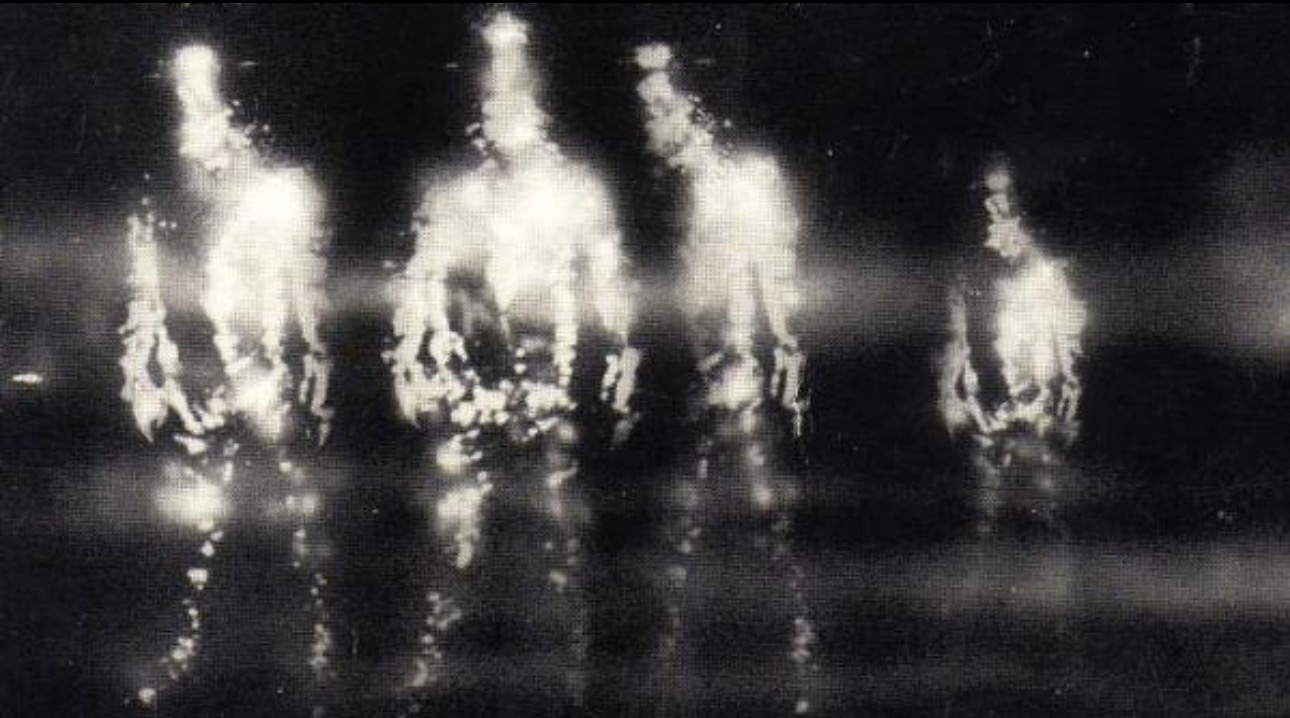
According to the officer’s report, the figure appeared to be humanoid but strangely reflective, as if covered in metallic or aluminum-like material.
Greenhaw described the figure as: • Roughly six feet tall • Covered in a tight, shiny suit • Moving in an unusual, stiff manner
When the officer stopped his patrol car and approached, the figure reportedly turned toward him briefly before running away at high speed.
Greenhaw attempted to follow it in his vehicle, but the figure disappeared into the darkness.
⸻
The Photographs
Before the figure fled completely, Greenhaw managed to take several Polaroid photographs of the object.
The images later circulated among UFO researchers, though they were blurry and difficult to interpret.
Some observers believed the photographs showed a reflective humanoid form, while others argued the images were too unclear to confirm what was seen.
⸻
Aftermath
The incident quickly attracted attention in the small town.
Although the officer maintained his account of the event, the experience reportedly brought him unwanted publicity.
In later interviews, Greenhaw said the encounter affected his career and reputation, and he eventually left the police force.
Despite investigation and speculation, no confirmed explanation for the figure was ever established.
⸻
Why the Case Is Still Discussed
The Falkville incident remains unusual because the witness was a trained police officer responding to a call while on duty.
Unlike many UFO reports that occur at great distances in the sky, this encounter involved a close-range sighting of a humanoid figure on the ground.
While skeptics suggest the event could have been a prank or a misidentification, others consider it one of the more curious UFO-related reports in Alabama history.
⸻
Discussion
What do you think the officer may have encountered that night near Falkville?
Could the figure have been a person wearing reflective clothing, an unusual prank, or something that simply defied easy explanation? 👀
14
One of the lesser-known cryptids associated with the Pacific Northwest is the Lake Chelan Water Serpent, sometimes called the Chelan Dragon, reported in and around Lake Chelan in the state of Washington. Lake Chelan is a long, narrow glacial lake that reaches depths of nearly 1,500 feet, making it one of the deepest lakes in the United States. Its extreme depth and cold, dark water have long fueled speculation that unknown creatures could inhabit its lower reaches.
Reports of a strange creature in the lake date back to the late nineteenth and early twentieth centuries. Early settlers and Indigenous residents occasionally described seeing a long, dark form moving through the water near the shoreline or farther out in the lake. Witnesses often described the creature as serpentine, sometimes estimating its length between 20 and 50 feet. In some accounts it appeared to have humps or coils visible above the surface, somewhat resembling descriptions of other lake monsters such as Ogopogo in Canada’s Okanagan Lake.
Several sightings occurred during the early 1900s when steamboats regularly traveled along Lake Chelan. Passengers occasionally reported seeing large disturbances in the water or elongated shapes moving beneath the surface. One widely circulated local story describes fishermen observing a large creature surfacing briefly before disappearing into deeper water near the northern end of the lake.
Because Lake Chelan is extremely deep and formed by glacial activity, some enthusiasts speculate that the creature could be a large unknown species of fish or an unusually large eel-like animal. Skeptics, however, suggest the sightings are more likely misidentified sturgeon, floating logs, waves, or other natural phenomena. Despite the uncertainty, the legend of the Chelan water serpent persists in regional folklore and remains one of Washington’s lesser-known cryptid traditions alongside the more famous Bigfoot.
Today the story survives mostly through local lore, occasional eyewitness reports, and cryptozoology discussions. While no physical evidence has confirmed the creature’s existence, the depth and remote sections of Lake Chelan continue to make it an appealing location for speculation about what might still lie hidden beneath the surface.


15
16
On the evening of January 29, 1986, residents of the mining town of Dalnegorsk in Russia’s Far East reported witnessing an unusual aerial object moving silently across the winter sky before descending onto a nearby hill known locally as Height 611. At the time, Dalnegorsk was part of the Soviet Union and located in Primorsky Krai, a mountainous and sparsely populated region near the Sea of Japan. The event quickly became one of the most discussed UFO incidents in Soviet-era research circles because of the number of witnesses and the subsequent investigation carried out by scientists.
Witnesses described the object as a bright reddish sphere roughly half the apparent size of the Moon. Unlike aircraft, it emitted no sound and moved at a steady speed while maintaining a constant altitude. Several observers reported that it appeared metallic or solid rather than gaseous or comet-like. As it passed over the town, it began descending toward Height 611, a rocky ridge overlooking Dalnegorsk. According to accounts gathered later, the sphere struck the hillside and disappeared behind the ridge line, producing a brief flash of light but no large explosion.
Because the crash site was visible from parts of the town, several people climbed the hill the following day to examine the location. They reported finding a circular area of scorched rock approximately two meters across. The ground was covered with unusual metallic fragments, many of which appeared as tiny spherical droplets or thin mesh-like pieces. Local investigators and later visiting researchers collected samples from the site and attempted to analyze their composition.
The investigation eventually involved scientists from institutes associated with the Soviet Academy of Sciences. Laboratory analysis of some fragments reportedly revealed unusual structures, including microscopic metallic spheres embedded within a carbon matrix. Other pieces resembled extremely fine metal gauze or fibers twisted into complex shapes. Researchers noted that the materials contained elements such as lead, silicon, and rare earth metals. Some investigators suggested the structure of certain fragments did not resemble typical industrial alloys produced at the time, though no definitive conclusion was reached.
Interest in the case increased a year later when witnesses in Dalnegorsk reported additional unidentified aerial objects appearing over the same hill. These objects were said to move in coordinated patterns above Height 611, occasionally emitting beams of light toward the ground. Some observers speculated that the craft were searching for or retrieving remnants of the object that had crashed the previous year.
Despite extensive discussion among Soviet ufologists and scientists, no consensus explanation was ever established. Skeptics proposed possibilities ranging from an experimental military device to an unusual meteor fragmenting upon impact. Others argued that the recovered materials were inconsistent with known natural or manufactured debris. The Dalnegorsk incident remains one of the most widely cited UFO cases from the Soviet Union, largely because it combined eyewitness reports, a visible crash site, and physical fragments that were subjected to laboratory examination yet never definitively explained.


17
18
19
A Strange Landing in Rural Provence
Among the many UFO sightings reported in France, one of the most unusual occurred in the quiet countryside of southeastern France in the early 1980s.
The case took place in the small village of Trans-en-Provence, where a brief encounter between a local resident and a mysterious object left behind physical traces that would later be examined by government scientists.
Unlike many UFO stories that rely only on witness testimony, this incident became notable because investigators documented physical changes to the soil and vegetation at the landing site.
Today the event remains one of the few UFO cases officially investigated by the French space agency.
⸻
The Witness
The event occurred on January 8, 1981.
A local resident named Renato Nicolai was working outside his home during the afternoon when he noticed an unusual object descending nearby.
According to Nicolai’s account, the object moved silently and appeared to settle briefly on the ground before lifting off again moments later.
The entire event lasted only a short time, but the object reportedly left behind a clear circular mark in the soil.
After the craft departed, Nicolai approached the area where it had touched down and observed an unusual ring-shaped impression on the ground.
⸻
The Mysterious Object
The witness described the object as a disc-shaped craft roughly two meters in diameter.
It appeared metallic and moved without the sound typically associated with aircraft or helicopters.
Nicolai reported that the craft rose vertically and accelerated away rapidly after its brief contact with the ground.
The sudden departure and the silent movement of the object contributed to the unusual nature of the encounter.
⸻
The Scientific Investigation
Because the landing reportedly left a visible ground trace, the site attracted the attention of investigators from CNES and its UFO research program GEIPAN.
Scientists collected soil and plant samples from the affected area.
Laboratory analysis revealed several unusual findings: • The soil within the ring had been significantly compressed. • Vegetation in the area showed abnormal growth patterns. • Some plant tissues displayed signs of heating or stress.
Although researchers could not determine the exact cause of the trace, they confirmed that a heavy object had briefly rested on the ground.
⸻
An Unexplained Case
Unlike many UFO reports that remain purely anecdotal, the Trans-en-Provence case became notable because of the documented physical evidence.
The official investigation concluded that the trace could not be explained by known agricultural machinery, aircraft activity, or natural causes.
As a result, the event remains classified among the unidentified cases within the French government’s UFO archive.
⸻
Why the Case Still Attracts Attention
The Trans-en-Provence incident continues to interest researchers because it combines a direct eyewitness account with measurable physical effects at the site.
While no definitive explanation has ever been confirmed, the case illustrates how some UFO reports have received formal scientific analysis.
Even decades later, the brief landing in a quiet Provençal village remains one of the more unusual entries in France’s catalog of unexplained aerial phenomena.
⸻
Discussion
If a craft truly left the trace examined by investigators, what do you think might have caused it?
Was the event the result of an unknown aircraft, a misidentified natural phenomenon, or something that still has no clear explanation today? 👀

20



Introduction: When a Religion Starts With Pasta
Some religions begin with sacred mountains, prophets, or cosmic revelations. The religion centered around the Flying Spaghetti Monster began with… pasta.
Specifically, a floating mass of spaghetti and meatballs allegedly responsible for the creation of the universe. It is the central figure of Pastafarianism, a satirical belief system that was created to challenge how religion and science are discussed in education and public policy.
The entire idea started in 2005 with a man named Bobby Henderson, a physics graduate from Oregon State University.
Henderson wasn’t trying to launch a global movement when he wrote a letter. He was mostly trying to make a point. A very sarcastic point.
As it turns out, sarcasm plus the internet can create a surprisingly durable cultural phenomenon.
⸻
The Origin Story
The story begins in 2005 when the Kansas State Board of Education was debating whether intelligent design should be taught alongside evolution in public school science classes.
Intelligent design proponents argued that life on Earth was too complex to have evolved naturally and must therefore have been created by an intelligent force.
Henderson saw a logical issue with this argument. If schools allowed one untestable creator theory into science classrooms, why not allow all of them?
So he wrote an open letter to the board proposing that schools should also teach the theory that the universe was created by the Flying Spaghetti Monster.
In Henderson’s version of cosmic history, the universe was created by a supernatural being composed of spaghetti noodles and meatballs. This entity allegedly manipulated reality using its “noodly appendages.”
He explained that any scientific evidence supporting evolution could simply be the result of the monster deliberately altering reality to test human faith.
In other words: if one unfalsifiable explanation could be used in science education, then any unfalsifiable explanation could be used.
The argument was satire, but it was constructed carefully enough that the logic mirrored the intelligent design debate.
The letter ended with a request that the school board devote equal classroom time to the Flying Spaghetti Monster theory.
Unsurprisingly, the board did not adopt the proposal.
But the internet absolutely loved it.
⸻
Birth of a Satirical Religion
The letter quickly went viral online. People began sharing the concept widely, and the idea evolved into a full parody religion known as Pastafarianism.
Pastafarians describe the Flying Spaghetti Monster as the true creator of the universe. According to the humorous mythology developed by followers, the monster created the world after drinking heavily, which supposedly explains certain imperfections in reality.
Pastafarian texts also describe pirates as sacred beings.
Yes, pirates.
In Pastafarian lore, pirates were originally peaceful explorers and spiritual figures whose numbers have tragically declined over time.
This decline is allegedly responsible for global warming.
A popular Pastafarian chart humorously claims that as the number of pirates decreased after the 1800s, global temperatures increased. The joke is meant to illustrate the classic warning that correlation does not equal causation.
In other words, just because two things happen at the same time does not mean one caused the other.
⸻
Sacred Clothing: The Colander
One of the most recognizable elements of Pastafarian culture is the colander worn as religious headwear.
Followers sometimes wear kitchen strainers on their heads in official photographs or identification documents as a statement about religious freedom.
The argument is simple: if other religions allow followers to wear special religious garments in official photos, Pastafarians should be allowed to do the same.
Several governments around the world have encountered this unusual request.
In some cases, they reluctantly allowed it.
In others, they refused.
Either way, the colander became a symbol of the movement.
⸻
The Gospel of the Flying Spaghetti Monster
In 2006 Henderson published a book titled:
The Gospel of the Flying Spaghetti Monster
The book expands the humorous mythology of Pastafarianism and outlines its mock religious teachings.
Among the “commandments” of the religion are a set of guidelines known as the “Eight I’d Really Rather You Didn’ts.”
These replace the traditional concept of strict commandments with something closer to polite suggestions.
The tone of the book is intentionally playful and sarcastic, reflecting Henderson’s original intent: to criticize the blending of religion and science in public education.
Despite its satirical nature, the book became a bestseller and has been translated into multiple languages.
⸻
Pirates, Beer Volcanoes, and the Afterlife
Pastafarian mythology contains several intentionally absurd elements designed to highlight the arbitrary nature of religious imagery.
For example, Pastafarians describe heaven as containing:
• a beer volcano • a factory that produces exotic dancers
Hell, according to the mythology, is similar but with flat beer and less appealing dancers.
The point of these descriptions is not to create a genuine spiritual doctrine but to parody how religious traditions often include elaborate depictions of the afterlife.
By making the imagery ridiculous, the creators emphasize the satirical nature of the belief system.
⸻
Legal Battles and Recognition
Despite its comedic origins, Pastafarianism has occasionally intersected with real legal debates about religious freedom.
In several countries, individuals have argued that Pastafarianism qualifies as a legitimate religion.
Some courts have rejected this argument, stating that the movement is clearly satirical.
Others have taken a more nuanced approach, recognizing that satire can still function as a form of philosophical expression.
For example, in certain cases individuals have successfully worn colanders in official identification photos under claims of religious expression.
These situations often spark debates about where governments should draw the line between legitimate religion and parody.
⸻
Cultural Impact
What began as a sarcastic internet letter has evolved into a widely recognized cultural reference.
The Flying Spaghetti Monster now appears in:
• political commentary • internet memes • debates about secularism • discussions of science education
The character has also become a symbol for skeptics and secular activists who argue for clearer separation between religion and government policy.
At the same time, many people simply enjoy the humor of the concept.
After all, it is difficult to take cosmic spaghetti entirely seriously.
⸻
Why the Idea Stuck
The reason the Flying Spaghetti Monster became so popular is partly because it uses humor to expose a logical argument.
Henderson’s original point was straightforward:
If science education includes supernatural explanations that cannot be tested, then any supernatural explanation could theoretically be included.
By proposing an intentionally ridiculous alternative, he highlighted what he saw as a flaw in the reasoning behind intelligent design.
The humor made the argument accessible to a wide audience.
Instead of writing a dense philosophical essay, Henderson wrote a sarcastic letter about pasta.
Sometimes that’s all it takes.
⸻
The Noodly Appendage Lives On
Today, nearly two decades after its creation, the Flying Spaghetti Monster remains one of the internet’s most enduring satirical inventions.
The character continues to appear in discussions about religion, science, and free speech.
It has inspired books, merchandise, political protests, and more memes than anyone could reasonably count.
For many people, the Flying Spaghetti Monster represents something simple: a reminder that humor can be a powerful tool for questioning ideas.
Also, it’s hard to argue with a deity made of pasta.
Especially one with meatballs.
And if the Flying Spaghetti Monster truly did create the universe with its noodly appendages, then at least one mystery has finally been solved.
Why the universe sometimes feels chaotic.
Because it was probably assembled by something made entirely of spaghetti.

21
Few criminal cases in American history have produced the level of shock, revulsion, and fascination associated with Albert Fish. His crimes, committed during the 1920s and early 1930s, involved the abduction and murder of children and were accompanied by bizarre confessions, disturbing letters, and psychological abnormalities that baffled investigators and psychiatrists alike. Over time, the case grew into one of the most infamous criminal investigations in American history.
Fish was born Hamilton Howard Fish on May 19, 1870, in Washington, D.C. His childhood unfolded within a family environment already marked by instability and mental illness. Several of his relatives reportedly suffered from severe psychological disorders, and mental illness appears to have been a recurring theme throughout his family history. When his father died during Fish’s youth, he was placed in an orphanage, an experience that would later be cited as a major influence on his psychological development.
According to later statements, the orphanage environment was harsh and punitive. Discipline was strict, and children were frequently subjected to physical punishment. Fish later claimed that during these years he became fascinated with pain and punishment. Whether these claims were entirely truthful is difficult to determine, but they were repeatedly referenced during later psychiatric evaluations.
By 1890, Fish had moved to New York City, where he began working various jobs. His adult life outwardly resembled that of many working-class men of the time. In 1898, his mother arranged a marriage for him with Anna Mary Hoffman, and the couple eventually had six children together.
Despite this apparently ordinary life, Fish’s personal behavior became increasingly unstable. He engaged in unusual and self-destructive activities and developed disturbing obsessions involving pain, punishment, and religious imagery. Over time, his psychological condition deteriorated further.
At various points during his life, Fish reported experiencing hallucinations and hearing voices. On one occasion he wrapped himself in a carpet because he believed he was following instructions from a biblical figure. These behaviors would later be cited during his trial as evidence of severe mental disturbance.
Fish also engaged in acts of extreme self-harm. Medical examinations later revealed that he had inserted numerous needles into parts of his body. During his trial, X-rays were introduced showing that many of these needles remained embedded in his pelvic region.
Although Fish maintained an outwardly ordinary life for years, his criminal behavior escalated over time. Beginning in the early twentieth century, he began committing crimes involving children. Several incidents involved attempts to lure young victims away from their homes.
Many of these crimes went undetected for years.
During the 1920s, investigators would later link Fish to a series of child disappearances and murders in the New York area. Among the earliest confirmed victims was Francis McDonnell, an eight-year-old boy who disappeared in 1924 on Staten Island. His body was later discovered in a wooded area near his home.
Although the case initially remained unsolved, witnesses had described seeing the boy with an elderly man with gray hair and a drooping mustache. This description would later become associated with Fish and contributed to his nickname, “The Gray Man.”
Another case occurred in 1927 with the disappearance of Billy Gaffney, a four-year-old boy from Brooklyn. The child vanished while playing with other children in the hallway of an apartment building. One of the children later told investigators that “the bogeyman” had taken him.
The body of Billy Gaffney was never recovered. Years later, Fish would confess to his involvement in the boy’s disappearance.
However, the crime that ultimately led to Fish’s arrest involved the disappearance of Grace Budd.
Grace Budd lived with her family in Manhattan. In 1928, her older brother had placed a newspaper advertisement seeking employment. Fish saw the advertisement and visited the Budd household under the false name Frank Howard, claiming to be a farmer looking to hire workers.
During the visit, Fish behaved politely and gained the trust of the family. At one point he persuaded Grace’s parents to allow him to take the ten-year-old girl to what he described as a children’s birthday party.
Grace left with him that evening and never returned.
For six years, the Budd family received no answers about their daughter’s fate. The disappearance remained unsolved and gradually faded from public attention.
Then, in November 1934, Grace’s mother received an anonymous letter in the mail. The letter contained disturbing claims about what had happened to her daughter. Written in a rambling and unsettling tone, it described the writer’s actions in disturbing detail and admitted responsibility for the crime.
The letter would become one of the most infamous pieces of evidence in American criminal history.
Although the letter was unsigned, investigators began examining it carefully. The envelope contained a small emblem representing the New York Private Chauffeurs’ Benevolent Association, which allowed detectives to trace the stationery to a boarding house in New York.
When detectives visited the boarding house, the landlady recognized the description of the man who had written the letter.
She identified him as Albert Fish.
Detective William King, one of the investigators on the case, located Fish and brought him in for questioning. During the interrogation Fish eventually confessed to the murder of Grace Budd and admitted involvement in other crimes involving children.
The confessions shocked investigators with their disturbing details.
Fish was arrested on December 13, 1934, and charged with the kidnapping and murder of Grace Budd. His trial began in 1935 in White Plains, New York and quickly attracted widespread media attention.
During the trial, Fish’s defense attorneys attempted to argue that he was legally insane. Several psychiatrists testified about his numerous psychological abnormalities, describing a complex range of obsessive behaviors and violent fantasies.
One of the most prominent psychiatric witnesses was Fredric Wertham, who testified about Fish’s mental condition and religious delusions. Wertham argued that Fish believed he was carrying out acts commanded by divine voices.
Despite these arguments, the prosecution focused on demonstrating that Fish understood the nature of his actions and therefore could be held legally responsible.
The trial lasted ten days. At its conclusion, the jury rejected the insanity defense and found Fish guilty of first-degree murder.
He was sentenced to death.
Fish was transferred to Sing Sing Prison, where he awaited execution. On January 16, 1936, he was executed in the electric chair at the age of sixty-five.
Reports from witnesses stated that he appeared calm as he entered the execution chamber.
Following his execution, the case continued to draw public attention. Newspapers referred to him using numerous nicknames, including “The Gray Man,” “The Moon Maniac,” and “The Brooklyn Vampire.” His crimes became a subject of ongoing study among criminologists and psychologists.
Fish himself had claimed to have committed far more crimes than investigators could verify. At various points he suggested that his number of victims might have been extremely high, though historians remain uncertain whether those claims were truthful or exaggerated.
Today the Albert Fish case remains one of the most disturbing criminal investigations in American history. It is frequently studied by criminologists, historians, and psychologists attempting to understand the extreme psychological factors that contributed to his behavior.
The case also illustrates the limitations of early twentieth-century investigative methods. Many of Fish’s crimes occurred during a period when forensic science was still developing, and police had far fewer tools available for solving crimes.
Despite those limitations, investigators were eventually able to identify and capture the man responsible through careful analysis of physical evidence and persistent investigative work.
Nearly a century later, the story of Albert Fish remains a chilling reminder of how some of the most disturbing figures in history managed to conceal their crimes for years before finally being brought to justice.
Warning!!! Don’t read being this point if you are thin skinned
IV. Forensic Victimology: The "Less Dead" Strategy Fish was a pioneer in what modern profilers call "Targeting the Less Dead." He deliberately chose victims from marginalized backgrounds—African Americans, the impoverished, and the disabled—correctly assuming that the police of the early 20th century would not expend significant resources to find them. He realized that a missing child from a tenement was less likely to trigger a city-wide manhunt than a child from a wealthy suburb.
- Francis McDonnell: The Birth of the "Gray Man" (1924) On July 11, 1924, 8-year-old Francis McDonnell was playing in Port Richmond, Staten Island. Fish, appearing as a "faded and grey" elderly man, lured him into the woods. • The Method: Fish strangled Francis with his own suspenders and beat the corpse with a paddle. • The Near-Miss: Earlier that day, Fish had attempted to lure Beatrice Kiel, but her mother chased him away. This highlights Fish’s persistence; he was a "hunter" who would return to the same territory until a kill was secured. The discovery of Francis's body—hanging and mutilated—sent shockwaves through Staten Island, but the description of the "Gray Man" remained too vague for a capture.
- Billy Gaffney: The "Bogeyman" of Brooklyn (1927) Four-year-old Billy Gaffney disappeared from a hallway while playing with a friend. Fish later confessed to taking Billy to the Riker Avenue dumps, where he whipped the boy until he bled, gouged out his eyes, and drank his blood. • Cannibalism: Fish’s confession regarding Gaffney was particularly harrowing. He described roasting the boy’s "sweet fat behind" with onions and carrots, claiming it was superior to roast turkey. He disposed of the "uneatable" remains in the "slimy water" of North Beach. The lack of a body meant that for years, the Gaffney family believed their son might still be alive, a cruelty Fish later savored in his letters. V. The Sacrifice of Grace Budd: Wisteria Cottage (1928) The murder of Grace Budd is the most documented case of predatory "grooming" in American history. Fish, using the alias Frank Howard, responded to an ad by Edward Budd. He won the family’s trust over several visits, bringing "pot cheese and strawberries," playing the role of a benevolent benefactor.
- The Crime Scene Fish took 10-year-old Grace to Wisteria Cottage in Westchester. He stripped naked to avoid bloodstains—a clear sign of premeditated, rational planning—and strangled her. He then dismembered her and engaged in a nine-day ritual of cannibalism. The choice of Wisteria Cottage, an abandoned and secluded property, showed his strategic thinking; he required a location where he could conduct his "feasts" without interruption.
- The Cyril Quinn Near-Miss Shortly before Grace Budd, Fish lured Cyril Quinn and a friend to his apartment. The boys escaped only after discovering a meat cleaver and a handsaw hidden under Fish’s mattress—his "Implements of Hell." This incident proves that Fish was actively "auditioning" victims in a high-frequency predatory cycle. Had the Quinn boys not been vigilant, the Budd murder might have happened weeks earlier. VI. The Anonymous Letter and Forensic Breakthrough (1934) In November 1934, Fish’s ego led to his downfall. He sent a graphic letter to Grace’s mother, Delia Budd, describing the murder and his "taste for human flesh." The letter was a masterpiece of psychological warfare, designed to inflict the maximum possible trauma on the recipient.

22
The Discovery
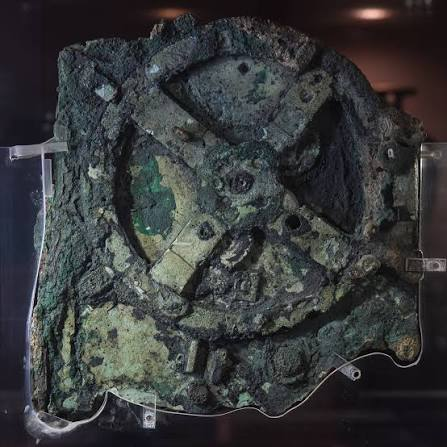
In 1901, sponge divers working off the coast of the Greek island of Antikythera discovered the remains of an ancient shipwreck on the seafloor. Among statues, pottery, and other artifacts from the wreck was a strange corroded object that initially appeared to be little more than a lump of bronze and stone.
When the artifact was brought to the surface and examined more closely, researchers realized something extraordinary. Hidden inside the corroded fragments were intricate bronze gears, carefully cut and arranged like the internal components of a clock.
The object eventually became known as the Antikythera Mechanism, and it would turn out to be one of the most mysterious pieces of ancient technology ever found.
⸻
An Ancient Mechanical Computer
Further study revealed that the mechanism dated to roughly the second century BCE, during the era of ancient Greek civilization. When scientists began reconstructing the device using modern imaging techniques, they discovered a complex system of interlocking gears.
The mechanism was not a simple tool. It was capable of performing calculations related to astronomical cycles.
Researchers believe the device could predict:
The phases of the Moon.
Solar and lunar eclipses.
Planetary movements.
Astronomical calendars used by ancient Greek societies.
In effect, the mechanism functioned as a kind of mechanical computer designed more than two thousand years ago.
⸻
How It Worked
The device originally sat inside a wooden box about the size of a small shoebox. On its front and back were circular dials marked with inscriptions and scales.
Inside the box were dozens of precisely cut bronze gears that rotated together when a crank was turned. By adjusting the mechanism, the user could simulate the motion of celestial bodies across the sky.
When the gears moved, the dials would show where the Sun, Moon, and possibly even known planets would appear on a particular date.
The level of mechanical sophistication shocked historians, because machines of comparable complexity did not appear again in Europe until medieval clockmaking over a thousand years later.
⸻
Why It Surprised Scientists
Before the Antikythera Mechanism was discovered, historians believed that ancient technology did not include complex gear systems.
Most known ancient tools involved simple mechanical principles like levers, pulleys, and water-driven devices. Precision gearwork was thought to be a much later invention.
The Antikythera Mechanism forced scholars to rethink how advanced ancient engineering might have been.
The device suggests that Greek scientists and craftsmen possessed far greater mechanical knowledge than previously believed.
⸻
The Hidden Technology Question
Because the mechanism appeared so unexpectedly sophisticated, some people have wondered whether it represents a form of lost or hidden technology.
One possibility is that devices like this were once more common but simply did not survive the passage of time. Bronze objects were frequently melted down and reused throughout history, which means many similar machines may have disappeared completely.
Another explanation is that the mechanism was a rare experimental device created by a small group of skilled engineers working with astronomical knowledge developed by Greek mathematicians.
Either way, it shows that ancient civilizations sometimes reached technological achievements far beyond what later historians expected.
⸻
Modern Investigation
Scientists have used advanced imaging techniques such as X-ray scanning and 3D modeling to study the fragments of the mechanism in detail.
These scans revealed tiny inscriptions carved into the metal plates that describe how the device operated. The text appears to function almost like an instruction manual for the user.
By combining the surviving fragments with digital reconstruction, researchers have been able to create working models of how the original mechanism likely functioned.
These reconstructions confirm that the device was capable of predicting complex astronomical events with impressive accuracy.
⸻
A Window Into Ancient Science
The Antikythera Mechanism provides an extraordinary glimpse into the scientific world of ancient Greece.
Greek astronomers such as Hipparchus and Archimedes were known to have studied celestial motion and mechanical systems.
Some historians believe the mechanism may have been influenced by or derived from scientific traditions associated with these thinkers.
If that is true, the device represents the physical expression of centuries of accumulated astronomical knowledge.
⸻
Legacy of the Machine
Today the fragments of the Antikythera Mechanism are preserved in the National Archaeological Museum of Athens.
It is often described as the world’s first analog computer, and it remains one of the most remarkable artifacts ever recovered from the ancient world.
The mechanism reminds us that human ingenuity has deep roots in history. Civilizations long before modern times were capable of remarkable scientific insight and engineering skill.
Sometimes the past still holds technological surprises waiting to be rediscovered.
⸻
Discussion
Do you think the Antikythera Mechanism represents a rare one-of-a-kind invention, or could there have been other complex machines in the ancient world that were simply lost over time?

23
The Allagash Abduction
In the summer of 1976, four young men set out on a canoeing and fishing trip through the deep wilderness of northern Maine. The group—Jack Weiner, Jim Weiner, Chuck Rak, and Charlie Foltz—were art students attending the Massachusetts College of Art. Their trip took them deep into the forests and lakes of the Allagash Wilderness Waterway, an area known for its quiet waterways and isolation.
The journey began like many wilderness excursions. The men paddled their canoes through the interconnected lakes, set up camps along the shoreline, and spent their days fishing and exploring the surrounding woods. At night the region became dark and silent, with little more than the sounds of water and wind moving through the trees.
One evening while fishing on a remote lake, the men noticed a bright object moving across the sky. At first they believed it might be a satellite or distant aircraft. But the object suddenly changed direction.
The light began moving toward them.
As it approached, the object grew larger and brighter. The men later described it as a glowing sphere hovering above the water. The light intensified and appeared to follow their canoe as they drifted across the lake.
Alarmed by the strange sight, the men began paddling quickly toward shore. The glowing object remained above them as they moved across the dark water.
Eventually they reached their campsite. When they arrived, they noticed something unusual about the campfire they had left behind. Before leaving to fish, they had placed several large logs on the fire so it would continue burning.
But when they returned, the fire had burned down almost completely to embers.
The men were puzzled. They believed they had only been away from camp a short time, yet the condition of the fire suggested that far more time had passed.
At the time they treated the experience as strange but unexplained. The trip eventually ended and the men returned to their normal lives.
Years later, however, the memory of that night began to resurface.
In the late 1980s several of the men began experiencing vivid dreams and troubling recollections connected to the encounter on the lake. The images involved bright lights, unfamiliar figures, and a sense that something had happened during the period of missing time.
Seeking answers, the men later underwent hypnotic regression sessions in an attempt to explore the lost portion of their memory.
During these sessions, each of the four men described similar events.
According to their accounts, the glowing object descended toward the lake. A beam of light engulfed the canoe, and the men found themselves taken aboard a craft hovering above the water.
Inside, they described entering a brightly illuminated room with smooth walls and unfamiliar equipment. Small humanoid beings surrounded them. The figures were described as thin and short, with large heads, pale skin, and dark eyes.
The men reported that they were separated and examined individually. They recalled being placed on tables beneath bright lights while the beings performed medical procedures and studied their bodies.
Throughout the experience, the men described feeling unable to move, as though temporarily immobilized.
After the examinations were completed, the men said they were returned to their canoe on the lake. The glowing object rose into the night sky and disappeared.
They later believed that the missing time they had noticed that evening represented the period during which they had been taken aboard the craft.
The experience eventually became one of the most widely discussed UFO abduction accounts connected to the American wilderness. According to the four men involved, something extraordinary happened during that night on the lake—an encounter with a mysterious object in the sky followed by a series of events they say they did not fully remember until years later.
⸻
Notes on Reported Inconsistencies
Over time, researchers and investigators examining the case have noted a few minor differences or questions within the accounts connected to the event. These include variations in how certain details were remembered or described during later retellings.
Some accounts differ slightly regarding the exact appearance and movement of the object observed over the lake. There have also been discussions about the timeline of when certain memories resurfaced and when the hypnotic sessions occurred.
These observations are simply part of the historical record surrounding the case and reflect the way memories and testimonies can evolve over time.
They are included here only for completeness and documentation. They are not presented as proof for or against the experience described by the witnesses.
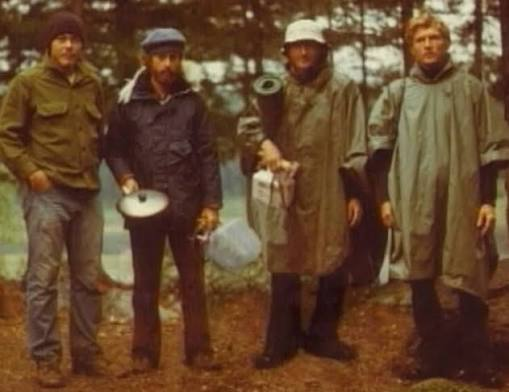
24
The Electric Car That Vanished
In the mid-1990s, a quiet technological revolution seemed ready to begin in the United States. Instead of gasoline engines and exhaust pipes, some engineers were building vehicles that ran entirely on electricity.
One of the most famous of these experimental vehicles was the General Motors EV1.
At the time, the idea of a fully electric car sounded almost futuristic. Most people believed batteries could never power a real automobile for daily driving. Yet when the EV1 appeared, it surprised many critics.
The car was sleek, quiet, and surprisingly advanced. Drivers who leased the vehicle reported that it accelerated smoothly and required almost no maintenance. Without a combustion engine, there was no oil to change and far fewer moving parts.
For a brief moment, it looked as if the age of electric vehicles had already arrived.
But the project soon became one of the most controversial technology stories in modern automotive history.
The EV1 was never sold to the public. Instead, it was offered only through a limited lease program in places like California and Arizona. A small number of drivers were allowed to use the vehicles while the company gathered data.
Many of those drivers loved the cars.
When the leases began to expire in the early 2000s, something strange happened. Instead of selling the vehicles to the people who were already driving them, the manufacturer demanded that every EV1 be returned.
Many drivers offered to buy their cars outright.
The company refused.
Soon afterward, most of the returned vehicles were quietly destroyed. Large numbers of the cars were crushed and recycled.
Footage of rows of EV1 cars being dismantled spread across the internet and quickly fueled speculation.
Some observers began asking uncomfortable questions.
Why would a company destroy working vehicles that people clearly wanted to drive?
Why were customers not allowed to purchase them?
Several explanations were offered. Automakers argued that maintaining the vehicles was expensive and that the limited technology of the time made mass production impractical.
But critics suspected something else.
Some believed the project had been quietly shut down because it threatened existing industries tied to gasoline and oil. Others argued that battery technology at the time may have been more promising than publicly acknowledged.
The controversy eventually became the subject of a well-known documentary titled Who Killed the Electric Car?.
The film explored the many possible reasons the project ended, including economic pressures, political influence, and resistance from industries built around traditional engines.
Today, electric vehicles have returned to the market in a big way. Companies around the world are producing them, and governments are investing heavily in battery technology.
Yet the story of the EV1 still lingers in discussions about technological change.
For some people, it remains an example of how promising innovations can disappear when they collide with powerful industries.
For others, it is simply a reminder that sometimes technology arrives before the world is ready to adopt it.
Either way, the quiet disappearance of those early electric cars remains one of the most debated technological mysteries of the modern automotive era.
⸻
Discussion
Do you think the EV1 program failed because the technology simply wasn’t ready yet, or do you think other economic and political forces played a role in its disappearance?

25
One of the most intriguing alleged early UFO encounters in Europe is the 1933 Magenta incident, said to have occurred near the town of Magenta during the rule of Benito Mussolini.
According to claims that surfaced decades later, an unidentified flying craft supposedly crashed in the countryside outside Magenta in June 1933. Witnesses allegedly reported a strange metallic object falling from the sky and coming down near the town. The craft was described as disk-shaped or cylindrical and unlike any aircraft known at the time.
Because Italy in the 1930s was under a tightly controlled fascist government, it is claimed that the event was quickly seized by military authorities. The story says that Mussolini ordered the wreckage secretly transported to a secure hangar for study.
Some UFO researchers claim the material was taken to an aviation facility in northern Italy and studied by a secret group known as the RS/33 Cabinet. According to later accounts, this committee supposedly consisted of scientists and engineers tasked with investigating advanced technology.
One of the most controversial claims connected to the story involves Guglielmo Marconi, the Nobel Prize-winning inventor of radio. Certain UFO researchers have speculated that Marconi may have been connected to the group studying the object, although historians have found no confirmed documentation placing him in such a program.
The story remained largely unknown until decades later when alleged Italian intelligence documents surfaced claiming that the fascist regime had attempted to keep the crash secret. According to these reports, the recovered craft remained hidden in Italy until near the end of World War II.
Some versions of the story claim that when Allied forces entered Italy during the war, the wreckage was recovered by the United States and transported abroad. Supporters of this theory sometimes argue that the Magenta incident could have been one of the earliest recovered UFOs.
However, historians and aviation experts remain skeptical. There are no verified contemporary records from 1933 confirming that such a crash occurred, and the documents cited by UFO researchers are disputed. Some scholars believe the story may have grown from rumors about experimental aircraft or wartime propaganda.
Despite the lack of confirmed evidence, the alleged Magenta crash continues to circulate in UFO literature. If true, it would represent one of the earliest claimed recoveries of an unidentified craft—occurring fourteen years before the famous Roswell incident in the United States.
Whether it was a misunderstood event, a lost historical episode, or simply a legend that developed decades later remains uncertain.
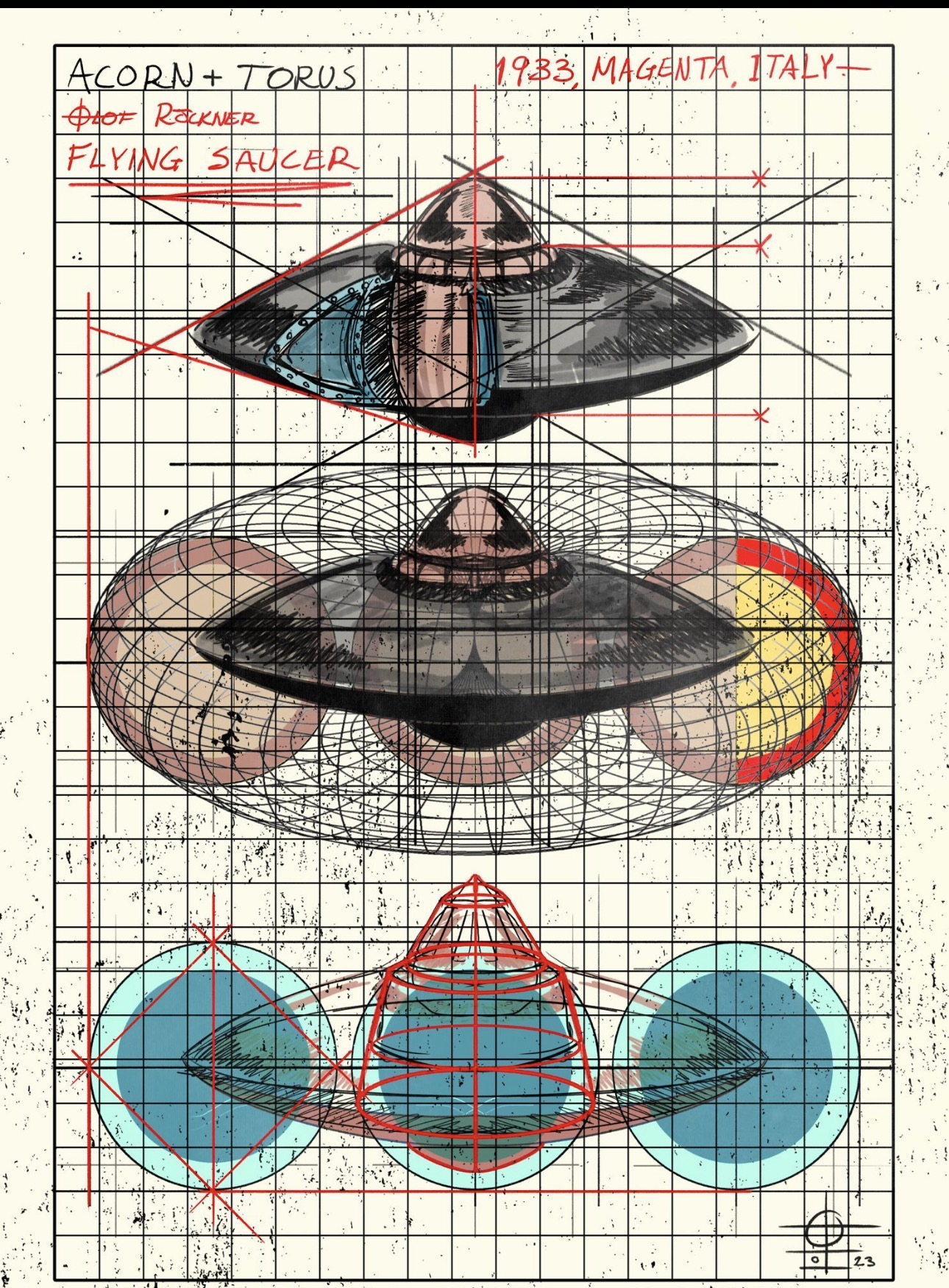
view more: next ›