baconmaster

joined 3 weeks ago
MODERATOR OF
 

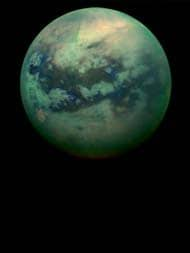
Titan, the largest moon of Saturn, is one of the most extraordinary worlds in the solar system and one of the most scientifically intriguing environments for studying planetary chemistry. Shrouded beneath a dense orange atmosphere and possessing landscapes shaped by liquids, Titan is often described as one of the most Earth-like bodies beyond our planet, though the substances involved are dramatically different. Rather than water flowing across its surface, Titan hosts rivers, lakes, and even rainfall composed of liquid methane and ethane. These conditions create a complex and dynamic environment that has made Titan a major focus in the search for understanding how chemistry evolves on planetary bodies.

Titan’s thick atmosphere immediately sets it apart from most other moons. Composed primarily of nitrogen with smaller amounts of methane and other hydrocarbons, the atmosphere is denser than Earth’s and extends hundreds of kilometers above the surface. Sunlight interacting with methane high in Titan’s atmosphere drives complex chemical reactions that produce organic molecules. Over time, these reactions create a haze of hydrocarbon particles that slowly drift downward, giving Titan its characteristic orange appearance when viewed from space. This constant chemical activity has made Titan one of the richest locations in the solar system for studying organic chemistry.

The surface of Titan remained hidden from view until the arrival of NASA’s Cassini spacecraft in the early twenty-first century. Radar imaging and atmospheric probes revealed a world shaped by weather systems and geological processes that mirror those on Earth in surprising ways. Instead of water cycles, Titan experiences a methane cycle. Methane evaporates from lakes and seas, forms clouds in the atmosphere, and eventually falls back to the surface as rain. These methane rains carve river channels and feed vast lakes near Titan’s polar regions, creating landscapes that resemble terrestrial coastlines and drainage systems.

Several of Titan’s lakes are enormous by Earth standards. Kraken Mare, the largest known sea on Titan, spans hundreds of kilometers across its northern hemisphere. These bodies of liquid methane and ethane form stable reservoirs because Titan’s surface temperature is extremely cold, averaging around minus 180 degrees Celsius. At these temperatures, hydrocarbons that would exist as gases on Earth become liquids capable of flowing across the landscape.

Beneath Titan’s frozen outer crust, however, scientists believe another type of ocean may exist. Measurements of Titan’s gravity field and surface movements suggest the presence of a deep subsurface ocean composed primarily of water mixed with ammonia or other antifreeze compounds. This ocean would lie far below the icy shell, separated from the hydrocarbon lakes on the surface. The existence of such an ocean means Titan may possess two distinct liquid environments: hydrocarbon seas at the surface and a hidden water ocean deep within its interior.

The chemistry occurring on Titan’s surface and in its atmosphere has attracted particular attention from scientists studying the origins of life. The organic molecules forming in Titan’s atmosphere include complex hydrocarbons and nitrogen-based compounds that resemble some of the building blocks associated with biological chemistry on Earth. These molecules accumulate on the surface over time, potentially creating vast deposits of prebiotic material.

While Titan’s extreme cold makes Earth-like life unlikely on its surface, some researchers have explored the possibility that unfamiliar forms of chemistry could occur in its methane lakes. Theoretical studies have suggested that membranes similar to biological cell walls could potentially form from hydrocarbon molecules under Titan’s conditions. Although this idea remains speculative, it illustrates how Titan provides a natural laboratory for studying chemical systems very different from those found on Earth.

The possibility of life becomes more conventional when considering Titan’s internal ocean. If liquid water exists beneath the icy crust and if it interacts with rocky materials in the moon’s interior, chemical reactions similar to those that occur around hydrothermal vents on Earth could potentially take place. Such environments provide energy and nutrients that support microbial ecosystems in Earth’s deep oceans, independent of sunlight. Although Titan’s internal ocean is difficult to study directly, its existence raises the possibility that habitable conditions could exist beneath the surface.

Titan also stands out because of its complex and varied landscape. Radar images from Cassini revealed mountain ranges, dunes composed of hydrocarbon particles, and vast plains sculpted by flowing liquids. The dunes near Titan’s equator stretch for hundreds of kilometers and resemble desert landscapes on Earth, though they are made from organic grains rather than sand. These features demonstrate that Titan is not a static frozen world but an active environment shaped by atmospheric and geological forces.

The most detailed exploration of Titan occurred in 2005 when the Huygens probe descended through the moon’s thick atmosphere and landed on its surface. As it drifted downward, the probe captured images of branching river channels and rounded ice rocks scattered across the ground. These images provided the first direct glimpse of Titan’s landscape and confirmed that liquids had once flowed across the surface near the landing site.

Future exploration of Titan is already being planned. NASA’s Dragonfly mission, scheduled for launch in the coming years, will send a nuclear-powered rotorcraft to explore the moon’s surface. Dragonfly will fly between different locations, studying Titan’s chemistry and geology in unprecedented detail. By analyzing organic materials and investigating environments shaped by methane rainfall and hydrocarbon lakes, the mission aims to better understand the processes that shape Titan’s unusual environment.

Titan’s combination of thick atmosphere, active chemistry, and diverse landscapes makes it one of the most compelling objects in the solar system for studying planetary evolution. It represents a world where organic chemistry unfolds on a planetary scale, providing insight into how complex molecules form and interact under conditions very different from those on Earth.

Although Titan may not resemble a traditional habitable world, its rich chemical environment offers scientists a rare opportunity to observe how the ingredients associated with life develop in natural planetary systems. By studying Titan, researchers gain insight not only into this distant moon but also into the broader question of how life’s chemical foundations might arise throughout the universe.


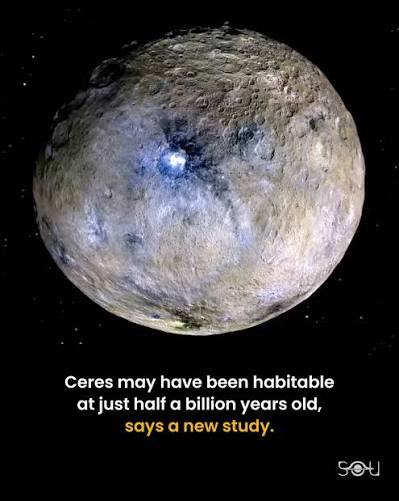
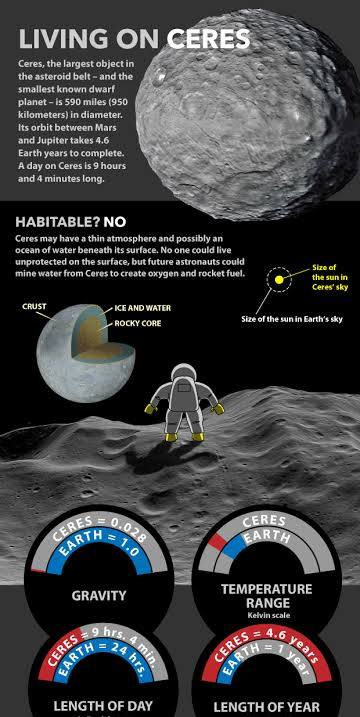
Ceres, the largest object in the asteroid belt and the smallest recognized dwarf planet in the solar system, has become an increasingly important focus in planetary science. Once believed to be little more than a large asteroid, Ceres has gradually revealed itself to be a far more complex world. Observations made by NASA’s Dawn spacecraft in the mid-2010s transformed scientific understanding of this distant body, showing that beneath its seemingly quiet surface lies evidence of water, salts, and geological processes that may still be active today. While Ceres is not currently considered as strong a candidate for life as some of the icy moons of the outer solar system, its unusual composition and internal structure make it one of the most intriguing objects between Mars and Jupiter.

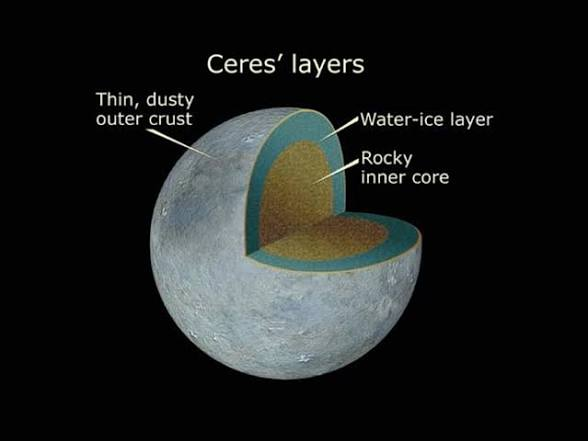
One of the most surprising discoveries about Ceres is the presence of water in multiple forms. The dwarf planet’s crust is believed to contain large quantities of water ice mixed with rock and minerals. Measurements of its density suggest that a significant portion of the interior is made of hydrated materials rather than solid stone. This has led scientists to conclude that Ceres likely formed with a substantial amount of water incorporated into its structure early in the history of the solar system. Beneath the outer crust, many researchers believe that Ceres once possessed, and may still contain in places, pockets of briny liquid water. Rather than a fully global ocean like those suspected on some icy moons, Ceres may harbor localized reservoirs of salty liquid trapped within its interior.

Evidence for these brines became clearer when Dawn observed the famous bright deposits scattered across parts of the dwarf planet’s surface. The most prominent of these deposits lies within Occator Crater, where a cluster of brilliant white patches reflects sunlight strongly against the darker terrain. Detailed analysis revealed that these deposits consist largely of sodium carbonate and other salts. Such materials are believed to have formed when salty liquid water from below the surface rose upward through fractures, reached the surface, and then evaporated in the vacuum of space. The remaining salt crystals formed the highly reflective patches that caught scientists’ attention when Ceres was first imaged up close.

The existence of these salt deposits suggests that Ceres experienced cryovolcanic activity in its relatively recent geological past. Cryovolcanism occurs when water, slush, or briny mixtures erupt instead of molten rock. One of the clearest examples of this process on Ceres is Ahuna Mons, a solitary mountain rising roughly four kilometers above the surrounding terrain. Its shape and structure strongly resemble a dome formed by material pushing upward from beneath the crust. Many scientists interpret Ahuna Mons as a cryovolcano, created when subsurface brines forced their way upward and solidified after reaching the cold surface.

The presence of salts, hydrated minerals, and possible subsurface brines indicates that Ceres once hosted an environment where water and rock interacted extensively. Such interactions are important because they drive chemical reactions that can produce complex compounds. In planetary science, these reactions are often viewed as key ingredients in the broader chemistry that precedes life. On Earth, water interacting with rock can release elements and minerals that support microbial ecosystems. While there is currently no evidence that such biological processes ever occurred on Ceres, the chemical activity implied by its geology shows that the dwarf planet is far from being an inert object.

Another important factor shaping Ceres is its location in the asteroid belt. This region contains remnants from the early solar system that never fully formed into planets. Because Ceres formed in this environment, it likely preserves materials dating back more than four billion years. Studying its composition helps scientists understand how water and organic compounds were distributed during the early stages of planetary formation. Some researchers even believe that objects similar to Ceres may have contributed water and chemical building blocks to the inner planets during the chaotic period when the solar system was still forming.

Despite its modest size, Ceres also appears to retain a surprising amount of internal heat. While it lacks the powerful tidal heating seen on moons such as Enceladus or Europa, the decay of radioactive elements within its interior may have helped maintain pockets of warmth for long periods. Combined with salts that lower the freezing point of water, this internal heat could allow briny liquids to persist beneath the surface much longer than previously expected.

The discovery of these internal processes has changed how scientists view the asteroid belt as a whole. Instead of being composed solely of dry, rocky debris, the region may contain bodies that once held significant quantities of water and potentially experienced complex geologic evolution. Ceres stands as the clearest example of this possibility. Its mixture of rock, ice, and salts places it somewhere between the rocky inner planets and the icy worlds of the outer solar system.

For this reason, Ceres is sometimes described as a transitional object. It shares characteristics with both asteroids and icy moons, making it an important laboratory for studying how small planetary bodies evolve. Although it does not currently rank among the most promising locations for extraterrestrial life, its chemistry and subsurface activity still provide valuable insight into the processes that shape habitable environments elsewhere.

Future missions may eventually return to Ceres to investigate its interior more closely. Scientists hope to better understand the extent of its subsurface brines, the timing of its cryovolcanic activity, and the role it may have played in delivering water and organic materials throughout the early solar system. Each new observation adds another piece to the puzzle of how this unusual dwarf planet formed and evolved.

What once appeared to be just another asteroid has instead proven to be a complex and dynamic world. Ceres reminds scientists that even small bodies in the solar system can possess rich geological histories, hidden reservoirs of water, and clues about the conditions that shaped the earliest chapters of planetary formation.


Documented Descriptions of Alleged Extraterrestrial Beings in UFO Reports

A Comparative Overview of Reported Non-Human Entities in UFO Encounter Literature

Introduction

Reports of unidentified aerial phenomena and alleged encounters with non-human beings have appeared in historical records for more than a century. In the twentieth century, particularly after the beginning of the modern UFO era in the late 1940s, these reports increased significantly. Witnesses from different countries, cultures, and backgrounds began describing encounters not only with unusual craft but also with entities associated with those objects.

Although these reports vary widely in detail and credibility, certain descriptions have appeared repeatedly across decades of testimony. UFO researchers, investigators, and enthusiasts have therefore developed informal classifications to describe these alleged beings.

It is important to emphasize that none of these entities have been scientifically verified. The classifications below are based entirely on patterns found within witness testimony, investigative reports, and UFO literature.

Despite this uncertainty, many believers argue that the consistency of certain descriptions suggests the presence of multiple distinct types of non-human intelligences interacting with humanity. The following sections outline the most frequently reported extraterrestrial entity types described in UFO encounter narratives.

The Grey Entities

Physical Characteristics

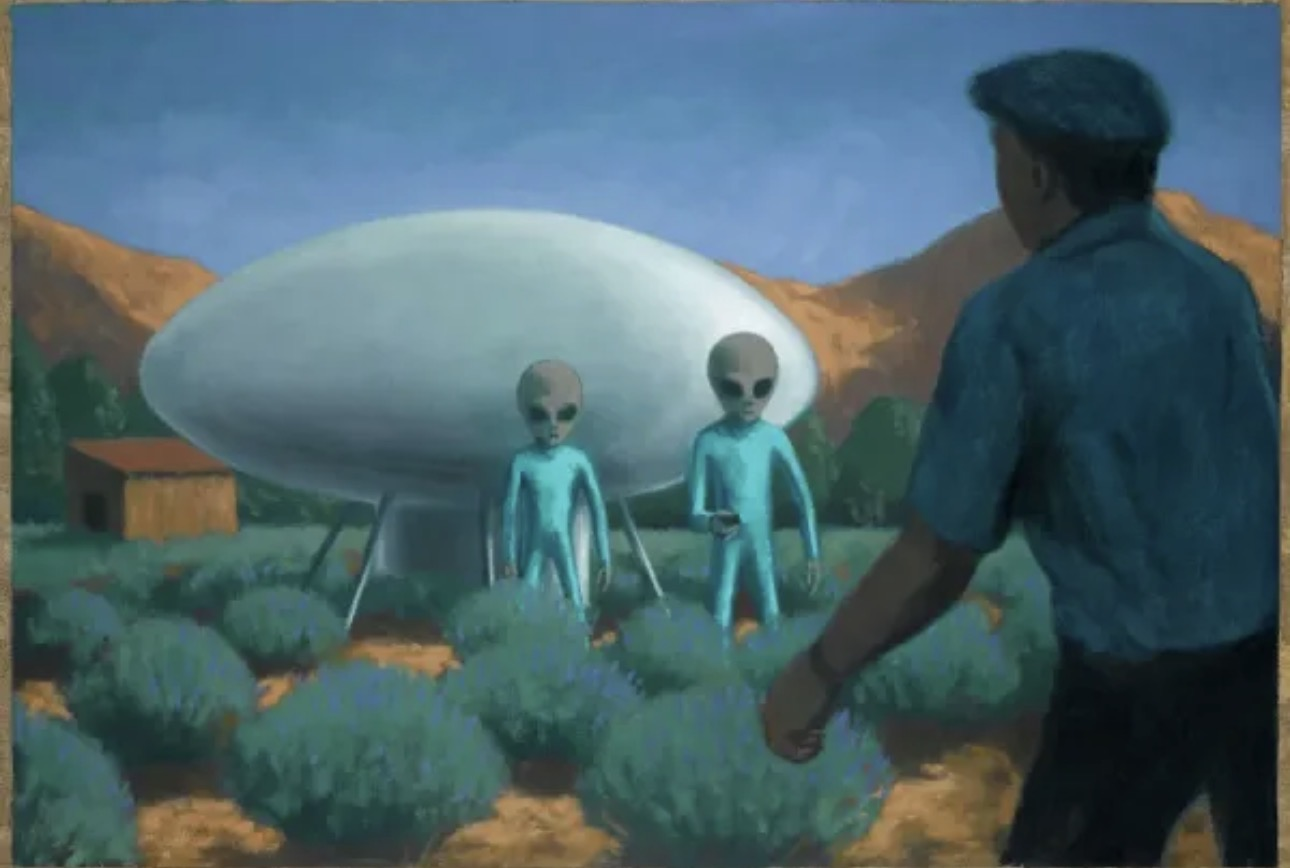
The most widely reported extraterrestrial type is commonly known as the Grey alien. These beings appear in thousands of alleged abduction accounts and close encounter reports. Witness descriptions of Greys are often strikingly consistent. Most reports describe beings approximately three to five feet tall with slender bodies and elongated limbs.

Their skin is typically described as smooth and grey, grey-tan, or pale bluish in tone. The head is disproportionately large compared to the body, with a rounded or bulbous cranium. The most distinctive feature reported by witnesses is the eyes. These are usually described as large, black, and almond-shaped, sometimes covering a significant portion of the face.

Facial features are minimal. Witnesses commonly describe the mouth as a small slit-like line, the nose as extremely small or nearly absent, and the ears as either missing or barely visible. Hands are typically described as having four long fingers, though some reports mention three or five.

Biological Speculation

Within UFO literature, Greys are often speculated to be biologically engineered beings. Their thin bodies and limited musculature have led some researchers to propose that they may not rely heavily on physical strength. Their enlarged skulls are often interpreted as evidence of advanced neurological development.

Some believers speculate that they possess highly developed cognitive abilities or telepathic communication systems. Another theory suggests that Greys may function as biological assistants or workers for another species that may rarely appear in encounters.

Behavioral Reports

In encounter reports, Greys are frequently described performing examinations or observational procedures. Witnesses often report that the beings communicate telepathically rather than through spoken language. Their behavior is commonly described as calm, focused, and highly task-oriented, with little evidence of emotional expression.

Tall Greys

A variant of the standard Grey entity is sometimes described as the Tall Grey. These beings are reported to be taller than the typical Grey, often ranging from six to eight feet in height. Their physical features remain similar to those of smaller Greys, including large heads, black almond-shaped eyes, thin bodies, and smooth grey skin.

However, Tall Greys are often described as having slightly more defined facial structure and a more imposing presence. Witnesses frequently report that these beings appear more physically developed than smaller Greys.

Witnesses frequently describe Tall Greys as appearing to supervise smaller Greys during encounters. In some abduction accounts they are portrayed as authority figures directing the activities of other beings. Their behavior is often described as deliberate and controlled, suggesting a leadership or command role during the event.

Nordic or Human-Like Entities

Another category reported in UFO encounters consists of beings that appear almost identical to humans. These entities are commonly referred to as Nordic aliens due to their physical resemblance to Northern European human populations.

Witnesses often describe them as tall individuals, usually between six and seven feet in height, with slender but athletic builds. Their hair is frequently described as blonde or light-colored, and their skin is typically pale. Their eyes are often blue or another light shade.

Their facial features are usually symmetrical and sometimes described as unusually attractive or idealized. Many witnesses report that these beings appear calm and composed.

Because these beings appear biologically similar to humans, some believers speculate that they may share a common ancestry with humanity or represent an advanced branch of humanoid evolution. Others suggest that the resemblance may simply be coincidental, resulting from similar evolutionary pressures.

Nordic entities are frequently described as calm and communicative. In many reports they interact directly with witnesses, sometimes delivering messages concerning environmental issues, technological development, or the future of humanity. Their demeanor is typically reported as peaceful and reassuring.

Reptilian Entities

Reptilian entities represent another category described in UFO and paranormal literature. Witnesses often describe these beings as tall and physically powerful, sometimes exceeding seven feet in height. Their skin is frequently described as textured or scaly.

Commonly reported features include elongated heads, pronounced brow ridges, and slit-like pupils similar to those of reptiles. Their skin coloration is often described as green, brown, or dark in tone. Some witnesses report prominent jaw structures or ridged foreheads.

Believers often suggest that reptilian entities could originate from an environment where reptile-like evolutionary traits were advantageous. Their muscular bodies and height have led witnesses to describe them as physically imposing and potentially stronger than other reported entity types.

Reports of reptilian behavior vary significantly. Some witnesses describe them as authoritative figures within spacecraft environments. Others portray them as observers or supervisors rather than direct participants in encounters.

Insectoid or Mantis-Type Entities

Another type of entity occasionally reported in UFO encounters resembles large insects, particularly praying mantises. These beings are often described as extremely tall, sometimes reaching seven or eight feet in height.

Their bodies are typically thin with elongated limbs and narrow torsos. Their heads are triangular in shape, and their eyes are positioned toward the sides of the head. Their appearance is frequently compared to that of a giant praying mantis standing upright.

Witnesses often report that insectoid beings move with smooth and deliberate motions. Their limbs appear designed for precise manipulation rather than physical strength. Their bodies are described as thin but stable.

In many encounter narratives, insectoid beings appear to act as supervisors or overseers during events involving Greys. Witnesses often describe them observing procedures while other beings carry out tasks.

Small Humanoid Entities

Another frequently reported category involves very small humanoid beings. These entities are usually described as between two and three feet tall. Their bodies are thin, with proportionally larger heads. Their skin is often described as smooth and pale. Large eyes are a common feature reported by witnesses.

In many encounter narratives, these small beings appear to function as assistants or technicians aboard spacecraft. Witnesses frequently describe them performing mechanical tasks or operating equipment.

Aquatic or Amphibious Entities

Some reports describe beings that appear adapted to aquatic environments. Witnesses occasionally describe these entities as having smooth blue or green skin, large eyes, webbed hands or fingers, and elongated limbs.

These reports are relatively rare but have been documented in cases involving underwater UFO sightings. Believers sometimes speculate that these beings may originate from ocean environments on other planets or possibly from hidden locations within Earth’s oceans.

Energy or Light Entities

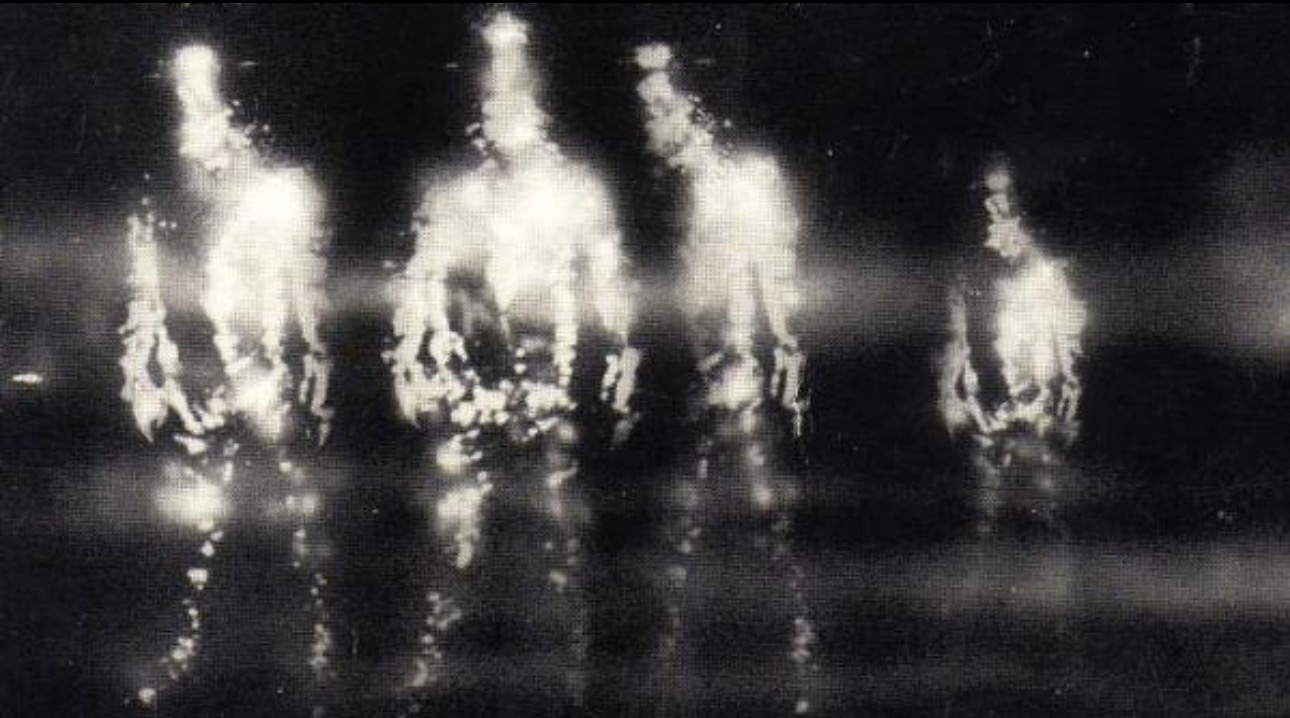
Some witnesses report encounters with beings that do not appear to possess a solid physical body. These entities are sometimes described as glowing silhouettes, bright spheres of light, luminous humanoid shapes, or shifting forms composed of energy.

Believers interpret these reports as possible evidence of life forms composed primarily of energy rather than conventional biological matter. However, such reports are rare and difficult to interpret.

Hybrid Entities

Some abduction reports describe beings that appear partially human and partially Grey. These entities are often described as having human-like facial features, slightly enlarged eyes, pale skin, and human-like proportions.

Witnesses often refer to them as hybrid beings. In some reports, hybrids are described as interacting with humans in ways that Greys do not. Some witnesses claim that these beings appear more emotional or expressive than other entities.

Robotic or Artificial Entities

A smaller number of reports describe beings that appear mechanical or robotic. Witnesses sometimes describe these entities as having rigid movements or metallic surfaces. Some reports suggest that they may function as automated assistants or drones.

Shadow-Like Entities

Some reports describe beings that appear as dark silhouettes rather than solid figures. Witnesses often describe them as tall shadowy shapes, humanoid outlines, or figures lacking clear physical features. These reports are less common and often difficult to interpret.

Historical Accounts of Non-Human Beings Prior to the Modern UFO Era

Although the modern classification of extraterrestrial entities largely developed during the twentieth century, some researchers argue that similar descriptions appear in much older historical records.

Throughout medieval Europe and Asia, chronicles occasionally described unusual beings associated with mysterious lights or aerial phenomena. These stories were often interpreted through the cultural frameworks of the time, such as encounters with spirits, angels, or supernatural visitors.

One frequently cited medieval account involves the appearance of unusual children in rural England during the twelfth century who reportedly spoke an unknown language and described coming from a strange land unlike the surrounding countryside. While historians interpret the story through historical and social explanations, some UFO researchers note parallels with later encounter narratives.

In Japan, a well-known nineteenth-century story known as the Utsuro-bune account describes a mysterious vessel washing ashore containing a strange woman who spoke an unfamiliar language and possessed unusual objects.

While these historical stories are interpreted in many different ways, they illustrate that reports of unusual beings and unexplained aerial phenomena existed long before the modern UFO era.

Patterns in Witness Descriptions Across Cultures

One of the most intriguing aspects of alleged extraterrestrial encounters is the similarity of witness descriptions across different countries and time periods. Reports of small grey beings with large heads appear in North America, Europe, South America, and parts of Asia.

Descriptions of tall human-like figures with light hair and calm demeanors also appear in multiple independent cases.

Some researchers argue that these similarities suggest witnesses may be describing the same types of entities despite cultural differences. Others believe that once certain images became widespread in popular culture, later witnesses unconsciously incorporated those images into their interpretations.

Regardless of interpretation, the repeated appearance of similar physical traits across many reports has led investigators to classify these beings into recognizable categories.

Encounters Involving Multiple Entity Types

Some encounter narratives describe the presence of more than one type of entity during the same event. In these reports, witnesses sometimes describe small Greys performing tasks while taller figures observe or supervise the situation.

In certain cases, mantis-like beings are described standing in the background while other entities carry out procedures. Witnesses sometimes interpret these arrangements as indicating a hierarchy or cooperative structure between different types of beings.

Communication Methods

Many witnesses report that these entities communicate without spoken language. Instead, communication is often described as occurring through telepathic impressions or direct mental images.

Witnesses frequently claim that thoughts or concepts were conveyed directly into their minds, sometimes accompanied by emotional impressions or visual imagery.

Environmental Conditions in Encounter Reports

Witnesses frequently describe unusual environmental conditions during alleged encounters. These conditions may include bright lights without visible sources, humming sounds, temporary paralysis, or altered perceptions of time.

Interior environments of alleged spacecraft are often described as brightly illuminated with smooth metallic surfaces and unfamiliar equipment.

Cultural Interpretations

Interpretations of non-human entities vary widely across cultures. In earlier centuries such beings might have been interpreted as supernatural or spiritual figures.

In modern technological societies, witnesses are more likely to interpret unusual beings as extraterrestrial visitors associated with advanced technology.

Conclusion

The descriptions presented in UFO encounter literature represent patterns observed across decades of witness testimony. Although no extraterrestrial species described in these reports has been scientifically confirmed, the consistency of certain descriptions has led researchers to organize them into informal classifications.

These classifications remain part of ongoing discussions surrounding unidentified aerial phenomena and the possibility of non-human intelligences beyond Earth.


 

The Antônio Villas-Boas Encounter (Brazil, 1957)

The Antônio Villas-Boas Encounter (Brazil, 1957)

In the early hours of October 16, 1957—though some sources place it on the night of October 15—a young Brazilian farmer named Antônio Villas‑Boas reported experiencing one of the earliest and most unusual encounters ever associated with UFO literature. The event took place near the small rural community of São Francisco de Sales in the state of Minas Gerais. At the time, Villas-Boas was twenty-three years old and working on his family’s farm. Because of the intense daytime heat common to the region, farmers often carried out heavy labor at night, plowing fields under the open sky with tractors long after sunset.

According to Villas-Boas, he had been operating his tractor alone shortly after midnight when he noticed a bright red light appearing low in the sky. At first he assumed it might be a distant aircraft or an unusually bright star. Within moments, however, the light began moving rapidly toward his position. As it approached, he realized it was not a conventional aircraft at all but an elongated, egg-shaped object glowing with a pale reddish light. The craft descended slowly toward the field and appeared to hover briefly before extending three metallic supports and settling onto the ground roughly ten to fifteen meters in front of his tractor.

Alarmed by the sudden appearance of the object, Villas-Boas attempted to flee. He started the tractor and drove away across the field, but after only a short distance the engine and headlights abruptly failed. Forced to abandon the vehicle, he began running on foot across the plowed ground. Before he could escape, several small humanoid figures approached him quickly and silently. He later described them as roughly five feet tall and dressed in tight gray suits with helmet-like coverings that concealed their faces. Despite his attempts to resist, the beings reportedly overpowered him and carried him toward the craft.

The interior was brightly lit with a cold, even illumination from no visible source. The surfaces were smooth and metallic. The air carried an odd, sharp odor that irritated his eyes and made breathing difficult. The beings placed him on what he described as a low, narrow examination table or couch. They removed his clothing completely, despite his resistance. Two of the figures held his arms while others performed procedures. A device resembling a thin tube or probe was pressed against his chin, drawing blood; he felt a sharp sting and later noticed small puncture marks. A thick, clear gel-like substance was spread over much of his body—apparently for decontamination or some preparatory purpose. He was then left alone briefly in the small chamber. After a time, a different figure entered: a female humanoid who appeared more like a human woman than the others. She was of similar height, naked, with long platinum-blonde hair that fell past her shoulders. Her eyes were large and slanted, described as deep blue or cat-like. Her skin was fair, and the hair in her underarms and pubic region was strikingly bright red. She had a small, pointed chin and well-proportioned features that Villas-Boas found attractive. She approached him directly. Despite his fear and the earlier ordeal, he experienced an uncontrollable physical arousal—something he later attributed possibly to some external influence or drug administered during the examination. She embraced him, pressing her body fully against his. No words were exchanged; communication was through touch and gesture alone. They engaged in sexual intercourse on the couch-like surface. During the act, she did not kiss him on the mouth but instead nipped or bit lightly at his chin several times, leaving small marks. The encounter was brief but intense. When it concluded, she rose, placed a hand on her abdomen, and then pointed upward toward the ceiling or sky in a clear gesture. She smiled faintly before leaving the chamber. The original beings soon returned. They allowed Villas-Boas to dress and escorted him back outside without further resistance. He was released near his stalled tractor. The craft's hatch closed, the legs retracted, and the object rose silently, accelerating upward until it vanished into the night sky. Villas-Boas returned home in a state of exhaustion and confusion. In the following hours and days, he suffered nausea, severe headaches, loss of appetite, burning sensations in his eyes, dizziness, and skin lesions—small, raised, reddish nodules that appeared after minor bruises, some with central openings that discharged a thin, yellowish fluid. The surrounding skin showed violet-tinged discoloration. These symptoms persisted for weeks or months and were later examined by physicians, including Dr. Olavo Fontes, who noted similarities to mild radiation exposure. Villas-Boas maintained this account consistently in interviews, without apparent motive for fabrication or publicity. The case remains unverified and unexplained.

Or are you asking for a paranormal or community related story with graphic sex as part of the story cz its essential to the story? Otherwise i could write a fictional sex story

Lol i mean i could but it would have to be a different community, are you serious or are you messing with me on wanting that sort of literature


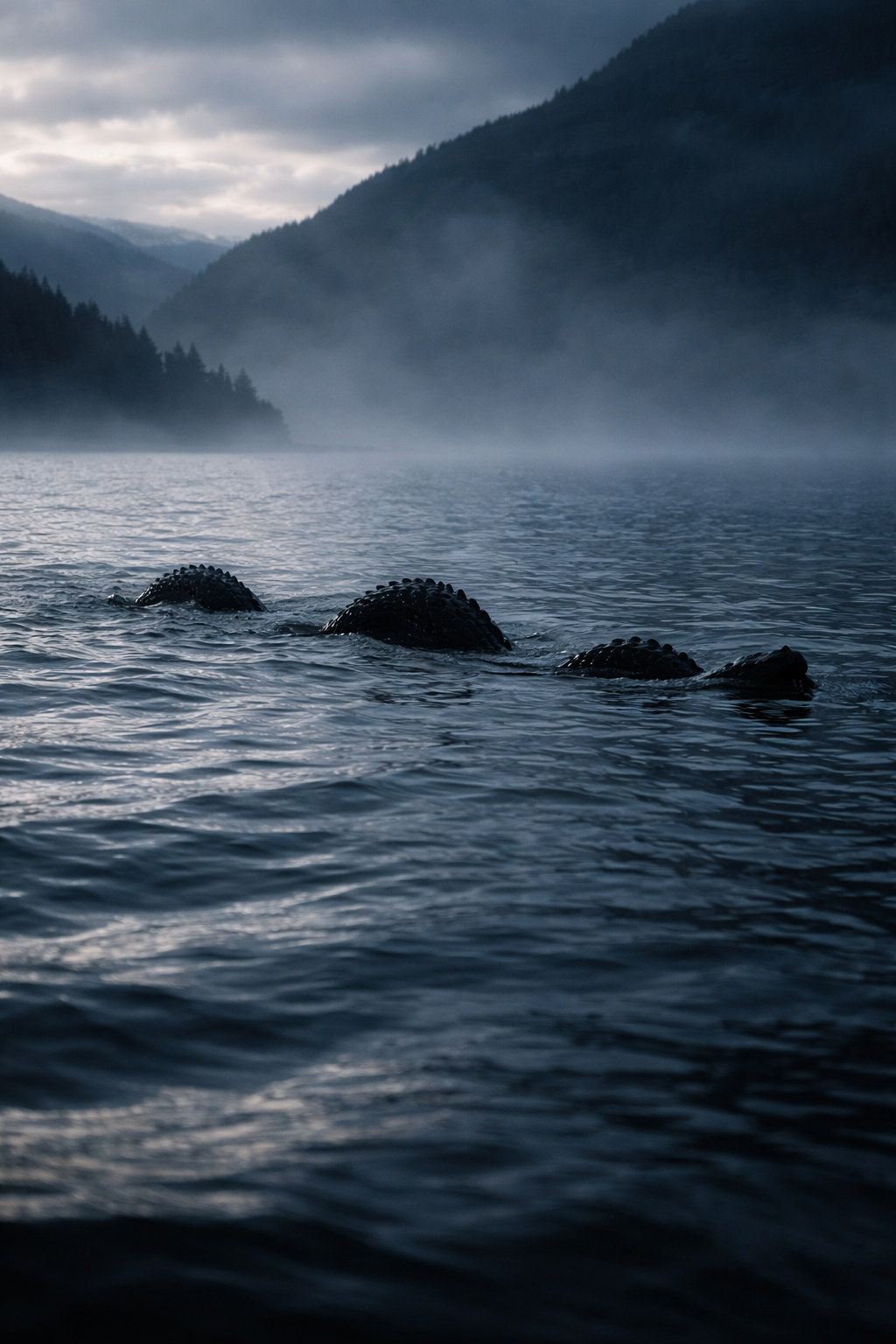
One of the lesser-known cryptids associated with the Pacific Northwest is the Lake Chelan Water Serpent, sometimes called the Chelan Dragon, reported in and around Lake Chelan in the state of Washington. Lake Chelan is a long, narrow glacial lake that reaches depths of nearly 1,500 feet, making it one of the deepest lakes in the United States. Its extreme depth and cold, dark water have long fueled speculation that unknown creatures could inhabit its lower reaches.

Reports of a strange creature in the lake date back to the late nineteenth and early twentieth centuries. Early settlers and Indigenous residents occasionally described seeing a long, dark form moving through the water near the shoreline or farther out in the lake. Witnesses often described the creature as serpentine, sometimes estimating its length between 20 and 50 feet. In some accounts it appeared to have humps or coils visible above the surface, somewhat resembling descriptions of other lake monsters such as Ogopogo in Canada’s Okanagan Lake.

Several sightings occurred during the early 1900s when steamboats regularly traveled along Lake Chelan. Passengers occasionally reported seeing large disturbances in the water or elongated shapes moving beneath the surface. One widely circulated local story describes fishermen observing a large creature surfacing briefly before disappearing into deeper water near the northern end of the lake.

Because Lake Chelan is extremely deep and formed by glacial activity, some enthusiasts speculate that the creature could be a large unknown species of fish or an unusually large eel-like animal. Skeptics, however, suggest the sightings are more likely misidentified sturgeon, floating logs, waves, or other natural phenomena. Despite the uncertainty, the legend of the Chelan water serpent persists in regional folklore and remains one of Washington’s lesser-known cryptid traditions alongside the more famous Bigfoot.

Today the story survives mostly through local lore, occasional eyewitness reports, and cryptozoology discussions. While no physical evidence has confirmed the creature’s existence, the depth and remote sections of Lake Chelan continue to make it an appealing location for speculation about what might still lie hidden beneath the surface.

Small world man, have you ever heard anything about this from the locals? I think this one is fake simply because of that damn photo I mean seriously it looks like something from a bad movie.


On the evening of January 29, 1986, residents of the mining town of Dalnegorsk in Russia’s Far East reported witnessing an unusual aerial object moving silently across the winter sky before descending onto a nearby hill known locally as Height 611. At the time, Dalnegorsk was part of the Soviet Union and located in Primorsky Krai, a mountainous and sparsely populated region near the Sea of Japan. The event quickly became one of the most discussed UFO incidents in Soviet-era research circles because of the number of witnesses and the subsequent investigation carried out by scientists.

Witnesses described the object as a bright reddish sphere roughly half the apparent size of the Moon. Unlike aircraft, it emitted no sound and moved at a steady speed while maintaining a constant altitude. Several observers reported that it appeared metallic or solid rather than gaseous or comet-like. As it passed over the town, it began descending toward Height 611, a rocky ridge overlooking Dalnegorsk. According to accounts gathered later, the sphere struck the hillside and disappeared behind the ridge line, producing a brief flash of light but no large explosion.

Because the crash site was visible from parts of the town, several people climbed the hill the following day to examine the location. They reported finding a circular area of scorched rock approximately two meters across. The ground was covered with unusual metallic fragments, many of which appeared as tiny spherical droplets or thin mesh-like pieces. Local investigators and later visiting researchers collected samples from the site and attempted to analyze their composition.

The investigation eventually involved scientists from institutes associated with the Soviet Academy of Sciences. Laboratory analysis of some fragments reportedly revealed unusual structures, including microscopic metallic spheres embedded within a carbon matrix. Other pieces resembled extremely fine metal gauze or fibers twisted into complex shapes. Researchers noted that the materials contained elements such as lead, silicon, and rare earth metals. Some investigators suggested the structure of certain fragments did not resemble typical industrial alloys produced at the time, though no definitive conclusion was reached.

Interest in the case increased a year later when witnesses in Dalnegorsk reported additional unidentified aerial objects appearing over the same hill. These objects were said to move in coordinated patterns above Height 611, occasionally emitting beams of light toward the ground. Some observers speculated that the craft were searching for or retrieving remnants of the object that had crashed the previous year.

Despite extensive discussion among Soviet ufologists and scientists, no consensus explanation was ever established. Skeptics proposed possibilities ranging from an experimental military device to an unusual meteor fragmenting upon impact. Others argued that the recovered materials were inconsistent with known natural or manufactured debris. The Dalnegorsk incident remains one of the most widely cited UFO cases from the Soviet Union, largely because it combined eyewitness reports, a visible crash site, and physical fragments that were subjected to laboratory examination yet never definitively explained.


Ill test both out over time, i prefer essay style because it feels more natural to me. Hope you enjoy the content and thank you for reading and checking out this community.


Tell me your opinion


Among the lesser-known UFO incidents reported in the United States, one of the most unusual occurred in the small town of Falkville, in northern Alabama.

The event became unusual not because of multiple witnesses, but because the sighting was reported by a police officer on duty, who later claimed he briefly encountered a strange humanoid figure near the roadside.

The report, made in 1973, remains one of the strangest UFO-related encounters recorded in the state.

The Officer’s Report

The incident took place on October 17, 1973.

A police officer named Jeff Greenhaw received a call about a strange object seen near the outskirts of town.

Greenhaw drove toward the reported location along a quiet road outside Falkville.

As he approached the area, he noticed something unusual standing near the roadside.

The Mysterious Figure

According to the officer’s report, the figure appeared to be humanoid but strangely reflective, as if covered in metallic or aluminum-like material.

Greenhaw described the figure as: • Roughly six feet tall • Covered in a tight, shiny suit • Moving in an unusual, stiff manner

When the officer stopped his patrol car and approached, the figure reportedly turned toward him briefly before running away at high speed.

Greenhaw attempted to follow it in his vehicle, but the figure disappeared into the darkness.

The Photographs

Before the figure fled completely, Greenhaw managed to take several Polaroid photographs of the object.

The images later circulated among UFO researchers, though they were blurry and difficult to interpret.

Some observers believed the photographs showed a reflective humanoid form, while others argued the images were too unclear to confirm what was seen.

Aftermath

The incident quickly attracted attention in the small town.

Although the officer maintained his account of the event, the experience reportedly brought him unwanted publicity.

In later interviews, Greenhaw said the encounter affected his career and reputation, and he eventually left the police force.

Despite investigation and speculation, no confirmed explanation for the figure was ever established.

Why the Case Is Still Discussed

The Falkville incident remains unusual because the witness was a trained police officer responding to a call while on duty.

Unlike many UFO reports that occur at great distances in the sky, this encounter involved a close-range sighting of a humanoid figure on the ground.

While skeptics suggest the event could have been a prank or a misidentification, others consider it one of the more curious UFO-related reports in Alabama history.

Discussion

What do you think the officer may have encountered that night near Falkville?

Could the figure have been a person wearing reflective clothing, an unusual prank, or something that simply defied easy explanation? 👀


A Strange Landing in Rural Provence

Among the many UFO sightings reported in France, one of the most unusual occurred in the quiet countryside of southeastern France in the early 1980s.

The case took place in the small village of Trans-en-Provence, where a brief encounter between a local resident and a mysterious object left behind physical traces that would later be examined by government scientists.

Unlike many UFO stories that rely only on witness testimony, this incident became notable because investigators documented physical changes to the soil and vegetation at the landing site.

Today the event remains one of the few UFO cases officially investigated by the French space agency.

The Witness

The event occurred on January 8, 1981.

A local resident named Renato Nicolai was working outside his home during the afternoon when he noticed an unusual object descending nearby.

According to Nicolai’s account, the object moved silently and appeared to settle briefly on the ground before lifting off again moments later.

The entire event lasted only a short time, but the object reportedly left behind a clear circular mark in the soil.

After the craft departed, Nicolai approached the area where it had touched down and observed an unusual ring-shaped impression on the ground.

The Mysterious Object

The witness described the object as a disc-shaped craft roughly two meters in diameter.

It appeared metallic and moved without the sound typically associated with aircraft or helicopters.

Nicolai reported that the craft rose vertically and accelerated away rapidly after its brief contact with the ground.

The sudden departure and the silent movement of the object contributed to the unusual nature of the encounter.

The Scientific Investigation

Because the landing reportedly left a visible ground trace, the site attracted the attention of investigators from CNES and its UFO research program GEIPAN.

Scientists collected soil and plant samples from the affected area.

Laboratory analysis revealed several unusual findings: • The soil within the ring had been significantly compressed. • Vegetation in the area showed abnormal growth patterns. • Some plant tissues displayed signs of heating or stress.

Although researchers could not determine the exact cause of the trace, they confirmed that a heavy object had briefly rested on the ground.

An Unexplained Case

Unlike many UFO reports that remain purely anecdotal, the Trans-en-Provence case became notable because of the documented physical evidence.

The official investigation concluded that the trace could not be explained by known agricultural machinery, aircraft activity, or natural causes.

As a result, the event remains classified among the unidentified cases within the French government’s UFO archive.

Why the Case Still Attracts Attention

The Trans-en-Provence incident continues to interest researchers because it combines a direct eyewitness account with measurable physical effects at the site.

While no definitive explanation has ever been confirmed, the case illustrates how some UFO reports have received formal scientific analysis.

Even decades later, the brief landing in a quiet Provençal village remains one of the more unusual entries in France’s catalog of unexplained aerial phenomena.

Discussion

If a craft truly left the trace examined by investigators, what do you think might have caused it?

Was the event the result of an unknown aircraft, a misidentified natural phenomenon, or something that still has no clear explanation today? 👀

Lol internet memes like this that became insane staples of internet lore are so funny

All im going to say about it is, if anyone is shocked that chuck was a conservative, i mean the guy was in Texas Walker Ranger, cmon folks, doesn’t take away his awesomeness, dudes a legend

Its honestly one of my favorite memes

I felt the need to address it. It will be the last time i do.

[–] baconmaster@hilariouschaos.com 1 points 2 days ago* (last edited 2 days ago)

Thanks for the info, i think I’ll pass though. It was just an observation. I’m actually very pleased with the engagement and amount of subscribers. I’ve been writing some books so writing in my more restrained style here and the reception I’ve gotten is telling me im doing alright. Plus the YouTubers that are featured in this community are friends of mine and I’m glad they are getting some attention as well.

I’ll keep it in mind, I’m interested in good horror films

Old sailor stories after often the most exaggerated

I’m gonna have to check that out. I think I’ve heard of it, but I never actually saw it.

view more: next ›