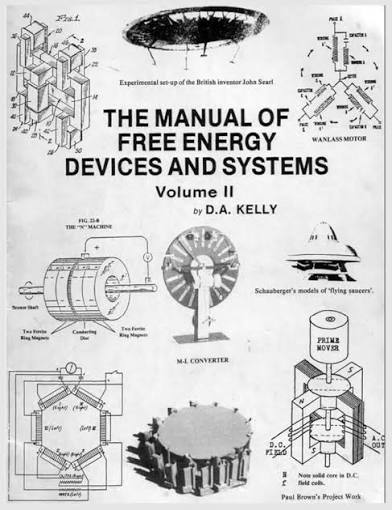
The idea of “free energy” has been around for a very long time. In the simplest sense, people use the term to describe machines or technologies that could generate energy without needing fuel or external input. Throughout history, inventors and thinkers have tried to design devices that could run forever or produce more energy than they consume. These ideas usually fall under the category of perpetual motion machines, and attempts to build them go back hundreds of years.
One of the earliest periods when these ideas appeared was during the Middle Ages. Engineers and inventors sometimes proposed mechanical wheels that would supposedly keep spinning indefinitely once they were started. These designs usually relied on shifting weights or clever arrangements of gears and levers. The hope was that gravity or motion could somehow keep the system running forever. Although these machines looked convincing in drawings, none of them actually worked when tested.
During the Renaissance and early modern period, interest in perpetual motion continued. Inventors occasionally claimed to have built working devices, and some demonstrations attracted public attention. However, as scientific understanding improved, physicists began realizing that such machines violated fundamental principles of energy and motion.
In the nineteenth century, the development of thermodynamics helped clarify why perpetual motion machines cannot function as proposed. Scientists discovered that energy cannot be created from nothing and that every process involves some loss of usable energy, usually as heat. These ideas became known as the laws of thermodynamics, which remain central to modern physics and engineering.
Despite this, the idea of free energy never completely disappeared. In the late nineteenth and early twentieth centuries, a number of inventors believed that new electrical technologies might unlock hidden sources of power. One of the most famous figures often mentioned in discussions about unconventional energy is Nikola Tesla. Tesla explored wireless energy transmission and high-frequency electrical systems, which later became surrounded by speculation and myths about untapped energy sources. While Tesla’s work was groundbreaking in electrical engineering, it did not produce a system capable of generating unlimited energy.
In the twentieth century, interest in alternative or unconventional energy systems continued to appear in various forms. Some inventors experimented with unusual electromagnetic devices, magnetic motors, or vacuum-energy concepts. These ideas often attracted attention from enthusiasts, but none have been demonstrated to produce energy in violation of known physical laws.
Claims of Suppression and Conspiracy
Alongside the technical discussions, a long-standing belief has developed in some circles that working free-energy technologies have been intentionally suppressed. According to these claims, inventors who supposedly discovered revolutionary energy systems were discouraged, bought out, or in some cases mysteriously disappeared. Stories occasionally circulate online about researchers who allegedly died under unusual circumstances or whose prototypes vanished after attracting attention.
Supporters of this idea argue that a technology capable of producing unlimited energy would threaten powerful economic interests connected to fuel industries and large energy infrastructures. Critics of the suppression theory, however, point out that no verifiable example of a working free-energy machine has ever been publicly demonstrated or independently replicated. As a result, most scientists consider these stories part of a broader mix of speculation, rumor, and misunderstanding surrounding experimental technologies.
Regardless of where someone stands on the issue, the topic continues to attract debate. The combination of unexplained claims, unusual inventors, and the enormous potential impact of such a technology keeps the discussion alive in many communities interested in alternative science and hidden technologies.
Modern Energy Research
Today, mainstream research focuses on developing sustainable and renewable energy sources rather than perpetual energy machines. Technologies such as solar power, wind energy, geothermal systems, and nuclear fusion aim to produce large amounts of energy while reducing environmental impact. These systems still obey the laws of physics but rely on natural processes that continuously supply energy to Earth.
The enduring fascination with free energy reflects a deeper human desire to find simple and abundant ways to power civilization. While perpetual motion machines remain impossible according to current scientific understanding, the search for better energy technologies continues. Advances in renewable energy and experimental fusion research suggest that the future of power generation may still bring dramatic changes, even if those developments do not overturn the fundamental laws that govern the universe.