
Umineko. It's a visual novel that teaches you that empathy and imagination are necessary to understand other's actions. It's very good. If you like mysteries or detective stories then you will definitely love it but it is still very good if you don't.
this post was submitted on 04 Sep 2026
139 points (99.3% liked)
Ask Lemmy
41331 readers
1748 users here now
A Fediverse community for open-ended, thought provoking questions
Rules: (interactive)
1) Be nice and; have fun
Doxxing, trolling, sealioning, racism, toxicity and dog-whistling are not welcomed in AskLemmy. Remember what your mother said: if you can't say something nice, don't say anything at all. In addition, the site-wide Lemmy.world terms of service also apply here. Please familiarize yourself with them
2) All posts must end with a '?'
This is sort of like Jeopardy. Please phrase all post titles in the form of a proper question ending with ?
3) No spam
Please do not flood the community with nonsense. Actual suspected spammers will be banned on site. No astroturfing.
4) NSFW is okay, within reason
Just remember to tag posts with either a content warning or a [NSFW] tag. Overtly sexual posts are not allowed, please direct them to either !asklemmyafterdark@lemmy.world or !asklemmynsfw@lemmynsfw.com.
NSFW comments should be restricted to posts tagged [NSFW].
5) This is not a support community.
It is not a place for 'how do I?', type questions.
If you have any questions regarding the site itself or would like to report a community, please direct them to Lemmy.world Support or email info@lemmy.world. For other questions check our partnered communities list, or use the search function.
6) No US Politics.
Please don't post about current US Politics. If you need to do this, try !politicaldiscussion@lemmy.world or !uspolitics@lemmy.world
7) No Hit-and-Run questions.
Please don't delete your post for no apparent reason. If you plan on deleting a question later, say so in the post, or if you feel that you have a good reason to remove it, message a mod beforehand. It's not fair to the ones who took their time to answer, and it's not in the spirit of the community.
8) No Bots.
Posts or comments from bots, LLM's, AIs, Neural Networks, Transformers, or Marvin the Paranoid Android are not welcome in AskLemmy. Real humans only please.
Reminder: The terms of service apply here too.
Partnered Communities:
Logo design credit goes to: tubbadu
founded 3 years ago
MODERATORS
His Dark Materials by Phillip Pullman. Made me realize how dogmatic religion is, also its a really fun and accessible book to read, teenage coming of age story, with a sprinkle of religious criticism.
I'm pretty sure it made me the scientist I am today.
1984 and it's spiritual prequel, Fear and Loathing in Las Vegas .
These books opened up my teen mind to the fact that we are always, individually and as a society, creating, editing, and manipulating consensual reality.
Unfortunately the bad guys are way ahead of us on the manipulation bit, and with LLMs/Gen-AI I fear a total collapse of consensual reality. But if we have enough Hunter S's in the world, we may still be in the fight.
Sounds weird, but Ascendance of a bookworm and time. Use to work agile and doing things quick, then I read bookworm and the tiny gremlin who wanted to do things quick and now, and the consequences for doing so.
Now I give as much time as I can/need for anything and everything. And I now start getting annoyed when family says they’re dropping in. Like dude, give me time to prepare, like 2-4 days heads up so I can clean, get more food and properly welcome you.
The Good Place, especially the ending of it.
Tap for spoiler
How much of our lives now through capitalism are passively “bad actions”, how people can always change and grow still even if it should be the “end” of their journey, how shitty the idea of living forever somewhere in the afterlife actually would be, and becoming comfortable with the idea of death and the whole unknowing nature of it.
Really a wild piece of work from the same man who made The Office, Parks and Rec, and Brooklyn Nine-Nine.
I thought the ending was cop out garbage, lets jump into a void because I can't think of how else to end a story about the afterlife
Type of ending I would write because I'm lazy.
The whole living in the afterlife is so shitty that everyone's bored thing is the wrost concept I can imagine. Like you woildn't just be able to be on drugs 24/7 with no tolerance so it would always feel good.
Every issue they have is something a living person would have not a soul. They just couldn't fathom a proper afterlife so ofc it's boring. The assumption is every single mf in existence would choose to erase themselves and no longer exist as themselves with that identit/persona. Doubt it, im sure the creator would, but the creator is weak willed and lacks imagination. Just look at their show about the afterlife which feels like the most low/light fantasy sht ever.
Maybe it's because I read comics all the time where entities live forever without issue, but it really felt like they lacked the imagination to play with their own concept.
NINE NINE!!
In his Discworld novels, Sir Terry Pratchett gave me a love for humanity. He's so good at writing, but especially at characterization. The people he writes are just so human, and for me, it increased my empathy for people overall.
Also, even though I'm an atheist, after having grown up fundie Southern Baptist, I'd like to think that if the spiritual and supernatural exist, that it works somewhat along Discworldian lines. Certainly there are two Deaths that I wouldn't mind meeting: The Discworld Death, and the Sandman Death (Neil Gaiman).
But it was with Pratchett's help that I've come to believe that there are no good people and no bad people. Just people, and all the choices they make. Which in some ways makes "evil people" more terrifying, because I believe they make those choices. But it's also heartening: People can choose to be better.
The principles expressed in the novels helped me change my views on what's important: I think the most important thing you can do is to make others' lives a little better, if you can. Huge projects like social safety nets, but even making a stranger laugh for a moment and brightening their day.
This life is all we get, and anything that makes it better is the main thing that's worth anything at all.
Back in the nineties, for me it was the TV show Northern Exposure. I grew up in a small town dominated by hockey jocks, pickup trucks and underage drinking--always being labelled a nerd for reading books or being in cadets (where we flew gliders on weekends and got teased for it.) This show really encouraged me in its depiction of an isolated, northern backwater town where people appreciated literature, philosophy, and valued different backgrounds and unorthodox endeavours. As I was reaching adulthood, I felt it normalized self-reflection and provided a perspective for me to see a bigger world outside of where I grew up, opening a lot of windows to seek out real self-actualization at a time in my life where I needed it.
Hitchhiker's Guide to the Galaxy
What did I take from it? I personally took the point to be "world's fucked, people are fucked, but who cares? Goof off more!"

load more comments
(4 replies)
Fahrenheit 451. I started noticing increasing censorship and the growing intentional denial of knowledge and learning more and more. It's terrifying.
load more comments
(1 replies)
Mornings in Jenin. Growing up as a child of refugees, it was difficult to fully grasp the horrors of Israeli violence against Palestinians, my parents shielded us from the worst they witnessed, only telling us of the good memories before they were forced to leave. This book helped shape who I am today, motivated me to learn the truth, and exposed me to a whole world of non colonial literature, both fiction and non. And while it is a story of fiction, it is based on the reality of the ethnic cleansing of Palestine, ongoing for 78 years now.
The Left Hand of Darkness and other Le Guin stories. Good timing on when I started expending my scifi reading in her direction; I was in high school, meeting more people outside my little conservative family and church bubble, trying to form new conceptual models for the much bigger world that I was previously insulated from.
Le Guin is phenomenal. Her acceptance speech at the 65th National Book Awards makes me tear up to this day.
"Hard times are coming, when we’ll be wanting the voices of writers who can see alternatives to how we live now, can see through our fear-stricken society and its obsessive technologies to other ways of being, and even imagine real grounds for hope. We’ll need writers who can remember freedom — poets, visionaries — realists of a larger reality."
Edit: Here's the full speech if anyone is interested in listening to it. It's only six minutes and well-worth it.
load more comments
(1 replies)
Anything by Le Guin. She's a revolutionary and visionary. Imo greatest sci-fi author ever.
load more comments
(3 replies)
Stranger in A Strange Land was called "the hippy bible" for a reason...
It was written in the 1960s tho, so even the "woke" parts can be pretty problematic. That just means society progresses tho. If 60 year old media doesn't have anything problematic in it, it means society has stalled instead of peogressed
Thou are God.
load more comments
(3 replies)
Ghost in the Shell. It really changed how I seen my body, not as something that I am, but as something I control. Now I can start and stop peeing whenever I want.
Dogma helped me see how absurd religion, specifically Catholicism, was and helped be begin to untangle what it all meant for me, a hyper-religious teenager at the time.
Cloud Atlas (I feel like every book post I make is about Cloud Atlas) It taught me two important lessons.
- We're not kind enough to each other and
- Even if a goal seems hopeless it's worth making the attempt if you see something wrong in the world.
Asimov’s Foundation Trilogy instilled in me a deep faith in science above all else. And a lot of hope that, even if times can suck, overall we have been developing and live has been getting better and better. I am way more cynical now, but I still hold on the hope that eventually everything will be fine.
load more comments
(1 replies)
Snow Crash is a Sci-Fi book from the early 90s. It coined the term metaverse. It takes place in a post American collapse setting, where corporations have taken over. There's a lot of interesting points in the book, probably as interesting today as the day it was wrote.
But what stuck with me, and helped form my understanding of society and helped me build my career in tech was his observations on franchises. He posits that franchise are basically a living organism, who's DNA is written in binders. These binders cover every eventuality. They explain process, procedure, and expected results so that the humans in each franchise can keep the organism alive.
It was kinda a throw away set dressing just setting up the world at the beginning of the book, but it is the part that had real meaning to me.
load more comments
(5 replies)
Realm of the elderlings, fitz is always in his head, assuming how other people feel about sht and it always fucks him over because he damn near always misunderstands. Made me communciate more and make less assumptions.
He's like a tragic hero that causes his own trajedies by being depressed and anxious.
Going to go with a video game: Outer Wilds. The game is very story and mystery oriented, so I don't want to spoil it, as that can ruin the experience. In short though, it's an exploration game where you get to do your first flight around a miniature solar system - exploring it freely without a linear sequence or quest markers.
The story is told in a nonlinear way, depending on how you explore it, and the way it comes together and the conclusion it reaches were amazing to discover.
load more comments
(1 replies)
Children of Men. Lack of human sustainability is depressing.
The matrix for obvious reasons.
American beauty. Gummo.
There's a great book called the road less travelled, that had a big impact too. Northern lights series.
But I can't remember specifics on what changed, just that they had a big impact on me.
I think it comes down to being able to appreciate the world in new ways.
A Demon Haunted World by Sagan should be taught in school.
Go Tell it On the Mountain by Baldwin is such a beautiful work of fiction that you could totally miss the profundity of it's themes.
Hmmm didn't know about the Sagan one. Do you think an actual scientist would get something out of it?
Not OP but yes an actual scientist would like it. It's more about the ways in which cultures over time turn to the supernatural to explain something that has a scientific explanation.
It like a lot of Big Science books (Guns, Germs, and Steel, Sapiens), has more than a few "just so" stories, but i you look past that, it's a very valuable book teaching you to look at things you don't understand critically and why we as a society, often fail at this.
Imajica by Clive Barker flipped a switch in my (then) teenage brain making me understand that "fantasy" books don't need to have swords, wizards, and all the other tropes. That the idea of "fantasy" as a genre is far far richer than I imagined.
load more comments
(1 replies)
Tengen Toppa Gurren Lagann and Neon Genesis Evangelion also (positively) changed my view on life and what makes it worth living.
Gurren Lagann is much more overt with the positive messaging.
load more comments
(2 replies)
The two fictional courtroom dramas that changed the course of my life (eventually persuading me I wanted to become a lawyer and make sure the system works towards justice) were A Few Good Men and To Kill a Mockingbird.
And even though recently things have seemed kinda bleak on the justice front in the big seats of power in the US (in the three branches of government), there's still a million tiny ways to improve things locally, including in day to day interactions with others. So I still draw some inspiration from those ideals.
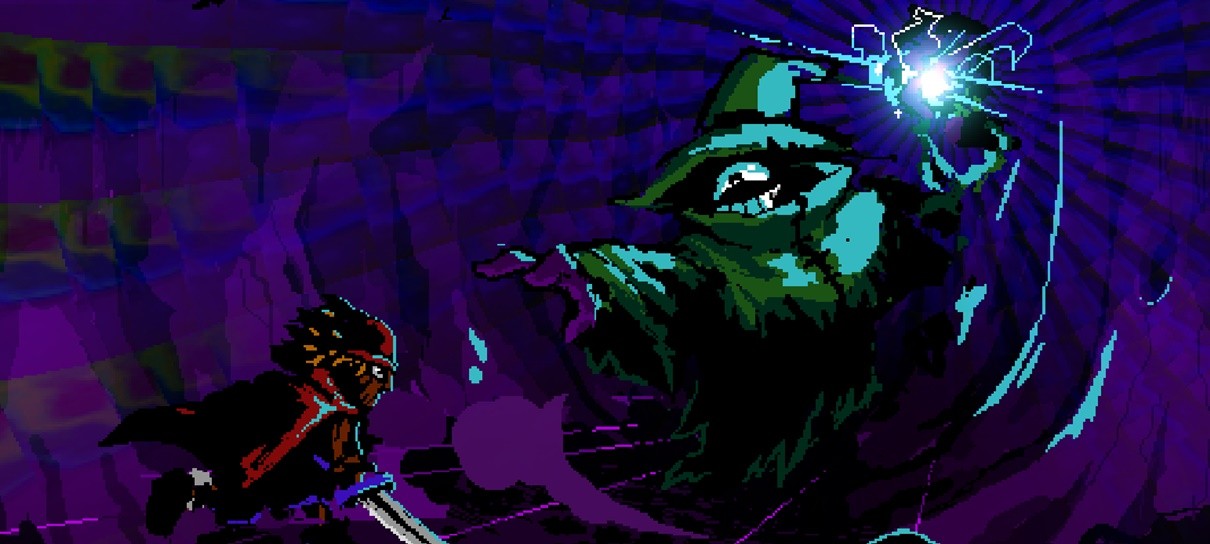
!!! WARNING. SPOILERS. !!!
Everhood for me. It's divisive, if you manage to connect with the game and don't bounce off it, I think it's one of the most emotionally powerful experiences I've gone through at least. The themes just happen to be intensely involved with most of my longest standing philosophical and existential struggles and the game was cathartic in dealing with them. Plus it's psychedelic, eastern/buddhist inspired, and is fully capable of rendering you emotionally raw.
That the asynchronous musical real time combat works so well for me just sends it even harder. The OST is nearly 3 hours long and nearly every song is a banger. Quite intimate at times, as the game I think deliberately ties the song to the character's very "soul" as you're struggling to kill them.
The basic premise is this: You may know, if you're in the right type of debate or philosophy communities, how often the topic of dealing with death comes up. Atheists I often find saying living forever would be absurd mental torture and maddening. Even though I agree I'd still choose to be ageless all the same as I'd rather that than not existing. Unpopular opinion. I don't expect anyone to agree with me and that's fine, I'm weird. Well, this game explores that scenario and certainly doesn't agree with me either.
You're orbiting the very last star in the entire universe, experiencing a later stage of Universal Heat Death before the last thing happening is evaporating black holes exploding in gamma ray bursts. With people who countless eons ago figured out how to become ageless. They've lived for so long they're physically twisted, messing with their forms out of sheer boredom and they're various flavours of insane.
Your character is pressured into finally ending the lives of the remaining survivors and then destroying the last star and reality itself. Truly ending it all. It's muddy and the game isn't going to let you go about that without feeling conflicted. The main character has tried before, failed, and lost their memory out of grief, laying dormant in the forest for who knows how long before this amnesiac second attempt begins with the encouragement of a frog man who very much wants to end reality itself. You can refuse btw, and get an extremely difficult fight out of it.
This is all played out with Undertale styled humor and characters. It's certainly under the Earthbound branch alongside LISA but much less crass.
At the end, I walked away being far less afraid of death and that's a big deal for me as an atheist who before this found zero comfort in the responses people gave online when it came to dealing wirh death when you're unwilling to believe in comforting lies like religion. I'd still choose to be ageless if I could :p but at least I'm at peace with reality for now.
If I caught anyone's interest I think it's best played on Expert so the fights really feel like the narrative wants them to feel: tooth and nail struggles. If you end up enjoying it, the sequel is an utter travesty and the biggest disappointment in a form of media I've ever experienced.
Probably a bit stereotypical, but in my teens I read Brave new World (Aldous Huxley), followed shortly by Brave new World Revisited. Really showed that even back when it was written, society is slowly getting worse. Sort of made it very easy to see how it continued (and still is) to the present day.
Idiocracy shattered my delusional optimism for the future.
Redwall - I didn't realize when I was reading the series but looking back now they absolutely instilled in me the knowledge that I could stand up to those in power despite being weaker or smaller. Those books lead to me rebelling against my abusive parents and striking out on my own. I shed their conservative views and hatred. All because a mouse and his friends stood up to a rat.
I've got more but this one probably had the largest impact on how I think overall in the long term.
view more: next ›