this post was submitted on 25 Feb 2026
735 points (97.5% liked)

Technology

82414 readers
4464 users here now

This is a most excellent place for technology news and articles.


Our Rules


  1. Follow the lemmy.world rules.
  2. Only tech related news or articles.
  3. Be excellent to each other!
  4. Mod approved content bots can post up to 10 articles per day.
  5. Threads asking for personal tech support may be deleted.
  6. Politics threads may be removed.
  7. No memes allowed as posts, OK to post as comments.
  8. Only approved bots from the list below, this includes using AI responses and summaries. To ask if your bot can be added please contact a mod.
  9. Check for duplicates before posting, duplicates may be removed
  10. Accounts 7 days and younger will have their posts automatically removed.

Approved Bots


founded 2 years ago
MODERATORS
top 50 comments
sorted by: hot top controversial new old
[–] thericofactor@sh.itjust.works 138 points 1 week ago (10 children)

Sodium ion batteries have less energy density as opposed to Lithium ion (100-150 WH per Kg instead of 150-250). I'm curious how much these "wet" batteries improve that. The article doesn't say.

Nonetheless, even if it's not the new battery for your car, it could be useful as energy storage for the grid, storing green (solar) energy for the night, and desalinating seawater at the same time.

[–] chocrates@piefed.world 54 points 1 week ago (10 children)

We hear about a new battery chemistry like every week. Do most never get to commercialization?

[–] apftwb@lemmy.world 62 points 1 week ago (1 children)

They mostly these articles are showing new avenues for research. Most are deadends usually due to issues with production/scalability.

Sodium Ions batteries are coming to market, however the issue is that Lithium Ion are just improving faster and making it harder for Sodium Ion batteries to compete.

[–] Jesus_666@lemmy.world 30 points 1 week ago (3 children)

Unless other situations where the established technology wins due to inertia, sodium ion batteries have two benefits that make them interesting regardless:

Firstly, they are safer. A punctured sodium ion battery doesn't catch fire, which massively simplifies safety design. That makes them very attractive for certain scenarios, especially ones where density is a secondary concern. That in turn means they get further development money instead of withering on the vine.

Secondly, they require fewer hard-to-obtain materials, which makes them attractive from a strategic perspective. This one should be less important than the safety factor but it's also relevant.

I'm pretty sure we'll actually see wet sodium cells in the wild if they are actually practical. Sodium ion tech is already being commercialized and if this brings it within the same ballpark as lithium ion then it becomes a very interesting choice for vehicles due to instant crash safety gains.

[–] 0tan0d@lemmy.world 13 points 1 week ago

They also perform better in the cold making them a better choice for EVs in cold regions. This is why I think CATL saw the videos of cars getting killed by cold and pulled the trigger on retooling even with the lithium price crash.

[–] wonderingwanderer@sopuli.xyz 9 points 1 week ago (2 children)

Not to mention from a human rights perspective, it's not just easier to obtain sodium than lithium but also more humane.

There is an industry for ethically-sourced materials, and even if this doesn't completely replace lithium it can still significantly reduce the amount needed to meet demand, which can also encourage more ethical practices in that supply chain too, such as sourcing it from areas with stronger labor laws.

load more comments (2 replies)
load more comments (1 replies)
[–] meco03211@lemmy.world 14 points 1 week ago (1 children)

R&d on these I'm guessing takes a little while. And it greatly depends on what niche they fill. Like the poster above said these might have lower density. For applications that move, that's not usually good. How sensitive are they to hot and cold? That could necessitate thermal management.

load more comments (1 replies)
[–] WanderingThoughts@europe.pub 11 points 1 week ago

One in ten of chemistries in the lab work in real world conductions. One in ten of those are cheap enough to consider production. One in ten of those can scale up to mass manufacturing. Most research works like that. You have to keep going until you hit jackpot.

load more comments (7 replies)
[–] apftwb@lemmy.world 19 points 1 week ago* (last edited 1 week ago) (5 children)

the strategy of retaining crystal interlayer water yielded a specific capacity of 280 mA h g−1 at 10 mA g−1, one of the highest capacities reported for SIB cathodes in literature.

All I could find. This isn't a statement about capacity(?) Units are wrong(?)

Its worth noting how preliminary this research is. Currently these "batteries" are just jars with chemicals.

https://pubs.rsc.org/en/Content/ArticleLanding/2025/TA/D5TA05128B

https://www.rsc.org/suppdata/d5/ta/d5ta05128b/d5ta05128b2.mp4

[–] UniversalBasicJustice@quokk.au 11 points 1 week ago

Fairly sure those units are milliamp•hour per gram which makes sense for energy density.

load more comments (4 replies)
[–] fartographer@lemmy.world 9 points 1 week ago (5 children)

And instead of charging them, you can drink them! Unlike Lithium Ion batteries, which you have to chew.

load more comments (5 replies)
load more comments (7 replies)
[–] iopq@lemmy.world 97 points 1 week ago (14 children)

Desalinating water might be the best part. Usually, solar power has the downside of needing storage and desalination has the downside of big energy requirements. If you can do both at the same time, it's a big win for dry climates with lots of sun

[–] FlyForABeeGuy@lemmy.dbzer0.com 24 points 1 week ago (5 children)

There is also the issue with the salt by itself in desalinisation. If it's removed with water, you have to deal with that stuff. Table salt is really cheap and there is plenty of offer,, so you can't really economically clean it enough and package it for human consumption or industrial use. So what usually happens is that they dump it back at one moment or another. And that is a hard pollution, and can lead to dead zones around the desalinisation plants if not managed well enough. Being able to add it in a high demand product such as batteries takes all those hurdles away

load more comments (5 replies)
load more comments (13 replies)
[–] defaultusername@lemmy.dbzer0.com 72 points 1 week ago (2 children)

I can only hope these can actually hit commercialization, unlike most new battery technologies that never leave the lab.

[–] ExLisper@lemmy.curiana.net 101 points 1 week ago (8 children)

Yes, because battery technology stagnated years ago...

Oh wait

[–] Frozentea725@feddit.uk 52 points 1 week ago (2 children)

Great response, people just love to parrot easy dismissals without looking and the sheer magnitude on innovation and commercialisation going on in this sector

[–] tb_@lemmy.world 17 points 1 week ago (1 children)

It doesn't really dispute it, though. Lithium-ion has seen a lot of improvement, yes, because it's already a giant industry; other battery chemistries have a hard time breaking through because they require entirely different processes to manufacture.
I'm still rooting for it, but it's not really the same thing.

[–] Buffalox@lemmy.world 8 points 1 week ago (7 children)

This too is false, great progress has been made on for instance solid state batteries.

load more comments (7 replies)
[–] echodot@feddit.uk 8 points 1 week ago* (last edited 1 week ago) (10 children)

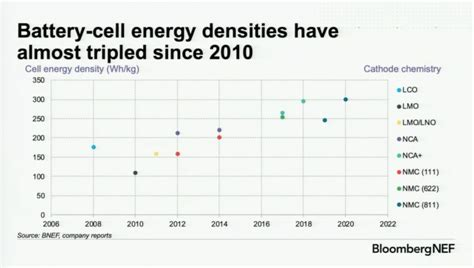
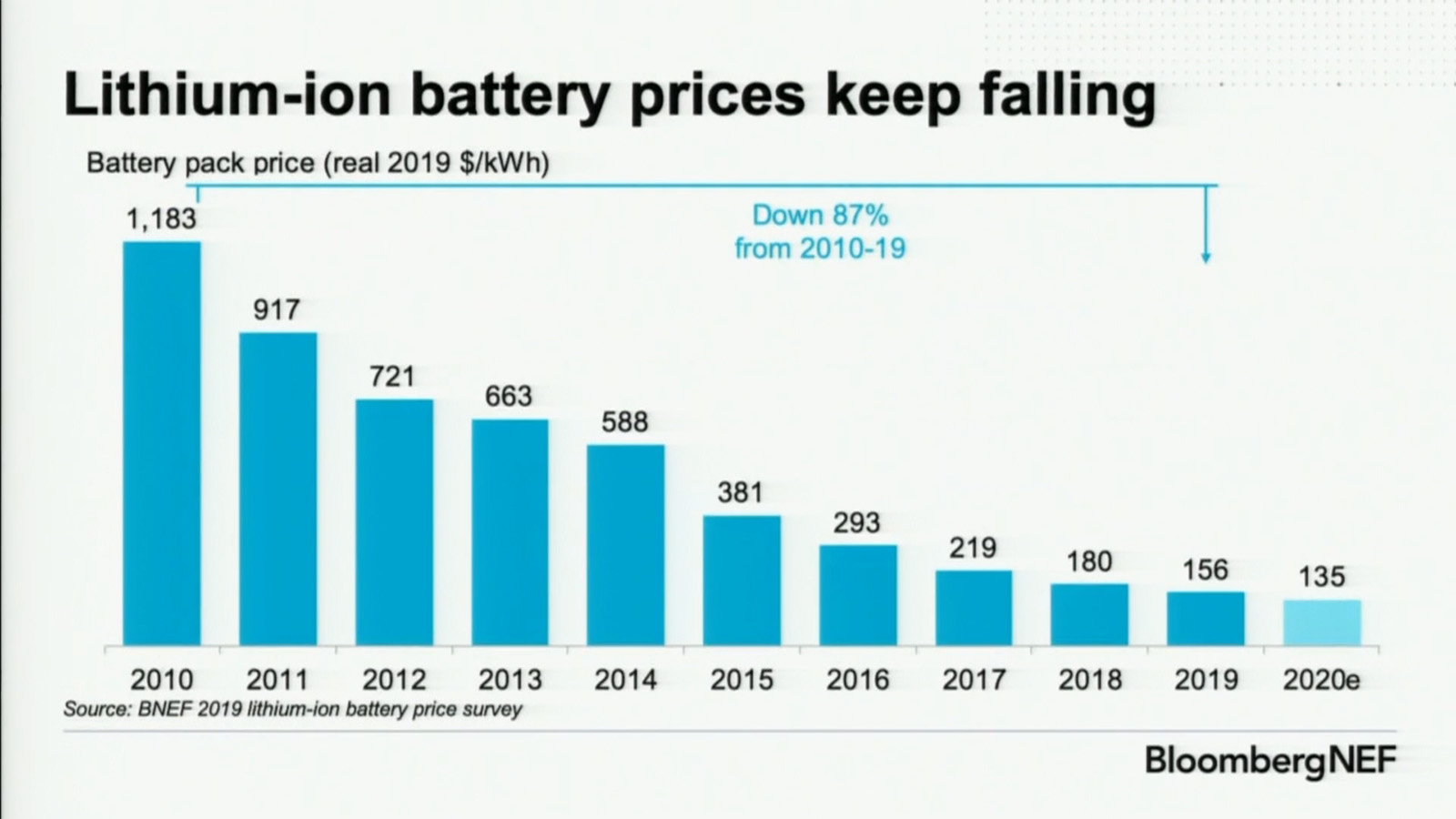
Well all those graphs show is that the cost of batteries has gone down and that as a result electric cars contain more batteries and therefore more range. It doesn't actually show that the individual battery capacity has increased.

The third graph that indicates battery performance vs battery chemistry doesn't really show incremental improvement it just shows general improvement but there's plenty of battery chemistries that are worse than pre-existing ones.

load more comments (10 replies)
[–] henfredemars@infosec.pub 18 points 1 week ago

Wow! Thanks for sharing that data. I had no idea.

[–] Diplomjodler3@lemmy.world 9 points 1 week ago* (last edited 1 week ago) (7 children)

TBF, there are a lot of "battery breakthroughs" that turn out to just be hot air. Battery technology has made tremendous progress though and there is still a lot of room for improvement.

load more comments (7 replies)
[–] CaptPretentious@lemmy.world 7 points 1 week ago (3 children)

Weird, I didn't know Lithium-Ion batteries were still in the lab. I thought for sure we were using those already. I thought the batteries in the labs were various solid-state batteries like graphene or like this sodium-ion battery, where there's been a rise in patents around it but not a lot delivered

load more comments (3 replies)
load more comments (4 replies)
[–] Damage@feddit.it 18 points 1 week ago

I can only hope one day people will stop repeating reddit clichés

[–] Reygle@lemmy.world 58 points 1 week ago (6 children)

Every week with the "miracle battery!" headlines. This has been going on for ages and I'm sick of it.

[–] RaoulDook@lemmy.world 30 points 1 week ago (7 children)

Sodium-ion batteries are not hype though, they are in production use in multiple industries already. They are generally superior to Lithium based batteries in all regards, with the exception of having a bit lower energy density. An equivalent LiFePO4 battery might be 70-80% of the size for the same storage. It's not a big deal for large applications like cars and solar storage.

load more comments (7 replies)
[–] SocialMediaRefugee@lemmy.world 12 points 1 week ago (2 children)

Right up there with "cause/cure for dementia found"

[–] Reygle@lemmy.world 18 points 1 week ago (2 children)

"Dyslexia for cure found!"

[–] SocialMediaRefugee@lemmy.world 7 points 1 week ago (2 children)

We found the cure for Alzheimer's but can't remember what it was. I think it began with a "c". Who are you?

load more comments (2 replies)
load more comments (1 replies)
load more comments (4 replies)
[–] froh42@lemmy.world 44 points 1 week ago (2 children)

TWICE AS MUCH COMPARED TO WHAT????

My left ball?

[–] rob_t_firefly@lemmy.world 32 points 1 week ago (6 children)

To answer your question we'll need to conduct a series of electrical tests on your left ball. Please report to the lab as soon as possible, and wear loose pants.

[–] froh42@lemmy.world 7 points 1 week ago

Oooh, kinky.

load more comments (5 replies)
[–] freepizza4life@lemmy.world 15 points 1 week ago (2 children)

Compared to a non-hydrous sodium vanadium oxide system.

[–] froh42@lemmy.world 10 points 1 week ago (3 children)

Yep, I'm just annoyed by lazy headlines.

load more comments (3 replies)
load more comments (1 replies)
[–] nek0d3r@lemmy.dbzer0.com 32 points 1 week ago (3 children)
[–] SaveTheTuaHawk@lemmy.ca 24 points 1 week ago* (last edited 1 week ago) (2 children)

We are close to finding out why some liquids are blue.

load more comments (2 replies)
[–] vaultdweller013@sh.itjust.works 8 points 1 week ago (1 children)

You can throw any battery in the ocean. The better question is should you?

load more comments (1 replies)
[–] SirMaple__@lemmy.ca 27 points 1 week ago
[–] Zwuzelmaus@feddit.org 22 points 1 week ago (2 children)

Finally a new one!

It was too quiet during the whole last year. But before, we had about 2 revolutionary new battery technologies every week.

[–] dukemirage@lemmy.world 9 points 1 week ago (7 children)

Would you prefer researchers to not publish results?

load more comments (7 replies)
load more comments (1 replies)
[–] SpaceCowboy@lemmy.ca 21 points 1 week ago (1 children)

Sodium Ion is a real game changer. But I doubt it will compete with Lithium Ion on energy density anytime soon.

But that's not necessary to make major changes in the power grid. Solar and wind is already cheapest form of energy generation even considering the expense of Lithium to store the energy when renewables aren't generating. If you're just installing stationary battery banks, you don't care that much about the energy density as you would for a battery in a car or phone. Set up banks of cheap sodium ion batteries strategically and not only do you have plenty of power stored for when it's not sunny or windy, you may avoid widespread power outages when power lines are downed.

load more comments (1 replies)
[–] humanspiral@lemmy.ca 20 points 1 week ago (1 children)

Sodium Ion already does 5000+ cycles. Adding Vanadium is not a scalable material. It is very expensive. 400 cycles steady is not useful information because it needs to do much more. They didn't state a wh/kg density. This is probably not a viable research vector, but "big Vanadium" has proposed a rental model to make Vanadium more scarce for other applications. Flow batteries (a fuel cell with tanks of electrolytes) provides an ultra easy way of recycling/selling the vanadium for traditional uses. Battery rental that forces returning it could be viable.

Right up there with the batteries that would contain about 1 kg of silver in them. Even if they didn't become insanely expensive you'd have tweakers foaming at the mouth to steal your batteries.

[–] captain_aggravated@sh.itjust.works 14 points 1 week ago (1 children)

New tit ion battery generates fifteen times the power and shits butter pecan ice cream. And, like every other battery chemistry there's ever been a news article for, isn't real and will never enter production.

load more comments (1 replies)
[–] turdburglar@piefed.social 8 points 1 week ago

i’ll take 10 please.

load more comments
view more: next ›