Theoretically, this process can go on indefinitely, effectively rendering the jellyfish biologically immortal,[3][6] although in practice individuals can still die. In nature, most Turritopsis dohrnii are likely to succumb to predation or disease in the medusa stage without reverting to the polyp form.[7] --WP
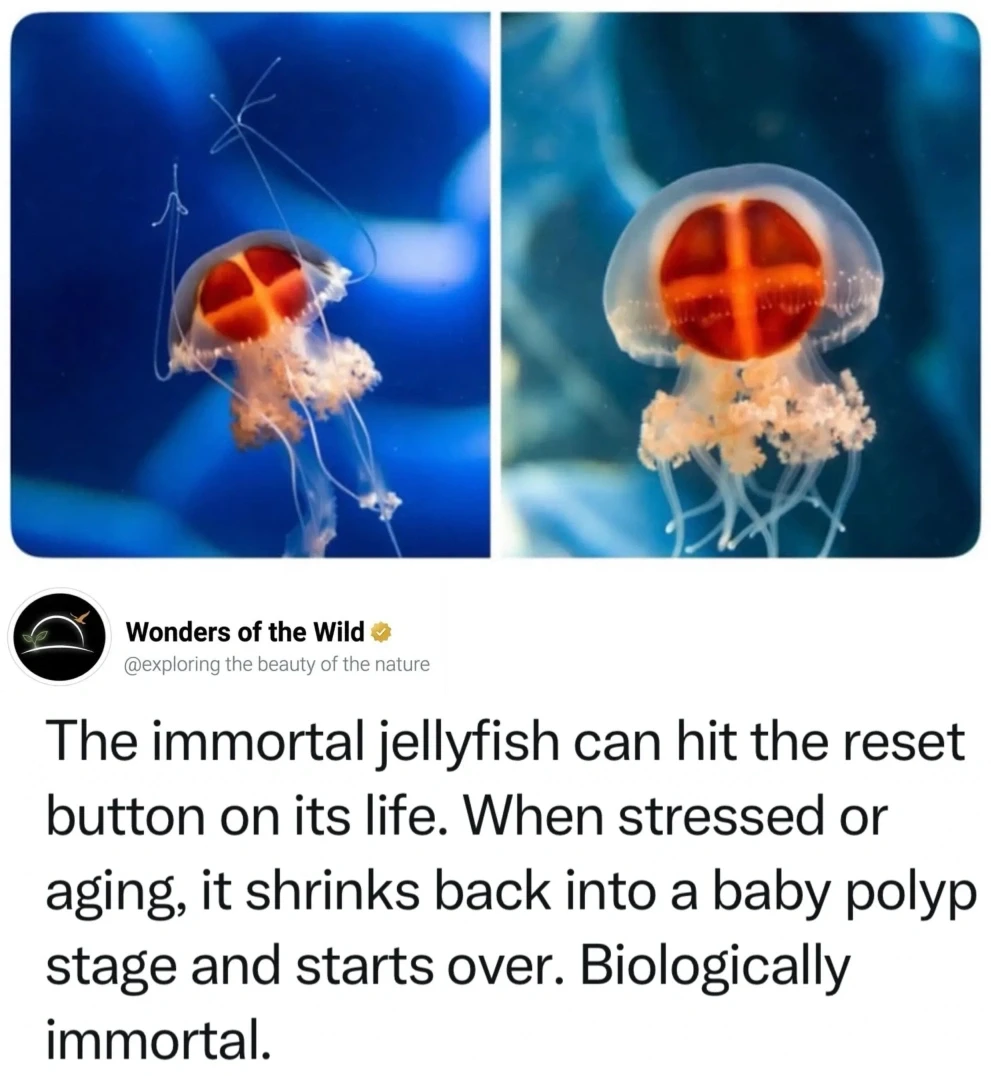
Wouldn’t this be bad for the species in many ways?, can’t understand the evolutionary pressure to allow this
Yeah, the whole point of classic sex is that it allows for a LOAD more exchange of genetic material than you have with the usual creeping, genetic mutations, compared to lifeforms that self-reproduce.
So there's not an 'evolutionary pressure' here as I understand it, but more like a niche being exploited. We must remember that ~99% of lifeforms on Earth are extinct, and that there are no guarantees of any kind upon sustainable survivability.
For example, with ocean acidification growing pH changes, a range of species (like this one) might suddenly quickly vamoose as a species, with no chance to adapt. That's the 'choice' they made... to live inside a certain niche of sustainability.
Until the lights go out for them... which countless species have experienced before.
Well, not exactly a choice.
Just trying to illustrate the difference between the two scenarios.
I'm guessing they have better adaptability when young.