Ask Science

17195 readers
42 users here now

Ask a science question, get a science answer.


Community Rules


Rule 1: Be respectful and inclusive.Treat others with respect, and maintain a positive atmosphere.


Rule 2: No harassment, hate speech, bigotry, or trolling.Avoid any form of harassment, hate speech, bigotry, or offensive behavior.


Rule 3: Engage in constructive discussions.Contribute to meaningful and constructive discussions that enhance scientific understanding.


Rule 4: No AI-generated answers.Strictly prohibit the use of AI-generated answers. Providing answers generated by AI systems is not allowed and may result in a ban.


Rule 5: Follow guidelines and moderators' instructions.Adhere to community guidelines and comply with instructions given by moderators.


Rule 6: Use appropriate language and tone.Communicate using suitable language and maintain a professional and respectful tone.


Rule 7: Report violations.Report any violations of the community rules to the moderators for appropriate action.


Rule 8: Foster a continuous learning environment.Encourage a continuous learning environment where members can share knowledge and engage in scientific discussions.


Rule 9: Source required for answers.Provide credible sources for answers. Failure to include a source may result in the removal of the answer to ensure information reliability.


By adhering to these rules, we create a welcoming and informative environment where science-related questions receive accurate and credible answers. Thank you for your cooperation in making the Ask Science community a valuable resource for scientific knowledge.

We retain the discretion to modify the rules as we deem necessary.

For answers to historical questions, please check out our sister community: !askhistorians@lemmy.world


founded 3 years ago
MODERATORS
1


Greetings, everyone!

Looking to make a difference in our community? We need your help! We're seeking active members like you to join our moderator team.

As a moderator, you'll play a vital role in maintaining a positive environment, addressing reported issues, and fostering community growth. We're particularly interested in individuals who actively contribute to our community by regularly reviewing posts and comments for adherence to our rules. While we understand that reading every comment in detail may not be possible, we expect a few minutes of your time, checking the site 2 - 3 times a day, at minimum.

If you're passionate about our community and eager to contribute, please leave a comment below expressing your interest in becoming a moderator. Share a brief explanation of why you believe you'd be an excellent fit for the role.

Please note that active participation as a moderator is crucial. If selected, it's important to fulfill your mod responsibilities consistently. Failure to do so may result in the removal of your moderator position.

PS: Effective communication is key to our moderation team's success. If selected, we'll require you to be available on Discord for coordination with other moderators and community-related discussions.

Thank you for your consideration!

2
3
4


Disclaimer: I know enough about astronomy to know that I know pretty much nothing.

As dark energy was explained to me, it is a placeholder in the equation(s) for measuring the expansion of the universe. Rephrasing, we know the universe is expanding but we can't account for some amount of the force involved.

I hope I am making sense and I am not too far out in the weeds.

To my question: all of the stars are blasting out not just photons but also substantial amounts of physical matter in various states (gas, plasma, solid) that also includes material from the various objects in the solar system (eg atoms of water from mars). Wouldn't that mixture of massless photons and physical material have some significant influence on everything else?

5


I have heard that a very hardened alcoholic can get alzheimers and never know they were a drunk and don't feel withdrawals from it. Is this true? If it is then that would mean a certain portion of our brain or body can ignore the withdrawal symptoms. What part of the brain is it, and how come they don't feel the serotonin release anymore like when they were drinking. Or is it a lot or small amount of serotonin or dopamine? With that said then is the complete opposite true? Can a person trick his or her brain into getting drunk without ever touching a drop of it? Do the same parts of the brain then function like it would a person who get;s "high". Can try to explain further if any questions.

6
7


Considering that cats are descended from big cats like lions

8
9


Title worded awkwardly, but I was thinking about the chemical makeup of our planet, and the other bodies in our solar system. Is the chemical makeup of our star system similar to every other star system? And if not, are we more similar to stars nearest to ours? Is it totally random? Like does every star system have roughly the same amount of iron, hydrogen, oxygen, etc. When averaged out? Has this even been studied?

10
11
12


I was intentionally against science because I kept hearing how they used back then was alot like 15 million to measure the milk enzymes in a cows hair and other stupid stuff. But I have changed.

13
14
15
16
17
18
19
20


For how long must light be emitted for a human eye to perceive it?

  • Would a person notice a flash of light that lasted 10 ms?
  • Does the intensity of the light matter?
  • How much light is a photon, anyway? Does is take thousands or trillions of photons interacting with the eye to register as light?

1am where I live and I'm wondering

21


I think Category Theory is really interesting in the way it frames the human endeavor of trying to understand and map phenomena out and then reason about it, but it is a super abstract thing by design... but the thought came to me that the deluge of modern board game designs with many that are carefully designed to have complex interactions and mechanics might be a place that the utility of Category Theory could be explained in an approachable way (at least to board game nerds...) that also demonstrated the basic utility of it as a way to examine different complex systems and compare them in some logically precise way.

https://en.wikipedia.org/wiki/Category_theory

To put it succinctly, could we look at Dominion and examine whether other Deckbuilding games are Isomorphic or are in some sense fundamentally similar or dissimilar in some way that isn't just qualitative? Certainly we can say that a "Bag builder" like Orléans or Quacks Of Quedlinburg can be equivalent mechanically to a Deckbuilder but what about more nuanced less obvious questions of similarity?

https://boardgamegeek.com/boardgame/36218/dominion

https://boardgamegeek.com/boardgamemechanic/2664/deck-bag-and-pool-building

It seems to me it would give a language to talking analytically about game design, it could express things like whether you could tweak a Dominion game with certain market cards to approximate the same mechanics as another Deckbuilding game or whether there are fundamental differences between Dominion and the other Deckbuilder that preclude that and if so how precisely so does that manifest?

I realize Category Theory isn't quite Science... but it certainly represents a scientific approach to representing how we categorize and analyze the universe so in that sense... I don't know it felt right to ask it here... but I can re-post on a math community if it doesn't fit here if wanted?

https://www.math3ma.com/blog/what-is-category-theory-anyway

22


Don't know if this is the correct community to ask this question but here goes.

I am a physics/math major and I am fascinated by computers. I want to work on a field that deals with cutting edge computer hardware (sort of like how ssd was in the age of hdd). But most of the research seems to be on stuff that will be used by corporations (not affordable for common people).

Does anyone have any idea what field is closest to what I'm looking for?

23


I would also like us !askhistorians@lemmy.world to be a partner community with you guys and gals. I was told to message Sabbah but no answer so would put it to the community

24


I was looking at the reply to this survey map:
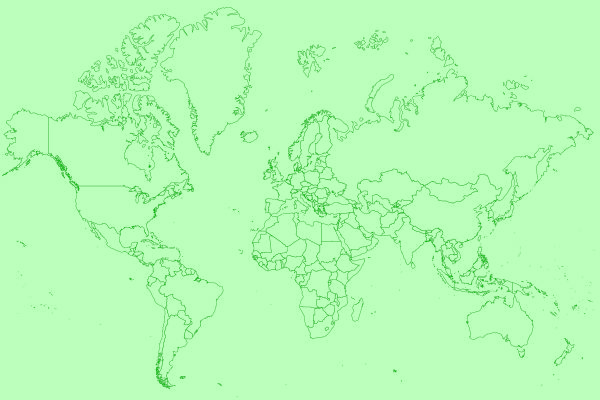
complainig humans don't live in the ocean. Which lead me to the question of how large of a radius around every person you would have to color, tracing all their movements for their entire life, to color in the entire earth.

Naturally, this radius would have to be set such that the most remote point across time is just barely covered. So what would that point be, and how far away has every human been from it for all of time?


I assume this would be somewhere in antarctica, or maybe in the pacific? With a radius of surely not more than a few tens of kilometers, right? Maybe even less?

I would say let's, since we obviously wanna count ships, also count planes and subs. But let's not count astronauts.


Some clarifications:

  • This is all on a map, height does not matter. Walking somewhere or flying over it is the same.
  • We are talking absolutely noone has been closer than an absolute distance. If a single person has travelled there, the location is out.
25
view more: next ›