juergen_hubert

joined 1 year ago
MODERATOR OF
 

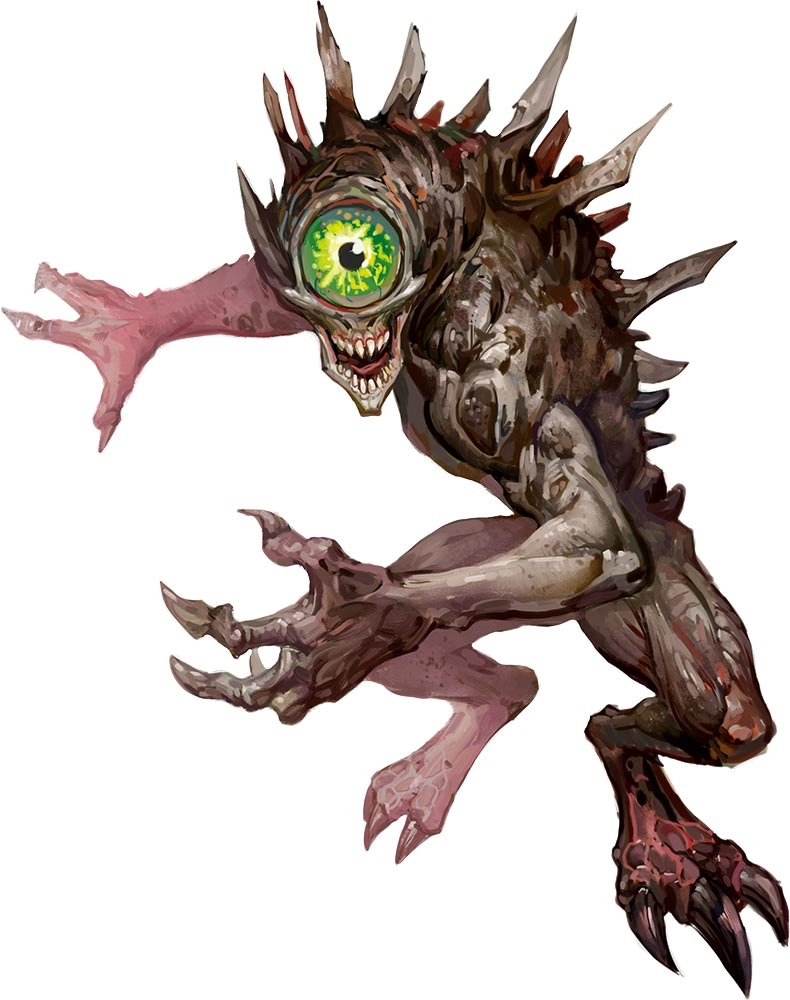
In the next session, the player characters will enter the lair of a group of Nothics who have holed up in the old temple of a God of Magic.

And I need some ideas for absolutely unhinged magical items that should give even player characters second thoughts about using them. Any ideas?


I am running a fantasy campaign (using the Ptolus setting), and the PC just looted a "conspiracy board" from the hideout of a rather unhinged creature.

I've added a bunch of elements that might or might not be relevant for the campaign. And the element with the most strings to other elements was "beer price increases".

And I'd like to mess with the minds of the players some more. Thus, I could use some ideas for sinister reasons why the beer prices in a city might have increased.

Any suggestions?


I am running a fantasy campaign (using the Ptolus setting), and the PC just looted a "conspiracy board" from the hideout of a rather unhinged creature.

I've added a bunch of elements that might or might not be relevant for the campaign. And the element with the most strings to other elements was "beer price increases".

And I'd like to mess with the minds of the players some more. Thus, I could use some ideas for sinister reasons why the beer prices in a city might have increased.

Any suggestions?

I've covered a few tales of the Holle/Hulda/Perchta myth-complex in my translations.

(I see these three as fundamentally the same entity, even if there are major regional variations.)

I've covered a few of these tales in my translations.

I suspect that there is quite a lot of overlap with kobolds and household spirits in German folklore.

I suspect that there are quite a few of these in German folklore. I have collected more than a hundred German folk tales of saints and holy people over the last few years, but I haven't cross-referenced these with the list of canonical saints yet.

[–] juergen_hubert@ttrpg.network 3 points 1 week ago (1 children)

I do hope they use the ORC license for this, like they do for their other games.

[–] juergen_hubert@ttrpg.network 2 points 2 weeks ago (1 children)

I hope "Iron Gods" gets updated for 2E at some point, now that Starfinder 2E has been released and is cross-compatible.

[–] juergen_hubert@ttrpg.network 2 points 2 weeks ago

Thanks, these are excellent and very helpful!

[–] juergen_hubert@ttrpg.network 1 points 2 weeks ago

A good fit, thanks!


My players characters are currently exploring some truly ancient underground ruins of a sunken city (the setting is Ptolus, if it matters), and the PCs are trying to find the sites of some temples of various gods to explore.

Next up on the list are temples of ancient gods of knowledge and magic, and when I searched for thematically appropriate monsters to populate them, I came across Nothics. They have a pretty good base concept, but I need some more ideas to make exploring a ruin filled with them interesting. Things I am looking for in particular include:

  • D&D lore about the Nothics (this doesn't have to be from 5E)
  • Ways of personalizing them and their environment, emphasizing how weird and creepy they are
  • Variant stat blocks that might make encounters with them more interesting
  • Creatures that might co-exist with them

But feel free to throw any ideas you have out here - I am still in an early brainstorming phase!

[–] juergen_hubert@ttrpg.network 2 points 3 weeks ago

I mean, I realize that the margins in the TTRPG industry are razor-thin.

Still, this doesn't sound like something that should require a lot of effort.


What are your top three Pathfinder Adventure Paths, from either edition - and why?

As a reminder, here is the full list:

Pathfinder 1E:

  • Rise of the Runelords
  • Curse of the Crimson Throne
  • Second Darkness
  • Legacy of Fire
  • Council of Thieves
  • Kingmaker
  • Serpent's Skull
  • Carrion Crown
  • Jade Regent
  • Skull & Shackles
  • Shattered Star
  • Reign of Winter
  • Wrath of the Righteous
  • Mummy's Mask
  • Iron Gods
  • Giantslayer
  • Hell's Rebels
  • Hell's Vengeance
  • Strange Aeons
  • Ironfang Invasion
  • Ruins of Azlant
  • War for the Crown
  • Return of the Runelords
  • Tyrant's Grasp

Pathfinder 2E:

  • Age of Ashes
  • Extinction Curse
  • Agents of Edgewatch
  • Abomination Vaults
  • Fists of the Ruby Phoenix
  • Strength of Thousands
  • Quest for the Frozen Flame
  • Outlaws of Alkenstar
  • Blood Lords
  • Gatewalkers
  • Stolen Fate
  • Sky King's Tomb
  • Season of Ghosts
  • Seven Dooms for Sandpoint
  • Wardens of Wildwood
  • Curtain Call
  • Triumph of the Tusk
  • Spore War
  • Shades of Blood
  • Myth-Speaker
  • Revenge of the Runelords
  • Hellbreakers-
[–] juergen_hubert@ttrpg.network 5 points 3 weeks ago (3 children)

Yeah, but why should I be the one to do it, and not the company?


I buy a lot of digital RPG books - the shelf space in my apartment is ultimately limited, while the space on my hard drive is far less constrained (despite current storage prices). Furthermore, while the reading experience is still slightly better for physical books, I have a color e-ink reader which comes close enough for my purposes.

However, I do have a pet peeve with some RPG publishers: They refuse to give the files proper file names. Paizo is the worst offender among them, though not the only one.

I mean, I don't mind if the file name includes the product code. It's fine if a "PZO13008E" somewhere in there.

But please, for all that is unholy, make the file name "PZO13008E Hellfire Dispatches" instead of just leaving it at that! When I am making large purchases of multiple books - which I do frequently - I have to go on a renaming orgy:

  1. Open the file
  2. Check what product this file represents
  3. Close the file
  4. Rename the file

If the file name included the actual product title, I could skip steps 1-3.

[–] juergen_hubert@ttrpg.network 1 points 3 weeks ago

Occasionally, the Devil does show up as a fly in German folk tales.

[–] juergen_hubert@ttrpg.network 2 points 3 weeks ago (1 children)

Thanks for this information!

The way I see it, folk tales are basically a bundle of narrative tropes that can be switched out depending on the needs of the storyteller. So when the Wild Hunt narrative spread across Europe, people always tried to make it relevant to their local region. And in regions where there were still fragments of belief in Odin, it is not surprising that he appeared in one form or another - while in others, the Wild Hunt takes on rather stranger forms.

Ultimately, their main commonality is the strange noises you can hear in the countryside at night.


I translate German folk tales, and here is one that definitely made me wonder about possible connections to the Cthulhu Mythos:

In the year 1454, a curious heresy spread in Thuringia, particularly in the Sangerhausen region as well as the domains of the Schwarzburger Unterherrschaft. According to legend, the men and women who adhered to this heresy secretly came together in cellars and dark chambers where they worshiped the Devil. The Devil appeared in the form of a bumblebee and flew in front of the mouth of each of them. Once the devotions were over, the lights were quenched, and everyone grabbed around them. And when they grabbed someone of the opposite sex, they sinned with them in a brazen manner, even if they were mother, sister, or daughter.(*) A smith revealed this to the lord of the realm, and led him to such a congregation in disguise so that he could witness this outrage for himself. After this, most of these sectarians were apprehended and burned, but many of them went joyfully to their deaths.


While fantasy is a many-varied genre, religion in fantasy RPGs is often some mix-up of polytheism with Christian notions - including of the afterlife. The common assumption seems to be that while there are a multitude of gods, if you dedicate your life and belief in that god in particular you will end up in the specific afterlife of that god.

In Christianity, the situation is of course a bit more complex than that. One major precondition for entering the "good afterlife" (i.e. Heaven) is that you need to get baptized. For a long time, this left a rather awkward question mark for what happens to the souls of infants who died during or soon after birth - before they could receive a baptism. Folklore sometimes comes up with its own answers for that, but this was certainly a thing that people worried about.

RPG fantasy religions tend to deemphasize baptism since it's such an iconic Christian rite - but this only further emphasizes the question of what happens to the souls of children who died before they could actually express faith in a particular deity. Does any particular deity claim these children then? Perhaps a deity worshiped by a parent - and if so, of which parent (are there "afterlife child custody" court cases)?

Of course, a fantasy setting does not need to have an afterlife people believe in. But if there are multiple afterlives maintained by different deities (or at least, if people believe that such afterlives exist), then people will worry about that.


In letzter Zeit gibt es ja diesen Drang von Politikern, Altersbeschränkungen für "Social Media" einzuführen, was dann bedeuten würde, daß man für Social Media-Plattformen seine Identität nachweisen müsste - eine hervorragende Gelegenheit für diese Plattformen, noch mehr Benutzerdaten zu sammeln.

Das Fediverse ist glücklicherweise nicht darauf ausgerichtet, solche Altersnachweise einzuziehen. Aber dennoch macht das die Situation für die Betreiber von Instanzen schwierig, da sie sich dann potentiell strafbar machen.

Jetzt würde mich interessieren: Gibt es in den deutschsprachigen Ländern irgendwelche juristisch klaren Definitionen von "Social Media", mit denen man klar identifizieren könnte, ob eine Fediverse-Anwendung als solche zählt oder nicht?

Z. B. betreibe ich einen WordPress-Blog mit dem ActivityPub-Plugin. Zählt das schon als "Social Media"?

Wer hier kennt sich mit dieser Thematik aus?


So far, my ire at the Merz cabinet has primarily been focused on Katherina Reiche. But then I discovered that Wolfram Weimer is truly horrible, too.


The practice of using fantasy counterpart cultures - cultures and societies that are very similar to real world cultures of specific times and places - has a long history in fantasy in general, and fantasy RPGs in particular.

And, in truth, there are good reasons for that. Fantasy worldbuilding is a major task, and fantasy worldbuilding for RPGs in particular requires that not only the GM understands any given culture, but the players as well - but understanding a culture requires a lot of effort, and there is only so much time everyone at the table has available for that.

Thus, using familiar elements is a great time saver. The main reason we see the same Tolkien ancestries over and over again (elves, dwarves, halflings, orcs...) is that most players of fantasy RPGs are already familiar with their basic concepts, and thus only have to learn what is different from the norm. But you create fantasy ancestries from scratch, you need to convey all that information to the players.

The same applies to fantasy counterpart cultures - if you have a vague familiarity with the real world culture, then familiarizing yourself with a fantasy culture will be a lot easier.

However, there's also a lot that can go wrong with using fantasy counterpart cultures. Misrepresentation is always a danger, especially with marginalized groups and if the developers did not consult with members of that culture. Likewise, if you are building a fantasy counterpart culture of a nation that has some ugly history, then you risk whitewashing that history.

So what are your thoughts? Do you like to have fantasy counterpart cultures in your settings, or do you prefer to avoid them? And what are some good examples of fantasy counterpart cultures done right?

8
submitted 1 month ago* (last edited 1 month ago) by juergen_hubert@ttrpg.network to c/pathfinder@ttrpg.network
 

Any long-running published setting is going to have a couple of warts - ones where parts of the audience are going to say: "What the hell were they thinking?"

The same is true for Golarion. For the most part, I love the setting, but there are a number of setting elements I find problematic. One of these is Andoran. The best way I can describe it is as:

"A fantasy counterpart culture of the post-Revolutionary War United States of America - as retconned through American propaganda."

So while the real world American Revolutionary War was allegedly about "Freedom", but at the same time reinforced the system of slavery and exploitation of the First Nations - something commonly glossed over in American history - Andoran simply leaves out these ugly aspects and says that Andoran's revolution was really about fighting for Freedom and Democracy - which they now seek to export to the rest of the world.

I mean, I am not opposed to democracies in fantasy settings, or groups of people fighting slavery. But it's the mixture of these elements with tropes of the nascent USA that really bothers me.

What are your thoughts on this?

view more: next ›