juergen_hubert

joined 1 year ago
MODERATOR OF
 

Fantasy RPG settings have almost always drawn inspirations from real world cultures, including real world folklore and mythology. This also includes fantastic creatures, which are a staple of monster manualy since the earliest days of D&D.

And in recent years, there have been more and more efforts to draw TTRPG inspiration from non-European sources - a trend I approve of, since we can always use more diverse sources of inspiration.

However, I am curious how you all use creatures from different cultures in your fantasy campaigns and worldbuilding. I could see a few different approaches:

Do you assume "counterpart fantasy cultures" for your world? I.e. is there a Not!Europe, Not!Asia, Not!Africa, Not!Mesoamerica etc., each of which has "culturally appropriate" supernatural creatures? In such a situation, supernatural creatures would largely stick to their "home region", and occasional "guest stars" in other regions would be noteworthy. This works well, but it does mean you are usually limiting yourself to a "culturally appropriate" subset of the creatures in the books.

Alternately, you could try to integrate these creatures into whatever cultural region your campaign focuses on. In my view, this would require some rewriting in how these creatures are portrayed and/or named - if your region has a culturally English or Germanic slant, then having creatures that are called "Sramana", "Betobeto-san", or "Tzitzimitl" (to pick three examples from the recent Monster Core 2 for Pathfinder) will seem strange.

I feel there is no "right" or "wrong" approach to this, but I am curious how you are tackling this issue.

Yeah, as a German the settlement patterns within most D&D settings looked deeply weird to me. But for all of its pseudo-European trappings, D&D owes at least as much to the tropes of the "Wild West" genre.

The problem is that cities are usually dependent on the resources of the surrounding countryside. You have to protect the fields and the mines as well, unless you can somehow produce all that stuff within the city walls.

Keith Baker always encouraged this kind of creative reskinning of classes.

And, of course, the privilege of superbeings has been explored in #ttrpg before, such as in the setting of Aberrant.


Another one of my pet peeves about fantasy world building is the concept of "large cities surrounded by miles and miles of howling wilderness" (looking at you, Forgotten Realms!) While such cities aren't completely unknown in real world history ("oasis towns" in particular, they are and were very rare. Most real world cities are surrounded by a network of smaller settlements, and while you can come up with reasons for why a fantasy city is truly isolated, a setting will be more plausible if that is a rare exception.

So, what is a good way of developing settlement patterns in fantasy worlds?

A concept I found useful for worldbuilding purposes is that of the "Central Place Theory", which describes the notion that settlements of different sizes support each other. (And I first came across it in the WFRP 1E rulebook, of all things!) While this theory is not free criticism, I feel that it yields results that are plausible enough. In order to adapt it for fantasy purposes, I propose the following categories:

  • Villages are mostly inhabited by farmers and other food producers, although there might be a few specialist trades such as millers and village blacksmith. They are self-sufficient when it comes to food production, but need to trade for more complex tools. Using Central Europe as an example, it rarely takes more than an hour or two to travel to the next village.
  • Towns have markets where the farmers can sell their produce, and thus are rarely more than a day's worth of travel away from any given village. They are administrative centers and can produce most of the tools that the rural population needs for daily survival. However, they are also part of a network of long-distance trade, selling surplus from their own region and buying items that are rare in the local area. Each town is supported by a small network of villages, without whom it would starve.
  • Finally, Cities are major trade hubs and centers of craftsmanship. They will support multiple specialized trades and might be famous throughout the country (or beyond) for things they produce. Just like each town is supported by a network of villages, each city is supported by a network of towns.

In other words, when you place a city on a map, think about the network of towns and villages that support it. Depending on the scale of the map, you might not bother to place them all - but you should remember that they are there, instead having the wilderness start close to the city walls.

Which brings me to another point - real world history didn't have much in the way of "monster-infested wildernesses", but these are a staple of fantasy world - and they are a further reason why such dense settlement patterns might develop. After all, a lonely settlement is easy pickings for monsters - but a network of settlements can defend each other. If a single village faces monsters that are too tough for the inhabitants, they can ask for help from the next town or even city, who likely have specialist tools (and people) for that kind of thing.

In worlds where dangerous monsters roam the wilds, you could even make the argument that human(oid) civilization is not viable of the network of settlements is too thin - thus, you have "clusters of civilization" huddling together, while the wilds are full of lost settlement that could not be defended any more...

So, what are your thoughts on this? Have you put any consideration into settlement patterns for your own fantasy settings?

[–] juergen_hubert@ttrpg.network 2 points 4 days ago (2 children)

Eberron is one of my favorite DnDoid settings, precisely because the designers put a lot of thoughts into this stuff.

[–] juergen_hubert@ttrpg.network 4 points 4 days ago (3 children)

Seoni, the "Iconic Sorcerer" from the Pathfinder RPG.

51
submitted 5 days ago* (last edited 5 days ago) by juergen_hubert@ttrpg.network to c/rpg@ttrpg.network
 

One of my pet peeves of modern fantasy media is the notion that some people are "special" - and thus implied to be "better" - than other people because of some inherent magical ability. One of the best-known modern examples of this is the Harry Potter franchise, where the protagonists are mostly mages, and even the characters who actually care about the welfare of the latter do so in an extremely patronizing way - i.e. by stopping the "bad mages" rather than working together.

In #dnd and similar #ttrpg, the concept is represent by the "sorcerer" and similar characters who gained their cool powers from some innate birth ability rather than study and hard work.

And while there is nothing wrong with wanting to play such a character, just for once I would like to see an in-setting examination of what it means to have this privilege, instead of the more common:

"Oh no, woe is me, I have been born with special powers and will be hated and persecuted for them. Thus, I must spend most of my time in a secret society with my fellow very special people!"

To be clear, people born with privilege did not ask to be born with privilege, and cannot be blamed for that. However, they should also acknowledge that they have this privilege, and not assume that they are somehow "better" than people without it.

I rarely have buyer's regret for TTRPG products, but Carcosa ranks high on that list. The "Sorcerous Rituals" section is maybe worst - do we really need a detailed list of how sorcerers sacrifice humans to work their magic? Not to mention one ritual ("Consign to the Lightless Lake") where the sorcerer actually rapes his victim.

I will never buy anything from Geoffrey McKinney again.


Seriously. Every form of entertainment has baked-in political assumptions, and that definitely includes #ttrpg . You might choose not to examine them, but this is an active choice on your part, and you don't get to pretend that your entertainment is "free of politics".


Looking back at my past campaigns, the ones I've had the most fun running (and which were arguably the most successful) were the ones where the PCs could take a fairly sandboxy approach to exploring a wilderness region. I'd like to develop a new campaign like this again one day, but what I could use for such a campaign is an interesting premise. I am ruling the following premises out:

  • Adventurers plundering old ruins for profit: Too trite.
  • Adenturer-archeologists uncovering the deep history of the region for academic bragging rights: A lot of fun, but I have done this before.
  • Making the region "safe" for colonization and settlement: While the whole concept of "colonizing the frontier" provides plenty of interesting background drama for a campaign that I don't mind exploring, it is too ethically dubious to make the PCs take the side of the colonizers by default.

So, what other premises can you come up with that provide a justification for player characters to hang around a frontier region and explore it?

[–] juergen_hubert@ttrpg.network 2 points 3 weeks ago

They are! Click on the link under "Source" in each article.


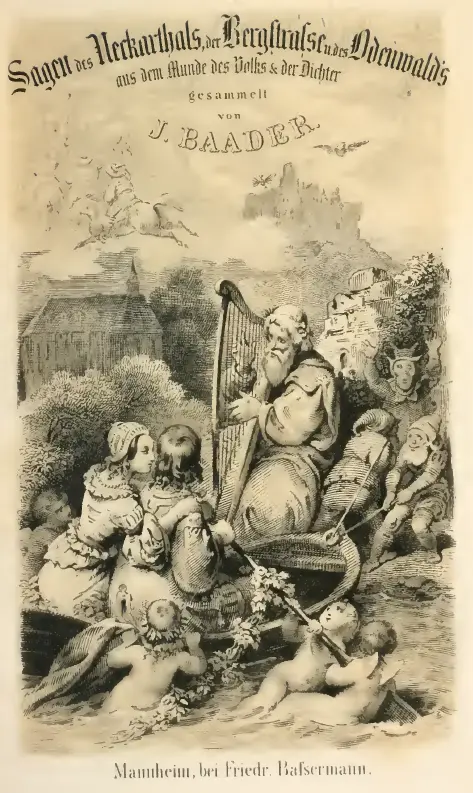
I've spent the last few months building a wiki that contains my English-language translations of German folk tales.

It's not quite finished yet, but there are a couple of hundreds of tales for you to enjoy.

[–] juergen_hubert@ttrpg.network 3 points 3 weeks ago (1 children)

Curse this mobile interface!

[–] juergen_hubert@ttrpg.network 3 points 3 weeks ago (3 children)

Sorry, I accidentally deleted the link to the article. You should be able to check it out now!

[–] juergen_hubert@ttrpg.network 2 points 3 weeks ago

Sorry, I messed up the link. It should be fixed now.

25
Guest article on the Wild Hunt (www.eroticmythology.com)
submitted 3 weeks ago* (last edited 3 weeks ago) by juergen_hubert@ttrpg.network to c/folklore@mander.xyz
 

For whom it might concern: I wrote a guest article on the Wild Hunt in Central European folklore - one that tries to be a bit more nuanced than "The Wild Huntsman is really Odin in disguise!".

EDIT: Gah, I thought I had included a link! It should be fixed now.

[–] juergen_hubert@ttrpg.network 1 points 3 weeks ago

It's on the big link list at Wikisource:

https://de.wikisource.org/wiki/Sagen

[–] juergen_hubert@ttrpg.network 2 points 4 weeks ago

I've only browsed through it a bit, but the Occult dragons are appropriately creepy.


I am currently currently through a bunch of Pathfinder setting books, and decided to share my thoughts on BookWyrm.

(Are you also sharing your RPG reviews on BookWyrm?)


The PCs will soon be entering their first "Megadungeon". And I want to emphasize how dangerous this environment is - not by throwing them into meatgrinder fights, but by having them come across the remains of earlier adventurers who died horribly. And I could use some suggestions from others!

Here are the rules:

First, describe the scene - whatever the PCs are seeing.

Second, describe what actually happened in case the PCs investigate and make some successful skill rolls, use divinatory magic, and so forth. Here is an example:

1. The PCs come across a chain mail which has seen some battle damage but is largely intact, as well as the blade of a handaxe. Both are covered by a thin green-white residue. Searching further, they come across a belt buckle and a small number of coins, all of which are likewise covered in residue.

(A gelatinous cube came across the body of an adventurer, digested everything organic, and left the metal parts behind.)


At some point in the past, I noticed that I had a strong tendency to make NPCs male, even though there wasn't any good story or setting-specific reason to do so. From gods to villains to random shopkeepers - most of these were assigned male without me even realizing that I have been doing it.

Thus, I started to assign genders by the roll of a dice - and I am fairly pleased with the results as this made the world significantly more diverse.

How about you? Have you noticed any similar biases in your own NPCs - and if so, what did you do about this?


I think modern role-playing gamers aren't appreciate enough just how much folkloric precedent there is for "a random bunch of weirdos delve into subterranean vaults for treasures". So I thought I should share one of my favorite tales from German folklore on this topic - though there are hundreds if not thousands of further tales about this theme:

The Treasures of the Isholz

A long time ago, the Schlangenhecke estate belonged to the Morsbroich chapter house of the Teutonic order. It was as lively back then as it is empty and decayed now. As there are few inns in the remote countryside which provide food and shelter to wanderers, the farmer provided all the more hospitality. And in this manner, wanderers arrived at the Schlangenhecke who were admitted there for the night.

Once, three such guests requested the hospitality of the farmer. Because of their garb as well as their manner of speaking, they were recognizable as the inhabitants of a faraway region. The farmer offered the living room to them, and, after dinner, gave them fresh straw as bedding as was custom in the region. At midnight, the three wanderers rose up from their straw, quietly snuck out into the yard, and from there through a side gate into the outside.

But the shepherd of the estate had heard the noise and became suspicious: The strangers might plan to steal some animals, which he needed to prevent. However, he soon realized that he had misjudged them. But since he saw these people sneak out to the heath and towards the Isholz woods, he could not stifle his curiosity and snuck after them at some distance through this mild summer night. In this manner, he was able to avoid being noticed by them. The longer he followed them, the more his desire grew to understand what they were doing.

At the borders of the heath, close to the ill-omened forest, the men halted, whispered for a time, carefully looked around to all sides, and then ignited a candle. The shepherd was greatly astonished when he saw the three adventurers descend into the earth with their light. Initially, he circled around the spot from a distance. Then, becoming brazen, he went straight to the location where he had last seen them, but he could not find anything other than a rabbit warren from which not even the slightest noise emerged. He was overcome by considerable dread by this revelation, and quickly fled from the ill-omened heath into the safe refuge of the Schlangenhecke.

The next morning, he told the master of the house about this strange incident. The latter then questioned his guests, who had returned unnoticed at dawn. After much evasiveness, he finally received the confession that they had undertaken this long journey because of the treasures which were buried beneath the heath. They had dared the incantation, and, under its influence, penetrated the earth which had retreated before them. They then described how they had passed through a narrow opening into long corridors, which had opened into a succession of caves. In these caves, they had beheld glittering weapons, shining crowns, chains, and gemstones, and an abundance of precious metals in both minted and unminted forms. But they had been unable to touch anything at this time. They confessed that the retrieval of these treasures would have to wait for another, still distant hour.

As can be imagined, such news of enormous wealth caused receptive people in the surrounding hamlets and villages to seek their fortune there. And thus, treasure hunting is not a wholly unknown art in the region, although it has rewarded the practitioners little.

Years ago, a group of determined young men conspired together to quietly acquire everything needed for the lifting of subterranean treasures. Then they went out to the Isholz on a night which was favorable to treasure hunting. Their arts of invocation were indeed so successful that they could penetrate the earth after some digging. The men - allegedly seven in number - soon found themselves deep beneath the ground in long, dark corridors, which they were barely able to illuminate with their blessed light.

Finally, they trotted into a spacious cave, whose walls and curves reflected the rays of the blessed candle in a strange manner. In the center they saw a naked maiden reclining on a large stone slab as if it was a bed. Her arms and chest were richly adorned with golden chains and bracelets, and golden brooches and shimmering gemstones sparkled from beneath her dark curls. At the feet of this female apparition, there was gold and silver in all sorts of coin types in huge chests, and large containers, bowls and shields made out of noble metals, and crowns adorned with marvelous jewelry were piled up. The maiden waved to the treasure hunters in the loveliest manner, and elaborated that each of them was free to grab into the gold-filled chest with both hands. However, then one of the seven would be required to stay with her in the cave. Then the beautiful woman looked at each of the men in turn, as if she wanted to pick the one who would have to remain behind with her in the mountain.

No matter how bright the money shone into the eyes of the young men, no matter how marvelous the glitter of the gemstones reflected all colors and penetrated their greedy hearts, everyone was nevertheless overcome by the thought that he might be bound to this gloomy cave forever. The luring maiden might be secretly a monster, who in this moment might smile in a heavenly manner, but in the next could torture him in the form of a dragon. In this manner, they might race into the arms of the Evil Enemy, and be lost for all time!

Everyone thus carefully looked to the entrance of the cave, and used this opportunity to hurry away. As no one wanted to be the last, all seven rushed upstairs through the narrow entrance at the same time. They collided with each other, tumbled because the light went out, rolled over in their haste, climbed over each other, and finally all arrived up in the open air, though they were very scratched and disheveled. But no one dared to rest there. Everyone ran towards his abode on their own, and was in terrible fear, and they felt as if a thousand giant hands were grasping for them out of the darkness. Everyone reached their home with the firmest conviction that at least one of his comrades, if not all of them, were now buried within the mountain forever.

This misapprehension was only cleared up the next day. Every one of the companions became disgruntled and regretted that he had not brazenly grabbed something from the chest, and then the choice of the magical woman would not have fallen on him but on one of his comrades. Everyone reproached himself because of his fear and timidity, although the fellowship was unable to agree to a second expedition and treasure hunt.

Thus, the treasures of the Isholz still remain under the custody of the beautiful maiden or some other member of the spirit people. Therefore, a bold treasure hunter can still get lucky here in a twofold manner.

Source: Waldbrühl, W. v. Die Wesen der Niederrheinischen Sagen. 1857, p. 17ff.

If you know of any other good treasure-hunting tales, feel free to share them!


Large dungeon complexes and even "megadungeons" have become a stable of fantasy RPGs. But they are difficult to map out, since they tend to be complex, three-dimensional structures. While mapping them in 5 ft. squares may be possible, that doesn't give a good view of how all the different locations connect with each other.

So I am curious: What are your favorite visualizations for megadungeons? How did they help you as a game master (or player) to understand how their whole environment is structured?

view more: next ›