flavonol

joined 3 years ago
 

The Storypath system is descended from the systems used in Vampire: the Masquerade, World of Darkness and other stuff from White Wolf publishing. There's already games published by Onyx Path that implement Storypath (such as Trinity Contiuum & Scion), but this is a generic version with example settings included.

This finalized version actually came out over a week ago, but today I noticed that despite the apparent interest in Storypath on Backerkit, nobody on r/rpg or here had posted about the announcement. I haven't played it yet myself; does anyone here have experience with or interest in Storypath?

Note: While the PDF is available now, it'll be some months before the hardcover ships.

[–] flavonol@lemmy.world 1 points 9 months ago

An Arc B580 might serve you well. I'm a Radeon user myself, though, so I can't speak from firsthand experience on using Arc cards for Blender.

[–] flavonol@lemmy.world 16 points 1 year ago (3 children)

Truly excellent GNOME slander. Who made this?

[–] flavonol@lemmy.world 1 points 1 year ago

What is meant to be accomplished here?

[–] flavonol@lemmy.world 1 points 1 year ago

Tried the demo! Plays great, runs great, looks good & is pleasing to the ears.

[–] flavonol@lemmy.world 1 points 1 year ago

I understand the concept of fusing off or otherwise blocking defective die portions. What I am curious about is the apparent absence of, say, 320-bit bus designs being made which could be cut down as needed to 256-bit.


There are some bus widths that are used in full discrete GPU dies and some that I've only ever seen in cut-down GPUs. Full-die GPU memory bus widths seem to always be:
64-bit × 2^n^ × (1 or 0.75)
where n is a whole number. Cut-down models can feature pretty much any multiple of 32 bits.

Examples:

  • 128-bit bus: common in entry-level GPUs (RTX 4060, RX 6600 XT)
  • 160-bit bus: occasionally shows up in cut-down designs (Arc B570)
  • 192-bit bus: common in midrange & entry-level GPUs (RTX 5070, Arc B580)
  • 256-bit bus: common in midrange GPUs (RX 9070 XT, RTX 3070 Ti)
  • 320-bit bus: occasionally shows up in cut-down designs (RX 7900 XT, RTX 3080)
  • 352-bit bus: Appeared in the RTX 2080 Ti, which was cut down
  • 384-bit bus: common in upper-midrange & high-end GPUs (RX 7900 XTX, RTX 4090)

Any insights into why this is? As a layperson, it seems like having a full die with perhaps a 160-bit bus for the entry level or a 224-bit bus for the midrange would at least occasionally make sense.

[–] flavonol@lemmy.world 2 points 1 year ago

The title now links to the PDF. I moved the image to the body of my post.

[–] flavonol@lemmy.world 1 points 1 year ago* (last edited 1 year ago) (2 children)

I originally had an open-access PDF linked. Not sure what happened to it. Maybe it was overridden when I added the image?

Edit: Brought the link back.


If you think GPUs are big today, you ain't seen nothing yet. This baby (theoretically) scales all the way up to a 300mm wafer.

Abstract

This paper introduces the Photonic Network-on-Wafer (NoW) GPU architecture to overcome fundamental limitations in electrical interconnect scaling by implementing the inter-GPU network in a wafer- scale optical interposer. We argue that the photonic-NoW GPU is a scalable architecture, delivering significant performance benefits in a power-efficient manner.

Edit: Fixed link to PDF.

[–] flavonol@lemmy.world 1 points 1 year ago* (last edited 1 year ago)

Ladybird does have a donation page: https://donorbox.org/ladybird; Ablaze (Floorp devs) take GitHub Sponsors.

[–] flavonol@lemmy.world 1 points 1 year ago

I was under the impression that Ladybird has become independent of the Serenity project, even if they are still related projects.

[–] flavonol@lemmy.world 2 points 1 year ago

Yields must be pretty good if the RX 9070 & RX 9070 XT are so similarly priced.


I see that there are already posts here about RDNA4 today, but I figured I'd link the actual announcement for general discussion about the launch.


The University of Pennsylvania offers a free series of books called Software Foundations with the following description:

The Software Foundations series is a broad introduction to the mathematical underpinnings of reliable software.

The principal novelty of the series is that every detail is one hundred percent formalized and machine-checked: the entire text of each volume, including the exercises, is literally a "proof script" for the Coq proof assistant.

The series includes Verifiable C, which seems very appealing as a way to avoid some of C's infamous "footguns." I haven't read the series myself, but I might in the future because I like math, logic & programs that do what they're supposed to do.

Are there any materials that would be good as alternatives or complements to this series?

Edit: Adding the Vercors Wiki to the resources in this thread


solution by @wada@lemmy.ml

Hi,

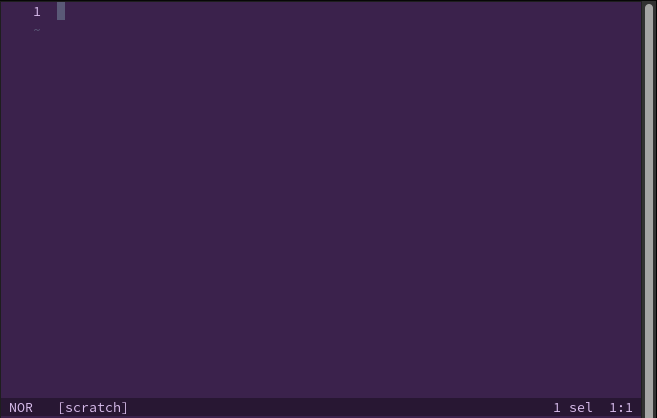
I'm new to both using Helix and terminal multiplexers in general, so I'd appreciate some help with this. When I launch Helix without tmux, I see the default theme with a purple background, which I like:
But when I launch it using tmux, even with the -2 flag, Helix does not display the same color scheme:
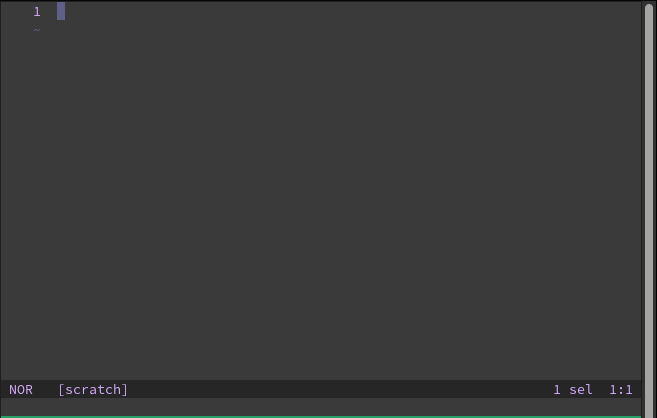
I have tried making a config.toml file with an [editor] section and set true-color to true, but that didn't appear to help. How can I use the default theme with tmux? I'm using GNOME 47 with wayland on Fedora, in case that matters.

Any post I've seen involving Helix, tmux & colors seem to be with custom themes, so I don't know which threads are relevant to this, if any.___

view more: next ›