ethaver

joined 11 months ago
MODERATOR OF
[–] ethaver@kbin.earth 5 points 1 hour ago

Because it turns out I don't actually want facial hair and I can't undo that easily / cheaply so now I'm stuck with weird little patches on the side of my chin that I'm constantly scratching open when I forget to keep them plucked. Now, I'm still considering doing the rest of the hormone course, I just also keep in mind that I might have to plan for electrolysis concurrently. It turns out making permanent changes to your body is actually something to ponder for a second.

[–] ethaver@kbin.earth 2 points 1 hour ago (1 children)

yes the boredom will be the biggest problem and no electronics are unlikely to be allowed. get a few good paperback books, a good puzzle book with some more variety than just word searches / sudokus, and bring a non-spiral bound sketchbook and some crayons (all psych wards will pretty much universally allow crayons vs if they're acute enough they may worry about hard plastics, but admittedly that level of acuity is somewhat rare) and practice your figure drawing or just have fun scribbling if you like. also a great time to pick up origami as a hobby. If you ask nicely they will almost definitely play music for you but it might be in a group setting where you have to rotate choosing with the other patients.

hi I've been working inpatient psych for almost a decade, ama! lol.

[–] ethaver@kbin.earth 9 points 1 day ago (1 children)

6-lobe tamper is great for acute psychiatry and corrections where you're dealing with violent and self injurious behavior. You don't want people pulling screws out to make shivs / lockpicks / things to slit their wrists with or pulling utility plates off the wall to access wiring for fire setting or expose studs or plumbing to anchor a noose on. It's a lot harder to improvise a tool to remove a 6-lobe than it is a flat or even a Phillips.

[–] ethaver@kbin.earth 4 points 5 days ago

any new power structure can be good for the time it takes a generation to pass. after that people forget why they designed something a certain way and lose engagement with the political process. the only political and economic system that will ever be functional is one that is fundamentally founded on educating the populace on both their right and their responsibility to be involved in their own governance. the right to bear arms was a prototypical move to ensure people would always be able to enforce their right to self governance but without education in the importance of actually doing so it has ultimately failed to fulfill that purpose.

[–] ethaver@kbin.earth 8 points 5 days ago

there's already a !bestofredditorupdates@lemmit.online but a lot of instances block lemmit for being bot content since their whole purpose is to repost reddit content which like. bots are actually super useful for that kind of thing. A LOT of users don't seem to understand that they personally have the power to set instance blocks for their own account. so instead they push for defeds when like. just block the instance from your settings. it's a checkbox. it's not complicated! Sometimes I worry that all the defeds will create little insular echo chambers when the whole point of fedi is diversity.

[–] ethaver@kbin.earth 11 points 6 days ago

one of the many reasons I've heard is that men are unhappy with the financial benefits it entitles the woman to.

IMO receiving money in the event of divorce is one of the few ways a woman is protected while living a "traditional" lifestyle; when she leaves the workforce to care for a home and children, she's both giving up a the opportunity to save and invest capital, AND she's giving up becoming experienced in her field. Giving up the experience means she that if she loses financial support and attempts to return to the workforce, she would have to do so in a junior role in her field, if she can find work at all. Things like alimony and division of assets are, at least imo, a completely fair compensation for the unrespected but very real work of homemaking.

And while that's ultimately not a lifestyle that suits me personally, there are a lot of men who want a tradwife, but don't respect that that's going to require them to be a trad husband. One of the reasons I got married as a working / career oriented woman was that I thought my domestic house husband deserved financial security in payment for supporting my career. I think a lot of it really does just come down to the underlying misogyny of not considering homemaking to be a legitimate profession when it's been fundamental to society longer than written record.

[–] ethaver@kbin.earth 5 points 1 week ago

Abilify is a beautiful long term maintenance med but wholly inappropriate for an acutely agitated and combative patient.

[–] ethaver@kbin.earth 3 points 1 week ago

I straight up used draw.io to create a paper form. I needed high information density so I can't waste space formatting stuff the normal way, I need something more graphical and publisher got axed.

[–] ethaver@kbin.earth 40 points 1 week ago

here's a markdown formatted quit plan for your notes app (based on this) with bullets for common answers to the questions that you can delete if they don't apply / keep or add ones that do.

# Quit Plan

***

## Quit Date
_Choose a date within the next two weeks._

**Quit Date:** [YYYY-MM-DD]

**What to expect**
- **1 week:** Nicotine is out of your system  
- **2 weeks:** Physical withdrawal symptoms fade  
- **1 month:** Habit- and emotion-driven cravings may continue  

***

## Reasons for Quitting

- Feel healthier / Live longer
- Save Money
- See my kids grow up / set a better example
- Look healthier / smell better
- Reduce stress between uses


***

## Triggers
_Knowing your triggers helps you plan around them._

### Emotional
- Feeling stressed
- Feeling anxious
- Feeling down
- Feeling lonely
- Feeling bored
- After conflict

### Situational
- Talking on the phone
- Drinking alcohol
- Watching TV
- Driving
- Finishing a meal
- Drinking coffee
- Work breaks
- After sex

### Social / Environmental
- Bars or parties
- Social events
- Seeing someone else smoke

***

## Coping Strategies

### If your hands or mouth need something to do
- Hold a straw or pen and focus on breathing
- Fidget with a coin or paperclip

### If you use tobacco to manage stress or mood
- Slow breathing or short bursts of exercise
- Talk it out with someone you trust

### If boredom or restlessness is the problem
_Keep a short “craving list”:_
  - [TASK]
  - [TASK]
  - [TASK]

### If you feel irritable or anxious without nicotine
- Consider nicotine replacement (patch, gum, lozenge)

### If you used tobacco for energy
- Light exercise
- Regular meals and healthy snacks
- Adequate sleep

### If you used tobacco for pleasure or relaxation
_Substitute another reward:_
  - Music
  - Movies
  - Saving money for something specific

***

## Remove Reminders
_(Before Quit Day)_
- Wash clothes that smell like smoke
- Clean your car
- Discard tobacco, lighters, ashtrays
- Place coping tools where tobacco used to be

***

## Support (Optional)
_Quitting is easier with backup._
- [NAME / ROLE]
- [NAME / ROLE]

***

## Personal Notes

...and if you're a transgirl I'd like to add to your reasons list that estrogen + smoking significantly increases the coagulability of your blood. I've had several transgirl patients with DVTs / PEs / strokes even who did not know that can happen!

[–] ethaver@kbin.earth 1 points 2 weeks ago (2 children)

better than 66

[–] ethaver@kbin.earth 20 points 3 weeks ago (1 children)

idk I think people shouldn't be able to sell their children into marriages at 14 years old just because they don't share my beliefs that that's horrible. Meanwhile they think that an abortion harms a child in a way that outweighs b the mother's right to decide whether or not her body gets used as life support and I don't. I think whether or not it's important to meddle in other's private and family lives is actually a fairly complicated question.

106
Unhinged (media.kbin.earth)


I can hold it together and be serious when needed, but my default bedside manner is playful. Like when I'm taking off EKG stickers or adhesive bandages I say "Please enjoy this complimentary wax; it's free with your stay!"

And they tell you when you communicate through an interpreter that you should just talk how you normally do and let the interpreter focus on translating both the info AND your paraverbal communication, but I feel like not a lot of people actually do that because sometimes interpreters seem really put off by me at first. And I'm in psych so I actually use humor therapeutically and even to a certain extent diagnostically (if I can get a flash of a smile their affect is probably more constricted than blunted, for instance).

But my favorite was the lady who synced up with me about halfway through when the patient was trying to minimize her needs and I was like "GIRL you gotta tell me these things that is literally so easy for me to fix!" And I just saw the look of dawning recognition before the interpreter literally flipped her hair to the side and went "...AMIGA-"


I made this as an intro for new unlicensed / entry level psych workers whose jobs did not give them an adequate introduction to serious mental illness, but since none of the interventions are actually medical, it's not a bad intro for laypeople either (and I basically never see people give tips for helping people with more severe mental illness). Some of the vids mention treatments but less in a "how to treat" and more of in a "how to support treatment." This guide assumes that the person is already at the correct / safest level of care they need, but obviously you would want to seek (more) professional help if you are worried they are a threat to themselves or others. There are a few specific situations mentioned here that should raise extra alarms though. There's both videos and some helpful points typed out under each one (it may help to disable media previews for readability). Hope this helps and that you find it interesting!

History of Mental Health

Anxiety Disorders

  1. Generalized Anxiety
  2. Post-Traumatic Stress Disorder
  3. Obsessive-Compulsive Disorder
  4. Key Points: What to do if a person is having a “Panic Attack”
    1. Reduce stimulation (light and sound) as much as is safe. If you can't reduce stimulation where they are, try to gently lead them to somewhere you can.
      1. Talk slowly and softly, but with careful enunciation
      2. Acute Anxiety / Panic temporarily reduces cognition; keep instructions simple.
      3. Avoid standing in front of, over, cornering, or otherwise being physically imposing. Standing to the side also makes it less likely that they will hit you while panicking.
      4. Offer simple Distractions such as sensory, grounding, or breathing exercises.
    2. Pay attention to triggers so that they can be avoided or better prepared for next time.
    3. For OCD Specifically:
      1. allow the person to take time to complete any compulsions that are not dangerous to themselves or others (flipping light switches, counting things, etc)
      2. Encourage them to seek treatment, and just make sure they’re eating, sleeping, and otherwise safe while the treatment is still taking time to work.

Mood Disorders

Depression

  1. Treatments for Depression
  2. Key Points: How to help a person with Depression.
    1. Depression is more slow/empty than it is sadness.
    2. People with depression often have very little energy and difficulty planning tasks.
    3. Help the depressed person by gently encouraging them to be more active and engage with others.
    4. Not all suicidal ideation has to be managed inpatient / in the hospital as long as the person is able to not act on their thoughts. Encourage the person to create a safety plan by talking to a professional (most free suicide hotlines should know how to help with this, as well as any in-person crisis services in the community or ER).
    5. Sometimes the difficulty planning caused by depression actually ironically keeps the person from planning their suicide.
      1. Watch extra carefully as they recover because there can be a short window where they are juuust better enough to create an actionable suicide plan. If you are worried that the person is making preparations to harm themselves, seek a higher level of professional care.

Bipolar Mania

  1. Treatments for Bipolar Disorder
  2. Key Points: How to help a person with Mania.
    1. Mania is more fast/overwhelming than it is happiness.
    2. People with mania can often be angry / more irritable (imagine being in the slowest possible DMV or grocery store line after chugging a few cups of coffee)
    3. People with mania often make impulsive decisions that can become dangerous / life altering, especially those involving
      1. driving or other tasks that require careful attention
      2. delicate / intimate interpersonal interactions such as sex
      3. anything involving large quantities of money or other valuable assets
    4. A person with mania often has too much energy to rest easily. Encourage good sleep hygiene:
      1. Keep stimulation (lights and sounds), reduced overall, but help them stay lightly active during the day with safe, simple tasks.
      2. At night, reduce stimulation as much as possible to help the person with mania rest.
    5. Mania often co-occurs with psychosis, which will be covered next.

Psychotic Disorders

  1. Treatments for Psychotic Disorders
  2. Key Points: How to help a person with a Psychotic Disorder
    1. Do NOT argue with delusions, it makes them stronger.
    2. Instead, redirect the conversation to an unrelated, but reality-based topic (especially a shared hobby or something else you have in common with the person like sports, gardening, a favorite show, or music; this will help refocus them on strengthening their supportive social ties instead of disconnecting with the rest of society).
    3. Instead of arguing about whether or not a scary hallucination / delusion is real, focus on validating their emotions and find some other way to reassure them like moving them out of the area or offering to stay with them / help them watch in case something does happen.
    4. Paranoia is the one particularly dangerous symptom of psychosis because it can cause the person to be violent out of fear / to protect themselves. Watch for new / emerging / suddenly increasing paranoia and try to safely connect the person with a higher level of professional care.
      1. Establish yourself as honest and trustworthy. Don't lie to them unless they're an immediate threat to themselves or others and you don't know how else to keep them safe until help arrives.
      2. Some people become paranoid about their food and drink being poisoned, and it can help to give mostly sealed foods and/or open the packaging in front of them. Recovery can take a while, and in the meantime they need food / hydration.

Substance-Use Disorders

  1. Treatments and Triggers for Drug Dependence
  2. Motivational Interviewing
  3. Key Points: Things to remember about addiction.
    1. Before you judge others, remember that you're probably addicted to something.
    2. Legal Addictive Substances: Nicotine, Alcohol, Caffeine
    3. Addictive Behaviors: social media, Video Games, Gambling, Pornography, Binge Eating, Self-Harm (people especially really underestimate video games with microtransactions as gambling)
    4. Shame often causes anxiety/depression which impairs a person's recovery/sobriety.
    5. Motivational interviewing is an easy-to-learn technique to boost readiness and motivation for sobriety.

Autism Spectrum Disorder

  1. Managing Autism Spectrum Disorder
  2. Key Points: Helping a person with Autism.
    1. Keeping a consistent routine and helping the person know what to expect to happen next helps a person with autism feel less anxious.
    2. People with autism often struggle with interpreting AND expressing emotions the same way as everyone else.
    3. They might laugh when upset, for instance. Try not to make assumptions about what the person is feeling.
    4. Be clear and unambiguous about how you are feeling and what you need them to do.

Attention-Deficit and Hyperactivity Disorder (ADHD)

  1. Key Points: Helping a person with ADHD
    1. Help them develop plans and routines and stay organized by being clear about what needs to be done and by what deadlines
    2. Encourage them to create physical habits that help them not forget things
      1. Have them put their house keys on a big cardboard box in front of the front door so they can’t leave the house without them.
      2. Clip the house key, grocery shopping list, or another important item to the baby so that they can’t leave them in the car.
      3. Encourage them to set phone alarms and put appointments in their calendar as soon as they schedule them (I even turn my phone around and have the other person verify my calendar entries)
    3. Understand that their “paying attention” may not look how you expect. They may need to move, doodle, or fidget to pay attention, so don’t use stillness or eye contact to judge learning / retention. Use critical thinking / problem solving questions (“what if’s”), and have them repeat things back to you in their own words to help them interact with the information more fully.

Delirium & Dementia

  1. Delirium
  2. Dementia
  3. Reminiscence Therapy
  4. Key Points: Helping a person with Delirium or Dementia
    1. Delirium is temporary, Dementia does not go away.
    2. Reorient the delirious person so that they can come back to themselves, and seek emergency treatment for the underlying medical cause (usually infection or dehydration, but can be other things).
    3. Avoid reorienting the person with dementia as you will likely fail AND upset them.
    4. Use reminiscence or music therapies where possible instead.
      1. Music memory is one of the last to go in many types of terminal disorders, making it a powerful tool.
      2. If the person cannot tell you what music they like, try playing what was popular in their demographic when they were 15-25 years old.

Borderline Personality Disorder (BPD)

  1. Treatments for BPD
  2. S.E.T. Communication for BPD
  3. Distress Tolerance Skills for BPD
  4. Key Points: Helping a person with borderline personality disorder.
    1. People with personality disorders struggle with strong emotions and not knowing what boundaries are helpful for either themselves or others.
    2. You can help by keeping a neutral tone and posture and keeping fair but firm boundaries.
    3. The distress tolerance skills in the last video must be initially learned while already calm.
    4. Encourage the person to practice their calming skills throughout their daily routine.

(Edit: fixed / organized the headers a little)


Wordle 1,576 X/6

⬛🟨⬛⬛🟨
⬛⬛🟨🟨🟩
⬛🟩🟩⬛🟩
⬛🟩🟩🟩🟩
⬛🟩🟩🟩🟩
⬛🟩🟩🟩🟩

throwing table image


One of my coworkers was doing their admission assessment and the patient was getting super irritable because it was late and they wanted to go to bed (and the irritation was manifesting in a lot of colorful language up to and including racial slurs). From a style standpoint I knew my coworker often preferred thoroughness over patient comfort vs I'm a lot more likely to just chart "Pt refused / unable to tolerate xyz, full assessment deferred to morning in favor of rest."

So I offered to take the pt off my coworker's hands and they could try their luck with the next one. Done deal, I take over and the patient instantly calms down, ("finally a [my ethnic group] who can take care of me properly!"). OK, here's your admission packet, the supplies you requested, have a nice night." ".....but what about my suboxone?"

And I was just immediately like "oh, OK. Small misunderstanding here. My plan was going to be to just tuck you into bed and hope for the best. If you do actually want to take the time to get all your meds straightened out tonight my coworker here is actually a much better fit for your needs." The pt did not give my coworker any more trouble. Pt successfully educated on the importance of active participation in their treatment plan.

Y'all got any good ones?


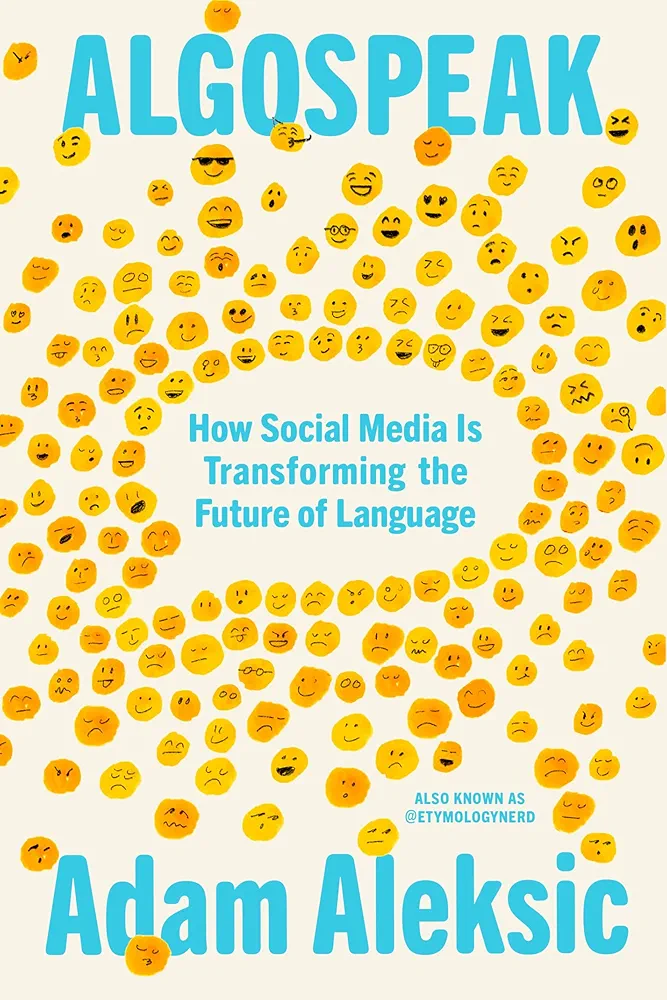
Really really enjoyed this one although it took me a few weeks to fully digest. Here's two of my absolute favorite excerpts (please forgive any OCR glitches). They both describe fairly old phenomena, one that's been around as long as the internet, and one that's been around as long as language, but in both cases people have a tendency to ascribe their effects to something new and uniquely bad despite then having been part of humanity far longer than we often realize.

The shift from "le$bian" to "wlw," the shift from "suicide" to "unalive and all these other instances of linguistic Whac-A-Molery exemplify the euphemism treadmill, a concept intro-duced by Steven Pinker to describe the continuous motion of evasive words in the English language. The euphemism tread-mill is why were constantly updating our words for offensive things. The words "idiot"' "imbecile and "moron" all used to be serious words for classifying mental disability, but then they became negative, so we replaced them with the word "retarded" which also became negative, so we replaced that with "mentally disabled"' which is also becoming negative. The same process happens with terms for racial and sexual minorities as the words they use to describe themselves become poisoned over time. That's why "colored" became "black" and why some people now prefer capital-B "Black." Once words are used maliciously, we replace them until the cycle continues, as if moving along on a treadmill. This is a normal and inevitable linguistic process that can only really be solved by addressing the underlying societal problems causing the treadmill to move in the first place. When the algorithm prevents people from saying "sex" or "suicide" or any other sensitive word, it becomes a proxy for human behavior. Instead of people turning a word negative over time, the platform labels it as undesirable for social media, caus-ing the treadmill to move faster rather than actually preventing discussion of forbidden topics.


Some time after the serious philosophy was turned into a joke, though, it began to be treated seriously again by some of those out of the loop. At least some of the beauty influencers talking about hunter eyes and interocular distance misinterpreted the ironic context of the lookism words and spread them as genuine beauty standards, which spawned more jokes, leading to more serious reinterpretations. After the jokes about canthal tilts and mewing went viral, we began seeing increases in canthal tilt eye-liner demonstrations and Google searches for "jaw surgery' On the one hand, that just made the jokes funnier; on the other, incel ideas about attractiveness became more culturally relevant. Again, how did this happen? Well, it's famously difficult to discern tone on the internet, to the point where there's an adage about it called Poe's law: "Any sarcastic expression of extreme views can be mistaken for a sincere expression of those views," and vice versa. Poe's law explains how dangerous ideas spread as memes. If something is meant genuinely, but it is also crazy enough to be interpreted as a joke, people may reward it with "likes" and other engagement because they find it funny. Meanwhile, if something ironic is interpreted as genuine, people will be offended by it, which then also drives engagement as a form of ragebait. Either way, "edgy" humor is able to worm its way into the mainstream via the algorithm.

I requested the library buy it on release and checked it out immediately but it's been autorenewing ever since while I tote it back and forth to and from work. I'm almost sad to take it back at the thought it might sit alone on the shelf but there is a limit even to the autorenewals. Somebody go check this out, it's really good!



I think this this conversation originally started on this sub so I'm bringing it back.

The Egg of Life

Created by drawing a circle, then drawing another circle centered on it's edge. If you draw another circle centered on the intersection of their edges, then another on the next intersection, you will get 6 evenly spaced circles with a 7th in the center.

The Flower of life

If you keep drawing more circles centered on the intersections of circles, you eventually work your way out to the flower of life. If you erase most of the circles and leave only the intersections, you are left with an isometric grid. This the base grid that the sacred geometries are drawn on top of.

Metatron's Cube

One of the more recognizable Sacred Geometries due to it's complex and distinctive shapes.


This is a continuation of this.

The Egg of Life

Created by drawing a circle, then drawing another circle centered on it's edge. If you draw another circle centered on the intersection of their edges, then another on the next intersection, you will get 6 evenly spaced circles with a 7th in the center.

The Flower of life

If you keep drawing more circles centered on the intersections of circles, you eventually work your way out to the flower of life. If you erase most of the circles and leave only the intersections, you are left with an isometric grid. This the base grid that the sacred geometries are drawn on top of.

Metatron's Cube

One of the more recognizable Sacred Geometries due to it's complex and distinctive shapes.


I'm especially thinking of some bizzare foreign horror movies that didn't make sense to me and I figure there's gotta be some from my own (US) culture that just make 0 sense outside of the context of having been raised in this culture.


A Psalm for the Wild Built is so cute though. Like so cute that it hurts in the context of current events. And I'm like two chapters in. Is it possible to tag this like on mastodon so I can just livetweet books I feel like livetweeting books should be more of a thing.

view more: next ›