blackbeard

joined 1 year ago
MODERATOR OF
[–] blackbeard@europe.pub 1 points 3 months ago* (last edited 3 months ago)

This works!

Key Commands

  1. List Connected Displays To see all connected outputs and their status:

kscreen-doctor -o

Example output:

Output: 1 eDP-1
        enabled
        connected
        Modes: 1:2560x1600@60.00*!

This helps identify your display names (e.g., eDP-1 or HDMI-A-1).

  1. Turn Off All Displays (DPMS) To put all displays into low-power mode:

kscreen-doctor --dpms off

Uses DPMS (Display Power Management Signaling) to turn off displays safely.

  1. Turn On All Displays To wake all displays:

kscreen-doctor --dpms on

  1. Disable/Enable a Specific Output To control a specific display (e.g., HDMI-A-1):
kscreen-doctor output.HDMI-A-1.disable
kscreen-doctor output.HDMI-A-1.enable

Note: Avoid disabling your primary/laptop panel (e.g., eDP-1) unless you have another display connected.

  1. Bonus: Adjust Brightness or Scale
kscreen-doctor output.eDP-1.brightness.50  # 0-100
kscreen-doctor output.eDP-1.scale.1.5     # Scale factor
[–] blackbeard@europe.pub 1 points 3 months ago

Thank you for sharing your setup. Your solution using wlr-randr in a cron job is indeed useful for wlroots-based compositors (such as Sway, Hyprland, or labwc), where the wlr-output-management protocol is supported.

For those (like me) encountering the error 'compositor doesn’t support wlr-output-management-unstable-v1', this indicates that the compositor in use (e.g., KDE/KWin, GNOME/Mutter, or other non-wlroots compositors) does not support wlr-randr. In such cases, alternatives should be considered.

I will be post my findings, I can't believe I'm the only or just one of the few looking to archive this in a laptop..


Hi everyone, I’m running KDE Plasma 6 with Wayland and I’m trying to find a way to turn on the screen programmatically via the command line. In X11, I could use xset dpms force on, but this doesn’t work in Wayland due to its security model. Has anyone found a reliable method to wake or turn on the screen from the command line in a Wayland session? I’m aware of the security and architectural reasons behind this limitation, but I’m curious if there are any workarounds, compositor-specific DBus calls, or third-party tools that might help. What I’ve tried so far: xset dpms force on (fails, as expected)

Simulating keyboard input with wtype/ydotool (unreliable)

Checking KWin’s DBus interface (no obvious method exposed)

Context: I’m automating some tasks and would like to avoid switching back to X11 just for this feature. Any insights, scripts, or suggestions would be greatly appreciated! Thanks in advance for your help.

[–] blackbeard@europe.pub 1 points 3 months ago (2 children)

Are you sure? I believe that using ipleak.net will provide you with a detailed report of your public IP address, DNS servers, WebRTC status, and other network-related information. However, it will not show you the internal DNS server you are using within your local network.

You are right that Android's system-wide DNS settings (e.g., those configured in Wi-Fi or mobile network settings) are not automatically applied to Termux. Termux runs in a sandboxed environment and manages its own network configuration. I will try changing Termux but keep in mind that the reason I checked Termus is because local dns resolution do not work on all my android devices, I can resolv local addresses only if I connect to my home network remotely using a vpn.

[–] blackbeard@europe.pub 1 points 3 months ago (4 children)

Yes but how do you know that is using that? I mean, did you try to resolv a local address? I have test it using a Terminal (termux) - If I use did and seems to report all the time, regardless of which connection and despite setting my local DNS setting on a static configuration for the wifi. Is this the same for you? can you share some screenshot?

[–] blackbeard@europe.pub 1 points 3 months ago

Why this matter? Is it posibile to use your local dns ip as private dns? I have tried and didn't accept a local ip address

[–] blackbeard@europe.pub 1 points 3 months ago (6 children)

Did you ever tested it? Because in any android device I got, it always "default" to 8.8.8.8 - google's one. I have to connect to a vpn do get local ips being resolved. I just don't get it, is this normal?

[–] blackbeard@europe.pub 3 points 4 months ago

like every other devices I supposed..but it doesn't work in any mobile I got. the dns server stay google's one no matter what you do.


I'm using e/os and I want to be sure that, when connected to my local network, my local dns server is used, however, no matter what I do, my phone always use google's one. Is there any way to fix this?


Since 2022, the European Union has been pushing a controversial law called the Child Sexual Abuse Regulation (CSAR), better known as "Chat Control." On paper, it’s about protecting children from online exploitation. But dig deeper, and a far more alarming picture emerges: Chat Control isn’t just about child safety—it’s the first step in a plan to normalize mass surveillance across Europe. The Official Story: A Law to Protect Children The EU claims Chat Control is necessary to combat child sexual abuse material (CSAM) by forcing platforms to scan private messages—even encrypted ones—for illegal content. The argument is simple: If we don’t act, criminals will keep exploiting digital spaces. But the methods proposed—like client-side scanning, which analyzes messages before they’re encrypted—are technically flawed, legally risky, and ripe for abuse. So why is the EU so determined to push this through, despite widespread opposition from digital rights groups, security experts, and even some governments?

The Real Goal: Building a Surveillance Infrastructure The most plausible explanation? Chat Control is a Trojan horse. It’s being sold as a child protection law, but its real purpose is to create a permanent surveillance system that can later be expanded for other uses—like tracking political dissent, enforcing copyright laws, or even monitoring "misinformation."

  1. A Backdoor in Disguise The law’s client-side scanning requirement is the biggest red flag. This technology, which scans messages before encryption, is essentially a backdoor—one that can be repurposed to monitor any content governments deem illegal. Once built, it won’t just be used for CSAM. History shows that surveillance laws always expand. The UK’s Online Safety Act, for example, started as a child protection measure but now requires platforms to police "legal but harmful" content.
  2. Who’s Really Pushing This? Investigations reveal that U.S.-based lobbyists, particularly the group Thorn (co-founded by Ashton Kutcher), played a major role in shaping Chat Control. Thorn doesn’t just advocate for the law—it sells the scanning tech needed to enforce it. This conflict of interest raises serious questions: Is this really about child safety, or is it about profiting from surveillance?
  3. The Bigger Plan: Weakening Encryption Chat Control isn’t a standalone law. It’s part of the EU’s ProtectEU strategy, which calls for:

"Lawful access" to encrypted data by 2030 Expanded data retention for VPNs, messaging apps, and cloud services Restrictions on anonymity tools like VPNs and Tor Internal EU documents even suggest universal ID requirements for online services—effectively ending anonymous communication in Europe. 4. Exemptions for Governments, Scrutiny for Citizens Here’s the kicker: Government accounts are exempt from scanning. If the tech is too risky for officials, why is it acceptable for everyone else? This double standard suggests the real target isn’t criminals (who can bypass scanning) but ordinary users whose messages could be monitored. 5. False Positives and the Chilling Effect Existing CSAM detection systems have error rates as high as 80%, meaning innocent people could have their private messages flagged. The European Data Protection Supervisor warns this could turn Europe into a "generalized surveillance society" where users self-censor out of fear.

A Global Trend: The War on Encryption Chat Control isn’t an isolated case. Governments worldwide are trying to weaken encryption:

U.S. (EARN IT Act): Threatens tech companies unless they break encryption. UK (Online Safety Act): Forces platforms to scan for "legal but harmful" content. Australia (Assistance and Access Act): Mandates backdoors in encrypted services. The pattern is clear: Under the guise of safety, governments are seizing control of digital communication.

The Opposition: A Rare Unified Front Chat Control has faced unusual resistance:

Digital rights groups (EDRi, EFF) call it a slippery slope to authoritarianism. Security experts warn it will weaken cybersecurity for everyone. Tech companies (Signal, Proton) threaten to leave the EU rather than comply. Some EU governments (Germany, Poland) have blocked the proposal, citing rights concerns. Yet, the EU keeps pushing—using procedural tricks to keep the law alive.

What’s Next? The Fight for Europe’s Digital Future Chat Control is now in final negotiations. The outcome will decide whether Europe:

Defends digital privacy as a fundamental right, or Surrenders to mass surveillance, setting a dangerous global precedent. How to Stop It

Contact your MEP and demand they reject indiscriminate scanning. (FightChatControl.eu) Support privacy-focused tech (Signal, Proton, Tor). Spread the word—this isn’t just about CSAM. It’s about who controls the internet.

Final Thought: This Isn’t About Safety—It’s About Control Chat Control isn’t really about protecting children. It’s about giving governments the power to monitor every message we send. Once that infrastructure is in place, there’s no going back. Europe stands at a crossroads. Will it defend privacy or embrace surveillance? The choice will shape the future of the internet—for better or worse. The time to act is now.


The dangers that big social media platforms pose to democracy, such as the spread of disinformation, polarisation, microtargeting, and manipulative advertising—are well-documented and significant. The question of whether a ban on user profiling for marketing purposes could address these issues is complex but I still don't understand why a real debate was never started.

What are the potential Benefits of Banning User Profiling for Marketing?

User profiling enables highly targeted advertising, which, as we know, can be exploited to amplify divisive content, spread misinformation, or influence voter behaviour. A ban could reduce the precision and effectiveness of such campaigns, thereby mitigating their impact on public opinion and democratic processes.

Profiling also allows malicious actors to identify and exploit vulnerable groups with tailored disinformation. Restricting profiling could make it harder to deliver customised false narratives, thereby slowing the spread of misleading or harmful content.

Enhanced User Privacy. Banning profiling for marketing would align with stronger data protection principles, such as those enshrined in the GDPR. This could restore user trust in digital platforms and reduce the commodification of personal data.

We could have a massive reduction in polarisation. Algorithmic amplification, driven by profiling, often prioritises engaging but polarising content. Limiting profiling could reduce the echo chamber effect, where users are repeatedly exposed to extreme or one-sided viewpoints.

A ban could reduce the advantage that well-funded actors (e.g., political campaigns, corporations) gain from microtargeting, thereby promoting fairer public discourse.

Seem quite clear what the challenges and Limitations of a ban are. Sure there are enforcement difficulties: Profiling is deeply embedded in the business models of social media platforms. Enforcing a ban would require robust regulatory frameworks, cross-border cooperation, and technical oversight, all of which are challenging to implement consistently.

Obviusly there could be Impact on Legitimate uses, I mean, not all profiling is harmful. For example, personalisation can enhance user experience by delivering relevant content. A blanket ban might disrupt benign or beneficial applications, such as local business advertising or public service announcements.

This would have massive economic Implications for platforms. Social media companies rely heavily on targeted advertising for revenue. This would help the fediverse a lot.

There are some alternative and complementary measures.We could ask stronger transparency and accountability. Mandate platforms to disclose how algorithms and profiling are used, including the criteria for content recommendation and ad targeting. Require independent audits of algorithms to assess their impact on democracy and user rights. for sure a big area of intervation should be the regulation of political Advertising. Implement stricter rules for political ads, such as mandatory disclosure of funding sources, targeting criteria, and the use of profiling. Ban microtargeting for political advertising, as proposed in the EU’s Digital Services Act (DSA) and other regulatory frameworks. We could require platforms to design algorithms that prioritise democratic values, such as pluralism, accuracy, and fairness, over engagement metrics. Introduce "circuit breakers" to limit the viral spread of harmful content, as suggested by some policymakers and researchers.

Important could be empowering users.Provide users with meaningful controls over their data, including the ability to opt out of profiling and access clear explanations of how their data is used. Promote digital literacy initiatives to help users recognise and resist manipulative content.

Also, support independent journalism and public interest media to counterbalance the influence of algorithmically amplified contentaEncourage the development of decentralised social media platforms (e.g., Mastodon, PeerTube) that prioritise user control and reduce reliance on centralised profiling.

Bans on certain forms of targeted advertising (e.g., based on sensitive data like political opinions or sexual orientation). Risk assessments for systemic risks, including impacts on democratic processes. The AI Act further restricts harmful uses of AI-driven profiling, reinforcing the EU’s commitment to mitigating the risks posed by big social media.

So, yes, a ban on user profiling for marketing could be a valuable component of a broader strategy to protect democracy. Why there is basically no conversation about this?


8
Star - Dancefire (europe.pub)
submitted 11 months ago* (last edited 11 months ago) by blackbeard@europe.pub to c/Eurodance@europe.pub
 
[–] blackbeard@europe.pub 2 points 1 year ago* (last edited 1 year ago) (1 children)

I don't get it, why is that? I also get: Error code: 503 Service Unavailable

Are you guys referring to this:

https://citizens-initiative.europa.eu/initiatives/details/2024/000001_en

?

[–] blackbeard@europe.pub 1 points 1 year ago

I think what we are missing is some sort of "unify onboarding portal"

[–] blackbeard@europe.pub 4 points 1 year ago

Me like other people, had the idea of ECI (European citizen initiative) to ask EU level entities to start using the Fediverse. The process is quite slow as I do not have much time but, if you are European and can help, have a look here:

An European Citizens' Initiative for the adoption of the Fediverse in the European Union's institutions:

https://europe.pub/post/61266

[–] blackbeard@europe.pub 2 points 1 year ago (1 children)

I use only Mastodon, even though I got accounts on other platforms too. I'm not super sure what the issue is with Mastodon, but, as I'm moving away from Youtube, the thing I'm missing is, paradoxically, the algorithm suggesting different creators or videos. To clarify: I hate that, I think is sick and controlling, but, as I have used that social for so many years, I think I got quite addicted. Can be the same for other users?


Article 1(3) of the General Data Protection Regulation (GDPR) ensures that the free movement of personal data within the European Union (EU) is neither restricted nor prohibited on grounds related to the protection of personal data. This provision primarily targets Member States, which might otherwise be inclined to enact data localisation laws that could impede the free flow of data.

The scope of this free movement is confined to the European Economic Area (EEA), which encompasses all EU Member States along with Iceland, Liechtenstein, and Norway. It is important to note that the status of various special territories associated with EU Member States requires careful consideration, as some are included within the EEA while others are not.

Countries outside the EU/EEA do not enjoy the benefits of the free flow of personal data. The Court of Justice of the European Union (CJEU) has established stringent standards for international data transfers. The free flow of personal data is explicitly limited to the EEA, with rules governing transfers to non-EU/EEA countries, referred to as 'third countries,' detailed in Chapter V of the GDPR.

For instance, when a data controller based in Italy stores personal data with a cloud service provider in Norway, there are no concerns regarding international data flows because the GDPR prohibits restrictions on such flows within the EEA. Conversely, if the Italian data controller utilises a service provider in the UK, an additional legal basis is required to legitimise these data flows.

There is an ongoing debate regarding whether the free flow of personal data solely applies to data transfers between systems located within the EEA or if it also extends to systems outside the EEA that are under the effective control of an EEA-based controller or processor. The European Commission has recently adopted an entity-based approach, focusing on whether the controlling entity falls within the territorial scope outlined in Article 3 of the GDPR, rather than a data-based approach, which would consider whether the data remains physically within the EEA. However, the wording of the GDPR does not appear to support this entity-based approach. Nevertheless, the definition of the GDPR's territorial scope of application is explicitly decoupled from the question of whether the data processing occurs within the Union or not, as stated in Article 3(1).

[–] blackbeard@europe.pub 1 points 1 year ago (1 children)

I think as other people mentioned, it's important to understand how data is used by this company. My assumption is that it will never be worst of Google, as they are a British company but you never know.

37
submitted 1 year ago* (last edited 1 year ago) by blackbeard@europe.pub to c/buyeuropean@feddit.uk
 

Location: United Kingdom, Ireland Note that the app isn't OS.

Curve is a Google wallet replacement app that consolidates multiple bank cards into a single smart card and digital wallet, making it easier to manage your finances. Here are some key points:

PRO:

  1. Curve allows you to link multiple debit and credit cards to one Curve card, simplifying your wallet and making it easier to switch between accounts.
  2. The app claim to offer robust security features, including instant card freezing, transaction notifications, and the ability to set spending limits.
  3. Curve provides cashback and rewards on purchases, which can add up over time and provide extra value.
  4. The app is intuitive and easy to navigate, with clear transaction histories and spending insights.
  5. Go Back in Time: A unique feature that lets you switch the card used for a transaction after the purchase, providing flexibility and control.

CONS:

  1. While the basic version is free, some premium features come with a subscription fee.
  2. Curve is not available in all countries, however, should be available in all EU and the UK.
  3. Isn't an Open Source app and very likely they will sell your transactions history to other company (like google)


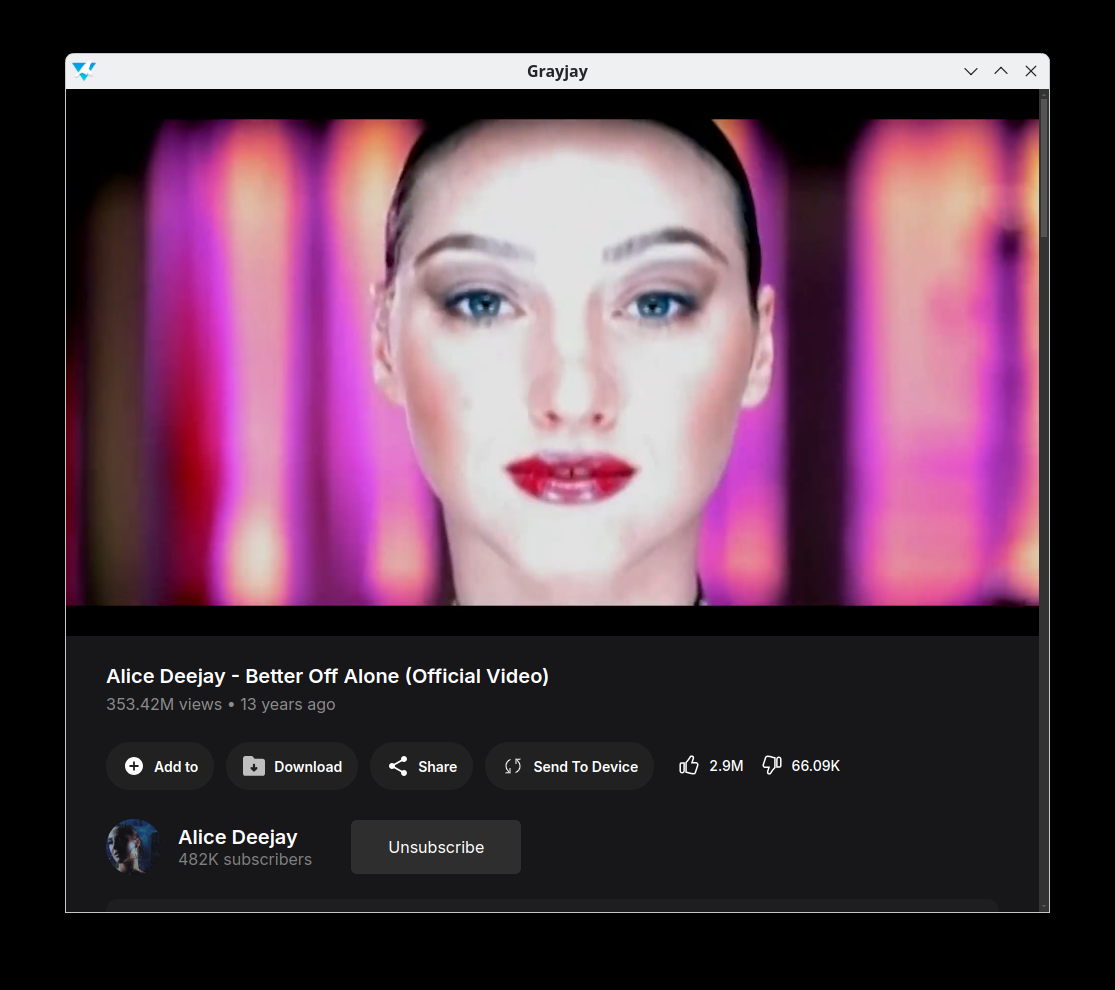
"Better Off Alone" is a iconic song by Alice Deejay, a Eurodance project led by Dutch producer DJ Jurgen in collaboration with Wessel van Diepen, Dennis van den Driesschen, Sebastiaan Molijn, and Eelke Kalberg (Pronti & Kalmani). Initially released as an instrumental by DJ Jurgen in 1997, the track later featured vocals by Judith Pronk, who became a key part of the Alice Deejay project. The song was included on their debut album, "Who Needs Guitars Anyway?" (2000) 12.

The song's creation was influenced by Sebastiaan Molijn's emotional state following a breakup, leading to the memorable line, "Do you think you're better off alone?" 12. The track was produced in various remixes, including the "Vocal Clubmix" and "Pronti & Kalmani Vocal Remix," which contributed to its popularity in clubs and on dance charts worldwide 12.

"Better Off Alone" is known for its fast tempo and catchy melody, written in the key of B major. It has been described as a turning point in the development of commercialized techno sound, sharing similarities with other Eurodance hits of the time, such as "Blue (Da Ba Dee)" by Eiffel 65 12.

The song received mixed initial reviews but has since gained acclaim and recognition. It has been featured on Billboard's lists of the "Best Pop Songs of All Time" and "Best Dance Songs of All Time" in 2023 and 2025 12. The track has also been covered and sampled by various artists, including David Guetta and Lindsay Lohan, showcasing its enduring influence on electronic music 2.

YouTube: https://www.youtube.com/watch?v=Lgs9QUtWc3M

3
submitted 1 year ago* (last edited 1 year ago) by blackbeard@europe.pub to c/Eurodance@europe.pub
 

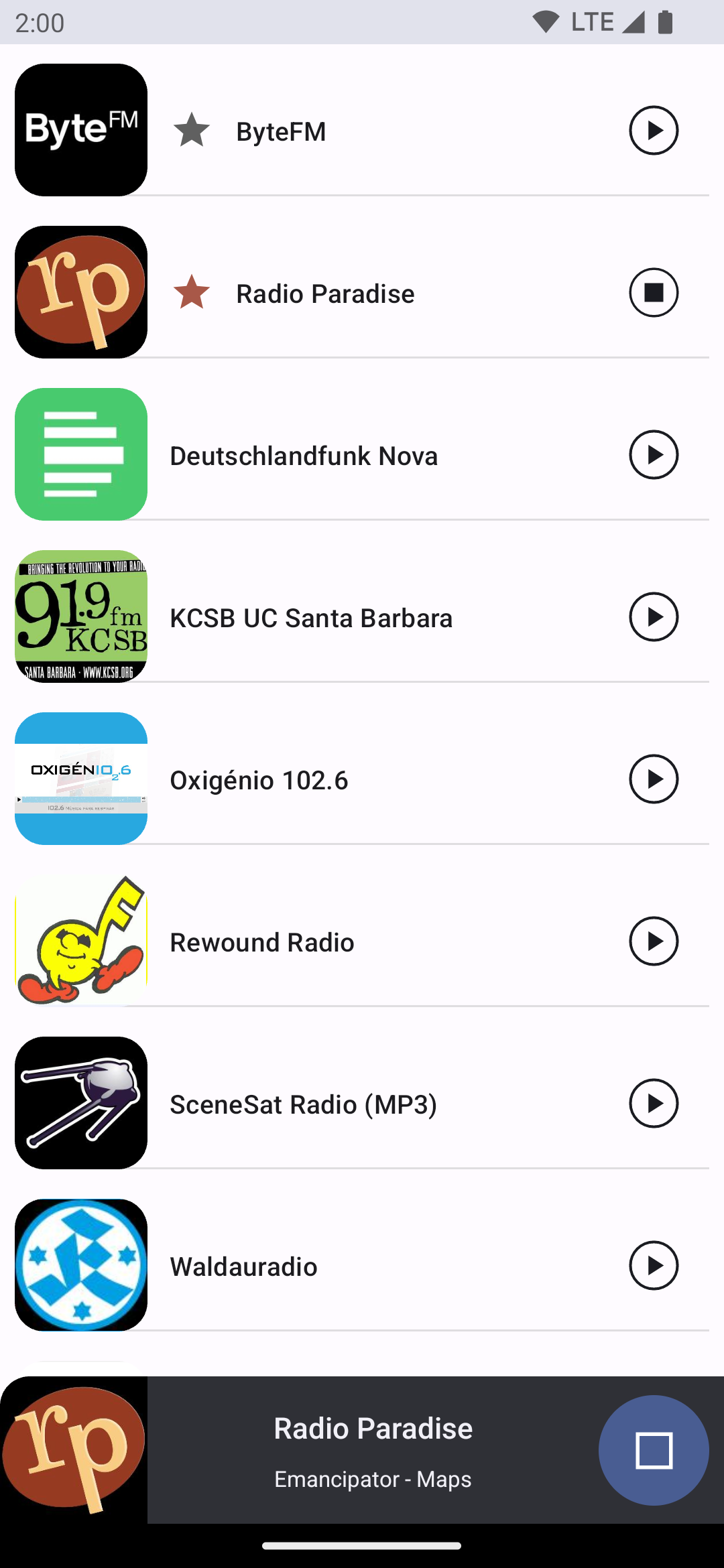
My favourite's radio for Eurodance is the German BDJ that you can listen here

If you are looking for a radio client for your phone, have a look at Transistor:

https://codeberg.org/y20k/transistor!


Let a Boy Cry" is a song written and recorded by Italian singer-songwriter Gala. Released in January 1997 as the second single from her debut album, Come into My Life, the song was co-written by Gala, Filippo Andrea Carmeni, and Maurizio Molella, who also produced the track12.

The song describes a society where men are not ridiculed for their sensitivity, allowing women to be freer. It achieved significant success in Europe, receiving platinum records in France and Belgium, and peaking at number one in Belgium, France, Israel, and Italy. On the Eurochart Hot 100, "Let a Boy Cry" reached number three12.

Critically, the song received positive reviews. Music Week gave it five out of five, praising its catchiness and potential for strong radio airplay. Chris Finan from RM Dance Update rated it four out of five, predicting vigorous demand upon its UK release. Pop Rescue noted that while Gala's vocals occasionally sound flat, the song's tempo and chorus are strong points2.

The accompanying music video, directed by Philippe Antonello, Luca Bigazzi, and Gala, was shot in black-and-white in Venice during the Carnival. It features a scene with two boys kissing, which caused controversy at the time but was seen as a progressive statement by Gala12.

Overall, "Let a Boy Cry" is a notable track from Gala's discography, known for its message of acceptance and its impact on European dance music in the late 1990s

Youtube: https://www.youtube.com/watch?v=_bxaDvSTGl0

9
submitted 1 year ago* (last edited 1 year ago) by blackbeard@europe.pub to c/Eurodance@europe.pub
 

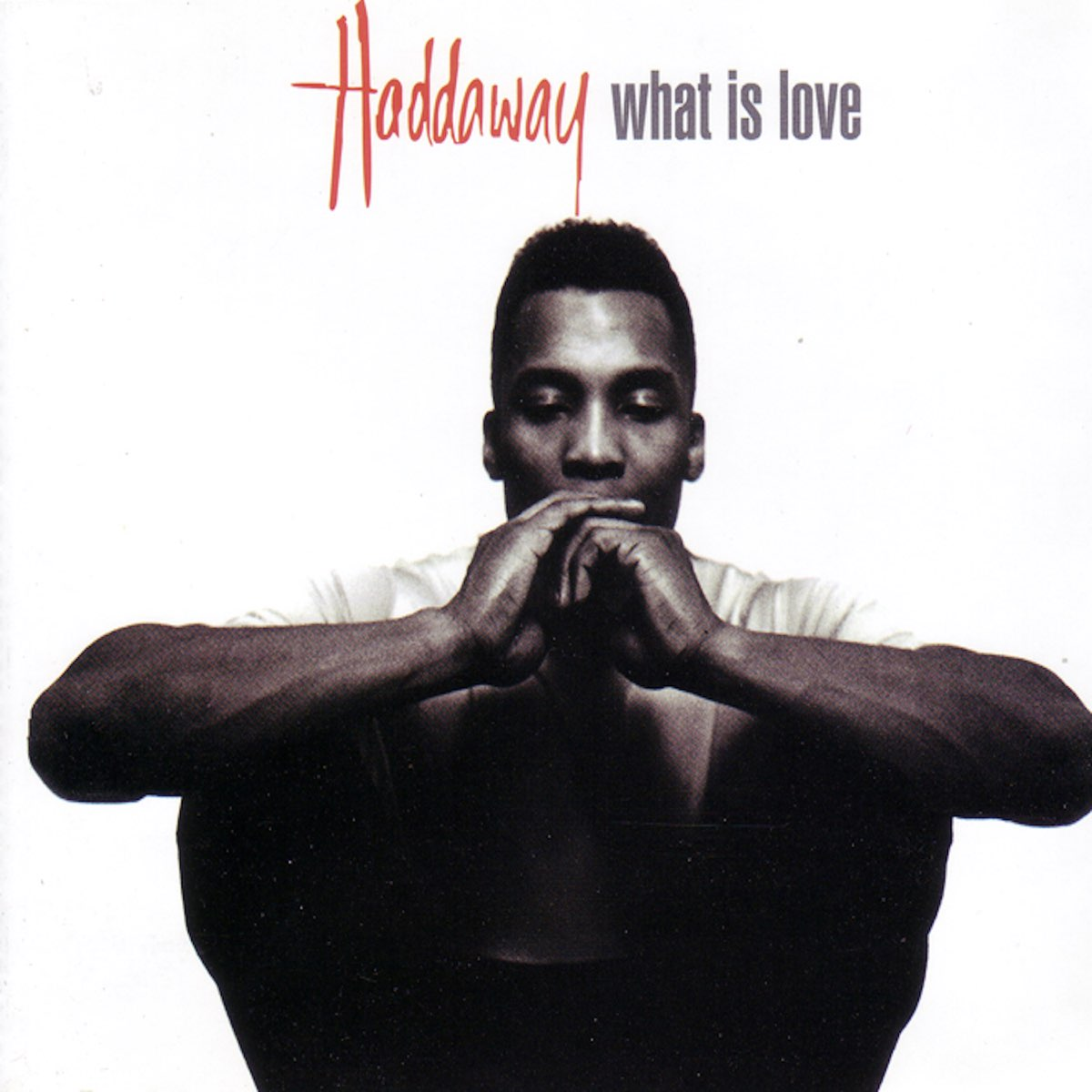
"What Is Love" is a song by Trinidadian-German singer Haddaway, released as his debut single from his debut album, The Album (1993). The song, both written and produced by Dee Dee Halligan and Karin Hartmann-Eisenblätter, was released by Coconut Records in January 1993. It was a hit across Europe, becoming a number-one single in at least 13 countries and reaching number two in Germany, Sweden and the United Kingdom. Outside Europe, the single peaked at number 11 in the United States, number 12 in Australia, number 17 in Canada, and number 48 in New Zealand.

"What Is Love" earned Haddaway two awards at the German 1994 Echo Award, in the categories "Best National Single" and "Best National Dance Single." The music video for "What Is Love" was directed by Volker Hannwacker and received heavy rotation on music television such as MTV Europe.

The song remains Haddaway's most popular and signature song.

YouTube: https://www.youtube.com/watch?v=YTLVNSnbKOI

A Tip on listening music with more privacy and to maybe help the fediverse too.

I use GrayJay as client instead of the Youtube site or android client.

https://grayjay.app/

GrayJay is open source, syncs between devices (locally) , allow offline usage and can be use for different streaming platform, including Spotify and PeerTube. It also stop you be potentially conditionated by google on watching certain content and create unheathy habits.


We have extensive discussions about our enormous dependence on American clouds, but what exactly are we talking about? And is Europe equally dependent on all types of cloud? This article is aimed at policy makers, but it may also provide some clarity about the broader landscape to actual cloud users.

https://berthub.eu/articles/posts/the-european-cloud-ladder/

view more: next ›