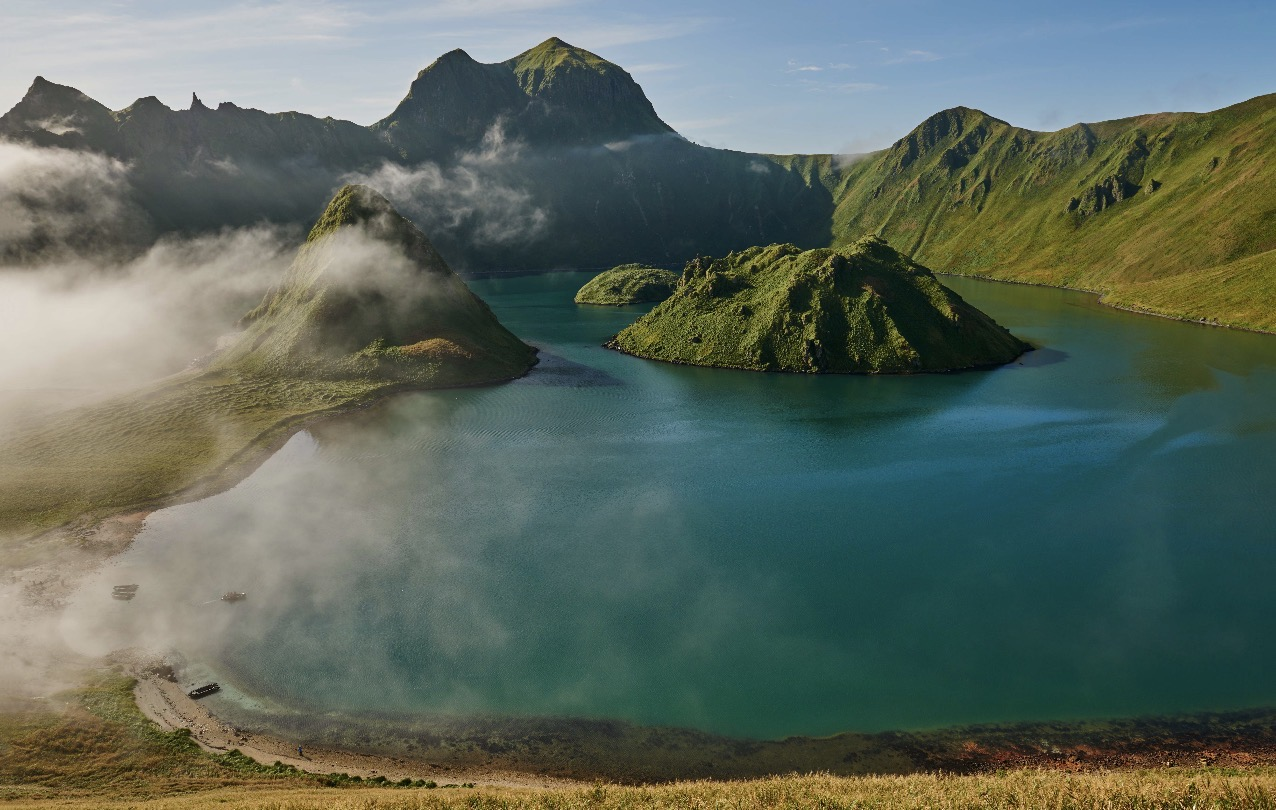
Kamchatka is one of the most isolated and geologically active regions on Earth. Volcanoes, deep lakes, and cold coastal waters dominate the landscape. It is not a place that is fully mapped or easily studied. That matters, because some of the stories coming out of this region don’t read like exaggeration. They read like observation without explanation.
Among local indigenous groups such as the Koryak and Itelmen, there are long-standing accounts of a large aquatic creature known as the Agisys. This is not a modern internet cryptid. The name and the stories existed long before outside attention reached the region.
The Agisys is typically described as a massive, elongated creature moving beneath the surface of lakes or coastal waters. Its body is said to be long and smooth, more like a serpent or oversized fish than anything with limbs. Some accounts describe a head that resembles a wolf or a horse, which gives it a more defined and unsettling presence than a simple eel-like animal.
Most of these sightings are tied to deep, remote lakes such as Lake Azabachye, where visibility is limited and depth works against any attempt to confirm what is there. Witnesses do not describe chaotic movement. The motion is controlled. A wake moving against the current. A section of water rising and shifting before settling again.
There are also more aggressive interpretations. Russian settlers and locals have sometimes referred to similar encounters as the “Vodyanoy Chert,” or “Water Devil.” In these accounts, the creature is not just seen, but felt through its impact. Boats disturbed, heavy nets torn, something large moving with force below the surface.
In more modern language, some refer to it as a “Giant Loach,” based on its eel-like appearance and fast, fluid movement through the water. That name is less mythological, but it reflects the same core observation. Something long, fast, and out of scale with known species.
There are explanations. Massive fish like Kaluga sturgeon can grow to extreme sizes and move in ways that are unfamiliar to most people. Marine animals such as sea lions can also create unexpected disturbances. Even volcanic activity plays a role. Gas releases from lake beds can form moving wakes that look like something traveling beneath the surface.
But those explanations don’t fully erase the pattern.
The same type of movement. The same scale. The same descriptions appearing across different areas and different groups who have no reason to coordinate stories.
What keeps the Agisys from being dismissed outright is not proof. It is consistency.
Kamchatka is one of the few places left where something large could exist without immediate confirmation. The terrain is harsh, the water is deep, and access is limited. If something moves below the surface there, it does not need to reveal itself.
It only needs to be seen once, clearly enough to be remembered.
And in Kamchatka, that has happened more than once.