politics
Welcome to the discussion of US Politics!
Rules:
- Post only links to articles. Title must fairly describe link contents. If your title differs from the site’s, it should only be to add context or be more descriptive. Do not post entire articles in the body or in the comments.
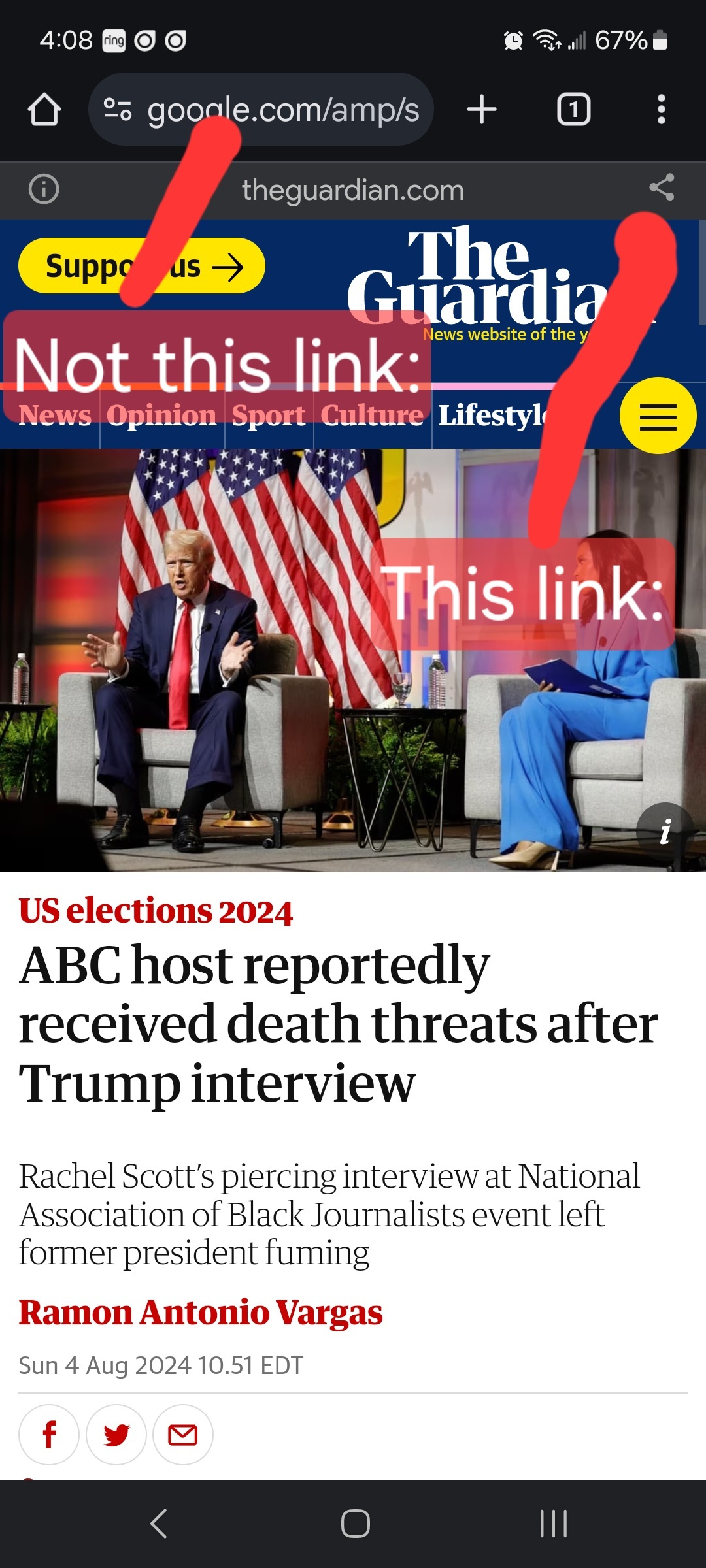
Links must be to the original source, not an aggregator like Google Amp, MSN, or Yahoo.
Example:
- Articles must be relevant to US politics and contain quality and original content. Social Media adjacent hosts like Substack are allowed, but ONLY if they tie back to a company/subsidiary. No personal or friend group blogs and no self-promotion. Articles should be worth reading. Clickbait, stub articles, and re-hosted or stolen content are not allowed. Check your source for Reliability and Bias here.
- Be civil, No violations of TOS. It’s OK to say the subject of an article is behaving like a (pejorative, pejorative). It’s NOT OK to say another USER is (pejorative). Strong language is fine, just not directed at other members. Engage in good-faith and with respect! This includes accusing other users of being bots or paid actors.
- No memes, trolling, misinformation, or low-effort posts/comments (including reposts). If you see posts like this that anger you, do not engage. Report, block, and live a happier life than they do. Any slap-fight is subject to comment removals. Fights full of rule violations will result in temporary bans to cool off.
- No manipulating votes via bots or alt accounts; this will result in permanent bans. Vote based on comment quality, not agreement. This community aims to foster discussion; please reward people for putting effort into articulating their viewpoint, even if you disagree with it.
- No hate speech, slurs, celebrating death, advocating violence, or abusive language. This will result in an account ban. Usernames containing racist, or inappropriate slurs will be permanently banned.
We ask that the users report any comment or post that violate the rules and use critical thinking when reading, posting, and commenting. Users that repeatedly have comments or posts removed, weaponize reports, or violate the code of conduct, will be banned.
All posts and comments will be reviewed on a case-by-case basis. This means that some content that violates the rules may be allowed, while other content that does not violate the rules may be removed. The moderators retain the right to remove any content and ban users. The reason(s) behind moderator action(s) are publicly available through the Modlog.
That's all the rules!
Civic Links
• Congressional Awards Program
• Library of Congress Legislative Resources
• U.S. House of Representatives
Partnered Communities:
• News
view the rest of the comments
Turning in a ballot with an empty selection is exactly the way to send the "voting for nobody" message that non-voters convince themselves they are sending, rather than the "you don't need to care about my opinion on the issues because I don't vote" message that it actually sends.
I cannot tell you how many sanctimonious jackasses I've met in my life that think their non-action is "sending a message".
Staying home or doing performative nonsense like not selecting a candidate or voting third party is basically non-action, and virtually no one sees the message or cares.
I thought it rather silly when I was still in university and hearing it from peers. These days, when someone my age tells me they have been doing this for decades I usually ask him them who has gotten their "message" and what was done about it?
We've tried nothing and we're out of ideas!
One of the recent local elections i voted in had a list of 3 shit Republicans for sheriff. I chose to vote for none of them. Every other ballot choice i filled out.
Unless the elections are rigged any party has the same chances of winning, stop spreading misinformation and propaganda, voting a third party is as much action as voting red and blue is.
The overall election rules are rigged in favor of the D/R duopoly. I have several big posts, with sources, on the current statistics. To summarize:
Unless you have an independent or 3rd party incumbent, or have some form of ranked choice in your district the winner will be either the D or R nominee.
Your argument is that elections are rigged because a third party never got voted for?
I'm showing the observations that would lead one to hypothesize that the elections are rigged against 3rd parties. If you can look at the gerrymandered districts, the ballot access rules, the minimum percentage of the vote needed for public funding, the plurality-based vote counting, etc and then combine that with the statistically non-existent representation of 3rd party and independent legislators at the state and federal level and not suspect that the elections are rigged against 3rd parties then I don't know what to else to say to you.
This is not an accurate statement. Plurality voting inevitably results in a two party system, due to the spoiler effect.
Until we switch away from plurality voting, voting for a third party helps the party you least align with. It's math. If you're thinking of a scenario where magically a majority of voters all vote for a third party, you're not taking this seriously; that is not a realistic scenario.
Now, if you live in Maine, Alaska, or whatever other places that have switched from plurality voting (a) I'm very jealous and (b) you're encouraged to vote any third party as you see fit.
That's literally what they're implying. They're straight delusional. And, unfortunately, there's a LOT of voters and non-voters out there that are as well.
There should be a name for the fallacy where your stance presupposes that everyone in an uncoordinated system behaves in a coordinated fashion. Let's call it "The Green Party Fallacy".
People voting for whoever they want is a realistic scenario in democratic elections.
Do you understand what the spoiler effect is? It's sometimes called "splitting the vote".
It's why having, for example, two left leaning candidates and one right leaning candidate results in a win for the right-leaning candidate. With plurality voting the candidate with the most votes wins, without regard for whether that candidate has majority (more than 50%) of the vote.
Let's imagine that we have a population of 100 people and the demographic breakdown is that 60 of them are left leaning and 40 are right leaning. In a two party vote, the left leaning candidate wins. Now imagine a three party election with a liberal, a progressive, and a conservative. If more than 20 left-leaning people vote for the progressive candidate, the conservative wins. Since the voters know this, they have strong incentives to vote for the left leaning candidate they think is most likely to get the most votes, not the one they most align with.
It is technically possible for everyone on the left to all switch parties at the same time, but realistically impossible, especially considering that many people do prefer liberals over progressives.
The only way we get more than two parties is by abandoning plurality voting, and if you're voting for a third party in a plurality voting system, you're helping the candidate you least align with.
The world isn't divided in left and right, you are still assuming that voting for a third party is voting for blue.
My examples assume those things, but you're free to switch them around as you like; it doesn't change the underlying principle.
The key element of the spoiler effect is that a majority isn't required. If you have 100 candidates and 100 voters, someone can win with only 2 out of 100 votes.
I am guessing that you very strongly do not want this to be true, but unfortunately that doesn't make it so.
The good news, assuming you're an American, is that the states dictate how voting works. Some states, like Maine, have moved away from plurality voting for some elections. In those states there is no harm in voting third party, as long as your vote finalizes on the major party you most align with. If your state still uses plurality voting, now you know exactly what to push for to get more representative voting in your state.
33% people vote blue, 33% people vote red , 34% people vote third party. Third party wins.
Yes, but that's magical thinking. The spoiler effect affects voting behavior. You aren't going to get 33% of voters to do that. Even if that did miraculously happen, the "blue" voter is faced with the spoiler effect in the subsequent elections; the point is that voters generally understand that splitting the vote is counter-productive.
This is not up for debate, it's a well defined phenomenon.
If you want more than two parties, push to move from plurality voting.
joe explained it very well to you. You should stop being obtuse and listen to joe
You are assuming that American elections are more democratic than they really are.
How are they not democratic?
Every couple of months a brand new movie comes out and millions of people go to watch it because they hear about it on ads. It takes less than a month to make something popular among the public.
That's not a metric on how to measure how democratic a government is.......?
Democracy is measured by how much access the average citizen has to influence how the nation is run. Compared to a direct democracy, the average American is pretty separated from the levers of powers. We are a democratic Republic, meaning that we do not directly vote for every law, but instead vote on representatives to vote on those laws.
How these representatives are elected, how much power they have, and how they can operate in regards to their constituent's will are all ways that we are moved further away from the democratic process.
LOL, it's not misinformation to state the fact that voting third party is basically pissing away your vote. There is no real serious third party option. Maybe we can talk about some other country or some future where a serious party emerges in this country. Until then, what I said is truth.
Arguing to not vote for third parties because they can never win is indeed misinformation. Governments spend billions in propaganda, what the hell do you think they are advocating for? for people to vote for parties that aren't part of the government?
I would argue that any party is a more serious option than red or blue, they don't have blood on their hands.
All it takes for a party to get traction and votes is popularity and popularity can be farmed in a day, if a bunch of famous people with millions of followers would start advocating for a third party you would have a revolution in a week.
Not if they don't stand the remotest chance in hell of winning.
Oh, is that it?
Ok, you're just delusional.
Hey, it's like if every single worker in this country agreed to take part in a national strike, then worker's demands would be met the next day. Oh wait, that's a fantasy scenario that will never happen.
Lol. WTF?
Kiddo. The most popular 3rd party candidate in the last election (Jill Stein) got a whopping half of a single percent of the total votes cast. That means that there was absolutely, positively, categorically no path to victory for her.
So yeah, voting 3rd party, in a national election, is literally pointless and equivalent to inaction.
If you want to vote 3rd party in local/state elections, great. You HAVE to do that for a LONG TIME to start getting more than ZERO 3rd party reps in Congress, and making that 3rd party a household name, before it stands the remotest chance in hell of winning a national election, such as the presidency.
On a practical matter the message is still "both are equally acceptable to me", with a small shade of a slightly louder "I wish there was someone better".
But it indicates you actively participate and are therefore a winnable vote. That means campaigns are more likely to reach out to you in some way.
Since votes are secret, it really just indicates "I voted is this election and are 50/49/1 percent likely to have voted winner/runner-up/either"
I think not voting at all is a stronger message of "I wasn't encouraged to actually vote for or against either", but it's also indistinguishable from "I just don't care anymore" or "I was in a coma that November"
Have you observed that to be moving the DNC to the left over the past few decades? My observation is that after Kamala received fewer votes than Biden and lost to Trump, in the face of the historic (yet still measly) 4% of the primary vote being for Uncommitted, the entrenched neoliberals are digging in their heels and continuing to oppose progressive primary candidates in 2025 and 2026 primaries. My conclusion is that they don't care, and we can't trust them to get any message other than "you're fired, and being replaced by this progressive candidate." And the only way to do that is by voting for a progressive primary challenger in the primary.
I see people who don't vote saying they never receive any flyers, calls, texts, canvassers, or any other kind of outreach from any campaigns. And then I see people who voted in either the primary or the general say they are bombarded with those types of outreach. So it's hard for me to conclude anything other than that campaigns by and large ignore people with a public record of not voting. Because it's harder and costs more to get a non-voter to vote than it is to get a voter to vote against the opposition. And in first-past-the-post, that is truly what your vote is in the general. Not a vote for the best, but a vote against the worst who is most likely to win.
"First-past-the-post" is a terrible moniker to describe the sort of single ballot plurality wins elections common in the USA. It's metaphor is clumsy to the point of inaccuracy, since there isn't any predermined scale that declares a winner. Whether only 3 votes are cast or 3 million, the winner is whomever has the biggest pile. A better sports metaphor might be "shotput", but I think "plurality wins" is clear enough.
That being said, that the democratic establishment is ignoring the signals doesn't mean that they aren't relatively strong. The party's voters are moving to the left, so even if the consultant gang isn't responding to the collective "ew" of Uncommitted someone is.
Yeah, agreed on the wording.
What I mean is whether the signal is being ignored or misinterpreted is kind of immaterial. The desired result is not being observed, so a different tactic is required. We consistently have more non-voters than primary voters, so why not try voting in the primaries where each vote carries more weight than it does in the general? It certainly can't be construed as a tacit approval of neoliberal policies like a vote for such a nominee in the general could be. So you still get a more clear and direct message than you did with non-voting.
There’s always a worse choice of the choices for who to vote for.
Vote for the other one.
The only perfect candidate for you is you yourself. If you're not running, and you don't have some form of ranked choice, not voting against the worse candidate is one fewer vote they need to overcome in order to win. And for your 1 vote against them, they need two for them to get ahead.
you just wrote 'die' on a piece of paper...
"I'm aware."