politics
Welcome to the discussion of US Politics!
Rules:
- Post only links to articles, Title must fairly describe link contents. If your title differs from the site’s, it should only be to add context or be more descriptive. Do not post entire articles in the body or in the comments.
Links must be to the original source, not an aggregator like Google Amp, MSN, or Yahoo.
Example:
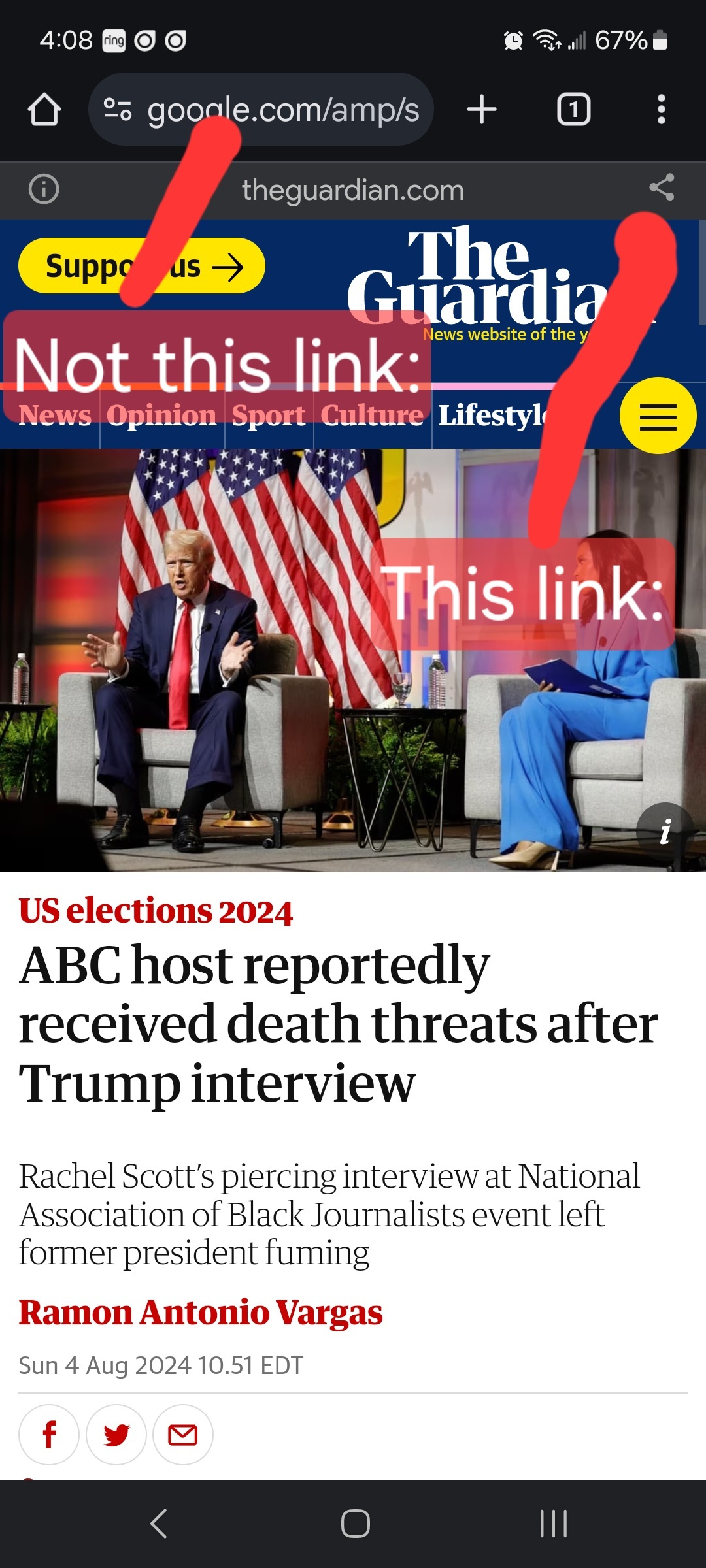
- Articles must be relevant to politics. Links must be to quality and original content. Articles should be worth reading. Clickbait, stub articles, and rehosted or stolen content are not allowed. Check your source for Reliability and Bias here.
- Be civil, No violations of TOS. It’s OK to say the subject of an article is behaving like a (pejorative, pejorative). It’s NOT OK to say another USER is (pejorative). Strong language is fine, just not directed at other members. Engage in good-faith and with respect! This includes accusing another user of being a bot or paid actor. Trolling is uncivil and is grounds for removal and/or a community ban.
- No memes, trolling, or low-effort comments. Reposts, misinformation, off-topic, trolling, or offensive. Similarly, if you see posts along these lines, do not engage. Report them, block them, and live a happier life than they do. We see too many slapfights that boil down to "Mom! He's bugging me!" and "I'm not touching you!" Going forward, slapfights will result in removed comments and temp bans to cool off.
- Vote based on comment quality, not agreement. This community aims to foster discussion; please reward people for putting effort into articulating their viewpoint, even if you disagree with it.
- No hate speech, slurs, celebrating death, advocating violence, or abusive language. This will result in a ban. Usernames containing racist, or inappropriate slurs will be banned without warning
We ask that the users report any comment or post that violate the rules, to use critical thinking when reading, posting or commenting. Users that post off-topic spam, advocate violence, have multiple comments or posts removed, weaponize reports or violate the code of conduct will be banned.
All posts and comments will be reviewed on a case-by-case basis. This means that some content that violates the rules may be allowed, while other content that does not violate the rules may be removed. The moderators retain the right to remove any content and ban users.
That's all the rules!
Civic Links
• Congressional Awards Program
• Library of Congress Legislative Resources
• U.S. House of Representatives
Partnered Communities:
• News
view the rest of the comments
People voting for whoever they want is a realistic scenario in democratic elections.
Do you understand what the spoiler effect is? It's sometimes called "splitting the vote".
It's why having, for example, two left leaning candidates and one right leaning candidate results in a win for the right-leaning candidate. With plurality voting the candidate with the most votes wins, without regard for whether that candidate has majority (more than 50%) of the vote.
Let's imagine that we have a population of 100 people and the demographic breakdown is that 60 of them are left leaning and 40 are right leaning. In a two party vote, the left leaning candidate wins. Now imagine a three party election with a liberal, a progressive, and a conservative. If more than 20 left-leaning people vote for the progressive candidate, the conservative wins. Since the voters know this, they have strong incentives to vote for the left leaning candidate they think is most likely to get the most votes, not the one they most align with.
It is technically possible for everyone on the left to all switch parties at the same time, but realistically impossible, especially considering that many people do prefer liberals over progressives.
The only way we get more than two parties is by abandoning plurality voting, and if you're voting for a third party in a plurality voting system, you're helping the candidate you least align with.
The world isn't divided in left and right, you are still assuming that voting for a third party is voting for blue.
My examples assume those things, but you're free to switch them around as you like; it doesn't change the underlying principle.
The key element of the spoiler effect is that a majority isn't required. If you have 100 candidates and 100 voters, someone can win with only 2 out of 100 votes.
I am guessing that you very strongly do not want this to be true, but unfortunately that doesn't make it so.
The good news, assuming you're an American, is that the states dictate how voting works. Some states, like Maine, have moved away from plurality voting for some elections. In those states there is no harm in voting third party, as long as your vote finalizes on the major party you most align with. If your state still uses plurality voting, now you know exactly what to push for to get more representative voting in your state.
33% people vote blue, 33% people vote red , 34% people vote third party. Third party wins.
Yes, but that's magical thinking. The spoiler effect affects voting behavior. You aren't going to get 33% of voters to do that. Even if that did miraculously happen, the "blue" voter is faced with the spoiler effect in the subsequent elections; the point is that voters generally understand that splitting the vote is counter-productive.
This is not up for debate, it's a well defined phenomenon.
If you want more than two parties, push to move from plurality voting.
joe explained it very well to you. You should stop being obtuse and listen to joe
You are assuming that American elections are more democratic than they really are.
How are they not democratic?
Every couple of months a brand new movie comes out and millions of people go to watch it because they hear about it on ads. It takes less than a month to make something popular among the public.
That's not a metric on how to measure how democratic a government is.......?
Democracy is measured by how much access the average citizen has to influence how the nation is run. Compared to a direct democracy, the average American is pretty separated from the levers of powers. We are a democratic Republic, meaning that we do not directly vote for every law, but instead vote on representatives to vote on those laws.
How these representatives are elected, how much power they have, and how they can operate in regards to their constituent's will are all ways that we are moved further away from the democratic process.