politics
Welcome to the discussion of US Politics!
Rules:
- Post only links to articles, Title must fairly describe link contents. If your title differs from the site’s, it should only be to add context or be more descriptive. Do not post entire articles in the body or in the comments.
Links must be to the original source, not an aggregator like Google Amp, MSN, or Yahoo.
Example:
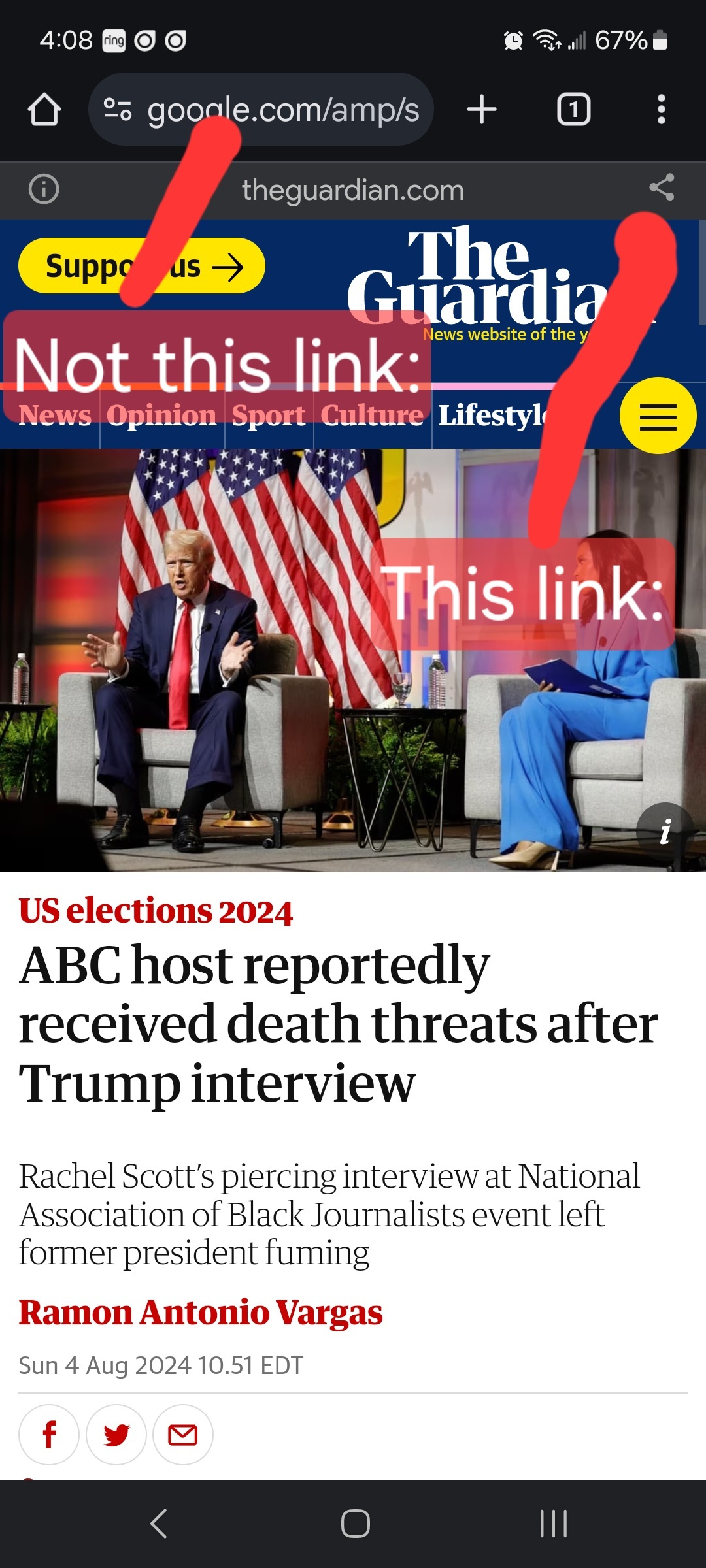
- Articles must be relevant to politics. Links must be to quality and original content. Articles should be worth reading. Clickbait, stub articles, and rehosted or stolen content are not allowed. Check your source for Reliability and Bias here.
- Be civil, No violations of TOS. It’s OK to say the subject of an article is behaving like a (pejorative, pejorative). It’s NOT OK to say another USER is (pejorative). Strong language is fine, just not directed at other members. Engage in good-faith and with respect! This includes accusing another user of being a bot or paid actor. Trolling is uncivil and is grounds for removal and/or a community ban.
- No memes, trolling, or low-effort comments. Reposts, misinformation, off-topic, trolling, or offensive. Similarly, if you see posts along these lines, do not engage. Report them, block them, and live a happier life than they do. We see too many slapfights that boil down to "Mom! He's bugging me!" and "I'm not touching you!" Going forward, slapfights will result in removed comments and temp bans to cool off.
- Vote based on comment quality, not agreement. This community aims to foster discussion; please reward people for putting effort into articulating their viewpoint, even if you disagree with it.
- No hate speech, slurs, celebrating death, advocating violence, or abusive language. This will result in a ban. Usernames containing racist, or inappropriate slurs will be banned without warning
We ask that the users report any comment or post that violate the rules, to use critical thinking when reading, posting or commenting. Users that post off-topic spam, advocate violence, have multiple comments or posts removed, weaponize reports or violate the code of conduct will be banned.
All posts and comments will be reviewed on a case-by-case basis. This means that some content that violates the rules may be allowed, while other content that does not violate the rules may be removed. The moderators retain the right to remove any content and ban users.
That's all the rules!
Civic Links
• Congressional Awards Program
• Library of Congress Legislative Resources
• U.S. House of Representatives
Partnered Communities:
• News
view the rest of the comments
Nobody gets disenfranchised. Rather this compact enables the radical idea of "one person, one vote".
So they kinda do. Mainly because the constitution doesn't set up a one, person, one vote type of government. So by circumventing the constitution, it would be disenfranchising people from small states that are supposed to have a "louder" voice in a way. Now, the concept dates back from when states were far more autonomous, and the federal gov was not so strong. So I think we agree that it is outdated, and one person one vote would be better. But disenfranchised doesn't mean losing your vote, it means losing the power of your vote as granted by the current rules.
Sure but the constitution set up a far far more proportionally representative system than what we currently have. If the house was just uncapped this wouldn't be a problem, no I don't care how much of a problem uncapping the house be they can go fuck themselves.
It can't enable anything without federal oversight via a constitutional amendment. Voting is within the purview of each individual state, so the states in this compact have no oversight on their peers (let alone the powers to demand a recount or rerun the election).
For example, let's say 20 states make up exactly 270 EC votes. The popular vote within those states (if allocated proportional to votes) ends up as 136/270 to candidate X. The other 30 states report universal support for candidate Y.
By rights, Y should win with 402 EC votes and 74% of the popular vote. But if the compact chooses to ignore those states as fraudulent then candidate X wins with a mere 26%.
Similar fuckery can happen with late reporting of votes or a state in the compact reneging on the agreement and voting against the rest. There's absolutely nothing binding about this, it's just a pinky promise among these states.
You're a touch off. If the state passes a law backing the compact, it is now law in their state. The feds don't have much of a say unless they make a case for discrimination. It's true the other states have no power to enforce it, but they don't have to. Someone from an offending state can sue their state for ignoring a law they passed. And there would be no shortage of such someones.
Unless they strongly protect the compact (such as putting it in the state constitution) they can just as easily repeal it. And honestly it would be downright negligent to not add an escape hatch.
I'd also expect a bunch of lawsuits the first time a candidate wins a state but the compact flips the result.
Of course they can change the law. But if they don't do it before the election, the change would be legally dubious at best.
I don't expect there to be lawsuits from the compact "flipping results" as you put it, partly because that's entirely the wrong framing for how it works but mostly because all those lawsuits would be gotten out of the way when the laws first come into effect. The reason flipping a state's results is the wrong framing is simple, the compact only comes into effect when there are enough electoral college votes participating to be able decide the election on their own. At that point it is meaningless to say someone "won" any individual state, because the only number that matters is the national vote.
I think maybe you misunderstood the compact.
I'm your example, the states who signed the compact would all put their votes to candidate Y, assuming they had more popular votes in all states.
It's not "join us or be punished", it's "we will implement the will of the majority, not matter what".
So, as in my original comment, you would expect the blue states to graciously allow Texas + Florida + a few other deep red states to unilaterally declare the winner by leveraging the compact's EC votes? When push comes to shove this compact will either be kingmakers or fall apart.
The 17th Amendement requires the direct election of Senators. Blue state accept red states' votes for those.
If you're going to make an argument based on bad faith of states, then the US basically ceases to exist as a republic, regardless of whether you have the compact.
What about recent American politics gives you the impression that states will act in good faith? Hell, look back even farther at the slave state collusion for Mexican territory, secession, Reconstruction fuckery, Jim crow, etc...
The only limit to states acting in bad faith has historically been the federal government. When states start fucking around too much, laws like the Voting Rights Act get drawn up to claw more power away from them.
IMO the state-federation experiment has all but failed and the majority of good faith states need a proper convention to build a modern government. Choosing now of all times to put your faith in those anti-democratic, Christo-fascist slave states is the dumbest option possible.