politics
Welcome to the discussion of US Politics!
Rules:
- Post only links to articles, Title must fairly describe link contents. If your title differs from the site’s, it should only be to add context or be more descriptive. Do not post entire articles in the body or in the comments.
Links must be to the original source, not an aggregator like Google Amp, MSN, or Yahoo.
Example:
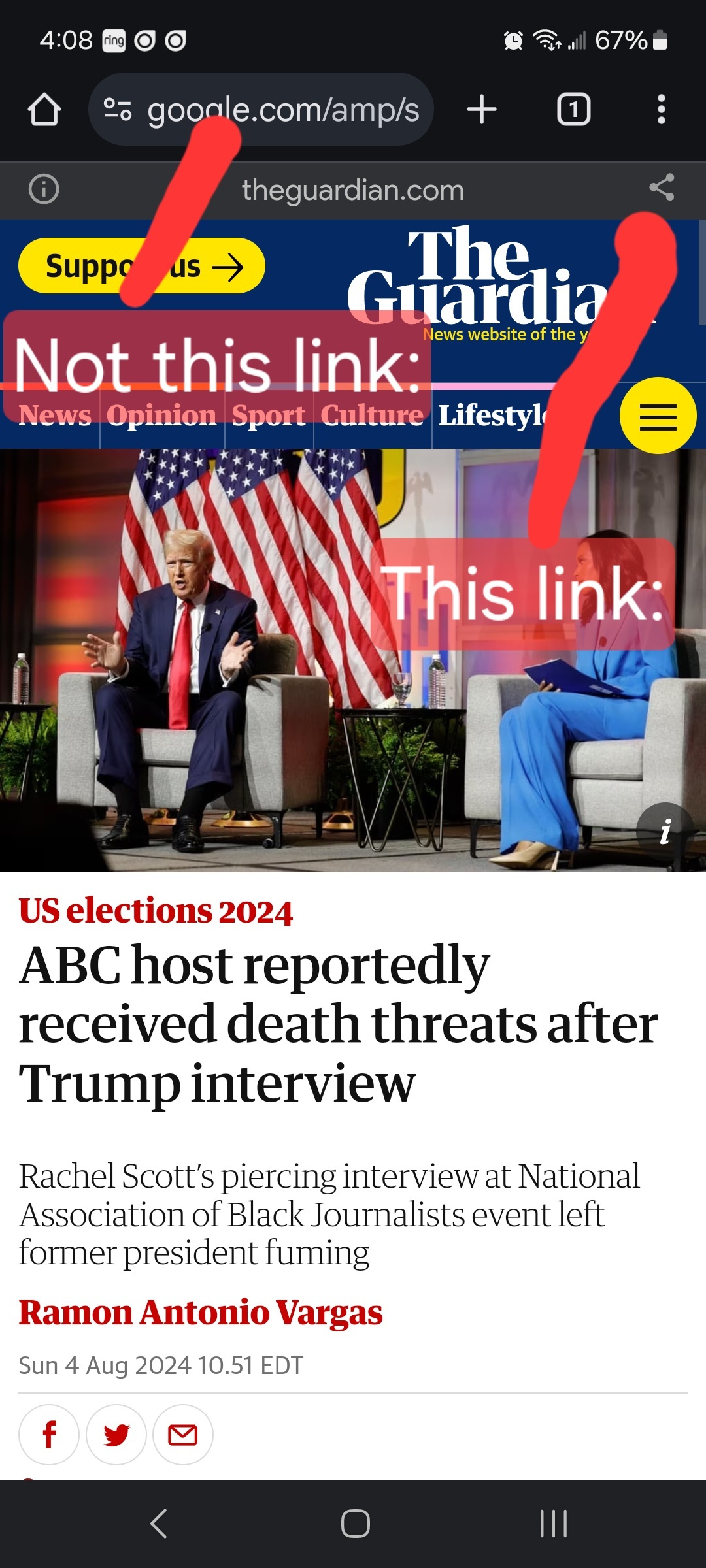
- Articles must be relevant to politics. Links must be to quality and original content. Articles should be worth reading. Clickbait, stub articles, and rehosted or stolen content are not allowed. Check your source for Reliability and Bias here.
- Be civil, No violations of TOS. It’s OK to say the subject of an article is behaving like a (pejorative, pejorative). It’s NOT OK to say another USER is (pejorative). Strong language is fine, just not directed at other members. Engage in good-faith and with respect! This includes accusing another user of being a bot or paid actor. Trolling is uncivil and is grounds for removal and/or a community ban.
- No memes, trolling, or low-effort comments. Reposts, misinformation, off-topic, trolling, or offensive. Similarly, if you see posts along these lines, do not engage. Report them, block them, and live a happier life than they do. We see too many slapfights that boil down to "Mom! He's bugging me!" and "I'm not touching you!" Going forward, slapfights will result in removed comments and temp bans to cool off.
- Vote based on comment quality, not agreement. This community aims to foster discussion; please reward people for putting effort into articulating their viewpoint, even if you disagree with it.
- No hate speech, slurs, celebrating death, advocating violence, or abusive language. This will result in a ban. Usernames containing racist, or inappropriate slurs will be banned without warning
We ask that the users report any comment or post that violate the rules, to use critical thinking when reading, posting or commenting. Users that post off-topic spam, advocate violence, have multiple comments or posts removed, weaponize reports or violate the code of conduct will be banned.
All posts and comments will be reviewed on a case-by-case basis. This means that some content that violates the rules may be allowed, while other content that does not violate the rules may be removed. The moderators retain the right to remove any content and ban users.
That's all the rules!
Civic Links
• Congressional Awards Program
• Library of Congress Legislative Resources
• U.S. House of Representatives
Partnered Communities:
• News
view the rest of the comments
This compact is extremely unlikely to ever be enforceable. The ensuing court cases would make 2000 seem minor.
The Constitution gives the power to the states to appoint and direct their electors.
Supreme Court: "Not like that."
Interstate compacts require congressional approval. This one doesn't have that. There's also a good argument that a state giving all it's votes to someone the state didn't vote for in the majority violates the rights of it's citizens to a republican form of government.
And the Supreme Court has already ruled 3 different times that congressional approval for interstate compacts is implicit, unless the compact shifts power from federal to the state.
States determine their election laws. Including how they apportion electoral college electors. I'm not sure what the counter-argument to that is.
Not a legal argument but there is at least one state that already floated the idea of undermining the whole thing by refusing to publish their vote totals until all the electors are gathered to vote thereby preventing the popular vote from being determined ahead of time.
Then couldn't they just ignore that state in the tally? It's just a quick way to disenfranchise your own state.
A red state refuses to publish their voter tally.
Every blue state in the compact chooses to ignore that state.
Since they can't know the true popular vote count, every red state in the compact has cover to refuse to cast blue EC votes as required by the compact.
If you and your state overwhelmingly votes for candidate A, yet your state's EC votes are cast for Trump's third term, you (or people like you) are going to demand your state withdraw from the compact.
If the compact ever actually affects an election, it will be scrapped in a hot minute.
yup. once it reaches the threshold, the congressional and legal battles that follow will likely keep it from ever actually taking effect without a constitutional amendment.
It seems pretty cut and dry to me. It gives absolutely no guard rails, limits, directives, or even suggestions as to how those states' legislatures may appoint Electors. They can do it "in such manner as [they] may direct". The states have the latitude to decide how to assign and direct their Electors however they see fit.
It's already enough latitude that different states at different times have decided A) to give an elector to the winner of each district and two to the winner of that statewide winner, B) to give them all to the statewide winner, C) to have the legislature decide without a popular vote, and D) to hold a state vote and then ignore it anyway and let the legislature decide instead. And 13 states, still, fully allow individual "faithless" Electors to vote against their assigned/pledged candidate, and only 14 states will actually void and replace the electors who misplaced their vote (the other states where it is disallowed just give them a fine or criminally charge them but still let their vote stand)...
If that's the kind of latitude that is already settled law, then it would be absolutely insane to draw the line at assigning Electors on the will of the whole nation, i.e. of the entire body of people who has a pony in this race, and based on a compact that the states representing the majority of Americans agreed upon. It doesn't disenfranchise anyone, the current system does that.
I'm sure that it will be challenged. But there is absolutely no legal justification to overturn it.
The compact presumes that the individual states officially publish their popular vote count prior to the EC vote count. An unaffiliated state (or multiple states) can unilaterally declare that they will not officially publish their popular vote count until after the EC meets. The members of the compact cannot provably know the popular vote count; they cannot provably know that they will be casting their votes for the winner of the national popular vote, as required by the compact.
That theoretical possibility is sufficient justification to overturn the whole compact.
Further, if there is every a scenario where the compact actually changes the outcome of an election, any state that would be forced to switch its EC vote will see their populace pushing for immediate withdrawal from the compact, before the EC can even meet. They will have legislation drawn up and ready to sign on election day, releasing their electors from the requirements of the compact.
As a theoretical exercise, the compact is interesting. As a practical alternative to the EC, it utterly fails.
In such cases as the popular vote cannot be determined, or should enough members withdraw such that the majority of Electors no longer fall under the compact, the states can just fall back to their previous methods for determining their elector distribution. That's already established in the compact for the latter case, if I recall, though I don't know that they've a specific provision for another state not publishing their popular vote count. But regardless, worst case scenario, it can just default back to how it already is now.
That would cause the compact to be ineffective, certainly, but still not constitutionally unsound or illegal.
But even that isn't really a true limitation. If they wanted to, they could also just decide to only consider the officially published vote counts of all the states that choose to report it to keep any rogue states from holding the compact hostage. Or they could even just only count the votes of those states in the compact if they so collectively chose, to. I doubt they would, but they could. Again, they have unbound latitude here. Hell, if they were so inclined they could collectively decide to elect the president with the first name in alphabetical order. What's to stop them?
I don't think the compact allows for only counting votes from participating states, but otherwise yeah.
It doesnt now. Nothing stops them from agreeing to change the compact though.
Making that change would be at least as difficult as getting it passed in the first place has been, probably harder, since for that to happen each state would need to pass a new law amending it.
I wasn't suggesting that changing it so would be easy or simple. The point of the thread thus far was discussing the legality and effectiveness of such a compact.
Someone suggested that as it is now it would be challenged and overturned by the courts. I argued that it is well within the bounds of the language in the constitution and legal precedent.
And someone else suggested that would all but be overturned if any state withheld their voting numbers or if any state in the compact withdrew. I was agreeing that it could be stymied by such things under the current terms of the compact, but also pointing out that the compact can be changed by those in it to make it more resilient/impervious to external sabotage and to mitigate the risks of a schism while still remaining in constitutional bounds.
The difficulty of that change is not nothing, for sure, but still far easier than a constitutional amendment.
It's not just battles trying to delay it. There's very good legal arguments that congressional approval is required at a minimum in addition to states signing on.