Introduction: When a Religion Starts With Pasta
Some religions begin with sacred mountains, prophets, or cosmic revelations. The religion centered around the Flying Spaghetti Monster began with… pasta.
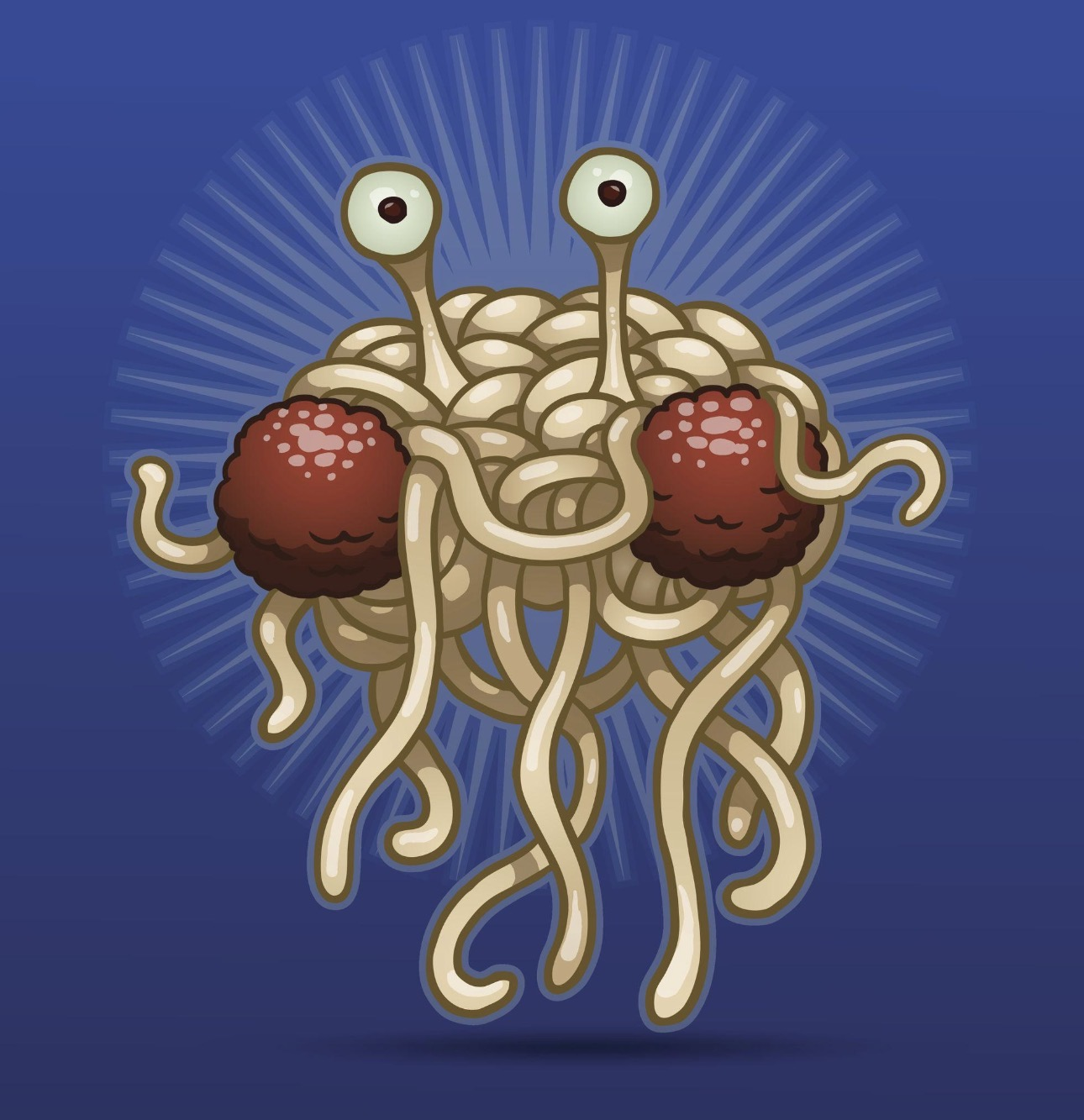
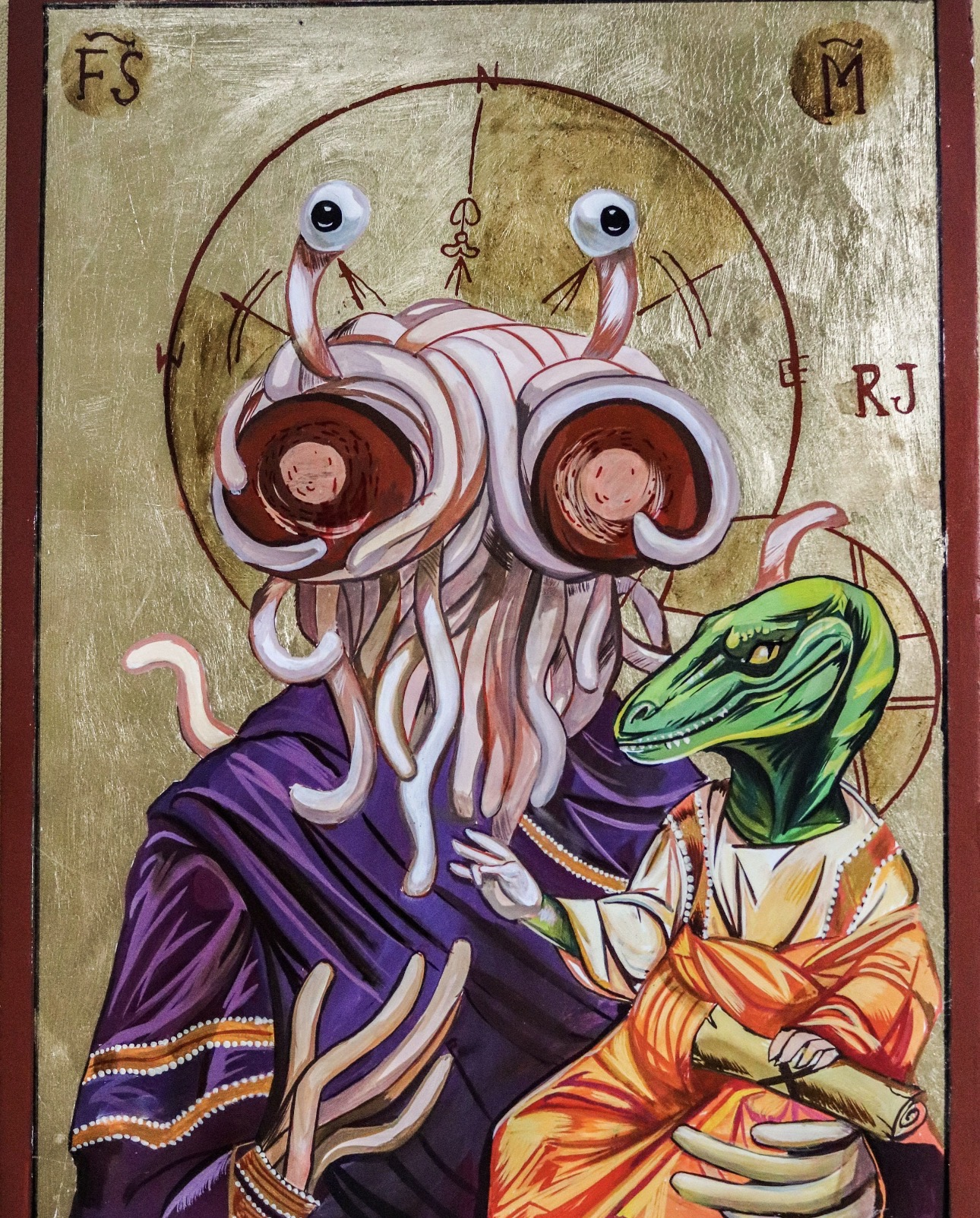
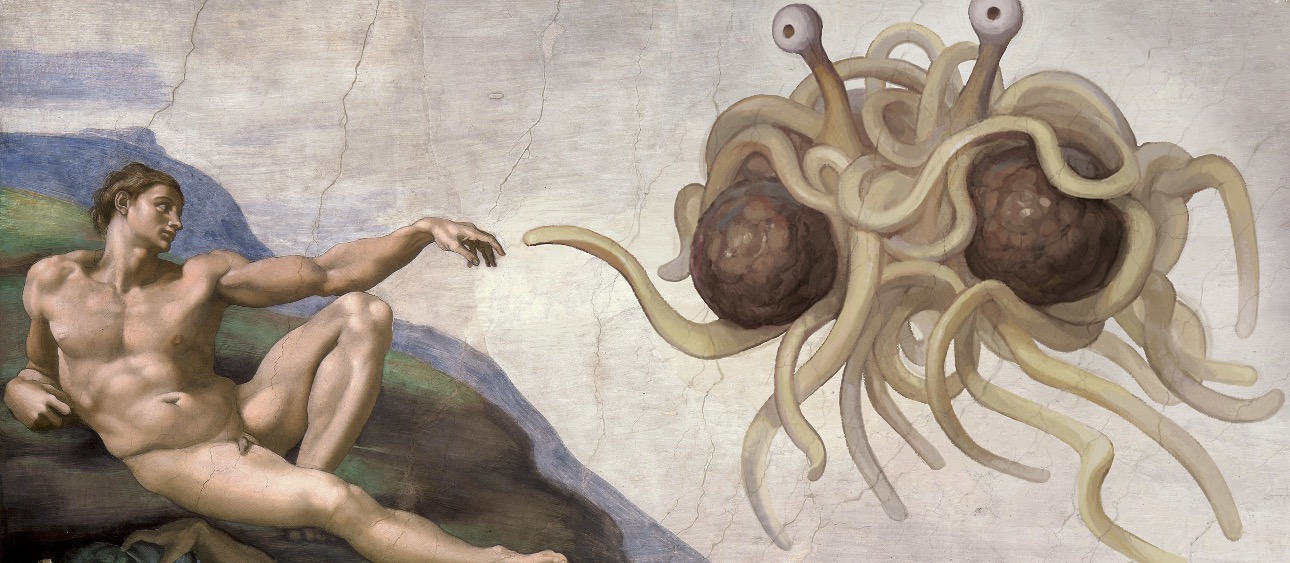
Specifically, a floating mass of spaghetti and meatballs allegedly responsible for the creation of the universe. It is the central figure of Pastafarianism, a satirical belief system that was created to challenge how religion and science are discussed in education and public policy.
The entire idea started in 2005 with a man named Bobby Henderson, a physics graduate from Oregon State University.
Henderson wasn’t trying to launch a global movement when he wrote a letter. He was mostly trying to make a point. A very sarcastic point.
As it turns out, sarcasm plus the internet can create a surprisingly durable cultural phenomenon.
⸻
The Origin Story
The story begins in 2005 when the Kansas State Board of Education was debating whether intelligent design should be taught alongside evolution in public school science classes.
Intelligent design proponents argued that life on Earth was too complex to have evolved naturally and must therefore have been created by an intelligent force.
Henderson saw a logical issue with this argument. If schools allowed one untestable creator theory into science classrooms, why not allow all of them?
So he wrote an open letter to the board proposing that schools should also teach the theory that the universe was created by the Flying Spaghetti Monster.
In Henderson’s version of cosmic history, the universe was created by a supernatural being composed of spaghetti noodles and meatballs. This entity allegedly manipulated reality using its “noodly appendages.”
He explained that any scientific evidence supporting evolution could simply be the result of the monster deliberately altering reality to test human faith.
In other words: if one unfalsifiable explanation could be used in science education, then any unfalsifiable explanation could be used.
The argument was satire, but it was constructed carefully enough that the logic mirrored the intelligent design debate.
The letter ended with a request that the school board devote equal classroom time to the Flying Spaghetti Monster theory.
Unsurprisingly, the board did not adopt the proposal.
But the internet absolutely loved it.
⸻
Birth of a Satirical Religion
The letter quickly went viral online. People began sharing the concept widely, and the idea evolved into a full parody religion known as Pastafarianism.
Pastafarians describe the Flying Spaghetti Monster as the true creator of the universe. According to the humorous mythology developed by followers, the monster created the world after drinking heavily, which supposedly explains certain imperfections in reality.
Pastafarian texts also describe pirates as sacred beings.
Yes, pirates.
In Pastafarian lore, pirates were originally peaceful explorers and spiritual figures whose numbers have tragically declined over time.
This decline is allegedly responsible for global warming.
A popular Pastafarian chart humorously claims that as the number of pirates decreased after the 1800s, global temperatures increased. The joke is meant to illustrate the classic warning that correlation does not equal causation.
In other words, just because two things happen at the same time does not mean one caused the other.
⸻
Sacred Clothing: The Colander
One of the most recognizable elements of Pastafarian culture is the colander worn as religious headwear.
Followers sometimes wear kitchen strainers on their heads in official photographs or identification documents as a statement about religious freedom.
The argument is simple: if other religions allow followers to wear special religious garments in official photos, Pastafarians should be allowed to do the same.
Several governments around the world have encountered this unusual request.
In some cases, they reluctantly allowed it.
In others, they refused.
Either way, the colander became a symbol of the movement.
⸻
The Gospel of the Flying Spaghetti Monster
In 2006 Henderson published a book titled:
The Gospel of the Flying Spaghetti Monster
The book expands the humorous mythology of Pastafarianism and outlines its mock religious teachings.
Among the “commandments” of the religion are a set of guidelines known as the “Eight I’d Really Rather You Didn’ts.”
These replace the traditional concept of strict commandments with something closer to polite suggestions.
The tone of the book is intentionally playful and sarcastic, reflecting Henderson’s original intent: to criticize the blending of religion and science in public education.
Despite its satirical nature, the book became a bestseller and has been translated into multiple languages.
⸻
Pirates, Beer Volcanoes, and the Afterlife
Pastafarian mythology contains several intentionally absurd elements designed to highlight the arbitrary nature of religious imagery.
For example, Pastafarians describe heaven as containing:
• a beer volcano • a factory that produces exotic dancers
Hell, according to the mythology, is similar but with flat beer and less appealing dancers.
The point of these descriptions is not to create a genuine spiritual doctrine but to parody how religious traditions often include elaborate depictions of the afterlife.
By making the imagery ridiculous, the creators emphasize the satirical nature of the belief system.
⸻
Legal Battles and Recognition
Despite its comedic origins, Pastafarianism has occasionally intersected with real legal debates about religious freedom.
In several countries, individuals have argued that Pastafarianism qualifies as a legitimate religion.
Some courts have rejected this argument, stating that the movement is clearly satirical.
Others have taken a more nuanced approach, recognizing that satire can still function as a form of philosophical expression.
For example, in certain cases individuals have successfully worn colanders in official identification photos under claims of religious expression.
These situations often spark debates about where governments should draw the line between legitimate religion and parody.
⸻
Cultural Impact
What began as a sarcastic internet letter has evolved into a widely recognized cultural reference.
The Flying Spaghetti Monster now appears in:
• political commentary • internet memes • debates about secularism • discussions of science education
The character has also become a symbol for skeptics and secular activists who argue for clearer separation between religion and government policy.
At the same time, many people simply enjoy the humor of the concept.
After all, it is difficult to take cosmic spaghetti entirely seriously.
⸻
Why the Idea Stuck
The reason the Flying Spaghetti Monster became so popular is partly because it uses humor to expose a logical argument.
Henderson’s original point was straightforward:
If science education includes supernatural explanations that cannot be tested, then any supernatural explanation could theoretically be included.
By proposing an intentionally ridiculous alternative, he highlighted what he saw as a flaw in the reasoning behind intelligent design.
The humor made the argument accessible to a wide audience.
Instead of writing a dense philosophical essay, Henderson wrote a sarcastic letter about pasta.
Sometimes that’s all it takes.
⸻
The Noodly Appendage Lives On
Today, nearly two decades after its creation, the Flying Spaghetti Monster remains one of the internet’s most enduring satirical inventions.
The character continues to appear in discussions about religion, science, and free speech.
It has inspired books, merchandise, political protests, and more memes than anyone could reasonably count.
For many people, the Flying Spaghetti Monster represents something simple: a reminder that humor can be a powerful tool for questioning ideas.
Also, it’s hard to argue with a deity made of pasta.
Especially one with meatballs.
And if the Flying Spaghetti Monster truly did create the universe with its noodly appendages, then at least one mystery has finally been solved.
Why the universe sometimes feels chaotic.
Because it was probably assembled by something made entirely of spaghetti.

rAmen
Its honestly one of my favorite memes