Excellent summary of the situation. Thank you.
mike_wooskey
joined 2 years ago
I'm not positive, but wouldn't "back" be the verb and "up" be an adverb?
Congrats. And what a fantastic smile!
Socialism is the idea that the means of production are owned by everybody (by the society). It sounds like you're saying you can't afford to pay for something (in this kind-of-capitalist society) so you "like to think of it" as socialism, which you define as an exchange of goods and services rather than money, but you didn't describe exchanging anything - you just describe taking something without paying for it.
I disagree with your definition of socialism, and with the idea that socialism (as I defined it) is good.
not having money to pay for all the services I use so I like to think of it as a socialist type system
I don't understand this. Not being able to afford products/services doesn't mean that the sellers of those products/services are socialist. Maybe I don't understand what you mean by "system".
I've had great success, but I have a pretty beefy gpu: radeon pro w7900 (48GB vram).
Definitely not as fast or good as frontier models, but quite good! I'm currently using qwen3.8-27b, but have used qwe3.6-35b-a3b and other models (including using openrouter and opencode go, but you asked about self-hosting).
Also, FYI, I use opencode.
What definition of "vibe coded" are they using?
That's pretty darn cool! Thanks for sharing. Ik forward to cloning your repo someday.
I'm viewing this thread in Lemmy and am unable to find any mention of a link to the source code or a demo, and I can't see the attached media (genetic image icon - is it an animated gif or a video?).
Based on all the comments, I appear to be in the [significant] minority. Would you mind posting a link to your source or demo or image/video?
I'm very sorry it was your friend's time to go. 🙁

The Purina for Professionals website's "cookie management" (to opt out of cookies) is heavily dark-patterned. Not only does the popup at the bottom of the page not have cookie management (it has a link that takes you to a page that has a link to take you to cookie management), but the wording is intentionally counter-intuitive to opt out:
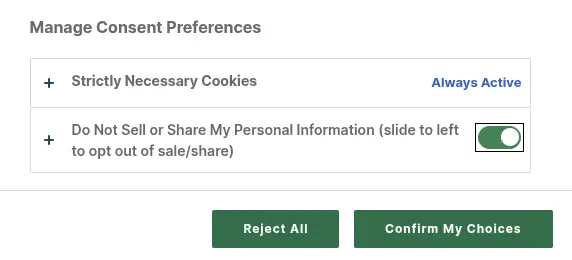 The option is called "Do Not Sell or Share My Personal Information", which suggests that by selecting the option, you want them to not sell or share your information. But in parentheses it adds "slide left to opt out of sale/share", which suggests that disabling the option means for them to not sell or share your information.
Which of the 3 buttons does which of the 4 commands listed next to them?
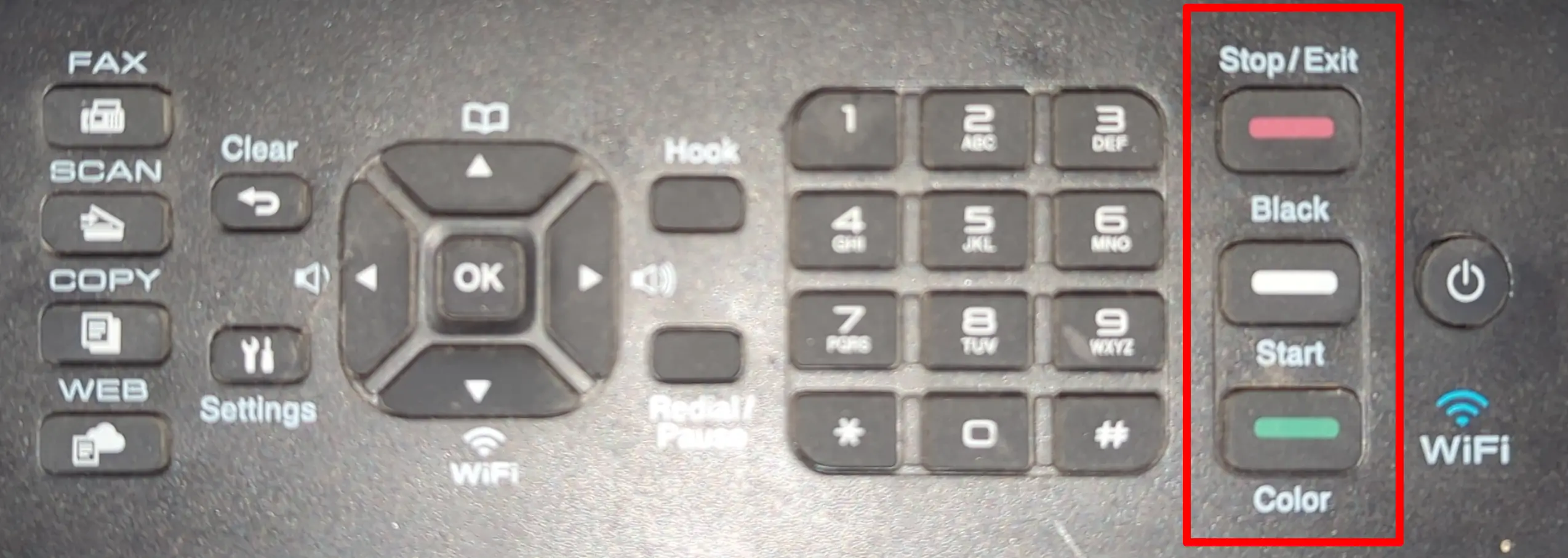
Of the 3 buttons in the red-outlined-box on this Brother printer control panel, which does what function? Grrr!

view more: next ›
I think it is the next move (not the first) in enshittifying bitwarden. I think the first move was the leadership change announced in May.