I agree with any move that makes it easier for families to buy their first homes, regardless of party affiliation. Ban the rich!
4
Authorities Say Boston Teen Planned Release of Genetically Modified Bees to Disrupt Ecosystem
(reddthat.com)
By Natalie Conner, Associated Press, Boston
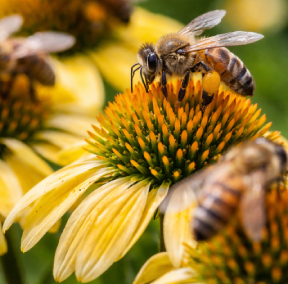
BOSTON — Federal and state authorities are investigating a 19-year-old Boston-area man, Arjun Patel, accused of planning to release genetically altered bees this spring in what officials say was an attempt to destabilize already fragile local pollinator populations.
Patel, a U.S. citizen with no prior criminal record, was taken into custody last week following a months-long investigation that traced online activity connected to the alleged plot. Authorities say the bees were ordered online and intended to be raised and released locally as temperatures warmed.
Investigators allege the insects were modified to interfere with bee reproduction and colony stability, including traits designed to suppress queen viability and accelerate colony collapse. Officials declined to provide further technical details, citing the ongoing investigation and concerns about encouraging copycat behavior.
“Pollinators in this region are already under significant stress,” said a senior Massachusetts environmental official who spoke on condition of anonymity because the case is ongoing. “Any deliberate attempt to disrupt them would have consequences that extend well beyond a single season.”
According to court filings, the investigation began when federal agents monitoring an encrypted online forum identified discussions involving Patel and members of a shadowy group known as Integer42. Authorities describe the group as a loose, decentralized network operating across fringe platforms and private servers, blending anarchist ideology with illicit experimentation in emerging biotechnologies.
Law enforcement officials said Patel used the forum to discuss acquiring altered biological materials and outlined plans to introduce the bees into local environments as a form of ecological sabotage. The forum had already been under intermittent surveillance as part of unrelated cybercrime investigations, officials said, but they cautioned that tracing the origins and structure of Integer42 has proven difficult.
“It’s not a single organization you can point to on a map,” one official said. “It’s a loose ecosystem that appears, disappears, and reforms under different names.”
Agents executing a search warrant at the family’s home recovered beekeeping equipment, digital communications, and records indicating preparations to raise and release the bees this spring. Officials confirmed that no insects had been released.
Patel’s parents said they were shocked by the allegations.
“This doesn’t make sense to us,” said his mother, speaking briefly outside the family’s home. “He is a good student. He kept to himself. We had no idea he was involved in anything like this.”
His father, a computer scientist employed in the private sector, said the family had noticed their son growing increasingly withdrawn and cynical over the past year but did not suspect extremist views.
“He talked a lot about systems failing, about the world being beyond repair,” the father said. “We thought it was just frustration, maybe something a lot of young people feel. We never imagined it would lead here.”
Authorities said Patel’s online writings reflect growing disillusionment with American institutions and global systems, along with anarchist beliefs that environmental disruption could accelerate social change. Investigators described the posts as ideologically driven rather than financially motivated.
Environmental advocates said the alleged plan underscores the vulnerability of local ecosystems.
“Our bee populations are already fragile,” said Laura McKenna, director of a regional pollinator advocacy group. “Even a small disruption could ripple through agriculture, gardens, and food supply chains.”
Officials said potential charges include environmental crimes, conspiracy, and the unlawful acquisition of biological materials. No charges had been formally filed as of Tuesday, and Patel remains in custody pending further court proceedings.
Authorities emphasized that the public is not currently at risk.
“This case shows that monitoring and early intervention can work,” the Massachusetts official said. “But it also highlights how accessible powerful technologies have become.”
Law enforcement agencies urged parents, educators, and institutions to be alert to online communities that blend extremist ideology with advanced tools, warning that the intersection of grievance and technology presents a growing challenge.
“This is not a one-off concern,” the official said. “It’s part of a broader pattern we’re still trying to understand.”
13
Woman Offers Free Foot Care to Homeless, Later Sells Jewelry Made From Toenail Clippings
(reddthat.com)
By Philip Rhoeri, Associated Press, Greendale Press News
PORTLAND, Ore. — Homeless advocates and social service groups are criticizing a local woman’s outreach program after learning that toenail clippings collected during free foot care sessions are later used to make and sell jewelry, a practice they describe as exploitative and deeply troubling.
The woman, a self-described artist and wellness volunteer, has for more than a year offered free toenail trimming and basic foot care to unhoused people in parks and encampments across the city. Promotional materials for the program describe it as a harm-reduction effort aimed at preventing infection and improving mobility.
The controversy surfaced after jewelry items advertised online as “human-derived adornments” were traced back to the same individual. The listings describe necklaces, rings, and earrings made from “sanitized, ethically sourced human keratin,” with prices ranging from $120 to more than $400.
“It feels deceptive,” said Marla Jensen, director of a nonprofit homeless outreach coalition in Portland. “People accepted a medical service in a vulnerable moment. They did not consent to becoming raw material for a product.”
Several advocates said they were particularly disturbed by what they described as a lack of informed consent. Some clients interviewed said they were unaware their toenail clippings were kept at all.
“I thought she threw them away,” said one man who receives services near downtown. He asked not to be named out of fear of losing access to care. “Nobody said anything about jewelry. Sounds wrong.”
The woman behind the program defended her actions in an interview, saying the jewelry is meant to challenge ideas about value, waste, and dignity. She said that a portion of proceeds is donated to homeless-related causes.
“I’m turning something discarded into something meaningful,” she said. “Toenail clippings can be beautiful and sexy. It's a thrill to me. And some of the money goes back into the community.”
She declined to specify what percentage of profits are donated or which organizations receive the funds, citing privacy concerns. Financial records reviewed by the Greendale Press show small donations to at least one mutual aid group, though advocates say the amounts do not align with the revenue suggested by online sales.
“This is not transparency,” Jensen said. “This is branding.”
Medical professionals also raised concerns, noting that even sterilized human biological material raises ethical questions when used commercially.
“There are strict rules around the use of human tissue,” said Dr. Alan Rivera, a podiatrist familiar with outreach medicine. “Even when the health risk is low, consent is non-negotiable.”
City officials said they are reviewing whether the practice violates health codes or consumer protection laws. No charges have been filed, and the foot care sessions continue.
For now, advocates say the issue goes beyond legality.
“This isn’t about art,” Jensen said. “It’s about power, vulnerability, and who gets to profit from whose body.”
The woman said she plans to continue both the outreach and the jewelry line, adding that criticism reflects discomfort with unconventional art rather than wrongdoing.
As scrutiny grows, outreach groups are urging people seeking foot care to ask more questions before accepting services, while city officials weigh whether clearer rules are needed to prevent similar situations.

10
Doctors Alarmed as Reports Surface of Affluent Diners Consuming Human Tumor Tissue for Status
(reddthat.com)
By Brett O’Keefe, Associated Press, Wisconsin Daily News
TOKYO and SHANGHAI — Health authorities in Japan and China are investigating reports of a clandestine dining trend among wealthy elites involving the consumption of discarded human tumor tissue obtained from private medical facilities, a practice doctors describe as disturbing, unethical, and medically unjustified.
According to multiple physicians and public health officials, the alleged trend centers on diners seeking out what they believe to be an extreme status symbol. Much like high-risk delicacies such as pufferfish, the appeal lies in proximity to danger, rarity, and taboo rather than any culinary value.
“There is no scientific evidence that eating tumor tissue transmits cancer,” said Dr. Kenji Morimoto, an oncologist at a Tokyo university hospital. “But that does not mean it is safe, sanitary, or acceptable. This is medical waste. It is not food.”
Investigators say the tissue is rumored to originate from private clinics and cosmetic oncology centers, where small benign or malignant tumors are removed during procedures and then illegally diverted before disposal. Officials stressed that no licensed hospital has been shown to be involved.
In Shanghai, the municipal health commission issued a statement acknowledging awareness of “online discussions and unverified reports” related to the practice, adding that any handling of human biological waste outside approved protocols violates Chinese law.
“We are treating this as both a public health issue and a criminal matter,” the statement said.
Several doctors interviewed said the diners appear motivated by exclusivity rather than belief in health benefits. In private chat groups and invitation-only supper clubs, participants allegedly describe the experience in language borrowed from luxury tasting culture, focusing on provenance, preparation, and shock value.
“It’s about bragging rights,” said a Beijing-based physician who requested anonymity due to concerns about professional repercussions. “The risk itself becomes the luxury.”
Medical experts emphasized that while cancer is not contagious through ingestion, consuming human tissue poses risks of bacterial contamination, bloodborne pathogens, and exposure to chemical preservatives or trace medications.
“There is also the ethical dimension,” said Dr. Mei Lin, a bioethicist at Fudan University. “Human tissue is not a commodity. Treating it as one erodes basic norms that protect patients and medical workers alike.”
Authorities in both countries said they have not confirmed any illnesses directly linked to the alleged practice. Still, officials warned that enforcement actions would follow if evidence of trafficking or improper disposal is found.
“This is not cuisine,” Morimoto said. “It is spectacle built on a misunderstanding of medicine and a disregard for human dignity.”
As of now, investigators say the reports remain limited in scope, but they are urging private clinics to review waste handling procedures and urging the public to avoid engaging in what officials called a “dangerous and deeply misguided trend.”

2
How demand for elite falcons in the Middle East is driving illegal trade of British birds
(www.theguardian.com)
Oh, I didn't know that. It's pretty cool, tho!
Most people just read headlines and don't bother with the articles anyway these days.
Do you seriously think that we aren't going to have self-driving cars be the majority in the future? Brah, come on now...
I dig 'em. And they are coming, regardless of how much you are annoyed by them.
Brah, I get what you are saying. But you are complaining that people can't "afford gaming PCs." That sounds pretty 1st world problems to me. Now if ya wanna talk about healthcare, education, food, etc., then yeah.
But seriously?! You're mad because vid games are expensive? If that's your argument, I'm voting on side of self-driving cars.
Nah, fam. This is the funner version of the old world!
Right?! But yawning or not, welcome to the new world.
Yeah, the way things are going, that seems about right.
view more: next ›
Queen!