Colloidal

joined 11 months ago
[–] Colloidal@programming.dev 1 points 6 days ago (1 children)

I'm pretty sure it's a lot more than 11, BTW. But you have a point.

[–] Colloidal@programming.dev 1 points 6 days ago

ASN.1 crying in the corner.

[–] Colloidal@programming.dev 4 points 6 days ago (3 children)

Not a bot, just a very peculiar person. I still think the balance is positive for the fediverse. If only they could learn to filter their posts more. The quality is hit and miss.

[–] Colloidal@programming.dev 1 points 6 days ago

That's not very useful. Thank you.

[–] Colloidal@programming.dev 1 points 1 week ago (2 children)

Nice. Does it do projections with budgets? Like how is my savings account going to be in 6 months after putting in X$ every month?

[–] Colloidal@programming.dev 1 points 1 week ago* (last edited 1 week ago)

The GParted project distributes their own disk recovery ISO which I blanket recommend to everyone.

[–] Colloidal@programming.dev 2 points 1 week ago (1 children)
  1. GParted is very reliable, but never do any disc operation without a tested backup in hand. Honestly the first and best self hosted thing you can do is a NAS backup.

  2. That Fedora default is a great default for any residential Linux install. You mentioned earlier wiping your NVMe for Linux. That is a sound choice.

[–] Colloidal@programming.dev 2 points 1 week ago (4 children)

Huh. Well that fucks with my current GNUCash workflow of having transactions months in advance. Does Firefly do budgets well?

[–] Colloidal@programming.dev 2 points 1 week ago (2 children)

No, you do the copying and resizing on Linux. Look for a live USB for GParted, put it on an actual usb drive. It's a great recovery tool to have around.

[–] Colloidal@programming.dev 2 points 1 week ago (3 children)

1: for general computing, like storing your photos, documents, etc, just fine. I wouldn't store a database or run programs from it.

2: always, even if not distro hopping. You can use a volume aware filesystem like Btrfs and have @ mounted on / and @home mounted on /home, so you don't have to pre allocate space for one or another. Many distros will detect this setup and smartly use snapshots to revert upgrades without touching your home dir.

[–] Colloidal@programming.dev 9 points 2 weeks ago

Nazis hate this one weird trick!

[–] Colloidal@programming.dev 3 points 2 weeks ago

Thank you, that's very helpful.


I wanted a long gun locker. Why is it that I can only find 2 categories in the market:

  • flimsy cabinets that you could open without tools;
  • mega safes that will stand as a testament to humanity in 1000 years.

Where's my middle option?


TLDR: Automakers want a piece of the data harvesting pie. But don't worry they assure us it's just to improve their products. You know, like the infotainment they're building, that they wouldn't need to build if they kept phone integration.


Programming.dev seems to be experiencing slowness intermittently again. It is most pronounced on Tesseract, but also on the default UI. Using a mobile client such as Voyager seems more responsive, so maybe the API isn't suffering from it.


The Fakespot feature within Firefox known as Review Checker will shut down on June 10, 2025.

There goes the only feature that managed to move my wife towards a gecko based browser. l guess it's Brave for her now.

Mozilla acquired it two years ago. Bastards.


cross-posted from: https://lemm.ee/post/63055455

Oregon State University's Open Source Lab may shut down without $250K in funding. Projects like Gentoo, Debian, Fedora, and many more rely on it.


All of the above have web GUIs to install, configure, and maintain services and are commonly suggested for someone that is new to self hosting. What are their key differences? Their advantages and disadvantages for common use cases?


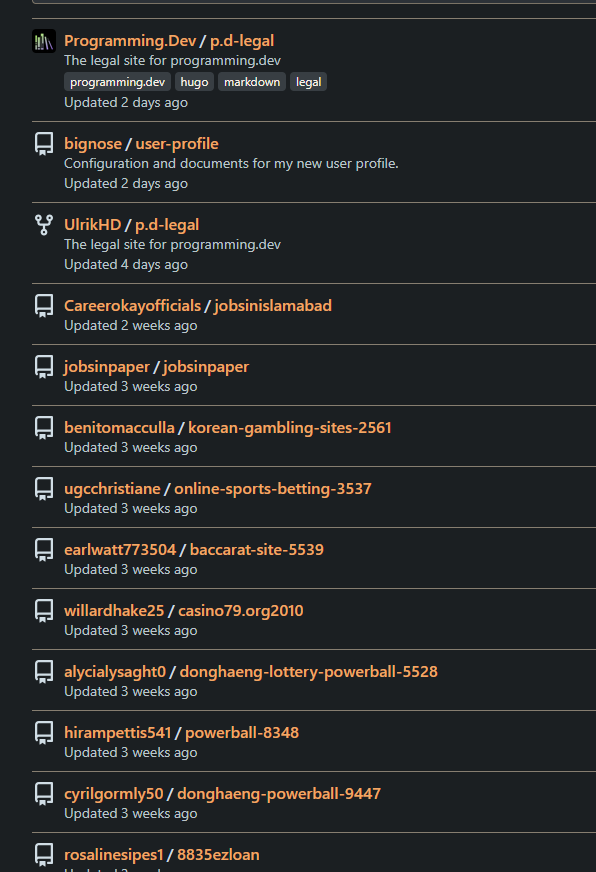
It's pages and pages of this. Maybe you want to restrict who can log in and create repositories.
 

I’m versed enough in SQL and RDBMS that I can put things in the third normal form with relative ease. But the meta seems to be NoSQL. Backends often don’t even provide a SQL interface.

So, as far as I know, NoSQL is essentially a collection of files, usually JSON, paired with some querying capacity.

  1. What problem is it trying to solve?
  2. What advantages over traditional RDBMS?
  3. Where are its weaknesses?
  4. Can I make queries with complex WHERE clauses?
view more: next ›