
252
Microsoft’s Secure Boot has been broken for a decade and no one noticed until now
(www.welivesecurity.com)
This is a most excellent place for technology news and articles.
Unpopular opinion but I’m dying on this hill. Secure boot creates more problems than it solves.
I'd argue this is actually a popular opinion. IMO secureboot has just become a way for Microsoft to leverage it's position and keep a strangle hold on industries they have no business being in.
The whole kernel level anti-cheat on win11 bullshit in the gaming industry is a good example. Essentially locking games to its platform and willing to sacrifice security to do so at our expense.
This is especially true on computers where it is impossible to change the signing keys. Smartphones, game consoles, many laptops, some desktops, smart TVs, IoT devices, modern cars, etc.
Only in tech circles, it says secure and that's enough for most people.
Outside of tech circles most people think secure boot looks something like this
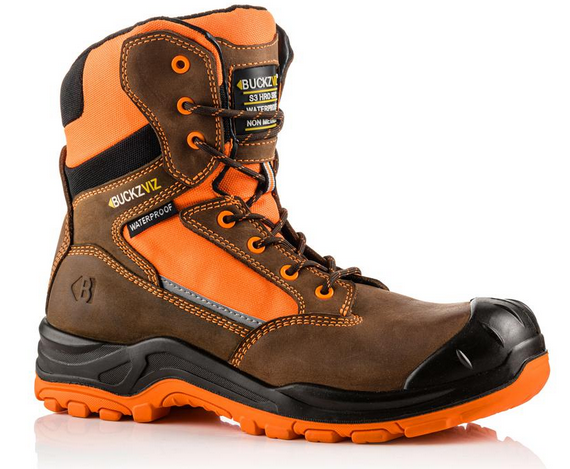
You think that's a safety boot you've got there? It's anything but! It is clearly the bottommost part of a certain powered hazmat suit - why, it's a Hazard Boot! You'll need to ask one of the egg heads whether Secure Boot is a part of its boot sequence, though.
Poor Gordon Freeman, running around out there somewhere, with just one Hazard Boot. I guess you'll find that his other leg is running with Insecure Foot, then.
Fantastic 😂 ! Thanks for the laugh.
That's like saying windows 11 doesn't need tpm chips, an extremely popular opinion
That's a very popular opinion.
Was it ever popular?
Popular is the wrong question, the correct question is, how many machines is this default on.
And, how many people switch to something other than the default? Most W11 users are just going to go with whatever the computer says it's doing without changing anything. They're either ignorant of the options available, or scared of breaking something if they make a change.
Arch Wiki had pointed out for years that Secure Boot is a flawed mechanism.
It's not flawed at all. But its purpose isn't actually to secure anything. Its purpose is to complicate the installation of alternative OS and to perpetuate vendor lock in, while sounding like it's "for your security". In that regard, it has succeeded.
There is also TPM and Microsoft Pluton, which serve the same purpose.
11 old and forgotten UEFI shim bootloaders at versions 0.9 and below that can be used to bypass UEFI Secure Boot on any UEFI-based machine that trusts Microsoft’s Microsoft Corporation UEFI CA 2011 third-party UEFI certificate authority (CA) certificate, regardless of the installed operating system (OS).
This "Trust" is one of my pet peeves. It's $$$.
I get why you'd dislike that wording, but this is also how all certificate stores work, regardless of whether we're talking Secure Boot, Windows or Linux. Gotta trust the top level as providing legitimate certificates to then trust everything underlying as coming from the correct parties.
Certificate are something I work with constantly at work and I fucking hate resolving issues with them lol.
I get why you’d dislike that wording
It's not just the wording.
this is also how all certificate stores work
Precisely.
Check out cacert.org and why it never gained "Trust". Hint: $$$
Add this to the pile of reasons why M$ is a joke and people should stop using them. Nothing they make is so good that you need to stick around.
MS has mastered the one thing businesses love which is being perfectly mediocre. If you present a business two pieces of software one that does one thing really well but nothing else, and one that does three things terribly, they'll pick the one that does three things terribly every time. That's the MS design, it smears a thin coating of suck across as broad a surface as possible and then advertises that it does everything.
All it takes for it to be 'broken' is to be from Microslop.
Few years ago I watched this engineer who used an rp3 to hack a bit locker encryption key.

That's the scary part about security assumptions.