Pay walled so we can't know what happened unless someone pays.
this post was submitted on 03 Apr 2026
128 points (93.2% liked)
politics
29217 readers
2225 users here now
Welcome to the discussion of US Politics!
Rules:
- Post only links to articles, Title must fairly describe link contents. If your title differs from the site’s, it should only be to add context or be more descriptive. Do not post entire articles in the body or in the comments.
Links must be to the original source, not an aggregator like Google Amp, MSN, or Yahoo.
Example:
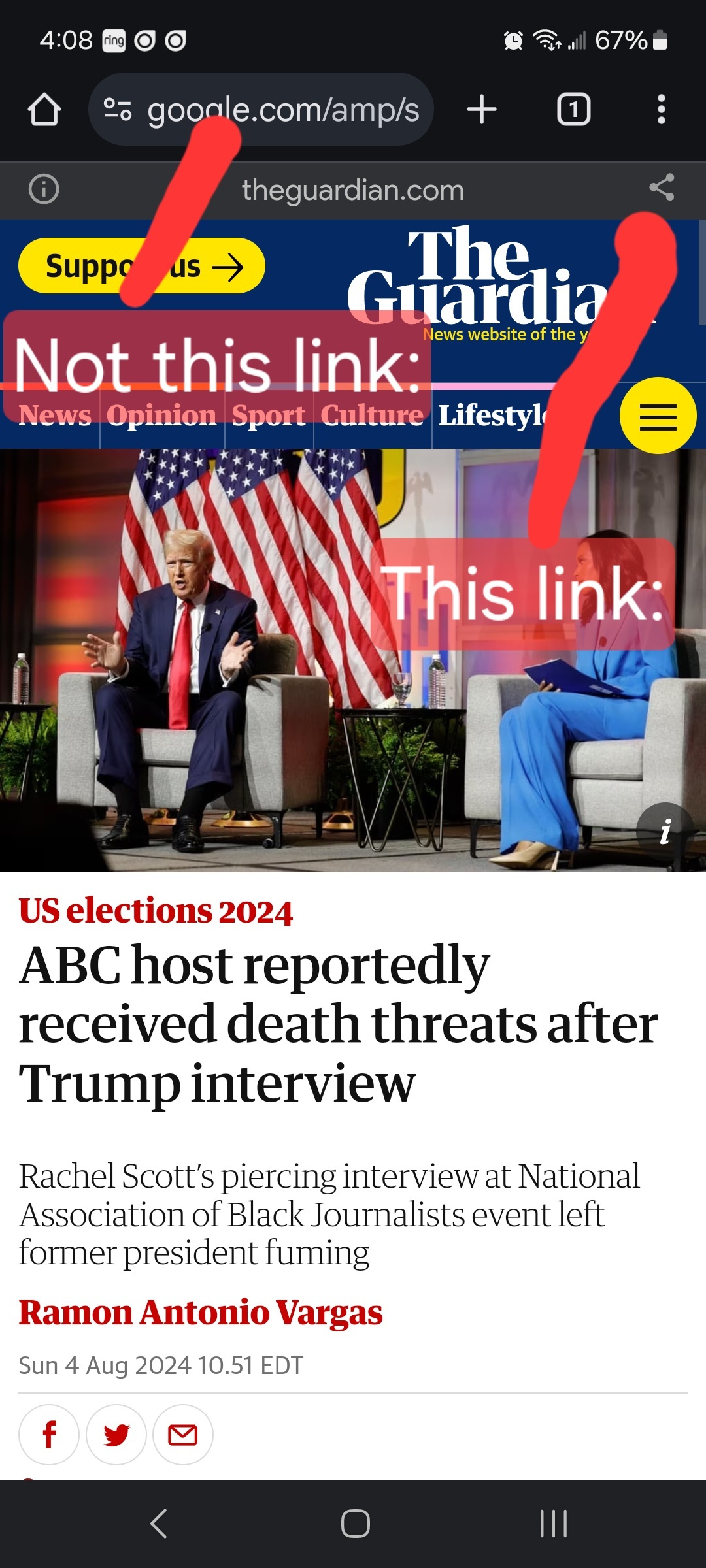
- Articles must be relevant to politics. Links must be to quality and original content. Articles should be worth reading. Clickbait, stub articles, and rehosted or stolen content are not allowed. Check your source for Reliability and Bias here.
- Be civil, No violations of TOS. It’s OK to say the subject of an article is behaving like a (pejorative, pejorative). It’s NOT OK to say another USER is (pejorative). Strong language is fine, just not directed at other members. Engage in good-faith and with respect! This includes accusing another user of being a bot or paid actor. Trolling is uncivil and is grounds for removal and/or a community ban.
- No memes, trolling, or low-effort comments. Reposts, misinformation, off-topic, trolling, or offensive. Similarly, if you see posts along these lines, do not engage. Report them, block them, and live a happier life than they do. We see too many slapfights that boil down to "Mom! He's bugging me!" and "I'm not touching you!" Going forward, slapfights will result in removed comments and temp bans to cool off.
- Vote based on comment quality, not agreement. This community aims to foster discussion; please reward people for putting effort into articulating their viewpoint, even if you disagree with it.
- No hate speech, slurs, celebrating death, advocating violence, or abusive language. This will result in a ban. Usernames containing racist, or inappropriate slurs will be banned without warning
We ask that the users report any comment or post that violate the rules, to use critical thinking when reading, posting or commenting. Users that post off-topic spam, advocate violence, have multiple comments or posts removed, weaponize reports or violate the code of conduct will be banned.
All posts and comments will be reviewed on a case-by-case basis. This means that some content that violates the rules may be allowed, while other content that does not violate the rules may be removed. The moderators retain the right to remove any content and ban users.
That's all the rules!
Civic Links
• Congressional Awards Program
• Library of Congress Legislative Resources
• U.S. House of Representatives
Partnered Communities:
• News
founded 2 years ago
MODERATORS
See kids, this is why we still use Firefox (I did not pay):
Wednesday’s Supreme Court arguments over birthright citizenship went very poorly for Donald Trump. The president watched from the front row as a majority of the justices expressed deep skepticism toward his executive order seeking to deny U.S. citizenship to the American-born children of many immigrants. He walked out of the courtroom midway through arguments and later ranted on Truth Social that the nation is “stupid” for protecting this fundamental right. Trump is not a sophisticated legal observer, but even he seemed to understand that the case is not going to go his way.
There was no single turning point against the administration at arguments—but one exchange between Justice Amy Coney Barrett and Solicitor General John Sauer may have locked in the government’s loss. On a special Slate Plus bonus episode of Amicus, co-host Mark Joseph Stern discussed this pointed exchange with Evan Bernick, a professor at Northern Illinois University College of Law and co-author of a significant amicus brief in the case. A preview of their conversation, below, has been edited and condensed for clarity.
Mark Joseph Stern: Justice Barrett had a lot of skeptical questions for the solicitor general. And she really drilled down on his theory that children do not receive birthright citizenship if their parents lack “domicile” in the United States or hold “allegiance” to a foreign power. She asked how the government would know whether certain immigrants intended to stay in the country or maintain loyalty to a foreign power. And where would we draw the line? What about, for instance, the child of a woman who’s illegally trafficked into the U.S. then gives birth here? Is that person an automatic citizen?
Sauer kept returning to his claim that the lone purpose of the 14th Amendment’s citizenship clause was to overturn Dred Scott and grant citizenship to newly freed slaves and their children. But then Barrett asked: What about slaves who were brought to this country illegally and against their will, as many were? Surely some of them still “felt allegiance to the countries where they were from” and intended “to return as soon as they can.” So wouldn’t their children be excluded from birthright citizenship, too? And if so, doesn’t that just blow up Sauer’s theory that the whole point of this clause was to protect the citizenship of these exact people?
Evan Bernick: Justice Barrett likes to show why history supports a rule that makes sense rather than doing history just for the sake of history. She wants to show how there’s latent wisdom to the rule that was incorporated into this history. And for Barrett, that is the rule of jus soli—the idea that if you’re born in a place and governed by that place, you’re a citizen of that place. If you have that rule, you don’t have to worry about the “domicile” or “allegiance” of people who were illegally trafficked.
She made very clear that she viewed the children of slaves through the lens of unlawful immigration. She thought that the situation of enslaved people’s children was not something that could be settled on the basis of any domicile requirement. Because if we think about domicile as “presence with intent to remain,” well, enslaved people didn’t intend to remain anywhere! They were taken. They were forced into a place. So domicile can’t be the rule, because then you can’t unproblematically grant citizenship to the children of formerly enslaved people.
Just to draw this out: Sauer’s argument is that if people came here illegally, their children don’t get birthright citizenship. Barrett responded: OK, but many slaves were brought here illegally, and everyone acknowledges that the point of the 14th Amendment first and foremost was to grant citizenship to them and their children. So this felt like the moment that Sauer completely lost the case, because he had to admit that his chief theory cannot be squared with what he himself acknowledges the 14th Amendment was ratified to do.
Yes. And I inferred another implication from what Barrett was saying: If domicile is the rule, and domicile requires that you have the permanent intention to stay in a place, enslaved people who were forcibly imported into the country against their will did not have an intention to stay there. So if we’re going to tie the status of children to whether their parents are “domiciled,” under Sauer’s own theory, why would the children of formerly enslaved people be citizens at all? The citizenship clause would not accomplish its most basic function of overruling Dred Scott.
So I think that is what’s going on with Barrett. She read the briefs. She has a firm idea about the distinction between two very different theories of citizenship: jus soli, based on soil, and jus sanguinis, based on descent. The former is much less complicated than the latter. The framers of the 14th Amendment had good reasons to use the less complicated one. And we have good reason to keep it, because it prevents all these very complicated problems from subsequently arising.
Barrett did ask tough questions of the ACLU’s Cecillia Wang, who argued against Trump’s order. She really pressed Wang on whether Congress could expand the limited classes that do not receive birthright citizenship. What did you make of that?
Wang took the position that the set of exceptions to birthright citizenship is closed. Congress can’t create new exceptions to birthright citizenship, but it can get rid of old exceptions. And Barrett was unsatisfied with this, because Wang didn’t really elaborate a theory about it. So it came off more as “this is good policy” rather than “I’ve got text and history on my side.” And Barrett wondered where this closed set came from.
But you still think this case will probably come down 7–2 against Trump with Barrett in the majority?
Absolutely. Barrett was outright hostile to the solicitor general’s arguments. I just think her professor mindset was triggered by some of Wang’s answers.
Yeah. I seriously find it offensive when people post articles that nobody can read. WSJ and Economist are other such examples.
It would be fucking hilarious to find out somewhere in this pedophiles family tree that one of his blood relatives is a birthright citizen; therefore nullifying his entire lineage up to himself according to himself. So, his case is stupid. He's stupid. He's also a pedophile rapist piece of shit, that part is very important.
His grandfather moved here from germany doing what their family loves to do best, running from their wartime fighting obligations because they’re a family of cowards. He started a whorehouse.
His kids are all birthright citizens
It would be hilarious if the judge asked that question.
Ivanna was not yet a citizen when she had Don Jr., Ivanka, and Eric Trump.
He used to care about Ivanka a lot. Then she grew up. :-(
His children are, but he doesn't really care about them
Trump would be just that. His fucking grandfather was an illegal alien. Which means his father would not have been immergrant. Also learn that all his children mother was not a citizen until long after the last child was born.
Well his father was the one arrested at the KKK rally. Being that he was a German at a rally of people who didn't like people who looked different then them one can only ponder what values they passed on to their kid who is trying to take citizenship away from those he doesn't like.
Wednesday’s Supreme Court arguments over birthright citizenship went very poorly for Donald Trump.
The phrase "went very poorly for Donald Trump" can pretty much universally be translated as "Went well for literally everyone else".
Wasn’t Donald’s grandfather a German immigrant?
Let him lose his citizenship.
His dead wife who he buried on a golf course had all their kids before she became a US citizen iirc
It’s always projection.
......mother of god.....is this just a long game from trump so that he can deport his children?
Yeah well trump’s assholes were arguing “nuh uh” against The Constitution.
I would seriously hope most of us could unravel that demented rapist drooled-on garbage easily enough. FFS.
So what's the TLDR? This is paywalled for me.
the gist, as I understand, is that the argument that was presented is basically "the purpose of the 14th amendment was only to grant citizenship to newly freed slaves; children of parents who do not intend to permanently live in the US, or who still feel allegiance to a foreign country, are not intended to be included." Barrett's response was essentially "your argument is self-contradictory. many parents of newly freed slaves did not feel allegiance to the US and wished to return to the countries that they or their ancestors were taken from against their will. the amendment cannot have been intended to both include and exclude their children."
Sauer claims that the birthright citizenship should only apply to people born here who intend to stay, and have no foreign allegiances. He justified that by saying the history of birthright citizenship is specifically to help newly freed slaves after the US civil war, and should not apply to children of illegal immigrants.
Barret noted that most slaves were trafficked here against their will, and undoubtedly some of them wanted to go back to their home, or were still allegiant to their home country. So, Sauer's test of whether someone is domiciled and has no foreign allegiances would preclude a sizeable amount of freed slaves. Therefore, his test is ahistorical, because in fact all slaces received citizenship regardless of their allegiance or willingness to stay.
The article claims the case will be won 7-2 in favor of birthright citizenship without any loyalty test.
Who are the two dissenters?
/s
Trump's solicitor general was saying the 14th amendment wasn't intended to cover the children of people here illegally, that it was intended for slaves.
Barrett argued that slaves were brought here illegally, so his basis is flawed.
It goes on about the governments position on domiciled people's vs jus soli, based on soil, and jus sanguinis, based on descent and how basing citizenship on decent could get confusing very quickly therefore the writers of the 14th amendment clearly intended on jus soli.
Just before the paywall for me:
What about slaves who were brought to this country illegally and against their will, as many were? Surely some of them still “felt allegiance to the countries where they were from” and intended “to return as soon as they can.” So wouldn’t their children be excluded from birthright citizenship, too? And if so, doesn’t that just blow up Sauer’s theory that the whole point of this clause was to protect the citizenship of these exact people?
Mark Joseph Stern: Justice Barrett had a lot of skeptical questions for the solicitor general. And she really drilled down on his theory that children do not receive birthright citizenship if their parents lack “domicile” in the United States or hold “allegiance” to a foreign power. She asked how the government would know whether certain immigrants intended to stay in the country or maintain loyalty to a foreign power. And where would we draw the line? What about, for instance, the child of a woman who’s illegally trafficked into the U.S. then gives birth here? Is that person an automatic citizen?
Sauer kept returning to his claim that the lone purpose of the 14th Amendment’s citizenship clause was to overturn Dred Scott and grant citizenship to newly freed slaves and their children. But then Barrett asked: What about slaves who were brought to this country illegally and against their will, as many were? Surely some of them still “felt allegiance to the countries where they were from” and intended “to return as soon as they can.” So wouldn’t their children be excluded from birthright citizenship, too? And if so, doesn’t that just blow up Sauer’s theory that the whole point of this clause was to protect the citizenship of these exact people?
Are evil people just dumb and incompetent?
no. don't be fooled, there are a lot of evil people who are smart, intelligent and actively ruining society
Trump is certainly all of the above. But others around him are much more intelligent. Relatively speaking of course. OTOH being aggressively and confidently dumb and imcopetent was Trump's charm when he got elected, so I don't really see one of the clever ones winning. Yes, I'm fully aware what I just wrote there: many people want to vote for dumb braggarts.
But then again, it is not impossible to have charisma AND be intelligent AND NOT evil. Here's to hoping.
That's a terrible argument, as expected from Barrett. I guess we're just fortunate that the other guys are so stupid.
Why is it terrible? It honestly seemed like a pretty good point to me.
The importation of slaves had been banned in the US since 1808, about 60 years before 14th amendment. The vast majority, if not all, of the people that were granted citizenship by the 14th amendment would have been born in the US and been several generations removed from anyone that lived in Africa.
It's the exact same mistake that racists keep making: Assuming that any brown person that they see is from some other country.
I think the fact that there could have been at least one newly freed slave who was the child of a first generation US slave (and therefore would have been ineligible for birthright citizenship by Sauer's logic) makes Barrett's point salient though. Sauer argues that the whole (and only) point of the 14th amendment was to grant African American slaves citizenship, but if you can find an African American slave who (all other things being equal) would not have been able to benefit from the citizenship granted by the amendment according to Sauer's interpretation, then his argument has a massive hole in it.