461
James Webb confirms something is deeply wrong with how we understand the universe
(glassalmanac.com)
You can find the original sidebar contents below:
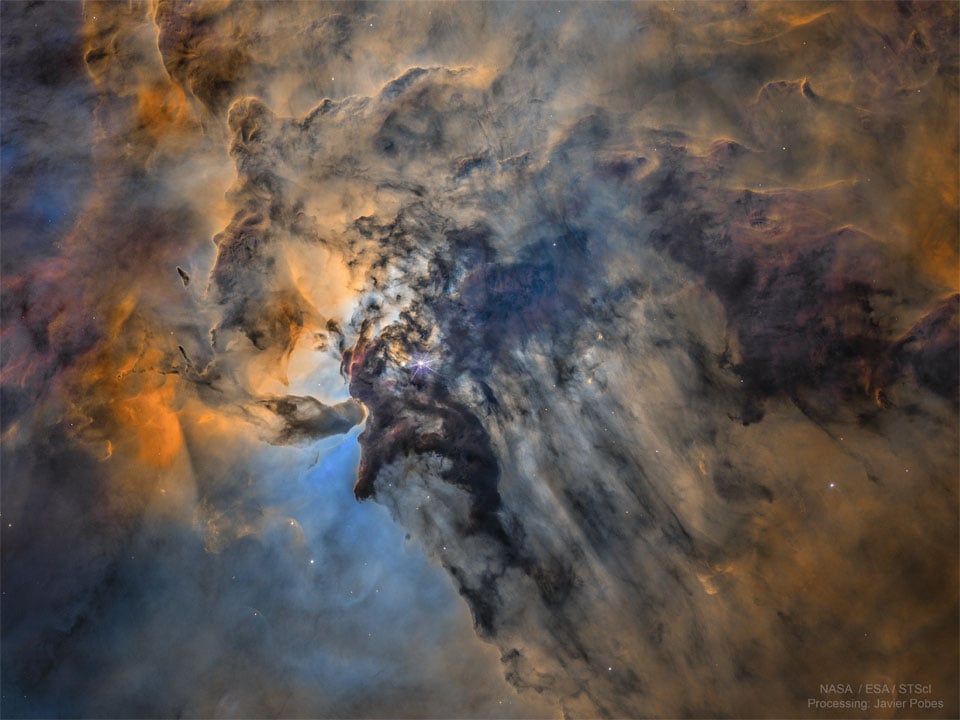 The Busy Center of the Lagoon Nebula
🔭 Science
🚀 Engineering
🌌 Art and Photography
Other Cool Links
Off topic: no full screen popover showing up to ask me to subscribe/disable adblocker/accept cookies? What is this site and how do I give them money?
.
You’re absolutely right that the Hubble tension exposes a deep inconsistency in our cosmological model. But in the book: The Death of the Dark Energy Idea, I argue that the tension isn’t a mystery at all once you look at the underlying assumption both methods rely on: the standard model’s interpretation of photons and the CMBR.
The book points out that the so-called Hubble tension arises because early-universe methods (Planck’s CMBR measurements giving ~67 km/s/Mpc) and late-universe methods (Cepheid variables + Type Ia supernovae giving ~72–74 km/s/Mpc) should agree if they are tracing the same phenomenon. Instead, they differ by 5–6 km/s/Mpc — a discrepancy large enough that cosmologists now call it “one of the biggest unsolved problems in physics.”
But it’s only unsolved if you assume the CMBR really is a relic from a recombination event 380,000 years after a Big Bang. My argument is: that event never happened.
The CMBR interpretation is built on the model that photons are transverse electromagnetic waves whose redshift is produced by an expanding spacetime. If that assumption is wrong, then building an entire early-universe framework on it guarantees contradictions later on.
In my book I explain that the apparent expansion — the inferred recession speeds of distant galaxies — is a misinterpretation of photon behavior, not evidence of the universe stretching. If photons are instead modeled as longitudinal compression waves, their density and inertial components naturally map onto what we perceive as a transverse EM profile. In that framework, redshift is a built-in dispersive property of the wave, not a geometric stretching of space.
Once you correct the photon model, the Hubble tension vanishes — the two methods disagree because they are solving two different problems. One is trying to extract cosmic expansion from a phenomenon that has nothing to do with expansion, and the other is measuring real astrophysical distances. The mismatch isn’t a crisis; it’s a clue that the foundation was wrong.
That’s why I argue the Hubble tension isn’t a window into new physics — it’s a symptom of an old mistake.