For people who don't natively speak languages other than English, letters you'd get by long-pressing on a mobile keyboard or would need other modifiers or methods to type on a computer keyboard will seem like accented letters at best, special characters at worst.
As a German, to whom äöü are separate letters from aou, I feel your pain, but I'm guessing you can see where people are coming from.
Don't worry, it's just a meme. I'm choosing to die on this stupid hill for the sake of it.
While I'm at it, in Spanish we don't have äö, but we do have ü, and in our case, it is literally just a ü with 2 dots, not a different letter. Same thing for áéíóú.
It's pronounced the same as a regular u. It is the same letter.
They are weird rules, but in Spanish we have these rule:
If a word has a "Q", the next letter must always be a silent u. That is, you write a "U" but don't pronounce it. And after that "U", always comes a vowel.
Similarly, if after a "G" comes a "E" or "I", it is pronounced differently depending on if there is a silent "U" after the "G".
However, sometimes we want a non silent U after a Q or a G. In that case, we write "ü".
So u and ü are literally the same letter in spanish. We call the 2 dots "diéresis", maybe it's similar in German.
However, sometimes we want a non silent U after a Q or a G. In that case, we write "ü".
Then it's similar concept: the letter combination qu is pronounced differently than q-u separately, and the diéresis indicates that they should be pronounced separately.
In German, Diärese refers to the separate pronunciation of vowels, so the concept rather than the indicator. The indicator is called Trema, but it's rarely used in German itself anymore. You just have to learn how things are pronounced, because of course we have to make things difficult. Can't have learning German be easy, can we?
Ñ is not a letter, and even though at some point recently it was part of the alphabet its standing has always been flaky. It is technically just a spicy n with an accent.
De hecho la virgulilla (~) es un tipo de tilde. Aunque ahora que lo pienso, no sé sí la RAE tendrá un asiento para la Ñ… me decepcionaría si no fuera así.
Decimoquinta letra del abecedario español. Su nombre es femenino: la eñe (pl. eñes). Representa el fonema consonántico nasal palatal /ñ/.
Esta letra nació de la necesidad de representar un nuevo fonema, inexistente en latín. En cada una de las lenguas romances se fue fijando una grafía distinta para representarlo, como gn en italiano y francés, ny en catalán o nh en portugués. El castellano medieval escogió el dígrafo nn, que se solía representar abreviadamente mediante una sola n con una rayita más o menos ondulada encima; así surgió la ñ, adoptada también por el gallego y el vasco. Esa rayita ondulada se llama tilde, nombre dado también al acento gráfico (→ tilde1)
EDIT: it is true that Spanish is not the only language so it shouldn't be the one to decide if it is a letter or not. Since I only know 2 languages that used it, I checked the other one: basque.
According to euskaltzaindia:
ñ letra (eñe)
ñ letra (eñe)
Zenbait jendek uste du [ñ] hots bustia bikotearen ondorio dela beti, eta ñ letrarik ez dela euskaraz. Ez da hala. Erreparatu adibide hauei: ñabardura, ñaka, ñañan egin, ñaño, ñimiño... hitzei; -ño atzizkiaz eraturikoei: andereño, haurño, xoriño, gazteño, maiteño...; mailegatuei: piñoi, txanpiñoi, erresiñol, giñol...; zenbait herri-izeni: Abadiño (abadiñar), Oñati (oñatiar), Armiñon (armiñondar), Iruñea, Urdiñarbe (urdiñarbetar)...; zenbait ponte-izeni: Eñaut, Beñat, Iñaki, Garbiñe, Eguzkiñe, Zuriñe... [EH; 17. araua] (→ letra; → kontsonante busti-palatalen grafia eta ahoskera)
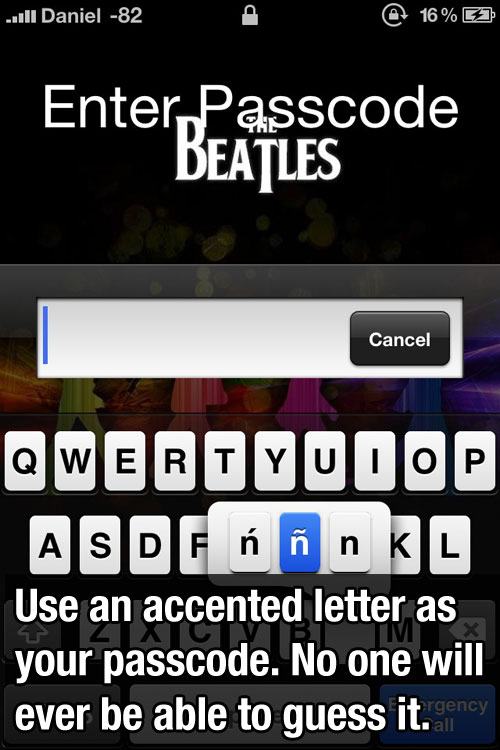
Text: use an accented letter
Image: shows a different, unique letter.
As a Spaniard I feel this is rage bait. Like calling Q an accented O.
For people who don't natively speak languages other than English, letters you'd get by long-pressing on a mobile keyboard or would need other modifiers or methods to type on a computer keyboard will seem like accented letters at best, special characters at worst.
As a German, to whom äöü are separate letters from aou, I feel your pain, but I'm guessing you can see where people are coming from.
Don't worry, it's just a meme. I'm choosing to die on this stupid hill for the sake of it.
While I'm at it, in Spanish we don't have äö, but we do have ü, and in our case, it is literally just a ü with 2 dots, not a different letter. Same thing for áéíóú.
As in, two dots to mark that it's pronounced as a separate vowel rather than merging with the previous one? Idk what the proper term is
It's pronounced the same as a regular u. It is the same letter.
They are weird rules, but in Spanish we have these rule:
If a word has a "Q", the next letter must always be a silent u. That is, you write a "U" but don't pronounce it. And after that "U", always comes a vowel.
Similarly, if after a "G" comes a "E" or "I", it is pronounced differently depending on if there is a silent "U" after the "G".
However, sometimes we want a non silent U after a Q or a G. In that case, we write "ü".
So u and ü are literally the same letter in spanish. We call the 2 dots "diéresis", maybe it's similar in German.
Then it's similar concept: the letter combination qu is pronounced differently than q-u separately, and the diéresis indicates that they should be pronounced separately.
In German, Diärese refers to the separate pronunciation of vowels, so the concept rather than the indicator. The indicator is called Trema, but it's rarely used in German itself anymore. You just have to learn how things are pronounced, because of course we have to make things difficult. Can't have learning German be easy, can we?
Ñ is not a letter, and even though at some point recently it was part of the alphabet its standing has always been flaky. It is technically just a spicy n with an accent.
De hecho la virgulilla (~) es un tipo de tilde. Aunque ahora que lo pienso, no sé sí la RAE tendrá un asiento para la Ñ… me decepcionaría si no fuera así.
RAE about ñ:
Decimoquinta letra del abecedario español. Su nombre es femenino: la eñe (pl. eñes). Representa el fonema consonántico nasal palatal /ñ/.
Esta letra nació de la necesidad de representar un nuevo fonema, inexistente en latín. En cada una de las lenguas romances se fue fijando una grafía distinta para representarlo, como gn en italiano y francés, ny en catalán o nh en portugués. El castellano medieval escogió el dígrafo nn, que se solía representar abreviadamente mediante una sola n con una rayita más o menos ondulada encima; así surgió la ñ, adoptada también por el gallego y el vasco. Esa rayita ondulada se llama tilde, nombre dado también al acento gráfico (→ tilde1)
EDIT: it is true that Spanish is not the only language so it shouldn't be the one to decide if it is a letter or not. Since I only know 2 languages that used it, I checked the other one: basque.
According to euskaltzaindia:
ñ letra (eñe) ñ letra (eñe)
Zenbait jendek uste du [ñ] hots bustia bikotearen ondorio dela beti, eta ñ letrarik ez dela euskaraz. Ez da hala. Erreparatu adibide hauei: ñabardura, ñaka, ñañan egin, ñaño, ñimiño... hitzei; -ño atzizkiaz eraturikoei: andereño, haurño, xoriño, gazteño, maiteño...; mailegatuei: piñoi, txanpiñoi, erresiñol, giñol...; zenbait herri-izeni: Abadiño (abadiñar), Oñati (oñatiar), Armiñon (armiñondar), Iruñea, Urdiñarbe (urdiñarbetar)...; zenbait ponte-izeni: Eñaut, Beñat, Iñaki, Garbiñe, Eguzkiñe, Zuriñe... [EH; 17. araua] (→ letra; → kontsonante busti-palatalen grafia eta ahoskera)
Definitivamente no era mi día…
Gracias por la corrección, se me fue.
And yeah, the RAE is not the ultimate authority on… really anything.
Appreciated the info on basque too!