politics
Welcome to the discussion of US Politics!
Rules:
- Post only links to articles. Title must fairly describe link contents. If your title differs from the site’s, it should only be to add context or be more descriptive. Do not post entire articles in the body or in the comments.
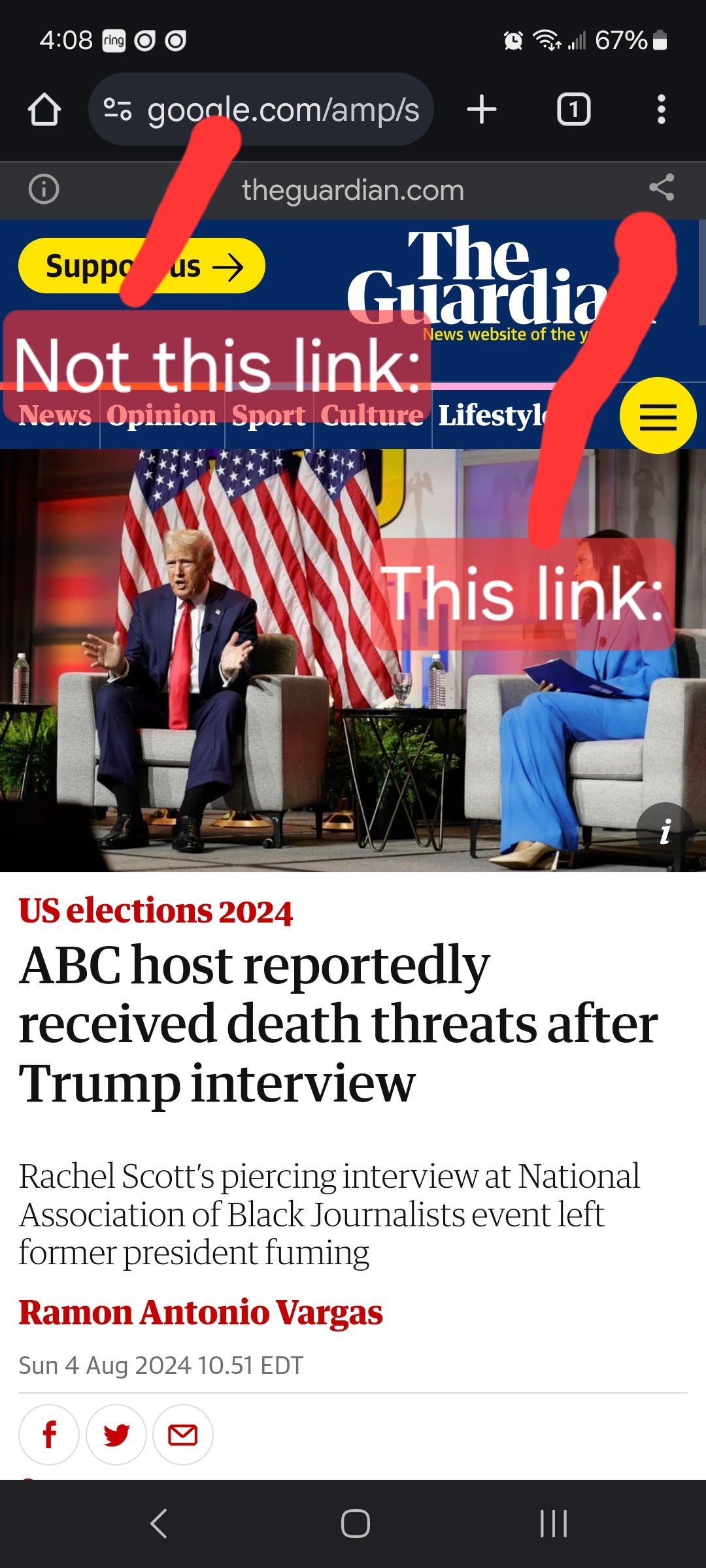
Links must be to the original source, not an aggregator like Google Amp, MSN, or Yahoo.
Example:
- Articles must be relevant to US politics and contain quality and original content. Social Media adjacent hosts like Substack are allowed, but ONLY if they tie back to a company/subsidiary. No personal or friend group blogs and no self-promotion. Articles should be worth reading. Clickbait, stub articles, and re-hosted or stolen content are not allowed. Check your source for Reliability and Bias here.
- Be civil, No violations of TOS. It’s OK to say the subject of an article is behaving like a (pejorative, pejorative). It’s NOT OK to say another USER is (pejorative). Strong language is fine, just not directed at other members. Engage in good-faith and with respect! This includes accusing other users of being bots or paid actors.
- No memes, trolling, misinformation, or low-effort posts/comments (including reposts). If you see posts like this that anger you, do not engage. Report, block, and live a happier life than they do. Any slap-fight is subject to comment removals. Fights full of rule violations will result in temporary bans to cool off.
- No manipulating votes via bots or alt accounts; this will result in permanent bans. Vote based on comment quality, not agreement. This community aims to foster discussion; please reward people for putting effort into articulating their viewpoint, even if you disagree with it.
- No hate speech, slurs, celebrating death, advocating violence, or abusive language. This will result in an account ban. Usernames containing racist, or inappropriate slurs will be permanently banned.
We ask that the users report any comment or post that violate the rules and use critical thinking when reading, posting, and commenting. Users that repeatedly have comments or posts removed, weaponize reports, or violate the code of conduct, will be banned.
All posts and comments will be reviewed on a case-by-case basis. This means that some content that violates the rules may be allowed, while other content that does not violate the rules may be removed. The moderators retain the right to remove any content and ban users. The reason(s) behind moderator action(s) are publicly available through the Modlog.
That's all the rules!
Civic Links
• Congressional Awards Program
• Library of Congress Legislative Resources
• U.S. House of Representatives
Partnered Communities:
• News
view the rest of the comments
I like your approach. I think a reason why a lot of people resist the idea is that they're afraid of losing what they have. No working-class person should lose their nest egg in order to redistribute the wealth. Nor do any need to. Because the problem isn't the middle class or even the upper-middle class. The problem is the upper-upper class, the owner-caste, the plutocrats, the zaibatsu, the financial oligarchs.
So when we talk about it, our rhetoric needs to highlight that we're not after any doctors or lawyers or professors emeritus. Those aren't the people siphoning and hoarding the lifeblood of society; they're not the ones who are appropriating the surplus value of labor in order to generate exorbitant personal wealth to the detriment of everything and everyone around them.
We need to communicate better about working-class solidarity, and how that includes the middle classes, yes, even up to and including the upper-middle class. They can keep their mcmansions and their corvettes. That's not the means of production that needs to be seized.
Personal possessions are fine. It's privately-owned business empires that need to die. And the "public" stock market should be nationalized, and governed by democratic civil institutions, like a hybrid between a union and a bureau, or something along those lines.
Especially–and starting with–public utilities and other infrastructure, which honestly needs to include communications infrastructure such as cell towers & satellites, internet, and even social media. But there I'm starting to get a little radical, and I don't know if the broader social conscience is ready for that leap quite yet. The key idea is that these things should be treated as public goods rather than commodities to be exploited for profit by individuals or business entities.
And yeah, there definitely needs to be an upper wealth limit. $100 million seems reasonable. You reach that, you win. Nobody needs more than that, so at any point if a person's net worth goes over it, every dollar over should be taxed at 100%.
I'd caution against applying wealth tax to anything under that limit though, because the thing about wealth is that it's a static amount unlike income, so a recurring wealth tax would actually tax the same wealth redundantly. So it's probably best to only apply it to any amount over the upper limit.
And lastly, but arguably most importantly, capital gains need to be taxed more fairly. Currently, in the US at least, the highest tax bracket for capital gains is taxed at a rate comparable to the income tax bracket of about a $40,000 salary. It's so bullshit.