politics
Welcome to the discussion of US Politics!
Rules:
- Post only links to articles. Title must fairly describe link contents. If your title differs from the site’s, it should only be to add context or be more descriptive. Do not post entire articles in the body or in the comments.
Links must be to the original source, not an aggregator like Google Amp, MSN, or Yahoo.
Example:
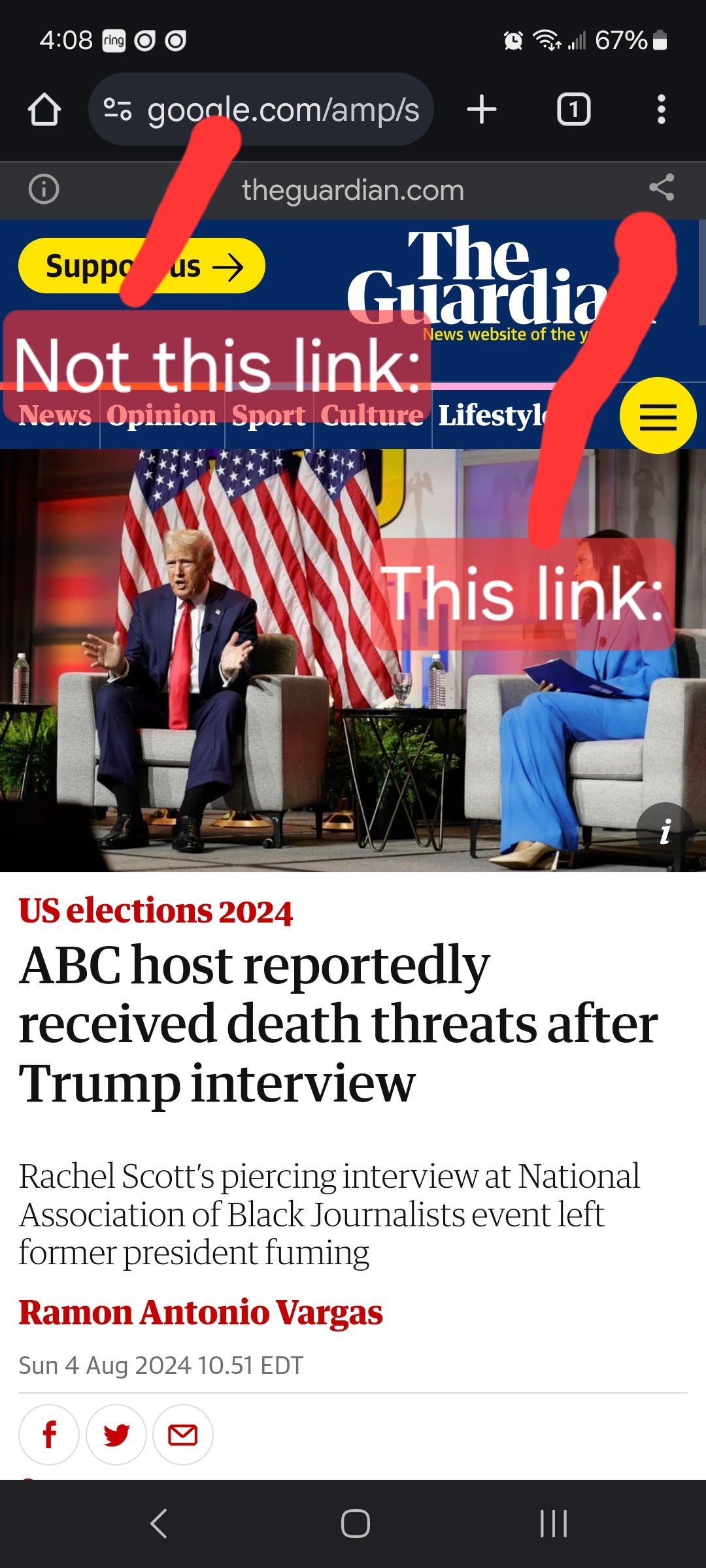
- Articles must be relevant to US politics and contain quality and original content. Social Media adjacent hosts like Substack are allowed, but ONLY if they tie back to a company/subsidiary. No personal or friend group blogs and no self-promotion. Articles should be worth reading. Clickbait, stub articles, and re-hosted or stolen content are not allowed. Check your source for Reliability and Bias here.
- Be civil, No violations of TOS. It’s OK to say the subject of an article is behaving like a (pejorative, pejorative). It’s NOT OK to say another USER is (pejorative). Strong language is fine, just not directed at other members. Engage in good-faith and with respect! This includes accusing other users of being bots or paid actors.
- No memes, trolling, misinformation, or low-effort posts/comments (including reposts). If you see posts like this that anger you, do not engage. Report, block, and live a happier life than they do. Any slap-fight is subject to comment removals. Fights full of rule violations will result in temporary bans to cool off.
- No manipulating votes via bots or alt accounts; this will result in permanent bans. Vote based on comment quality, not agreement. This community aims to foster discussion; please reward people for putting effort into articulating their viewpoint, even if you disagree with it.
- No hate speech, slurs, celebrating death, advocating violence, or abusive language. This will result in an account ban. Usernames containing racist, or inappropriate slurs will be permanently banned.
We ask that the users report any comment or post that violate the rules and use critical thinking when reading, posting, and commenting. Users that repeatedly have comments or posts removed, weaponize reports, or violate the code of conduct, will be banned.
All posts and comments will be reviewed on a case-by-case basis. This means that some content that violates the rules may be allowed, while other content that does not violate the rules may be removed. The moderators retain the right to remove any content and ban users. The reason(s) behind moderator action(s) are publicly available through the Modlog.
That's all the rules!
Civic Links
• Congressional Awards Program
• Library of Congress Legislative Resources
• U.S. House of Representatives
Partnered Communities:
• News
view the rest of the comments
"The arc of history moves towards progress"
We might take a couple steps backwards for every few steps we take forward, but no one can deny that we have moved forward.
We move forward with the hopes of the younger generation
We are held back by the fears and anxieties of the older generation
The movement is balanced by the lack of wealth and resources of the young, who have the energy and drive compared to the vast material riches of the old, who are shortsighted and can only see their near end.
That's insightful. But doesn't it also seem to indicate that progress is inevitable?
In broad terms, the younger generation will outlast the older.
So it might be frustrating at times, even painstaking, but overall doesn't that tip the scales toward reason to be optimistic?
I agree and it probably worked a lot better and faster generations ago when our elderly grew old faster and died off quicker. In our modern age, we have modern medical technology that can keep people alive longer and also healthier for longer parts of their lives ... the problem is that much of that medical technology and knowledge is wrapped up with the only the wealthiest people. So those same dinosaurs I'm talking about get to spend way too much of their elderly lives in positions of power and basically holding everyone back for longer.
One of the biggest things every government around the world, especially in first world democratic developed nations is to institute a more strict retirement age for these positions. How can we expect a leader to lead a nation of new young people looking for hope to be led by a 70 or 80 year old who doesn't want to think about the next ten years?
Things are likely to get very weird in the not-too-distant future - where people have longer and longer healthspans, and also keep more nimble minds.
The viewpoints of the very old may change a lot due to that. Everyone, but most especially the young, may have to completely recalibrate how they think about age.
I think we're still a long way away from that Charlie ... in the near future (within 100 years) I'm guessing long life will look and act more like Mitch McConnell ... they will be there and relatively healthy but whether or not their mind is OK will be questionable.
Yeah that one's a tricky thing to discuss. On the one hand, we tend to view death as a bad thing and longevity as a good thing. Anyone who's ever lost a loved one understands why. There's no real argument against that.
But it's precisely because of the unprecedented nature of technological and medical breakthroughs that have extended human lives that we face new challenges that human society has never needed to confront at this scale. And it's difficult to discuss those in earnest without being accused of ecofascism.
Like clearly, forced population decline is evil. But education and access to contraceptives can help stabilize the population on a more voluntary basis. It's less simplistic to implement, but ethical solutions typically involve more complexity than unethical ones.
Artificially increasing mortality rates would likewise be evil. If the technology exists to extend human lives, then everyone should have equal access to that.
But we're going to run into very real practical limitations such as: what is the max carrying capacity of the Earth? Can the human population continue to grow without exacerbating extinction-level events for other species that are already happening due to human activity? Can the population level-off before surpassing 11 digits, and can a population of this size exist sustainably while offering universal access to a reasonable minimum basic standard of living? Can we produce enough food and water for this many people without negatively impacting the environment?
I recognize that some of these answers are as technical as they are ethical, and some of them are easier to answer than others. Some merely require systemic-level structural changes, some require collective willingness and participation. Others may still be more open-ended questions that can't be fully answered until we experiment with a few potential solutions.
But overall, the reality is this: there are no more new frontiers, at least not until space colonization becomes a possibility. We can't simply expand into uncultivated wilderness. And we're already seeing some world powers trying to take land by force from their weaker neighbors. It's not even limited to the most obvious examples (Israel, Russia, US, etc.). It's happening in Sudan, in West Papua, in Myanmar, across Himalaya.
And things are only going to get worse as climate change accelerates, until we can stem the tide and reverse course, which may take centuries even if we start immediately. Millennia if we don't start very soon.
So yeah I digressed on a few tangents, but coming back to your main point, yes, I agree that medical breakthroughs should be available to everyone equally, and I also agree that once a politician turns 70 they should be allowed to finish their term but should not be allowed to run for reelection.
The problems of the world will always stay the same no matter what generation the world is in ... it's just human nature and it may get better or worse with time. But having the oldest members of our society take control of how to deal with those issues and problems is not a good idea.
And yes, any new technology to lengthen lifespans will first be made available to the ultra wealthy first ... and maybe shared with everyone else later.
And I never enjoy the arguments that people have about population control. Yes I agree that in our current world and current way of doing things ... if we keep adding a few more billion people to the planet, then yes it is very unsustainable. However, if we changed the way we lived and worked and shared all the world's resources, provided education to every person, gave them food, water, medical care and opportunities to live productive lives, then we would have billions of people working towards solutions instead of spending their time maintaining a destructive system in order to survive. Wealth is completely centralized in the world right now to only a few people with the majority of every other human doing their best to just survive ... so their only recourse is to just keep participating in a system that is destroying the planet ... and when you keep adding people at the bottom of that system, it only makes the problem worse.
So the problem is not population size ... its how our world governing system and wealth system works. Because once you feed people, give them comforts, educate them and make their lives livable, then over time, they have fewer children and if done over a couple hundred years, the population would stabilize (and even decrease) to a manageable level. But it would only work if wealth and resources are equally shared and available to everyone everywhere.
And none of these kinds of conversations much matters to someone who is 70 or 80 years of age because they can see their exit and they have no real investment in a future they will never see ... which is why they should not be allowed to stay in power to lead nations.
I agree wholeheartedly.
My only caveat is that I don't care if there's still a modest amount of social stratification. I think that's inevitable, because human activity is a dynamic process. Even if we were to reset the playing field to perfectly level, it wouldn't stay that way for long.
But if the richest people in the world are only ten-millionaires, and the poorest people in the world have enough to build a comfortable nest egg and have access to everything needful for a healthy and thriving life (we can use Maslow's hierarchy as a compass here; I'd say the lower three tiers at a bare minimum should be considered bottomline universal rights; there's room to expand that as society progresses); if we can achieve that, then I believe a just and equitable society is possible even without a perfectly even distribution of resources.
(And I say that as someone at the lower end of the middle class, so it's not like I have any assets to defend. I just think everyone deserves the same basic standard of living that I have access to. It should be a right, not a privilege).
But it would of course require adequate government oversight in accordance with democratic processes to ensure it doesn't snowball over time into a new oligarchy/plutocracy.