235
Minnesota solar project set to replace retiring coal plant reaches 710 MW
(www.solarpowerworldonline.com)
Discussion of climate, how it is changing, activism around that, the politics, and the energy systems change we need in order to stabilize things.
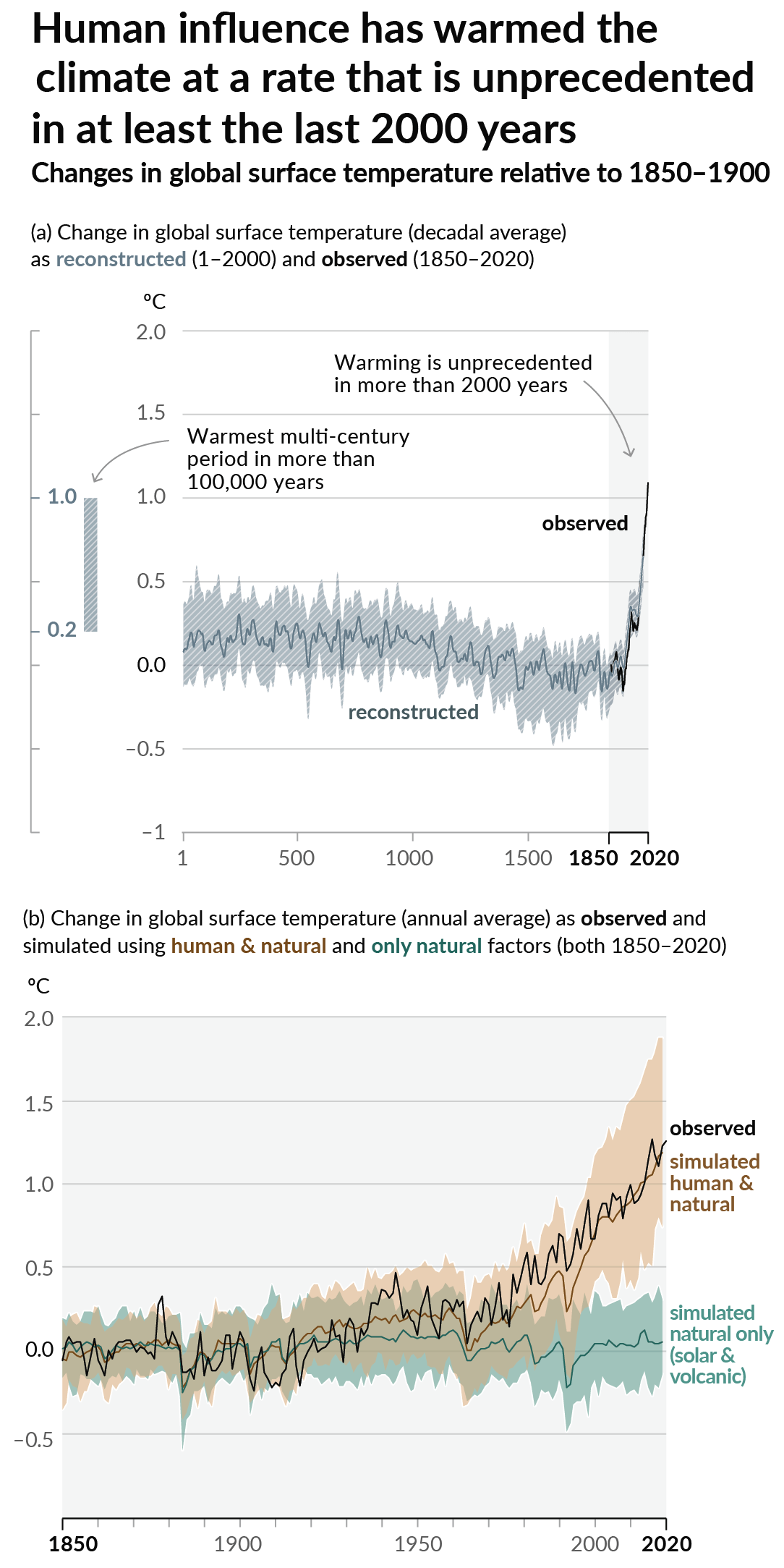
As a starting point, the burning of fossil fuels, and to a lesser extent deforestation and release of methane are responsible for the warming in recent decades:
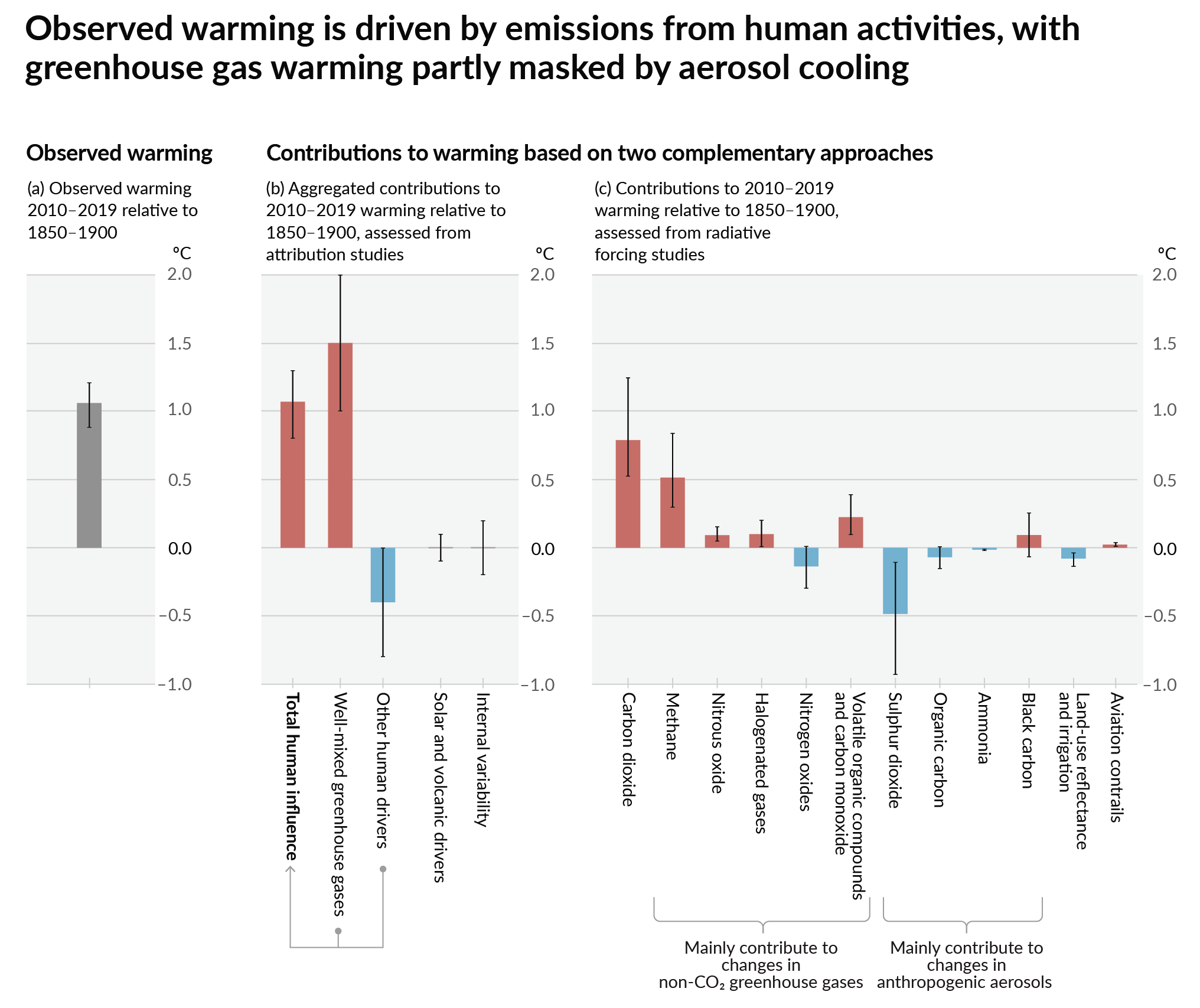
How much each change to the atmosphere has warmed the world:
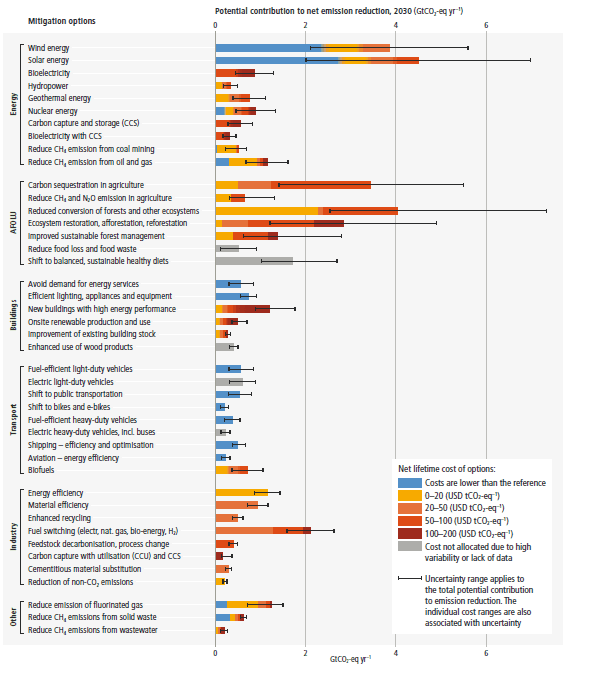
Recommended actions to cut greenhouse gas emissions in the near future:
Anti-science, inactivism, and unsupported conspiracy theories are not ok here.
So it is 3GWh. Better than 600MWh. While the power requirement during nights might be less, it's still a problem, specially during winter (short days, clouds, heat pumps etc.). And you need to charge those batteries as well which significantly lowers the power output during the day.
You can see California moving to deal with this issue via battery storage:
https://app.electricitymaps.com/map/zone/US-CAL-CISO/live/fifteen_minutes
Pumped hydro is better, but not available everywhere.
I expect sodium-ion batteries to be the main type of storage going forward, but who knows?
Depending on geography, but yes, it's rare that you have all requirements for it (hill, river etc.)
These certainly seem like the future. There is also fusion, but it won't be feasible in near future if ever.
Honestly fusion isn't worth talking about. The closest fusion has gotten to a viable power plant is Quaise, the geothermal startup that uses a maser (microwave laser) for drilling.
Speaking of which, geothermal might well be the main baseload power plant.
Fusion is still making progress, though. Slowly, but progress nevertheless. I'm not sure how geothermal is viable in general but if we can harness it, it might do very well also for heating.
I mean, yeah, that's kinda how it works.