I was looking at the reply to this survey map:
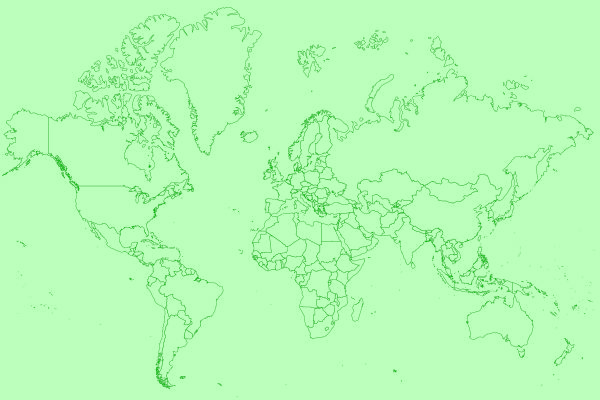
complainig humans don't live in the ocean. Which lead me to the question of how large of a radius around every person you would have to color, tracing all their movements for their entire life, to color in the entire earth.
Naturally, this radius would have to be set such that the most remote point across time is just barely covered. So what would that point be, and how far away has every human been from it for all of time?
I assume this would be somewhere in antarctica, or maybe in the pacific? With a radius of surely not more than a few tens of kilometers, right? Maybe even less?
I would say let's, since we obviously wanna count ships, also count planes and subs. But let's not count astronauts.
Some clarifications:
- This is all on a map, height does not matter. Walking somewhere or flying over it is the same.
- We are talking absolutely noone has been closer than an absolute distance. If a single person has travelled there, the location is out.
By population, most humans lived after the bronze age collapse, and like 20%+ after the industrial revolution. We estimate only a bit over 100 billion humans in total.
So really I think you can ignore anything pre-industrial without too much loss. Anything preindustrial humans got to, nowadays many more can get to, so those areas would be densely covered.
But really since a single person can ruin a point, you also need to consider all weird stuff.
Point Nemo, people could have gotten to more frequently since maybe 500 years ago with better ships. To consider would be roughly were sail ships would sail, snd where they could end up with any number of accidents. Then the same for steam ships, and modern container ships.
Weirdnesses would be survey ships for example. Anyone mapping the ocean floor, or looking for resources to mine, will very strategically cover an entire area with lines maybe 10-20km appart. The same happens with survey planes.
And who knows where a nuclesr sub might cross the pacific between various start and end-points.
Finally there is the worst nightmare, explorers.
Your guess for the point: remote hard to get to location.
Consequence: Point becomes famous, 50 people will risk their life to ship themselves to the south pole, the tallest mountain in antarctica, or point nemo.
So anything that has a name and is known to be remote is probably out.