I was looking at the reply to this survey map:
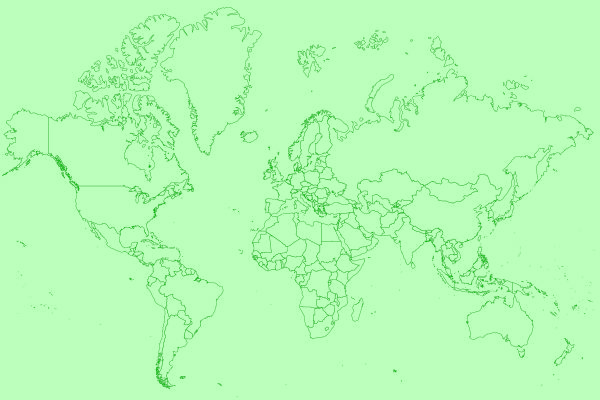
complainig humans don't live in the ocean. Which lead me to the question of how large of a radius around every person you would have to color, tracing all their movements for their entire life, to color in the entire earth.
Naturally, this radius would have to be set such that the most remote point across time is just barely covered. So what would that point be, and how far away has every human been from it for all of time?
I assume this would be somewhere in antarctica, or maybe in the pacific? With a radius of surely not more than a few tens of kilometers, right? Maybe even less?
I would say let's, since we obviously wanna count ships, also count planes and subs. But let's not count astronauts.
Some clarifications:
- This is all on a map, height does not matter. Walking somewhere or flying over it is the same.
- We are talking absolutely noone has been closer than an absolute distance. If a single person has travelled there, the location is out.
Its got to be the South Pole. no humans got there until 1911. For an area where no human has ever been at all, walk 100 kilometers in any direction away from the south pole. 😆
Can't be that simple. There have been multiple teams now, if they came from say 4 orthogonal directions that would already push this point out multiple hundred km. Even if they all took the same route, there is now the "Amundsen-Scott Station" there, directly on the south pole, with regular flights. Even tourist flights.
Surely those flights have taken various routes to the station and covered antarctica in a fairly dense mesh of lines of longitude.
Edit:
Rough numbers: according to wikipedia "Between October and February, there are several flights per week of U.S. Air Force [...]". So let's call that 50 flights a year for 40 years, 2000 flights.
Now, if those had all flown fanned out, which realistically ofc they wouldn't have, that would put them only 3km apart even at the coastline 1000km from the south pole.
Also a different note, surely there must have been various surveys flown all across antarctica.
I think you should refine your question. Do you mean the point where most or any humans have stayed away from. Or something like an average population density map? Or something else?
The point noone has ever been near to. For the greatest possible definition of near where there still is such a point.
For example, say humans have been within 10km of every point of earth, except one random location 500km from the south pole, where even by plane noone has been closer than 10.001km when viewed top-down, so on a map.
How would anyone determine such a point? I think it’s an unanswerable question.
I'll take best guesses. It's hard to answer, you can always pile in more data.
Ideally one could collect some candidate ideas, like "random point inland of antarctica", "random point within a few thousand km of point nemo", ... then maybe do some estimates of how many people have crossed those areas, and how randomly, and then estimate the expected largest gap with that amount of paths and that area statistically.
For example with 2 thousand flights straight through the south pole from random directions, over the disk 500km in radius from the south pole, I would expect very loosely a gap of 10km to randomly be left somewhere on the border of that disk, so there would be a point 500km from the south pole, that noone has been within 10km of ever.