I was looking at the reply to this survey map:
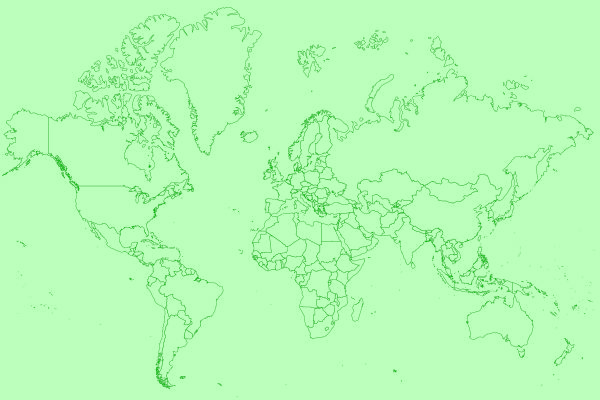
complainig humans don't live in the ocean. Which lead me to the question of how large of a radius around every person you would have to color, tracing all their movements for their entire life, to color in the entire earth.
Naturally, this radius would have to be set such that the most remote point across time is just barely covered. So what would that point be, and how far away has every human been from it for all of time?
I assume this would be somewhere in antarctica, or maybe in the pacific? With a radius of surely not more than a few tens of kilometers, right? Maybe even less?
I would say let's, since we obviously wanna count ships, also count planes and subs. But let's not count astronauts.
Some clarifications:
- This is all on a map, height does not matter. Walking somewhere or flying over it is the same.
- We are talking absolutely noone has been closer than an absolute distance. If a single person has travelled there, the location is out.
I'll take best guesses. It's hard to answer, you can always pile in more data.
Ideally one could collect some candidate ideas, like "random point inland of antarctica", "random point within a few thousand km of point nemo", ... then maybe do some estimates of how many people have crossed those areas, and how randomly, and then estimate the expected largest gap with that amount of paths and that area statistically.
For example with 2 thousand flights straight through the south pole from random directions, over the disk 500km in radius from the south pole, I would expect very loosely a gap of 10km to randomly be left somewhere on the border of that disk, so there would be a point 500km from the south pole, that noone has been within 10km of ever.