spirituality

182 readers
5 users here now

A place for spiritual discussion of all kinds. All faiths and beliefs welcome.

This is a space for exploration, not proselytizing. Share your truth, but leave room for others to discover theirs. Rational discourse and lived experience is welcome; dogma and demands are not.

RULES

  1. No dogma. Whatever system you want to follow is yours to follow as you feel best but don't try to impose it on others, or otherwise shame others for not doing things your way. Discussing the tenets of your system is fine but know the difference between "this works for me", "this is the only correct way" and "this is what the teachings say".

  2. No bigotry, hate, racism, sexism, transphobia, homophobia etc. 0 tolerance policy.

  3. No AI slop, or spam. No paywalled content. Limited self-promotion is fine but it shouldn't be your sole reason of posting here. Active posters engaging positively get more leniency.

  4. No soliciting or offering services of any kind.

founded 2 years ago
MODERATORS
1
8
Mod changes (lemmy.world)
submitted 2 days ago* (last edited 2 days ago) by _OneSoul_@lemmy.world to c/spirituality@lemmy.world


As some may have noticed, I took over the sub from the absent admin. This was purely to put a stop to one user starting to post obviously AI generated blog posts of little value.

I talked with, and requested @bsit@sopuli.xyz became another mod as they are the most active poster here.

We'll try to do our best to keep the community pleasant, and free of spam. To that end I did add some hopefully sensible rules to the sidebar:


This is a space for exploration, not proselytizing. Share your truth, but leave room for others to discover theirs. Rational discourse and lived experience is welcome; dogma and demands are not.

RULES

  1. No dogma. Whatever system you want to follow is yours to follow as you feel best but don’t try to impose it on others, or otherwise shame others for not doing things your way. Discussing the tenets of your system is fine but know the difference between “this works for me”, “this is the only correct way” and “this is what the teachings say”.

  2. No bigotry, hate, racism, sexism, transphobia, homophobia etc. 0 tolerance policy.

  3. No AI slop, or spam. No paywalled content. Limited self-promotion is fine but it shouldn’t be your sole reason of posting here. Active posters engaging positively get more leniency.

  4. No soliciting or offering services of any kind.


I realize the community is rather quiet and frankly I'm fine with that. Not looking to impose dramatic changes, though I figured I could write a bit of a guide to general, non-dogmatic and rational spirituality for beginners. It's getting away from me a bit but hopefully it'll be done within a few days.

2


Hi everyone! I recently came across this sub-Lemmy and also recently became aware of a newish podcast that I have been enjoying. Just sharing it here in case others may also enjoy it. Feel free to recommend any other podcasts as well.

3
4
5


"Vanity of vanities; all is vanity." - Solomon (Breath of breaths; all is (as temporal as) breath. Achievement of achievements; all is an aspiring to achieve. Doing of doings; all is a doing "under the sun.")

"Morality is the basis of things, and truth is the substance of all morality." - Gandhi (Selflessness and selfishness are at the basis of things, and our present reality is the consequence of all mankind’s acting upon this great potential for selflessness and selfishness all throughout the millenniums; the extent we've organized ourselves and manipulated our environment that’s led to our present as we know it.)

If vanity ("breath," thus, a temporal desire to aspire to do, or achieve; a striving), born from morality (selflessness and selfishness), is the foundation of human behavior, then what underpins morality itself? Here's a proposed chain of things: 

Sense Organs+Present Environment/Consciousness/Imagination/Knowledge/Reason/Truth/Influence/Desire/Morality/Vanity/Spirit ("Spirit:" The will that's fueled by ones faith or, will to believe in a truth, thus, "breath" or vanity that's "done under the sun.")

  • Spirit is determined by Vanity,
  • Vanity is governed by morality,
  • Morality is rooted in desire
  • Desire stems from influence
  • Influence arises from truth,
  • Truth is shaped by reason,
  • Reason is born from knowledge,
  • Knowledge is made possible by our imagination,
  • And our imagination depends on the extent of how conscious we are of ourselves and everything else via our sense organs reacting to our present environment.

There's a place for Soul here but I haven't decided where exactly; perhaps it's woven within each category, giving "color" to them all, so to speak. Defined more as ones "personality." Some cats have even a phobia for water, others will jump right in; some cats love their belly rubbed, others will claw and bite at you for going anywhere near it, etc.


Sense Organs + Present Environment: It all begins with our sense organs reacting to whatever our present environment consists of. Without our sense organs, we humans (conscious capable beings on a planet) wouldn't be able to be as aware as we sure seem to be to whatever our present environment is made up of; no sense organs, no degree of consciousness. However, without an environment for our sense organs to react to, what good would they be? What would be the outcome of a human that was born into and lived in nothing but a small, empty room? Nothing; it wouldn't know squat and wouldn't grow to be anywhere near as conscious as you and I sure seem to be—knowledge being what governs over ones level of consciousness. As we age and gather more knowledge of the experience or simply information for example, the more and more conscious we become; I wouldn't be anywhere near as conscious or aware of the vastness of the universe without gaining that knowledge first, for example. Unfortunately, there's living proof of exactly this—a poor little girl was locked up in a cellar by her father at twenty months old until she was Thirteen: https://www.theguardian.com/society/2016/jul/14/genie-feral-child-los-angeles-researchers


Consciousness: With sense organs reacting to an environment comes the ability to be conscious or aware of either oneself, or anything else; consciousness can be divided into two—the extent of how much more conscious or aware we are of ourselves, and the extent of how much more conscious we are of everything else. An awareness that gives birth to any degree of selfish awareness or what we call today—"selfishness" and selfless awareness or "selflessness," therefore. Without our ability to be as conscious as we sure seem to be in contrast to any other living thing that's supposedly ever existed, there can't be any knowing of anything. No consciousness, no knowledge; consciousness is what gives life, so to speak, to any degree of knowledge on a planet, and is what keeps it living. Even the knowledge that instinct reveals to both something capable of acknowledging its own instinct, and something not capable of coming anywhere close of being able to do so.


Imagination: Consciousness may be what gives life to any degree of knowledge, but its our imaginations that truly make it possible. With no imagination comes the inability to shape knowledge; knowledge needs to be given the form of something to be given life, so to speak. How would we ever be able to reason that combing two things with another two things makes four things without being able to first give those thoughts shape via our imaginations? Would we even be able to reason at all to begin with? Things like Philosophy simply wouldn't exist. Hell, would any knowing of anything exist?

"The true sign of intelligence is not knowledge but imagination.” - Albert Einstein

One's imagination and how "big" or detailed it is, is on a spectrum, akin to what we're presently referring to as "Autism Spectrum Disorder." There's what's called "Hyperphantasia," which is the term used to categorize a human with an above average detailed or "big" imagination, "Aphantasia," to categorize those with little to even non-existent detailed imaginations, and of course average imaginations that can be referred to as simply "Phantasia," this being the ancient Greek word for "imagination." The extent of one's inner dialogue or inner thoughts are governed by how detailed ones imagination is, as well as one's ability to empathize—to imagine in our heads the perspectives of other things and subsequently feel the feelings of other things for ourselves; one of our many more profound and unique abilities we humans posses so much more capacity for in contrast to nature.


Knowledge: With our imagination comes knowledge. This one is the most important in my opinion. Our knowledge of anything—morality, time, of the experience, science, history, philosophy, math, and even the influence of the divine to whatever extent that we keep alive or "living" via our unique and profound ability to retain and transfer knowledge in contrast to nature, is a consequence of being as conscious to both ourselves and everything else as we humans sure seem to be. Knowledge is what separates us the most from nature. Yes, we may be mammals, but its our unique and profound ability for knowledge—to retain and transfer it—that allows us to take what our instincts would demand of us otherwise, inherently, and not only deny the more barbaric thoughts and behaviors that are born out of instinct, but even "suffer" to pierce past them, in favor of where a knowledge takes us. There's nothing that comes anywhere close to this unique and profound ability we humans posses; to not only be able to acknowledge our instincts and any more "barbaric" thoughts and subsequent behaviors born out of it, but to even consider, not to mention the great lengths we can push past ourselves in favor of the exact opposite. Instincts (selfishness) demand retaliation, knowledge (selflessness) reveals alternatives that we wouldn't be able to even begin to consider being otherwise absent knowledge. Without knowledge, instincts would completely rule over us as it does lesser conscious, capable beings; knowledge is what makes us free—free from the government of instinct, that is.

The greatest of any knowing is knowing the extent of how little you truly know about anything, or anyone. Of course ignorance (lack of knowledge) would come along with our ability to know anything to begin with; ignorance is neither an insult, nor is it insulting, it's nothing but an adjective. It's a consequence of consciousness; to know is to not know. Lack of knowledge is at the core of instinct, and instinct is what's at the core of selfishness, and selfishness is what's at the core of all the fear, thus, anger, hate, and suffering in the world; all the "evils" mankind has ever known, and will ever know.


Reason: With this unique and profound capacity for knowledge comes our ability to reason with it; to weigh it; quantify (measure) it; to choose it. Reason takes the knowledge we form or shape via our imaginations and rounds it out, so to speak. We may be able to imagine knowledge, but its reason that gives us the ability to take these more simple shapes and make them into triangles and on to decagons; to evolve two plus two is four into rocket science; to take knowledge and turn it into a book, even of our knowledge of morality; to lead one to stop and think when met with someone who offers their other cheek in return after slapping them on the other. It's the very creator of what we now call "logic." With our ability to reason, comes the ability to shape knowledge into a truth.


Truth: To reason is to be able to comprehend what presently reveals itself to be more or less rational and thus, what's subjectively "right" and with that, true. It's by this ability that allows us to take the shapes of knowledge we conjure via our imaginations and ability to reason and turn them into a truth; the truth of wearing clothes for example. It's our ability to reason or "wrestle" with the truth and subsequently live by or deny the outcomes that determines who or what we ultimately become the product of; we are what we've been surrounded with, however, we are also what we repeatedly choose to think, and therefore, do. If I either knowingly or unknowingly decide that becoming a manager of a clothes store is what's presently revealing itself to be the most rational decision, and subsequently live by it, I will ultimately become a product of that doing; of that knowledge.

It's truth to whatever degree (questionable or unquestionable; absolutely or not so absolutely true) that's always guided mankind throughout the ages and into our present as we know it. But what would truth be without the overwhelming influence of other people? To what degree would we believe this or that as true without the influence of our contemporaries? Would we even be able to consider anything as true without all those that have come before us, rounding it out into what we as a species know to be true to whatever degree today? We wouldn't even be able to communicate without all the knowledge of the influence of all those that have come before us, that we take for granted today.


Influence: Would you know all that you know now without the knowledge of the influence of all those that have ever surrounded you? What would you know of even tying your shoes? Truth may be what governs over what or who we ultimately become the product of, but without influence, well, there wouldn't be a whole lot to know would there? If you were the only human on Earth that's ever existed, you'd be absent the knowledge of all that we presently know and have ever presently known, you and I presently at the pinnacle of the "present."

Without influence, Plato wouldn't ever have known all that he knew; he wouldn't have possessed the faculty to express what he knew and he wouldn't ever have gained the knowledge of what Socrates had to share without his influence; Peter or Mary Magdalene would've just kept living their lives without the influence of Jesus. Would we know all that we know now of the relevance and logic of loves ability to overcome hate if it wasn't for people like Jesus or Gandhi going to the great lengths they did to point it out? If someone hadn't pointed out and yelled "watch out!" How would the group of people be aware of what's about to fall on to them and destroy them? How would they be able to save themselves therefore? From their inherency to themselves in Jesus' or Gandhi's case. To become a "sign" (Luke 11:29) or an influence upon their contemporaries for them to even be able to consider love and selflessness over hate and selfishness; to walk the more difficult, less convenient, narrower path that knowledge reveals to us over the more inherent, far easier and more convenient, wider path that instinct demands of us, that we're otherwise more inherently drawn to. Without the influence of your parents for example, would you value what you presently do as much as you would without their influence? Would one simply become a racist along with their families and/or contemporaries as another example? How could one know of the woes of racism and the woes of not questioning or wrestling with the truth as its presented to them via the overwhelming influence of our contemporaries, without knowing of the value of doing so beforehand?


Desire: Without the influence of knowledge to whatever degree, what would we desire? How can one desire ice cream without first gaining the knowledge of the experience of its profound taste? Way back when we weren't aware of sex, to what degree did we desire it? If the influence of our contemporaries didn't consist of sex in any way whatsoever, would we desire it as much as we do today? Obviously, instinct would say the desire would still persist, but to what degree in this context in contrast to our present conditions? Where sex is not only encouraged, but it's even "cool" and culturally "adults" participate in it in droves, so therefore, you being an adult too means that of course you should desire it to the same degrees right? Wrong. We may very well be what we are surrounded with, but we are of course what we repeatedly choose to think and therefore, do.

Desire stems from our sense organs reacting to our environment; without this reaction, what would sex be but simply procreation? Just a side note, if sex didn't feel as good as it does, would anyone be led to "want" to procreate? Or would it fade away as walking to our destinations has in favor of vehicles today for example? It's desire that leads one to act or do for the sake of itself (selfishness), or anything else (selflessness), and that potentially leads to a level of passion that has the potential to "undo" or "defile" a humans mind, to even lead one to murder or commit suicide, via the passions that are flamed by both hate and love.


Morality: With desire comes our inherency to measure the good or evil within any doing born out of desire. Morality may be subjective, but just like our knowledge of time for example, via our ability to acknowledge, measure, and organize it, we've always been able to find degrees of objectivity within our knowing of anything, like the laws of physics for example, we've come to find "laws of love" - Tolstoy, or whatever any group of humans have come up with to measure and organize our knowledge of things like time, morality, or the experience as a few examples, at any point throughout mankind’s history. Through our inherency to empathize, (the law and the prophets as a whole that were meant to be fulfilled, in my opinion of course - Matt 5:17, 7:12, 22:40), we're able to make the most accurate measurement to determine what most people would agree to be "good" or "bad," just as we're able to determine what time it presently is for most people. Of course it would still be very circumstantial and dependent on the situation, person, culture, day in age, etc, but generally, using the most accurate tool at our disposal, we can find degrees of objectivity within the sea of subjectivity that is our knowledge of morality.

Any vanity (an aspiring to do) born out of desire—by considering its origins, or what’s at the core of it—can be categorized as a doing for the sake of oneself (selfishness), or for the sake of anything else (selflessness). P.S. subjective morality wouldn't exist if morality was a "spoof" or didn't exist due to its subjectivity; no morality, no subjective morality.


Vanity: With our ability to acknowledge, measure, and give life to any knowledge of morality on an Earth comes the doing of any desire, thus, the vanity of it; if we didn't desire anything, what would we aspire to do? If nothing was good or bad, right (and therefore rational) or wrong, good or evil, then why desire anything? Is it, what we call today, "instinct" that demands we quench our thirst when suffering from the lack of it? Or is it that inherent demand for ourselves born out of consciousness and our knowing of morality coupled with our inherency to measure it in relation to ourselves specifically? A knowing, therefore; an awareness. Just as most nature is conscious enough to share that inherent demand for itself, so we humans just can't help but possess the same. The difference being of how much more conscious we are of ourselves and morality in contrast, hence the extent of how much more angry we become (its very difficult to lead a pet to gain a grudge towards its owner), or sad, to the point of even "crippling" ourselves.

With desire comes the ability to aspire to act; strive; do for the sake of oneself (selfishness), or anything else (selflessness). Upon this inevitable choice—made knowingly or unknowingly—lays the foundation of human behavior and subsequently the extent we've ever and presently manipulated our environment and organized ourselves up until now as a species, and what will, objectively—God or not, forever govern over the future of the tomorrow of the most conscious, capable species on this planet; the ones with the most potential for either itself, or anything else.

"Know thyself." - The first of three Ancient Greek maxims chosen to be inscribed into the Temple of Apollo where the Oracle of Delphi resided in Ancient Greece

"When you can understand everything [things] you can forgive anything [things]." - Leo Tolstoy


If all vanity or "vapor;" "breath," is a temporal doing "under the sun," is there any vanity or "vapor;" "breath" that man can conjure with the potential to even last forever?: https://lemmy.world/post/38610025

6
 
 
7
8


Ostensibly related to spirituality. I see a lot of stoic thought these days but as the author of that post points out, it's often stripped of any actual self-reflection and inquiry.

Related to that, The Waking Up app features a couple of modern Stoic practitioners that may be of interest. Personally I prefer more Buddhist approach though.

9


Great conversation that gets into the nuance of spiritual practices that call for "purity" or forgiveness, or even compassion in the face of oppression. A lot of people understandably find the idea of forgiving harmful behavior distasteful but Rasmussen explains how it works for your benefit without approving it, and how you're going to be far better resourced to take tangible action against harm when you're not fueling impotent anger.

10


Always found the compassion and empathy discussion interesting. Paul Bloom I think makes a good case for adjusting our knee jerk reaction to empathy as inarguably virtuous. Empathy is good in small doses but letting oneself be manipulated or drained because of it is counterproductive. Nice to see a Buddhist teacher talk about it too.

11
12
13
14


Today, "Christians" call the Garden of Eden, the story about Adam and Eve (https://biblehub.com/lsv/genesis/2.htm), "the fall," but I think there's a more profound moral lesson underneath what man has made it out to be ever since; the supernatural and miracles within being simply a means for people millenniums ago to express thought, words like consciousness not existing in these ancient languages, e.g., "I Am That Which I Am." - Exodus 3:14. And knowledge is knowledge no matter its source and no matter what we've rendered it ever since it's been revealed and labeled.


The trees in Eden represented knowledge of things; a tree for the knowledge of science, a tree for the knowledge of time, math, the experience, etc, and of course of morality—right and wrong; good and evil. Making the tree in the midst of the garden, the "Tree of Life," the tree of the knowledge of life, and to know life is to be aware of it, and to be aware of life is to be conscious, and to be conscious is to be aware of both oneself (selfishness) and everything else (selflessness). That's why it's in the midst of the garden. Consciousness is what gives life to any degree of knowledge on an Earth; no consciousness, no knowledge. When we took a bite of the fruit of the tree of the knowledge of morality, and gained its knowledge, we became aware of the right and wrong regarding our knowing of anything, including ourselves, that's why we became aware of our "nakedness" and even felt ashamed. Prior to gaining the knowledge of morality, being naked wouldn't have been right or wrong; a good or bad thing. The same, of course, can be said about death:

"From every tree of the garden eating you eat; but from the Tree of the Knowledge of Good and Evil, you do not eat from it, for in the day of your eating from it—dying you die." - Genesis 2:16

Prior to gaining that knowledge, death wouldn't have been bad. It wouldn't have been anything. It just would've been a part of knowing what life is. Therefore, in gaining the knowledge of morality, dying, as all things are destined to do, we became aware of our dying, while nature is blissfully unaware of it, just as we were prior to gaining the knowledge of being able to measure morality; death is a part of everyday life, millions of things die everyday, and of course millions are brought into life everyday, for approximately 4 billion years here on Earth alone so far. It's us humans, being in possession of both how much more aware we are of ourselves and everything else and our inherency to measure what is good or evil that makes it either a good or bad thing to begin with. I think this is the "weeping and gnashing of teeth" Jesus was referring to; the storm of the final precept of the Sermon on the Mount (Matt 7:24) is death, and the shores is our conscience.

If we gained a knowledge that led us to be kicked out of Eden, then that would mean we need to become ignorant (lack of knowledge) of something to gain it back, so to speak. This is why what guards Eden is an angel with a flaming sword, because if something is aware of its death and subsequently fears it, then it will inherently want to meet the angel with another sword, with violence as a means to overcome it. But if something is absent of itself and isn't worried about what is right or wrong, good or evil for the sake of itself specifically, then this person will just simply walk by the angel without a care in the world; the angel might as well be a bunny with a cucumber in its hand to something thats absent the knowledge of what is good and evil in relation to itself specifically.

"Whoever finds his life will lose it, and whoever loses his life for my sake will find it." - Matt 10:39

“Truly, I say to you, unless you turn and become like children, you will never enter the kingdom of heaven." - Matt 18:3

We ate the fruit of that knowledge, so there's no becoming completely unaware of it. We're cursed with its knowledge forever. But one can push past it's instincts (selfishness; "sin") in favor of where knowledge (selflessness; God) takes it to strive to become less aware of oneself and of what is good or evil in relation to itself, which is where all the fear, worry, or need for oneself comes from and therefore, thoughts of suicide, anger, anxiety, hate, narcissism, resentment, deppression, suffering, violence, you name it; for "it's only what a person thinks that can truly defile them." (Tolstoy’s interpretation of Mark 7:15.) At the root of it all is the extent of how much more conscious we are of ourselves in contrast to nature and subsequently how much more we're able to measure what is good or bad for ourselves specifically. God wants us to replace this fear, worry, and need for ourselves (selfishness) with the fear, worry, and need for everything else (selflessness) to reunite ourselves with it and gain this "true life" of a life striving for others as opposed to ourselves that we can't help but be more inherently drawn to. When one holds God to be true to whatever degree, it passively leads our minds to be the least aware of ourselves, and the most selfless, provided of course your knowing of God doesn't point you back to selfish thoughts and behaviors, as most what we now call "religions" do today.

The Serpent is "Instinct"

Additionally, the serpent represents arrogance; hypocrisy—an acting like other people, like everyone else; "playing a part." (Tolstoy) The serpent was renowned to be a symbol of wisdom and cunning at this time; it slithered its way into knowing as much as a human does within Eden, but it was no God, and not being guided by God as Adam and Eve were, it turned evil and selfish in its journey in gaining great knowledge. It's ability to reason darkened by the extent of how much more conscious it was of itself (selfishness; "sin"), while Adam and Eves was illuminated by holding the knowledge of a God as a truth; with great potential for knowledge comes great vulnerability to being blinded by this false sense of self-assurance born out of the love we gain for ourselves along the way. And when God wasn't around, it revealed itself to the humas and its arrogant influence was introduced to them, claiming the opposite of what God claimed, that dying they won't die.

If it wasn't for the serpents arrogant influence, the humans would've done what God warned them not to do without question, not knowing right from wrong at this point, but the idea of becoming more like a God ourselves—that they wouldn't have even considered otherwise if not for the serpents influence—led them onto a different path that again wouldn't have been there otherwise, lack of knowledge being a blindness; the snake represents all the arrogant humans that unknowingly—via this false sense of self-assurance born out of the overwhelming influence of our contemporaries—lead us to build our life on the sand along with them, making the gold of life given to us (or that you've stumbled upon) all about making more life for ourselves all throughout it via the way mankind has made the world ("the dirt of which we came"), making Gods of our sense organs (of "the flesh") so to speak, as opposed to going as far as even building pyramids for the poor or homeless, the starved, or collectively disliked; for everything else (Matt 25:14).


The Consequence of Consciousness; to Know is to Not Know: https://lemmy.world/post/37315263

15
16
0
The Basis of Things (lemmy.world)
submitted 3 months ago* (last edited 2 months ago) by Codrus@lemmy.world to c/spirituality@lemmy.world


Disclaimer: This is all subject to change and nothing but my best guesses; my theories so far. That said, what are your genuine thoughts and criticisms of this draft?


"Vanity of vanities; all is vanity." - Solomon (Breath of breaths; all is (as temporal as) breath. Achievement of achievements; all is an aspiring to achieve. Doing of doings; all is a doing "under the sun.")

"Morality is the basis of things, and truth is the substance of all morality." - Gandhi (Selflessness and selfishness are at the basis of things, and our present reality is the consequence of all mankind’s acting upon this great potential for selflessness and selfishness all throughout the millenniums; the extent we've organized ourselves and manipulated our environment that’s led to our present as we know it.)

If vanity ("breath," thus, a temporal desire to aspire to do, or achieve; a striving), born from morality (selflessness and selfishness), is the foundation of human behavior, then what underpins morality itself? Here's a proposed chain of things: 

Sense Organs+Present Environment/Consciousness/Imagination/Knowledge/Reason/Truth/Influence/Desire/Morality/Vanity/Spirit ("Spirit:" The will that's fueled by ones faith or, will to believe in a truth, thus, "breath" or vanity that's "done under the sun.")

  • Spirit is determined by vanity,
  • Vanity is governed by morality,
  • Morality is rooted in desire
  • Desire stems from influence
  • Influence arises from truth,
  • Truth is shaped by reason,
  • Reason is born from knowledge,
  • Knowledge is made possible by our imagination,
  • And our imagination depends on the extent of how conscious we are of ourselves and everything else via our sense organs reacting to our present environment.

There's a place for Soul here but I haven't decided where exactly; defined more as ones "personality." Some cats have even a phobia for water, others will jump right in; some cats love their belly rubbed, others will claw and bite at you for going anywhere near it.


Sense Organs + Present Environment: It all begins with our sense organs reacting to whatever our present environment consists of. Without our sense organs, we humans (conscious capable beings on a planet) wouldn't be able to be as aware as we sure seem to be to whatever our present environment consists of; no sense organs, no degree of consciousness. However, without an environment for our sense organs to react to, what good would they be? What would be the outcome of a human that was born into and lived in nothing but a small, empty room? Nothing; it wouldn't know squat and wouldn't grow to be anywhere near as conscious as you and I sure seem to be—knowledge being what governs over ones level of consciousness. As we age and gather more knowledge of the experience or simply information for example, the more and more conscious we become; I wouldn't be anywhere near as conscious or aware of the vastness of the universe without gaining that knowledge first, for example. Unfortunately, there's living proof of exactly this—a poor little girl was locked up in a cellar by her father at twenty months old until she was Thirteen: https://www.theguardian.com/society/2016/jul/14/genie-feral-child-los-angeles-researchers


Consciousness: With sense organs reacting to an environment comes the ability to be conscious or aware of either oneself, or anything else; consciousness can be divided into two—the extent of how much more conscious or aware we are of ourselves, and the extent of how much more conscious we are of everything else. An awareness that gives birth to any degree of selfish awareness or what we call today—"selfishness" and selfless awareness or "selflessness," therefore. Without our ability to be as conscious as we sure seem to be in contrast to any other living thing that's supposedly ever existed, there can't be any knowing of anything. No consciousness, no knowledge; consciousness is what gives life, so to speak, to any degree of knowledge on a planet, and is what keeps it living. Even the knowledge that instinct reveals to both something capable of acknowledging its own instinct, and something not capable of coming anywhere close of being able to do so.


Imagination: Consciousness may be what gives life to any degree of knowledge, but its our imaginations that truly make it possible. With no imagination comes the inability to shape knowledge; knowledge needs to be given the form of something to be given life, so to speak. How would we ever be able to reason that combing two things with another two things makes four things without being able to first give those thoughts shape via our imaginations? Would we even be able to reason at all to begin with? Things like Philosophy simply wouldn't exist. Hell, would any knowing of anything exist?

"The true sign of intelligence is not knowledge but imagination.” - Albert Einstein

One's imagination and how "big" or detailed it is, is on a spectrum, akin to what we're presently referring to as "Autism Spectrum Disorder." There's what's called "Hyperphantasia," which is the term used to categorize a human with an above average detailed or "big" imagination, "Aphantasia," to categorize those with little to even non-existent detailed imaginations, and of course average imaginations that can be referred to as simply "Phantasia," this being the ancient Greek word for "imagination." The extent of one's inner dialogue or inner thoughts are governed by how detailed ones imagination is, as well as one's ability to empathize—to imagine in our heads the perspectives of other things and subsequently feel the feelings of other things for ourselves; one of our many more profound and unique abilities we humans posses so much more capacity for in contrast to nature.


Knowledge: With our imagination comes knowledge. This one is the most important in my opinion. Our knowledge of anything—morality, time, of the experience, science, history, philosophy, math, and even the influence of the divine to whatever extent that we keep alive or "living" via our unique and profound ability to retain and transfer knowledge in contrast to nature, is a consequence of being as conscious to both ourselves and everything else as we humans sure seem to be. Knowledge is what separates us the most from nature. Yes, we may be mammals, but its our unique and profound ability for knowledge—to retain and transfer it—that allows us to take what our instincts would demand of us otherwise, inherently, and not only deny the more barbaric thoughts and behaviors that are born out of instinct, but even "suffer" to pierce past them, in favor of where a knowledge takes us. There's nothing that comes anywhere close to this unique and profound ability we humans posses; to not only be able to acknowledge our instincts and any more "barbaric" thoughts and subsequent behaviors born out of it, but to even consider, not to mention the great lengths we can push past ourselves in favor of the exact opposite. Instincts (selfishness) demand retaliation, knowledge (selflessness) reveals alternatives that we wouldn't be able to even begin to consider being otherwise absent knowledge. Without knowledge, instincts would completely rule over us as it does lesser conscious, capable beings; knowledge is what makes us free—free from the government of instinct, that is.

The greatest of any knowing is knowing the extent of how little you truly know about anything, or anyone. Of course ignorance (lack of knowledge) would come along with our ability to know anything to begin with; ignorance is neither an insult, nor is it insulting, it's nothing but an adjective. It's a consequence of consciousness; to know is to not know. Lack of knowledge is at the core of instinct, and instinct is what's at the core of selfishness, and selfishness is what's at the core of all the fear, thus, anger, hate, and suffering in the world; all the "evils" mankind has ever known, and will ever know.


Reason: With this unique and profound capacity for knowledge comes our ability to reason with it; to weigh it; quantify (measure) it; to choose it. Reason takes the knowledge we form or shape via our imaginations and rounds it out, so to speak. We may be able to imagine knowledge, but its reason that gives us the ability to take these more simple shapes and make them into triangles and on to decagons; to evolve two plus two is four into rocket science; to take knowledge and turn it into a book, even of our knowledge of morality; to lead one to stop and think when met with someone who offers their other cheek in return after slapping them on the other. It's the very creator of what we now call "logic." With our ability to reason, comes the ability to shape knowledge into a truth.


Truth: To reason is to be able to comprehend what presently reveals itself to be more or less rational and thus, what's subjectively "right" and with that, true. It's by this ability that allows us to take the shapes of knowledge we conjure via our imaginations and ability to reason and turn them into a truth; the truth of wearing clothes for example. It's our ability to reason or "wrestle" with the truth and subsequently live by or deny the outcomes that determines who or what we ultimately become the product of; we are what we've been surrounded with, however, we are also what we repeatedly choose to think, and therefore, do. If I either knowingly or unknowingly decide that becoming a manager of a clothes store is what's presently revealing itself to be the most rational decision, and subsequently live by it, I will ultimately become a product of that doing; of that knowledge.

It's truth to whatever degree (questionable or unquestionable; absolutely or not so absolutely true) that's always guided mankind throughout the ages and into our present as we know it. But what would truth be without the overwhelming influence of other people? To what degree would we believe this or that as true without the influence of our contemporaries? Would we even be able to consider anything as true without all those that have come before us, rounding it out into what we as a species know to be true to whatever degree today? We wouldn't even be able to communicate without all the knowledge of the influence of all those that have come before us, that we take for granted today.


Influence: Would you know all that you know now without the knowledge of the influence of all those that have ever surrounded you? What would you know of even tying your shoes? Truth may be what governs over what or who we ultimately become the product of, but without influence, well, there wouldn't be a whole lot to know would there? If you were the only human on Earth that's ever existed, you'd be absent the knowledge of all that we presently know and have ever presently known, you and I presently at the pinnacle of the "present."

Without influence, Plato wouldn't ever have known all that he knew; he wouldn't have possessed the faculty to express what he knew and he wouldn't ever have gained the knowledge of what Socrates had to share without his influence; Peter or Mary Magdalene would've just kept living their lives without the influence of Jesus. Would we know all that we know now of the relevance and logic of loves ability to overcome hate if it wasn't for people like Jesus or Gandhi going to the great lengths they did to point it out? If someone hadn't pointed out and yelled "watch out!" How would the group of people be aware of what's about to fall on to them and destroy them? How would they be able to save themselves therefore? From their inherency to themselves in Jesus' or Gandhi's case. To become a "sign" (Luke 11:29) or an influence upon their contemporaries for them to even be able to consider love and selflessness over hate and selfishness; to walk the more difficult, less convenient, narrower path that knowledge reveals to us over the more inherent, far easier and more convenient, wider path that instinct demands of us, that we're otherwise more inherently drawn to. Without the influence of your parents for example, would you value what you presently do as much as you would without their influence? Would one simply become a racist along with their families and/or contemporaries as another example? How could one know of the woes of racism and the woes of not questioning or wrestling with the truth as its presented to them via the overwhelming influence of our contemporaries, without knowing of the value of doing so beforehand?


Desire: Without the influence of knowledge to whatever degree, what would we desire? How can one desire ice cream without first gaining the knowledge of the experience of its profound taste? Way back when we weren't aware of sex, to what degree did we desire it? If the influence of our contemporaries didn't consist of sex in any way whatsoever, would we desire it as much as we do today? Obviously, instinct would say the desire would still persist, but to what degree in this context in contrast to our present conditions? Where sex is not only encouraged, but it's even "cool" and culturally "adults" participate in it in droves, so therefore, you being an adult too means that of course you should desire it to the same degrees right? Wrong. We may very well be what we are surrounded with, but we are of course what we repeatedly choose to think and therefore, do.

Desire stems from our sense organs reacting to our environment; without this reaction, what would sex be but simply procreation? Just a side note, if sex didn't feel as good as it does, would anyone be led to "want" to procreate? Or would it fade away as walking to our destinations has in favor of vehicles today for example? It's desire that leads one to act or do for the sake of itself (selfishness), or anything else (selflessness), and that potentially leads to a level of passion that has the potential to "undo" or "defile" a humans mind, to even lead one to murder or commit suicide, via the passions that are flamed by both hate and love.


Morality: With desire comes our inherency to measure the good or evil within any doing born out of desire. Morality may be subjective, but just like our knowledge of time for example, via our ability to acknowledge, measure, and organize it, we've always been able to find degrees of objectivity within our knowing of anything, like the laws of physics for example, we've come to find "laws of love" - Tolstoy, or whatever any group of humans have come up with to measure and organize our knowledge of things like time, morality, or the experience as a few examples, at any point throughout mankind’s history. Through our inherency to empathize, (the law and the prophets as a whole that were meant to be fulfilled, in my opinion of course - Matt 5:17, 7:12, 22:40), we're able to make the most accurate measurement to determine what most people would agree to be "good" or "bad," just as we're able to determine what time it presently is for most people. Of course it would still be very circumstantial and dependent on the situation, person, culture, day in age, etc, but generally, using the most accurate tool at our disposal, we can find degrees of objectivity within the sea of subjectivity that is our knowledge of morality.

Any vanity (an aspiring to do) born out of desire—by considering its origins, or what’s at the core of it—can be categorized as a doing for the sake of oneself (selfishness), or for the sake of anything else (selflessness). P.S. subjective morality wouldn't exist if morality was a "spoof" or didn't exist due to its subjectivity; no morality, no subjective morality.


Vanity: With our ability to acknowledge, measure, and give life to any knowledge of morality on an Earth comes the doing of any desire, thus, the vanity of it; if we didn't desire anything, what would we aspire to do? If nothing was good or bad, right (and therefore rational) or wrong, good or evil, then why desire anything? Is it, what we call today, "instinct" that demands we quench our thirst when suffering from the lack of it? Or is it that inherent demand for ourselves born out of consciousness and our knowing of morality coupled with our inherency to measure it in relation to ourselves specifically? A knowing, therefore; an awareness. Just as most nature is conscious enough to share that inherent demand for itself, so we humans just can't help but possess the same. The difference being of how much more conscious we are of ourselves and morality in contrast, hence the extent of how much more angry we become (its very difficult to lead a pet to gain a grudge towards its owner), or sad, to the point of even "crippling" ourselves.

With desire comes the ability to aspire to act; strive; do for the sake of oneself (selfishness), or anything else (selflessness). Upon this inevitable choice—made knowingly or unknowingly—lays the foundation of human behavior and subsequently the extent we've ever and presently manipulated our environment and organized ourselves up until now as a species, and what will, objectively—God or not, forever govern over the future of the tomorrow of the most conscious, capable species on this planet; the ones with the most potential for either itself, or anything else.

"Know thyself." - The first of three Ancient Greek maxims chosen to be inscribed into the Temple of Apollo where the Oracle of Delphi resided in Ancient Greece

"When you can understand everything [things] you can forgive anything [things]." - Leo Tolstoy


If all vanity or "vapor;" "breath," is a temporal doing "under the sun," is there any vanity or "vapor;" "breath" that man can conjure with the potential to even last forever?: https://lemmy.world/post/38610025
17
18


I think AI could be a preliminary coach but most people benefit from a human teacher, more than one.

19
20


“The real juice of life, whether it be sweet or bitter, is to be found not nearly so much in the products of our efforts as in the process of living itself, in how it feels to be alive.” George Leonard

21


cross-posted from: https://lemmy.world/post/2845474

“In asana our eyes are open, our ears are open, our minds are open, our hearts are open. As the months turn into years, we realize that our practice is a long unfolding, an opening into promise. We learn to stand easy, firm, and relaxed, and our problems become the open windows of opportunity.” –Rolf Gates

22


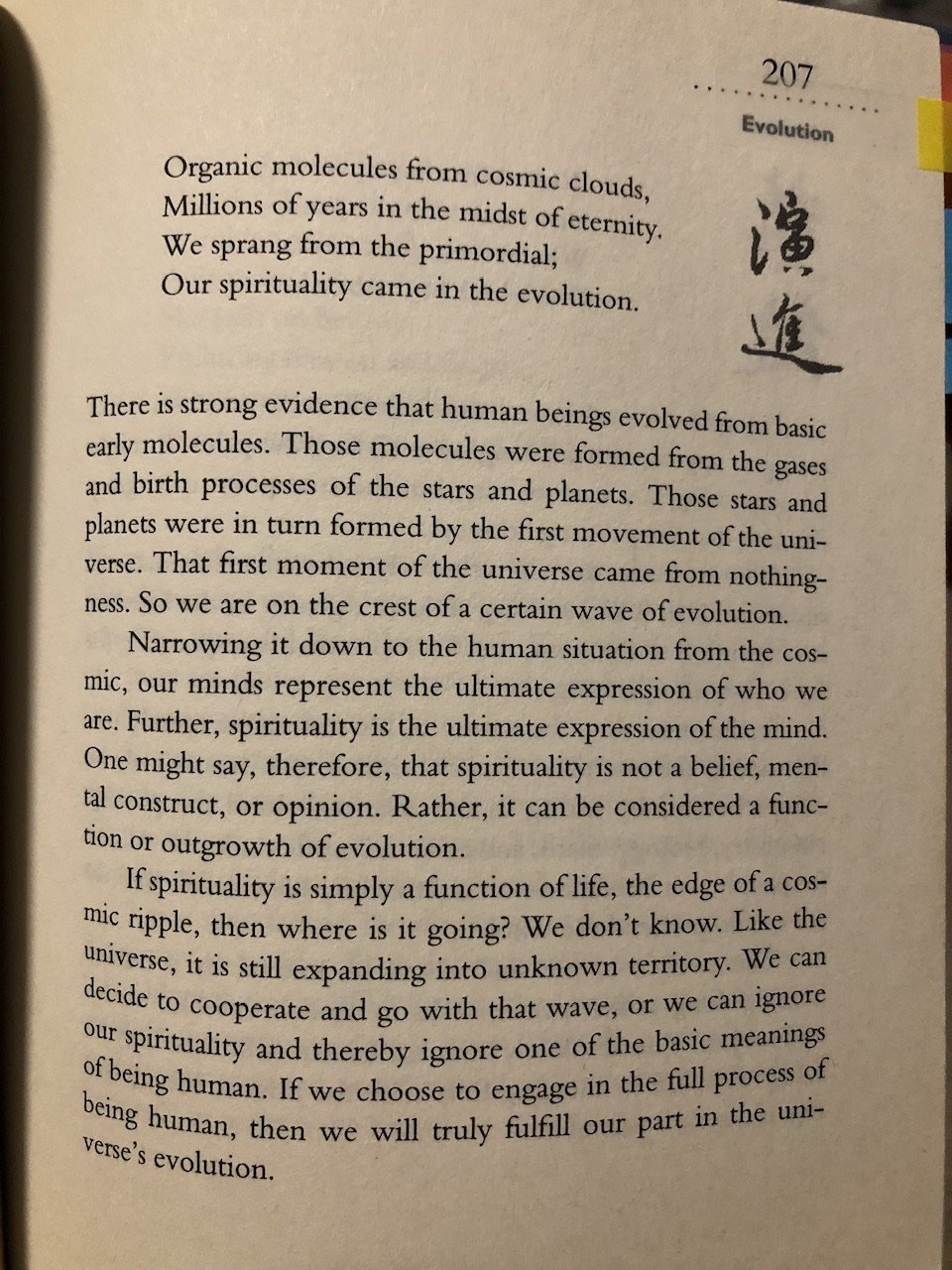
Day 207 from 365 Tao: Daily Meditations by Deng Ming-Dao.

23


cross-posted from: https://lemmy.world/post/2120704

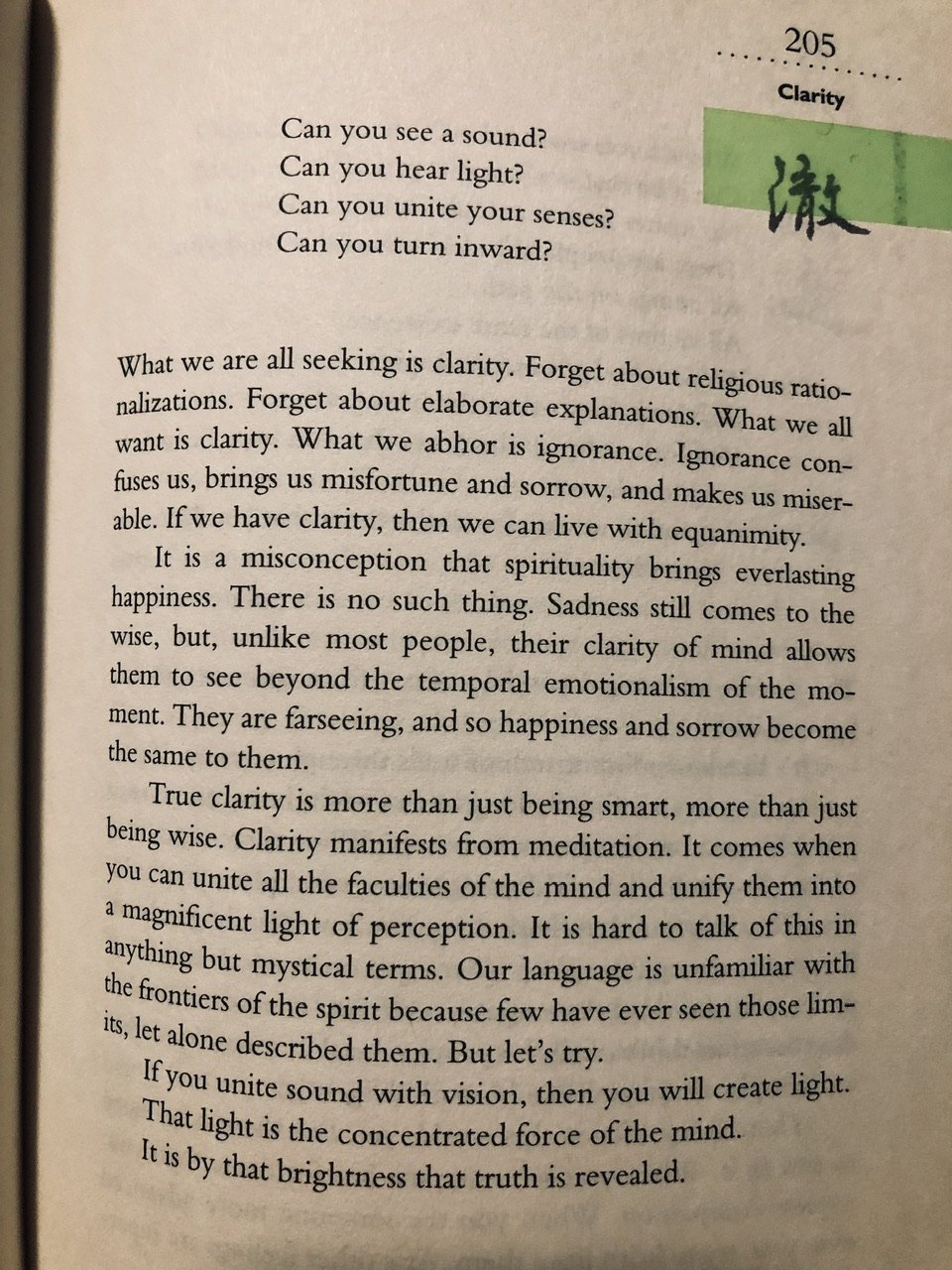
A personal favorite. Meditation brings clarity.

24


cross-posted from: https://lemmy.world/post/2002086

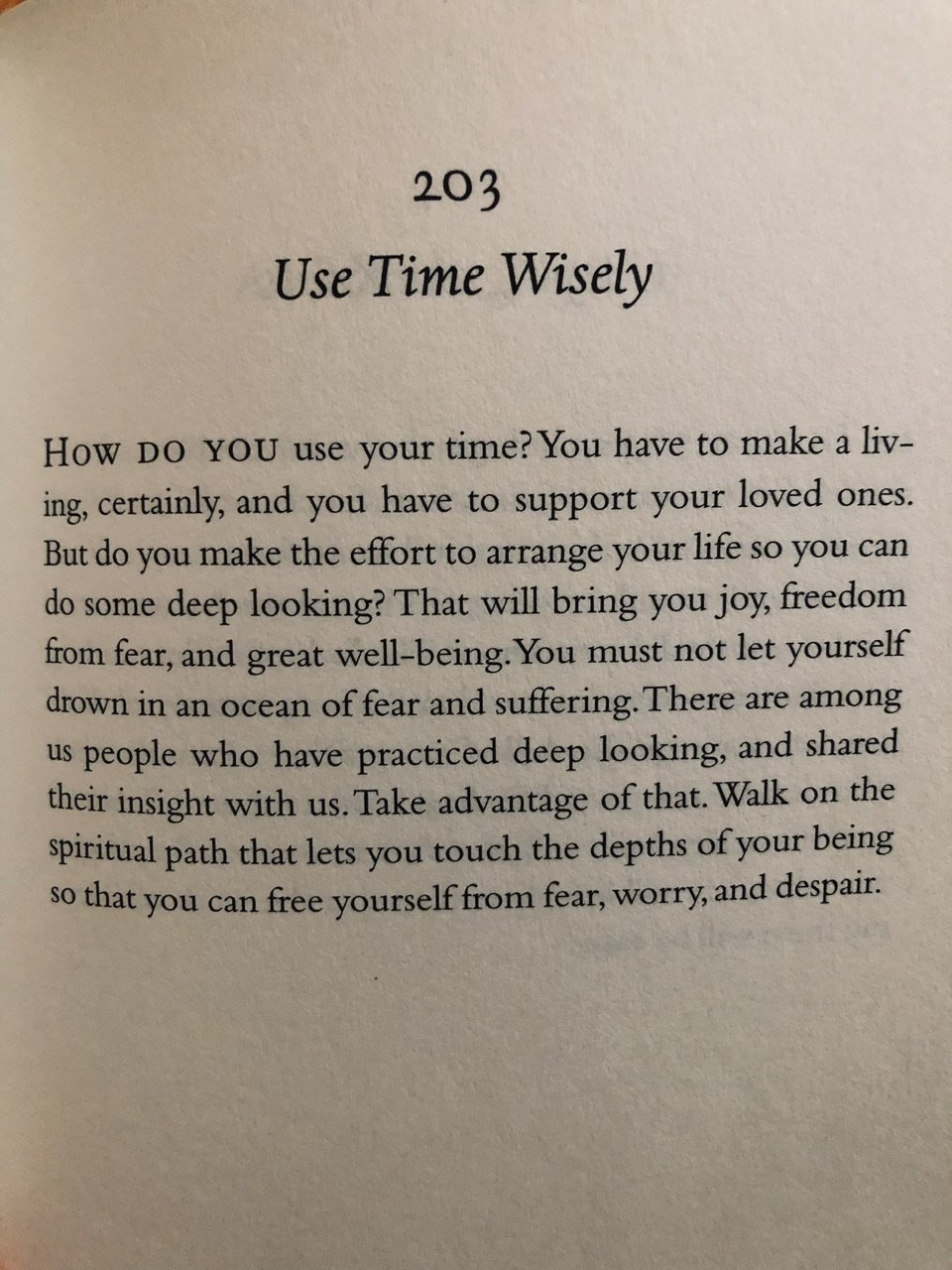
From Tich Nhat Hanh’s your one true home

25


cross-posted from: https://lemmy.world/post/1965909

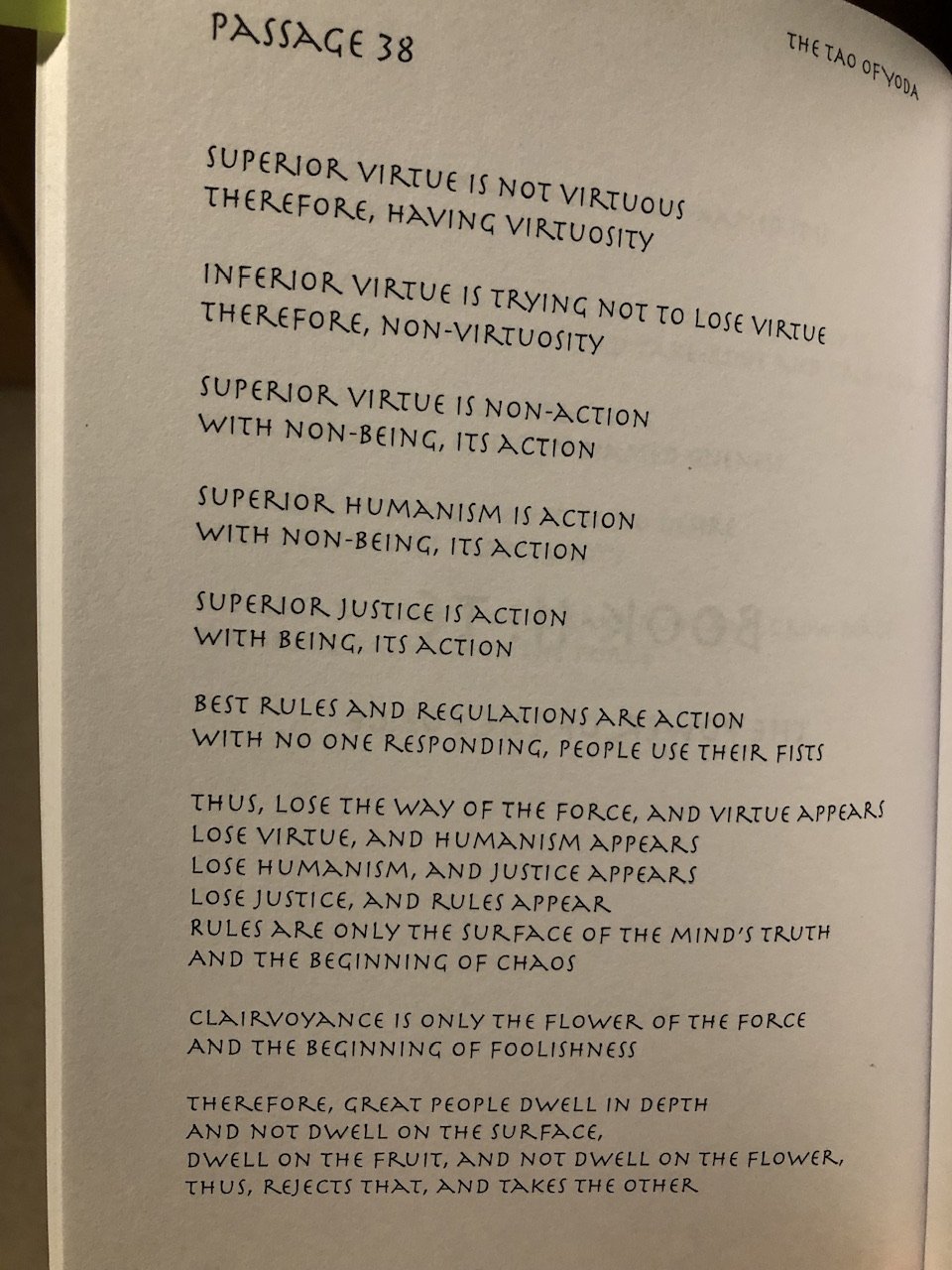
“This, lose the way of the first and virtue appears Lose virtue, and humanism appears Lose humanism, and justice appears Lose justice, and rules appear Rules are only the surface of the mind’s truth And the beginning of chaos”

view more: next ›