Food

886 readers
1 users here now

A place for Solarpunks to discuss food & food sovereignty!

Everything related to slow food, cooking, nutrition and preservation.

Come join our chat, Solarpunk Foodies, and stay tuned for our community wiki!


Resources:

Community Fridge Finder
Food Not Bombs Chapters
Little Free Pantry Map

Kindred communities:

!culinary_cultures@slrpnk.net
!farming@slrpnk.net
!foraging@slrpnk.net
!fruit@slrpnk.net
!zerowaste@slrpnk.net


Banner: "High-Rise Gardens" by Sean Bodley (CC-BY-SA 4.0) from Story Seed Library


founded 3 years ago
MODERATORS
1


California nearly triggered a seismic shift in American kitchens this fall.

A bill phasing out the sale of nonstick pans made with polytetrafluoroethylene—a type of PFAS “forever chemical”—cleared the state legislature in September with overwhelming support. Given the well-documented health risks associated with production of PTFE, commonly known as Teflon, advocates fully expected Gov. Gavin Newsom to sign SB 682 into law.

But then the celebrity chefs showed up.

Days before Newsom was set to rule on the bill, a wave of similarly worded letters to the California State Legislature appeared. Celebrity chefs Rachael Ray, David Chang, Thomas Keller, and Marcus Samuelsson all insisted that Teflon was safe when used correctly. Their letters warned that the bill was alarmist, unnecessary, and unfair to home cooks and professional chefs alike. Their message was polished, unified, and amplified across national media.

In the end, Newsom echoed their concerns. “I am deeply concerned about the impact this bill would have on the availability of affordable options in cooking products,” he wrote in his veto message.

But the chefs weren’t acting alone. They were working on behalf of The Cookware Sustainability Alliance, a newly created lobbying group representing some of the world’s largest pan manufacturers, which argued the bill would drive up consumer prices and needlessly restrict a “safe” product.

The reason the chefs’ letters aligned so cleanly with the CSA’s talking points is, in retrospect, unsurprising: They all have financial relationships with companies that produce and sell PTFE-coated pans—the same companies that fund the CSA, a joint investigation by Atmos and Heated found.

2
8
submitted 2 weeks ago* (last edited 2 weeks ago) by quercus@slrpnk.net to c/food@slrpnk.net


cross-posted from: https://slrpnk.net/post/31112565

Miriam talks with Gabe and Kato from the Astoria Food Pantry, a radical food pantry that has food, books, and RPGs, about how the project works, how giving away shit for free is cool, how awesome mutual aid distros are, and how we could sure use more of them, especially ones with RPGs.

Find them at https://www.astoriafoodpantry.com/ or on IG @astoriafoodpantry.

3
9
submitted 2 weeks ago* (last edited 1 week ago) by quercus@slrpnk.net to c/food@slrpnk.net


My irl schedule is getting busier so I'm looking to form a team with one or two more mods.

This community is chill. Would be a good opportunity for first timers!

🍴 Must have a slrpnk.net account at least a few months old with a post and/or comment history
🍴 Will enforce instance rules in a cool-headed manner
🍴 Understand that the global food system is a mess
🍴 Bonus if outside the EST (UTC -5) time zone

I'm open to new rules, recurring posts and other ways to bring more life to the community, so be sure to leave a comment if interested. Thanks!

4
5
6


Each week, we’ll share a cooking video on YouTube featuring a complete holiday menu that blends classic, creative, and cultural dishes with a plant-based twist. From gourmet spreads to Caribbean flavors, comforting classics, and clever leftover makeovers — there’s something for every table.

When you register for the free Vegan Holiday Menu Series, you'll automatically receive a complimentary download of our special recipe collection, "The Vegan Holiday Table." This essential PDF guide features 17 beloved recipes plus helpful tips and insights for navigating the holiday season, making your plant-based celebration simple and delicious.

7


Given the government shutdown, soaring grocery prices, and federal cuts to food-assistance programs, the need for the grassroots initiative is greater than ever.

8
2
EAT Lancet misses the point (gardenearth.substack.com)
submitted 2 months ago* (last edited 2 months ago) by solo@slrpnk.net to c/food@slrpnk.net


Key takeaways

  • EAT Lancet 2.0 has a wider focus on socio-economic factors, which is a great improvement. Despite talk about human rights and justice most of the analysis and suggested measures are grounded in the market framework, however.
  • The agriculture part is recommending many good practices and a radical reduction in the use of pesticides. But is not very convincing when it comes to the impacts on yields and cost of production. It can’t resolve inherent contradictions between the modernist emphasis on efficiency and the need to reduce human demands on the biosphere.
  • They project an increase of crop lands and a decrease of grasslands, as a result of a drastic reduction in ruminant livestock. To decrease the contributions to the agri-food system of grazing ruminants is simply a lose-lose.
  • The Planetary Health diet is based on a view of the food system as consumer driven, which is mistaken. There is also mismatch between the diet and the agriculture realities.
  • Instead of using a diet as the entry point of the discussions of the food system, we should start in how we can manage the various agro-ecosystems in an organic/regenerative way. Diet will follow, as it always did.
  • The implementation of the diet and the other proposed measures will not result in a halving of green house gas emissions of the food system, which has been claimed by EAT. Most of the reduction of the emissions will come from the phasing out of fossil fuels in the whole system. That this will happen is an assumption in the report and not linked to the policies and recommendations of EAT Lancet 2.0. Unfortunately, the huge impact this will have on the food system is also neglected in the report, which undermines the credibility of all scenarios.
  • The scenarios are also built on a growth of the GDP with 127 percent in 30 years. This is both implausible and not desirable.

See also: The EAT–Lancet Commission on healthy, sustainable, and just food systems

9
10
11


Food sovereignty is foundational to climate justice and must be built from the ground up.

Social and environmental movements from around the world gather at the 3rd Nyéléni Global Forum this week, as the need for food sovereignty could not be more urgent.

12
13
20
The Anarchist Cookbook (www.foodnotbombs.net)
submitted 3 months ago by Five@slrpnk.net to c/food@slrpnk.net
14


The supermarket is one of the strangest and most powerful inventions in human history. Grocery shopping is often perceived as a simple, mundane activity. And for many, access to food has never been more effortless. But supermarkets hold far more power than we realize. The journey our groceries take to reach the shelves touches every part of our lives – from our health, to our culture, to the environment.

In this episode of Human Footprint, Shane Campbell-Staton embarks on a global investigation into the supermarket’s origins, revealing how they transformed the world and grappling with what the future may bring. He explores how innovations in food production, packaging, transportation, advertising, and retail design revolutionized how we buy our food.

Today, supermarkets offer endless choices and low prices, but behind the shelves lies a darker truth. In pursuit of efficiency, we’ve surrendered control of our food system to vast corporations, promoted global supply chains that hide labor and environmental abuses, and flooded our diets with ultra-processed foods.

Shane travels from surreal supermarket art installations to apple orchards, commercial film sets, shrimp farms, urban food co-ops, and beyond, connecting with people whose lives are intertwined with this system. What he uncovers is a complex story of the modern grocery store, the true cost of convenience, and the urgent need to reimagine the way we feed ourselves.

15


Author: James McKendry | Assistant Professor in Nutrition and Healthy Aging, University of British Columbia

Excerpt:

Protein is having its moment: From grocery store shelves to Instagram feeds, high-protein foods are everywhere. Food labels shout their protein content in bold, oversized fonts, while social media overflows with recipes promising to pack more protein into your favourite dishes.

And according to the International Food Information Council’s Food and Health Survey, “high protein” topped the list of popular eating patterns in 2024. But does the hype match the science?

Yes and no.

Protein is essential to good health and boosting protein intake can support healthy aging and fitness goals, but the rush to pile on grams — often driven by marketing more than medical need — raises questions. How much do you really need? Can you overdo it? What’s the best source of protein?

This article breaks down the facts, debunks common myths and answers the most pressing questions about protein today.

16


Like dang, I know the food's amazing. But still

17


cross-posted from: https://piefed.ca/post/131336

18


cross-posted from: https://discuss.online/post/24020529

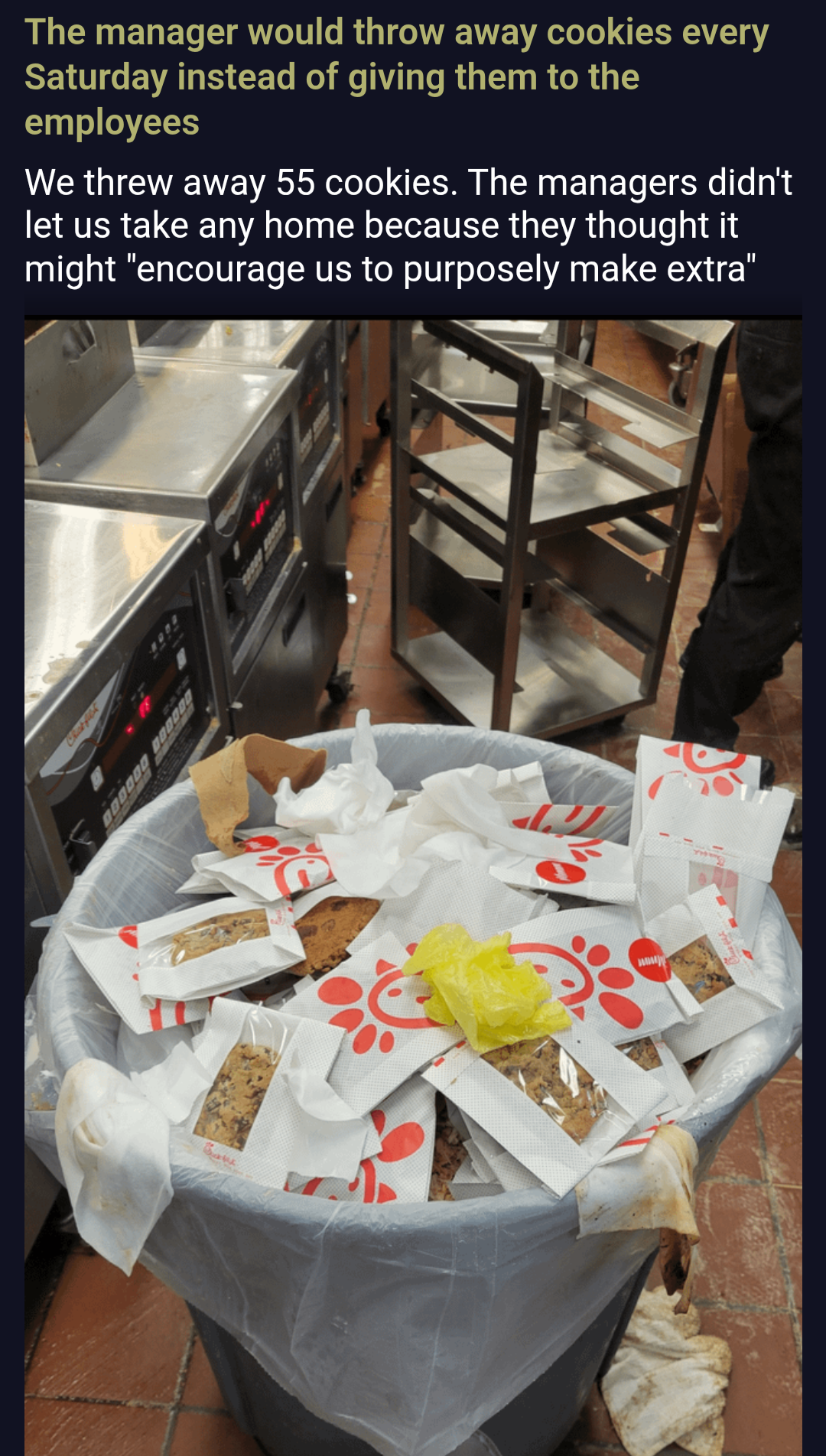
Throwing food away because capitalism

19


It's tree ice cream time, yet again! And you might be asking yourself, why on earth are you talking about Christmas trees in the middle of summer? WELP, spruce tips are a summertime crop! And they make for an excellent ice cream flavor if you ask me!

Cooking portion starts at 6:30

Woodworking portion starts at 11:00

20
21
22
23
24


The globalization of trade has given the wealthier share of the global population the impression that you can eat what you want. This fits well with the neoliberal ideology that portrays capitalism as democratic where people “vote with their wallets”. But it is an illusion – even for the rich countries. Rather than putting our faith in green consumerism we should strive to de-commodify food.

25
12
Against Corporate Food (www.currentaffairs.org)
submitted 7 months ago by quercus@slrpnk.net to c/food@slrpnk.net
 
 
view more: next ›