To be honest, I doubt it will make a difference. Drivers have been complaining for at least 40 years that Monaco is a track impossible to overtake on. I would be happy to be wrong, though.
Rheinish
joined 1 month ago
5
Ralf Schumacher voices criticism: ‘Formula 1 must become a gladiatorial sport again’
(www.auto-motor-und-sport.de)
The analogies they're coming up with to explain overtake mode are hilarious. Chocolate bars and catapults.
English translation
Mercedes is reportedly experiencing problems with fuel for its engines. Fuel partner Petronas is allegedly struggling with delays in the homologation of sustainable petrol. What does this mean for the start of the season in Melbourne?
Rarely has there been so much hype surrounding a Formula 1 team before the start of a season: even before the turn of the year, word leaked out that Mercedes had developed a clever trick for its combustion engine. In operation, the V6 turbo is said to achieve a compression ratio of 18:1. Since this season, however, the official limit, which is measured statically, has been 16:1. For weeks, opponents have been trying to get clarity from the FIA on this issue.
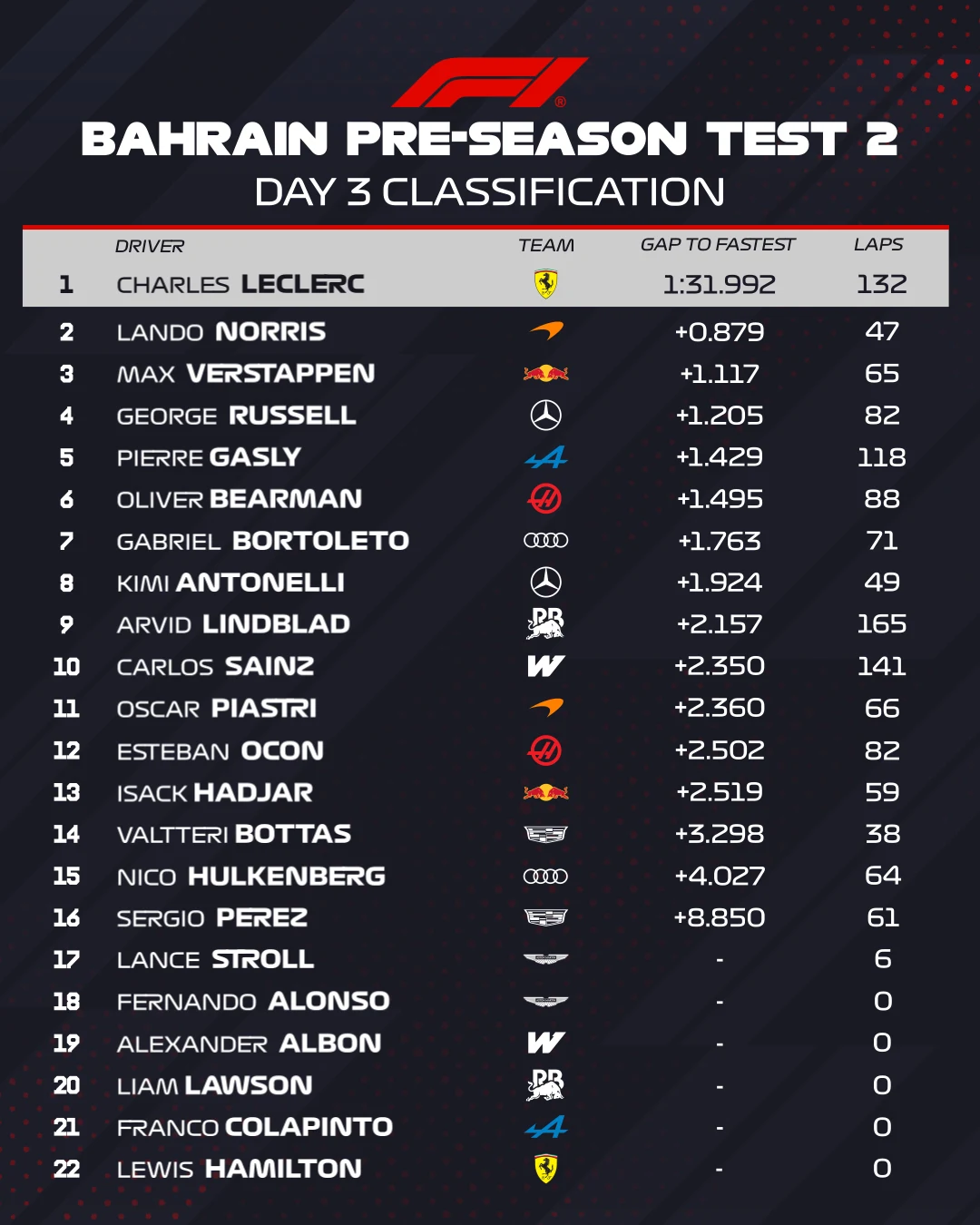
Before the start of the second Formula 1 test week in Bahrain (18 to 20 February), there is now the next controversy surrounding Mercedes. As our colleagues at ‘Motorsport.com’ have discovered, the Silver Arrows have a problem with fuel.
Supplier Petronas had not yet homologated its mixture around two weeks before the season opener in Melbourne (8 March). The regulations for approval have been drastically tightened this year. In the past, it was sufficient for fuel suppliers to send small samples for certification to a British laboratory belonging to the FIA. Approval was granted shortly afterwards and the fuel was homologated for the entire season.
Complex processes
Meanwhile, the British company Zemo is reviewing the process and granting homologation. It is no longer sufficient to send small samples to a laboratory. The entire manufacturing process is relevant for the certificate. And this is precisely where Petronas is said to be under pressure.
Zemo employees now travel to the production facilities and ensure that all criteria specified by the FIA are met. This also includes the certification of individual molecules supplied by partners involved in the production of the fuel. This complicates the entire process.
As part of the comprehensive rule changes for 2026, the fuel used in Formula 1 cars must now be 100 per cent sustainable. The premier class wants to continue reducing its carbon footprint. Formula 1 aims to achieve net greenhouse gas neutrality by 2030. The climate-neutral fuel used in the 22 racing cars accounts for a significant proportion of this.
Temporary solution?
If Petronas is unable to resolve the issue by Melbourne, another solution will have to be found. A total of four teams would be affected by the problem. In addition to the Mercedes works team, McLaren, Williams and, since this season, Alpine also use the power unit from Brixworth.
Formula 1 cannot afford to have eight cars unable to compete in the first race of the new era because the fuel is not homologated. As with the compression trick, they don't want to create a situation that would result in a significantly reduced starting field in Australia. A fiasco like Indianapolis 2005 – when only six cars started – is to be avoided. A temporary solution will probably be found. The only question is how the other engine manufacturers will react.
Conclusion
Mercedes' fuel manufacturer has reportedly not yet homologated its new fuel for the coming season. The certification processes for sustainable fuels have become significantly more stringent. If Petronas does not receive homologation by Melbourne, a temporary solution will have to be found.
Translated with DeepL.com
And he's right. Unfortunately being right doesn't mean anything in F1, though. When Alfa Romeo was the only one under the weight limit they changed it. Ironically enough it was Vassuer working at Alfa Romeo at the time who complained about other teams playing games with the weight limit.
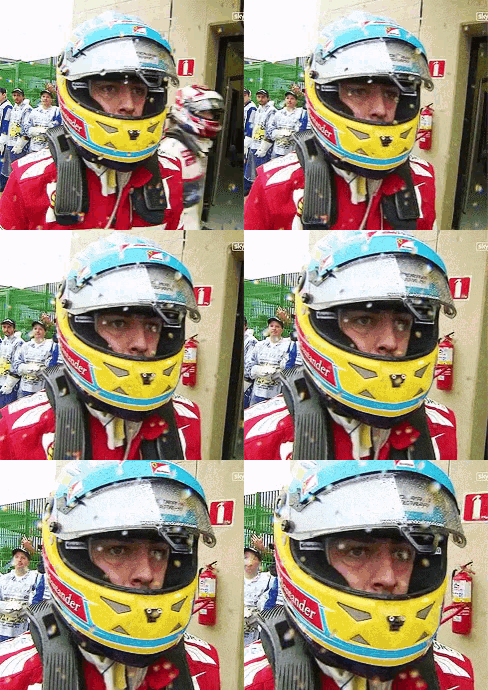
Looks like not even Newey's magic can overcome Alonso's bad luck. That man is truly cursed.
The video popped up in my YouTube feed and seemed informative. Is the channel known to be disreputable?
English translation
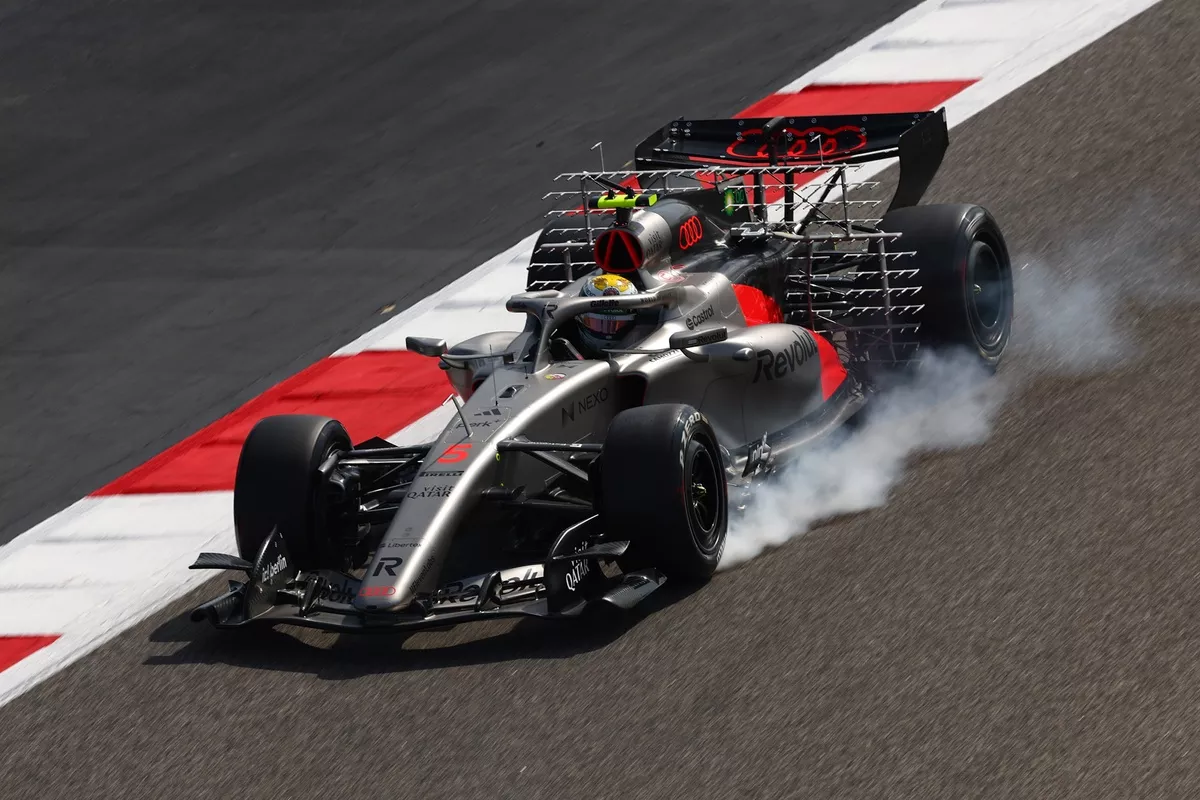
Audi showed up at the Bahrain test with a completely redesigned car. The side pods in particular are unrecognisable. We present the first images of the B version.
The Audi factory team is brand new to Formula 1. But when it comes to development work, the new German-Swiss alliance is already way ahead. The engineers have built two completely different cars in a very short time. One for the shakedown week in Barcelona. And one for further testing in Bahrain.
Observers were amazed when the revamped R26 rolled out of the garage at the start of test driving on the Sakhir Grand Prix circuit on Wednesday (11 February). Under the watchful eyes of project manager Mattia Binotto and technical director James Key, a fundamentally redesigned car took to the track.
‘I think it's fair to call this a B version,’ Binotto grinned mischievously. ‘Don't ask what's new! Everything is new.’ The first thing that catches the eye, of course, are the side pods. The bulbous cooling intakes from the Barcelona week have disappeared. They have been replaced by ultra-slim vertical scoops.
The result is somewhat reminiscent of Mercedes' so-called ‘Zeropod Concept’. At the start of the last regulation era, the Silver Arrow team wanted to shock the competition with ultra-slim bodywork.
Zeropod flops at Mercedes
But the solution backfired. It didn't work with the complicated underbodies. Now the underbodies are much simpler in design. And Audi is making a second attempt with a modified concept. The small bump protruding from the panelling at cockpit level is the best indication of just how slim the R26 really is. This is where the side crash structure is located. Its position is mandatory for all cars.
However, Nico Hülkenberg's new company car is not quite as extreme as the old Mercedes. From above, you can see a small channel that directs air over the side pods to the diffuser. Another new feature is the cooling fins carved vertically into the bonnet. They prevent heat from building up under the tightly fitting carbon skin.
A version still in the 2025 budget
Many changes can also be seen on the nose and front wing. The dark contrasting adjustment mechanism used to retract the upper flaps on the straights is particularly striking. It was not yet present on the base car used in Barcelona.
For those who now fear that Audi has already used up its entire development budget for the 2026 season by building two completely different cars, we can give the all-clear. Binotto confirmed that the parts for the A version from the shakedown in Barcelona were all built last year and accordingly included in the budget cap. This leaves room for further upgrades.
Conclusion
Audi showed up at the test drives in Bahrain with a completely redesigned car. The ultra-slim side pods with vertical cooling inlets are particularly eye-catching. You can find the latest detailed photos in the gallery.
Translated with DeepL.com
The root of all evil seems to be the limited amount of battery. I wonder if the FIA will make a last minute change to allow for a larger capacity battery.
That's fair. Generally, I would expect more interest in the pre-season tests since it's a new regulation, but I guess not.
The Audi sidepods are looking wild.
view more: next ›
English translation
Sky expert Ralf Schumacher understands the drivers' criticism of the new Formula 1 regulations. The former driver hopes to see a return to pure combustion engines in the premier class and a greater focus on the drivers.
The countdown to the start of the season in Melbourne is already in the home stretch. This coming weekend (8 March), all questions will finally be answered: Who has built the best car for 2026? Who is best suited to the new regulations? And will the rules really deliver the hoped-for action, or will the new hybrid formula turn out to be the feared damp squib?
Many drivers have already expressed their opinions on the new cars. More or less openly, many critical words were heard during the test drives. Above all, the lack of driving pleasure was criticised. Instead of pushing the limits, managing the limited energy will be at the top of the priority list in the future.
Ralf Schumacher is also known for his clear words. During a press conference on Sky TV, the TV expert expressed his surprise that it had come to this: ‘I'm particularly surprised that, with all the clever minds and all the simulations, it has only now dawned on people how complex the issues are, and that they are complaining about it. That's good for journalists, but it's not good for Formula 1.’
Formula 1 is too complicated
The former racing driver understands the frustration among the drivers: ‘I agree with Max Verstappen that you have to calculate far too much with the electrical energy, that the overall performance is significantly lower than in our day and that the car is considerably heavier. Those are my criticisms too. Formula 1 is too complicated.’
The 50-year-old expects the task to be more difficult this year, not only for the drivers but also for the TV experts. There was a one-day briefing for the commentators, reveals the six-time Grand Prix winner. Nevertheless, Schumacher fears that it will not always be easy to see how overtaking manoeuvres or accidents come about when electric energy is involved.
The Sky expert does not believe that the regulations will be changed at short notice: ‘The only Plan B is to return to normal combustion engines by 2030 at the latest, using synthetic fuels. Formula 1 must be seen as a gladiatorial sport again, rather than primarily as a matter of sustainability. This can also be portrayed well in the media.’
New rules for Audi
Schumacher believes that Formula 1 is in danger of straying from its successful course with the current hybrid strategy: "On the track, it should be pure sport and what we humans like: emotions through sounds and man-to-man comparisons. As nice as it is to have many great brands, for me, apart from Ferrari, it's the people who are the most important. That's why the Drivers' Championship is much more important to me than the Team Championship."
When the current engine regulations were written, different conditions applied. At that time, electrification was the big topic for the future. Formula 1 tried everything it could to get new manufacturers on board. "It's clear that a completely new development was important for Audi. The goal was for everyone to start from scratch," says Schumacher, explaining the background to the current situation.
However, the retired racing driver hopes that the criticism from the drivers will now quiet down a bit: "Max Verstappen has a very loud voice, of course, and he's a great guy, but if the drivers are already starting now, even though no races have been run yet, then that's a bit of a shame. Perhaps they could have waited a little longer. The discussions aren't helping either. They'll just have to get through the next few years. Maybe we should just keep quiet for three races."
Conclusion
Ralf Schumacher is not a fan of the current hybrid regulations. The focus on technology is too great. In future, the drivers should once again take centre stage. As far as the action on the track is concerned, however, Schumacher wants to wait for a few races before making a final judgement. And that is what the Sky expert recommends to the drivers as well.
Translated with DeepL.com