This is a photograph of the bark of a London Plane tree, a type of Sycamore. Photo taken in Canandaigua, New York, by Annette Hansen. 2025

This is a photograph of the bark of a London Plane tree, a type of Sycamore. Photo taken in Canandaigua, New York, by Annette Hansen. 2025
"Heart cells are among the most densely packed in the body — about 100 million fit into a space the size of a sugar cube. The compact structure crams the cells so close together that they can communicate with one another and beat as one lump. For tissue engineers, however, it poses a tricky hurdle: Pack the cells too tightly and some won’t get proper nutrients; too loosely and they can’t coordinate a beat."
https://stanmed.stanford.edu/innovations-helping-harness-sound-acoustics-healing/

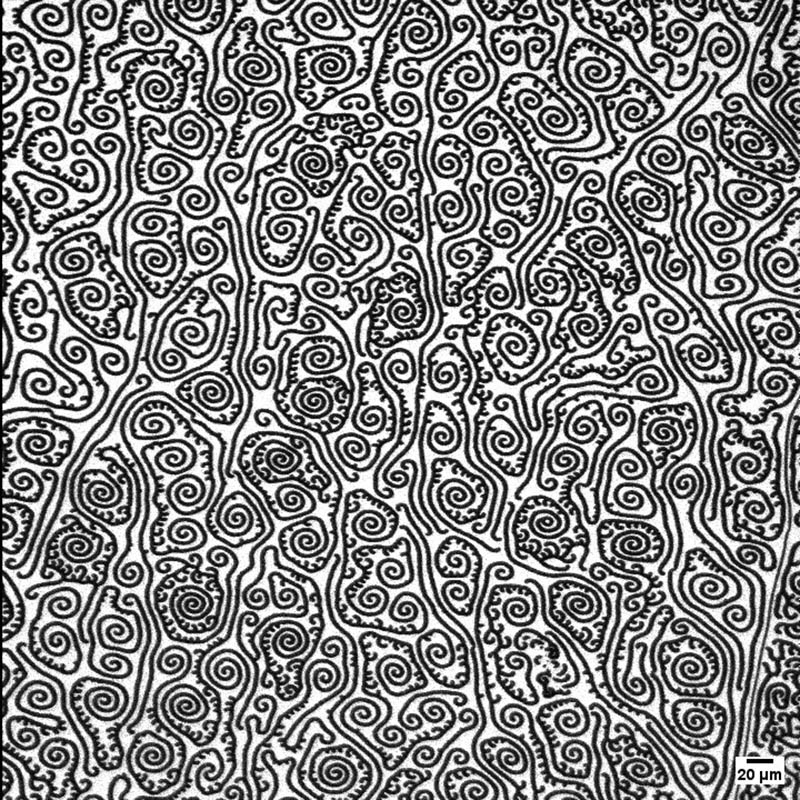
2nd Place at the Biophysical Society's annual Art of Science competition in 2024 went to Benjamin Stottrup for this stunning image - "Every breath you take is possible because of lung surfactant. Lung surfactant makes these intricate and beautiful patterns that vary with composition and surface pressure. This image was taken by confocal fluorescence microscopy. Sample composition is 9:1 (4:1 r:racDPPC):hexadecanol with 1.5 mol% dehydrocholesterol."
This image of a rodent optic nerve head showing astrocytes (yellow), contractile proteins (red) and retinal vasculature (green) by Hassanain Qambari and Jayden Dickson won first place at the 2023 NSW Photomicrography competition.
https://www.nikonsmallworld.com/galleries/2023-photomicrography-competition/rodent-optic-nerve-head

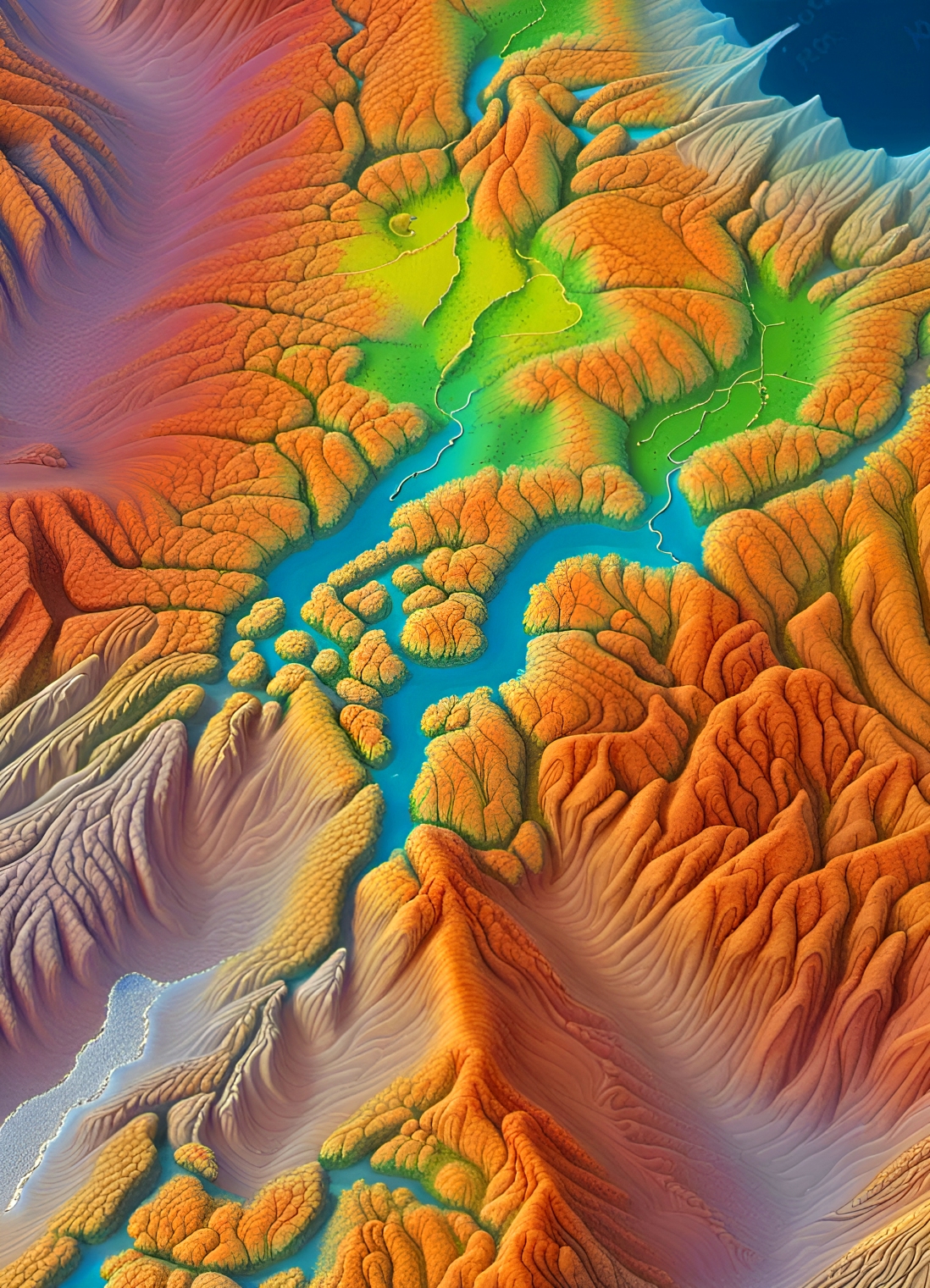
The processes of erosion and subsequent sediment deposition can produce some very intriguing and visually staggering imagery, whether on a small scale, or visible from satellites, as presented here.
Wherever there is nature, you will never be far from Art.
https://www.thisiscolossal.com/2023/10/dan-coe-lidar-rivers/

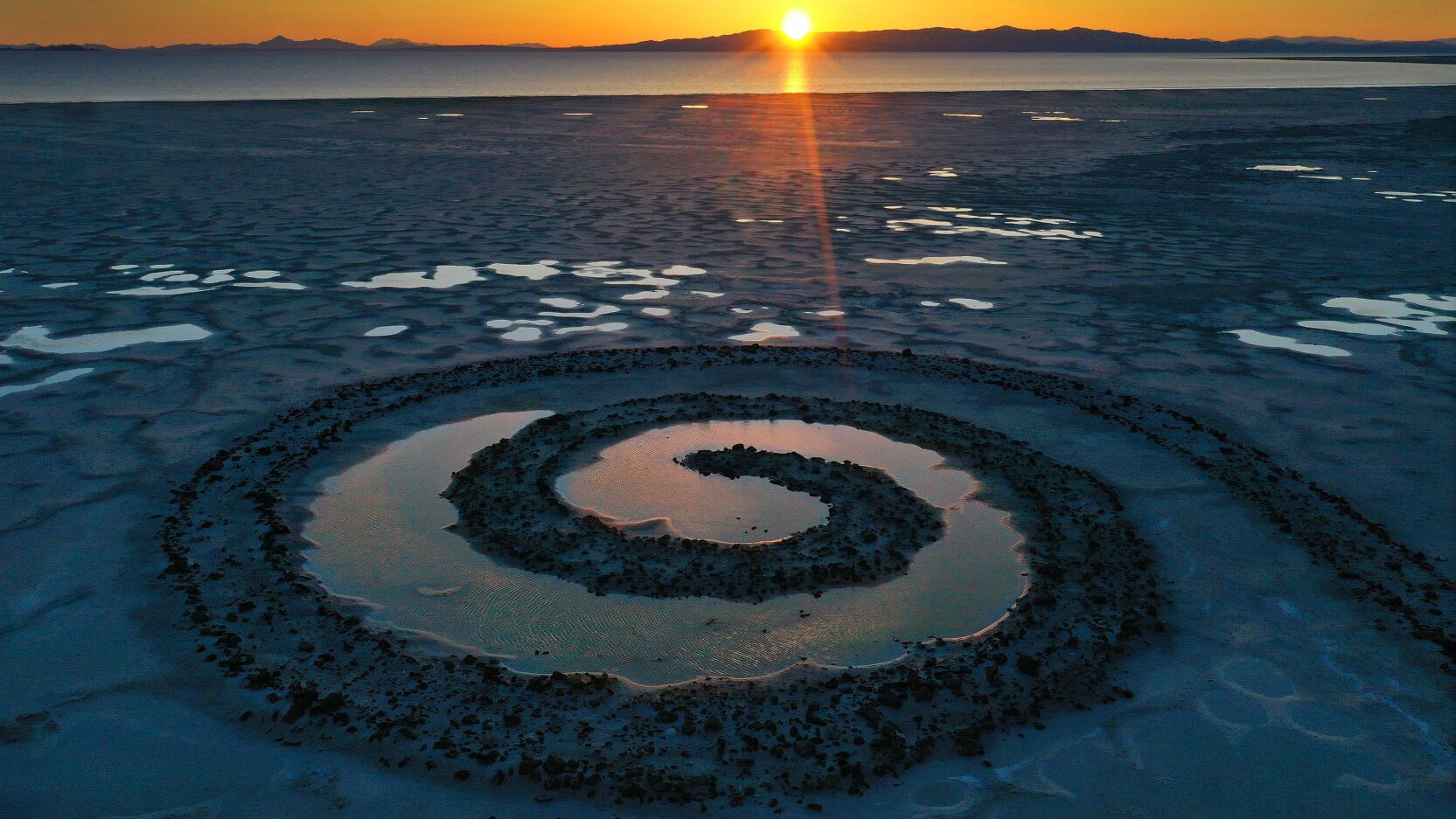
One of the most amazing things about Art which is meant to change within an environment as the environment changes, is the cumulative effects that change can have, when viewed over a long period of time. This artwork was meant to archive that change, as that change transformed the work of art.
It's important to revisit works like these, to get in touch with the passing of time in beautiful new ways.
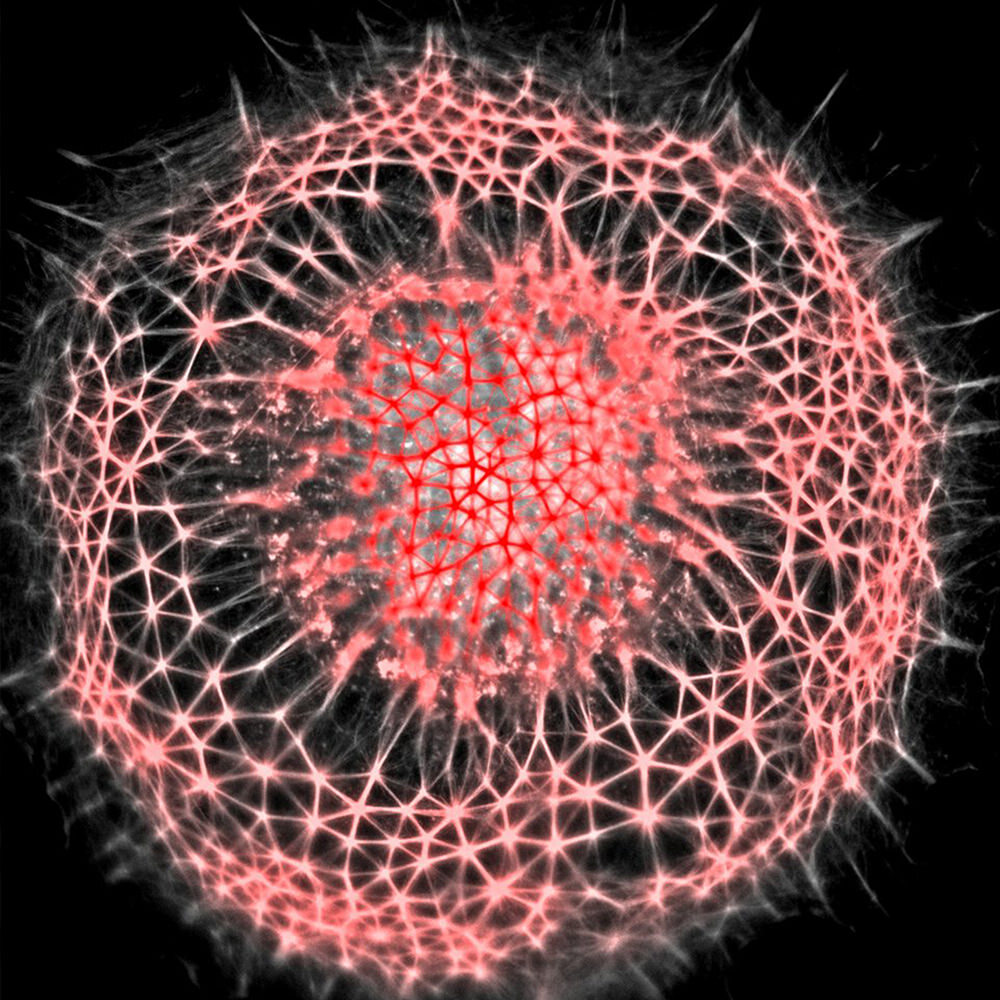
Kim's work resulted in this beautiful image, which won 2nd place in the annual "Art of Science" image contest hosted by the Biophysical Society, in 2013!
https://www.biophysics.org/Portals/0/BPSAssets/Awards/ImageContest/
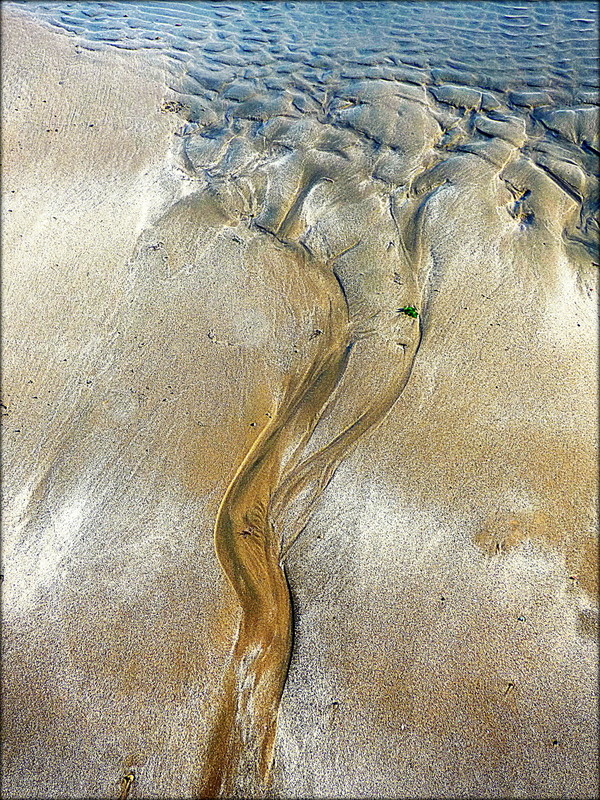
Sediment deposition/erosion is a natural process that produces some breath-taking imagery! Many thanks to Brian for this newest work!
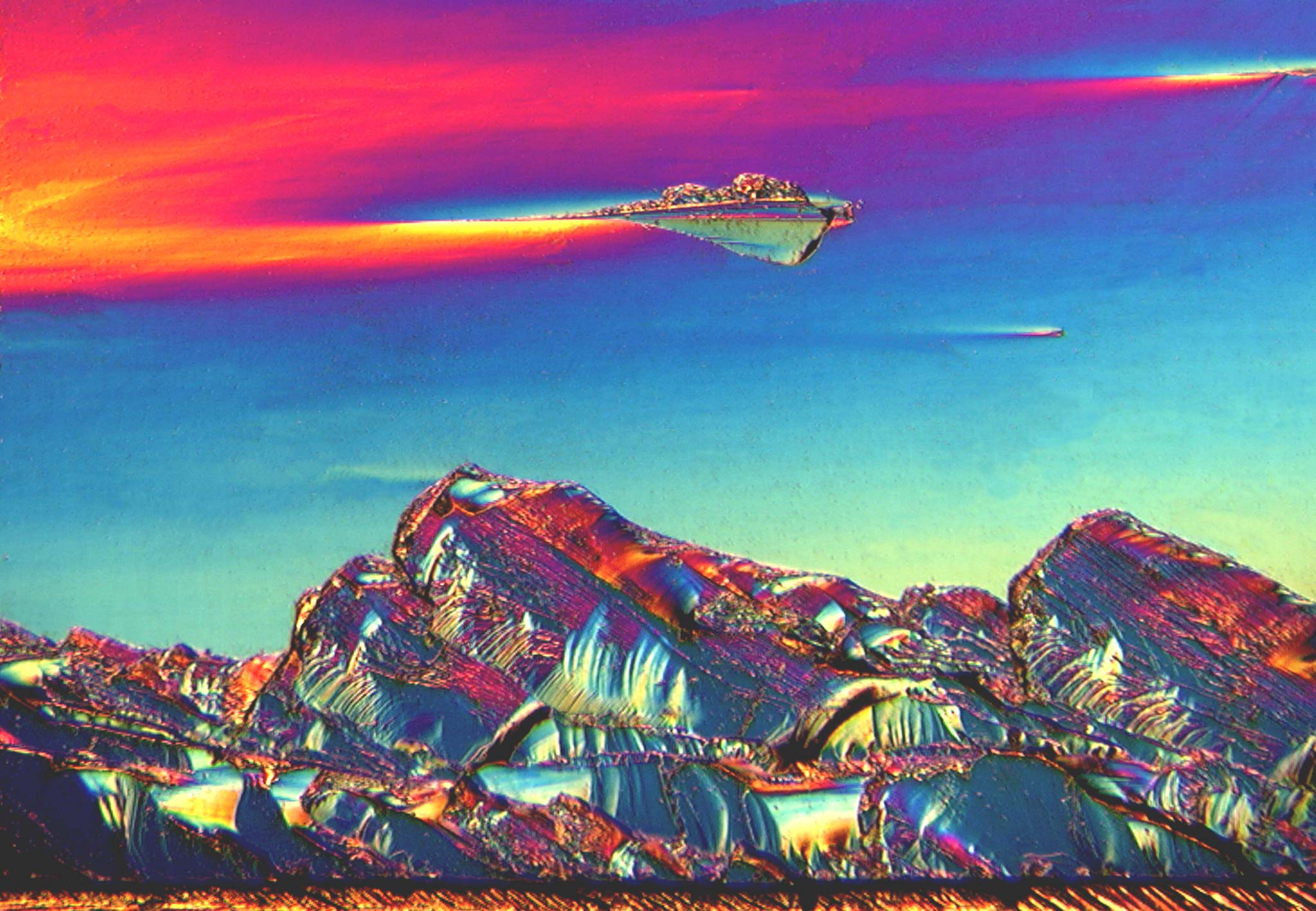
This image was captured by Differential Interference Contrast by Dr. Lynn Boatner et al of the Oak Ridge National Laboratory in Oak Ridge, Tennessee, USA for the 2003 NSW competition, where it placed 15th. ...But of course I will hone in on it because it looks so much like a landscape!
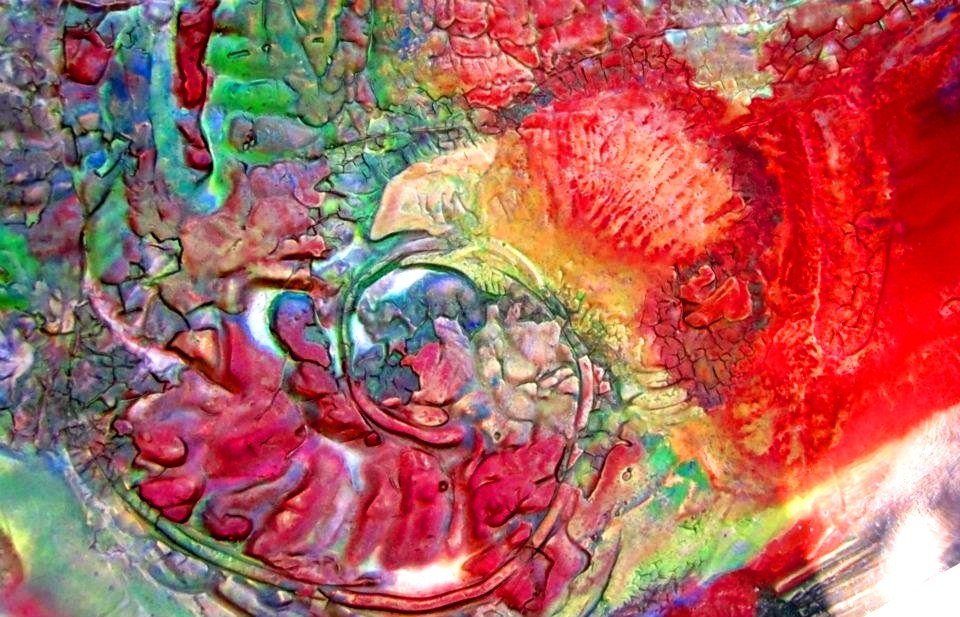
This painting was a salvage operation, from the moment when I discovered that my gesso had been replaced by a cheap impostor wearing the same bucket. The gesso cracked and fell away from the masonite, and I almost gave up on this painting - and painting in general. I didn't though, and just applied more gesso over what was left in this painting. The end result was definitely an interesting surface to apply pigment to, resembling a rocky coastline where a few puzzle-pieces of gesso held on.

My work has always attempted to echo nature, by applying some of the same processes that nature uses - in this case sediment deposition (in addition to fractal field applications), to reproduce alluvial fans, river deltas, and other geological features often found in the natural world.

Pigment is applied in a highly aqueous state by pouring it over a level painting like flood waters, which move over some areas quickly, and others more slowly. Depending on the pigment grain, the individual particles settle at different rates, collecting on the surface in differing concentrations. Just like in nature, this liquid collects from these "rivers and streams" into larger "lakes and seas", which sometimes take days to dry completely in the sun.
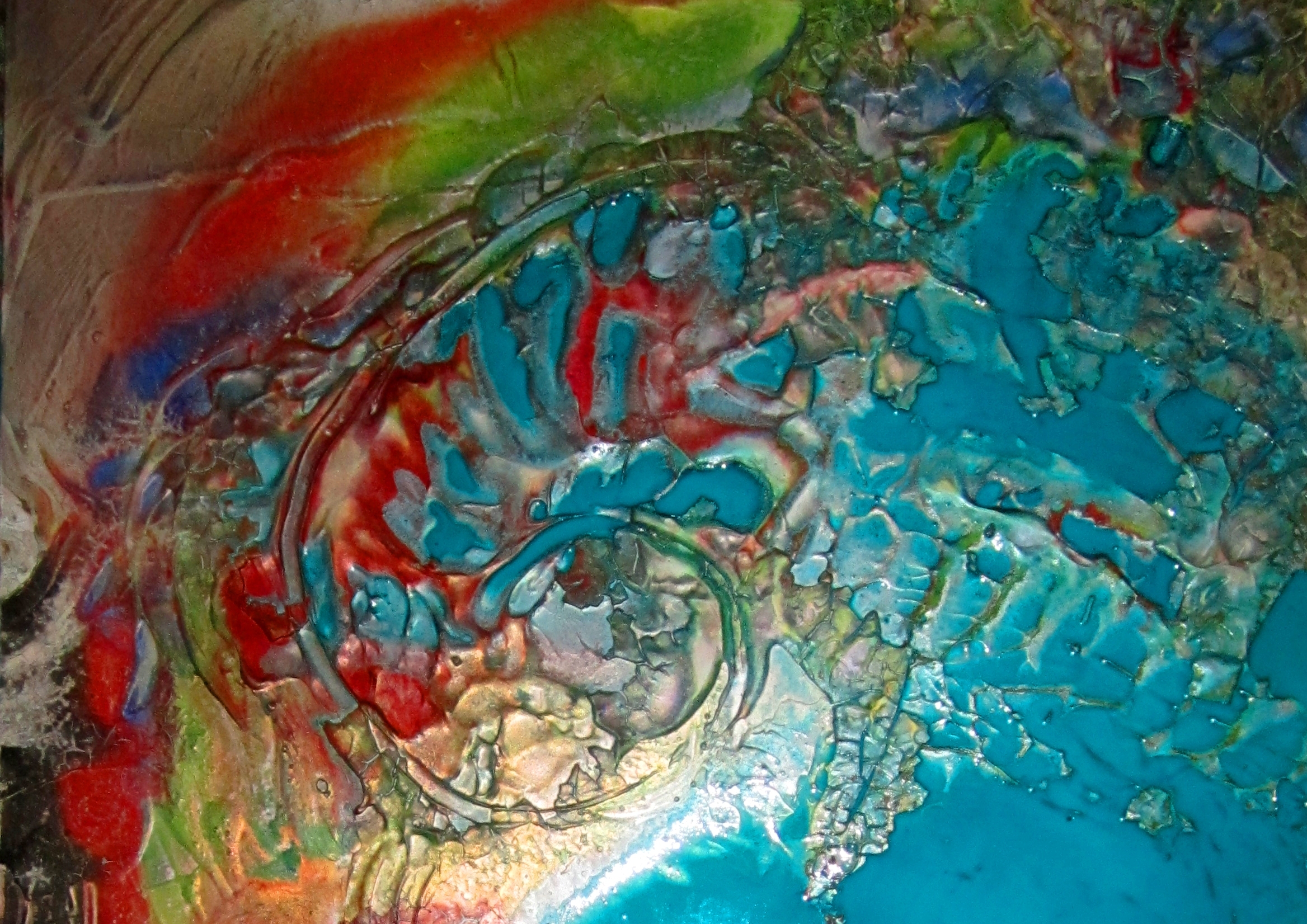
Each consecutive layer interacts in unexpected ways with the previous, resulting in a work that was painted by nature. As the artist I just facilitated the various processes it needed to accomplish its magic.
https://blog.yourdesignjuice.com/2021/11/an-artists-life-by-loren-hall/

Submitted to the Nikon photomicrography competition in 1990, this entry won 4th place. In addition to just being a lovely piece, it has the distinctive signs of nature repeating herself - this time in the form of an alien desert landscape! And THAT, is a tell-tale sign that some natural process art is afoot!