Same experience. 🫤
K3can
joined 3 years ago
Personally, whenever I need to process anything text-based, I use perl.
Read the json into a hash, parse the values if desired, then plug the values into an html template.
It's pretty quick to write, much easier to learn than python (in my opinion), and super powerful.
I'm a bit torn on the hardware bit, myself.
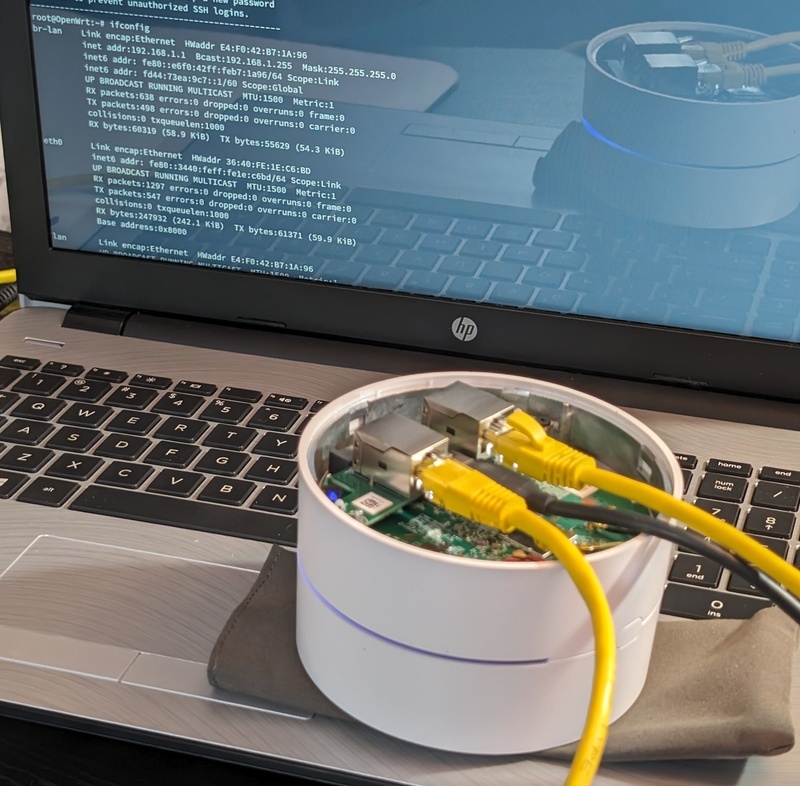
On one hand, hardware is a fundamental aspect of self hosting. There's already a portion of the community who considers self-hosting to include using commercially-hosted cloud services (as long as it's not Google), so prohibiting hardware discussion just reinforces that concept. Plus, it can be really fun to see what creative hardware people come up. I'm pretty sure I posted about my Fediverse server running on a WiFi router here, for example. The focus was on the unusual hardware, but it was also clearly related to self-hosting.
On the other hand, looking at what is posted in other communities, I don't think there's a ton of value in seeing a dozen photos of a bone-stock rpi or a closed laptop sitting on a desk. Same with the nth post asking if their 30-year-old 1u would be a good choice for Jellyfin; so I see why the rule exists.
Overall, though, I think hardware should be allowed, but maybe add a rule along the lines of "if you're posting a question, please include what resources you've already reviewed or troubleshooting steps you've already taken."
Heck, that might be a good rule for all questions, regardless of topic...
The first one. The service is owned by root, but the application is running as an unprivileged system user.
Quadlets work like any other systemd service.
You create the user/group you want to run as on the underlying system, then just specify that user/group in the quadlet file.
If you look at my *arr examples, you can see the user and groups they're running as.
Podman quadlets can also auto-update and auto rollback, if needed.
Same here.
Pulling doesn't work if you don't know when a system will be online, so it only makes sense for my laptop to push.
Regex would be a nice addition.
Unfortunately, I think Boost is still closed source, so there's little that can be done to improve it.
boost seems to use a substring method when filtering, meaning if I add "republic", that blocks any post containing "Republic of congo" or "republican".
It looks like you've got some pretty short words in there, though, like "us" and "oil".
Wouldn't that block things like "boiling spaghetti", "user", "bus", and a ton of other benign words?
Also, for what it's worth, some of the words can be used pretty often in non-political connexts. "Fpv" is "first person view" in RC hobbies, for example, and "jail" is used in BSD-based operating systems.
Seems to be specific to rewrites using an un-named capture.
grep -rnE "\$[0-9.*].*\?" /etc/ngnix
should show if you have any potentially vulnerable directives in your config.
It's a function of a "pod" within podman.
I wrote the podman examples for AudioMuseAI using a pod: https://github.com/NeptuneHub/AudioMuse-AI/tree/main/deployment/podman-quadlets
And I have an example *arr suite on my GitHub page: https://github.com/K3CAN/podman-arr-quadlets
Someone on another Lemmy instance raised the question of whether an old wifi router could make a usable server of some sort, specifically a decade-old Google AC-1304. Since I happened to have a couple hanging around, I decided to give it a try.
I wrote a little about my experience in my blog but to summarize, I thought it would be fun to se if I could run a GoToSocial instance entirely on the router. It has an ARMv7 processor, 4GB of storage, and 512MB of RAM, so it falls a smidge short of the recommended minimum specs, but I figured that I might be able to get by if I kept the instance simple.
Surprisingly, GTS seemed to run fine after some basic configuration tweaks. The biggest issue I encountered was actually with ffmpeg, rather than GTS itself. The only GTS build available for ARMv7 is a nowasm build, meaning that it's missing the built-in media handling components, and instead relies on ffmpeg being proveded by the host system. The version of ffmpeg that ships with the OS I'm using (OpenWRT) didn't have the needed codecs to create webp files, which GTS requires when dealing with media. Using the OpenWRT SDK, I tried to build an ffmpeg package with the correct codecs, but it still failed to properly convert files to webp. My goal was just to run GTS, though, so I that digging deeper into ffmpeg felt like a tangent I didn't want to pursue.
But I digress. The instance is now online and running (though without media), and I created a simple bot account, named Gale, who will post a random fact about wifi and networking each day.
Feel free to give 'em a follow in your favorite Mastodon client at @gale@gts-googlewifi.k3can.us or you can view past toots here
Just wanted to share!
view more: next ›
Not often, but there's a niche. I wish I could remember the details, but I saw someone earlier this year that was hosting a public BBS on a c64.