-2
Five Things the “Nuclear Bros” Don’t Want You to Know About Small Modular Reactors
(blog.ucsusa.org)
Discussion of climate, how it is changing, activism around that, the politics, and the energy systems change we need in order to stabilize things.
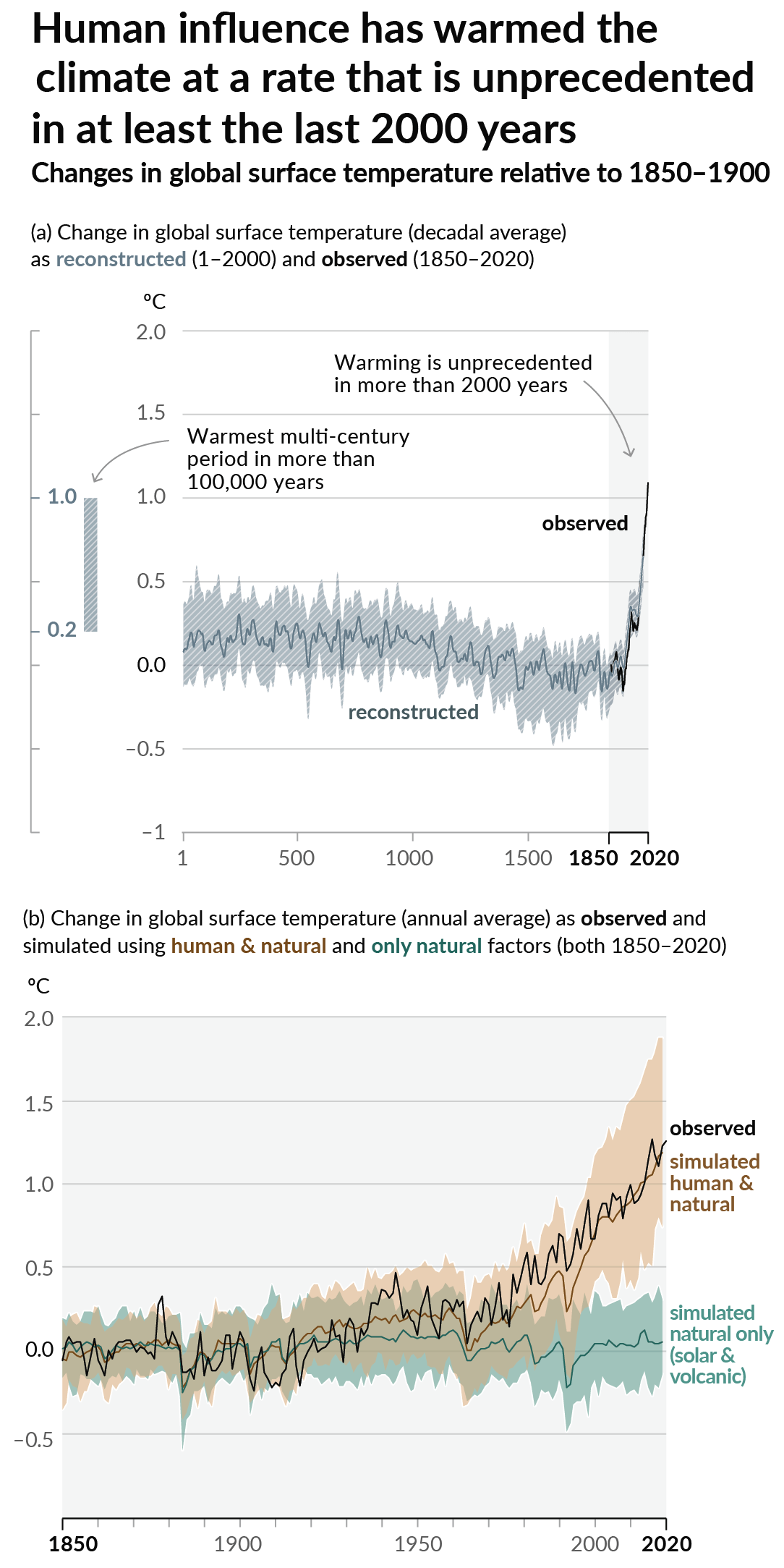
As a starting point, the burning of fossil fuels, and to a lesser extent deforestation and release of methane are responsible for the warming in recent decades:
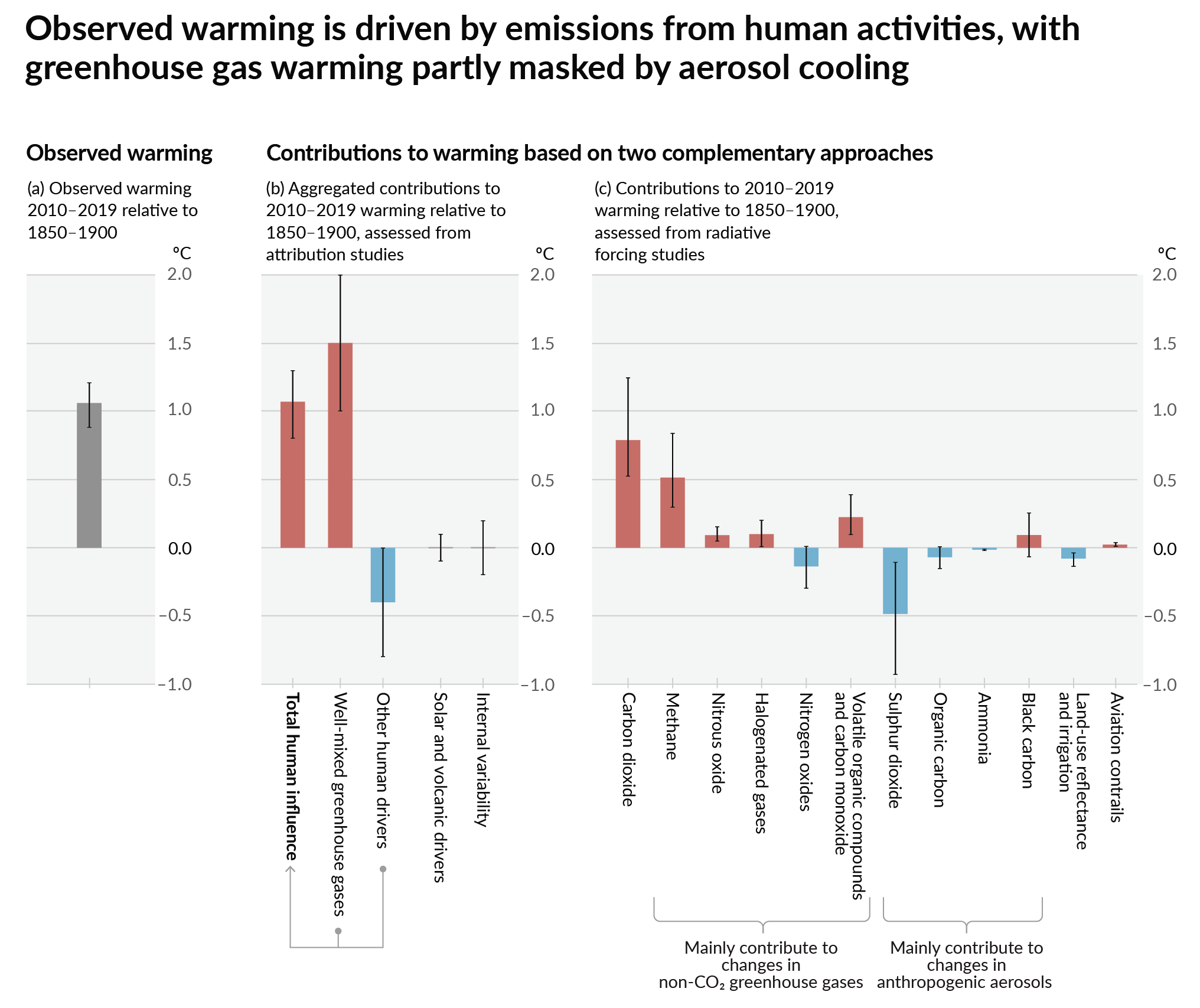
How much each change to the atmosphere has warmed the world:
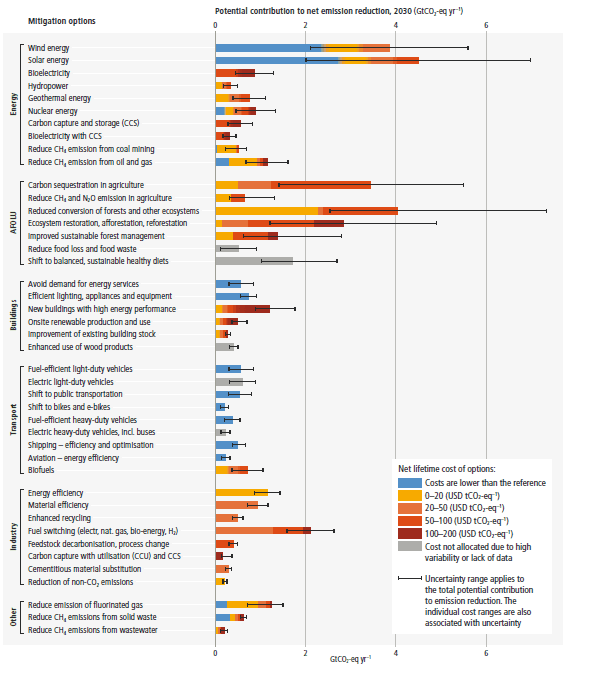
Recommended actions to cut greenhouse gas emissions in the near future:
Anti-science, inactivism, and unsupported conspiracy theories are not ok here.
I think the EU Commission has done a fairly good job of listing the pros and contras of small modular reactors:
They have some advantages over conventional (large) reactors in the following areas:
Explanation: even a shut down NPP needs cooling, but bigger ones need non-trivial amounts of energy, for example the 5700 MW plant in Zaporizhya in the middle of a war zone needs about 50 MW of power just to safely stay offline, which is why people have been fairly concerned about it. For comparison, a 300 MW micro-reactor brought to its lowest possible power level might be safe without external energy, or a minimal amount of external energy (which could be supplied by an off-the-shelf diesel generator available to every rescue department).
The overview of the Commission mentions:
SMRs have passive (inherent) safety systems, with a simpler design, a reactor core with lower core power and larger fractions of coolant. These altogether increase significantly the time allowed for operators to react in case of incidents or accidents.
I don't think they will offer economical advantages over renewable power. Some amont of SMRs might however be called for to have a long-term steerable component in the power grid.
I though the use case was that these reactors can be mass produced in a factory and not require large scale infrastructure projects?
I appreciate this hasn't been proven but comparing apples with oranges seems odd.
While clearly biased and theres some wording and cherrypicking of studies (that isn't very egregious, to be clear!) that I'd take issue with in a more formal setting, the content of the article thru to point two are really quite an alright summary of the issues and raises some very valid questions the industry has yet to answer.
However it throws itself off the credibility cliff riiiiiight around this point:
In any event, regulators are loosening safety and security requirements for SMRs in ways which could cancel out any safety benefits from passive features. For example, the NRC has approved rules and procedures in recent years that provide regulatory pathways for exempting new reactors, including SMRs, from many of the protective measures that it requires for operating plants, such as a physical containment structure, an offsite emergency evacuation plan, and an exclusion zone that separates the plant from densely populated areas. It is also considering further changes that could allow SMRs to reduce the numbers of armed security personnel to protect them from terrorist attacks and highly trained operators to run them. Reducing security at SMRs is particularly worrisome, because even the safest reactors could effectively become dangerous radiological weapons if they are sabotaged by skilled attackers. Even passive safety mechanisms could be deliberately disabled.
What in the fearmongering fuck is this? "Oh no, terrorists!" And it's debunked on the first page of one of its own sources. Regulators have NOT put any pathways in place to "exempt SMRs from many of the protective measures." If you read the sources, what they have done is put in place guidelines for the evaluation of the current measures, to judge if those measures merit being re-evaluated. Its a path for a path to judge if maybe we should have a path.
And fucking hell, yes of course they would have smaller security contingents, the installations are physically smaller! There's less to guard! Thats in no small part the point!
Look there are a lot of problems with SMRs and even more questions we just don't have answers for yet. Those questions need answers before any progress can be made with SMRs. The benefits of lower transmission losses, dedicated power generation for industrial complexes being at all beneficial, or remotely finalized designs for the reactor technology needed here are all MASSIVE outstanding issues that have yet to be solved.
But this shit? "we cant have this source of green energy because terrorists!!!"
Fuck off with that.
There are more than enough issues with SMRs to justify extreme skepticism, hell microsoft wanting a bunch is probably reason enough to abandon the whole concept. We dont need to stoop to disinformation and blatant lies, what the fuck. This is why "nuclear bros" (Which great idea, lets "other" the critics, that's not a red flag at all...) get so much traction, because they dont stoop to conspiracy theory tropes to support their arguments.
There's so many people paranoid about the remote possibility of dirty bombs. Meanwhile, Norfolk Southern is actually spilling tankers full of toxic chemicals that get set on fire by being incredibly negligent.
If terrorists did want to poison an area, there's plenty of insanely toxic and commercially available compounds to choose from. The fixation on nuclear fuel is an indicator of someone who is just repeating a ghost story and doesn't actually know/care what the biggest sources of danger are.
Though to be fair, using dirty bombs or radioactive material has waaaaay larger "fear" factor than a random chemical that kills just as well.
There are plenty of good arguments against SMRs: none of them include terrorism.
The theory was always that you could get economies of scale if you were building the same reactor every time in a factory and transporting it to install somewhere else. In practice those economies never materialized (did they even exist?)
Meanwhile solar, wind, and batteries have plummeted in cost. There is no need for base load power generation if we have sufficient battery storage and an oversupply of generators - which is entirely feasible for wind and solar.
None of these points are relevant. Nobody is selling SMRs as better than large-scale plants (at least I hope they're not). The point of SMRs is that they are much easier to bring in and put down. A huge portion of the world still runs on fossil fuels, often with frequent brownouts or scheduled blackouts. Being able to bring in a RELIABLE non-fossil fuel power plant at a smaller scale would be huge. Distributed solar has some pretty awesome potential for individual households if you don't care about on- demand power, but you do eventually need something for your denser cities etc.
The economic advantage of SMRs is that when you make reactors in a location, the 1st is always more expensive than any following reactors. Just a reality of construction, permits, designs, etc. So if you have 4 reactors in one place, that's pretty nice. They also have the advantage of being able to turn one off for maintenance and then having 2, 3, 4 other reactors in the same vicinity that can pick up the slack for the duration.
As for waste, yeah it's the same problem. But it's important to note that the volume of material is not that big. The entire volume produced by all us nuke energy ever takes up a football field stacked 10 yards high. All told, that's a smaller problem than I ever thought.
I'm not a big nuclear advocate, I'm pretty mid on it. This is where I got all of the above information, an interview with the head of the US DOE loan program https://www.volts.wtf/p/nuclear-perhaps?amp%3Butm_medium=web
Thank you for sharing this link. It was very interesting listening to someone from within the US that is head of an office now and started from Shell Solar.
There is a reasoning that I didn't get. Maybe I misunderstood something or I lack some information/knowledge. Anyways, here it is:
At 1:02 they talks about nuclear waste saying that all the nuclear waste produced in the US by the nuclear power plants is like a football field that is 10 yards tall and then he talks about why this waste is not concerning.
Later at 1:07 He mentions that the US is not reprocesing the uranium fuel rods, in which 95% of the energy is still there, and that the US should do reprocessing like other countries do.
Doesn't that mean that these unprocessed rods in the US that are in the "football field of nuclear waste" are therefore a concern?
So energy remaining and radioactivity are separate. The isotope that it becomes has a decently long half life, but it might only be a few protons or neutrons away from something really radioactive.
I do believe that the fuel rods count towards that pile of waste. I think the US has laws or rules that make it hard or impossible to recycle these back into the good stuff, but it's very doable. France does it to a high degree.
My personal stance is that sustainability cannot be achieved within capitalism due to its model of eternal growth. We can have one or the other, but not both.
So creating more energy could not be the solution. Creating less demand would be, and the demand comes from industries.
More often than not, I it seems to me this discussion about clean energy is a deflection of the real problem which is industrialisation under capitalism. We don't question anymore what this energy is needed for.
Nuclear power is simply a smokescreen. It's proponents ultimately just want fossil fuel dependency to last as long as possible by promising silver bullet solutions that will never become reality, instead of focusing on solutions that exist and are effective today.
Why not use one of the safest and cleanest ways of producing power?
The wind doesn’t blow all the time, neither does the sun shine all the time, and not everyone is around thermal or wave sources.
Battery tech is coming along, and we are building more gravity batteries, but nuclear can close right in and replace most fossil fuel plants.
This is why it's always the conservative parties advocating for it, as they are in bed with the fossil fuel industry.
Have you got anything to back that up with? Because the problems with nuclear power have been almost exclusively caused by conservative governments. The ludicrous licensure requirements are the largest factor in driving the cost of nuclear facilities so far out of the realm of feasibility, and those have been imposed almost exclusively by conservative governments (~~with a special shoutout to Al Gore~~ Okay that's unfair, his legislation on nuclear power was largely based on anti-corruption ideals and not the ideals of the anti-nuclear movement)
We sure can't slip anything by you, can we? Curses...