https://www.metmuseum.org/art/collection/search/551012
Athos77 added the following context when this was posted back on Kbin (RIP)
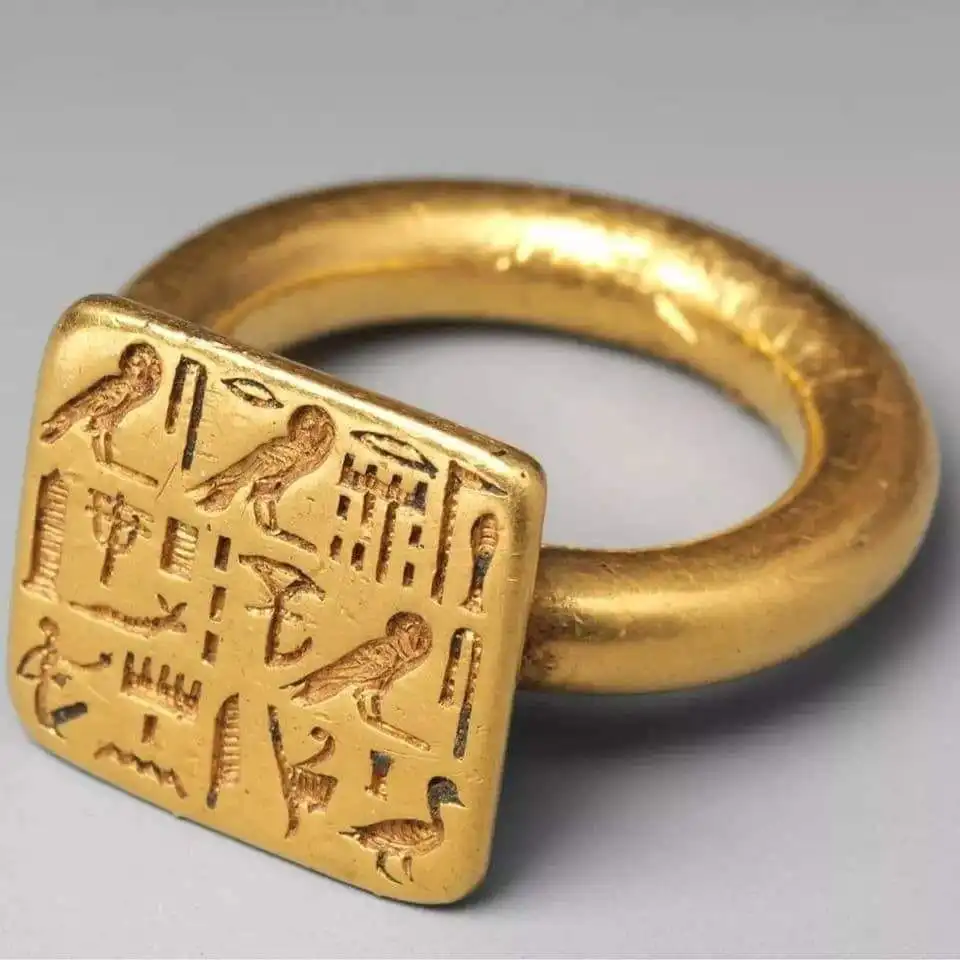
The inscription reads right to left on all three lines. Starting with the bottom line the hieroglyphs translate as follows:
Duck: biliteral sign sA (“son”) Red crown of northern/lower Egypt: uniliteral sign n (preposition “of”) Reed leaf: uniliteral sign i Senet game board: biliteral sign mn Water squiggle: uniliteral sign n (phonetic complement, simply reinforces the reading of mn) Seated man: determinative (word classifier, not read aloud)
Put together, you get his name sA-n-Imn, or Sienamun as the Met calls him. Translated literally, “son of (the god) Amun.”
The first two lines note that Sienamun was not only a priest (Hm-nTr) but also an overseer of horses (imy-r smsmw).