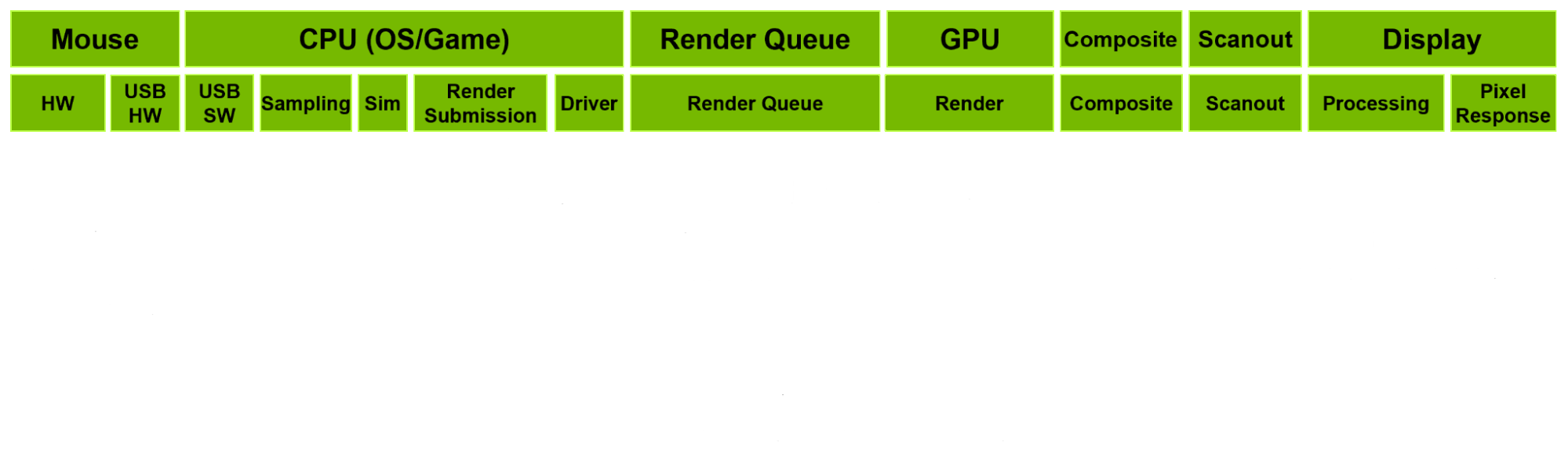
X11 wins in each scenario, but it is just a 0.14 to 0.22 ms difference
I think it's cool people seem to have noticed this difference.
A community for everything relating to the GNU/Linux operating system (except the memes!)
Also, check out:
Original icon base courtesy of lewing@isc.tamu.edu and The GIMP
X11 wins in each scenario, but it is just a 0.14 to 0.22 ms difference
I think it's cool people seem to have noticed this difference.
They haven't
What a thing to worry about. I applaude the effort it is an interesting project.
But the results... calling something "bad" for 3ms of latency is a bit ridiculous. That's only significant to a cat, to us larger meat sacks 100ms would be blazing fast reaction speed, making 3ms negligible. For an average person it means even less.
To me the message is gaming on Linux is in really good shape as far as input lag.
But the results… calling something “bad” for 3ms of latency is a bit ridiculous. That’s only significant to a cat, to us larger meat sacks 100ms would be blazing fast reaction speed, making 3ms negligible. For an average person it means even less.
You are conflating reaction time and response time. They are very different things.
Yes, your reaction time is in the 100s of miliseconds, but it doesn't take much of a delay in the response to your reaction before it becomes perceivable, and the response time is what was measured here.
If you have ever played rhythm games, then you may be aware that some of them have settings that allow you to offset the delay, such that your pressing a button at the exact same time as the note plays is also registered as happening at that time, even though it took some additional time for the input to reach the game. Without such a setting, you intentionally have to press buttons early (how much depends on your setup) to ensure that your input registers at the right time. A delay of 100ms would be extremely obvious
You underestimate how short 100ms really is. Animations of 200ms feel snappy, anything less and you can leave the animation away.
I'm well aware how short 100ms really is and it is very obvious if your inputs are off by 100ms or more; rhythm games are rarely that strict, but I've also played games where some inputs had to be timed to within 1/60th of a second (~16.7ms)
I will absolutely notice it in rhythm games, but everything else my brain auto compensates and I don't even notice
Wtf no 100ms is absolutely unacceptable. Anything over 30 ms becomes easily noticeable. You can feel the difference between preformance dlss (30ms added latency) and 60 on quality. 10ms difference is whatever but its one part of a stack and it can compound if every part of the stack neglects latency optimisation
Whenever US players find themselves on one of the AU hosted World of Warcraft servers with 200ms latency they can't stop complaining about how awful the game is to play.
When I find myself on servers like that in any game I pretend I'm training for operating a Martian Rover and see it as an extra challenge. I just hope the ping in consistent.
It's not that you will necessarily perceive that latency in any meaningful way, but in a competitive gaming setting, a few ms of latency means you react a few ms later, which means your opponents get a few extra ms.
I mean 3ms is very good, and nothing to worry about IMO. Pretty sure Windows isn't any better either. Either way, in a competitive setting, every ms counts.