this post was submitted on 11 Jan 2024
4 points (100.0% liked)
memes
21956 readers
1763 users here now
Community rules
1. Be civil
No trolling, bigotry or other insulting / annoying behaviour
2. No politics
This is non-politics community. For political memes please go to !politicalmemes@lemmy.world
3. No recent reposts
Check for reposts when posting a meme, you can only repost after 1 month
4. No bots
No bots without the express approval of the mods or the admins
5. No Spam/Ads/AI Slop
No advertisements or spam. This is an instance rule and the only way to live. We also consider AI slop to be spam in this community and is subject to removal.
A collection of some classic Lemmy memes for your enjoyment
Sister communities
- !tenforward@lemmy.world : Star Trek memes, chat and shitposts
- !lemmyshitpost@lemmy.world : Lemmy Shitposts, anything and everything goes.
- !linuxmemes@lemmy.world : Linux themed memes
- !comicstrips@lemmy.world : for those who love comic stories.
founded 3 years ago
MODERATORS
you are viewing a single comment's thread
view the rest of the comments
view the rest of the comments
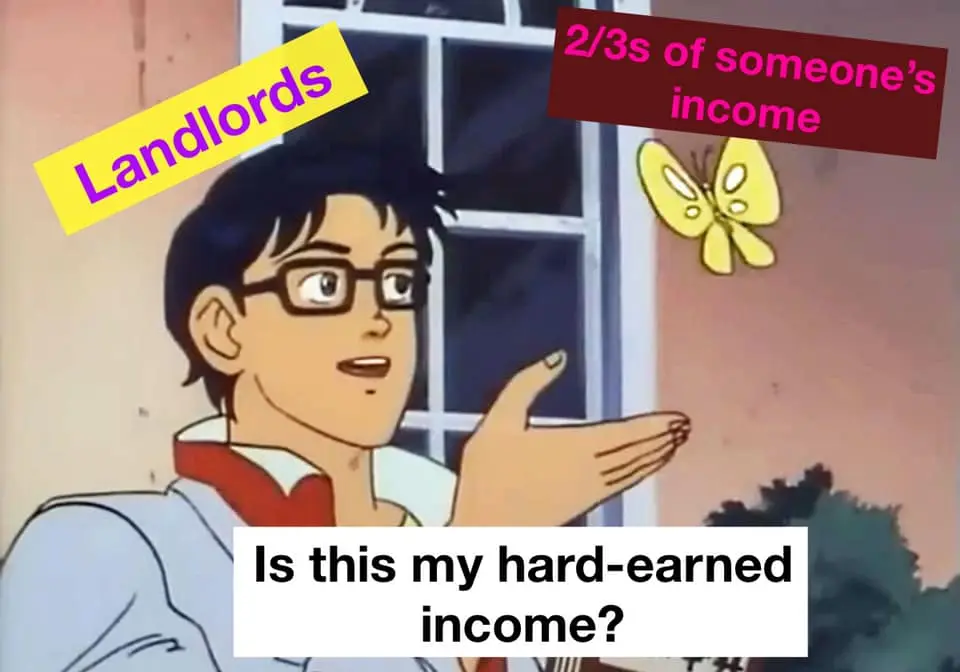
I never understood this sentiment. For single family homes the market sets the price. It's not like when you buy a house and use it for a rental all of sudden it's cheaper or more expensive in some way. You could make a price/demand argument but then again the underlying demand is housing not money hungry landlords. If there was not an underlying housing demand, no one would rent and it would fail as an investment.
How does the community serve those who want to rent? Apartments? Now that is where we can agree. Apartment valuation is calculated on operations not on the market. The only way to raise value of an apartment is to raise rent (or reduce expenses in some way but at some point you can only do so much). At least with SFH you have appreciation that landlords can factor in for return.
Lastly, 2 of my rentals were foreclosures. If anything I'm performing the city a service by buying these properties and adding value. If you had to choose, would you rather live next to a vacant house or a rental?
To answer your question, it's fair for a renter to not build equity because they don't pay for upkeep or have the risk associated with the loan. You have to put skin in the game at some point.
Edit: there are some good points for the other side of the argument if you keep reading. I don't know what the answer is but I'm not convinced that restrictions or to disincentivize rental operations is the answer.
Close. You're right there's no profit without demand. Now, consider what happens when certain entities with way more money than most of us comes along and decides they want to induce artificial scarcity by buying up and leaving empty a ton of houses.
They both kinda suck. I'd rather live next to someone who is invested in the property.
I could agree with this if rent was pegged to a percentage of the mortgage value. The issue is that the landlord makes a purchase and now owes, let's say, 1k/mo for everything. Rent, taxes, fees, etc.
They want to rent that place out, great. Maximum rent should be LESS THAN that 1k, because the landlord is already getting theirs, they're getting equity, and the only thing they have to do is upkeep they'd have to do regardless.
That's a building shortage problem and/or developmental cycle problem. I want to live in New York next to central park. I have a job why can't I?
You didn't answer my question.
As I stated before, I do exactly this. But landlords have to make a profit. So landlords can only expect appreciation as upside? That's now creating more of a bubble than what's currently going on.
I'm not invested in this conversation from 2 years ago, but I'll simply reject the premise that landlords have to make a profit. That's a big maybe at best.