this post was submitted on 19 Dec 2025
470 points (98.2% liked)
196
5045 readers
1950 users here now
Community Rules
You must post before you leave
Be nice. Assume others have good intent (within reason).
Block or ignore posts, comments, and users that irritate you in some way rather than engaging. Report if they are actually breaking community rules.
Use content warnings and/or mark as NSFW when appropriate. Most posts with content warnings likely need to be marked NSFW.
Most 196 posts are memes, shitposts, cute images, or even just recent things that happened, etc. There is no real theme, but try to avoid posts that are very inflammatory, offensive, very low quality, or very "off topic".
Bigotry is not allowed, this includes (but is not limited to): Homophobia, Transphobia, Racism, Sexism, Abelism, Classism, or discrimination based on things like Ethnicity, Nationality, Language, or Religion.
Avoid shilling for corporations, posting advertisements, or promoting exploitation of workers.
Proselytization, support, or defense of authoritarianism is not welcome. This includes but is not limited to: imperialism, nationalism, genocide denial, ethnic or racial supremacy, fascism, Nazism, Marxism-Leninism, Maoism, etc.
Avoid AI generated content.
Avoid misinformation.
Avoid incomprehensible posts.
No threats or personal attacks.
No spam.
Moderator Guidelines
Moderator Guidelines
- Don’t be mean to users. Be gentle or neutral.
- Most moderator actions which have a modlog message should include your username.
- When in doubt about whether or not a user is problematic, send them a DM.
- Don’t waste time debating/arguing with problematic users.
- Assume the best, but don’t tolerate sealioning/just asking questions/concern trolling.
- Ask another mod to take over cases you struggle with, if you get tired, or when things get personal.
- Ask the other mods for advice when things get complicated.
- Share everything you do in the mod matrix, both so several mods aren't unknowingly handling the same issues, but also so you can receive feedback on what you intend to do.
- Don't rush mod actions. If a case doesn't need to be handled right away, consider taking a short break before getting to it. This is to say, cool down and make room for feedback.
- Don’t perform too much moderation in the comments, except if you want a verdict to be public or to ask people to dial a convo down/stop. Single comment warnings are okay.
- Send users concise DMs about verdicts about them, such as bans etc, except in cases where it is clear we don’t want them at all, such as obvious transphobes. No need to notify someone they haven’t been banned of course.
- Explain to a user why their behavior is problematic and how it is distressing others rather than engage with whatever they are saying. Ask them to avoid this in the future and send them packing if they do not comply.
- First warn users, then temp ban them, then finally perma ban them when they break the rules or act inappropriately. Skip steps if necessary.
- Use neutral statements like “this statement can be considered transphobic” rather than “you are being transphobic”.
- No large decisions or actions without community input (polls or meta posts f.ex.).
- Large internal decisions (such as ousting a mod) might require a vote, needing more than 50% of the votes to pass. Also consider asking the community for feedback.
- Remember you are a voluntary moderator. You don’t get paid. Take a break when you need one. Perhaps ask another moderator to step in if necessary.
founded 11 months ago
MODERATORS
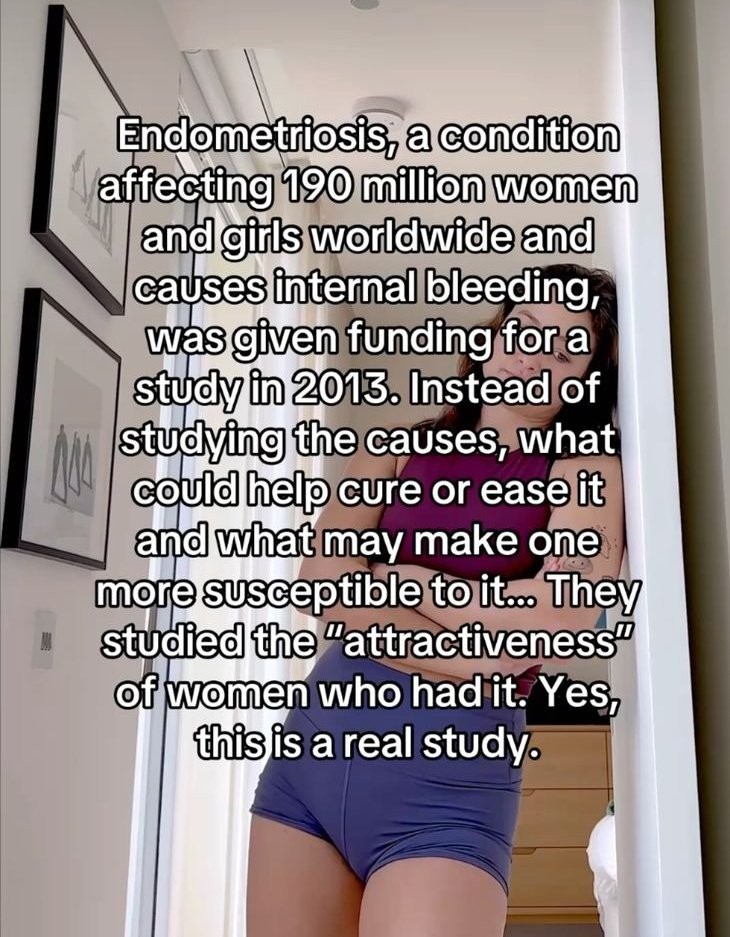
Genuinely don't see the issue with either.
Attractiveness of people suffering from illnesses is not a rare study really.
Quick Google Scholar search revealed for example these three:
Physical attractiveness and mental illness
Physical Attractiveness and Maladjustment Among Psychiatric Inpatients
Body image of children and adolescents with chronic illness: A meta-analytic comparison with healthy peers
I don't see any sociologists ever working on finding a cure or a cause of illnesses.
Similarly, the mental health effects of illnesses on their partner is also not a rare study:
Quality of Life: Impact of Chronic Illness on the Partner
The Impact of Partner Alcohol Problems on Women's Physical and Mental Health
My Illness or Our Illness? Attending to the Relationship When One Partner Is Ill.
I have not read any of these studies btw because neither sociology or medicine is a field I'm studying.
Still, I don't see the issue with funding such studies. It doesn't take away any resources whatsoever from researchers attempting to find cures/causes. (Partially because academia is so underfunded, you'd be hard pressed trying to find something to even take away)
The issue is perhaps we should send most of the funding to FIGURING OUT HOW TO FIX THE PROBLEM FIRST.
So all these studies mentioned above shouldn't have been made? Chronic illness, severe mental illness and alcoholism are all very difficult (if at all possible) to treat. Many treatments are just symptome reduction - important, yes, but far from a cure.
Also, if I had to guess, most money does go towards finding treatments. Studies investigating effects are - I believe - many orders of magnitude cheaper. They can be as simple as a survey with 100 or so participants. Now compare this with the cost of a clinical trial for some treatments.
There is no need to study the attractiveness of someone in relation to an illness they are suffering. It's a completely inconsequential metric that's ableist by design. Additionally, all 3 things you listed can have cures. Starting with the most obvious, many alcoholics are able to reach long-term sobriety, though studying methods to achieve higher success rates is obviously of importance. "Severe mental illness" is incredibly vague. Let's take one example, one that is notoriously difficult to treat: Borderline Personality Disorder (which I even happen to have). You can cure personality disorders, just not with medication. It requires you to spend lots of time in extensive therapy to essentially rewire the way your brain works. A quick search tells me that despite being classically cited as the "most painful mental illness", and one of the hardest to treat, between 50-70% of those with BPD achieve long-term remission from treatment. Given that it's a personality disorder, the definition of "cured" is not exactly clear, but remission brings patients below the requisite number of symptoms in the DSM to constitute diagnosis. Chronic illness is also a vague category, but there's progress being made on cures for many chronic illnesses. For instance, recent developments in Chimeric Antigen Receptors and inverse vaccines bring potential cures to a wide array of autoimmune disorders. These are chronic illnesses that were once thought to be incurable, but we're here sitting on research showing that these cures can work. That is the research we need, not some ableist BS about how people with chronic illness may be less attractive to other people.
As for your assumption about how funding works, there is only a limited amount of funding that goes into scientific research. The less that is wasted, the more opportunity there is for funding going to research that makes a difference.
Fair points, though I will say chronic illness is usually classified by being resistant to treatment. Cancer (generally) isn't chronic because either it kills you or you kill it. HIV is chronic because you cannot get rid of it (except for a handful of cases which underwent a risky bone marrow transplant but that's 'cheating' – it's like 'treating' chronic knee inflammation with an amputation).
One of the studies with chronic illness in the title I now read the abstract from mentioned Alzheimer and Parkinson so I doubt they referred to curable diseases currently.
Also, I wouldn't be so quick to judge research as ableist if the results are ableist. Provided the studies are neutral, wouldn't it generally be beneficial to know how much people suffering from certain illnesses are affected by ableism? (Also the study found people suffering from endometriosis were more attractive, which could at worst be mysoginist instead of ableist I believe).
As to your last point, I agree - to limited extent. My main gripe is: Who gets to determine what research is wasteful? Should someone studying a super niche math topic with no real world use case (like ultrafinitism) not get funding? And how do you determine whether something is worth exploring (or not) if you don't yet know the results? Hell, even showing there is no correlation between two things can be useful data because it allows researchers to rule stuff out.
The fact that the premise was proposed at all makes me think someone noticed a correlation and wanted to assess whether there was causation. As proving that could ultimately help with fixing the problem.
Maybe they discover that the "attractive" group largely consisted of subjects with any of traits A, B or C, and what do you know, there's a very high correlation between trait A and endometriosis.
Maybe some years later it's discovered that trait A and endometriosis have a common cause, some specific gene perhaps. That would be key for fixing the problem.
I'll save you the click as someone with many medical issues myself. The answer requires only surface level thinking: if I'm too depressed, sick, or otherwise impaired, I will have less energy to take care of myself. Pretty easy to conclude that. You know where that money could be better spent? Helping solve the problems causing the issue. The reason these studies exist is to justify ableism. The people conducting and funding this research want an excuse to validate their belief that people with disabilities are unattractive. The real-world value of this research doesn't extend beyond that ableist justification.
You quoted a bunch of studies about mental health/addiction and attractiveness. It’s should be self-evident why those two things are related.
You didn’t address the topic and quote any studies about physical health and attractiveness. Furthermore, you didn’t quote any studies about female sexual health and attractiveness. Furthermore, you didn’t quote any sources about Caucasian female sexual health and attractiveness. Most importantly you didn’t give us a reason why this particular study needed to happen more than a different junk science study with dubious motivations.
I picked the first results with meaningful amounts of citations. Not an ideal metric but at least correlated with relevance.
But that's the entire point? Correlations that seem obvious MUST be proven by data. Also, why isn't it obvious that endometriosis may affect attractiveness? From the retracted study itself:
I haven't actually read any citations or further. Still, this reasoning seems plausible to me. If endometriosis does actually correlate with a certain phenotype - which I don't know is true or not, as again I haven't read the citations - then this relation becomes self-evident just as much as the studies I quoted.
Also, I don't see why quoted studies must be about the same exact topic. "Caucasian" [why does English even use this outdated term still] female sexual health and its relation to attractiveness sounds like one of these hyperspecific topics where finding relevant studies requires knowledge about which keywords to look for. Knowledge I don't have.
And I have no clue about what other "junk science" there is in human health research. How would I even be able to point to any other topic there? Besides I am unable to determine whether any study in a field I have zero experience in is junk or not. From Wikipedia:
If you have experience in that general field and can point out why it is junk, please do so.
You picked a bunch of studies where the correlation is obvious.
You have still given no reason why there was a correlation in this study: For example, give me a reason I shouldn’t believe this study wasn’t just a few horny “researchers” trying to get laid. If you read the abstract of the study…they don’t even propose a correlation, or the corresponding reasoning for doing the study in the first place.
You did, however, bloviate and muddy the waters a lot.
If a correlation isn't immediately obvious, should it not be studied?
The abstract - if it can be even called that, seems more like a technical summsry to me - is useless btw, my quote is from the introduction. It's more readable and goes a bit into the motivation of the research, which is roughly (if the citations are in order):
Women with endometriosis tend to have a certain phentoype. This phenotype shares traits that correlate with attractiveness. The research question follows: Are women with endometriosis more attractive than those without?
And the researchers were split evenly into men and women (assuming their gender from their names). Perhaps the three women happen to be bisexual or lesbian but I'd argue the chances of them trying to get laid are... very low at best. Do researchers even get laid from doing any studies? I couldn't think of anything less attractive than analyzing someone's attractiveness on paper.
You didn’t make an argument. You just basically said “we can’t find out if they’re related unless we study them”.
I asked you to tell me why the study was done in the first place: what do we learn from the potential result? What potential scientific value did it serve? I didn’t ask you to filibuster me.
My hypothesis that the study was done to bring the researchers closer to attractive women is just as valid as any defence of the study.
Yes, but, clout and engagement >>>> rational thought.