this post was submitted on 24 Nov 2025
498 points (97.2% liked)
Funny: Home of the Haha
8349 readers
5 users here now
Welcome to /c/funny, a place for all your humorous and amusing content.
Looking for mods! Send an application to Stamets!
Our Rules:
-
Keep it civil. We're all people here. Be respectful to one another.
-
No sexism, racism, homophobia, transphobia or any other flavor of bigotry. I should not need to explain this one.
-
Try not to repost anything posted within the past month. Beyond that, go for it. Not everyone is on every site all the time.
Other Communities:
-
/c/TenForward@lemmy.world - Star Trek chat, memes and shitposts
-
/c/Memes@lemmy.world - General memes
founded 2 years ago
MODERATORS
you are viewing a single comment's thread
view the rest of the comments
view the rest of the comments
When we're talking about the form of a character that we can see, then I feel like the most relevant sense of "body type" is one that includes the whole picture of both the underlying bone structure/musculature, and how fat is distributed on the body.
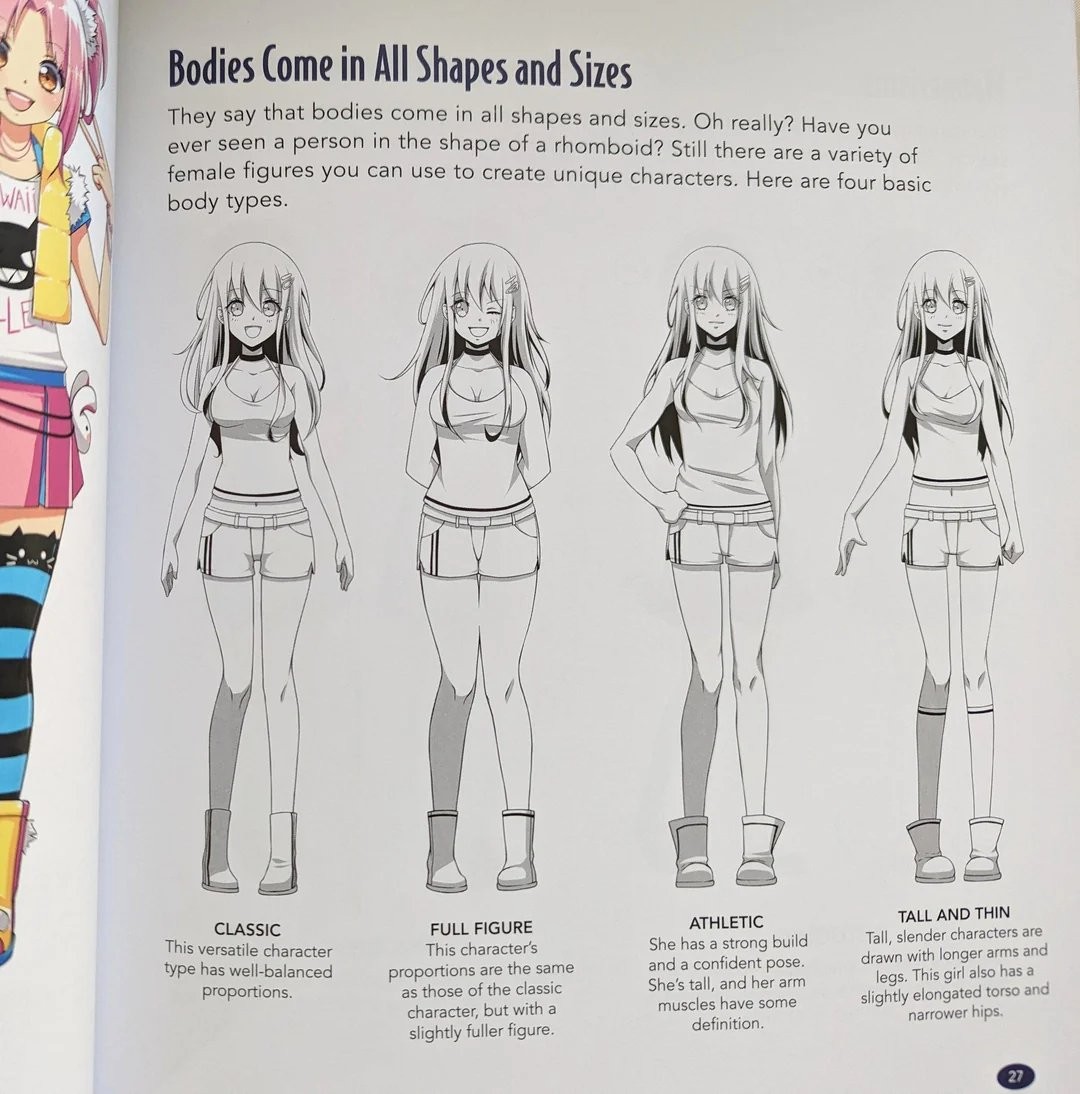
Linking things back to the original image, I personally find it absurd that even the body type described as "full figured" still has a thigh gap. Even people who are slender rarely have a thigh gap, so this depiction is ridiculous. I would interpret "full figured" as describing someone who is on the larger side of the healthy range (or is a bit overweight) but is not obese, so this image is silly even without getting into discussions about whether obesity constitutes a body type (though I would argue it does, for the purpose of a drawing guide that is showing the difference between how different body types are drawn. A better drawing guide might even have included references for characters who are overweight and/or obese — after all, obese people are people who exist in the world, and thus I would expect them to appear in fiction also.