this post was submitted on 02 Oct 2024
312 points (99.4% liked)

[Dormant] moved to !historyart@piefed.social

1995 readers
1 users here now

COMM MOVED TO !historyart@piefed.social

founded 2 years ago
MODERATORS
 
you are viewing a single comment's thread
view the rest of the comments
[โ€“] Zombiepirate@lemmy.world 29 points 1 year ago* (last edited 1 year ago) (1 children)

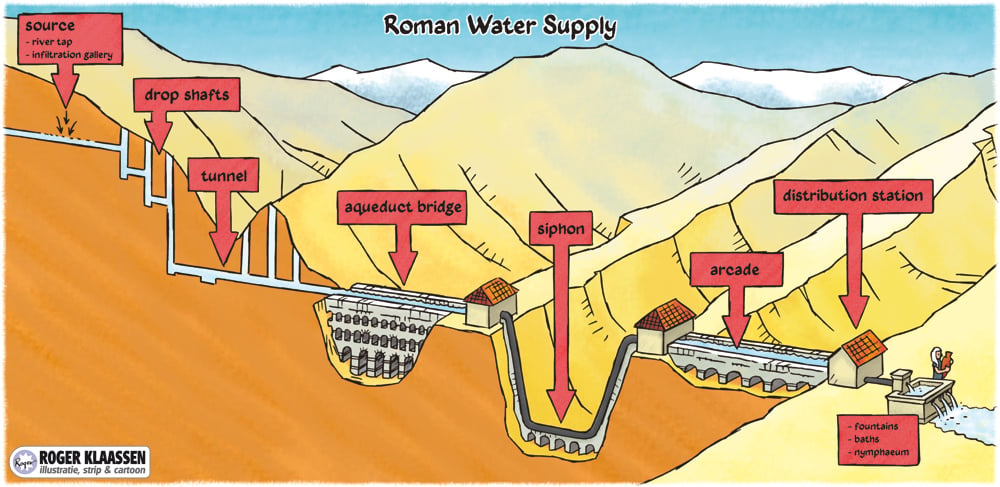
From Hydraulics of Roman Aqueducts : Steep Chutes, Cascades and Dropshafts (PDF warning):

The designs of dropshaft cascade, as well as steep chute followed by dissipation basin, show that the Roman aqueduct engineers were able to design specific features to cope with steep sections. It remains unclear whether they had some understanding of the hydraulic principles, or worked by observations and trial and error.

Most aqueducts were enclosed (covered) along their entire length, limiting the possibility for gas transfer at the free surface. Thus, the downstream waters were low in dissolved oxygen content unless reoxygenation devices were installed. I suggest that dropshafts may have been introduced in place of steep chutes in order to reoxygenate the water as well as to dissipate the energy of the flow. Aeration technology is commonly used today to reoxygenate depleted waters and to enhance the water quality. I recommend that further work by archaeologists focus on the excavation and survey of chutes and dropshaft to confirm this hypothesis.

Really, really cool stuff