cross-posted from: https://news.abolish.capital/post/49178
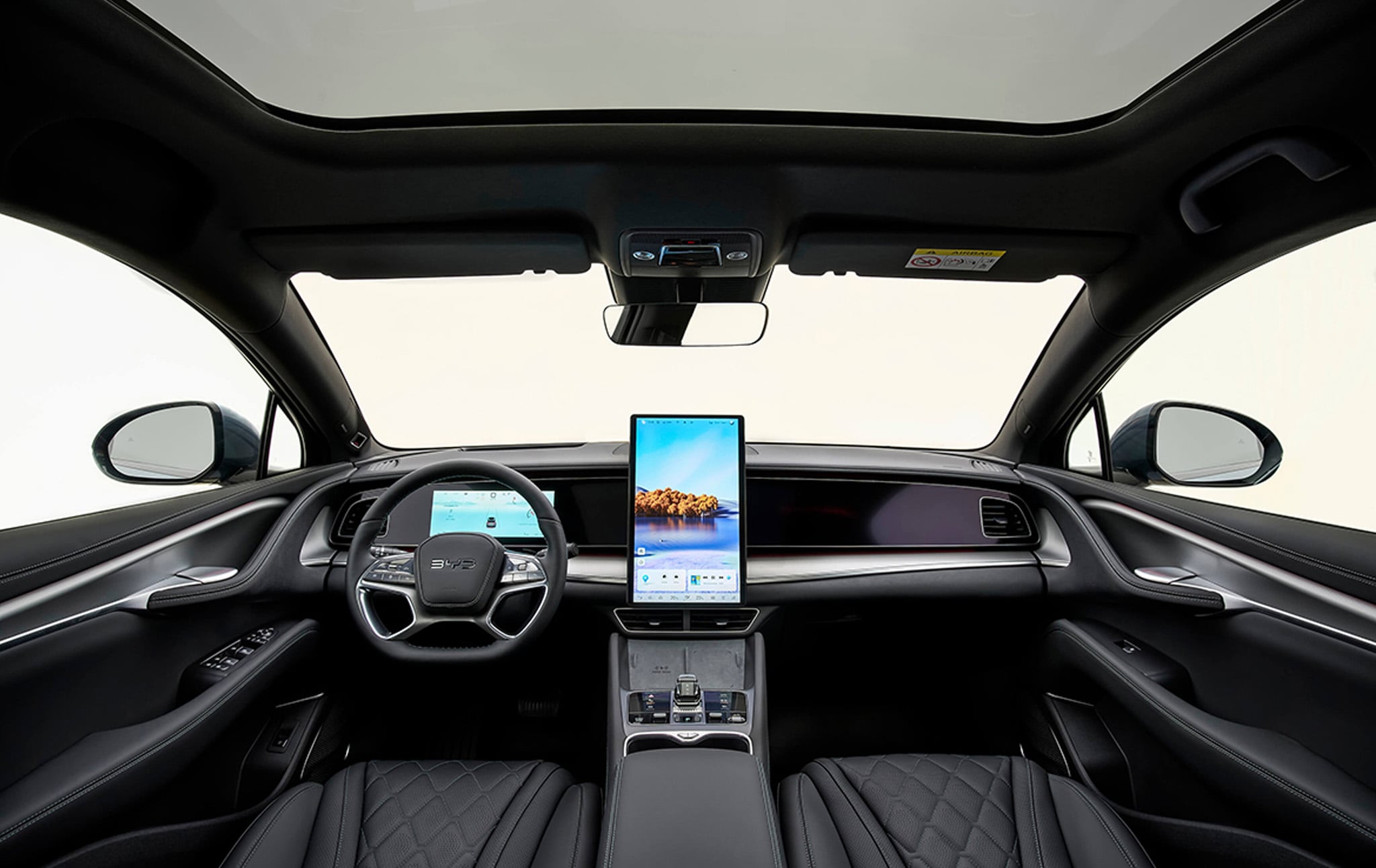
I took my first ride in a Chinese car recently. Not in the U.S., of course, since sky-high tariffs have made them almost impossible to import. I was visiting family in the U.K., and we rented a BYD Sealion SUV. And let me tell you: I saw immediately why American car companies are desperate to have these things kept out of this country. It was elegantly designed, incredibly comfortable, and a smooth ride.


From blog via This RSS Feed.
And exponentially more affordable.
And if Stern sounds like lovesickness may have compromised her judgment, consider this: the CEO of Ford himself drives one. "I don't like talking about the competition so much,” he admitted to a podcaster, “but I drive the Xiaomi… I don’t want to give it up.” Noting that the car is “fantastic,” he told a company board member that the Chinese auto industry is an “existential threat.”
American manufacturers are terrified of the Chinese auto industry, because Chinese cars are good, and they’re cheap. Their executives admit as much, saying that “the arrival of affordable, high-tech Chinese cars could upend” the industry. So they’re trying to ensure not only that Chinese cars can’t be sold in the U.S., but that Americans will never even be exposed to one. A group of Congressional Democrats recently sent Donald Trump a letter pleading with him to ensure Chinese cars never enter the United States. Supposedly progressive Democratic congressman Ro Khanna has been particularly aggressive in pushing for new rules, claiming the cars “put Americans at risk.” “Chinese cars are a serious threat to America’s national security and Michigan’s economic security,” Senator Elissa Slotkin has said. Astonishingly, even though the Biden administration already “imposed sweeping regulations that effectively ban Chinese automakers from selling passenger vehicles in the United States,” lawmakers are now trying to ensure that people can’t even drive Chinese cars across the border to visit the United States. They apparently envision an absurd scenario where agents at the Mexico border inspect every car to ensure it’s not Chinese before it’s even allowed to drive on U.S. soil. One problem is that U.S. manufacturers have focused on (deadly, inefficient) large SUVs and trucks, and the average new car now costs around $50,000. Car prices hit a record last year, and American auto loan debt hit a record $1.68 trillion, leaving many Americans with “more and more of their paychecks eaten by their car payments.” There are almost no new cars for sale under $20,000. But Chinese cars can sell new for as little $8,000 in China itself, and China may well be able to offer cars in the U.S. close to $20,000 new—if it’s allowed to compete. That’s why the industry sees Chinese cars as an existential threat: they worry that consumers will prefer them, and so the power of the government must be used to ensure that consumers are forced against their will to buy more expensive, lower-quality cars, in order to prop up the U.S. automotive industry. (They’ll say that’s about Jobs, of course, but it’s also about profits.)...
But wait! There's more! The article deserves a full read.