politics
Welcome to the discussion of US Politics!
Rules:
- Post only links to articles, Title must fairly describe link contents. If your title differs from the site’s, it should only be to add context or be more descriptive. Do not post entire articles in the body or in the comments.
Links must be to the original source, not an aggregator like Google Amp, MSN, or Yahoo.
Example:
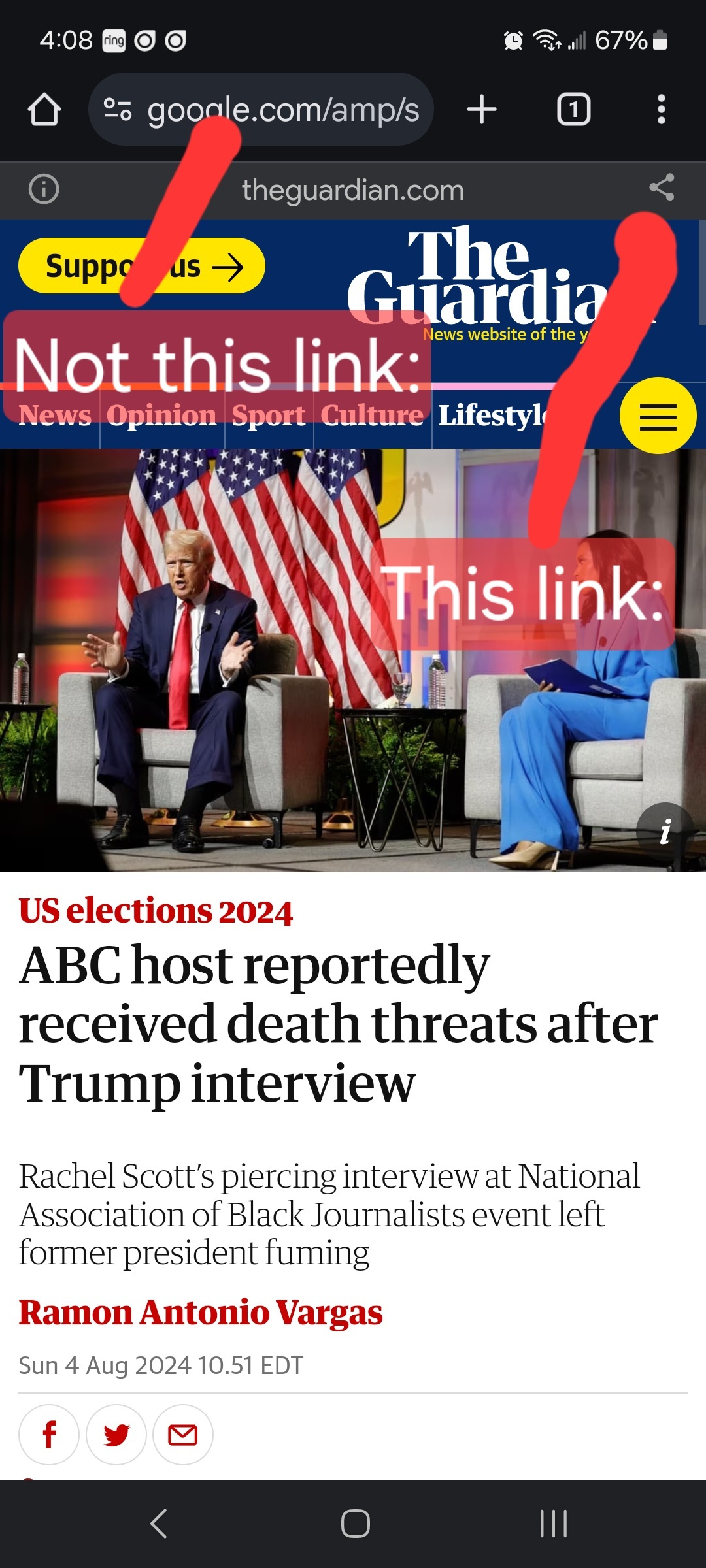
- Articles must be relevant to politics. Links must be to quality and original content. Articles should be worth reading. Clickbait, stub articles, and rehosted or stolen content are not allowed. Check your source for Reliability and Bias here.
- Be civil, No violations of TOS. It’s OK to say the subject of an article is behaving like a (pejorative, pejorative). It’s NOT OK to say another USER is (pejorative). Strong language is fine, just not directed at other members. Engage in good-faith and with respect! This includes accusing another user of being a bot or paid actor. Trolling is uncivil and is grounds for removal and/or a community ban.
- No memes, trolling, or low-effort comments. Reposts, misinformation, off-topic, trolling, or offensive. Similarly, if you see posts along these lines, do not engage. Report them, block them, and live a happier life than they do. We see too many slapfights that boil down to "Mom! He's bugging me!" and "I'm not touching you!" Going forward, slapfights will result in removed comments and temp bans to cool off.
- Vote based on comment quality, not agreement. This community aims to foster discussion; please reward people for putting effort into articulating their viewpoint, even if you disagree with it.
- No hate speech, slurs, celebrating death, advocating violence, or abusive language. This will result in a ban. Usernames containing racist, or inappropriate slurs will be banned without warning
We ask that the users report any comment or post that violate the rules, to use critical thinking when reading, posting or commenting. Users that post off-topic spam, advocate violence, have multiple comments or posts removed, weaponize reports or violate the code of conduct will be banned.
All posts and comments will be reviewed on a case-by-case basis. This means that some content that violates the rules may be allowed, while other content that does not violate the rules may be removed. The moderators retain the right to remove any content and ban users.
That's all the rules!
Civic Links
• Congressional Awards Program
• Library of Congress Legislative Resources
• U.S. House of Representatives
Partnered Communities:
• News
view the rest of the comments
I did address what you said. Adopting less extreme policies of a far-right group undermine its appeal.
The tax on the wealthy can be increased to lessen inequality but only to a degree because it would decrease the motivation to be rich. Making money is the basis of the capitalist system.
Ah, okay, fair enough. In practice, though, since the fundamental problems will persist regardless of immigration policy, I think they're still likely to keep growing in the longer run. They might also just chose to become even more extreme. I'd say we've seen this in Europe, with calls for "remigration" becoming part of the alt-right manifestos as mainstream politics has gotten more restrictive on immigration.
That being said, it's not impossible to do a very progressive economic policy, combined with restrictive immigration policies.
Well, I personally only want to go back to some version of what was the western consensus in the three decades following WW2 - I don't think that's very extreme really, but some people think it means I'm basically the ghost of Yosef Stalin :/
People innovated and worked hard in the 1950's too
If the far-right becomes more extreme, people will reject them because most people prefer moderate views.
From https://taxfoundation.org/data/all/federal/taxes-on-the-rich-1950s-not-high/
There is a common misconception that high-income Americans are not paying much in taxes compared to what they used to. Proponents of this view often point to the 1950s, when the top federal income tax rate was 91 percent for most of the decade.[1] However, despite these high marginal rates, the top 1 percent of taxpayers in the 1950s only paid about 42 percent of their income in taxes. As a result, the tax burden on high-income households today is only slightly lower than what these households faced in the 1950s.
Oh come on, don't link me an article from a billionaire-sponsored think tank and expect me to take that as anything but propaganda for lower taxes. That is just what those think tanks are for.
I tried to find the article they link to as a source (their link is dead), and I think it might be this: https://gabriel-zucman.eu/files/PSZ2018QJE.pdf - here's a quote from it:
"In the United States, the stagnation of bottom 50% incomes and the upsurge in the top 1% coincided with reduced progressive taxation, widespread deregulation (particularly in the financial sector), weakened unions, and an erosion of the federal minimum wage"
So yeah, much more progressive taxation, stricter regulation of the financial sector (including whatever capital controls are necessary) and strengthening of unions. All great ideas. Not sure about the federal minimum wage, but that might be a different discussion.
What's moderate is relative, and as people get more desperate they will reach for more extreme solutions. Trump's policies would be unthinkable just a few decades ago.
I will repeat: as people get more desperate. And they will, because the status quo is that things are getting worse - so voting for the status quo, is voting that things should keep getting worse. People understand this.