Superbowl
5387 readers
129 users here now
For owls that are superb.

Please scroll down to read our community rules.
US Wild Animal Rescue Database: Animal Help Now
International Wildlife Rescues: RescueShelter.com
Australia Rescue Help: WIRES
Germany-Austria-Switzerland-Italy Wild Bird Rescue: wildvogelhilfe.org
If you find an injured owl:
Note your exact location so the owl can be released back where it came from. Contact a licensed wildlife rehabilitation specialist to get correct advice and immediate assistance.
Minimize stress for the owl. If you can catch it, toss a towel or sweater over it and get it in a cardboard box or pet carrier. It should have room to be comfortable but not so much it can panic and injure itself. If you can’t catch it, keep people and animals away until help can come.
Do not give food or water! If you feed them the wrong thing or give them water improperly, you can accidentally kill them. It can also cause problems if they require anesthesia once help arrives, complicating procedures and costing valuable time.
If it is a baby owl, and it looks safe and uninjured, leave it be. Time on the ground is part of their growing up. They can fly to some extent and climb trees. If animals or people are nearby, put it up on a branch so it’s safe. If it’s injured, follow the above advice.
For more detailed help, see the OwlPages Rescue page.
Community Rules:
Posts must be about owls. Especially appreciated are photographs (not AI) and scientific content, but artwork, articles, news stories, personal experiences and more are welcome too.
Be kind. If a post or comment bothers you, or strikes you as offensive in any way, please report it and moderators will take appropriate action.
AI is discouraged. If you feel strongly that the community would benefit from a post that involves AI you may submit it, but it might be removed if the moderators feel that it is low-effort or irrelevant.
Also visit our twinned community for wholesome content:
founded 2 years ago
MODERATORS
1
It has been another wild year here at Superbowl, and it's time to take a look back at all we've accomplished together this year!
As for our community itself, we've passed 5000 subscribers in September and are almost to 5400, so it looks like this year's Owl of the Year was a great recruiting push once again.
We won the Lemmy.world Lemmy Silver event, netting my wildlife clinic a nice €150 cash prize to support our owl patients.
Owl of the Year had some extremely tense matches this year, and the result is our first large owl to get the title, Buffy Fish Owl! The new banners and images have been up for a bit now, but if the way you access Superbowl doesn't show you that, here they are.
Banner

Icon

Sidebar

I've ordered the new OotY donation tile in the community's name. Here's the mockup for now:

They changed the charity network this year, so there was some confusion if the character limit had changed from prior years, so I'm not exactly sure which we will get.
Speaking of the clinic, after 2 years of donating to them in honor of Owl of the Year, my ongoing interest in owls and bringing you guys owl facts got me to volunteer this year, and it's been life changing! I've met so many great people, helped a ton of animals get another chance at life, and learned so much. I've gotten to handle owls, of course, but also squirrels, flying squirrels, rabbits, about a dozen kinds of songbirds, and opposums. I've also fed raccoons, foxes, and a few types of hawk and a heron. And this coming year, I should be able to with with even more animals as long as my rabies antibody test comes back at a safe level. I even got to release a rehabbed Screech Owl at my house for my wife's birthday!
I usually share some specific goals for the next year, but I don't know if I have anything specific right now. This year has gone about as well as I could hope, sharing things with you all here. I much around the idea of expanding into covering other raptors, but the owls already keep me pretty busy, and I feel I'd have to do less owl stuff to get started on another thing. I think leaving that energy for IRL animal work or my other hobbies is more healthy for me.
Finally, let's look at my top posts of the year, and also a few good ones you may have missed. Honestly, there weren't too many this year that got less upvotes than expected. You all have been a really great and attentive bunch!
Top Posts by Me:
A Farewell to Zeus, The Owl with Galaxy Eyes

Would you like a large or small today?

A Word in Lobbying Efforts of Poison Manufacturers

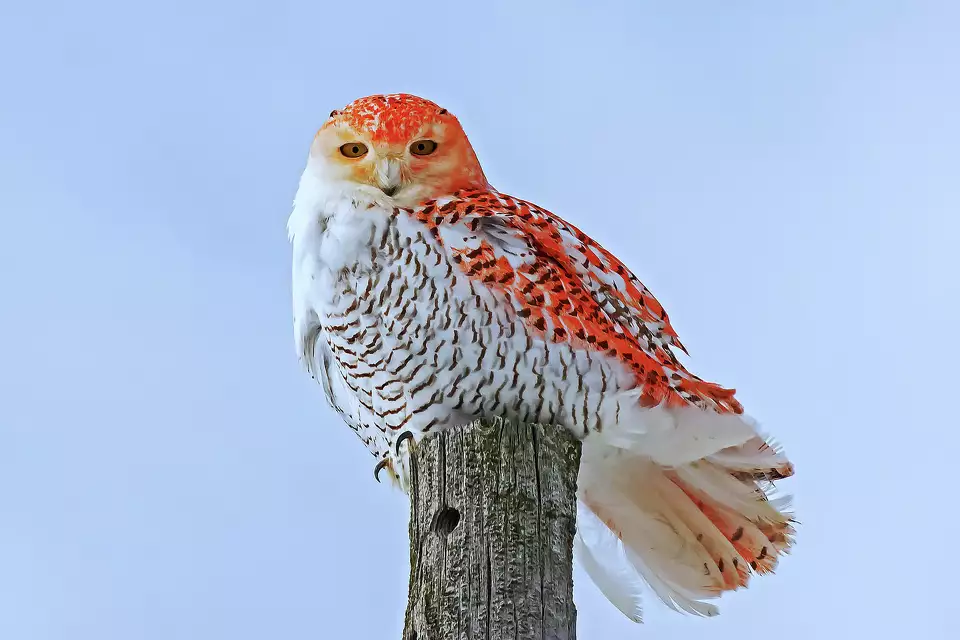
Rare reddish-orange Snowy Owl in Huron County captivates birdwatchers
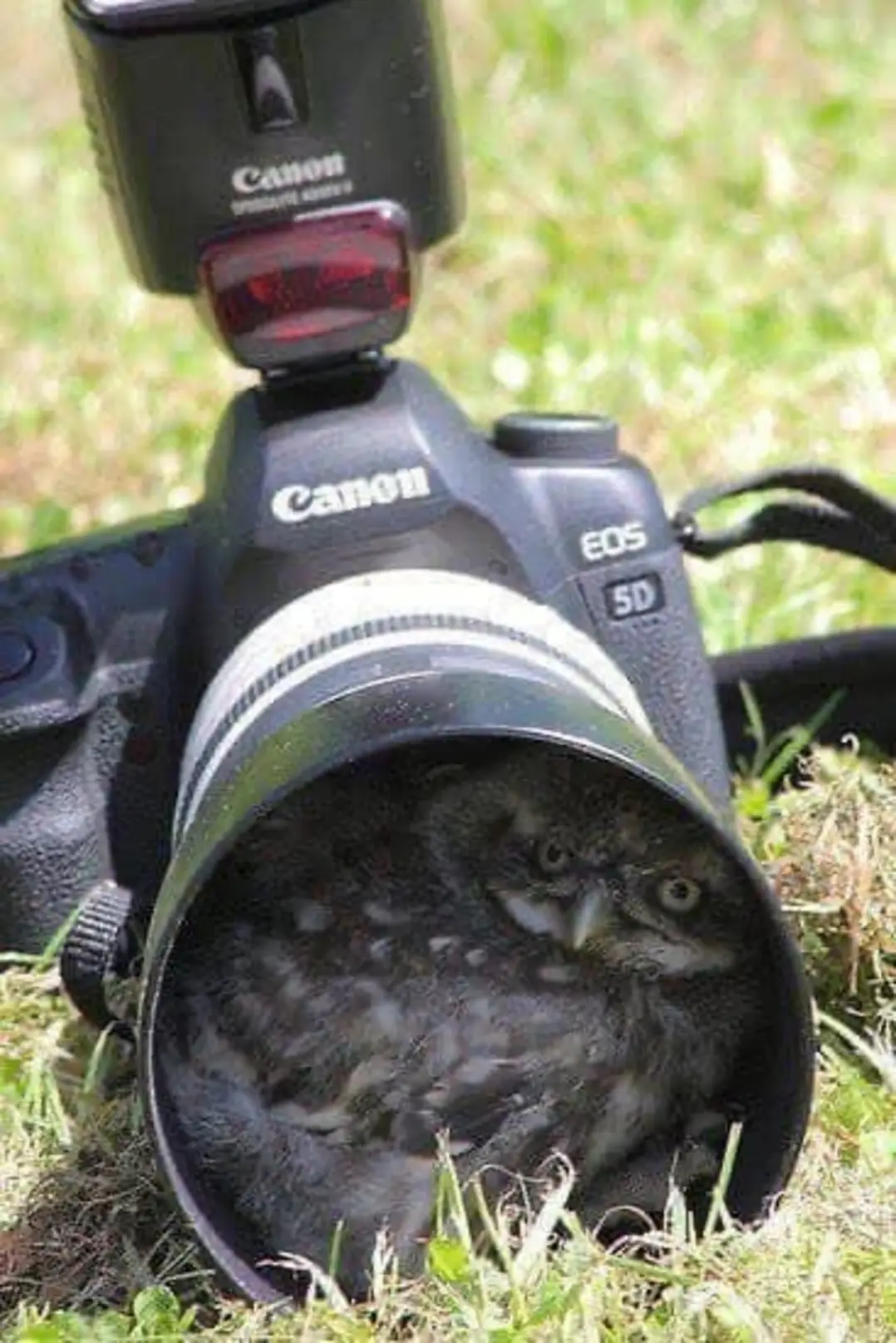
I've heard of close-ups, but this is ridiculous!
What You May Have Missed:
The reports of my death are greatly exaggerated...

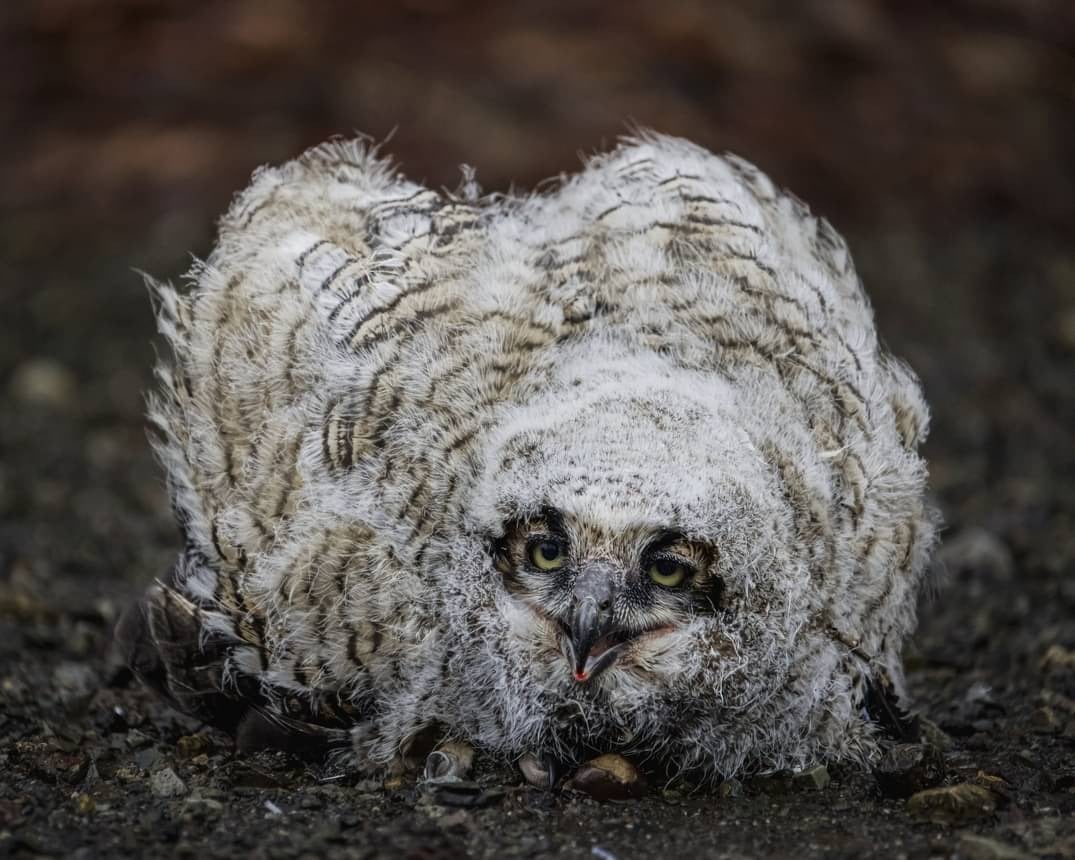
Watch That First Step! Baby owl survives 100ft / 30m fall

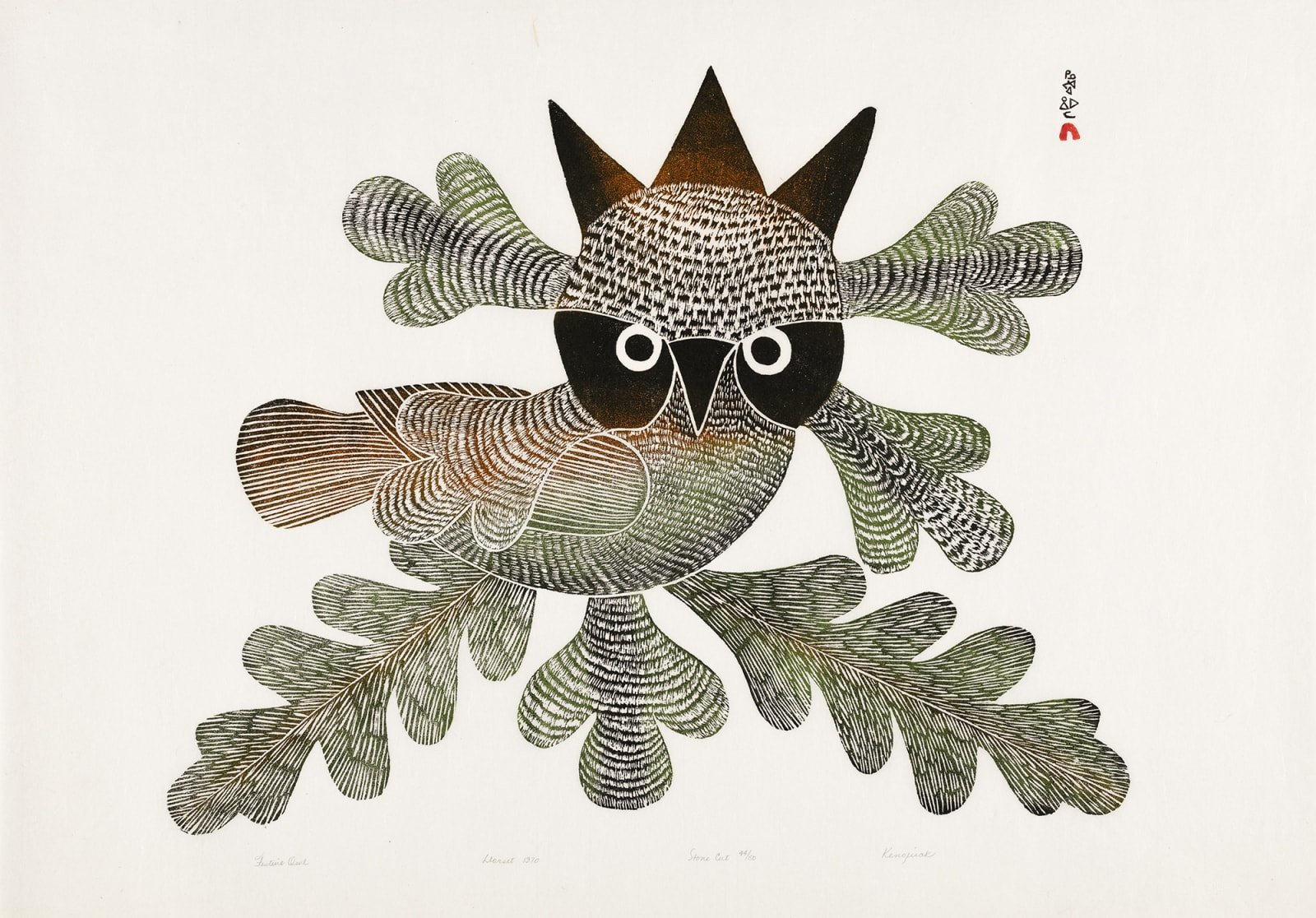
30 Way to Describe an Owl According to Kenojuak Ashevak
Traversing Russia's Remote Taiga in Pursuit of the Blakistons Fish Owl

Well, I hope you've had even half as much fun here as I have this year! For many reasons, this has felt like one very long year, but having you all here every day to share something fun with has been hugely impactful and positive for me.
Feel free to share any of your favorite owl moments!

2
From Hoo's Woods
The holiday season is an exceptionally busy time, and yesterday was no exception at Hoo's Woods, with several new patients including this Great Horned Owl we've named Timber.
Timber was found hanging from barbed wire with a significantly injured wing. His prognosis is heavily guarded. Owls are active at night and are unable to differentiate thin, stationary objects like wire in low light, making barbed wire especially dangerous and nearly invisible after dark. We were able to talk the finders through safely freeing Timber by placing a dark sheet over his head to help calm him and allowing him to grab a towel with his dangling feet. This helped prevent further injury to both Timber and the finder.
The finder did absolutely the right thing by contacting us and not attempting to release him.
Coincidentally, we also received a call for a barred owl from a different location that had become tangled in wire, but that bird was referred to a rehabilitation center closer to the finder so it could receive help as quickly as possible. Timber is now warm, safe, and receiving care.

3
From Praveen Siddannavar
There is something mesmerizing about the gaze of an owl. Captured this Black-and-white Owl perched perfectly against the night. The contrast between the dark plumage and the bright beak really brings out its character. Moments like these are why I love wildlife photography.
Costa Rica

4
From Carlos A Carmona
Small, silent, and absolutely powerful.
A Northern Saw-whet Owl holding its ground in a winter forest-proof that even the smallest hunters thrive in the harshest conditions. Nature never stops inspiring.

5
From Kinglet Photography
Over the past few years this specific cavity has seen some action, plenty of squirrels, both red and grey morph Eastern Screech Owls, but on this day, when you thought you had seen it all, there was a surprise...a Barred Owl had decided it was going to spend the day chilling out in it!

6
77
The last northern spotted owl in B.C. is likely gone. Is it too late to bring them back?
(lemmy.world)
A new federal recovery plan for the species offers a glimmer of hope, but with no owls sighted since 2023, it may be too little, too late
From Canadian Geographic
A few kilometres down a muddy trail snaking through old-growth Douglas firs and cedars, Jared Hobbs stops and tilts his head back. A moment later, he lets out a resounding whoop. “Hoo … hoo, hoo … howoooo!” It’s the four-note call of a northern spotted owl, and it seems to hang in the muggy August air like an echo. Which, in a way, it is.
The trail leads through a deep valley on the edge of the Cascade Mountains, once a stronghold for spotted owls. Before European contact, there were an estimated 1,000 spotted owls in Canada, all of them in southwestern British Columbia. Hobbs, who has the slightly dishevelled look of a seasoned wildlife biologist, has spent more time observing them than likely anyone else in the country. Known for their polka-dotted plumage, spotted owls tend to be reclusive but also surprisingly unafraid of humans — a “charismatic species,” as Hobbs calls them. He describes encounters over the years with young spotted owls, which were apt to perch near him as he wandered in their woods, seemingly as curious about him as he was about them.
There are three subspecies of spotted owls, with the range of the northern spotted owl extending from northern California to B.C. But their habitat is narrowly specific: they nest and hunt only in mountainous old-growth forests. Unable to build their own nests, the owls instead make their homes in the hollows or broken-off tops (known as “baskets”) of centuries-old conifers. The generous spacing between these forest giants is also ideal for their metre-wide wingspan.
As we walk through the forest, Hobbs consults a GIS map on the tablet he carries with him; it’s peppered with dots showing the nest sites he’s found over the last two decades, including one nearby. But the last actual owl sighting at this nest was recorded more than a decade ago. It’s no news to anyone that since the advent of industrial logging, British Columbia’s old-growth forests have been steadily disappearing — and so, too, have the spotted owls that rely on this habitat. Today, there may be just one wild spotted owl in all of B.C. — a female, last seen in the Fraser Canyon about 40 kilometres north of where Hobbs is standing.
“All I see are ghosts now,” says Hobbs, gesturing towards the towering trees that surround us.

Wildlife biologist Jared Hobbs looks up at a former northern spotted owl nest site. Hobbs has dedicated much of his career to collecting data on the owls in hopes of protecting their habitat.
WHEN HOBBS began studying spotted owls in the mid-1990s, there were around 30 breeding pairs in the province. In the early 2000s, he worked as a wildlife biologist for the B.C. government, slogging through rough terrain to find and map spotted owl nest sites, data the province could use to protect the surrounding habitat from logging and other activities like mining.
The work was gruelling and time-consuming. By his estimate, Hobbs spent more than 200 nights a year sleeping in a tent or under the stars. He faced other challenges, too. His truck tires were slashed, and his truck doors keyed. He once woke up to find the remains of a spotted owl placed on a stump near his tent site. The culprit was never found, though it’s a good bet it was someone affiliated with the logging industry.
Still, despite the obstacles, Hobbs and his team were able to put together a detailed map showing roughly 20 nest sites across the owl’s range. That map was used by the province to update its spotted owl recovery plan, released in 2006. The plan identified some 300,000 hectares (3,000 square kilometres) of habitat to be protected and launched a new captive breeding program for spotted owls.

But it wasn’t nearly enough, Hobbs says. A good-sized portion of the protected area had already been logged, he says, so although it was protected, there were no old-growth trees there to provide viable spotted owl habitat. The plan identified these areas as “potential habitat,” but, as Hobbs points out, any new trees will not provide habitat for hundreds of years. Other areas with suitable old-growth forest that should have been protected in the plan were not, Hobbs says, a casualty of the logging lobby (the industry continues to harvest in areas federally designated as critical habitat).

Northern spotted owls nest exclusively in the broken-off tops, or “baskets,“ of old-growth trees.
With a flawed recovery plan in place, the spotted owl population continued to plummet. The feeling among many conservationists was that the province was still committed to prioritizing logging, driving the spotted owl to extirpation while the federal government chose not to interfere.
“The spotted owl is like the canary in the coal mine,” Hobbs says. “It’s sending us a very strong message that we’re not managing old-growth ecosystems properly, and I think we owe it to the owl to listen.”
In 2021, the environmental law charity Ecojustice, in partnership with the Western Canada Wilderness Committee and Spô’zêm First Nation, launched a lawsuit against the federal government, alleging the government had failed to enforce protections under its own Species at Risk Act. In June this year, the Ministry of Environment and Climate Change released an updated spotted owl recovery strategy that calls for 400,000 hectares (4,000 square kilometres) of forest to be protected for spotted owls, including nearly double the protected area outside of provincial parks (the parks already act as protected areas because no logging is allowed within them) than was set out in the provincial plan.
For Hobbs, the release of the federal plan provides a glimmer of hope after decades of frustration. But with just one wild spotted owl left, it may be too little too late.
Until fairly recently, little was known about spotted owls. They rose from obscurity to fame — or notoriety, depending on your perspective — during the so-called timber wars in the western United States during the 1980s and ’90s. The timber wars pitted environmentalists against loggers in a bid to save old-growth forests across Washington, Oregon and northern California.
The reclusive spotted owl, with its reliance on centuries-old conifers, became the poster child for that battle, its survival used as the rationale for halting the march of chainsaws through these last stands of ancient forest. Prior to the timber wars, which made headlines across North America, few people had ever heard of the owls, and even fewer had ever seen one.
Eric Forsman, professor emeritus at Oregon State University, was an outlier. He has long been fascinated by the spotted owl, which he first encountered in the late 1960s while working as a fire lookout in the Cascade Mountains.
“As luck would have it, there was a pair of spotted owls that occupied the area,” says Forsman. “One night I heard them calling, and that was the first time I had ever heard one clearly.” He returned the call, and shortly after, a pair of spotted owls appeared outside his cabin door, welcoming their new neighbour.
Forsman decided to focus on spotted owls for his graduate thesis. He spent the next several years hiking through the mountains to observe them, count them, study their pellets for clues about their diet and tag fledglings to better understand their travel patterns. “At that point in time, no one had ever really done any long-term serious research on spotted owls,” he says. “There was very little known about them, and pretty much everything that we learned was new and exciting and interesting.”
Forsman found that spotted owl populations in the Pacific Northwest were declining at an alarming rate, largely due to habitat loss. He and other scientists studying spotted owls suspected the patchwork of old-growth forests left behind after logging was forcing young spotted owls to travel farther to find suitable homes, crossing broad expanses of clearcut. On these journeys, they were vulnerable to larger avian predators such as great horned owls, red-tailed hawks and golden eagles, as well as to starvation. If logging continued unabated, Forsman predicted old-growth forests would be gone in the Pacific Northwest within a few decades, and so, too, would the spotted owl.

A juvenile northern spotted owl.
In 1990, the U.S. federal government listed the spotted owl as a threatened species and, thanks to the work of Forsman and his colleagues, put the brakes on old-growth logging within its habitat. Not surprisingly, the decision was controversial. Industry experts predicted it would cost up to 30,000 jobs. Protests broke out in small towns whose population’s livelihoods were tied to logging (a popular bumper sticker and T-shirt at the time read “Save a logger, eat an owl”).

Protestors block a logging truck in California, 1989
“When I started out, I certainly didn’t have a clue that it was going to end up basically bringing about a sea change in terms of how we manage our forest down here in the States,” says Forsman of his research. Yet despite the protections in place, the northern spotted owl population in the U.S. has also continued to drop.
Adding to the spotted owls’ challenges are barred owls. The bigger owls are better adapted to a fragmented landscape and have expanded west from their eastern range, displacing spotted owls, disrupting their nesting and out-competing them for food. Earlier this year, the U.S. Fish and Wildlife Service announced plans to cull as many as 450,000 barred owls over the next 30 years in an effort to save spotted owls. The proposal has been met with pushback from some environmental and animal welfare groups.
But government scientists argue that if barred owls aren’t removed, the imperilled spotted owl could go extinct in our lifetime. The B.C. government is taking a similar tack: as of 2023, 80 barred owls had been killed, with plans to continue culling and relocating in the future.
Forsman agrees barred owls pose a serious threat. But unless sufficient spotted owl habitat is protected, he says that simply culling a predator is unlikely to save the spotted owl. “My sense of what’s going on in British Columbia is that except for relatively small reserve areas, the old forests are still being harvested quite rapidly.”

Greenpeace inflated a 20-foot-tall northern spotted owl in front of Rideau Hall in Ottawa in 2024 to protest the destruction of the owl's habitat ahead of COP16.
The last wild spotted owl in Canada lives in an undisclosed forest somewhere near the town of Spuzzum, B.C.
Or perhaps not.
If she’s still alive, the female, known as Skelúleʔ (sku-loo-la) from the word for owl in the Nlaka’pamux language, would be about 12 years old, making her a senior citizen when it comes to spotted owls. She was last seen by researchers in the summer of 2023. The mountainous landscape where Skelúleʔ lived can be a harsh environment, particularly in the winter. Squirrels and packrats — the favoured prey of spotted owls — tend to burrow deep into the snow when temperatures dip below zero. And frequent icy cold snaps can be lethal to an older bird struggling to find food. But it’s not impossible to think that she is still out there, perhaps wondering where all her kin have gone.
Skelúleʔ had shown herself to be remarkably tough, after all. A survivor, in the truest sense.
“The spotted owl is part of our stories of origin,” says James Hobart, a former chief of the Spô’zêm Nation. He remembers hearing their calls in the night when he was young.

A month-old fledgling, photographed in 2023.
“There were stories of spotted owls stealing kids for being too noisy at night,” he says. “My mom used to terrify me when she’d tell that story, but whenever we heard an owl scream, we knew to be quiet.”
Hobart has been a long-time advocate for protecting spotted owls. Last year, he successfully pushed the province and federal government to halt logging of spotted owl habitat within the Spô’zêm Nation’s territory in the Fraser Canyon.
Spotted owls are considered spirit messengers from the tree canopy, Hobart explains. Just as salmon are indicators of a river’s health, Hobart says owls tell us about the state of a forest. “They represent to us an oversight for the medicines that we harvest from the old growth. If the forest isn’t healthy, then we know we’re not healthy.”
In 2022, the recovery and breeding centre run by the province released three captively raised spotted owls in the Spô’zêm territory, where a large aviary has been built to temporarily house them. Sadly, two of the owls didn’t survive their first winter, and the third was found injured on a nearby roadway and returned to the captive breeding centre, about two hours west in Langley, B.C. Since launching in 2007, the program has yet to successfully introduce a single bird into the wild.
Indeed, the captive breeding program has endured numerous challenges. Spotted owls appear to mature more slowly in captivity, for example, taking up to eight years to reach breeding age (compared with three in the wild). There has also been a lower rate of eggs hatching healthy chicks. And the trickiest step of all might be releasing a captively-raised bird into the wild, where it must quickly learn to hunt for its own food and avoid predators.
Despite the setbacks, Hobart remains hopeful. Work is underway to expand the aviary in Spô’zêm Territory so captive owls can spend more time there before being released, which Hobart believes will ease the transition and give the birds a better chance of thriving. “We’re learning,” he says. “We’re still adamant that we can do this.”

Stein River Nlaka’pamux Heritage Park has one of the last best tracts of old-growth forest in B.C.
As the saying goes, where there is life, there is hope. Joe Foy knows that better than most. A campaigner with the Western Canada Wilderness Committee since the late 1980s, he has endured his share of disappointment — the federal list of wildlife species at risk now includes 299 endangered species, with 23 of those already extirpated (no longer found in the wild in Canada).
Every year, that list grows longer. And yet Foy notes that another charismatic local is, for him, a model of what’s possible when everyone comes together. By the early 1900s, the fur trade had decimated the global population of sea otters, taking it from upwards of 300,000 to just 2,000 by the early 20th century. Along B.C.’s coast, sea otters were wiped out entirely, the last one shot in 1929. But in recent decades, the B.C. population has staged a remarkable recovery, ballooning to 8,000 after just a few dozen otters were transplanted from Alaska in the 1960s.
“Because we still had the habitat and because they still existed in the U.S., they’re back, and their range is expanding,” says Foy. “With spotted owls, it’s why we argue the number one thing is nailing down the habitat.”
Foy began campaigning to protect spotted owls in B.C. in the mid-1990s, after seeing the protection measures enacted in the U.S. But there are clear differences between the two countries in terms of how species at risk are managed, he says. For starters, Canada didn’t have its Species at Risk Act until 2002 — nearly 30 years after the U.S. Endangered Species Act. And unlike the U.S., Canada delegates much of its authority to protect species to the provinces, which, Foy says, can lead to a patchwork approach.
“The federal government doesn’t come in with a heavy hand,” he says. “It tries to coax and mince around various issues, and that’s resulted in a very dire state for our species at risk.” Still, he hopes the federal government’s updated spotted owl recovery strategy will be a turning point, a case of “build it and they will come.” Though the forests are silent now, perhaps that 400,000 hectares contains enough contiguous old-growth habitat to support just one pair of spotted owls. It would be a start.

An owl swoops down on prey, likely a bushy-tailed woodrat, at its nest grove in the Fraser Valley.
For much of our hike, Jared Hobbs can’t resist calling out for spotted owls.
“Old habit,” he says with a shrug. Each time, his call is met with silence. After about two hours of hiking, including a stretch of bushwhacking, we eventually find the tree where he’d located a spotted owl’s nest years ago. It’s an old cedar with a hollow nook partway up, where a branch had broken off.
“This is the one,” Hobbs says, glancing up from his GIS. The nest, however, is long gone — likely blown down in a windstorm. The empty nook stands as a reminder of how quickly the evidence of a species can disappear.
“It’s sad that it’s not here,” Hobbs says as we sit down for lunch. “But it’s also amazing to be here in this place and get to tell the owl’s story. I think it’s appropriate.”
He launches into a description of one of the spotted owl’s most remarkable traits: its hearing. As nocturnal hunters, spotted owls rely heavily on their hearing to locate prey. The feathers that ring their head — known as a facial disc — help direct sound to their ear openings. The openings themselves are slightly offset, which helps the owl to precisely triangulate where a sound is coming from — even the faintest rustling of a tiny mouse beneath the snow.
“I have no doubt of the owl’s ability to hear,” says Hobbs, looking up at the tree. “But I wonder if we’ll hear the message the owl is trying to tell us.”
We eventually pack up and wind our way back out the trail. Hobbs calls out the four-note hoot of the spotted owl the entire way.

7
From Jian Xu
A Short-eared Owl rises from the tall prairie grass, wings lifted high as golden light reveals its fierce, focused gaze. Picture was taken last year in Southern Illinois.


10
From Ricky Roman
This is the only thing that breaks the silence.
The rest of the chatter is muted.
This is the only thing that I am tuned into.
The rest of the noise is muted.
This is the only thing that I am focused on.
The rest of the babbling is muted.Northern Hawk Owl - at Sax-Zim Bog.

11
From Blackland Prairie Raptor Center
Four Eastern Screech Owls in our Raptor Center's mew. Red morph, gray morph, red morph, gray morph.
Some bonus scowls:


12
13
From William Ko
Deep within the foliage, a lovely owlet perched deep within the surrounding leaves!
Oriental Scops Owl
27th Nov 25
Bidadari Park, Singapore.

14
From Owls in Towels
Luna the Spectacled Owl at Belize Raptor Center @belizeraptorcenter
"Luna is our residential matriarch raptor, going on 30 years wise, and was a successful apex predator for a quarter of a century before running into a barbed wire fence. She's non-releasable due to resulting wing injury.
"She is an exquisite educational ambassador at the center."
Many thank-yous to Elena Calderone for sharing these great pics of Luna at BRC. Elena included the following info:
"In those photos she was wrapped like a burrito so we could cope her beak as it had gotten a bit too long"
Indeed, owl beaks keep growing. Their talons too, and just like human hair and fingernails, they need the occasional trim. In the wild this excess growth tends to exfoliate naturally when they're out hunting and scavenging, picking meat from bones etc.
But in captivity? Owls (and other birds of prey) work a little less hard for their food. Less wear and tear means the keratin builds up, and growth is spurred along by nutrient-rich diets. So carers often use tools to trim and shape (aka "cope") their beaks to maintain proper function and health for the birds. The brand-agnostic rotary tool in the foreground is one such coping instrument.
Elena added "She was so mad 😄"
Before

After


15
From Bill Allard
Owls love and need perches, even burrowing owls. Here's a photo with 5 owls or owlets on it.

16
From Carlos A Carmona
With this image of a Northern Saw-whet Owl, I say goodbye to year 2025. What a year it has been! Here is to a super 2026 filled with joy, grace and togetherness. Check out my 2025 Year-end Review here. Cheers! 🥂
That's a non-social media link, so feel free to check out his summary of events. There's a bunch of owl content of course, but a ton of other great stuff too. Here's a preview.

17
After a couple of failed attempts to find them in another area, I spent three days in a spot where multiple short eared owls had been spotted. There was a group of at least 4 in one field who'd come out each evening around sunset to hunt. During the day they'd be sitting camouflaged in the high grass.


What I found interesting is that even though they were hanging around near each other at rest, when it came time to hunt, they would frequently rush at each other and squabble. Clearly they weren't among friends.

Another funny behaviour was how they would react to crows that also hung around the field, and vice versa. It's common for crows to harass birds of prey in a group, loudly crying out (it's one way to find out where there are owls even). But these crows acted a bit differently. Individual crows would from time to time come and annoy an owl just sitting around minding its business, but not as frantically as I'm used to seeing them. But what was even more incredible, the owls would do the same to the crows. It happened several times, but I've not seen something like that before.
I had a blast watching these guys and gals, it was a great way to cap off 2025. With that, I wish all superbowlers a great end of 2025 and/or start of 2026!

18
From Arkasha Kornienko
This female had the stare on at me for sure. The eyes are so hypnotic, just a beautiful species to view and study.
Look at those teensy weensie plumicorns!

19


21
From Marcy Mohler
Female snowy owl at dusk.
Not as many Snowy owls as in past years unfortunately. I found a few but this lady was the best subject.
Dec 29., 2025

22
Lifer and my 13th species of owl in AB (Petit-duc des montagnes) (Southern AB - November 19, 2025)

23
From Paul Bannick
Central American Pygmy-Owl (Glaucidium griseiceps) Woodpeckers created cavities are the typical nest site for many species of owls, including the Central American Pygmy-Owl. This small owl (13-18cm/50-59g) can only be found on from on the lowland Caribbean slope from southeastern Mexico to western Ecuador.

24
From Edwin Martinez
A very spectacular Spectacled!
This was one of the most immersive and species-rich tours we've ever led: 175 species seen and photographed by our guests during the Wide Horizon Photo Adventure 2025 Costa Rica tour.
For me, it was even more special - I was finally able to see and photograph one of my long-time personal targets and lifers, the Spectacled Owl. Uncommon yet instantly unforgettable, this massive, striking owl inhabits the humid evergreen forests of tropical lowlands and foothills. It typically roosts low to mid- level, expertly concealed in deep shadow, and flushes with ease.
Spectacled Owl - Adult
Costa Rica
November 2025
Canon EOS R5 Mark II + RF 100-500mm 1/350 F7.1 ISO 1600

25
From Kenzo Pan
Lifer Alert! Barn Owl and Short Eared Owl flying together!
I had one of my most amazing birding experiences of 2025 a bit over 3 weeks ago. It was a particularly fantastic day for the shorties where they were quite numerous and flying close. I was taking photos of whatever bird stole my attention at any given moment. When I got home I was so excited to see that one of the many birds flying that day was a Barn Owl! I was even more excited to see it flying with a shorty! This was such a special lifer for me.

view more: next ›