Examples of Profiteering

17 readers
1 users here now

The act of taking advantage of a situation in order to make a profit.

The Cambridge English dictionary.

This is devoted to examples of corporations in their fiduciary responsibility making incredible amounts of profit through situations they created, take advantage of, or perpetuate.

Posts should be relevant to profiteering. Post should contain a link to a story or video which descriptively shows in a verifiable manner of profiteering. Off‐topic and unverifiable posts shall be remove. No bigotry, including racism, misogyny, ableism, heterosexism, or xenophobia. Be respectful. Code of Conduct. No porn. No Ads / Spamming.

founded 1 year ago
MODERATORS
1


cross-posted from: https://sh.itjust.works/post/50983669

In Hitler’s eyes, the time had come to settle the struggle between the right and the left once and for all.

We must first gain complete power if we want to crush the other side completely.” Hitler argued that, in supporting his rise as führer, the moguls would in effect be supporting themselves, their firms, and their fortunes. “

Near the end of his speech, Hitler laid out how that would happen. In only two weeks, on March 5, the people of Germany would determine the country’s future by casting their votes in the national election—“the last election,” according to Hitler. One way or another, democracy would fall.

Germany’s new chancellor intended to dissolve it entirely and replace it with a dictatorship. “Regardless of the outcome,” he warned, “there would be no retreat.

2


The war in Ukraine is forcing conflict analysts and others to reimagine traditional state-centric models of war, as it demonstrates that militaries are no longer primarily responsible for defining the challenges of the modern battlespace and then producing tenders for technological fixes. Instead, private tech companies increasingly explain the ideal battlespace to militaries, offering software and hardware products needed to establish real-time information edges. In the Russia-Ukraine war, private companies have sought to shape Ukrainian intelligence requirements. At the beginning of Russia’s invasion in February 2022, Ukraine’s armed forces could not manage essential intelligence tasks. Ukraine’s military lacked its own software and hardware for real-time information dominance and instead accepted support from private tech companies. These companies provide AI and big data tools that fuse intelligence and surveillance data to enhance the military’s situational awareness. As the war has progressed, however, the Ukrainians have sought to develop their own government situational awareness and battle management platform called Delta. The platform was developed as a bottom-up solution, “initially focused on a single, highly effective application: a digital map for situational awareness.”2 Over time, it expanded into a robust software ecosystem used by most of Ukraine’s military, from frontline soldiers to top commanders. This in part reflects Ukraine’s desire to retain direct sovereign control over what the U.S. military refers to as Combined Joint All-Domain Command and Control infrastructure (CJADC2), which manages networked sensors, data, platforms, and operations to deliver information advantages across all military services and with allies.

Mass surveillance and social media now generate huge amounts of data during war. At the same time, the widespread availability of the smartphone means civilians carry around advanced sensors that can broadcast data more quickly than the armed forces themselves.4 This enables civilians to provide intelligence to the armed forces in ways that were not previously possible.5 Matthew Ford and Andrew Hoskins label this a “new war ecology” that is “weaponizing our attention and making everyone a participant in wars without end . . . [by] collapsing the distinctions between audience and actor, soldier and civilian, media and weapon.”6 In this ecology, warfare is participatory. Social media platforms such as TikTok, X (formerly Twitter), and Telegram are no longer merely tools for consuming war reportage; militaries accessing and processing open-source data from these platforms shapes the battlespace in real time by contributing to wider situational awareness.

In this “new war ecology,” Palantir Technologies is an often controversial symbol of how private tech companies and the military work together to tackle battlefield challenges.8 Since it was founded in 2003, the company has grown quickly by providing big data software solutions. Its platforms are designed to handle complex and difficult data challenges, including those experienced by Western militaries. Importantly, Palantir’s software platforms were not developed and commercialized to fulfill a military tender. They are rooted in business models prioritizing speed, flexibility, and investor return, rather than the state’s national security imperatives.

As a result of their work in Ukraine, a slew of companies like Palantir have drawn media attention.9 While commercial interests have rarely aligned neatly with geopolitics, circumstances are changing; private technology firms increasingly occupy, manage, and in some cases dominate the digital infrastructure upon which militaries now rely. States themselves have fostered this shift through selective deregulation and outsourcing of technology development. These dynamics are visible in the war in Ukraine and in the wider geopolitical contest over the global digital stack. As we argued in “Virtual Sovereignty,” a paper we published in International Affairs, this influence has major geopolitical consequences for how states use power.

The overlapping interests of finance capital and private technology corporations transcend national borders, creating forms of influence that do not fit neatly into binary friend-or-enemy distinctions. ByteDance’s global investment network, spanning Chinese state-linked entities, American private equity funds, and international investors, illustrates this transnational ownership model. It complicates national regulatory and security responses, as policymakers must ask not merely who owns a given platform, but who controls the data, infrastructure, and decisionmaking power that states increasingly depend on.

This illustrates a deeper shift in the relationship between the market and the military. The problem is not that defense firms are publicly traded—Lockheed Martin and General Dynamics have been for decades—but that contemporary defense-tech companies retain proprietary control over data-driven systems central to military operations. Their technologies are not merely delivered to the state; the companies are embedded in the decisionmaking architecture of warfare. When a firm’s market value depends on its perceived wartime success, its incentives may diverge from those of the state it ostensibly serves. This intertwining of commercial strategy, military dependency, and investor confidence represents a new kind of vulnerability for states.

What is at stake, beyond the conflict itself, is the nature of state sovereignty. The ability of states to govern, defend, and act independently is increasingly mediated by private technology firms and global finance. This is not entirely new. States have long relied on private contractors, but the kind of dependency has changed. Unlike traditional arms manufacturers, today’s defense-tech firms control the digital platforms, data flows, and algorithmic systems that underpin military decisionmaking. At the same time, civilian platforms like Telegram and TikTok shape the informational terrain of conflict, influencing how wars are perceived and fought.

3


Perhaps no one better encapsulates de Jong’s argument than Günther Quandt and his son Herbert Quandt, members of the Nazi party and patriarchs of the family that now dominates the BMW Group.

Herbert Quandt had responsibility over battery factories in Berlin where thousands of forced and enslaved labourers toiled, including hundreds of women from concentration camps. He acquired companies stolen from Jews in France and used prisoners of war and forced labourers on his own private estate. He even built a concentration subcamp in Nazi-occupied Poland.

When Günther Quandt was 37 and widowed, he met and married a 17-year-old called Magda Friedländer and had one child with her. After their divorce, Magda married the Nazi propaganda minister, Joseph Goebbels, with whom she murdered their six children before both killed themselves in 1945.

After the war, Günther Quandt was arrested for suspected collaboration with the Nazis, only to be acquitted after falsely claiming that he had been forced to join the party by Goebbels.

“Günther Quandt becomes one of Nazi Germany’s most most successful industrialists,” de Jong, who has been reporting on the families for a decade, said in a phone interview from Palm Springs, California. “He was already immensely wealthy before Hitler seized power. He uses it at the end of the war as a way of saying, ‘I was a victim of persecution. I was persecuted by Joseph Goebbels and by my ex-wife.’”

4


cross-posted from: https://sh.itjust.works/post/50872732

On Oct. 2, the second day of the government shutdown, Homeland Security Secretary Kristi Noem arrived at Mount Rushmore to shoot a television ad. Sitting on horseback in chaps and a cowboy hat, Noem addressed the camera with a stern message for immigrants: “Break our laws, we’ll punish you.”

Noem has hailed the more than $200 million, taxpayer-funded ad campaign as a crucial tool to stem illegal immigration. Her agency invoked the “national emergency” at the border as it awarded contracts for the campaign, bypassing the normal competitive bidding process designed to prevent waste and corruption.

The Department of Homeland Security has kept at least one beneficiary of the nine-figure ad deal a secret, records and interviews show: a Republican consulting firm with long-standing personal and business ties to Noem and her senior aides at DHS. The company running the Mount Rushmore shoot, called the Strategy Group, does not appear on public documents about the contract. The main recipient listed on the contracts is a mysterious Delaware company, which was created days before the deal was finalized.

5


When the Trump administration awarded a $1.26 billion contract this summer to build and operate a new tent city detention center in Texas, it made headlines, and not just because the facility, located at the Fort Bliss Army base, was expected to be the biggest of its kind in the country. The company that won the job, Acquisition Logistics, was so small it operated out of a single-family home in Richmond, Virginia. Almost nobody had heard of it.

Whereas many companies with ICE contracts had long histories with immigrant detention, including private prison giants such as GEO Group, Acquisition Logistics had no prior experience in incarceration.

Stranger still was the fact that the Navy, rather than ICE, awarded the contract.

Trump Bump Four companies profiting bigly from the administration’s deportation frenzy.

  1. People Who Think

One of two GOP-connected PR firms that have been awarded contracts for a $200 million ad campaign starring Kristi Noem (whom detractors call ICE Barbie)

Contract value: $52 million Trump connection: Co-founder Jay Connaughton was a Trump campaign adviser and has ties to Noem aide Corey Lewandowski.

  1. CSI Aviation

Part of “ICE Air,” the New Mexico–based company is one of the agency’s primary deportation-flight providers.

Contract value: $557 million Trump connection: Deborah Maestas, a company director and daughter of the firm’s CEO, was a fake elector for Trump in 2020.

  1. Palantir Technologies

The software company is building a platform, ImmigrationOS, to help ICE track and manage deportations.

Contract value: $30 million Trump connection: Co-founder Peter Thiel is a GOP megadonor who once employed JD Vance at his VC firm, and then backed his rise to power.

  1. GEO Group

One of ICE’s largest contractors, the private prison company, whose shares surged after Trump’s victory, operates at least 16 immigration detention facilities.

Contract value: $356 million Trump connection: GEO donated $1 million to Trump’s Make America Great Again Inc. super-PAC. Company founder George C. Zoley and former CEO Brian Evans contributed at least $10,000 to the fundraising committee Save America.

6


Amazon is phasing out Prime Invitee — the 16-year-old perk for sharing free shipping beyond your household — and steering members to Amazon Family.

Why it matters: The move closes a money-saving workaround and shifts sharing to households, where members get broader Prime perks. ...

7
1
submitted 1 year ago* (last edited 1 year ago) by tomatolung@sopuli.xyz to c/profiteering@lemmy.world


cross-posted from: https://lemmy.world/post/23500333

...

We now finally have the ugly truth on these fake artists—but no thanks to Spotify. Or to that prestigious newspaper whose editor I petitioned.

Instead journalist Liz Pelly has conducted an in-depth investigation, and published her findings in Harper’s—they are part of her forthcoming book Mood Machine: The Rise of Spotify and the Costs of the Perfect Playlist.

Mood Machine will show up in bookstores in January and may finally wake up the music industry to the dangers it faces.

Pelly started by knocking on the doors of these mysterious viral artists in Sweden.

Guess what? Nobody wanted to talk. At least not at first.

But Pelly kept pursuing this story for a year. She convinced former employees to reveal what they knew. She got her hands on internal documents. She read Slack messages from the company. And she slowly put the pieces together.

Now she writes:

What I uncovered was an elaborate internal program. Spotify, I discovered, not only has partnerships with a web of production companies, which, as one former employee put it, provide Spotify with “music we benefited from financially,” but also a team of employees working to seed these tracks on playlists across the platform. In doing so, they are effectively working to grow the percentage of total streams of music that is cheaper for the platform.

In other words, Spotify has gone to war against musicians and record labels.

At Spotify they call this the “Perfect Fit Content” (PFC) program. Musicians who provide PFC tracks “must often give up control of certain royalty rights that, if a track becomes popular, could be highly lucrative.”

Spotify apparently targeted genres where they could promote passive consumption. They identified situations in which listeners use playlists for background music. That’s why I noticed the fake artists problem first in my jazz listening.

According to Pelly, the focal points of PFC were “ambient, classical, electronic, jazz, and lo-fi beats.”

When some employees expressed concerns about this, Spotify managers replied (according to Pelly’s sources) that “listeners wouldn’t know the difference.”


They called it payola in the 1950s. The public learned that radio deejays picked songs for airplay based on cash kickbacks, not musical merit.

Music fans got angry and demanded action. In 1959, both the US Senate and House launched investigations. Famous deejay Alan Freed got fired from WABC after refusing to sign a statement claiming that he had never taken bribes.

Transactions nowadays are handled more delicately—and seemingly in full compliance with the laws. Nobody gives Spotify execs an envelope filled with cash.

But this is better than payola:

Deejay Alan Freed couldn’t dream of such riches. In fact, nobody in the history of music has made more money than the CEO of Spotify.

Taylor Swift doesn’t earn that much. Even after fifty years of concertizing, Paul McCartney and Mick Jagger can’t match this kind of wealth

....

8


cross-posted from: https://lemmy.world/post/20923780

Household paper products have the highest rate of shrinkflation, the LendingTree analysis found. Out of 20 products it tracked from prior to the pandemic until today, about 60% had reduced their sheet count, the study found. (Only one item, a 2-pack of Scott multipurpose shop towels, declined in price per 100 count, according to the data.)

Breakfast foods had the second-highest rate of shrinkflation, with LendingTree finding that about 44% of the items they tracked were now sold in smaller portions. Family-sized Frosted Flakes, made by Kellogg's, has slimmed from 24 ounces to 21.7 ounces, resulting in a 40% increase in per-ounce pricing, the analysis found. 

About 38% of candy items are now sold in smaller amounts, including party-size Reese's miniatures (35.6 ounces now versus 40 ounces in 2019-2020) and party-size milk chocolate M&M's (38 ounces now versus 42 ounces previously.)

About 27% of snacks had gone through portion reductions, LendingTree said. That includes party-size Cheetos, made by Frito-Lay, which shrank to 15 ounces from 17.5 ounces while its per-ounce price rose to 40 cents from 17 cents. 

Other snacks that have gotten smaller but pricier include party-size sour cream and onion Lay's, family-size original Wheat Thins and party-size original Tostitos, LendingTree said.

9


Going back a few years, but worth documenting. Alternative link

[2022], Pfizer forecasts it will generate $29bn from the vaccine, based on contracts it had already signed in mid-October. In an earnings call in February 2021, Pfizer predicted that after the pandemic ends, its current margins — in the high 20 percentage points — will increase, as costs are likely to fall.

“There’s a significant opportunity for those margins to improve once we get beyond the pandemic environment that we’re in,” said Frank D’Amelio, chief financial officer.

...

Winnie Byanyima, the Ugandan who runs the UN’s global effort to end Aids, shuddered when she read that interview. “He hasn’t saved the world. He could have done it but he hasn’t,” she says, pointing to the very low vaccination rates in Africa.

...

Yet even if that makes the doses more affordable, many leaders feel Pfizer is forcing them to navigate a labyrinth in order to obtain them. While western leaders had Bourla on speed dial, the first challenge for some nations was getting his — or anyone at Pfizer’s — ear.

“Countries reported to us that they had been trying to get hold of Pfizer and no one returned their calls,” says a person familiar with the African Union’s vaccine-purchasing operation.

Before deals could be agreed, Pfizer demanded countries change national laws to protect vaccine makers from lawsuits, which many western jurisdictions already had. From Lebanon to the Philippines, national governments changed laws to guarantee their supply of vaccines.

Jarbas Barbosa, the assistant director of the Pan American Health Organization, says Pfizer’s conditions were “abusive, during a time when due to the emergency [governments] have no space to say no”.

10
 
 
11
 
 
12


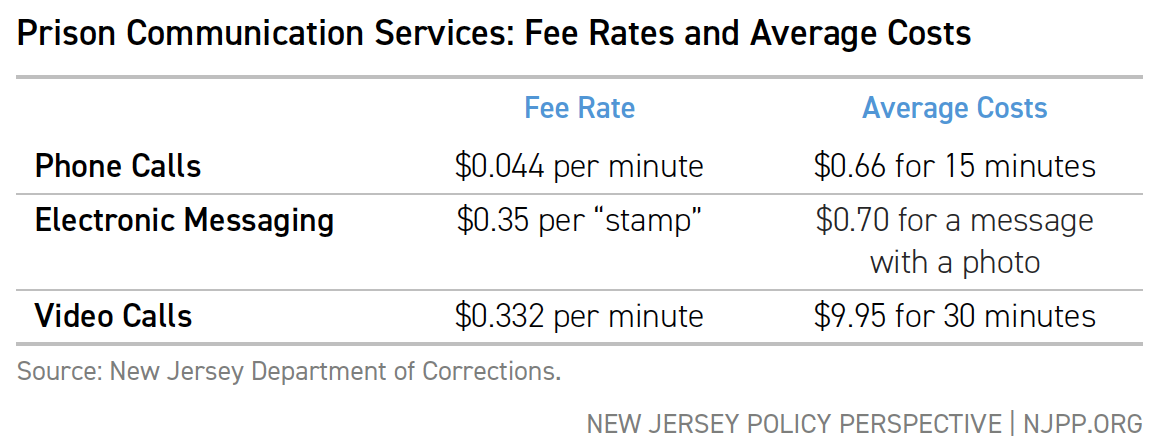
New Jersey is one of many states that contracts with private telecom companies to provide communication services for its prisons, including phone calls, electronic messaging, and video calls. The state currently contracts with two companies: ViaPath, formerly Global Tel Link, and JPay, a subsidiary of Securus Technologies.[viii] Founded in 1989, ViaPath was one of the first companies to transform prison phone calls into a multimillion-dollar industry.[ix] JPay, founded in 2002 as a prison money-wiring service, has since emerged as one of the largest prison technology contractors in the country.[x]

ViaPath and JPay make up nearly 80 percent of the prison communication market share in the United States, and their monopoly contracts allow them to charge exorbitant fees and generate hundreds of millions of dollars in profit from incarcerated individuals and their families.[xi] The two companies have each faced their fair share of price-gouging complaints, with ViaPath, ordered to pay $67 million to settle a 2015 class-action lawsuit, and JPay ordered to pay $6 million in fines and restitution in 2021 for charging excessive and illegal fees.[xii]
13


“Shrinking the size of a product in order to gouge consumers on the price per ounce is not innovation, it is exploitation,” the Democrats wrote in their letters. “Unfortunately, this price gouging is a widespread problem, with corporate profits driving over half of inflation.”

The lawmakers pointed to a recent report by the Institute for Taxation and Economic Policy that found that from 2018 to 2022, Coca-Cola made $13.4 billion but paid an average effective tax rate of 13.5 percent, PepsiCo made $22.4 billion but paid 15 percent and General Mills made $12 billion but paid 14.8 percent.

“No corporation should pay a lower tax rate than working Americans — especially when that same corporation turns around and gouges consumers on the other end through shrinkflation,” the lawmakers said.

14


Alternative link Article link

Chemical spills, a ceiling collapse, indoor bears. Employees and park superfans blame the hospitality company Aramark.

Aramark’s contract in Yosemite, worth approximately $2 billion over 15 years...

... park insiders say the industry still holds considerable sway. Yosemite is among America’s most lucrative and popular parks, with almost 4 million visitors accounting for roughly $140 million in annual concessions revenue. The NPS has a $3.5 billion annual budget, a $21 billion maintenance backlog and little power to punish a disappointing contractor. “If you kick them out, then what do you do?” asks Jon Jarvis, who ran the park service during the Obama years. “We don’t have rangers to change bed linens.”