1
Canadian News!
101 readers
9 users here now
A community for canada news
founded 8 months ago
MODERATORS
2

Photo: Jimmy Jeong / The Narwhal
I was arrested while reporting on Wet’suwet’en opposition to the Coastal GasLink pipeline in November, 2021.
And this year, I’ve spent weeks in court as The Narwhal and I pursue our press freedom lawsuit against the RCMP. I’ve had good reason to reflect on the fundamental rights we are fighting for.
It started with a simple pitch — I had asked co-founders Emma Gilchrist and Carol Linnitt: “Any interest in partnering to do some reporting out there?” I’d been documenting the RCMP sending officers to enforce Coastal GasLink’s injunction for years, once even for The New York Times.
I sent that pitch because I knew The Narwhal would be the publication to really get it. They agreed to fund my trip, and I was grateful. I had no idea how lucky I was to be working with a team who would go on to support me through some of the worst moments of my life.
That support hasn’t faded — and neither has my faith in The Narwhal. We can only keep telling critical stories about resource extraction in Canada because **more than 7,400 members regularly pitch in to support this work. Today, I hope you will join them.**I knew that trip would be difficult. I had no idea it would end with me staring down the barrel of a police gun, let alone being arrested and kept in custody for four days, or to become a headline myself. I could not have known we would still be wrestling with the effects nearly five years later.
Police filmed my arrest as they took my cameras, then my notebook, my audio recorder and my credentials. With my hands tied, I could not do my work. I felt helpless and unheard.
But Narwhals (both staff and readers like you) leapt into action. Carol and Emma jumped to get me and my urgent reporting out of jail. Reporter Matt Simmons drove to the RCMP station to advocate for me — and also made the long trip to Prince George to pick me up and dust me off, days later.
I was shaken. At the same time, I was buoyed by the response from so many Narwhal readers. We needed that community of support then — and we need it now, too. Will you help The Narwhal keep sending journalists to cover the most important stories affecting the natural world in Canada?
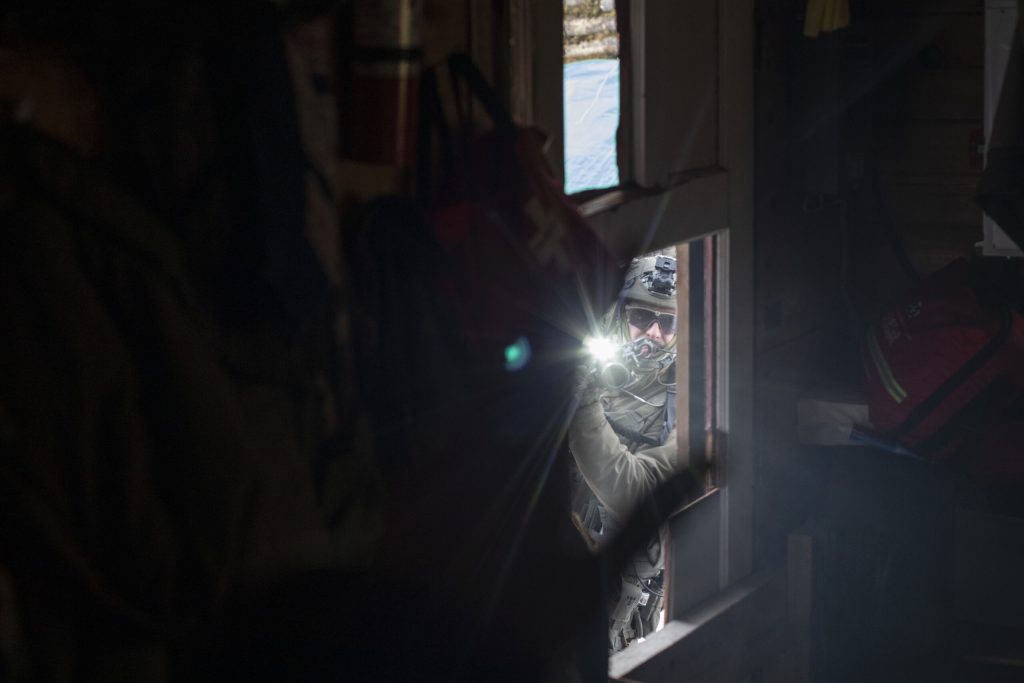
A militarized police officer aims his gun into a tiny house full of unarmed individuals on Friday, Nov. 19, 2021. Photo: Amber Bracken / The Narwhal
Wet’suwet’en opposition was not the first clash between industrial aspirations and Indigenous relationship to land — and it won’t be the last. Today, Prime Minister Mark Carney’s government is clearing the way for more major infrastructure in the name of sovereignty, including a potential new pipeline across British Columbia.
These issues, and the urgent need to be able to report completely on them, could not be more timely.
The Narwhal is invested in following stories from the halls of power in Ottawa and across the nation to the forests, mountain ranges and coastlines where communities feel the impacts.
Photojournalism requires physical presence. As the eyes and ears for the public, my job is to help you better understand what it’s like to be there — accurately, before it can become anyone’s spin. To get the time I needed to do this work, I’ve had to be scrappy. The Narwhal, as a non-profit, is scrappy too.
And, as one of our newest members put it: “I think reporters deserve to work without being arrested for doing their jobs.”
As a longtime freelancer I’ve gotten a peek into many different newsrooms, and felt the pinch of seemingly ever-shrinking budgets. The Narwhal is a rare and special breed, for its willingness to pursue gritty journalism — and genuinely support the journalists who do the work.
Today, I’m asking you to become a member so we can keep fighting for a free press, and keep publishing on-the-ground stories just like this. From experience, I know just how much your support matters — and it matters now, more than ever.
none
The Narwhal’s reporters are telling environment stories you won’t read about anywhere else. Stay in the loop by signing up for our free weekly dose of independent journalism.
From The Narwhal | News on Climate Change, Environmental Issues in Canada via This RSS Feed.
3
5
This doctor’s resignation from Hamilton’s police board exposes the failures of police oversight
(breachmedia.ca)
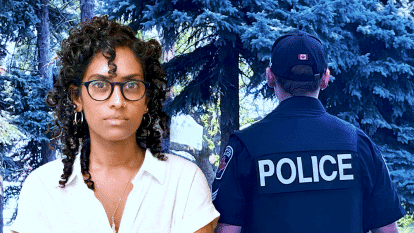
Physician Anjali Menezes just resigned from the Hamilton police board—and she’s calling for it to be dismantled entirely
The post This doctor’s resignation from Hamilton’s police board exposes the failures of police oversight appeared first on The Breach.
From The Breach via This RSS Feed.
4
3
North Bay’s PFAS problem: 5 things to know about a ‘forever chemicals’ hotspot in Ontario
(thenarwhal.ca)
Summary
- The Department of National Defence and City of North Bay have been working to clean up decades-old per- and polyfluoroalkyl, or PFAS, contamination, first announced to the public in 2017.
- Residents have proposed a class-action lawsuit over the contamination and consequent loss of property value — though environmental and health hazards of the contamination aren’t a part of the case.
- An international company called Industrial Plastics Canada is among the 10 major importers of a Teflon-like subgroup of PFAS to Canada, and they opened a factory in North Bay in 2023.
Gathered in an arena in North Bay, Ont., in summer 2024, federal officials told hundreds of concerned citizens how they planned to remediate longstanding contamination of the city’s waterways left behind by the Department of National Defence. A few months later, officials gave a similar presentation to a packed hotel conference room.
For nearly a decade now, residents have known about the contamination. Some have been told not to drink the water from their own wells, and everyone in the city has been warned not to drink water or eat fish from a creek outside town.
The creek is part of a system of waterways where carcinogenic “forever chemicals” run downstream from a military base, emptying into Trout Lake, the source of the city’s drinking water. It sits at nearly double Health Canada’s guideline for PFAS in drinking water, measured in nanograms per litre.
Health Canada published an “objective” level of 30 nanograms per litre in August 2024 for 25 chemicals in the PFAS family. That’s less than half of what Ontario currently recommends: 70 nanograms per litre, pertaining to just 11 PFAS chemicals. And that’s just a suggestion, not a binding regulation.
The city did not reply to The Narwhal’s detailed questions regarding the current state of the drinking water supply, but CBC reported in February 2026 that Trout Lake contained around 58 nanograms of PFAS per litre of water.
Thousands of substances classified as per- and polyfluoroalkyl substances, known as PFAS, are used to make everything from medical equipment to waterproof clothing. They can generate hazardous waste which, if not disposed of carefully, contaminates air, water and soil — where it can remain for 1,000 years, hence their other nickname, “forever chemicals.”
Statistics Canada reports almost all Canadians already have PFAS in their bodies, including in remote regions such as the Arctic and subarctic.
In North Bay, the issue is top of mind, with a class-action lawsuit, a lengthy and expensive remediation plan and a new factory importing chemicals from the Teflon-like subgroup of PFAS, called PTFE. And the company behind that factory, Industrial Plastics Canada, is one of the 10 major importers of PTFE in Canada.
While PFAS have been making global headlines for years as an emerging threat to the environment and our bodies, North Bay knows the issue intimately; citizens fear for their water as politicians try to clean up the mess.
Here’s everything you need to know about PFAS in North Bay.
- North Bay’s PFAS contamination comes from firefighting foam
From the early 1970s to the mid-1990s, the Department of National Defence used a fire suppression foam containing PFAS to train firefighters across Canada, including near the North Bay Jack Garland Airport. In 2016, after the North Bay Parry Sound District Health Unit learned PFAS had been identified by the Department of National Defence in waterways around the city, it commissioned consulting firm Stantec to assess the impacts on soil and groundwater.
It’s the invisible nature of these chemicals that are part of what makes them so insidious; you can’t see them or smell them, so you don’t know they’re there without testing.
“When you look at a mine, for example, you can see it and say, ‘That’s obviously disruptive to our ecosystem.’” North Bay-based environmental anthropologist Carly Dokis previously told The Narwhal. “But these things are invisible pollutants, which then tend to attract less public awareness.”
Stantec found PFAS from the foam had contaminated soil, bedrock, groundwater, private wells and several waterways in the region including Trout Lake, Lake Nipissing and Lees, Dorlan, Chippewa and La Vase creeks and surrounding areas.
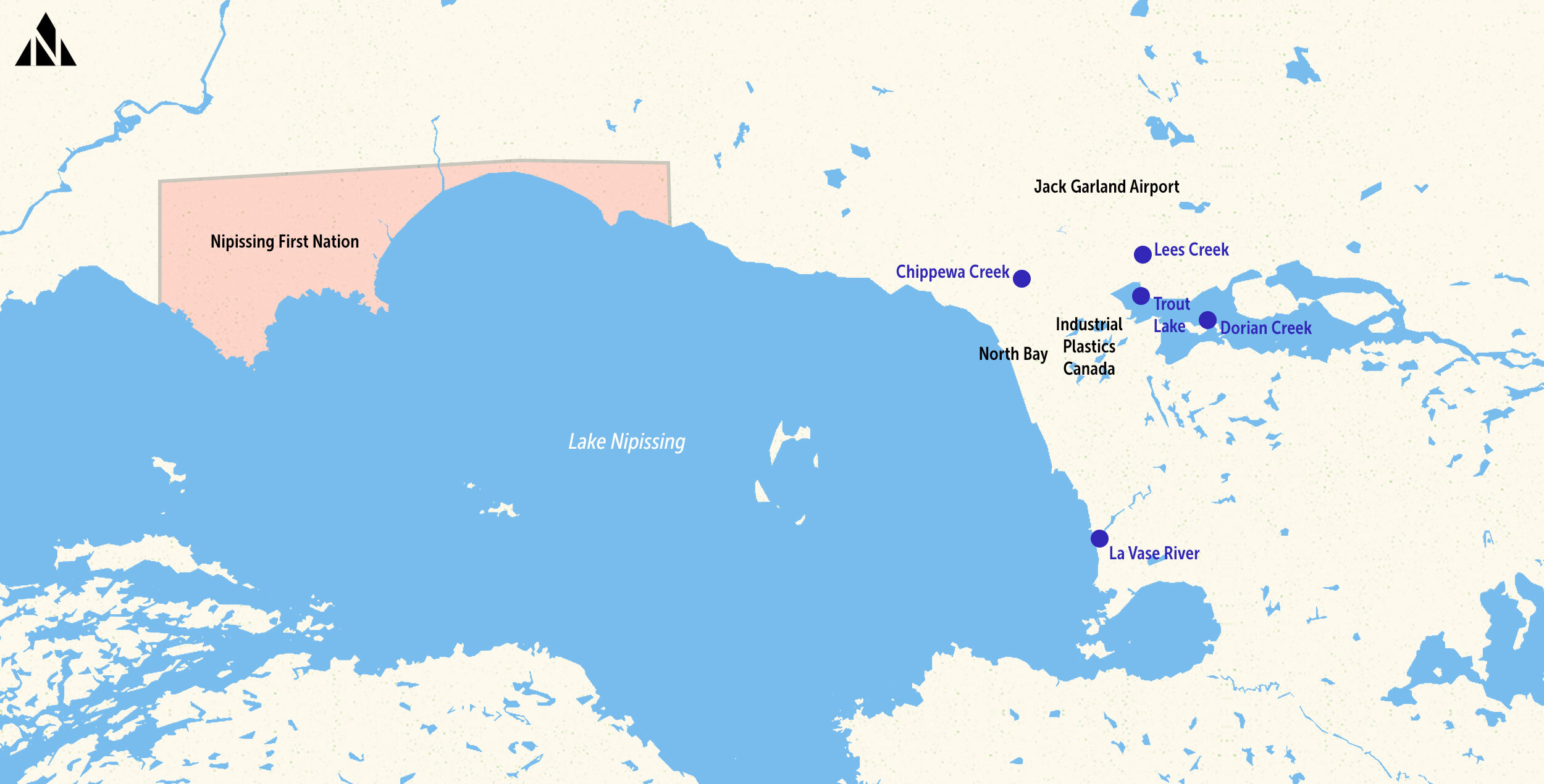
Long-lasting “forever chemicals” known as PFAS have contaminated surface water, soil, bedrock and groundwater near the Jack Garland Airport, including the municipal drinking water system, private wells and waterways around Nipissing District. Map: Shawn Parkinson / The Narwhal
In 2025, reporting by the Investigative Journalism Bureau surfaced a report by the Royal Military College showing the Department of National Defence found elevated PFAS levels around the base as far back as 2012. That means the department knew about the contamination for five years before revealing it to the City of North Bay in 2016, and the public in 2017.
2. PFAS impacts health, environment and property values. Residents are seeking recompense
In late 2025, North Bay citizens filed a proposed class-action lawsuit asking for remediation, safe drinking water and $105 million in damages for residents living within a three-kilometre radius of the 22 Wing Canadian Forces Base and Jack Garland Airport. Some of the people who live closest to the contamination have been receiving bottled water from the government for years, but have had no other opportunity for recourse.
The proposed lawsuit, if certified by the court, would be against the City of North Bay and the Attorney General of Canada, on behalf of the Department of National Defence, focusing on the loss of property value and remediation costs. The case is also seeking punitive damages, contending that National Defence was aware of the contamination long before warning residents.
Not mentioned in the suit is the long list of health concerns associated with “forever chemicals.”
The United States Environmental Protection Agency lists potential health risks of exposure to PFAS, including reproductive problems like infertility, developmental effects in children, increased risk of certain cancers and weakening of the body’s immune system, including reduced vaccine response. The Canadian government says PFAS can be transferred through the placenta during pregnancy, and infants can be exposed through human milk.
Ecosystems are affected, too. Studies have shown exposure to per- and polyfluoroalkyl substances can stunt plant growth and cause reduced seed germination and ability to photosynthesize. The chemicals can build up in the organs of living creatures throughout the food chain. In the district of Nipissing, that poses a risk to people who hunt, fish and harvest from the land.
“These industrial areas are often surrounded by lower-income buildings and peoples and communities,” Curtis Avery, environment department manager with Nipissing First Nation, told The Narwhal in summer 2023. “We’re the most vulnerable group of people that utilize our lands — the lands are our grocery stores. … If these are being impacted, we need to know.”
- Cost of North Bay clean-up grew five-fold, to more than $100 million
In 2021, the City of North Bay announced plans to begin remediation under a “shared responsibility” agreement between the Department of National Defence and the city. The federal department would cover 97 per cent of the costs, or $19.4 million, and the city would cover the remaining three per cent, at $600,000. But costs have ballooned since then; in December 2025, National Defence announced it would contribute another nearly $100 million to the remediation, with the city’s share rising to more than $3.6 million. The total for the cleanup project has risen to more than $122 million.
The remediation, which began on the ground in 2024, includes excavating and disposing of about 26,000 tonnes of PFAS-impacted soil; injecting activated carbon material into particularly dense patches of PFAS to stop the underground plume from spreading; and installing a filtration system to treat water leaving the site.
“We remain committed to addressing and managing the operational legacy of the Canadian Armed Forces responsibly,” Minister of National Defence David J. McGuinty said in a news release.
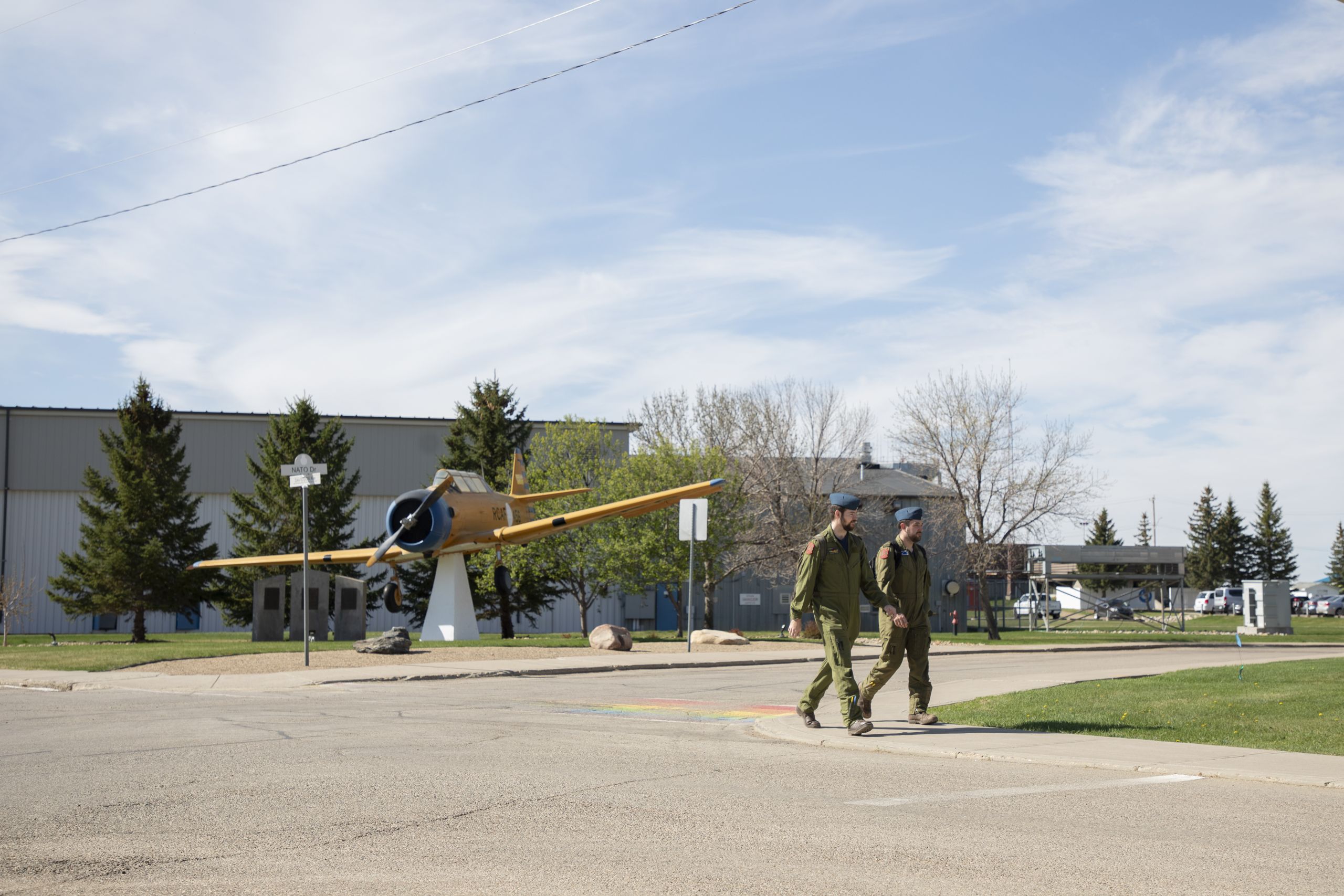
Contamination on federal sites is an issue across Canada. There are thousands listed on the federal contaminated sites inventory, and PFAS are found on more than 100 of them. These include at least 26 National Defence sites including bases in Trenton, Ont., Gagetown, N.B., and Moose Jaw, Sask. Photo: Amber Bracken / The Narwhal
As part of the process, a notice went up on the federal Impact Assessment Agency registry on April 28, inviting the public to comment up until June 5 on a proposal to install a 250-metre permeable barrier in the ground to help filter impacted groundwater. A spokesperson for the agency said its role in the project is to offer advice on determining its environmental effects, as well as providing the opportunity to post the project on the registry.
Local organizations, including the environmental group Northwatch, said in a press release that they were concerned about “very limited public engagement over the last ten years since the public disclosure of the contamination,” counting only the two forums in 2024 and 2025, where there was “limited opportunities for the public to ask questions.”
Northwatch’s project coordinator Brennain Lloyd told The Narwhal about the public notice period, which she said her organization only learned of in a daily bulletin from the Impact Assessment Agency listing multiple assessment notices from across the country.
“To the best of our knowledge there were no local announcements or invitations to comment issued to the many residents and organizations who have identified their interest in this program,” a release from Northwatch reads.
The Department of National Defence did not respond to questions from The Narwhal.
- North Bay’s not alone: contaminated military bases affect communities across Canada
Contamination on federal sites is an issue across Canada. There are thousands of contaminated sites listed on the federal contaminated sites inventory, and PFAS are found on more than 100 of them. These include at least 26 National Defence sites including bases in Trenton, Ont., Gagetown, N.B., and Moose Jaw, Sask.
And contaminants don’t stop at the fenceline. Health Canada says some contaminants can travel long distances through soil, water and air: “PFAS can be found in fresh water and drinking water in areas that are far away from where they entered the environment,” according to the department’s website.
- Industry is still importing PFAS-class chemicals into North Bay
While the Canadian government no longer uses firefighting foam that contains PFAS, industry continues to bring these substances into the country. In 2023, The Narwhal reported on an international plastics conglomerate that opened its first Canadian location, Industrial Plastics Canada, in North Bay. The company has a presence across Europe as well as in India and China, billing itself as one of the “largest worldwide manufacturers of PTFE products.”
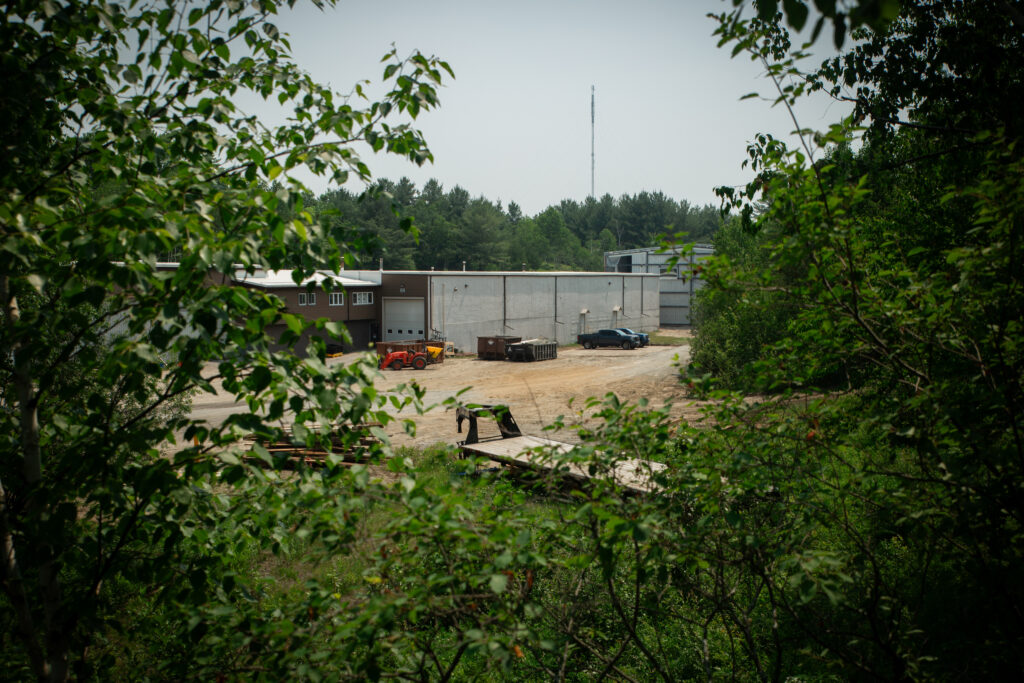
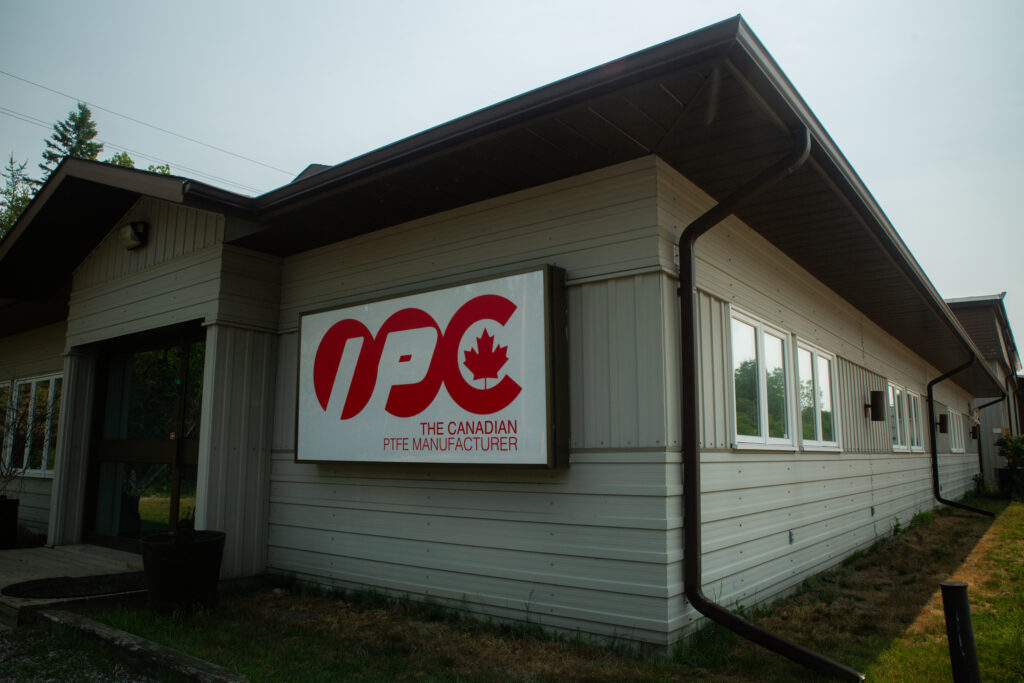
Industrial Plastics Canada in North Bay, Ont., is on the list of Canada’s 10 major importers of PTFE, or polytetrafluoroethylene, a Teflon-like product in a subgroup of PFAS. Photo: Vanessa Tignanelli /The Narwhal
PTFE, or polytetrafluoroethylene, is a Teflon-like product in a subgroup of PFAS known as fluoropolymers, or fluoroplastics. A company spokesperson previously told The Narwhal the use of PTFE at the factory will not produce waste and poses “no risk.” The company also says fluoropolymers aren’t as dangerous as other PFAS and are “considered safe, non-bioaccumulative and non-toxic.”
But fluoropolymers have been found to be dangerous to human health, according to research published in the peer-reviewed journal Environmental Science & Technology and others.
In 2023, Health Canada released a draft assessment of the state of PFAS in Canada to help decide how to regulate the class of chemicals. In it, the agency cited an industry-funded study that said fluoropolymers should be considered separately from other PFAS as “polymers of low concern.” A Health Canada spokesperson said the agency, along with Environment and Climate Change Canada, “examined information from a wide range of sources,” including scientific journals and reports while preparing the state of PFAS report.
The substances were ultimately excluded from the final report, released in March 2025, in which Health Canada proposed classifying the remaining PFAS chemicals as toxic substances under the Canadian Environmental Protection Act.
The Health Canada spokesperson said in an email that fluoropolymers “have specific properties that differentiates them from other PFAS,” which led to their exclusion from the final report. They added that the exclusion “should not be interpreted as meaning they are or are not of concern,” and that a separate fluoropolymer assessment is currently underway.
The exclusion of PTFE from that classification was a major priority for industry, Rémy Alexandre, toxics project lead at environmental law non-profit EcoJustice, told The Narwhal.
According to data collected by Alexandre, who studied Industrial Plastics Canada’s imports to North Bay, the company brought in almost 207,000 kilograms of PTFE from India and China from July 2025 to May 2026.
This puts the facility on the list of the 10 major importers of PTFE in Canada, alongside U.S.-based chemicals company Chemours, a spinoff of Dupont that has been arguing that the European Union should exempt fluoropolymers from their regulations, too.
“The decision to site this plant in a community that is an existing hotspot for PFAS raises concerns,” Alexandre told The Narwhal. “And so does the selection of a jurisdiction that isn’t regulating fluoropolymers.”
The Narwhal’s reporters are telling environment stories you won’t read about anywhere else. Stay in the loop by signing up for our free weekly dose of independent journalism.
From The Narwhal | News on Climate Change, Environmental Issues in Canada via This RSS Feed.
5
The winding drive northward from Vancouver along the Sea to Sky Highway is a series of postcard moments — lush coastal rainforest, glimmering ocean and approaching mountain ranges. It’s easy to miss the closed Britannia Mine nestled into the jagged northwest slopes.
The site, in Squamish Nation territory, was once a steep rockface sloping into the Pacific Ocean. In 1904, Britannia Mine opened and would grow to be one of the largest copper mines in the British Empire by the 1920s and ’30s. Little attention was paid to the environmental impacts of mining at the time. By the late ’90s, it became one of the most contaminated industrial sites in North America.
The mine shut down in 1974 and by 1975, the local historical society opened what’s now known as the Britannia Mine Museum.
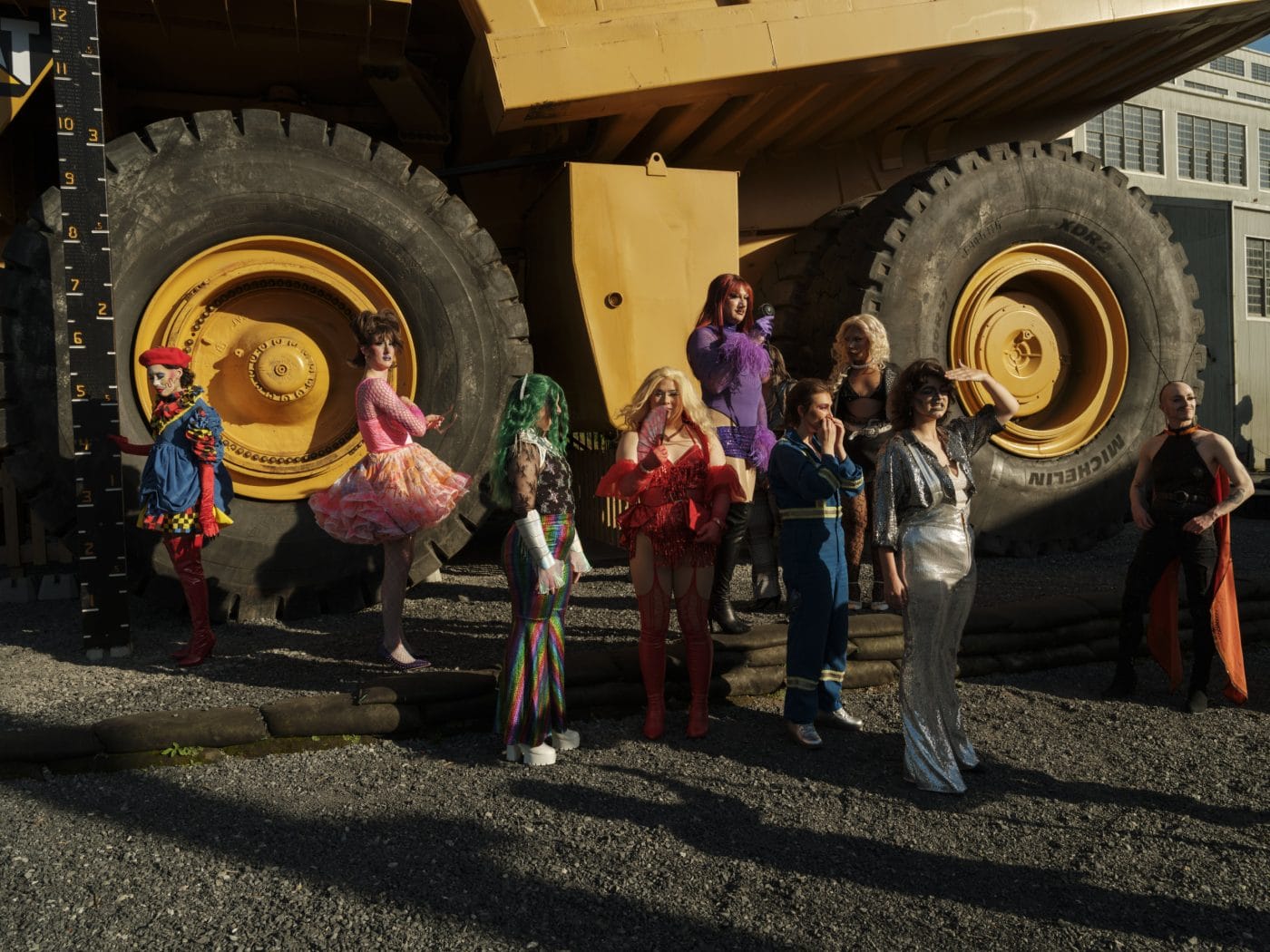
On a recent Saturday night this Pride Month, another evolution was underway, with 14 drag kings, queens and things strutting, lip-syncing and sashaying through the century-old Mill No. 3.
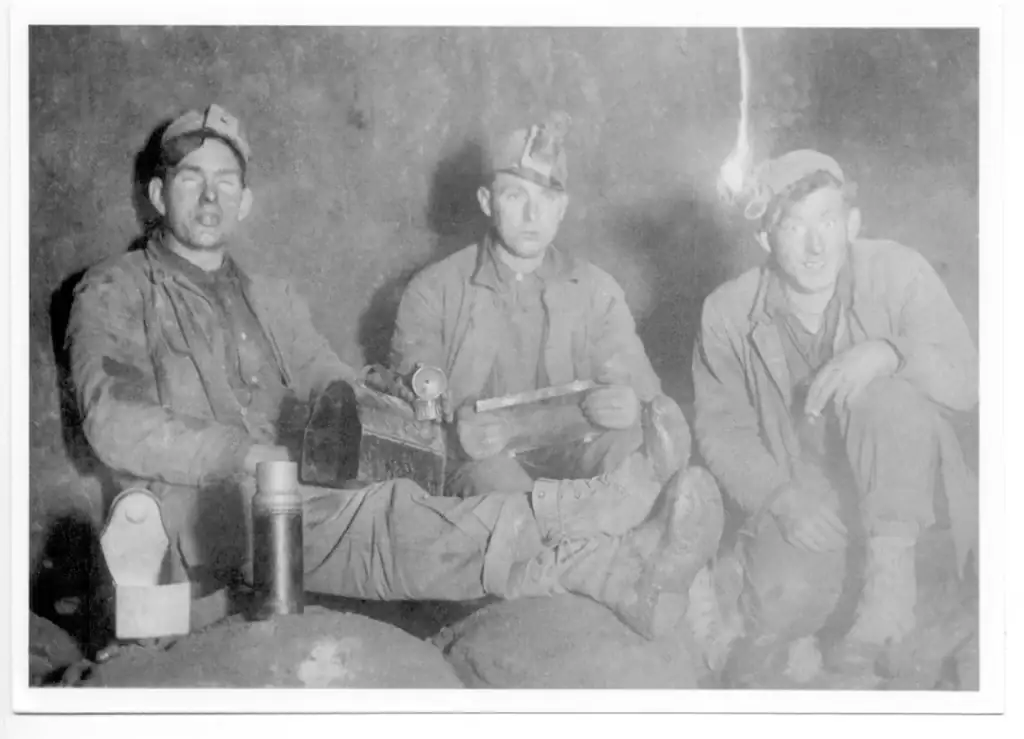
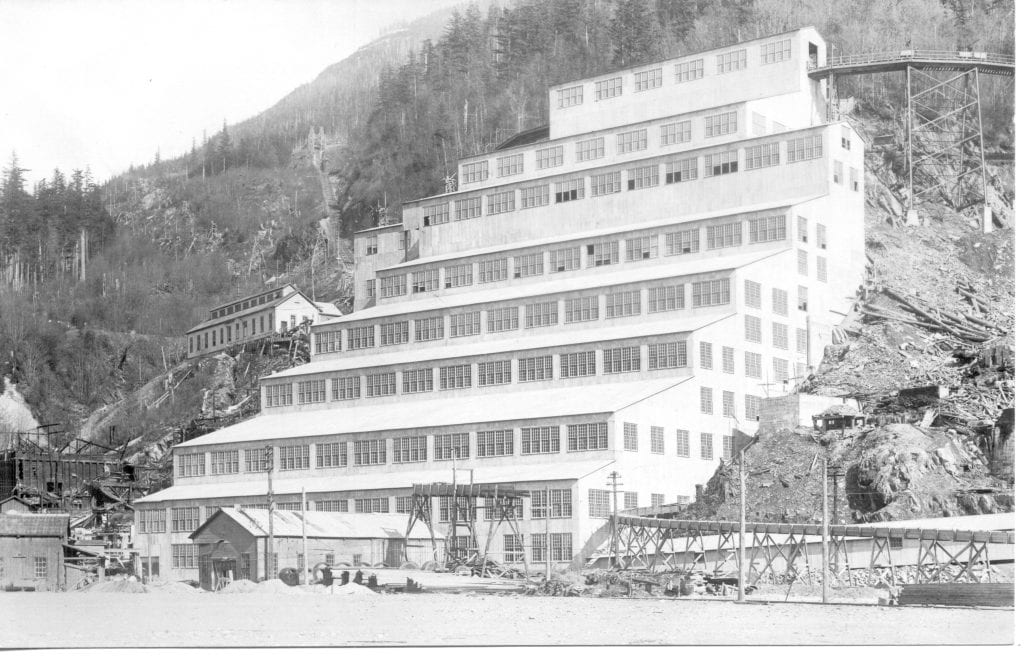
These archival photos, courtesy of the Britannia Mine Museum, offer a snapshot of mine life in 1923, the year it was built. Miners “Mac” McDougall, Stan Gear and “Blondie” Campbell would have climbed more than 240 steps each shift to reach the mine’s tunnels, and took their lunch break underground. Mill No. 3 remains a landmark — and sometimes drag venue — near the mouth of Britannia Creek.

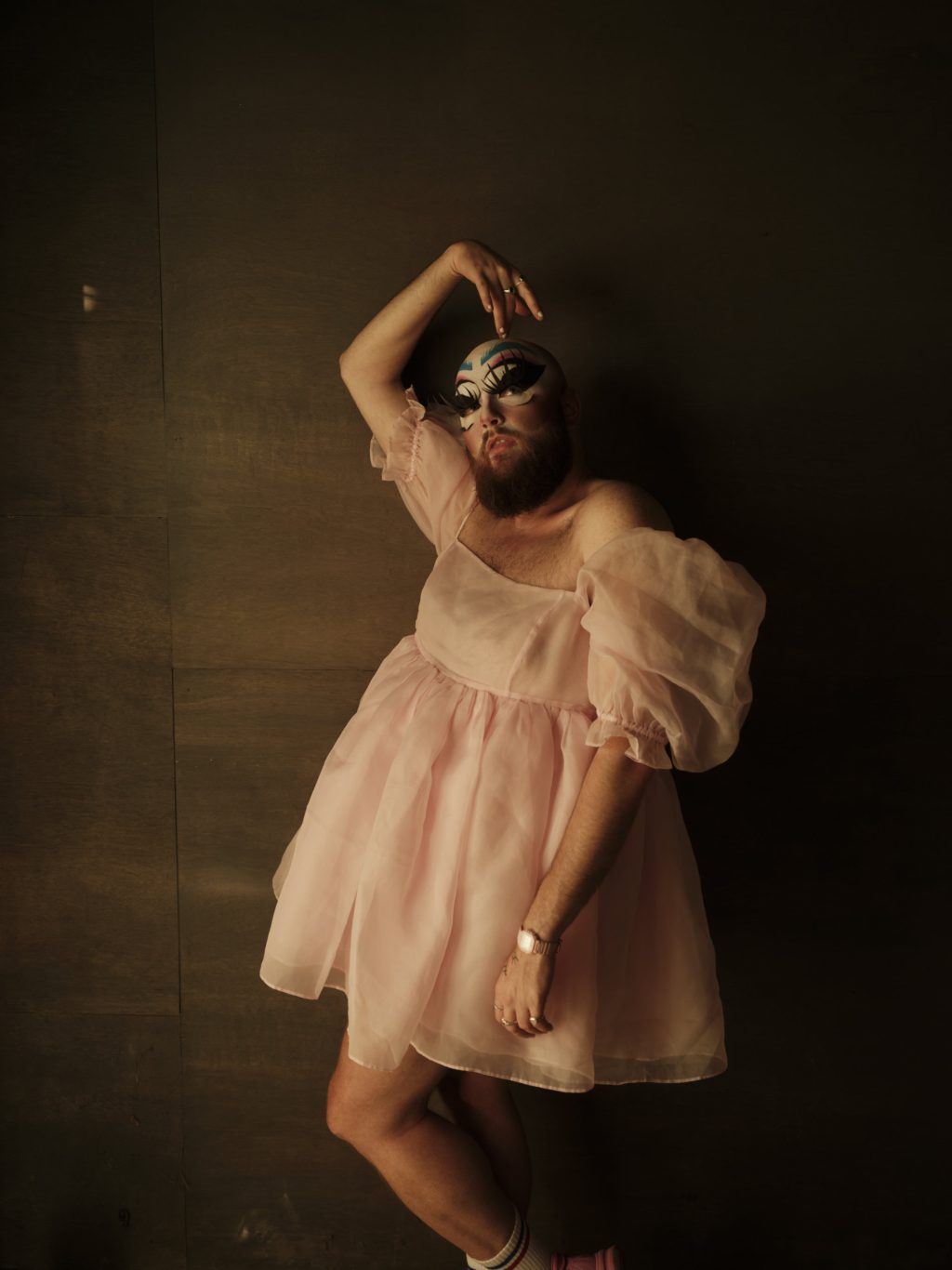

“A lot of our world was built on what came out of the ground here,” Dust Cwaine, a drag queen and co-producer of the show, says. The Britannia Mine Museum estimates 60,000 people built their lives around the mine while it was in operation. In the 1930s, the mine produced 17 per cent of the world’s copper.
Britannia Mine had to transform to continue to exist, drag queen Dust Cwaine says, sitting on a giant tire and staring out at a rusty piece of discarded mining equipment. “When we look around, all you see is history.”

For 70 years, workers eked out living underground at the Britannia Mine. Drag artist Sis Gender continues the tradition, lip syncing to Timebomb by Kylie Minogue for cash tips.
The venue for tonight’s drag show, “Old Town, New Queens,” is the historic 20-storey mill, which once used gravity to help process ore, rock that contains minerals, dug up from the over 200 kilometres of tunnels inside the mountain. Large pieces would tumble down from the top of the mill, to be crushed, grinded and processed into the consistency of sand. A mixture of that powdered ore, water, aromatic oils and bubbles became a cakey copper concentrate, to later be sent out and processed with high heat and purified into copper.
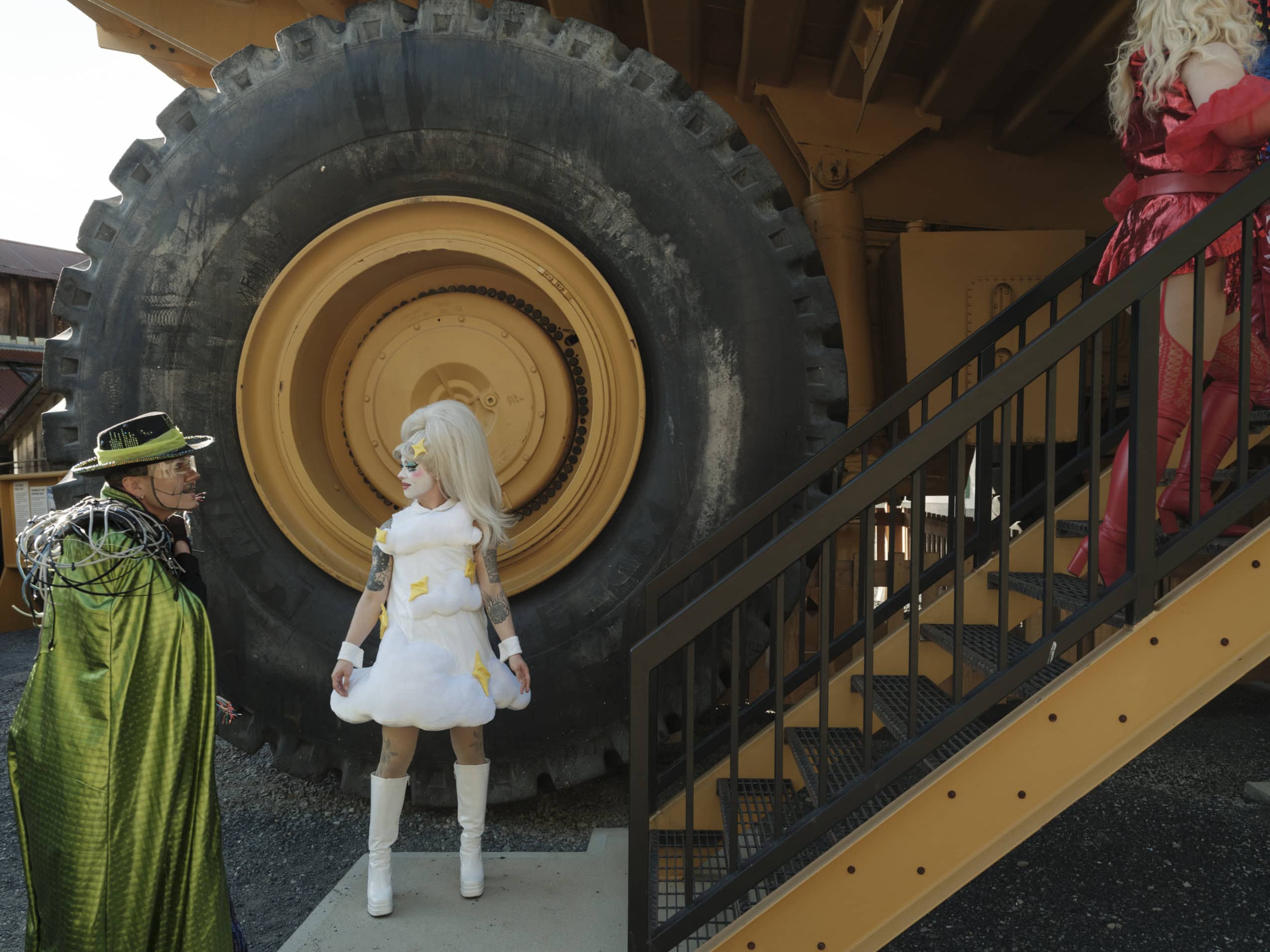
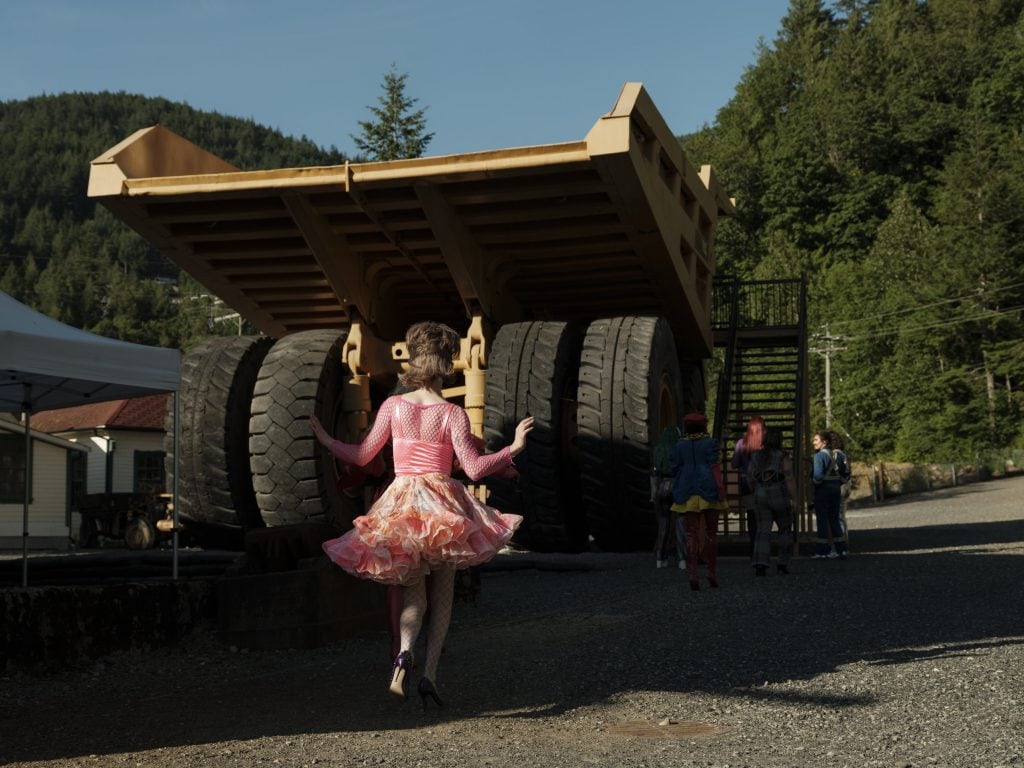
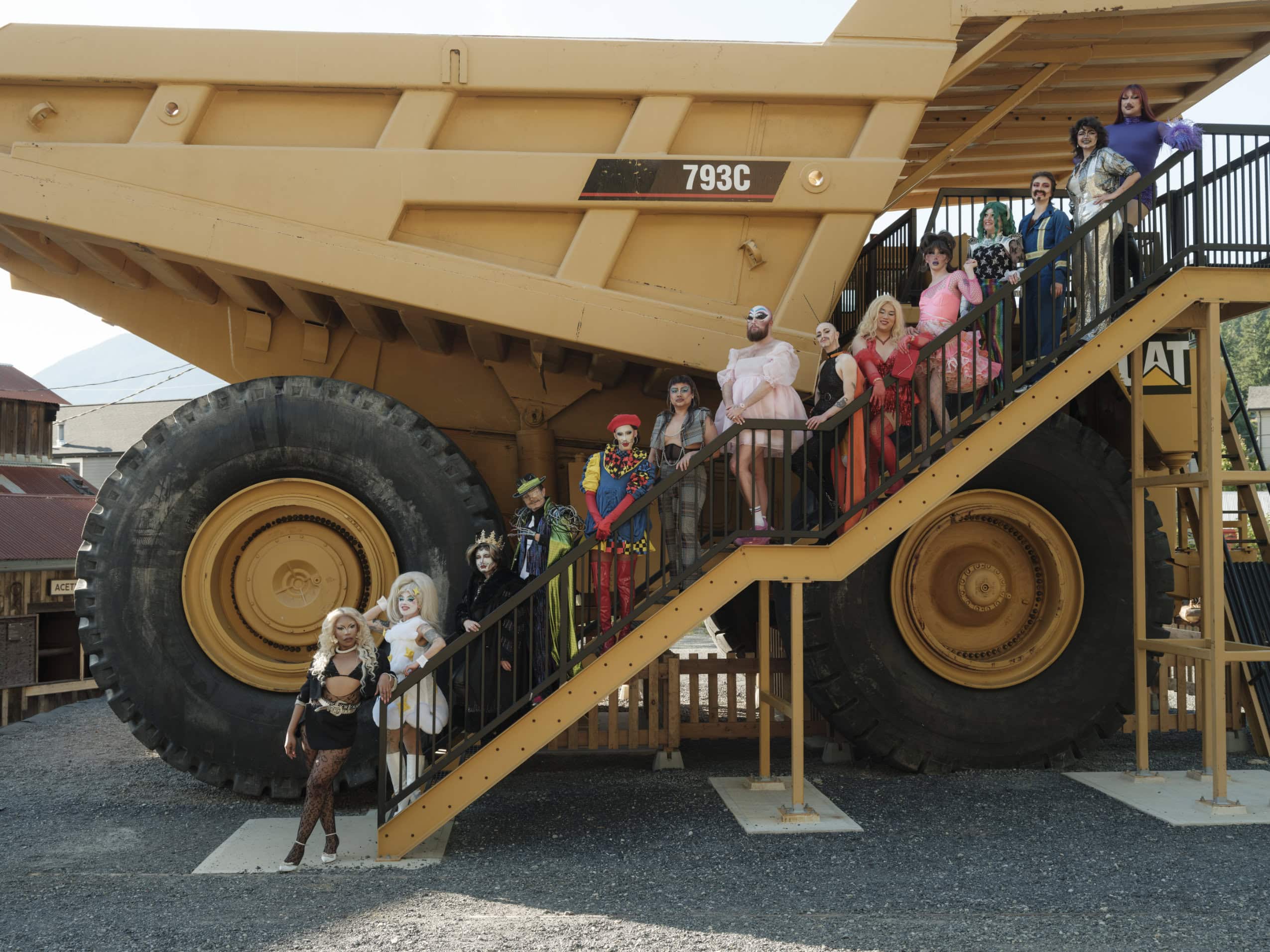
Turns out a Caterpillar 793C mining truck is longer than at least 14 drag artists posing side-by-side. The show’s theme, “Giants at Werk,” played on the museum’s summer exhibit, which spotlights the heavy equipment that powers modern mining.
From 1904 to 1974, Britannia Mine produced more than 45 million tonnes of ore. Tonight, the booming sounds of rock being crushed and grinded are far in the past, replaced by drag king Kyle Wiley turning it out to AC/DC’s You Shook Me All Night Long.
Britannia’s copper mill could have been left to “rust and rot” like others across the country, Derek A. Jang, the museum’s director of programs and guest experience, says before the show. His radio beeps and crackles as staff prepare for the evening and try to grab his attention.
Typically, when a mine in B.C. is closed or decommissioned, plans focus on returning the area back to what it was. The local community doesn’t always get a say.
Some closed mines have been remodelled in unique ways. The Sunken Garden in Victoria’s famous Butchart Gardens was once a limestone quarry. There’s an old silver mine in northern Ontario that has lived many lives including a bookstore, flower shop, grocery store and now a tea room. In Pennsylvania, an abandoned limestone mine has become a resort where visitors can ride all-terrain and other recreational vehicles through the darkness of underground tunnels.
The community of Britannia Beach shared its vision to turn the mine into a museum years before the last shift whistle blew on November 1, 1974, Jang says. The opening of the museum the next year was thanks to intentional efforts by a number of groups, including the Britannia Beach Historical Society.

Drag king Kyle Wiley rocks out to You Shook Me All Night Long by AC/DC, in a scene that isn’t so different from the mine’s past life. As retired mine worker Marshall Tichauer once recalled, “Those days, the mill was rockin’ and rollin’ and you could hear the loud rumblings from miles away. But that meant we were making money and we all had a job.”
Tonight, the old mine likely looks very different from what the founders ever imagined.
Community groups like Queer People in Mining, Sea 2 Sky Allies and Pride Squamish have booths set up in the gravel courtyard outside the mill. Rainbow hearts and balloons direct the crowd. Inside, there’s an archway — much like the one Madonna danced through in her iconic video Express Yourself — next to a sound system, smoke machine and stage lights.
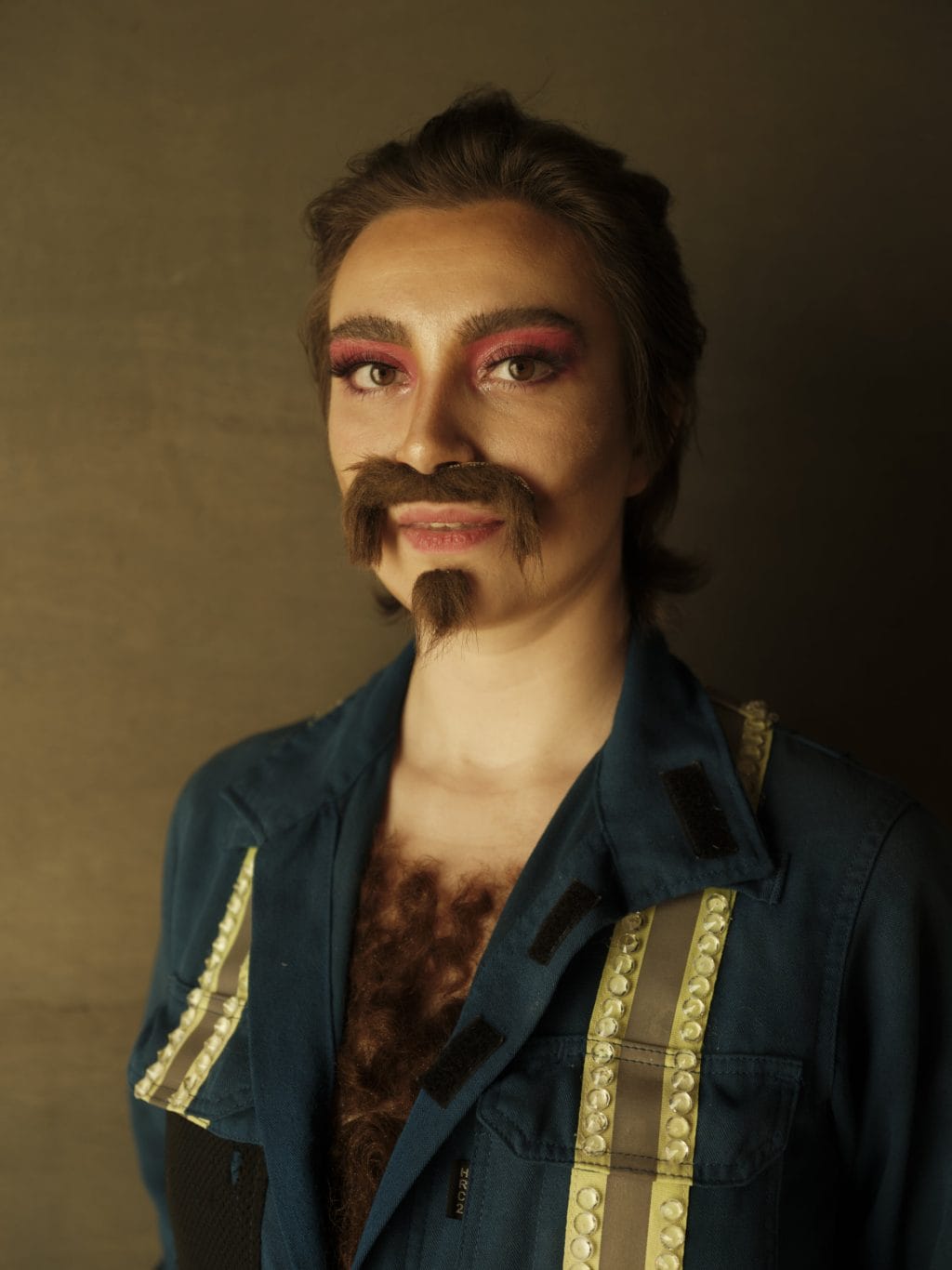
Kyle Wylie sported bejewelled coveralls and pink eyeshadow for the big night.
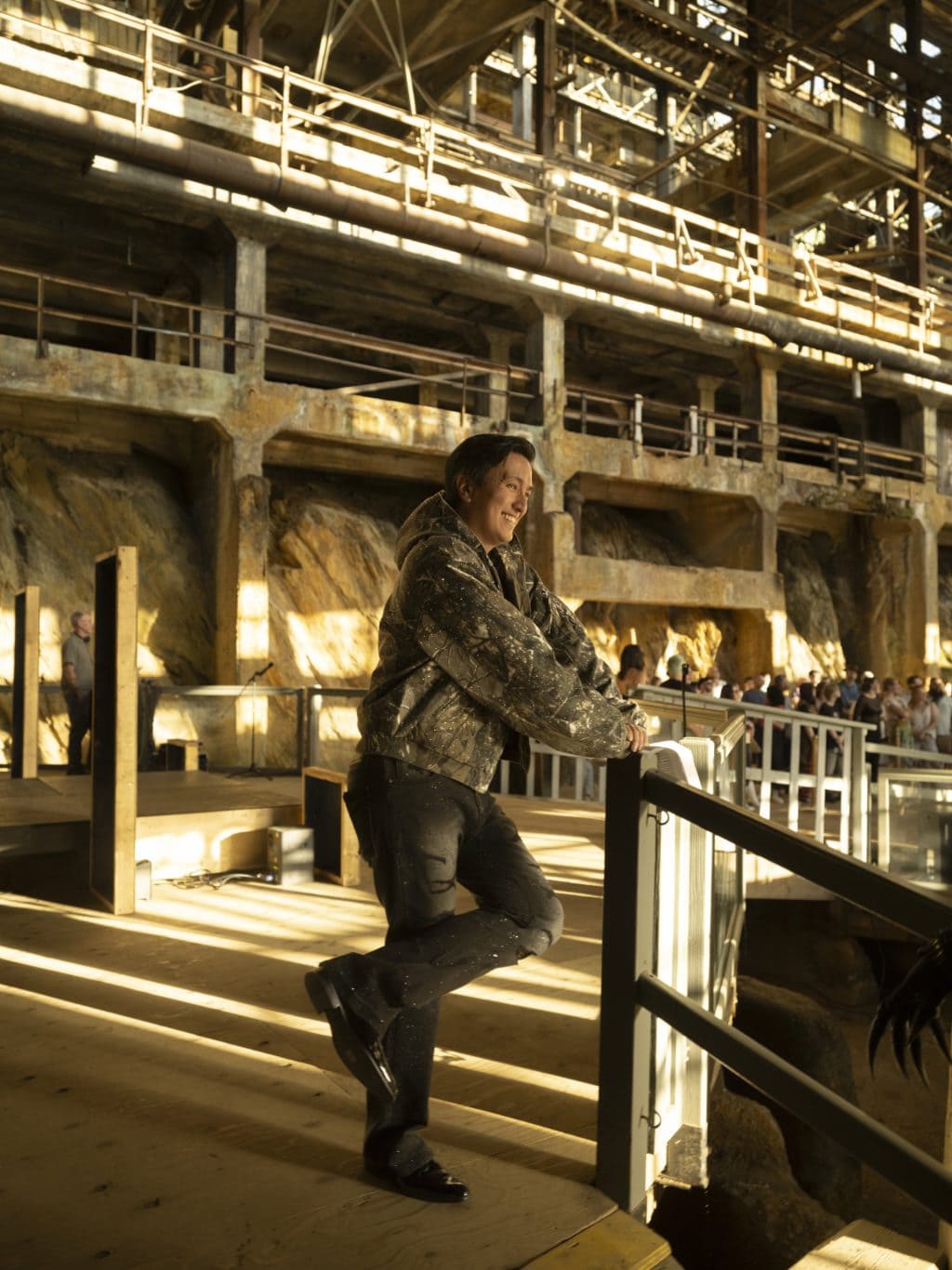
Derek A. Jang changed out of of his Britannia Mine Museum uniform and into this more “elevated” look.
“As a member of the 2SLGBTQ+ community myself, I don’t always feel seen when I go to different museum attractions,” Jang says, adding that Britannia exhibits have been dominated by images and stories of working white men. “This event, in some ways, is a bold way of saying ‘Let’s change that.’ ”
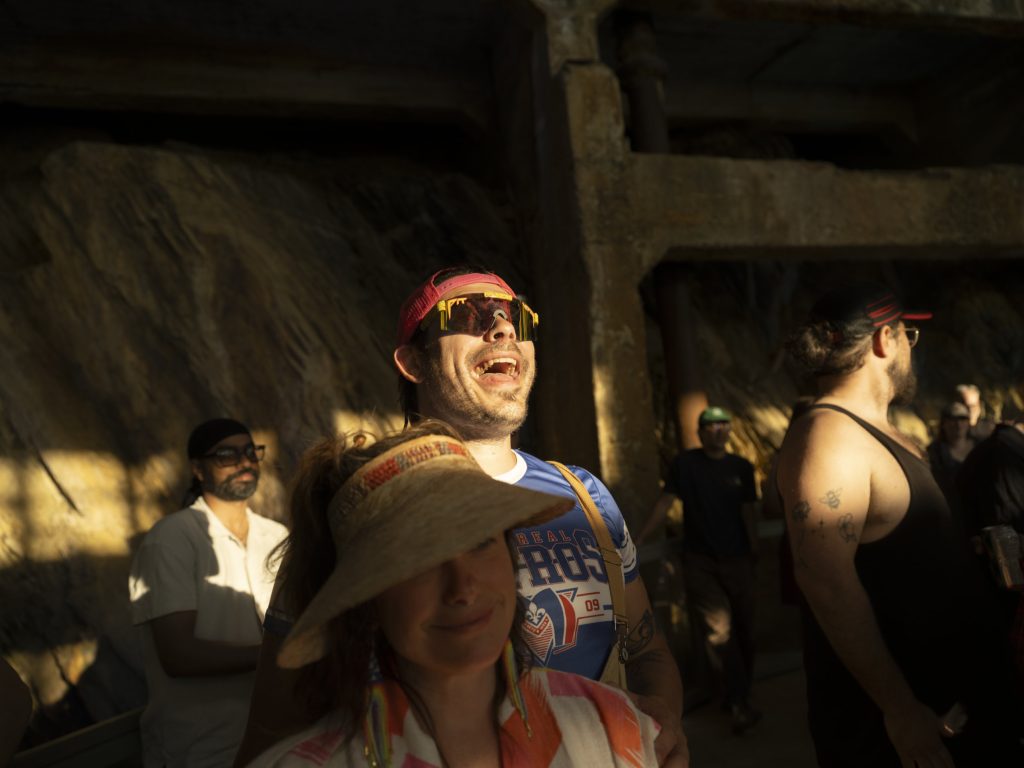

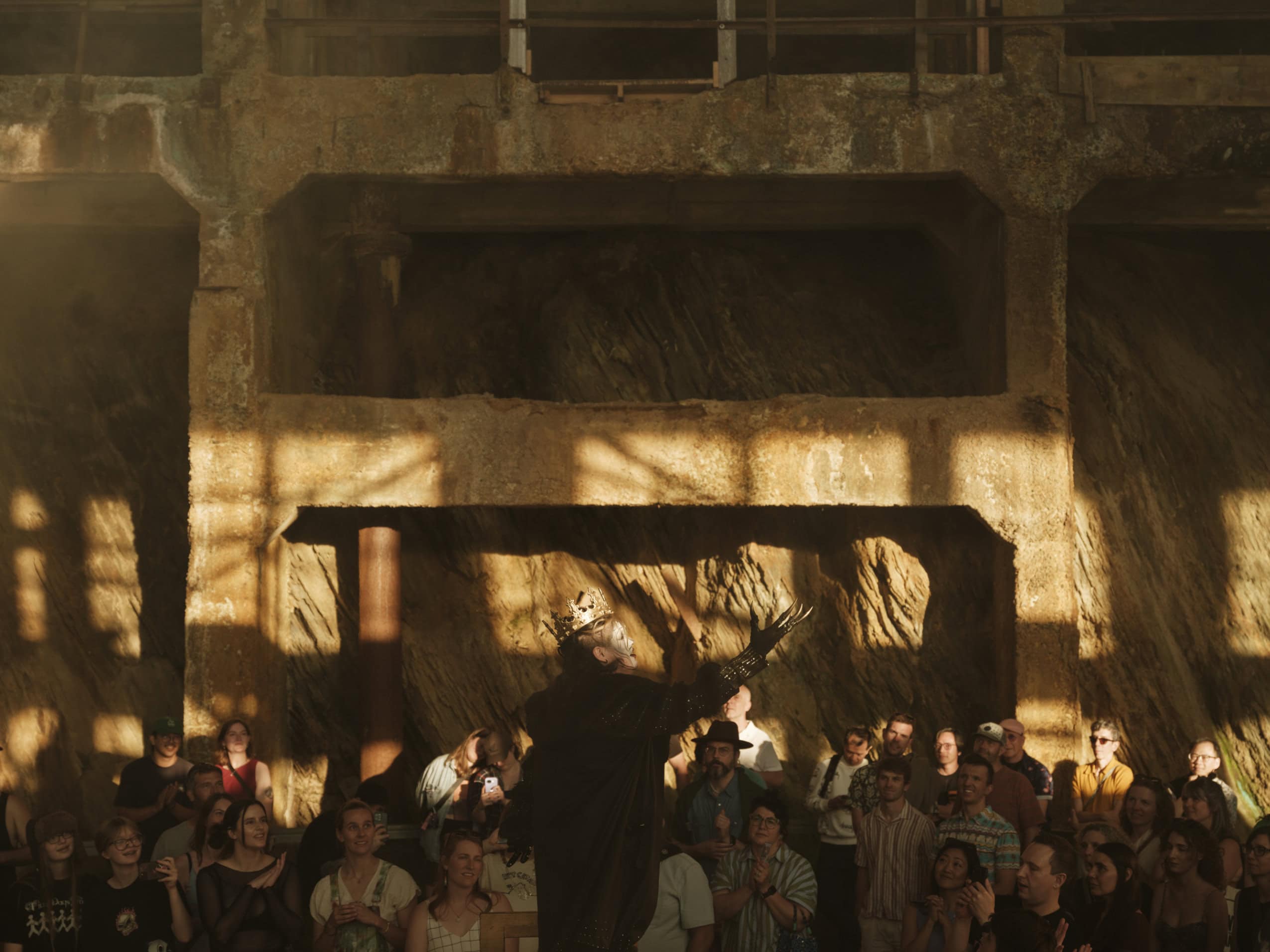
Nearly a century ago, Britannia Mine was the largest copper mine in the British Commonwealth. Now, it’s a stage for drag kings, queens and things — including Vincent Rice.
It took years of relationship building with the local 2SLGBTQ+ community for the museum to see the mine go from tunnels to tutus. Trevor Wulff, president of Pride Squamish, says the nearby town he grew up in wasn’t always a welcoming place. “It’s really amazing because it’s all about community … everyone deserves a sense of belonging,” Wulff says, looking around as a crowd of many ages and genders slowly grows.
It was important to think about how to make the event welcoming for young people, Jang says. He heard from community groups that youth “have very few opportunities to see queerness in action.”
Drag artists played with themes of tech advancements, “Giants at Werk,” a nod to Britannia Museum’s summer exhibit on big machinery and the mine’s legacy of pollution.
“We’re adding to a new history while honouring and respecting the past,” Dust Cwaine says in an interview during intermission, as performers Homo Hardware and Peter Packer prepare for their acts.
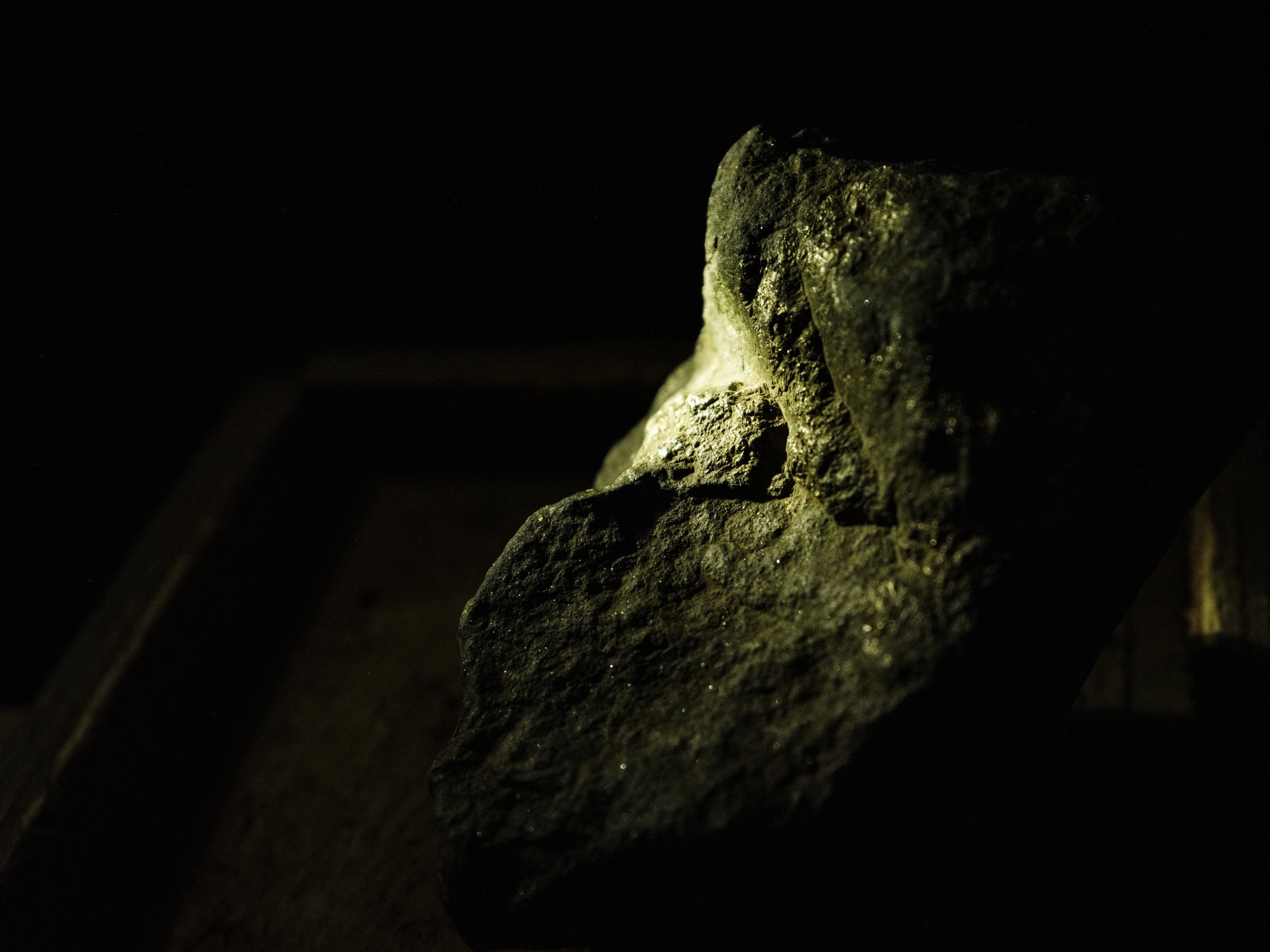
The discovery of ore at Britannia is usually credited to a doctor named A. A. Forbes — but in a 1931 interview, Forbes himself credited a fisherman named Granger for bringing him the first samples.
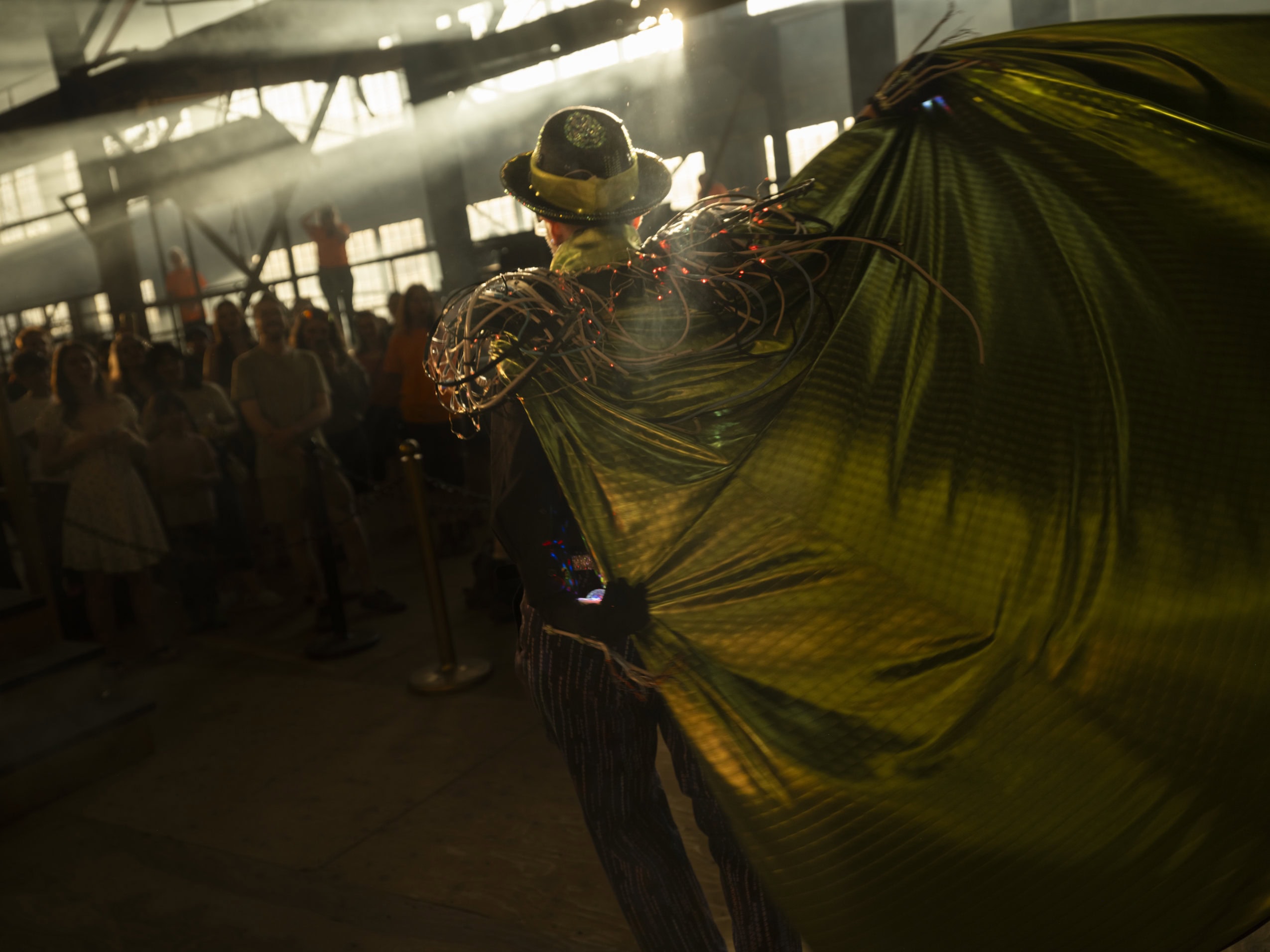
Drag king Justin Abit’s outfit glittered in the evening light. “Coming to an event like this when I was growing up would have meant the world to me,” he told the crowd.
Decades ago, when Britannia Mine was operational, its lights illuminated the nights of Howe Sound. The night of the drag show, sunset slowly seeped in through the mill’s 14,416 panes of glass adding to the dramatic glow of Homo Hardware’s iridescent, shimmering wings.
Drag is “a vehicle for self expression,” Homo Hardware explained on a phone call before the show. “There are so many different ways that people can use that, whether that’s a more direct, literal message about a cause, or something a bit more abstract.” What makes drag so effective, they said, is the energy and connection that comes from being in a live performance space.

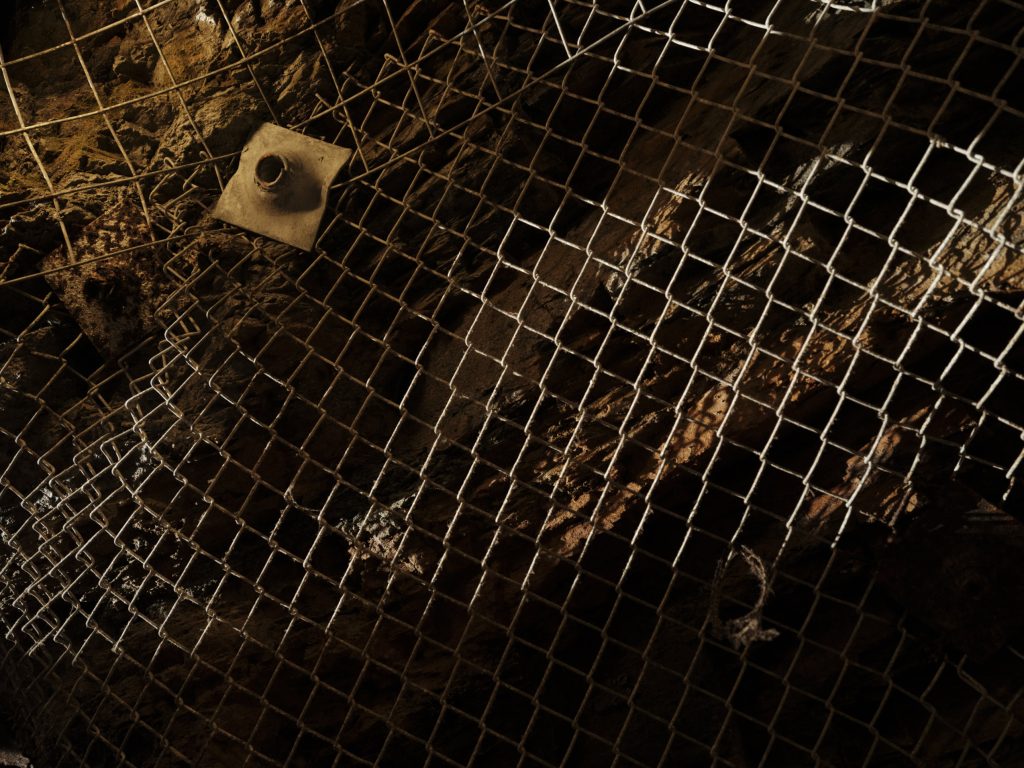
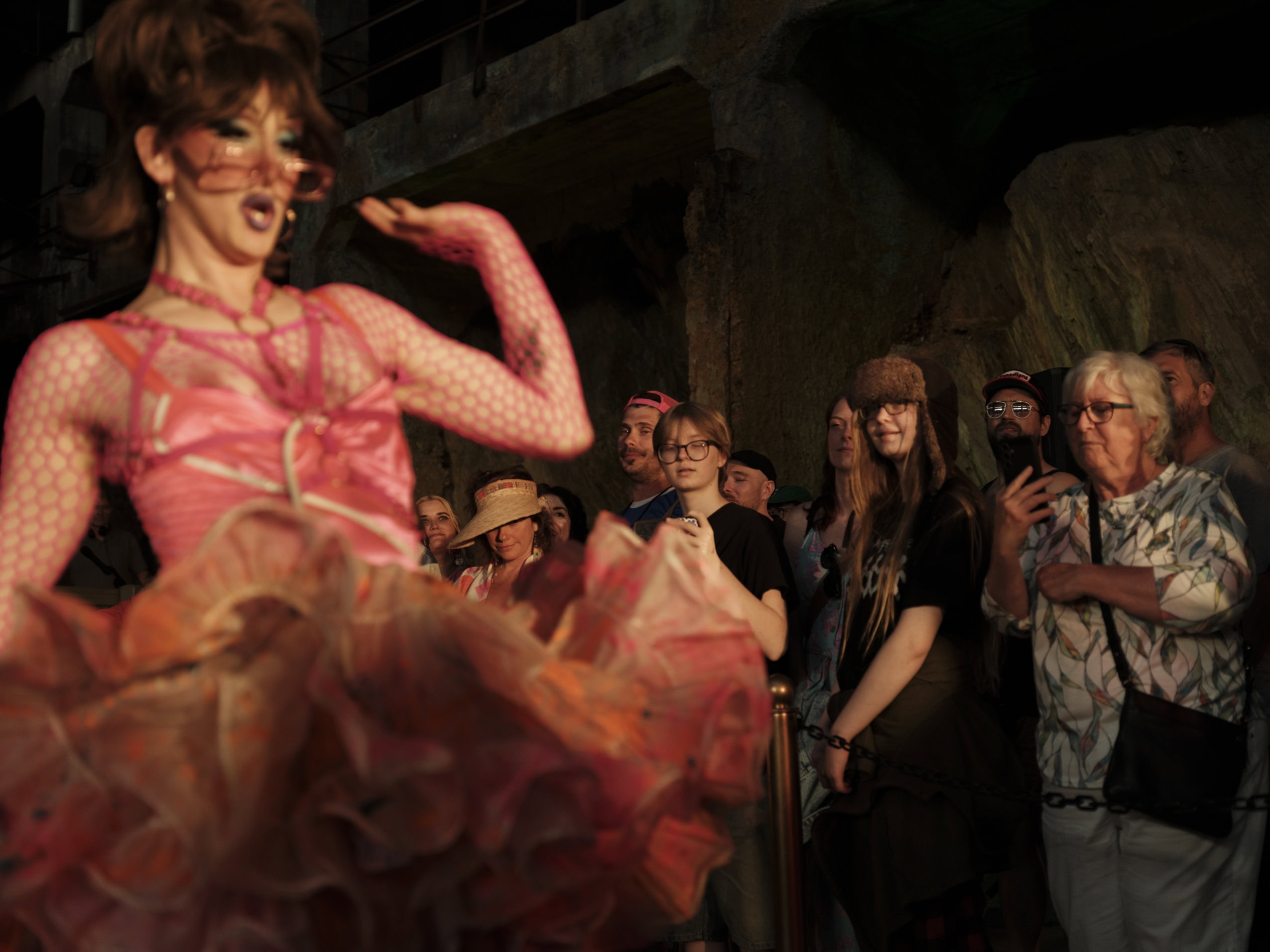
Wire netting on the mine walls keeps visitors safe from falling rocks. Drag queen Nora Vision looks fetching in fishnet.
In the second act, drag thing Rose Butch lip synced to Hillary Duff’s Come Clean. The lyrics hit a bit differently than usual, invoking the environmental impacts of mining. Duff’s voice reverberates through the rafters — “I’m shedding, shedding every color / Tryna find a pigment of truth beneath my skin” — as Rose Butch parts through bubbles floating across the stage.
In one far corner of the mill, bright blue streaks of copper reacting with water shine bright. Rose Butch moves up and down hidden in a star-speckled cloud, holding an umbrella dripping with tinsel until their big reveal: the clouds part into a dress draping them in sequined bright blue skies.
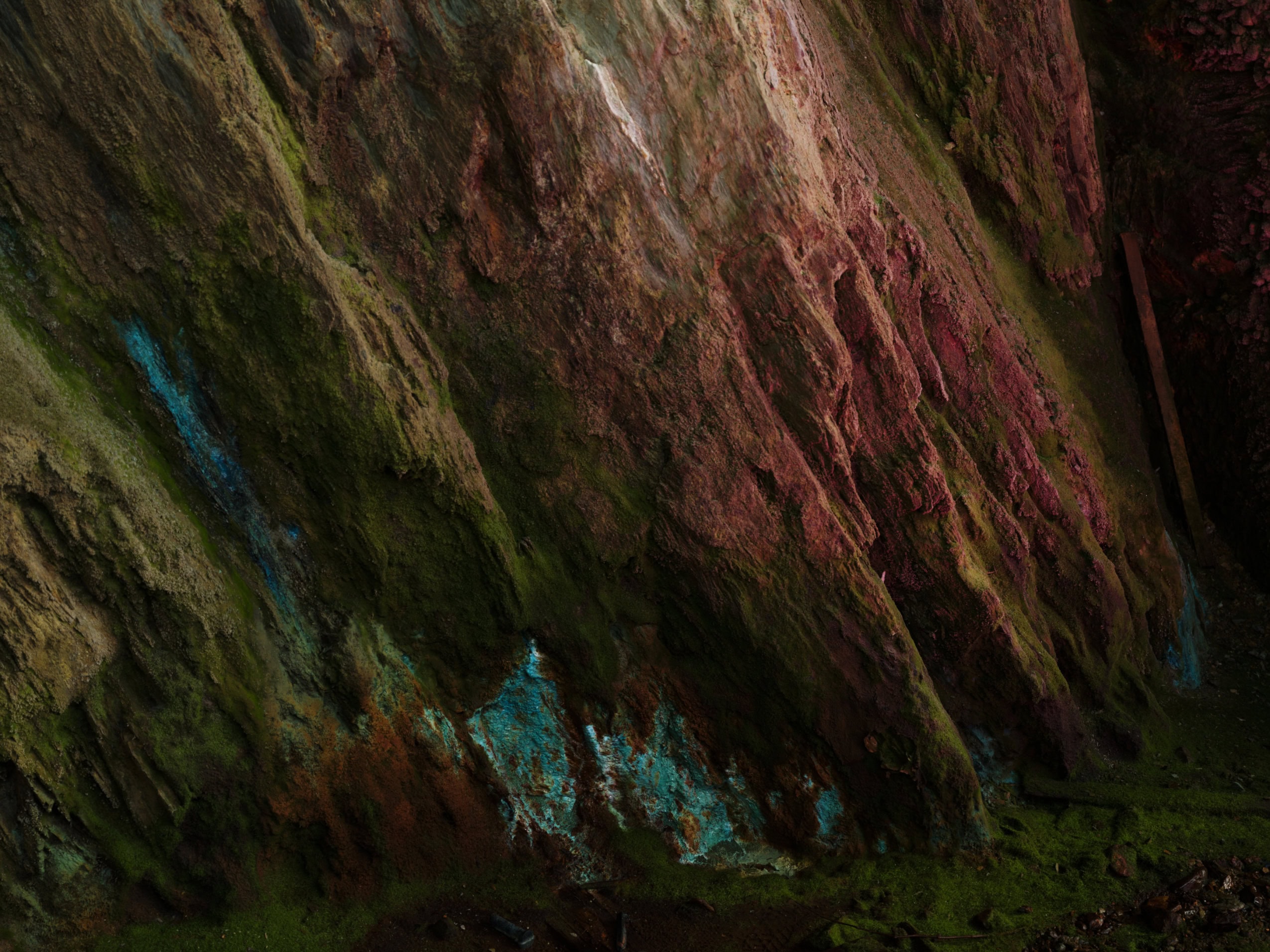
Traces of copper gleam blue under purple stage lights. For decades, Britannia Mine leached heavy metals into Howe Sound, devastating the marine environment.


The mine was once called “the single worst point source of metal pollution on the North American continent,” causing devastating effects to marine life in Howe Sound. Acidic water containing heavy metals leaked into nearby waterways for decades. Water leaving the site has to be treated at an estimated cost of $3.7 million per year, according to an email from the Ministry of Water, Land and Resource Stewardship. That treatment process has to happen in perpetuity — meaning the public will foot that bill for the foreseeable future.

Ads Prince, age 12, cheers on the performers from the front row. Prince, who is non-binary, had never been to a drag performance before. They said they loved it and hope to make the show an annual tradition.
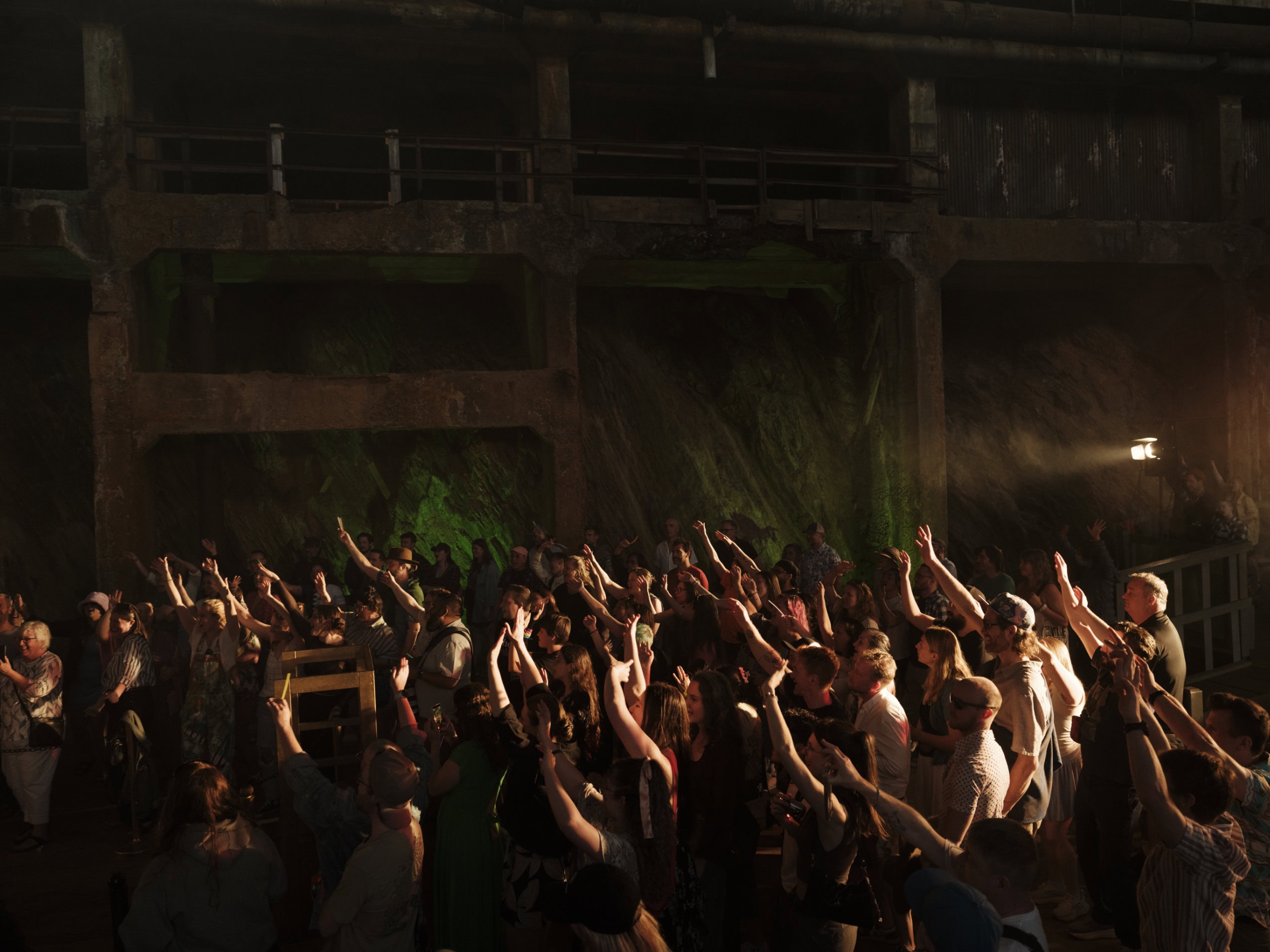

Rose Butch’s reveal.
That history isn’t lost on the organizers of the event. We’re all here because of the continuous efforts to keep the land clean, Dust Cwaine says. Work continues today to ensure “this place doesn’t poison our waters and poison our nature … It has this complicated existence … I think putting drag in it is this incredible juxtaposition.”
Just a few hours ago, Jang was wearing a plain black Britannia Mine Museum polo shirt, as he prepared for the show. Now, he’s on stage with a flashy new look, sharing another evolution of the mine — and a hope for more to come. The waters surrounding the mine site were once severely damaged, he tells the crowd, but there’s been incredible work done to bring back aquatic life and restore the ecosystem.
“In the 2010s spawning salmon returned to Britannia Creek, for the first time, in what we suspect to be over 100 years,” he says to an eruption of cheers, through which Jang continues.
“I worry [young people] think they’re inheriting a broken world that is beyond help … I hope that in some way Britannia Mine Museum can play a role in inspiring the next generation of great thinkers to remember that work is going to be hard, but solutions can be in reach.”

Homo Hardware unfurls their wings and soars to the soundtrack of Fireflies by Owl City.
The Narwhal’s reporters are telling environment stories you won’t read about anywhere else. Stay in the loop by signing up for our free weekly dose of independent journalism.
From The Narwhal | News on Climate Change, Environmental Issues in Canada via This RSS Feed.
6
7
8
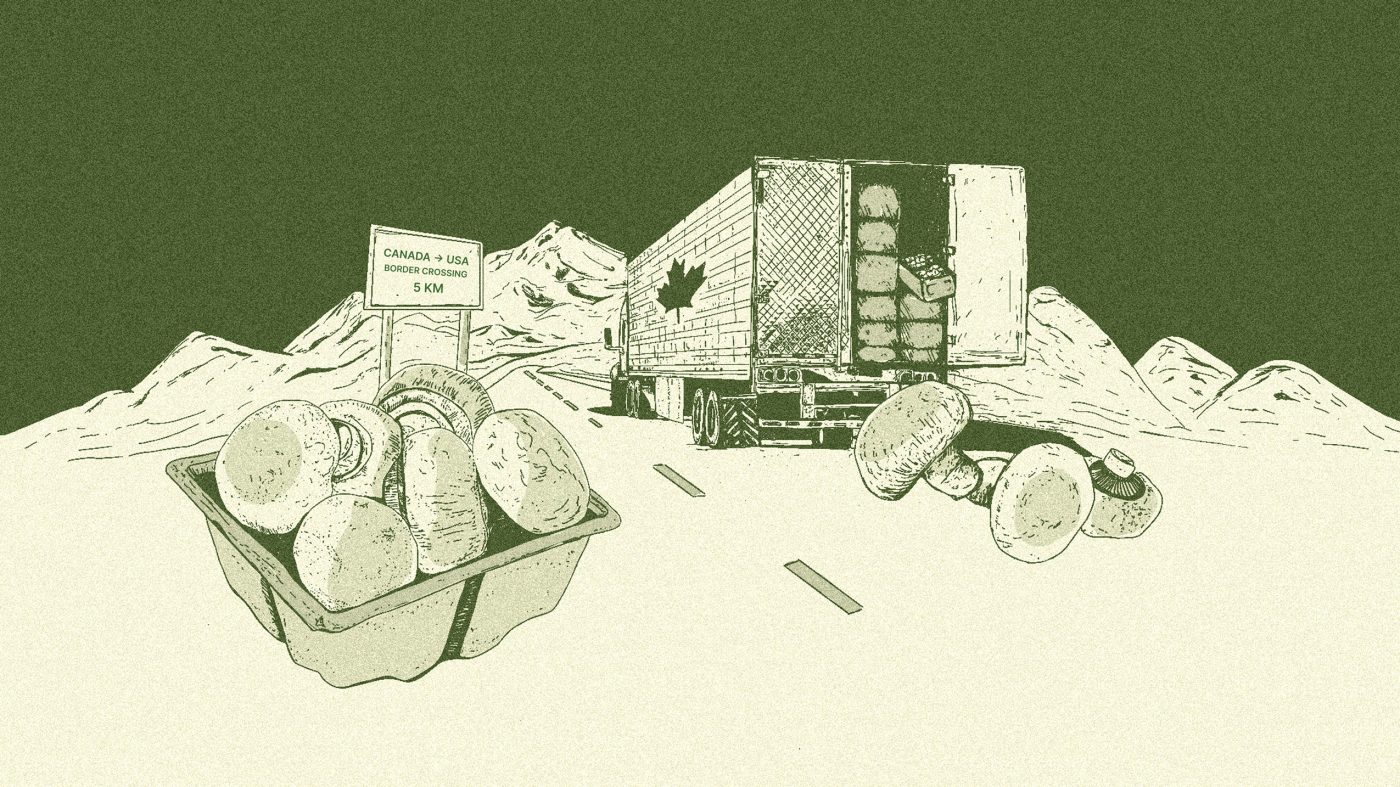
Illustration: Spores Illustrated (Aly Blenkin) / The Narwhal
Summary
- B.C. is a world-leading mushroom producer with much of the provincial crop being exported to the United States.
- Recently, the United States Department of Commerce added tariffs to Canadian-grown mushrooms on the grounds they receive unfair government subsidies.
- One B.C.-based mushroom farm is fighting the tariffs, but more could be coming by the end of the year.
Mushrooms may not be the first crop that comes to mind when you think of high-tech agriculture. But in B.C., Agaricus bisporus — the fungal species sold in grocery stores as button mushrooms, creminis and portobellos — are grown using cutting-edge techniques.
“If you go back 10 or 15 years, you would travel to Holland to find the most productive, leading-edge mushroom facilities in the world,” Lewis Macleod, CEO of South Mill Champs Mushrooms, said in an interview with The Narwhal. “Today, you travel to Holland and British Columbia.”
In 2017, Pennsylvania-based South Mill merged with Aldergrove-based Champ’s Mushrooms to form South Mill Champs. The company now supplies more B.C-grown mushrooms to the U.S. market than any other, around 22,675 tonnes per year.
Before B.C.’s mushroom tech boom, farms often mimicked more natural growing conditions. Modern B.C. farms use what’s called the Dutch method: metal shelves heaped with a mixture of manure and straw to cultivate their crops. The mushrooms are grown in air-tight facilities that are closely controlled for temperature and humidity. Unlike other indoor crops, mushrooms don’t need much light to grow. The buildings are dim, the opposite of brightly lit commercial greenhouses. This method results in faster growing, better quality mushrooms and fewer pests, according to Macleod. But it’s not as common in the U.S.
Nearly all Canadian mushroom exports — 98 per cent in 2024 — are sold in the U.S. As B.C.’s technologically advanced mushroom industry has grown into a global leader, some American producers have accused Canadian growers of benefiting from unfair government subsidies. It’s set off a trade dispute that could reshape the cross-border market.
B.C. mushroom trade sparks U.S. concerns
If you ask B.C. Agriculture Minister Lana Popham, mushrooms are among the most unique of the province’s commercial crops.
“They have to be harvested 24 hours a day and they grow in the dark,” Popham said in an interview. “There’s been a lot of technology that’s been coming around, a lot of innovation that is allowing for different types of harvesting [and] different types of lighting conditions.”
This innovation may be part of what sparked a trade complaint from a group of U.S. mushroom producers last year.
A September 2025 petition to the U.S. Department of Commerce from the Fresh Mushrooms Fair Trade Coalition argued fresh Canadian mushrooms are being “unfairly” subsidized by government programs.
“Canadian producers are exporting fresh mushrooms to the United States at prices below fair value and are benefiting from countervailable subsidies provided by the government of Canada,” the petition says. “These practices have resulted in significant negative impacts on U.S. mushroom growers and packers, including lost sales, depressed prices and declining profitability.”

While mushrooms may not be the first crop to come to mind at the mention of high-tech agriculture, B.C.’s mushroom industry is using cutting-edge techniques. Illustration: Spores Illustrated (Aly Blenkin) / The Narwhal
In fact, none of the subsidies provided by Canadian governments specifically target the mushroom industry and are instead directed at farmers generally.
But in May, the Commerce Department agreed with the U.S. petitioners and applied duties on some Canadian mushroom producers. The preliminary decision concluded Canadian governments do unfairly subsidize mushroom production.
For now, about two dozen Canadian mushroom producers are facing a 2.84 per cent tariff on the mushrooms they sell in the U.S.
South Mill Champs is contesting the Commerce Department’s decision, which Mushrooms Canada, the national trade association representing Canadian mushroom growers, called “deeply flawed.”
“It’s using regulatory tactics to stifle healthy competition,” Macleod said.
Champ’s Mushrooms was handed a 1.62 per cent tariff by the Commerce Department.
The Commerce Department has yet to decide on whether to hit Canadian mushrooms with anti-dumping duties, a type of tariff applied to imported goods that are being sold at lower prices, as a way to protect domestic producers.
Government subsidies aren’t specific to mushrooms — and U.S. growers get them too
There’s no denying Canadian mushroom growers receive support from the government. B.C. producers do not have to pay provincial sales tax on equipment for their businesses and can also access grant programs that support agricultural operations.
The province also offers funding to help farms cover the cost of adopting new technologies, but Popham pointed out none of the province’s programs are targeted specifically at bolstering B.C. mushrooms.
“It’s not specific at all to the mushroom industry,” Popham said. “It’s just the way we support farmers in B.C.”
And that means the Fresh Mushrooms Fair Trade Coalition’s complaint lacks merit under U.S. trade law, according to Mushrooms Canada CEO Ryan Koeslag.
“It is difficult to reconcile Commerce’s preliminary approach with the fact that comparable agricultural tax treatment exists in the United States,” Koeslag said in a statement after the Commerce Department’s preliminary duties were announced. “Canadian mushroom growers are not receiving special treatment. They are operating under ordinary rules that apply to farmers.”
The Commerce Department did not respond to questions about these criticisms of its decision and whether it will assess tax exemptions available to U.S. mushroom farmers before reaching its final decision on the tariffs. The Narwhal also contacted Giorgio Fresh Co., one of the U.S. companies that formed the Fresh Mushrooms Fair Trade Coalition, for comment but did not receive a response.
Macleod doesn’t believe the trade complaint is really about subsidy programs at all.
“This case is not about the U.S. versus Canada — it’s about companies who have invested in new infrastructure and those who haven’t invested in new infrastructure,” he said.
Most Canadian-grown mushrooms are grown using the Dutch method, Macleod explained. This technique gives growers large, reliable yields quickly, he added, while also reducing pest pressures and creating mushrooms that consumers prefer.
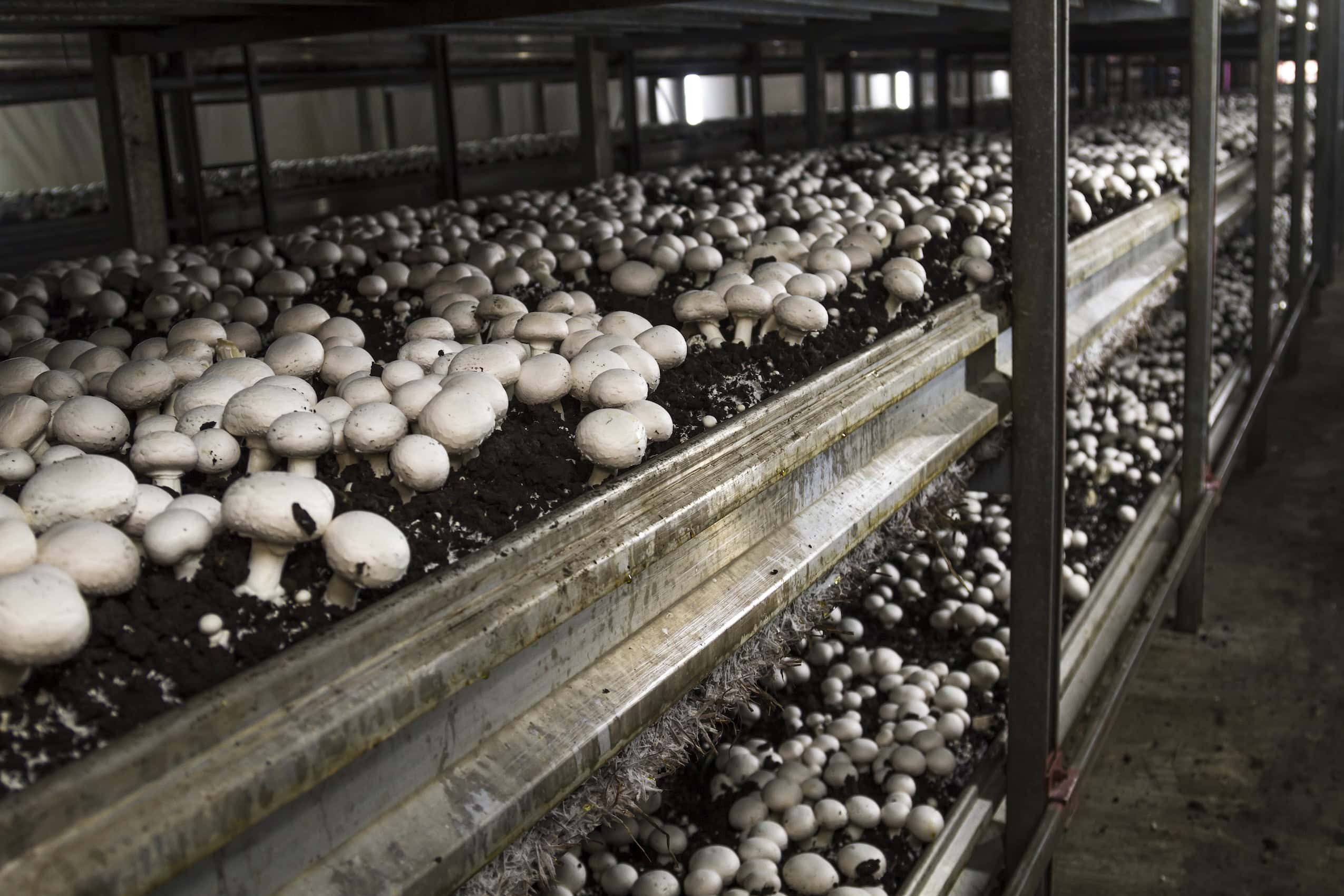
In B.C., most mushrooms are grown on metal shelves heaped with a mixture of manure and straw, in air-tight facilities that are closely controlled for temperature and humidity. Photo: iStock
In the U.S., the majority of mushrooms are grown on wood shelves, an older technique that isn’t as efficient as the Dutch method.
Growing mushrooms on wood makes it “very hard to consistently produce a fine-looking mushroom and ensure disease doesn’t at times of the year really damage the crop,” Macleod said.
South Mill Champs’ U.S. operations have learned a lot about the benefits of modern mushroom growing from their Canadian counterparts, he added.
Switching from wood-based cultivation to the Dutch method isn’t cheap, though government grant programs and tax exemptions can help take the edge off the costs. Macleod said it takes years for a mushroom farm to see a return on investment into a whole new cultivation set-up. But the new technology can reduce ongoing costs, increase revenue and open the door to further technological innovation, he added.
With new cultivation systems in place, Popham said some B.C. farms are introducing robots to harvest their mushrooms.
Agriculture Minister Lana Popham says mushrooms are among the most unique of B.C.’s commercial agricultural crops, and despite the industry’s technological innovations, government doesn’t expect to see human labour replaced in the industry. Photo: Province of B.C. / Flickr
“Technology is taking over what I would call mundane tasks,” she said, adding human workers are still needed to oversee the machines.
“They don’t expect, as they bring in technology, to see displacement of labour. It’s adding to a better quality of workplace, which is really cool.”
Robots can’t harvest mushrooms grown using wood-based shelving, Macleod said, potentially putting old-style producers at even more of a disadvantage.
“If you don’t have new infrastructure, you have to build from scratch,” he said.
Final decision on additional cross-border costs for B.C. mushroom growers could take months
While additional duties on Canadian mushrooms could be announced within weeks, a final determination by the U.S. Department of Commerce may not come for months. Macleod is hopeful the final determination will be that Canadian-grown mushrooms do not harm U.S. producers.
“I really do not think less mushrooms will be exported from Canada into the U.S.,” he said. “Duties paid will mean ultimately the consumer pays more for mushrooms, which is bad for the consumer and the industry.”
Popham believes that B.C.-grown mushrooms are popular because of the industry’s embrace of innovation and its proximity to the U.S. market.
“I hope that what results from this most recent challenge is that there’s an acknowledgement that we’re just doing it really, really well,” she said.
At a time when many British Columbians want to support locally grown food, mushrooms are a perfect choice, she added.
“When we talk about being more resilient and growing more at home, mushrooms have been there the whole time,”Popham said. “I think that when consumers understand how big of an industry it is here and I think that this is another feather in our cap.”
The Narwhal’s reporters are telling environment stories you won’t read about anywhere else. Stay in the loop by signing up for our free weekly dose of independent journalism.
From The Narwhal | News on Climate Change, Environmental Issues in Canada via This RSS Feed.
9
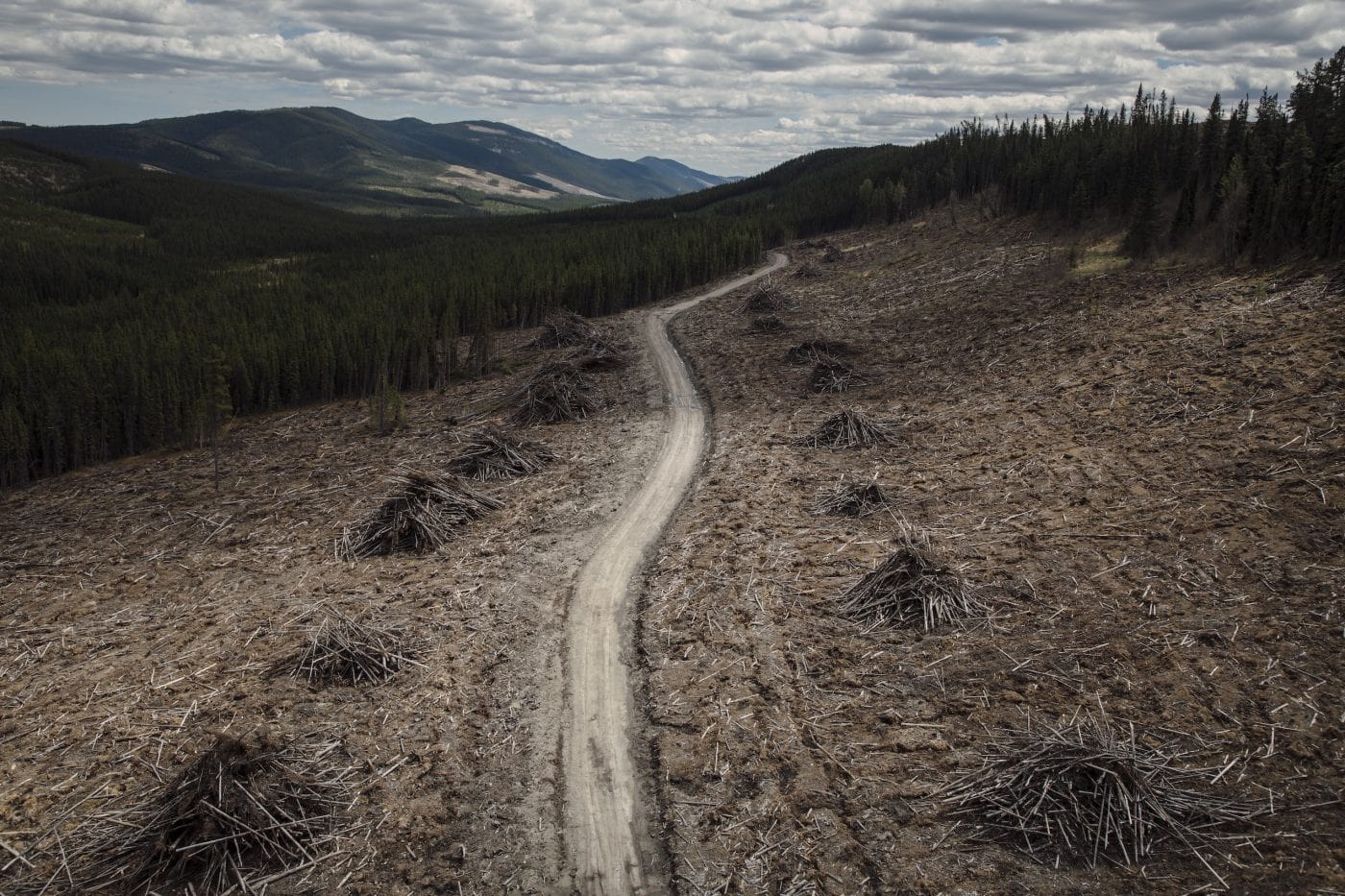
Photo: Amber Bracken / The Narwhal & The Canadian Press
Summary
- The Alberta government has gone back and forth on coal mining in the eastern slopes of the Rocky Mountains, with major decisions followed by major reversals.
- There are three main coal mines currently active in Alberta, with at least three more projects in earlier stages of development. The majority of these produce coal used to make steel.
- Country musician Corb Lund says his petition for a referendum question about coal mining in the Rockies has enough signatures to move ahead, but the government says it can’t be included on the October ballot.
Ever since the Alberta government surprised everyone by suddenly changing the rules around coal mining in the Rocky Mountains six years ago, the province has been on a rollercoaster of regulatory changes.
First there was the lifting of the old coal policy, followed by its reinstatement after public outrage — but not before some projects were approved. Then there was a suspension of those approvals, followed by a government review. Confused yet?
As it stands now, the government says a new coal policy to govern mining and exploration will be unveiled this year. But the last several years of back and forth have resulted in hundreds of millions of dollars (so far) in government payments to coal companies that were burned by the on-again/off-again regulatory seesawing.
And that’s not all. There’s also recent controversy over a petition led by country musician Corb Lund to block coal exploration in the Rockies, which the government says it won’t allow on the October ballot despite Lund claiming to have enough signatures (more on that below).
So what’s going on with coal mining in Alberta, exactly? Are there any projects operating or exploring? Will we ever have regulatory clarity from the government?
Let’s dive in.
Quick recap of the Alberta coal mining regulatory merry-go-round, please?
As noted above, the United Conservative Party government under former premier Jason Kenney suddenly killed a long-standing coal policy in Alberta, dating back to 1976. It did so on the Friday before a long weekend in 2020, but it failed to fly under the radar. The change made it easier to mine on the eastern slopes of the Rockies — a key fresh water source for much of the country.
The ensuing outcry forced the government to backtrack on the change in 2021, but that was far from the end of it.
A year later, the government ordered a pause on new exploration in some areas and a government committee hit the road to gather input from Albertans.
The government then instituted a moratorium on exploration and development on the eastern slopes in 2022.
That new moratorium was lifted in 2025, allowing suspended projects to move forward and new applications to be filed as the government works on a new coal policy. The policy will govern where and when a company can mine for coal on the eastern slopes; the government is currently only consulting about it with industry.
The province also says mountaintop removal mining won’t be allowed under its new policy, but there are serious questions about what that means, and how much of a mountain can still be removed.
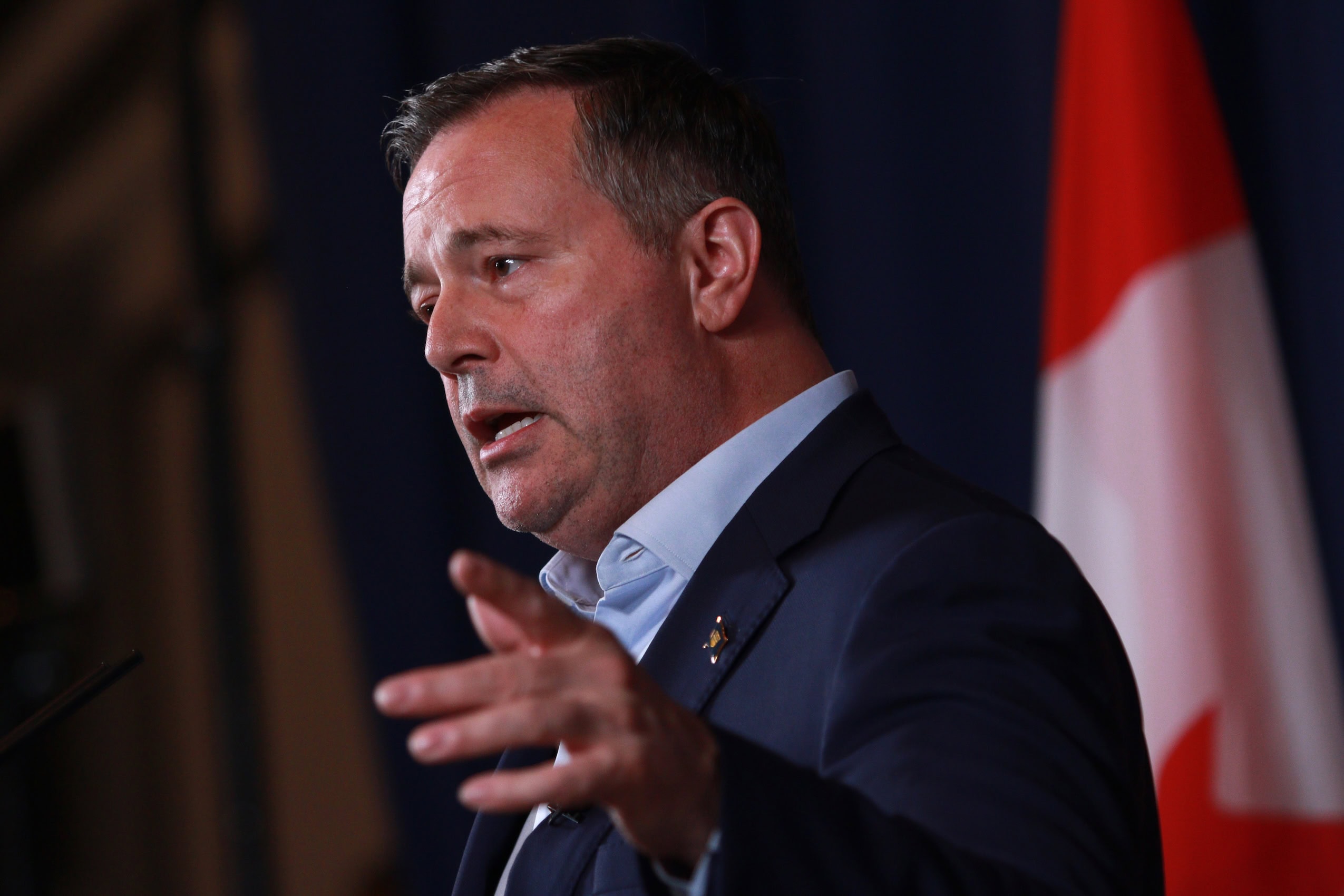
The United Conservative Party government under former premier Jason Kenney made it easier to mine for coal on the eastern slopes of the Rockies. But after an ensuing public outcry, the Kenney government backtracked on its changes, and the Alberta government has been seesawing on its coal mining policies ever since. Photo: Chad Hipolito / The Canadian Press
Along the convoluted way, companies caught up in these changes sued the province for upwards of $12 billion, although the final figure will likely be lower based on settlements to date. The province has finalized agreements with two companies for a total of $238 million, leaving three lawsuits outstanding.
Those lawsuits were a primary consideration for the government when it decided to lift the moratorium last year, according to Premier Danielle Smith.
Also worth noting is the government’s own coal policy committee, which issued a report in 2021 arguing regional and subregional land-use plans — broad rules that seek to balance multiple uses, essentially what should and should not be allowed in designated areas of the province — need to be completed before “any major coal project approvals are considered.”
Still with us?
Are there currently coal mines in Alberta? What’s happening now?
It’s hard to keep track of it all, and to remember which mines are still moving ahead and which have decided to head for more stable (regulatory) ground. There are currently three active coal mines in Alberta, with a handful in earlier stages of development.
But it’s important to make clear that we’re mostly talking about metallurgical coal here, which is a higher-grade product used in steel production. It’s different from coal burned to create electricity.
Most of the thermal coal mines, used to provide power, have shuttered with the end of coal-fired power in the province. But not all.
Let’s break it down by region. In the central Rockies — the area roughly west of Edmonton and adjacent to Jasper National Park — there are currently two operating thermal mines; one thermal mine expansion, Vista; and one metallurgical mine proposal, Mine 14, which was controversially approved by the Alberta Energy Regulator (appeals to come).
A little farther south, near the town of Nordegg, another metallurgical mine is in the exploration phase.
In the southern region, there is a metallurgical mine, also in the exploration phase.
There’s one more mine, east of Edmonton, that sells small quantities of thermal coal directly to the public.
Which Alberta mines are the most hotly debated?
Two of the mines that have generated the most controversy are actually not currently operating.
Mine 14, in west-central Alberta, along the Rockies near Grande Cache, was scheduled to have a public hearing after the regulator gave its nod of approval to the project. That hearing was cancelled, however, after conversations between the company and the CEO of the Alberta Energy Regulator, Rob Morgan, raised questions over the independence of the energy regulator, preventing opponents from airing their concerns about the project.
A coalition of environmental organizations is appealing that cancellation in the courts.
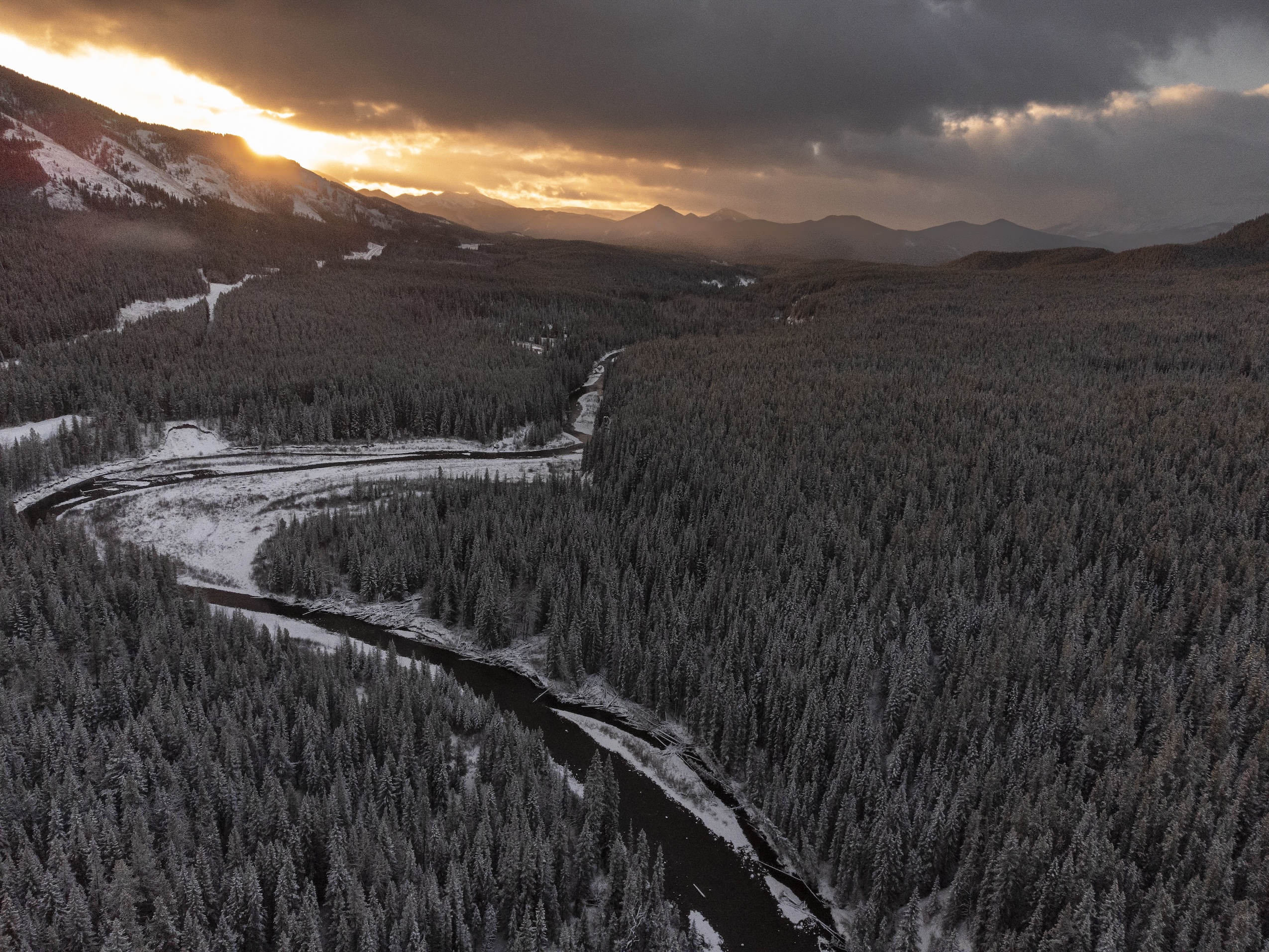
Alberta’s Kananaskis Country, on the eastern slopes of the Rocky Mountains, is a source of drinking water for much of the Prairies. Environmental advocates are concerned about the impact coal mining and logging could have on the crucial headwaters. Photo: Amber Bracken / The Narwhal
Then, farther south, there’s the Grassy Mountain mine proposed north of the Crowsnest Pass, a traditional coal region that hasn’t seen an active mine for decades. Grassy Mountain has generated the most opposition from ranchers, environmentalists and some First Nations. It was also the subject of controversy due to conversations between Morgan, the regulator CEO, and the company behind the project, Northback. The regulator refused to disclose to The Tyee, which broke the story, what was discussed at that meeting.
Grassy Mountain was rejected in 2021 by the Alberta Energy Regulator and the federal government. The regulator said the project was not in the public interest, while the federal review said the economic benefits of the project did not outweigh the significant environmental risks. That rejection was upheld in multiple court cases, but the mine was included on a provincial government list of approved projects that were not impacted by its moratorium.
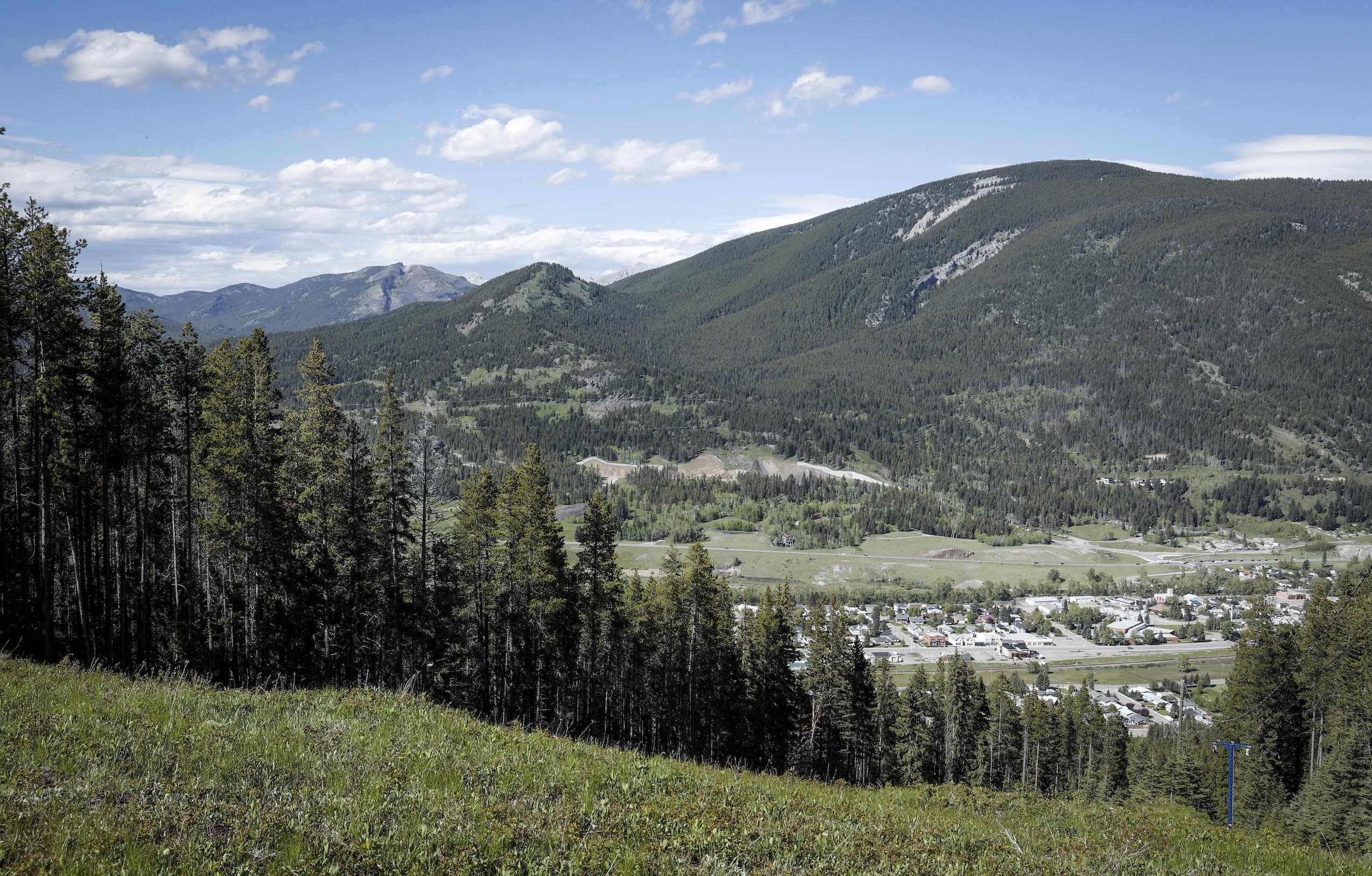
The Grassy Mountain coal mine was rejected in 2021 by the Alberta Energy Regulator and the federal government. But Alberta’s current energy minister has pushed for the project to be considered. The proposed open-pit mine is a few kilometres north of Blairmore, seen here in 2024. Photo: Josh McIntosh / The Canadian Press
In 2024, Energy Minister Brian Jean wrote a letter to the Alberta Energy Regulator saying the project could be considered.
“Once a project is considered an advanced project it remains as one regardless of the outcome of regulatory applications submitted before it was declared an advanced project,” Jean wrote in his letter to the regulator.
He went on to say he expected the regulator would review any applications for advanced projects. The regulator dutifully did so and the project is moving through the regulatory process.
What’s up with Corb Lund’s petition about Alberta coal mining?
There is local support for Grassy Mountain in Crowsnest Pass, which held a non-binding referendum that showed majority support for the project (even though it’s located in the neighbouring Municipal District of Ranchlands).
The Piikani First Nation, on whose traditional territory the mine would sit, says it supports exploratory drilling, but is reserving judgement on the mine itself.
But there has been significant opposition across Alberta, not only to Grassy Mountain, but to coal mining on the eastern slopes in general.
A recent petition asking the government to either ban coal mining on the Rockies, or to ask Albertans whether they want a ban in a referendum, claims to have more than 200,000 signatures, more than enough to get the issue on the ballot in October. However, Premier Smith said it’s too late for the topic to be included amongst a long list of referendum questions being put to Albertans — all of which deal with increased provincial sovereignty or separation.
The creator of that petition, country musician Corb Lund, said the petition is being tossed aside based on a missed deadline that didn’t exist.
“I personally met with the premier in her office on May 11. We were literally discussing the wording of my question as it should appear on the ballot, face-to-face. And at no point was any June 1 deadline mentioned,” Lund said in a statement emailed to media.
He said the premier has the authority to put something on the ballot and that she has done so multiple times, with nine of her government’s own questions on topics ranging from more control over immigration to constitutional amendments, as well as a question on holding a separation referendum.
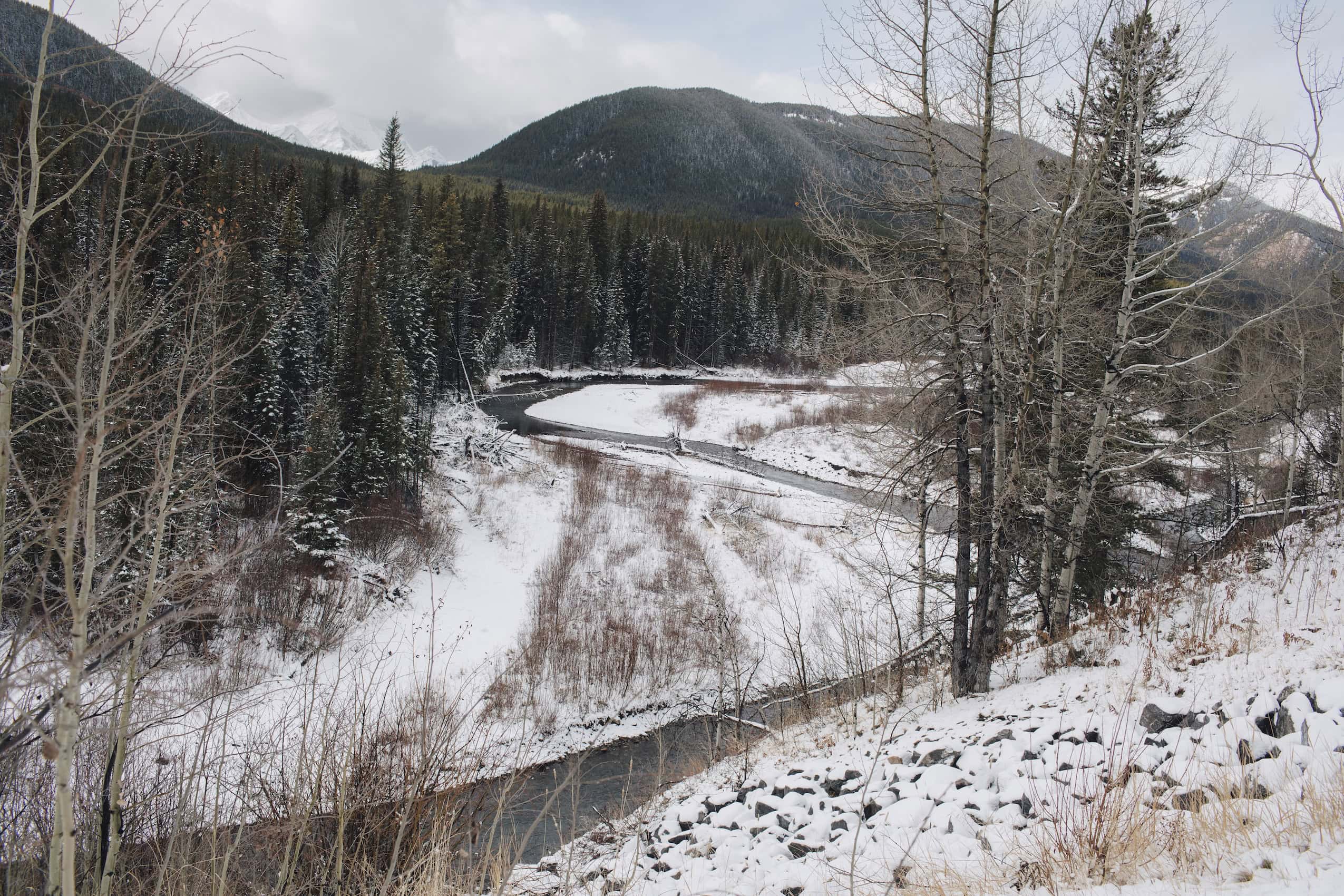
The prospect of expanded coal mining in Alberta has prompted a public outcry — and a petition seeking to put the issue to voters in a provincial referendum this fall. Photo: Amber Bracken / The Narwhal
If the question isn’t put to Albertans in October, it will have to wait until 2027.
In addition to the petition, the government’s own survey of Albertans, conducted in 2021, showed overwhelming concern about coal development in the province. More than 85 per cent of respondents didn’t think coal development or exploration was adequately regulated, and more than 90 per cent thought it should be barred from certain areas, including the Rockies, foothills, areas near watersheds and more.
What’s next with coal mining in Alberta
The government has promised a revamped coal policy for the province this year, but there is no date and no details. It is currently consulting industry, and only industry, on the policy.The Alberta government did not respond to an email asking when the new policy will be unveiled.
In the meantime, it has approved Mine 14, the Vista thermal coal mine expansion and allowed for Grassy Mountain to conduct exploratory drilling. Valory, the company behind Mine 14, is also pushing for a new metallurgical coal mine along the Rockies called Blackstone.
The Narwhal’s reporters are telling environment stories you won’t read about anywhere else. Stay in the loop by signing up for our free weekly dose of independent journalism.
From The Narwhal | News on Climate Change, Environmental Issues in Canada via This RSS Feed.
10
11
Liberals champion the causes of Canada’s progressive majority to get power, then screw them over to serve their corporate allies
The post Run left, rule right: how Liberals con progressive voters appeared first on The Breach.
From The Breach via This RSS Feed.
12
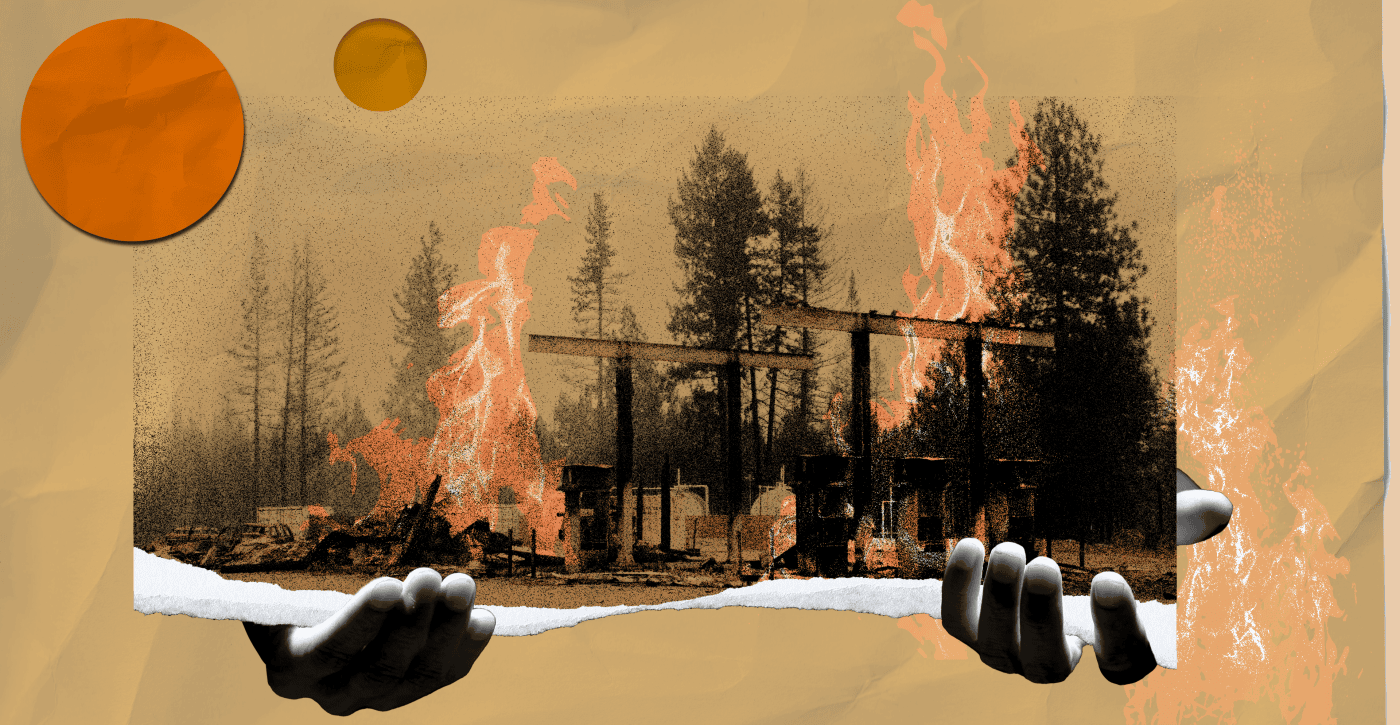
Illustration: Melanie Garcia / The Narwhal. Photo: Mike Graeme / The Narwhal
Around 13,000 years ago, our blue planet got a lot whiter.
Temperatures in the northern hemisphere dropped precipitously and in a relatively short time — decades, not centuries — big ice sheets spread down from the mountains, freezing out once-teeming habitats populated densely by flora and fauna.
Humans, and our non-human relatives, had been flourishing for some 10,000 years in the warm afterglow that followed the previous deep freeze. Abundance had bloomed in the glacial melt and from the sediment left on the land. Life stretched out in the absence of ice. But then the ice came back.
The ensuing thousand-year period is called the Younger Dryas, named for a little Arctic flower called Dryas octopetala. In some places, like Greenland, the freeze took mere months. Other parts of the northern world succumbed more slowly, but the overall process, in geological time, was like the heartbeat of a hummingbird. And then it was quiet.
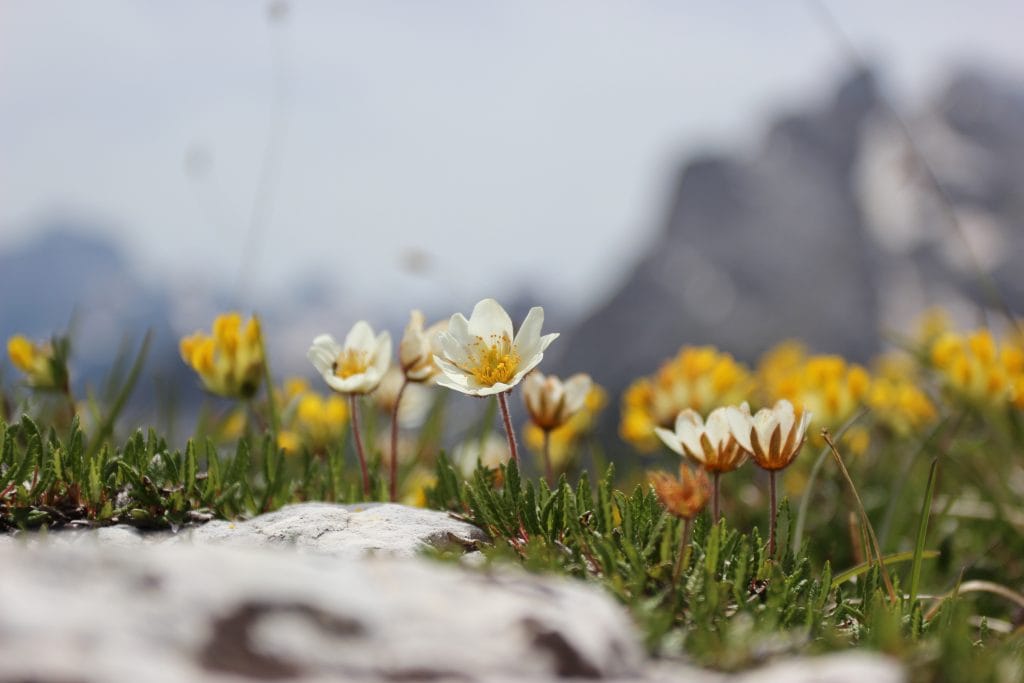
Dryas octopetala, an Arctic wildflower also known as mountain avens, gave the Younger Dryas its name. Photo: Steinsplitter / Wikimedia Commons
_1.jpg)
The onset of the Younger Dryas may have been abrupt, but it wasn’t catastrophic. Humans adapted. Clinging to refugia — pockets of the landscape where conditions were favourable enough to support plants and animals despite the pervasive cold — we endured. Ultimately, we thrived. When the period ended, as abruptly as it had arrived, so began the Holocene.
Like the humans who watched the world change so quickly to white and like their descendants who felt the rapid return of the sun, we are living through a period of dramatic and accelerating changes to our environment.
But ours is a different time, one characterized not by ice, but by fire.
Last fall, while walking down an alleyway in my northern British Columbia town, I ran into an acquaintance. We traded the usual pleasantries and then talk turned, as it so often does, to the weather. It was hot and dry and the skies were choked with the haze from a spate of wildfires that had flared up after the season appeared to be mostly over.
“This isn’t normal,” my friend insisted.
Unlike me, he grew up in the area. As an avid outdoors enthusiast and former mountain guide, he was well-positioned to say what’s normal and what’s not. He seemed unsettled, agitated.
“I have never seen a September like this,” he said.
We are living in the Anthropocene, a term many geologists have adopted to characterize the era where humans are the primary agents of change on the planet. Our actions over the past few centuries have led to the increasingly erratic and unstable climatic systems wreaking havoc across the globe. As we grapple with the impacts of our collective past, we also need to grapple with ourselves as we come to terms with how we process the changes we are experiencing. We are reckoning with a restless world.
Those same wildfires that suffused my little mountain town with the smell of campfire blanketed the city of Vancouver with thick smoke. For a few days, the air quality there plummeted to rank as the worst in the world. It all felt surprising somehow, even as we collectively chided ourselves for being surprised.
Humans are incredibly adaptable — but we crave certainty. We intuitively cling to patterns we’ve seen before to guide our expectations about what a day, month or year might bring. We plan around those expectations: picnics and road trips, soccer games and barbeques.
As the world around us continues to change, we begrudgingly change with it. We plan now for wildfire season — unheard of in my childhood. We slather our kids in sunblock and pack asthma inhalers. We don’t roast marshmallows on crackling fires anymore when we camp out in the woods in the summer because of months-long fire bans. But change is a painful and iterative process and we keep setting a new normal to anchor ourselves to, again and again and again.
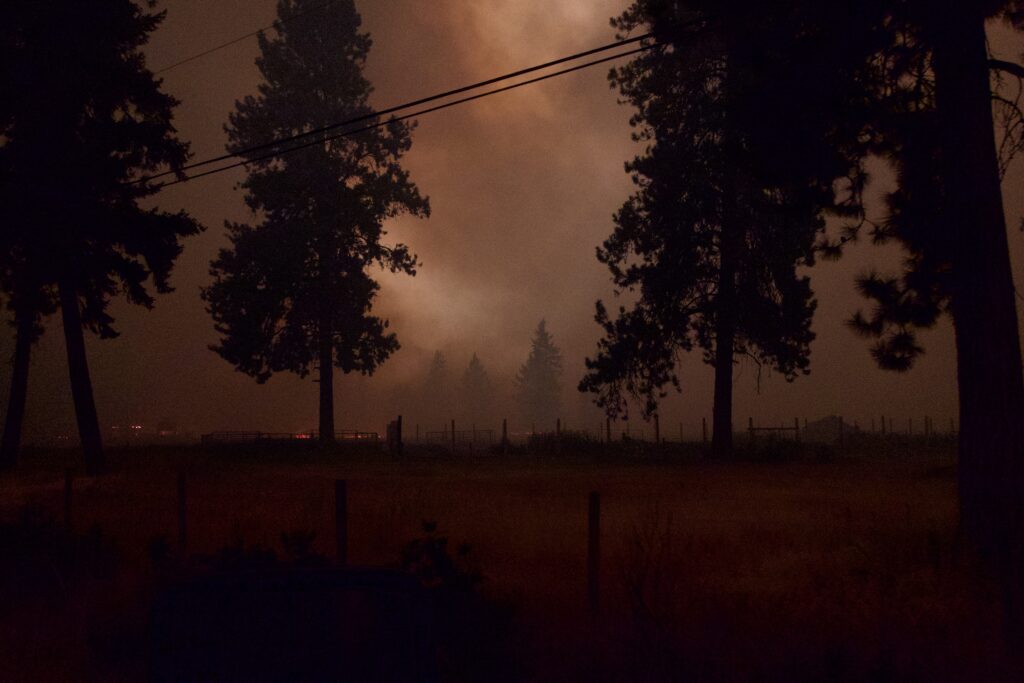
Wildfires increasingly shape the structure of our lives, from how and when we interact with the natural world to choices we make about exposing ourselves and our families to smoke. Photo: Mike Graeme / The Narwhal
Our preference for certainty can have profound impacts on mental health. Very little quantitative research has been done but there is a growing consensus that climate impacts — including the anticipation of those we have not yet experienced — are leading to a mental health crisis.
“Climate change has been associated with numerous mental health conditions including posttraumatic stress disorder (PTSD), depression, anxiety, grief, substance use disorders and suicidal ideation among many others,” Elizabeth Wiley, a physician, wrote in the BC Medical Journal in 2019.
We do plan further ahead, peeking into possible futures with predictive climate models to design and build infrastructure we hope will protect our communities from fires and floods and more. But our world is changing as fast as that flickering hummingbird heartbeat and we act as if each pulse will last forever. There’s only so far we can see.
In our temporal myopia, we need to get more comfortable with not knowing — and embrace uncertainty as an essential part of our existence.
Our ancestors found refugia to withstand an icy world that became increasingly hostile to life. Now, as we speed inexorably into a hotter future, we are confronted with a growing list of urgent problems we need to prepare for, and adapt our existence to meet. We need to build our refugia.
David Stainforth, a physicist and climate scientist from Oxford, England, says policy makers and scientists need to pay closer attention to uncertainty — and build for unpredictable outcomes. He told me climate modelling has an important role to play in adaptation, but relying too heavily on a particular set of predictions, however sophisticated the models may be, can inadvertently fall prey to the human tendency to seek certainty.
“It will kind of spuriously get rid of the uncertainty, meaning you can now build your flood defences — but you’re building the flood defences to protect yourself against the future in the model,” he said on a video call last year. “And the future in reality could be very, very different from that. There’s a danger you might misdirect society.”
In his 2023 book, Predicting Our Climate Future, Stainforth makes a case for embracing the uncertainties in climate models as a guiding principle for building resiliency at a community level. As he wrote in an essay for Aeon, uncertainties compound over decades until “almost everything can influence almost everything else.”
“Changes in Arctic sea ice could influence the Indian summer monsoon,” he wrote. “Changes in rainfall in the North Atlantic could influence temperature patterns in central Africa.”
In essence, Stainforth argues we risk catastrophe if we are too reliant on the predictions of complex climate models — which can do many things but not all things — for the decisions we make about how to survive the inevitable changes that are coming. But by embracing uncertainty, he says, we can build refugia capable of withstanding impacts we haven’t yet imagined.
Michele Koppes, a professor in the department of geography at the University of British Columbia, says accepting uncertainty can also provide a path through climate-related grief and anxiety. Koppes studies the effects of climate change on mountains and glaciers and works with communities living with the impacts, which include “dwindling water resources and increases in landslides and natural hazards like outburst floods.” That work began with a focus on the physical changes to the landscape, but has shifted to focus on the human side.
“Who are the people that are living in the closest proximity to these impacts and what are their stories?” she said. “How are they perceiving this and what do they need in order to be resilient and to feel like they can continue their livelihoods and their lives in the face of all this change?”
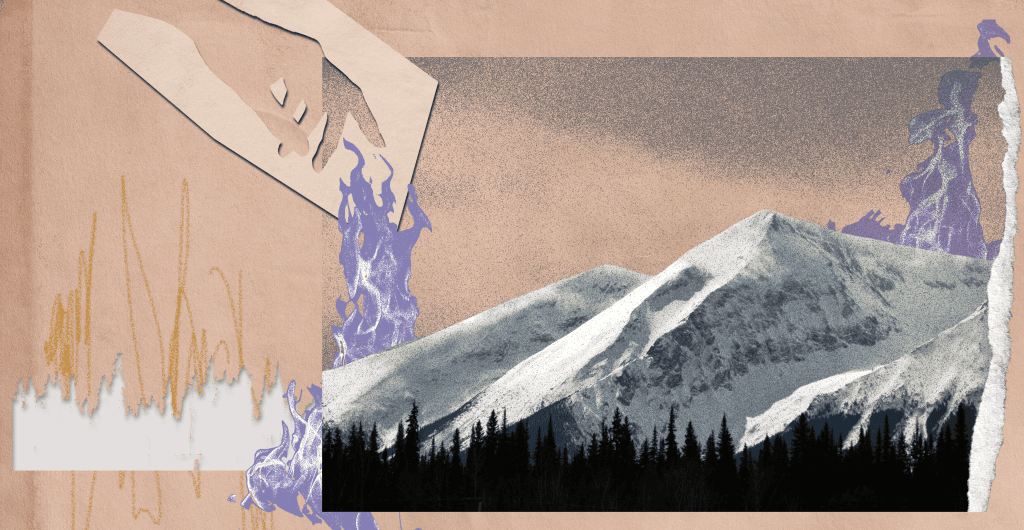
Illustration: Melanie Garcia / The Narwhal. Photo: Matt Simmons / The Narwhal
She said asking these questions helped her process the loss and helplessness she was feeling as she watched the places she loved melt away. Reframing how we think about climate change asks us to accept uncertainty as a core principle — and while that can be deeply uncomfortable it also offers a truer understanding of the world around us.
“The notion of certainty is a fallacy,” Koppes said. “Or maybe I’ll be more specific: the notion of control is a fallacy.”
“The more I spend time on this earth, the more I recognize how we are just one small part of a complex system,” she explained. “And complex systems are the process of emergent phenomena — you never quite know where it’s going to go. The more we think that we understand or we have control, or we’re certain about one aspect, the further we are from truly knowing everything is a web of relations.”
Faced with the onset of the Younger Dryas, our ancestors probably didn’t sit around arguing about how to stop the ice from advancing. It’s far more likely they took stock of their surroundings and found ways to act quickly to protect the things they cared about most.
“Some people will care about the decreasing glaciers and certain types of wildlife, whether that’s butterflies or polar bears, or whatever,” Stainforth said. “But I don’t think most people do. Their cares are smaller; their cares are more personal. I think the number one thing that we care about with respect to climate change is protecting our societies and our cultures. It’s the world that we have, the world we’ve grown up in, our support structure.”
Stainforth said grounding conversations in how climate change affects what we care about is essential to spurring action — and hope.
“There will be places where the train track needs rebuilding because of landslides, because of flooding or because of drought, or because of changes in the grasses that are growing there,” he said. “These things are going to happen, and they’re going to happen more and more frequently, because that’s what climate change is.”
Responding to impacts will be a steady drain on government resources, he said, which in turn means “we won’t have resources for other things — and that can be culture, it can be transport, it can be sports facilities or it could be health or education.”
“It’s a threat to everything,” Stainforth said. In response, we have to decide what to save. “It’s about building a future that we want,” he said.
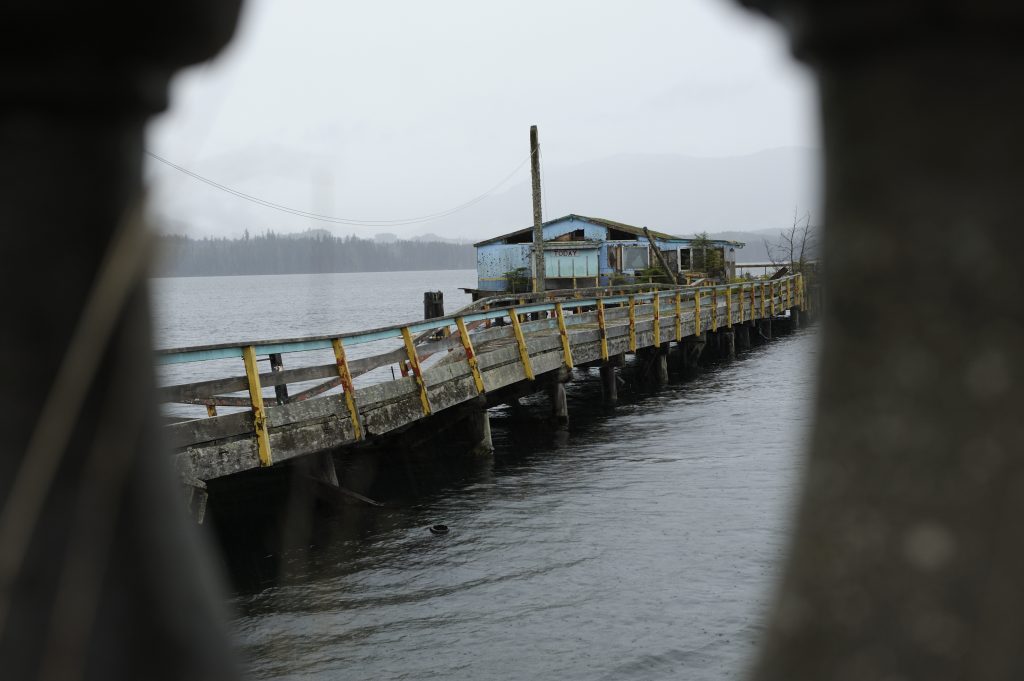
Faced with the existential threat posed by the rapidly changing climate, we have to decide what we want to save, climate scientist David Stainforth says. Photo: Matt Simmons / The Narwhal
When American author and activist Rebecca Solnit wrote about hope, she emphasized the value of uncertainty.
“Hope locates itself in the premises that we don’t know what will happen and that in the spaciousness of uncertainty is room to act,” she wrote in her 2004 book Hope in the Dark. “When you recognize uncertainty, you recognize that you may be able to influence the outcomes — you alone or you in concert with a few dozen or several million others.”
If we believe too firmly in a predictable future, Solnit writes, we risk setting ourselves on a path of apathy. Therein lies grief and anxiety and ruin. But if we accept uncertainty as a fundamental part of change, we can act accordingly.
Koppes believes we can see this belief at work in the next generation. Her students have loosened their grip on certainty, she says, but not in an apathetic way.
“There’s no longer any expectation that one can take a snapshot of time or a memory of place and that we can either get back to that time or that place — or that the environment and the climate was ever in a form of stasis,” she said. “They’re grasping at those components of their environments that are still bringing them joy, knowing that they might not exist for their lifetime.”
In other words, her students are accepting and embodying an existential truth: that everything is always in a state of change. And while we can’t be certain about the risks of the future, we also can’t predict how beautiful or resilient it might be.
One day we might name this period for *Chamaenerion angustifolium,*the fireweed. Or maybe we’ll go for Delonix regia, sometimes called the Phoenix tree. Like our distant relatives, not just enduring but thriving, we’ll rise from the ashes into a world we co-created that protects all that we hold dear.
The Narwhal’s reporters are telling environment stories you won’t read about anywhere else. Stay in the loop by signing up for our free weekly dose of independent journalism.
From The Narwhal | News on Climate Change, Environmental Issues in Canada via This RSS Feed.
13
14
15
16

Illustration: Shawn Parkinson / The Narwhal
Summary
- Tick populations are spreading in Ontario, increasing the risk of Lyme disease.
- Of the 44 varieties of ticks found in the province, only one — blacklegged ticks — carry Lyme, but they make up more than half of all ticks here.
- Experts say people need to recognize the risk of ticks and Lyme in the outdoors, and check themselves and others.
With the kids in bed and the movie credits rolling, I turned to my partner and asked the question no man can resist: would you check me for ticks? We’d been out in the backyard most of the day, among a not-so-recently mowed lawn, shrubs and tall native grasses. They all could be harbouring any number of pests — including the one adding an extra element of terror to southern Ontario summers. Wildfire smoke? Check. Extreme heat? Check. Ticks? Check — no, really: check yourself for ticks.
The insects have been spreading across Canada as the climate changes, and southern Ontario has seen a dramatic increase among several species of ticks. Unfun fact: our province has 44 species in total, according to Public Health Ontario. But only one, the blacklegged tick, carries Lyme disease (we’ll get to that in a minute).
Ticks have been on the rise in Canada for the better part of the last decade, Manisha Kulkarni, a professor in University of Ottawa’s School of Epidemiology and Public Health, says.
“What we’re really seeing is the result of this multi-year trend of tick population expansion in North America,” she says. “And now we’re really seeing those populations establishing in more regions in southern parts of Canada, including in Ontario.”
With warmer weather, ticks in Ontario are spreading
There are a few factors encouraging the tick’s northward march, Kulkarni says, but “one of the main drivers is climate change.”
“We’re not seeing as cold winters that would normally prevent them from surviving and reproducing, so they’re able to survive in more regions,” she adds.
That longer warm season allows more time for ticks to find hosts — like us — to feed on, and to reproduce. As a result, every year we’re seeing populations establish in new areas that now have desirable conditions for ticks.
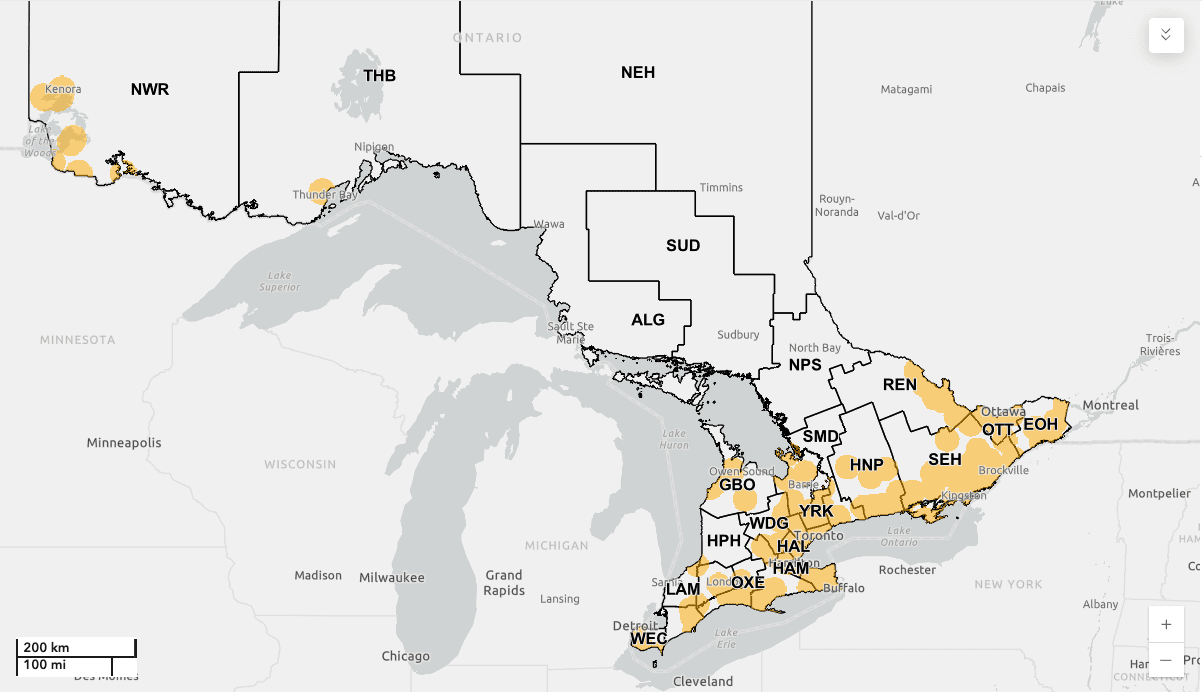
Areas shaded in yellow carry a high risk of blacklegged ticks, the variety known to infect humans and other animals with Lyme disease. Map: Public Health Ontario
So while my family in the Niagara region has been dealing with ticks every spring and summer for years, this summer they’ve become a shared foe within the family chat. The latest map from Ontario Public Health shows populations of blacklegged ticks as far north as Thunder Bay and Kenora, throughout the Ottawa Valley and in Owen Sound, on Lake Huron.
I’ve heard a few people seek a silver lining on the coldest days of winter, saying that at least long stretches of deep freeze will decrease the risks of ticks. They were — officially — wrong.
While we did have some bitingly cold temperatures in Ontario this winter, Kulkarni says, “We also had lots of snow, which is a great insulator.” Ticks burrow down in the leaf litter, blanketed by snow, and stay cozy even when we’re complaining about a stretch of -30 C days.
So depending on where you live, it might be time to draw the blinds, strip down … and turn on the lights.
How to check for ticks (or stop them before they get to you)
How exactly should you check yourself and loved ones for ticks? Cover as much surface area as possible, according to Health Canada. Check your chest and back, and in your hair — and don’t forget the crevices: armpits (and kneepits!), belly button and between your toes. Ticks also have a habit of going for the groin so … yeah.
To prevent ticks from reaching your skin in the first place, Health Canada suggests closed-toed shoes, long sleeves and pants — with your shirt tucked into your pants and your pants tucked into your socks. Ten minutes in a hot dryer will take care of any that hitched a ride on your clothes.
Sticking to cleared paths and trails helps, too.
And there may be ways to keep ticks away, more broadly, from outdoor spaces humans like to frequent. Kulkarni’s team at University of Ottawa recently released a study that found spreading wood chips at the edges of gardens and trails where ticks are prevalent effectively reduced the number that came looking for blood.
How did they test that? Dragging a piece of flannel material across the ground before and after wood chips were laid to see how many latched on. It really tells you something about how easily ticks attach, doesn’t it?
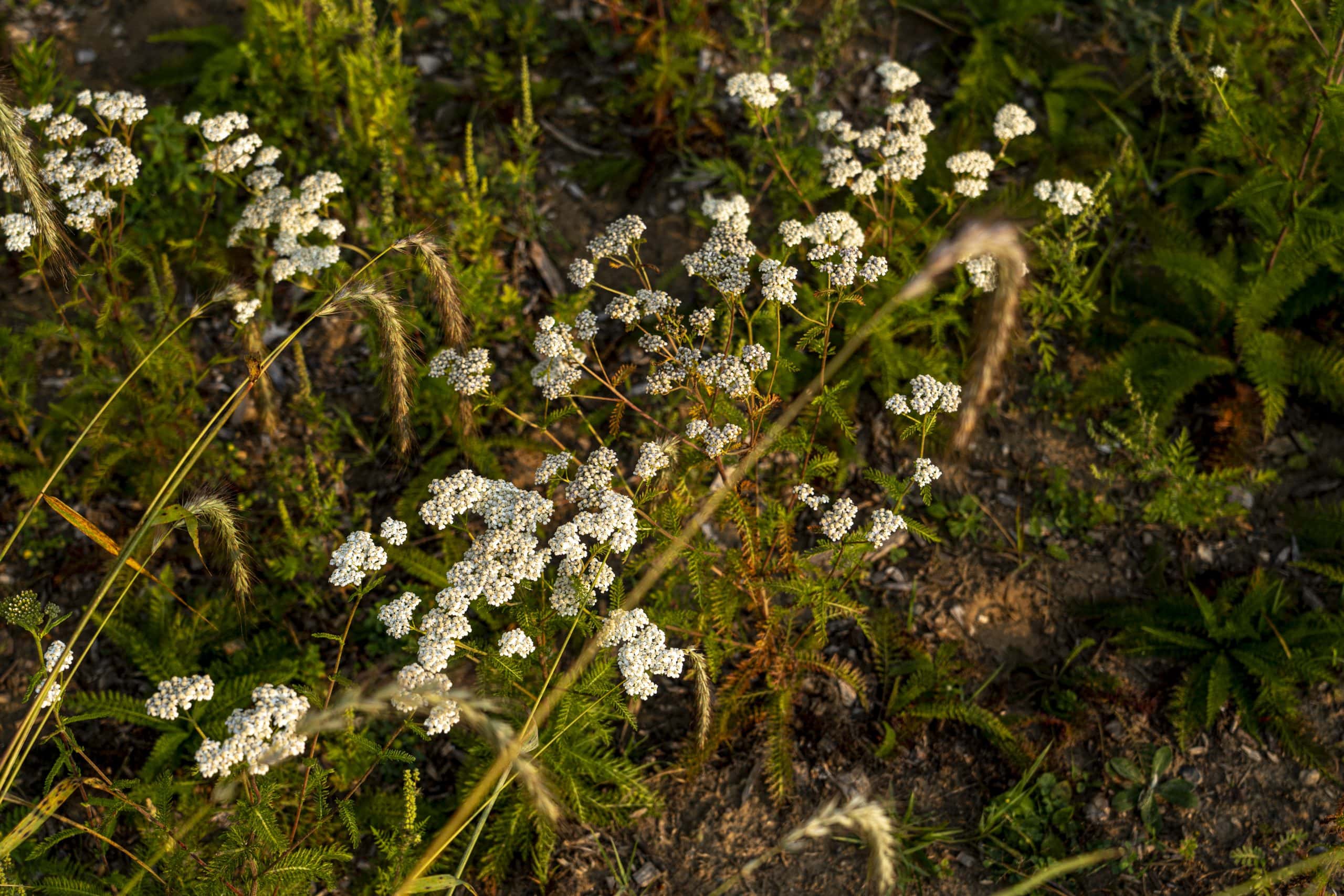
Tall plants and grasses can harbour ticks, so experts advise to keep to cleared trails in areas where there’s a high risk of ticks that carry diseases, like Lyme. Photo: David Jackson / The Narwhal
Why do so many Canadian musicians have Lyme disease? Blame the deer
As ticks take on new territory, their presence isn’t just creepy and unwelcome, it’s actually a public health risk: ask Justin Bieber, Avril Lavigne or Shania Twain.
They’ve all publicly announced their diagnoses of the disease that, if left untreated, can cause neurological and cardiac issues, as well as arthritis.
Some areas of the country and our province, particularly around Lake Ontario and Lake Erie, have a higher concentration of ticks carrying bacteria that cause Lyme disease. Though it’s the most common disease people get from ticks, Lyme isn’t the only one they carry. And while not all types of ticks can pass on Lyme disease, more than half of the ticks found in Ontario are of the blacklegged variety that can, according to Public Health Ontario’s recent report.
How does it happen, you ask? After mating on the backs of deer, the female blacklegged tick drops to the ground and, in the spring, lays eggs among the leaf litter, Kulkarni explains. Those eggs hatch into larvae, which quickly go looking for their first drink of blood. Down among the leaves, that’s usually from a small animal like a mouse or bird. If that animal is infected with the bacteria that causes Lyme, the tick takes on the infection. When it’s larger and more active, in the nymphal stage, the tick will find a bigger animal or human to feed on, and pass that infection on to them. As they mature into adults, white-tailed deer, dogs and humans are all on the menu.
“There’s several points in the cycle where humans are susceptible, but that tends to be during the nymphal peak of activity, in kind of the late spring and summer months, and then the adults, which are in the early spring and in the fall,” Kulkarni says.
For a general rule of where there might be a risk of ticks, consider if it’s a place populated by white-tailed deer, Kulkarni says.
Lyme disease diagnosis is up, so pull your pants down. But what do you do if you find one?
Across Canada, diagnoses of Lyme disease have skyrocketed from 104 cases in 2009 to a preliminary count of 7,105 cases in 2025, though the increase is likely due to awareness and increased testing, as well as a rise in cases. So far this year in Ontario, 236 cases have been identified by Public Health Ontario.
If you can remove the tick within a day, you can spare yourself a lot of trouble — it typically takes more than 24 hours after it attaches for the tick to pass on the bacteria that causes Lyme disease. Properly removing it means pulling the tick out straight, rather than twisting or bending, which risks leaving some of its mouthparts (unfortunately, that is the proper anatomical term) embedded.

Ontario has 44 different types of tick, but the blacklegged tick, also known as the deer tick, makes up more than half of the ticks found across the province. Photo: Erik Karits
Next up? Keep the tick. Put that little sucker into a sealed container and take it to your doctor for testing (they’ll be thrilled). And if you can’t wait to know whether you’re holding a little blacklegged tick hostage — the kind that carries Lyme — you can also submit photos of the little offender online, where it will be quickly identified by kind-hearted insect enthusiasts.
If you have been bit, or even suspect you may have been, look out for Lyme symptoms like a rash or fever, headache or joint pain, Kulkarni says. These can occur even without the most famous Lyme symptom: a bullseye rash around the bite. “Not everybody actually gets the rash, so it’s important to look out for those other symptoms,” she says. If you have a summer fever, she adds, “that’s a good indication you should get checked out for Lyme, especially if you’ve been in an area where ticks are present.”
It’s not about being afraid to go outside, she adds, but equipping yourself with knowledge: both of the level of risk for ticks and Lyme wherever you’re going (there’s a map for that!) and how to properly remove one of it digs in (there are kits for that — and tweezers work, too!).
Kulkarni likens the threat of ticks to another unpleasant natural hazard. “There are settings where we know there’s poison ivy. People don’t go off the trail because they might brush along it, and if they do get a rash, they know what to do, right?,” she says. “Tick bites can be a bit more serious than that, but it’s the same concept: that being out in nature isn’t without risks, but by knowing what the risks are and how to manage them, you can really reduce any potential impacts.”
So check yourself, your kids, your pets — and your friends, if they need it. And if you’ve got a special someone at home, why not make 2026 the summer of sexy tick checks?
The Narwhal’s reporters are telling environment stories you won’t read about anywhere else. Stay in the loop by signing up for our free weekly dose of independent journalism.
From The Narwhal | News on Climate Change, Environmental Issues in Canada via This RSS Feed.
18
3
Lake Muskoka gets its first MZO, meaning Ontario can push a new resort past local planning rules
(thenarwhal.ca)
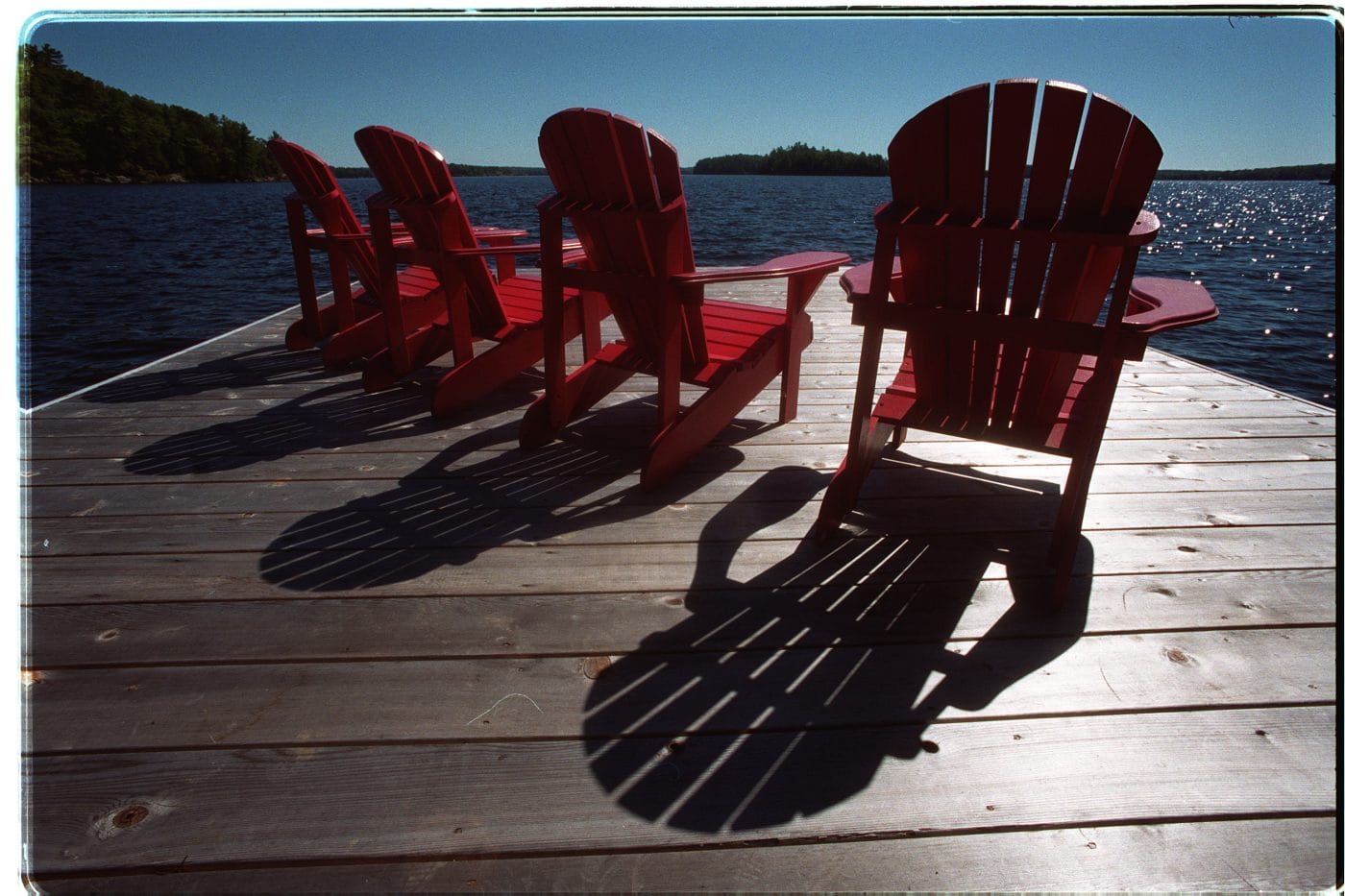
Photo: Fred Lum / The Canadian Press
Summary
- A proposal by developer Cliff Bay Muskoka Corp. includes new condominium and hotel units, restaurants, a spa, an event centre and a marina in the small town of Gravenhurst, Ont., along with particularly controversial water villas over Lake Muskoka.
- The proposal relies on obtaining a Minister’s Zoning Order, or MZO, to bypass local municipal planning rules.
- The MZO was a condition of the purchase when the developers bought it from the province, which one legal expert told The Narwhal could pose a conflict of interest.
Ontario cottage country — famous for its hundreds of clear lakes nestled in the Canadian Shield — is experiencing a first.
The Cliff Bay resort project, proposed for the south end of Lake Muskoka, is planning for a Minister’s Zoning Order, a provincial decree that limits local government oversight in order to move development ahead. It’s known across the province as an MZO although, until now, Muskoka doesn’t appear to have experienced one.
Now that it is, locals and cottagers have a lot to say. Throughout the town of Gravenhurst, Ont., lawn signs urge passersby to “Protect Muskoka Bay.” An attempt at an online public meeting initiated by the developers failed in May 2025, after its capacity of 100 attendees was quickly reached, with many more stuck in the waiting room eager to voice their concerns.
The proposal by developer Cliff Bay Muskoka Corp., part of the KS Group of Companies, shows new condominium and hotel units, two restaurants, a spa, an event centre for weddings and a marina with space for 80 boats. While the developers originally proposed 1,400 units split between hotel and residential space, they told The Narwhal in an email that number has been “significantly reduced,” but didn’t say by how much.
All of this will spread across 33 hectares, or about the size of just under 50 soccer pitches.
A particularly controversial aspect of the Cliff Bay resort plan are additional water villas proposed to be built directly over the lake. Their construction would impact Crown lake-bed, which supports invertebrates and insects that are the backbone of the lake ecosystem.
“The building over water is what gets me the most,” Bruce Parlette, who spends half his time at his cottage on Lake Muskoka, told The Narwhal. Parlette began an online petition opposing the project that has accumulated more than 5,300 signatures over the last year.
By current municipal rules, buildings on the bay typically have to be at least 20 metres, in some cases 30, from the shoreline. “But they’re looking to build all these villas on the water … so the whole shoreline protection, that buffer zone, would be gone,” Parlette said.
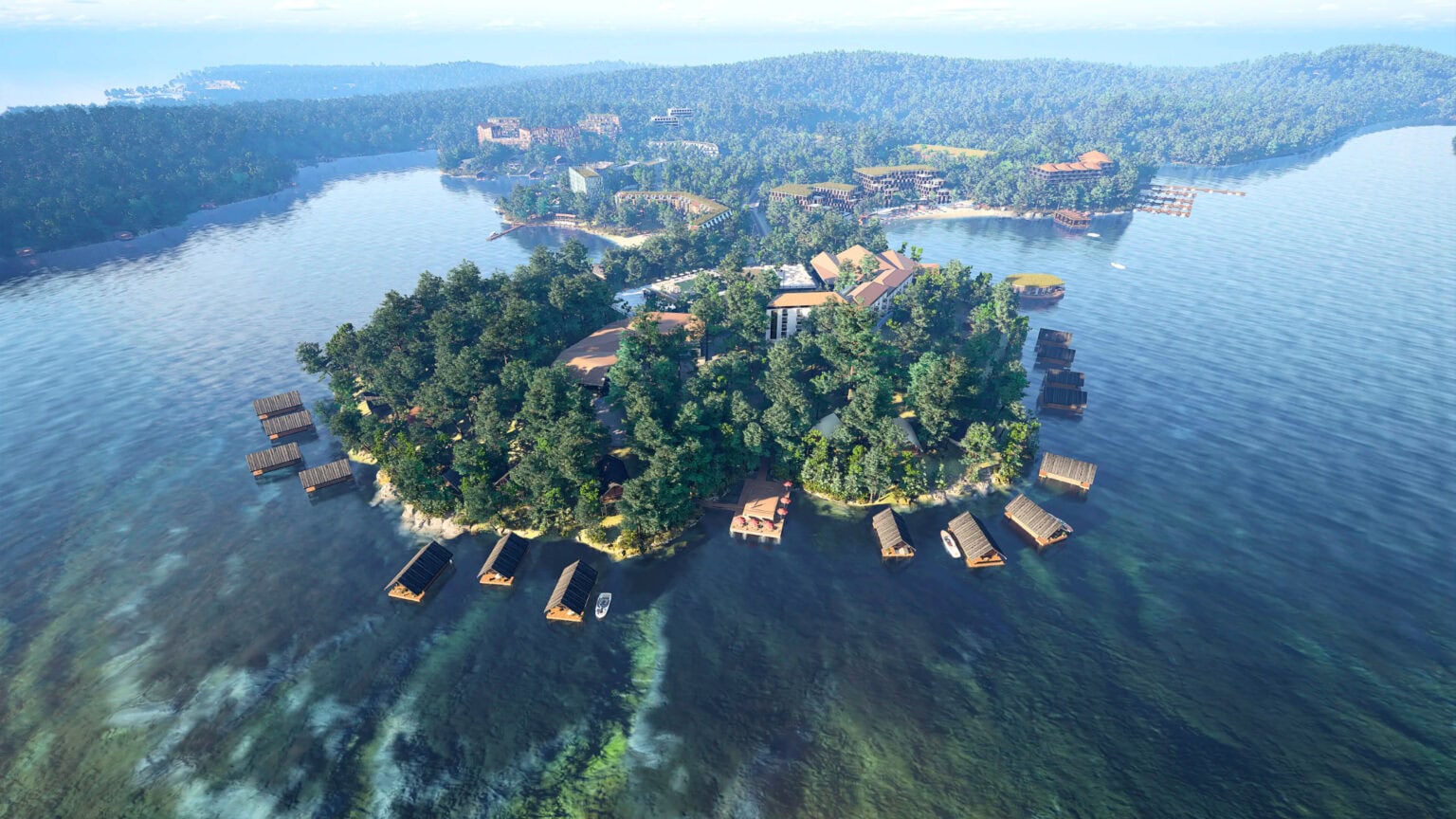
The proposal by developer Cliff Bay Muskoka Corp. includes new condominium and hotel units, two restaurants, a spa, an event centre for weddings and a marina — along with villas built over the lake. Illustration: Cliff Bay Muskoka All Season Resort and Residences
So far, Gravenhurst’s leadership has been quiet on the project within its borders. A spokesperson told The Narwhal in an email that the town has not taken a position or issued any news releases or statements as “there hasn’t really been anything to share,” adding that they are awaiting the final proposal for “some form of statement or release.”
When asked about public concerns over the impact of the project, the spokesperson said “the town does not own the property, process or decision here,” adding that council “certainly heard the concerns” at the developer’s public information session and might be able to take an eventual position when the process is further along.
The spokesperson did express council’s desire to see the property, a mix of undeveloped Crown land and a former sanatorium, put to productive use for the community.
Meanwhile, Parlette and advocates at the Muskoka Lakes Association are selling the lawn signs, emailing officials and participating in public meetings about what the association calls the “deeply troubling details of a massive development proposal.”
“Nobody wants to see it done with an MZO, because then it’s going to override any local planning, zoning and decision-making,” Parlette said.
The developer website reads that, “in partnership with the Province of Ontario, we’re redeveloping this iconic site into a vibrant, mixed-use tourist complex,” in a project that reflects their “commitment to thoughtful growth, economic development and preserving the natural beauty of Muskoka for generations to come.”
The Narwhal also sent questions to Infrastructure Ontario, which sold the land to Cliff Bay, and the Ministry of Municipal Affairs and Housing. Neither of the provincial agencies involved responded to detailed questions about the sale of the land, the Minister’s Zoning Order and public concerns about the impact of the project.
Muskoka’s first MZO and the Doug Ford government’s track record using them
A Minister’s Zoning Order is a powerful control tool. It lets the provincial Housing Minister unilaterally decide how land is used and developed by bypassing local municipal planning and public consultation processes that would otherwise be required under the Planning Act.
After searching publicly available government records, The Narwhal was unable to find evidence of any other MZOs being issued in the Muskoka area, including in the three major towns of Gravenhurst, Bracebridge, Huntsville and smaller hubs like Bala and Port Carling.
Phil Pothen, legal counsel and program manager of land use and Ontario environment at advocacy organization Environmental Defence, told The Narwhal the Muskoka proposal raises concerns because the developers stated publicly that obtaining a Minister’s Zoning Order was a condition of the purchase and sale agreement between Infrastructure Ontario and the developers.
“It would actually place the province in something of a conflict of interest,” Pothen said, “in the sense that [the province] is both the landowner who stands to gain more if the land is more highly valued and the regulator who’s actually making the decision.”
Discussion of the MZO came at a public information meeting held over Zoom in July 2025, a redo after the over-capacity attempt that May. There, Kirill Soloviev, head of strategic planning for Cliff Bay, told hundreds of attendees that, as part of the deal for the developer to buy the property from the province, a “Ministerial Zoning Order was included, and now it’s a formal part of the transaction.” Bob List, a land use and environmental planner acting as a consultant for the project, echoed the statement.
The Cliff Bay project’s developer wrote in an email to The Narwhal that a Minister’s Zoning Order was a “necessity” because mixed land use — mostly recreational and commercial — is currently not recognized in existing zoning for the property. Ensuring a Minister’s Zoning Order would come through was essential to the decision to purchase the land, as without it, the decision to rezone the property for the purposes of the resort would have been left with the township, and not guaranteed.
In 2024, the Office of the Auditor General of Ontario conducted an audit of Minister’s Zoning Orders in the province and found that between 2017 and 2023, 114 were issued. With the Doug Ford government first elected in 2018, that average of 23 per year represents a 17-fold increase from the prior two decades. The audit concluded that these orders “have been used to override municipal planning.”
The audit also found that most information packages prepared for the office of the Ministry of Municipal Affairs and Housing as it evaluated each order “did not contain the kind of detailed risk information normally factored into municipal zoning decisions.” That included key information about the capacity of local roads, sewers and other infrastructure; the risks posed by natural hazards and the environment; and likely financial burdens to regions, municipalities and taxpayers.
These orders cannot be appealed at the Ontario Land Tribunal. Of the 25 Minister’s Zoning Orders the auditor general scrutinized for the report, they found that half showed “no evidence the ministry engaged with any affected Indigenous communities” prior to issuing the order.
“This is a threat, frankly, to the rule of law in Ontario,” Pothen said. “It’s a process that is much more susceptible to impropriety than a conventional planning process where multiple individuals all need to be lined up in support of a proposal.”
What’s next for Cliff Bay resort in Ontario cottage country?
Right now, the area surrounding the site boasts a tree-lined shore spotted with cottages, ranging from quaint to luxurious. Docks surround the large, clear blue bay, with Muskoka chairs set up with views across the lake. Not far from the water on the site, the eerie, now-closed hospital building sits abandoned and overgrown.
Maintaining shorelines is critical to ecosystems and the wildlife they support; it’s where fish spawn, turtles lay eggs and birds nest. Healthy shoreline vegetation also filters rainwater and can even limit flooding, a risk that is increasing in the face of climate change.
In a response to questions from The Narwhal, the Cliff Bay developers said that upcoming changes to their plans will add more features for public use, like the beaches and public trails Soloviev mentioned during the public meetings, and address public comments they’ve received from people reaching out to them.
Phil Pothen, legal counsel and program manager of land use and Ontario environment at Environmental Defence, says MZOs allow development projects to “leapfrog and circumvent” the established planning laws of a municipality. Photo: Ramona Leitao / The Narwhal
In an email, they said no “significant or unusual environmental impacts are anticipated,” as sewage will be processed at an existing local treatment facility and because “there are no significant natural heritage features on the site.” The developers said they anticipate an updated draft of the Minister’s Zoning Order will be “available for further public review, Indigenous consultation and government processing in several months.”
Despite these efforts, Minister’s Zoning Orders do not come with any legally binding requirement to consult the public — a point project planner List repeated several times at the July 2025 Zoom meeting.
Pothen said the zoning orders provide a direct route for the minister to “leapfrog and circumvent the established planning laws of a municipality” and to approve a development even if it doesn’t conform with the official plan or with the government’s own provincial planning statement.
The Minister’s Zoning Order process does involve collecting comment from municipal governments. But, according to the auditor general’s report, there is no legislated requirement for the ministry to satisfy any municipal requests for specific conditions prior to the orders being issued.
The Cliff Bay development will have to go through several environmental checks before being built — including a posting on the environmental registry of Ontario for public comment if the proposal goes through.
There are cases where Minister’s Zoning Orders have been useful, Pothen told The Narwhal, such as during COVID-19 lockdowns, when they allowed for quick creation of emergency shelters.
“They are meant to be used, in our view, for very extreme and emergency circumstances,” Pothen said. “What’s being posed here, it’s really just a way to circumvent the rule, which raises the problem.”
The Narwhal’s reporters are telling environment stories you won’t read about anywhere else. Stay in the loop by signing up for our free weekly dose of independent journalism.
From The Narwhal | News on Climate Change, Environmental Issues in Canada via This RSS Feed.
19
Unifor researcher Graham Cox joins Desmond Cole to discuss why Carney is putting the rights of federal-regulated workers in the crosshairs
The post Gutting the right to strike: the latest item on Carney’s corporate checklist appeared first on The Breach.
From The Breach via This RSS Feed.
20

As Carney's Liberals adopt a raft of right-wing policies, the country’s largest Conservative gathering shows the party’s activists are turning to more reactionary approaches on culture, identity, and national belonging
The post Inside Canada’s Conservative identity crisis appeared first on The Breach.
From The Breach via This RSS Feed.
21
2
Near Tofino, a push for gold is colliding with efforts to protect a rare coastal ecosystem
(thenarwhal.ca)
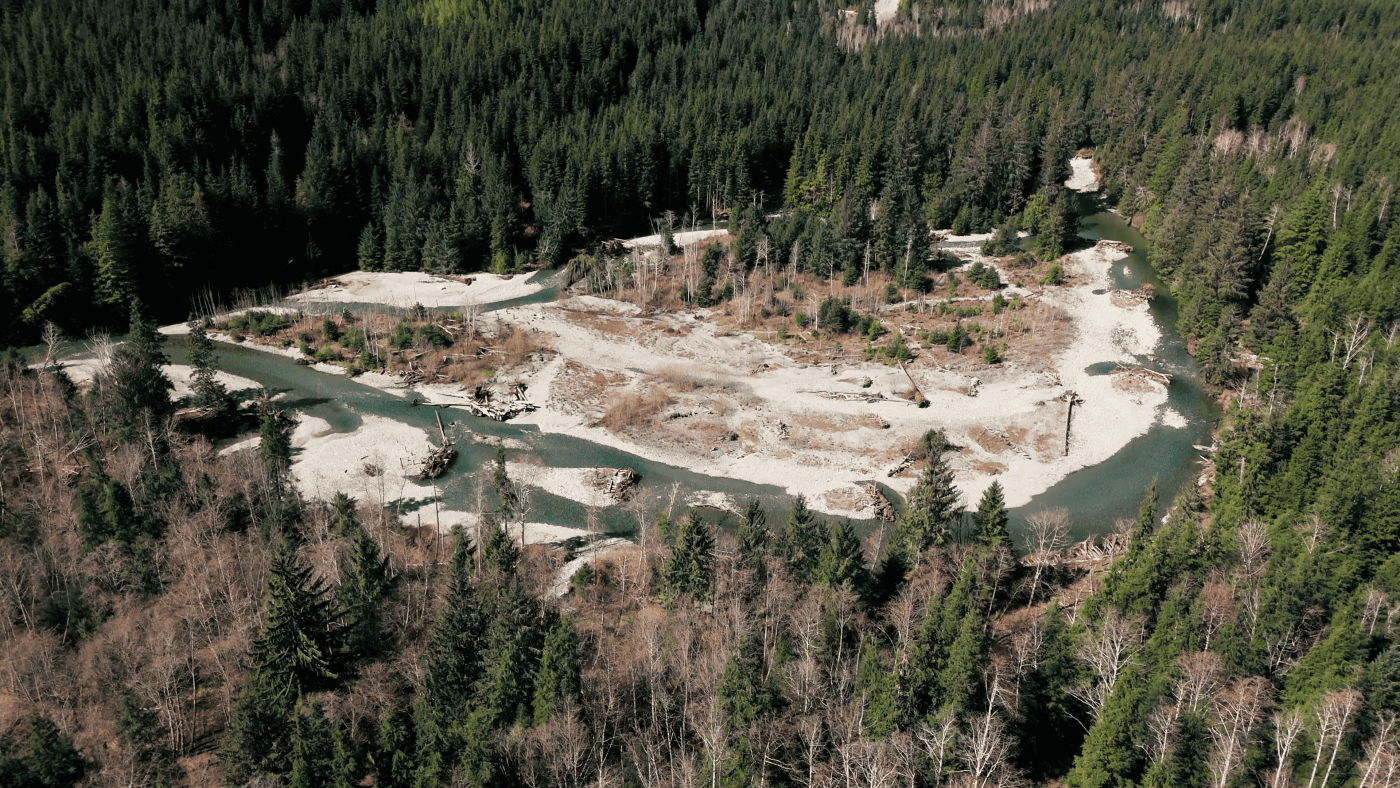
Morning light streams into the tiny, five-seat helicopter as it hovers above the Tranquil Creek watershed in Clayoquot Sound, B.C. It turns into what seems like a collision course with a cliff, but a landing pad appears just in time.
After a minute of careful positioning, the chopper touches ground on a bed of freshly cut grass and branches, allowing Tla-o-qui-aht First Nation’s natural resources manager Saya Masso and lead guardian Tattuuskulth (Tatt) Charlie to step outside.
They’ve come to see a mine shaft with an entranceway small enough that Masso ducks down to look inside. It looks like a relic from the gold rush, but there are a few conspicuously new things stashed at the entrance: a shiny white construction hat, plastic bags and a long orange hose coiled in a pile.
For Masso and Charlie, they’re quiet reminders that what began here more than a century ago has yet to conclude.
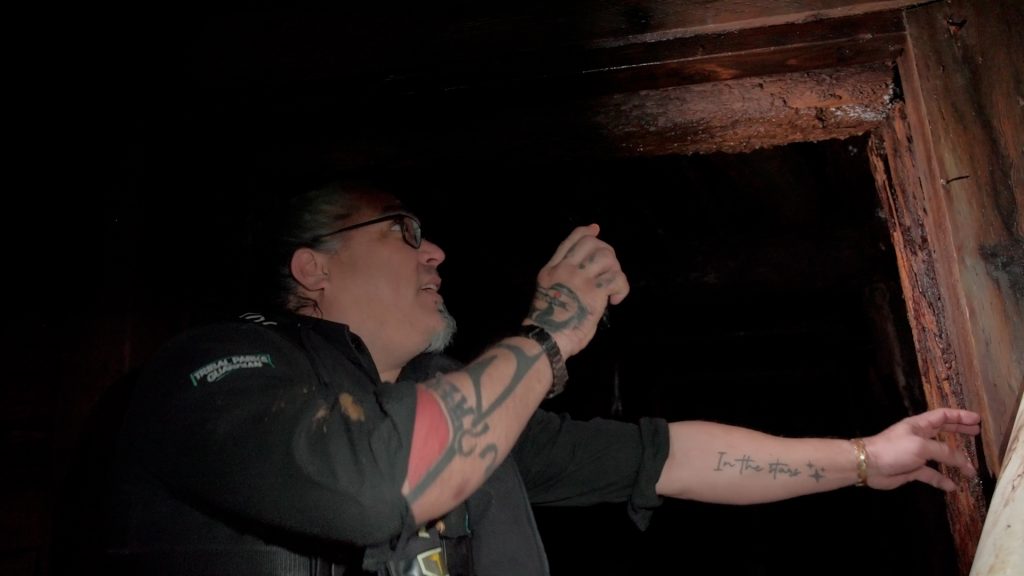
Tla-o-qui-aht natural resources manager Saya Masso and lead guardian Tattuuskulth (Tatt) Charlie travelled by helicopter to visit the long-dormant Fandora gold mine in Clayoquot Sound. With gold prices soaring, the Vancouver-based mining company Imperial Metals is exploring whether a gold mine here is worth it.
In February, Canadian mining company Imperial Metals received a permit to explore for gold at the long-dormant Fandora mine site on Vancouver Island’s west coast. For the next five years, the company is allowed to pick and prod underground in the hopes of accessing the site’s mostly untapped resources.
Masso is worried about Hiłsyaqƛis, the name for the Tranquil Creek watershed in Nuu-chah-nulth. Problems at this remote site in the middle of rain-drenched temperate forest could easily metastasize.
“Positive change is gradual,” he says, “but negative change can happen so quick.”
Clayoquot Sound is home to the some of the largest intact old-growth forests on Vancouver Island, and remains a key refuge for massive red cedars, orcas and Pacific salmon. About 20 kilometres from the mine site, these lands and waters now underpin the tourism economy of Tofino, B.C. First Nations including Tla-o-qui-aht have spent decades protecting the region, helping to shape its economic future. According to Tourism Tofino, visitors spent $430 million in the region in 2024.
Tofino Mayor Dan Law was careful to clarify the municipality has no jurisdiction over a prospective mine outside its boundaries, but says a mine in the sound “seems like a no-go.”
“Clearly, the wealth of Clayoquot Sound is not in resource extraction,” Law says from his office on a tree-lined street in the heart of town.
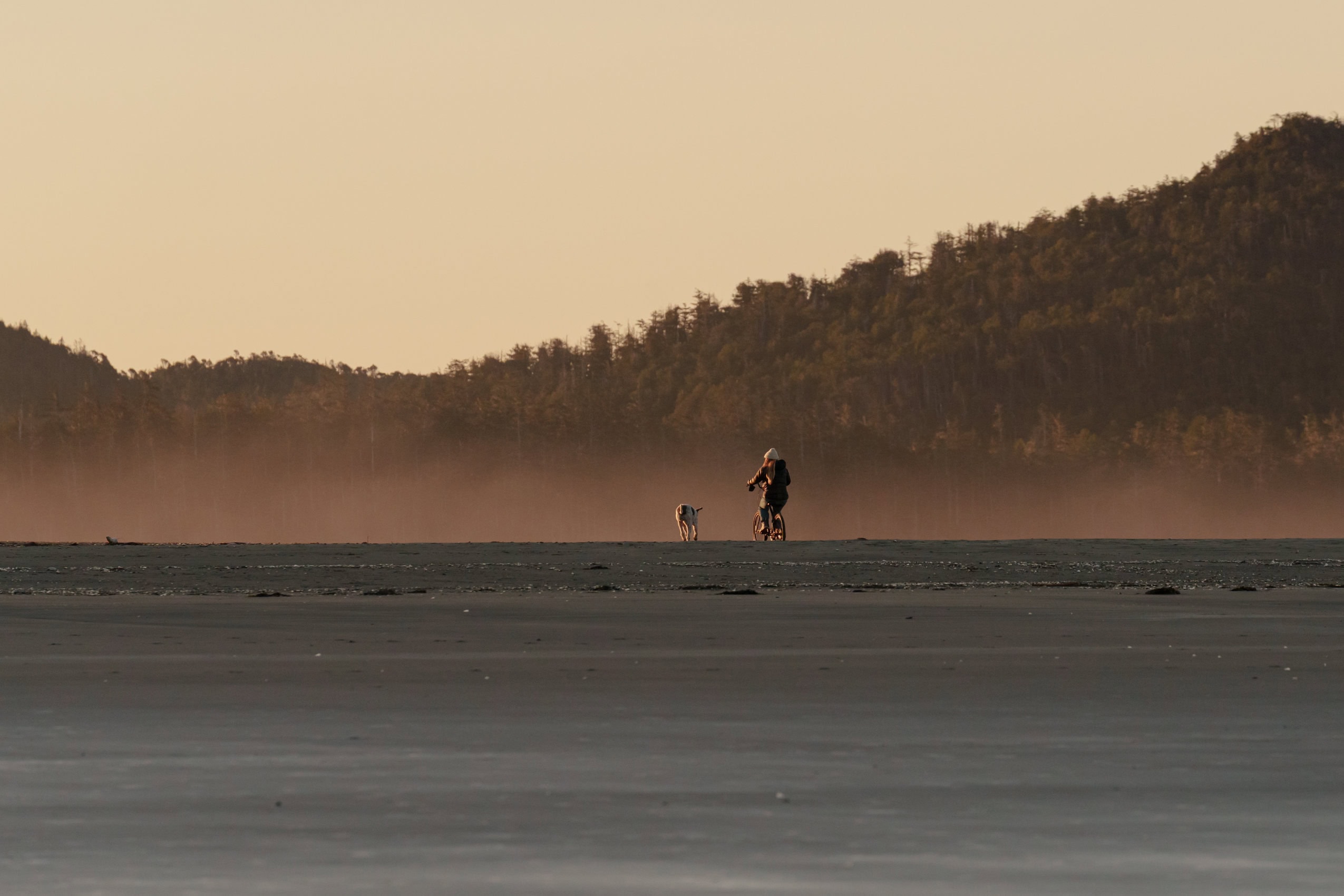
The District of Tofino’s natural beauty draws hundreds of thousands of tourists to the region each year. In 2024, visitors spent $430 million in the area. “The wealth of Clayoquot Sound is not in resource extraction,” Tofino Mayor Dan Law says.
Masso puts things a little more bluntly. “A gold mine will never open in Clayoquot Sound in this tenure,” he says. The Tla-o-qui-aht have opposed Imperial Metals’ efforts to search for gold on the site for more than a decade.
“It goes against our spiritual plan, our cultural plan, our tourism plan, so we’re asking ministers and leaders in B.C. to help turn this around, to put a pause on it, put an injunction on it,” Masso says.
The Tofino Chamber of Commerce also opposes the plan.
“This would be extensively damaging to our business community,” Graydon Clerk, executive director of the Tofino Chamber of Commerce, says. The association recently sent a letter to the province outlining its concerns.
Imperial Metals did not respond to The Narwhal’s multiple requests for comment.
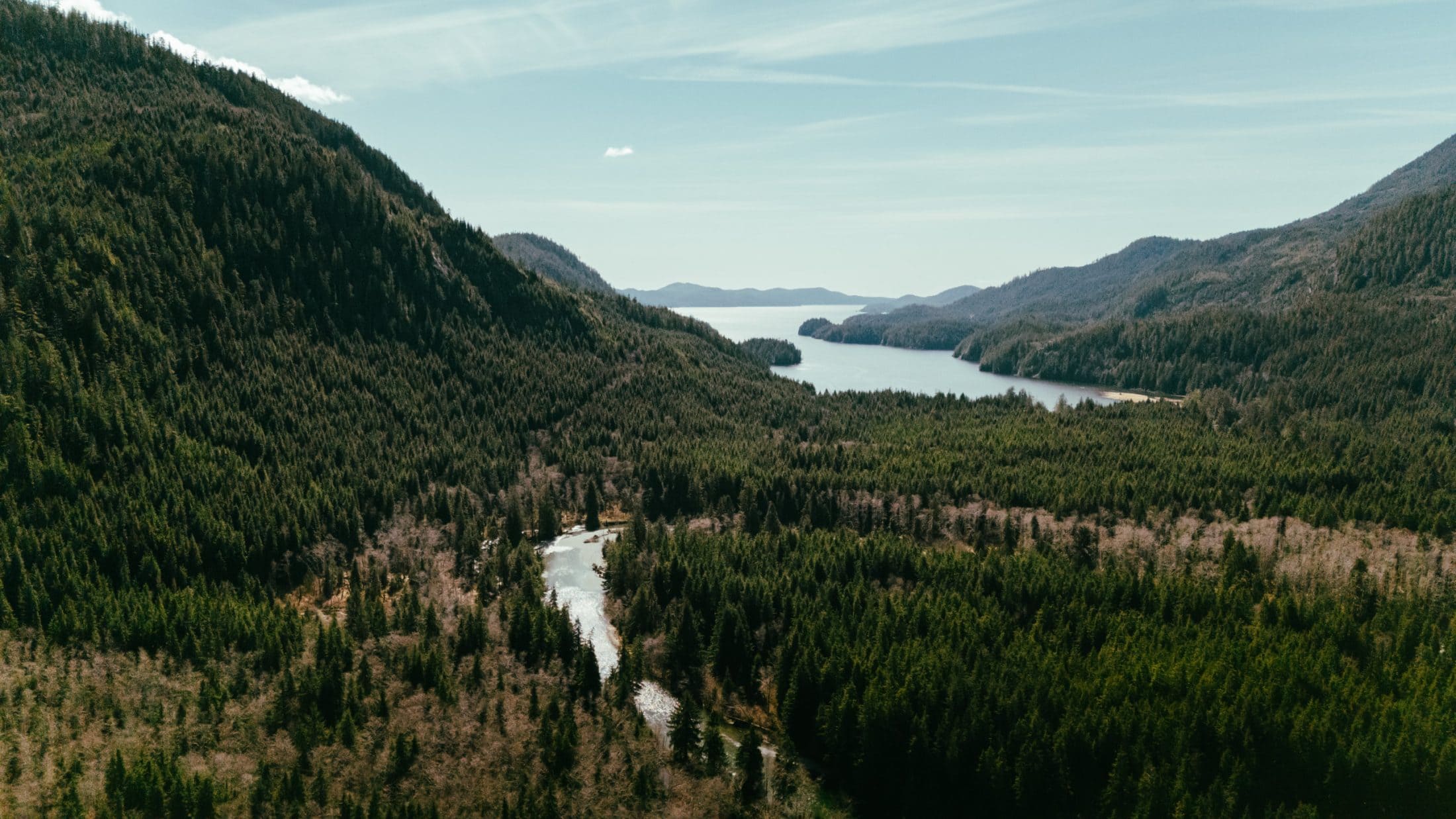
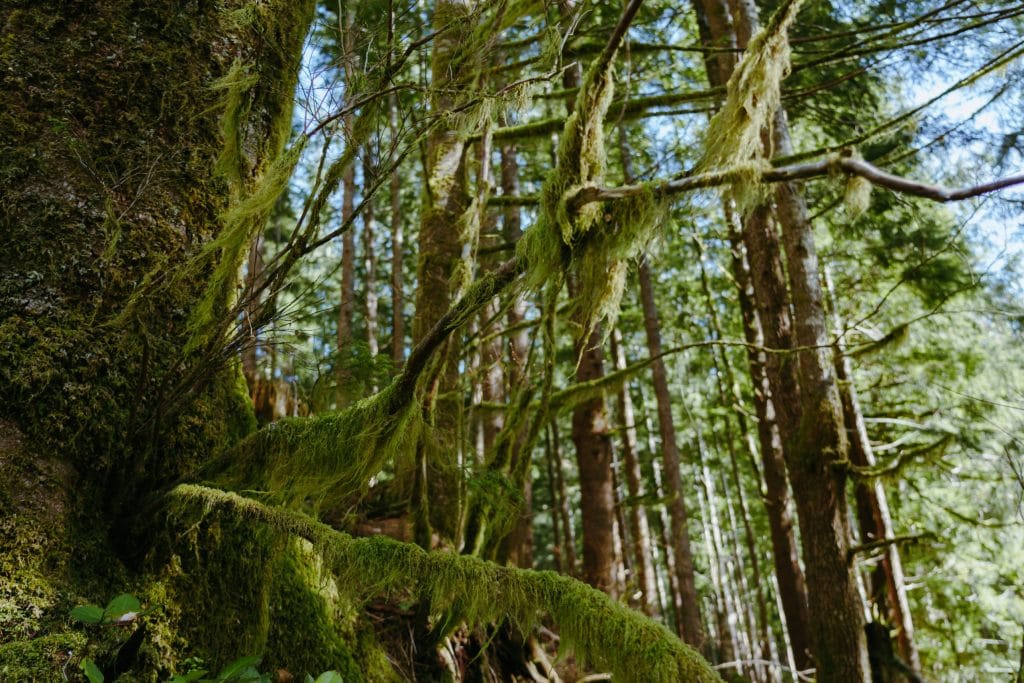
Located on the west coast of Vancouver Island, Clayoquot Sound is home to significant old-growth forests, and remains a key refuge for massive red cedars, orcas and Pacific salmon.
B.C.’s Ministry of Mining and Critical Minerals told The Narwhal the permit doesn’t allow activities beyond the current exploration plan. Anything more would require a new decision under the province’s Mines Act.
“The Ministry remains committed to strong environmental oversight, safe mining practices and ongoing consultation with First Nations and partners,” it added.
Pressure from the growing price of gold
East of Clayoquot Sound, a broader debate over Canada’s future is unfolding.
“Canada has what the world wants,” Prime Minister Mark Carney told a room of the world’s elite at the World Economic Forum in Davos, Switzerland, earlier this year, signalling his government’s open-for-business ethos. And the world wants gold.
Gold is among Canada’s largest exports, after oil and gas. Thanks to skyrocketing prices, the precious metal has boosted the profile of Canada’s stock exchange and contributed to the country’s claimed success diversifying its exports away from the U.S. To facilitate a resource-sector renaissance, Canada, B.C. and other provinces have promised to push major projects through — and quickly.
The Tla-o-qui-aht are no strangers to the treasures beneath their territory. Copper and gold from the region have long been used in ceremonies and to adorn regalia. “They had monumental value,” Tla-o-qui-aht Chief Elmer Frank tells The Narwhal in an interview.
By the late 1800s, word had gotten out, and prospectors flooded the region as the north’s Klondike Gold Rush wound down. The efforts were buoyed by B.C.’s mining laws, which allowed settlers to stake out mineral rights simply by driving posts into the ground.
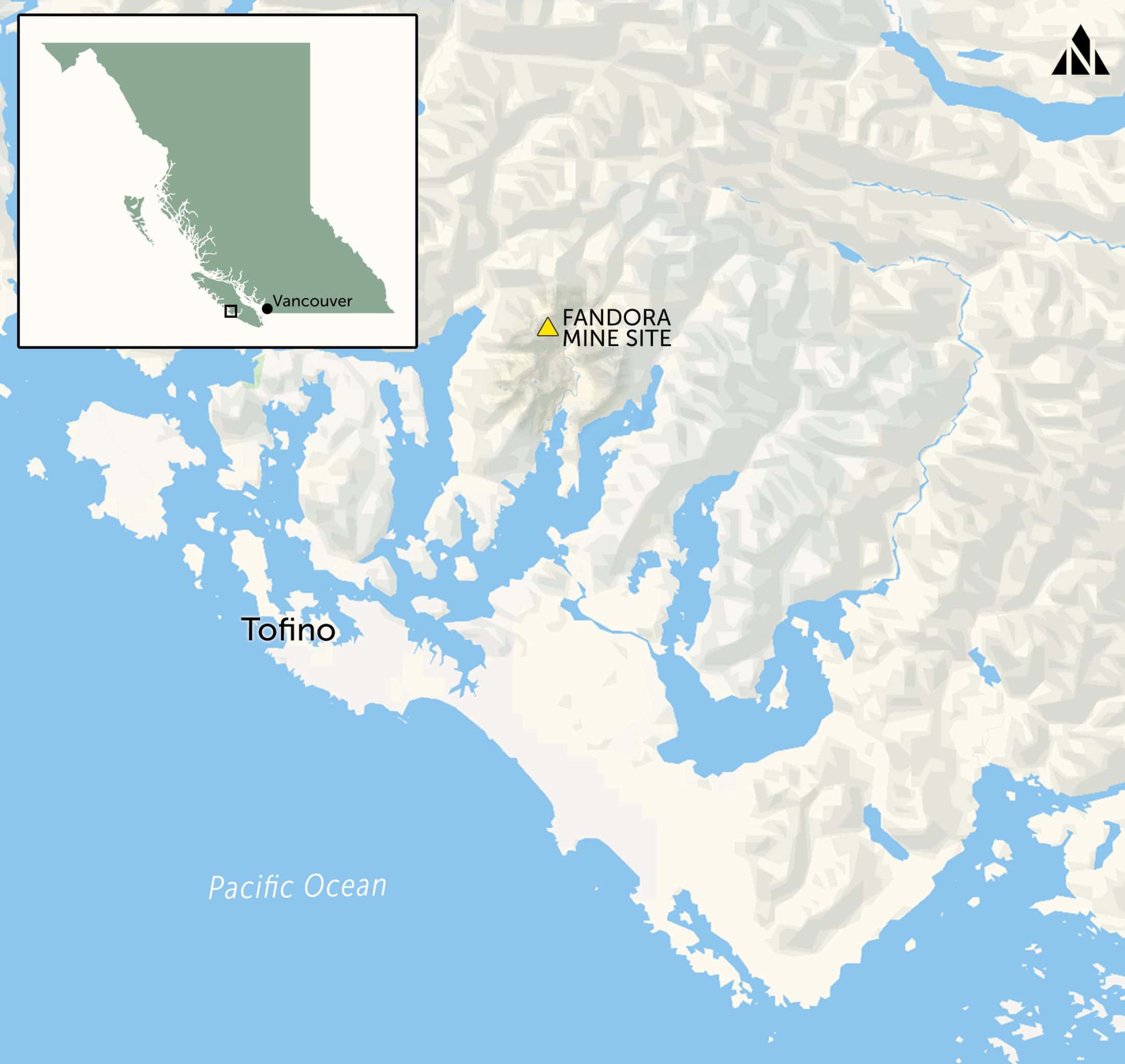
Map: Shawn Parkinson / The Narwhal
The Fandora mine site was first staked in the 1930s, but in 1940, the mine had yet to produce the equivalent of a large gold bar. It has sat mostly dormant for half a century.
Meanwhile, Tofino grew.
In 2000, Clayoquot Sound was declared a UNESCO Biosphere Reserve, marking it as a global priority for conservation. The town’s new boom was in whale-watching, five-star hotels and fancy restaurants. Today, Tofino’s population surges from about 2,500 year-round locals to more than 12,000 during its summer peak.
The District of Tofino has about 2,500 year-round residents. But in the summer months, when the village’s five-star hotels, fancy restaurants and whale watching cruises are operating, the population swells.
But in February, as gold prices soared, British Columbia approved a five-year permit for Imperial Metals, under its wholly-owned subsidiary, Selkirk Metals Corp., to see whether Fandora’s reserves are worth the cost of constructing a mine.
Documents obtained by The Narwhal show the company plans to dig a series of metre-wide trenches, some as long as two football fields, to determine if trace amounts of gold in the soil signal riches below. The company has also mapped out six drill pads, each roughly the size of a small house, some as close as 110 metres from the river. Drilling will likely require thousands of litres of water for each hole. On the company’s proposed exploration map, there are three “helicopter drill pad water sources” listed in Tranquil Creek’s tributaries. According to its permit, “road-access drilling” will not use water from Tranquil Creek or its tributaries.
In its permit application materials, Imperial Metals noted it will seek to reuse and reduce water as much as possible. The company’s permit also requires it take steps to accommodate traditional harvest and cultural practices during its exploration work, among other requirements.
In the documents, Imperial Metals noted the intensity of this project in its first year will depend on how much funding the company obtains. “We may only drill one or two holes,” it added. Its permit allows it to drill another 15 house-sized drill pads in yet-undisclosed locations across the Tranquil Creek watershed and its adjacent valley.
The documents also suggest gold on the property extends farther than previously understood. “After a long hiatus in exploration, modern soil geochemistry was completed on the property, which successfully extended the anomalous gold horizon along strike of the known veins,” an August 2025 Notice of Work obtained by The Narwhal states.
Imperial Metals did not respond to The Narwhal’s questions about its plans.
A mine surrounded by tribal parks
As the lead guardian for Tla-o-qui-aht First Nation, Charlie doesn’t miss a beat when asked which of his many tasks he prefers.
“Hands down, my favourite is trail building,” he says.
Tattuuskulth (Tatt) Charlie says trail building is his favourite part of being a Tribal Park Guardian for Tla-o-qui-aht First Nation. The nation has long been stewarding its territory.
Trails extend throughout the nation’s tribal parks, which now encompass Tla-o-qui-aht’s entire territory, more than 1,000 square kilometres. Within tribal parks, industry and economic development aren’t categorically excluded. But their acceptance is contingent on support from the nation and other locals who aim to ensure industry doesn’t come at the expense of what ecosystems and communities need to thrive.
“It’s a vision that the region can stand behind,” Masso says.
The province has yet to recognize tribal parks within its own legal system — and where some form of recognition exists, it has been hard-won.
In the late 1970s and early 1980s, members of Tla-o-qui-aht and ʕaaḥuusʔatḥ (Ahousaht) First Nations discovered logging giant MacMillan Bloedel had plans to clear-cut almost all of Meares Island, home of ecologically important intact forests. In response, Tla-o-qui-aht declared its first tribal park across Meares in its entirety. The province granted the company’s logging permits anyway.
A blockade led by the Tla-o-qui-aht ensued, sparking the first of a series of blockades in Clayoquot Sound which eventually led to the War in the Woods. In 1985, the B.C. Court of Appeal decided the nations’ yet-to-be-recognized Aboriginal Title should outweigh the company’s right to short-term profit.
According a paper published by lawyer and professor Douglas Harris, the decision helped shape a key turning point. Indigenous Rights claims were no longer a point of curiosity for the courts. Now they had legal weight.
Today, Meares Island remains off-limits to logging, protecting the District of Tofino’s sole source of drinking water. But elsewhere in the territory, including in the Tranquil watershed, areas within tribal parks had no such safeguards.
That is, until recently.
‘Consent of affected First Nations is not a legal requirement,’ B.C. government says
In spring 2024, B.C., Tla-o-qui-aht and neighbouring ʕaaḥuusʔatḥ announced a set of protected areas across Clayoquot Sound and throughout the Tla-o-qui-aht Nation’s tribal parks. “It’s a monumental occasion,” Masso said at the time.
In theory, the conservancies would recognize some principles of the Tla-o-qui-aht’s tribal parks within B.C.’s laws, and they came with commitments: B.C. promised the areas would have no commercial forestry within their boundaries, nor any mining activity.
To Masso, it remains a partial victory: The Tranquil Creek conservancy B.C. put forward has a big hole in the middle, shaped seemingly to avoid overlap with Imperial Metals’ mining claims.
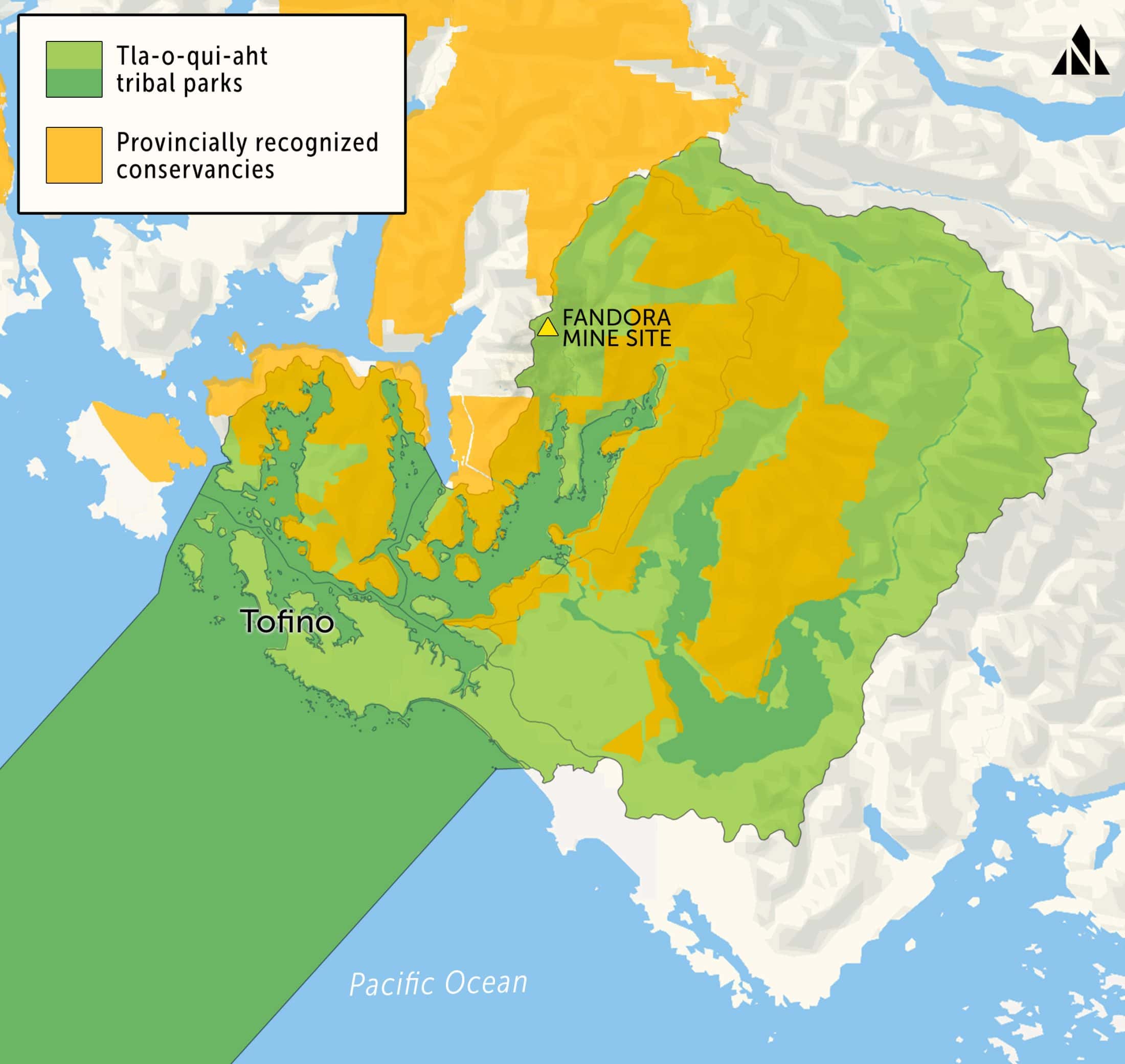
In 2024, the B.C. government announced conservancies, many within Tla-o-qui-aht First Nations’ tribal parks. The new conservancies do not include the Fandora mine site or surrounding area. Map: Shawn Parkinson / The Narwhal
Masso says he remembers the province’s reassurances. “They said, ‘This is just the first step,’ ” he says. “‘We’ll make more as we do more work to resolve overlaps or tenures, and we’ll add it.’ ”
But that hasn’t happened.
Instead, Masso received an email from the province in December 2025, which revealed Imperial Metals was about to return. After a few years of what Chief Frank described as “one-way” consultation, the company was on the precipice of receiving a renewed exploration permit.
Masso was stunned. “We said, ‘Wait a second, they’re considering issuing this,’ ” he says. “We wrote a very stern letter reminding them that they couldn’t.”
Two months later, the province approved Imperial’s permit anyway.
In an emailed statement, B.C.’s Ministry of Mines and Critical Minerals said its decision was based on the exploration activity alone.
The ministry added “Consent of affected First Nations is not a legal requirement” but that it “seeks to reach consensus in decision making and considers all input from First Nations in that process.”
“Input received informs decision making,” it added.
ʕaaḥuusʔatḥ, whose territory overlaps with areas within Imperial Metals’ Fandora claim, did not respond to The Narwhal’s interview request.
Indigenous consent and the country’s relationship to it are an increasingly charged lightning rod in Canadian politics. In 2019, B.C. committed to integrate the United Nations Declaration on the Rights of Indigenous Peoples, or UNDRIP, into its own laws, including the principle of free, prior and informed consent.
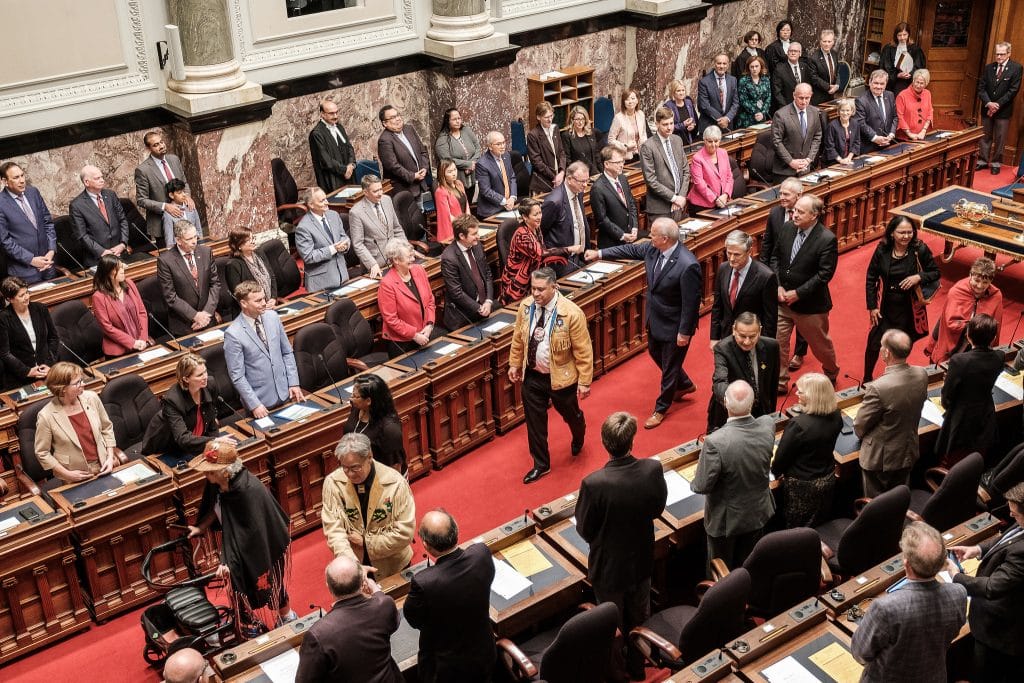
B.C.’s Declaration on the Rights of Indigenous Peoples Act passed unanimously in the provincial legislature in 2019, but the act has come under fire in recent years as Indigenous Rights become an increasingly charged lightning rod in Canadian politics. Photo: Province of British Columbia / Flickr
More recently, the B.C. Court of Appeal found the province’s mineral tenure system inconsistent with UNDRIP, as incorporated into provincial law through the Declaration on the Rights of Indigenous Peoples Act (DRIPA). The province appealed the ruling, which is now waiting to be heard by the Supreme Court of Canada. In the meantime, Premier David Eby attempted to suspend parts of the Declaration Act, a move that was widely criticized and stopped, in part, by the NDP government’s own members. The government says it will revisit the issue in the fall legislative session.
Sara Ghebremusse, an assistant professor at the University of British Columbia’s Allard School of Law, cautions against efforts to go backwards, particularly given the growing body of international and national law recognizing the weight of Indigenous Rights.
“This is going to be a long-term issue,” she says.
The cost of gold
At the Fandora site, gold comes wrapped up with sulphides. Under certain conditions, the compound turns water into acid that can leach heavy metals into the watershed.
To curb that risk, mines generally store waste rock underwater and away from oxygen. But in rain-drenched Clayoquot Sound, accumulating pools of tailings could overflow, meaning if built a mine would likely require long-term drainage systems and monitoring.
“Water is always a problem,” Scott Dunbar, a professor of mining engineering at the University of British Columbia, says. “If an accident occurs, the first question is always ‘Where did the water get out?’ ”
For the time being, Imperial’s exploration permit requires it to mitigate the potential for acid mine drainage through identifying and safely disposing of rocks capable of causing it.
Gold is also famously stubborn for clinging to its host rocks, which means heavy-duty chemicals are used in extraction. Cyanide leaching is the most common method of choice. Companies aim to isolate the obviously noxious chemical and keep it contained, but tailings that are left over are likely contaminated.
Meanwhile, the Tranquil Creek watershed is already on life support.
After the valley bottom was logged extensively in the 1960s and 1970s, loggers moved into the hills, destroying root systems that held the region’s crumbly till in place. Landslides ensued, helping turn Tranquil Creek, a key spawning ground for Pacific salmon, into a danger zone capable of suffocating salmon eggs beneath gravel or washing them out to sea. By 2017, resident Chinook and chum salmon had almost disappeared.
With the Redd Fish Restoration Society, Tla-o-qui-aht is working to restore the watershed, including installing a series of costly but effective human-made log-jams to slow the water and building terraces in the landslides to choke off the gravel taps. Collectively with other groups, about $6 million has been spent restoring the Tranquil so far. Recent years of boosted salmon returns are providing some hope.
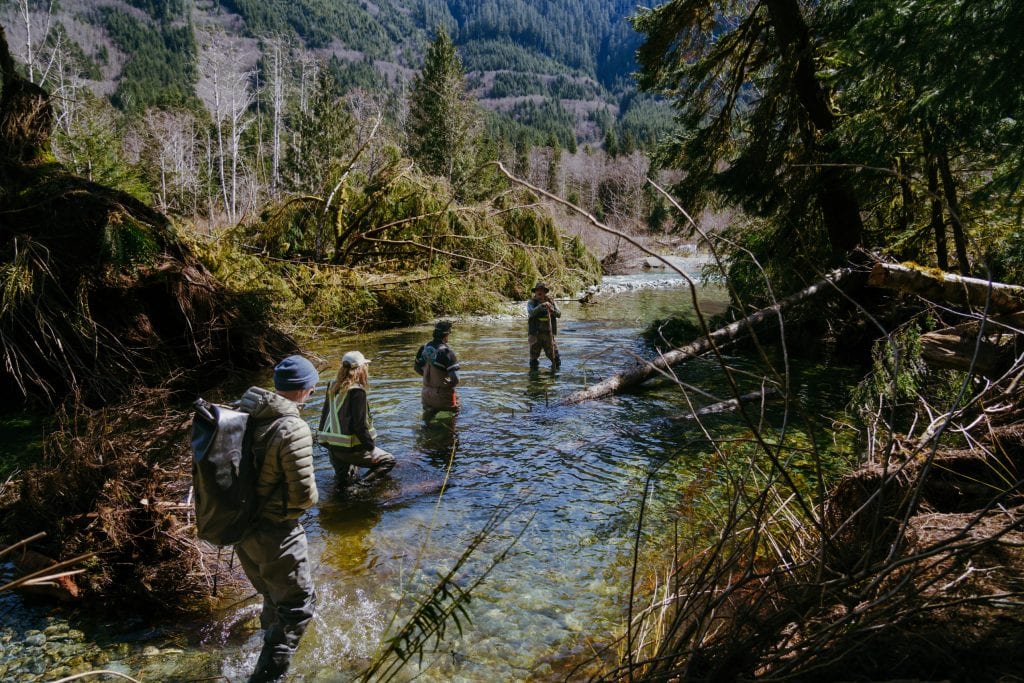
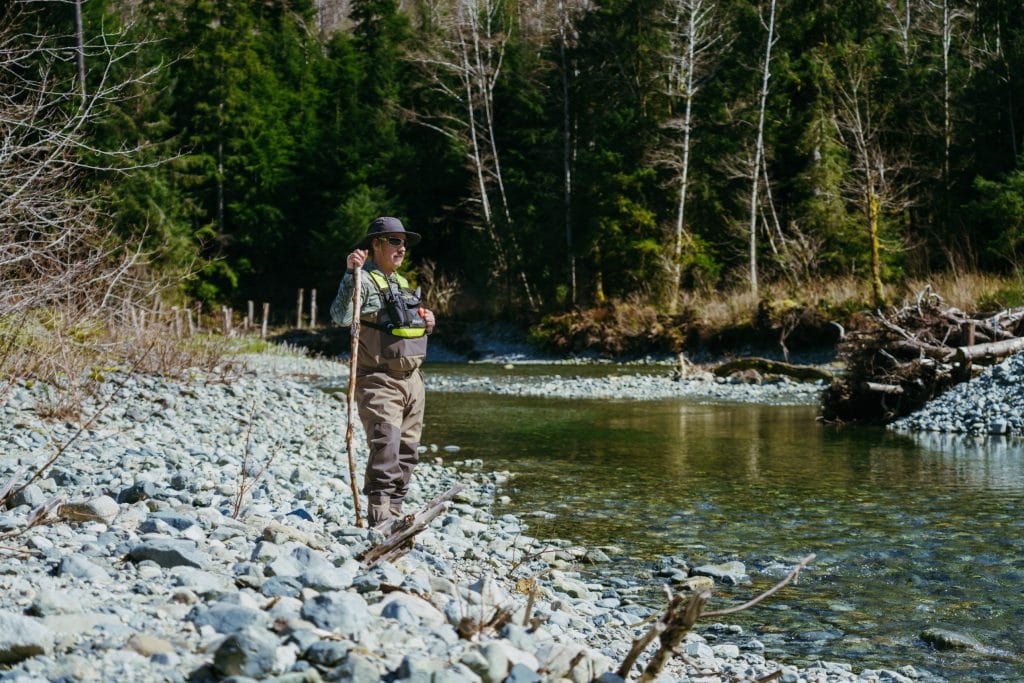
Intensive logging activity in the Tranquil Creek watershed nearly eradicated resident Chinook and chum salmon populations. Now, ecological restoration led by the Tla-o-qui-aht Nation and environmental charity Redd Fish Restoration Society is working to bring the salmon back.
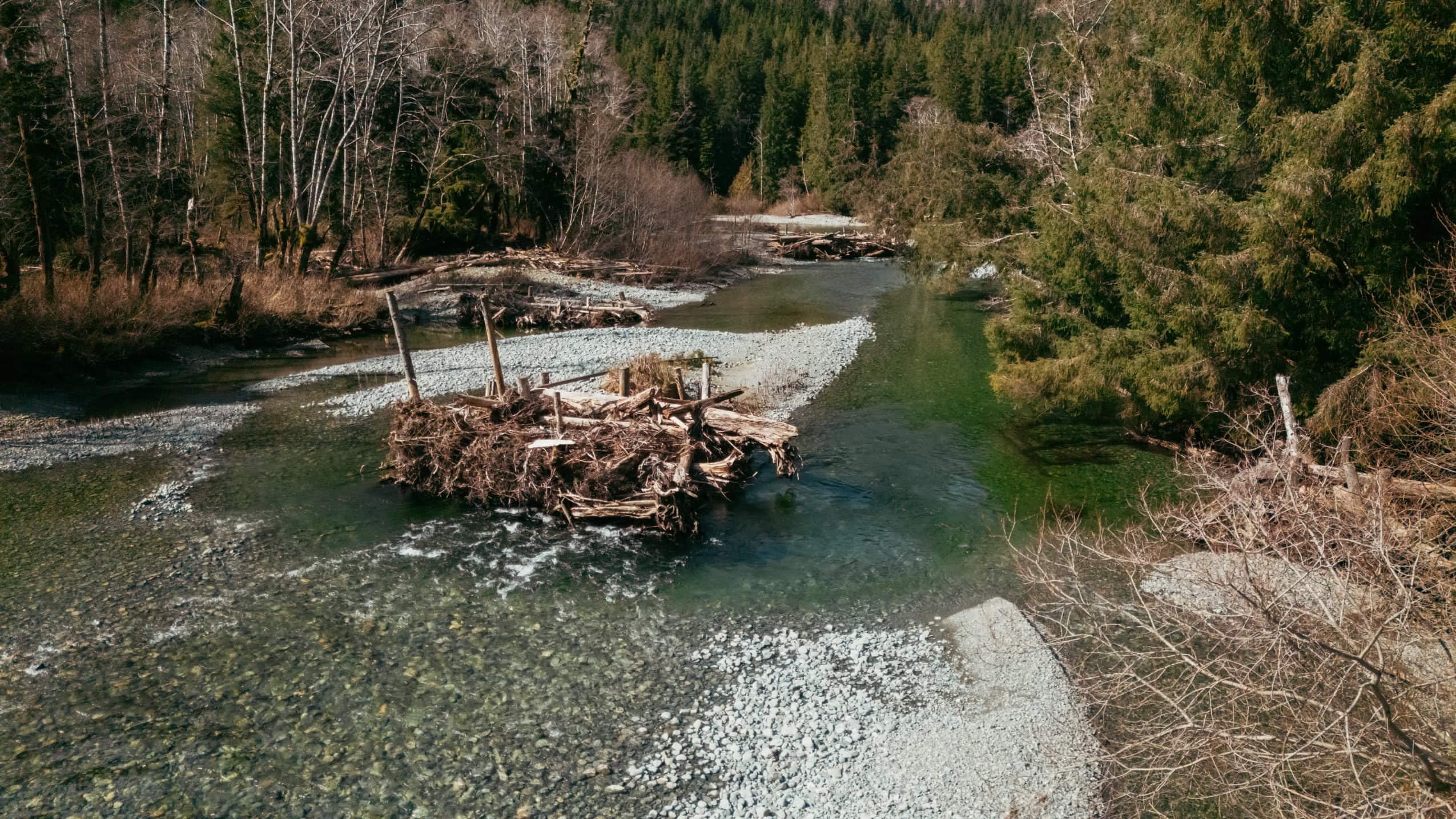
Human-made log-jams are placed strategically along Tranquil Creek to slow the pace of water flow, making the river more hospitable for salmon.
Charlie warns of the risks of backsliding in the Tranquil. “Mining is one thing that will just throw it over the edge,” he says.
In a recent article in the publication Ha-Shilth-Sa, Imperial Metals CEO Brian Kynoch noted the mine would “most likely” be underground, not in an open pit, and that it would target only “narrow” gold veins. He also said Imperial Metals “remains committed to engaging respectfully with First Nations and local communities as the project moves forward.”
Kynoch has previously described the project as “artisanal.”
But the company has a checkered past: In 2014, the company’s “crown jewel” gold and copper mine, Mount Polley, became the site of the largest mining waste disaster in Canada’s history when its tailings dam breached. More than 25 billion litres of water and mine waste, including lead, cadmium and arsenic, spilled into the surrounding watershed. Later reporting showed the province warned the company about stability concerns in its tailings dam at least five times before the disaster occurred.
In 2018, the company faced significant financial challenges and there was concern it might file for bankruptcy. But even if a mine is never built, Imperial could profit from the claim. In B.C., mining companies stand to be compensated if they withdraw claims to make way for new protected areas. In 2022, Imperial Metals received $24 million to relinquish its claim area in the Skagit Headwaters.
“It doesn’t make any sense at all to let them drill it if the only end result is to compensate them to not mine,” Masso says.
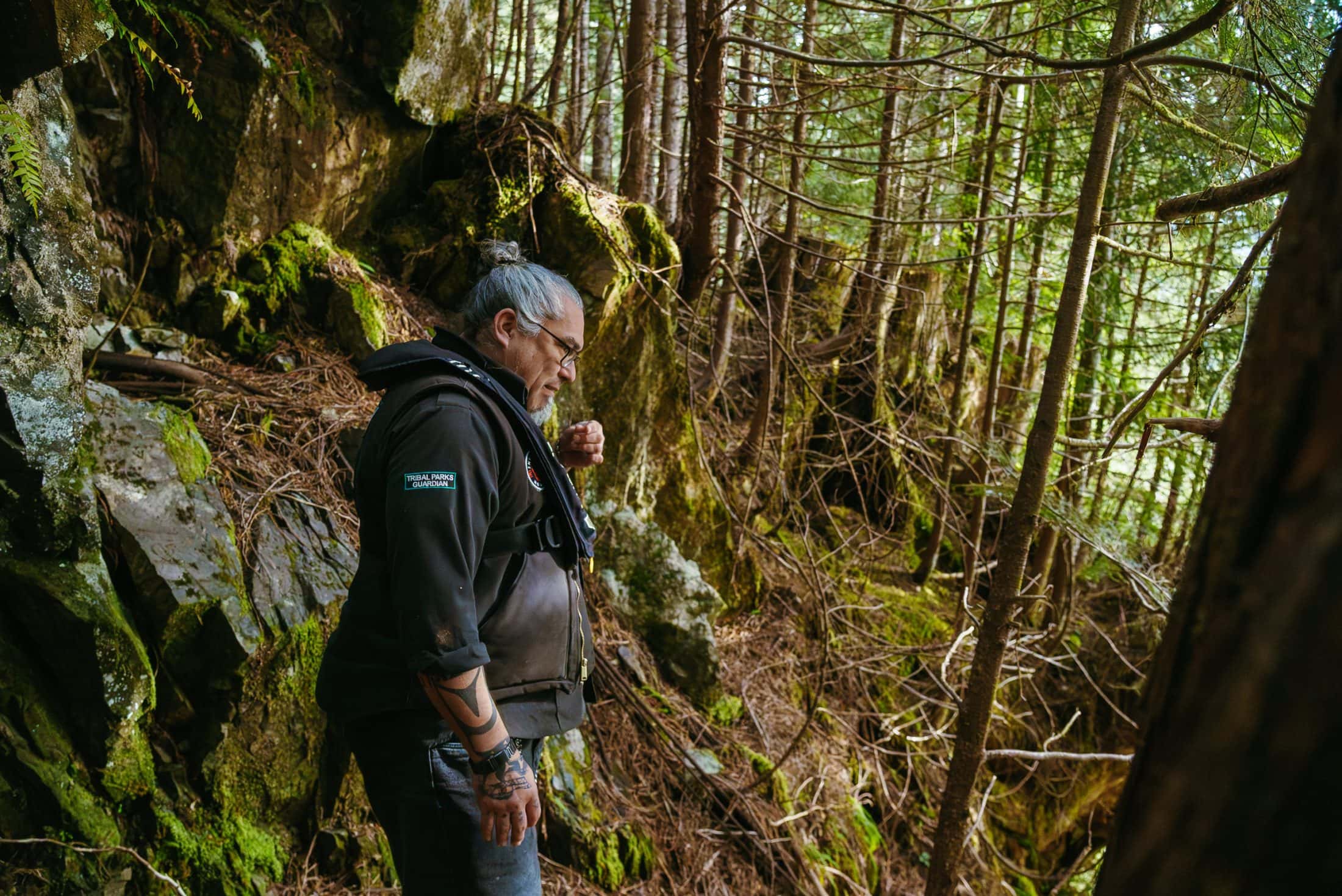
“Mining is a non-permissable use of tribal parks,” Tla-o-qui-aht First Nation’s natural resources manager Saya Masso says. “It goes against every other interest we have.”
Imperial Metals did not reply to The Narwhal’s request for comment.
‘It’s still a beautiful place’
Once we’re back in the helicopter’s bucket seats, the chopper ascends from the cliff face and travels on through the Tranquil watershed.
Uniform patches of short, stubby trees extend across the valley bottom, but the forests transform as we fly higher, farther from the reach of roads and access points. Soon the chopper tips toward the deep blue bowl of a mountain lake, its water still and inky blue.
“It’s still a beautiful place,” Masso says. “Even if it’s still in recovery.”
From up above, Tofino’s growth is hard to ignore. Multimillion-dollar vacation homes sprawl across the coastline. Masso peers out the window, thinking about an old photo of Tofino in the 1960s with just a scattering of homes. He knows more change is on the way.
“Imagine another 80 years from now,” he says. “People are gonna say, ‘Look at what it was like.’ ”
Tourism has its challenges: Tofino is short on water and housing. Charlie and the other Tla-o-qui-aht Guardians sometimes spend days cleaning up after visitors who leave their trash on the beach and backcountry.
But these are the challenges that Tla-o-qui-aht and the town of Tofino are choosing to grapple with, and there is work underway to smooth out the industry’s edges. Local businesses, for example, are now encouraged to collect a one per cent “responsible visitor fee” from customers to support restoration and protection in Tla-o-qui-aht’s tribal parks program.
“We live together,” Tofino Mayor Law says. “We see this as a present and future relationship.”
Tla-o-qui-aht First Nation is vowing to continue stewarding and protecting its traditional territory in the Clayoquot Sound. That includes opposing exploration at the Fandora gold mine in the Tranquil Creek watershed.
Back on the ground, Masso and Charlie get ready to return to their day’s business. Masso is thinking about the coming heat and wildfires, and asks to see the helicopter company’s firefighting equipment. Moments of pause are few and far between.
Masso had hoped the nation’s tribal parks would ward off ill-fitting visions of the region’s future.
“We could spend our time building longhouses and rebuilding rivers, doing positive things for our children,” he says.
“But now I have to spend the next couple of years opposing a gold mine.”
The Narwhal’s reporters are telling environment stories you won’t read about anywhere else. Stay in the loop by signing up for our free weekly dose of independent journalism.
From The Narwhal | News on Climate Change, Environmental Issues in Canada via This RSS Feed.
22
1
The Narwhal wins three more Canadian journalism awards, including for climate coverage
(thenarwhal.ca)

The Canadian journalism industry’s 2026 awards season is continuing apace, and The Narwhal picked up several additional accolades last week, right on the heels of our strong showing at the Digital Publishing Awards and National Magazine Awards.
For the second time this month, Narwhal freelancers Chloe Williams and Gavin John have been awarded with a top Canadian climate journalism prize. Judges from the Canadian Journalism Foundation announced Willams and John as winners of the foundation’s climate solutions reporting prize at a ceremony in Toronto on June 10.
Williams and John were recognized for their story on disappearing sea ice in Cambridge Bay, Nvt. The two journalists spent five days there last year to document the social and cultural impacts of receding sea ice, as well as a potential solution that could preserve the community’s sea ice traditions for another generation.
Nicole MacAdam, a juror for the prize, called the story “a fully realized account of what it means to be an Inuit community living inside a climate crisis, engaging with an imperfect intervention on its own terms.”
Williams and John also won the climate change reporting prize at the Digital Publishing Awards for the same story.
It’s not the first time The Narwhal has won the Canadian Journalism Foundation’s climate solutions reporting prize: we last snagged the award in 2023, for our work documenting the rise of Indigenous-led conservation in Canada.
Narwhal reporters Savannah Ridley and Matt Simmons each win silver at Canadian Association of Journalists awards
Days later, the Canadian Association of Journalists awarded two journalists from The Narwhal with silver prizes at its annual awards ceremony in Ottawa on June 13.
Savannah Ridley won silver in the emerging Indigenous journalist category for a body of work she produced in 2025.
Savannah joined The Narwhal as our first-ever Indigenous editorial fellow and quickly distinguished herself with her enthusiasm and commitment. She’s “an immensely talented young journalist who brings insight and empathy to her work,” bureau chief Michelle Cyca says.
Savannah covered the AI data centre boom and the drinking water crisis in First Nations, among other topics, during her time at The Narwhal. She is now a staff reporter at the Toronto Star.
Matt Simmons, The Narwhal’s northwest B.C. reporter, also won a silver from the Canadian Association of Journalists. His award came in the labour journalism category for a story he wrote about sexual violence in the tree-planting industry.
Matt spoke with sexual assault survivors, educators and industry representatives for his story, which painted a nuanced picture of the issue, focusing on systemic problems instead of individual perpetrators.
Executive editor Denise Balkissoon called Matt’s story “a thoughtful narrative on an important topic, written with care by a reporter willing to explore a sensitive subject he had never tackled before.”
The Narwhal’s award-winning environmental journalism is made possible by over 7,300 members who make monthly or annual donations to support our non-profit newsroom.
For a limited time, we’re thanking new members by sending them a pair of Narwhal socks. Sign up here to support independent journalism and show your feet some love!
The Narwhal’s reporters are telling environment stories you won’t read about anywhere else. Stay in the loop by signing up for our free weekly dose of independent journalism.
From The Narwhal | News on Climate Change, Environmental Issues in Canada via This RSS Feed.
23
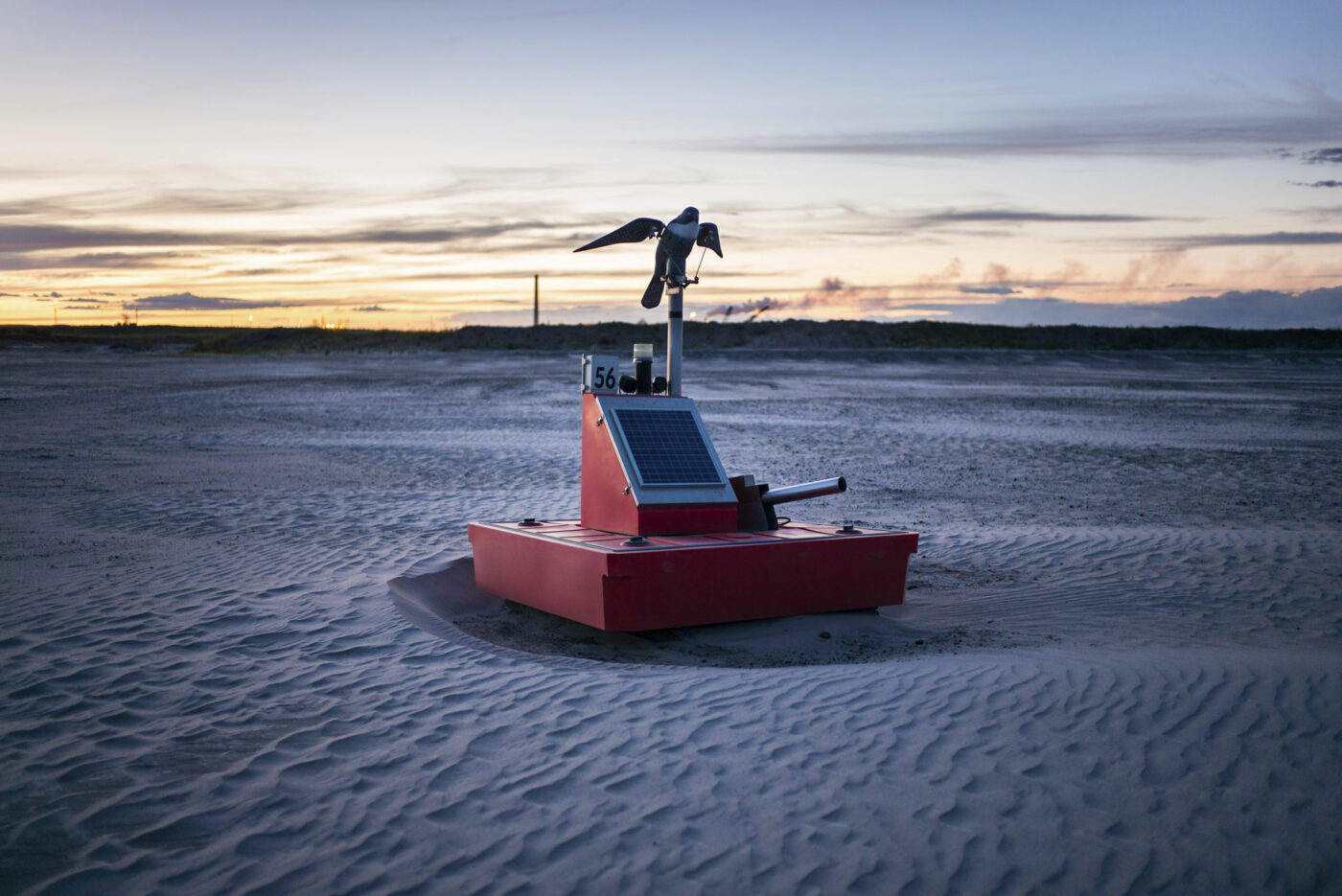
Photo: Ian Willms / Panos Pictures
Summary
- In early May, 49 birds were found in tailings ponds at Imperial Oil’s Kearl oilsands mine. Later in the month, 95 birds were found dead at the Suncor Firebag site.
- The Alberta government’s oilsands mine water steering committee made recommendations in 2025 to speed up creating standards for treating and releasing tailings, which are generated as a by-product of the oil extraction process.
- Treating and releasing tailings into rivers has been criticized by downstream First Nations, including Mikisew Cree First Nation.
At Jean L’Hommecourt’s cabin north of Fort McMurray, the birdsong is frequently interrupted by the hollow booming of a cannon, a stark reminder of the proximity of the oilsands in an otherwise tranquil setting of muskeg and boreal forest.
L’Hommecourt got another reminder of her toxic neighbour last month. Announcements about oiled birds in tailings ponds have L’Hommecourt, who is from Fort McKay First Nation, and other community members thinking about the 1.4 billion cubic litres of tailings ponds upstream of their water supply and food sources in northern Alberta.
The booming cannons heard from L’Hommecourt’s cabin are an attempt to scare away birds that might otherwise land on tailings ponds and perish — but they don’t always work. Fort McKay First Nation notified members that 49 birds were found in tailings ponds at Imperial Oil’s Kearl oilsands mine between May 1 and 8. “Detection and deterrent systems, including the use of drones for hazing, have remained active during this spring migration period,” the notice to members said. The Narwhal reached out to Imperial Oil to ask whether the birds were found deceased, or if any birds had been retrieved and rehabilitated, but the company did not respond to multiple requests for comment.
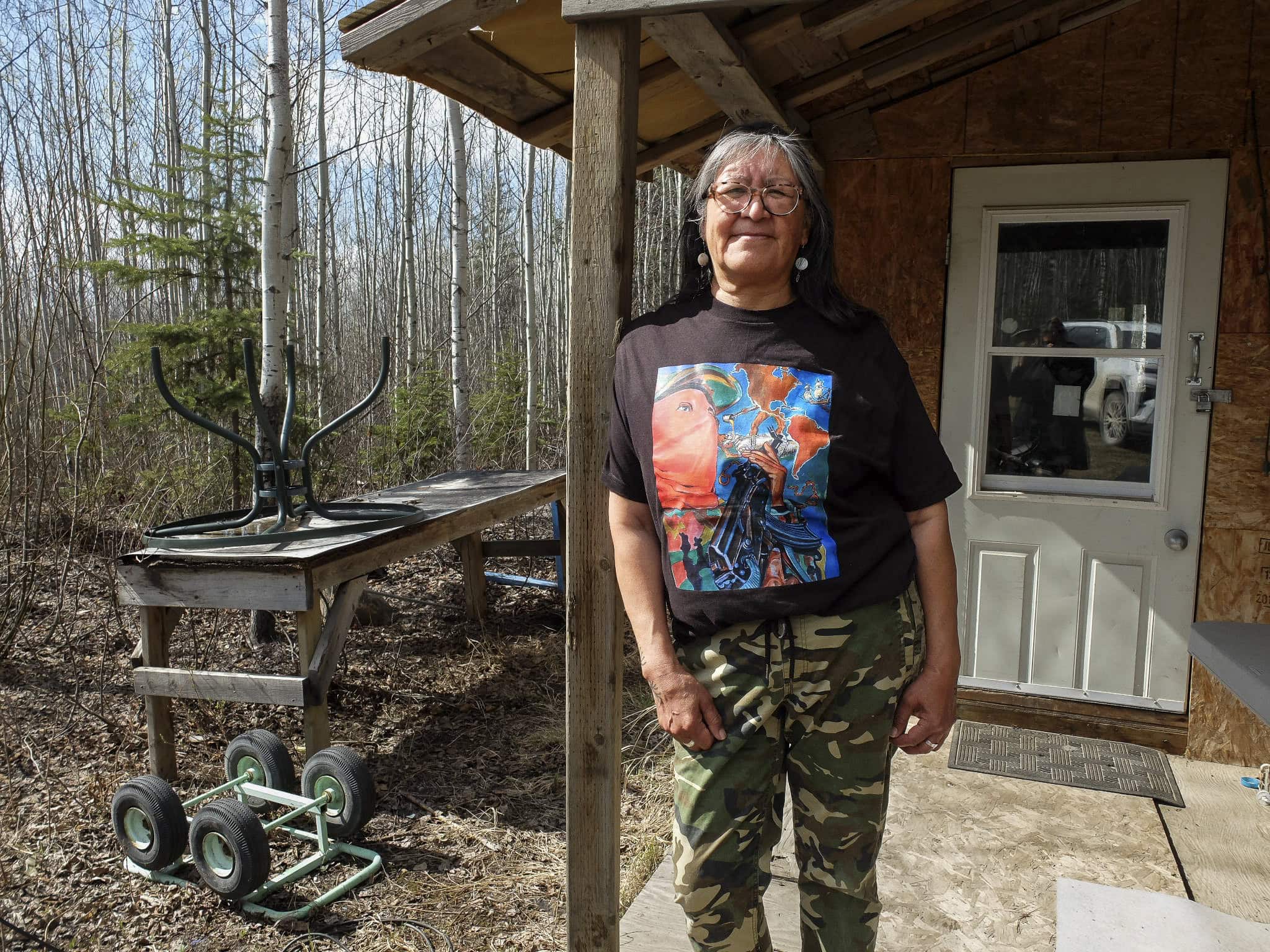
Jean L’Hommecourt at her cabin outside of Fort McMurray and Fort McKay First Nation in northern Alberta. Photo: Danielle Paradis / The Narwhal
“It’s claiming the lives of our waterfowl. That is our traditional foods,” L’Hommecourt, who has been an advocate for clean drinking water, said.
L’Hommecourt’s cabin is 13 kilometres away from the Kearl mine site and she no longer harvests plants or berries from the area. She is concerned about the effects of air pollution, though she and her husband will still harvest moose, as they live on a diet of traditional foods as much as possible.
95 more birds found dead at Suncor site in May
Living downstream of tailings ponds has long been a concern for residents in and around Fort McKay, which is in the middle of much oilsands mining activity, as well as in Fort Chipewyan, a remote fly-in community accessible only by plane or winter road that is downstream of the oilsands. Fort Chipewyan has three Indigenous groups: Athabasca Chipewyan First Nation, the Fort Chipewyan Métis and the Mikisew Cree.
On May 24, Mikisew Cree First Nation also notified members that birds were found dead at one of Suncor’s oilsands sites, known as the Suncor Firebag site.
“After a thorough search of the area, a total of 95 birds have been found deceased in the north-east quadrant of the site, not near any bodies of water,” a spokesperson for Suncor said in a statement.
Birds land on tailings ponds to rest as they migrate. Lights from the work camps, changes in temperature and even a change in headwinds can mean the migrating birds need these pit stops.
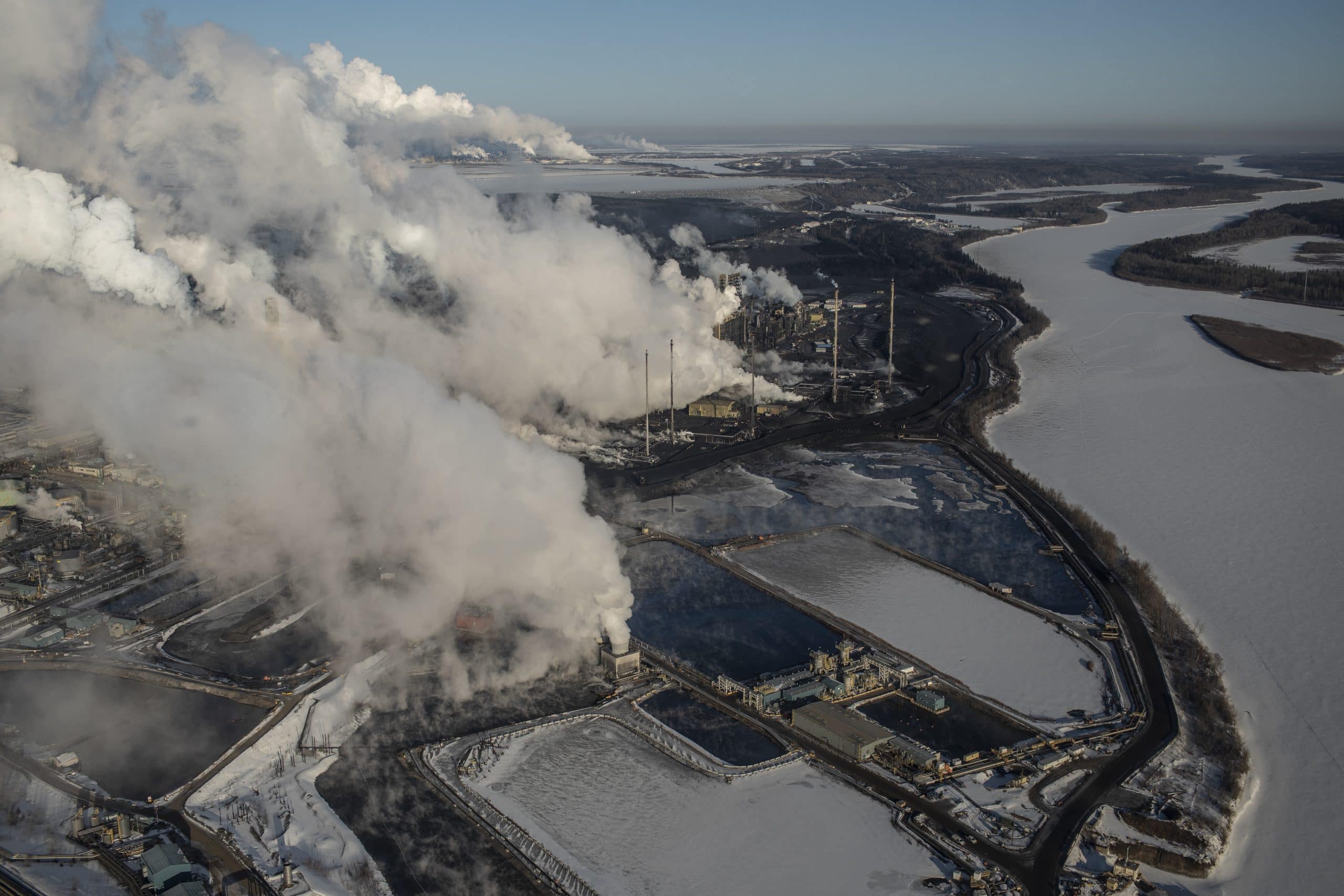
The Suncor Base Plant’s tailings ponds sit next to the Athabasca River. Birds make pit stops at these ponds along their migration routes, exposing them to risks like hypothermia. Photo: Amber Bracken / The Narwhal
When a bird lands in a tailings pond they can become coated with oil, which can reduce the waterproofing in their feathers and can cause them to sink. Birds that can get out of the tailings pond and have the oil removed may have reduced insulation and other negative effects that can lead to hypothermia even from small amounts of oil, according to a federal government report on annual bird mortality in the oilsands.
The Alberta Energy Regulator said it was conducting an inspection of the Firebag site for more information about the dead birds.
A spokesperson for the regulator said by email that oilsands operators typically use a number of deterrents to stop birds or other wildlife from ending up in tailings ponds, including propane-fired cannons and loudspeakers, scarecrows, human effigies and kites shaped like hawks.
The Narwhal previously reported on an unreleased internal document from the Alberta Energy Regulator in 2021 that showed an “emphasis on the appearance of sophisticated bird protection over data that demonstrate it.”
L’Hommecourt said she is upset that even though there is ample time to plan new deterrents, communities are still receiving notifications about oiled birds and bird deaths.
Suncor added in a statement that it has a monitoring and mitigation program to prevent its sites from harming wildlife. The cause of death for the birds is currently unknown.
Bird deaths continue as Alberta plans a new treat-and-release approach to tailings
The announcements have spurred further concern about pollution issues downstream of the oilsands. Mikisew Cree First Nation Chief Billy-Joe Tuccaro went to Ottawa in November to call on the federal government to manage tailings ponds and other industrial waste in a way that protects nearby communities like Fort Chipewyan, where he said he doesn’t feel Indigenous sovereignty or community concerns about water are being taken seriously.
“So, what they’re saying is that it’s safe. Well, if it’s so safe, build a pipeline, put it right by the [legislature] in Edmonton. The premier can drink it first, then send another pipeline to Calgary, then the Bow, they can drink it as well, those corporate people, and then build one, go to the east, and then Carney could drink it too,” he told The Narwhal.
“And then they could be the science experiments, the subjects, because we’re tired of it.”
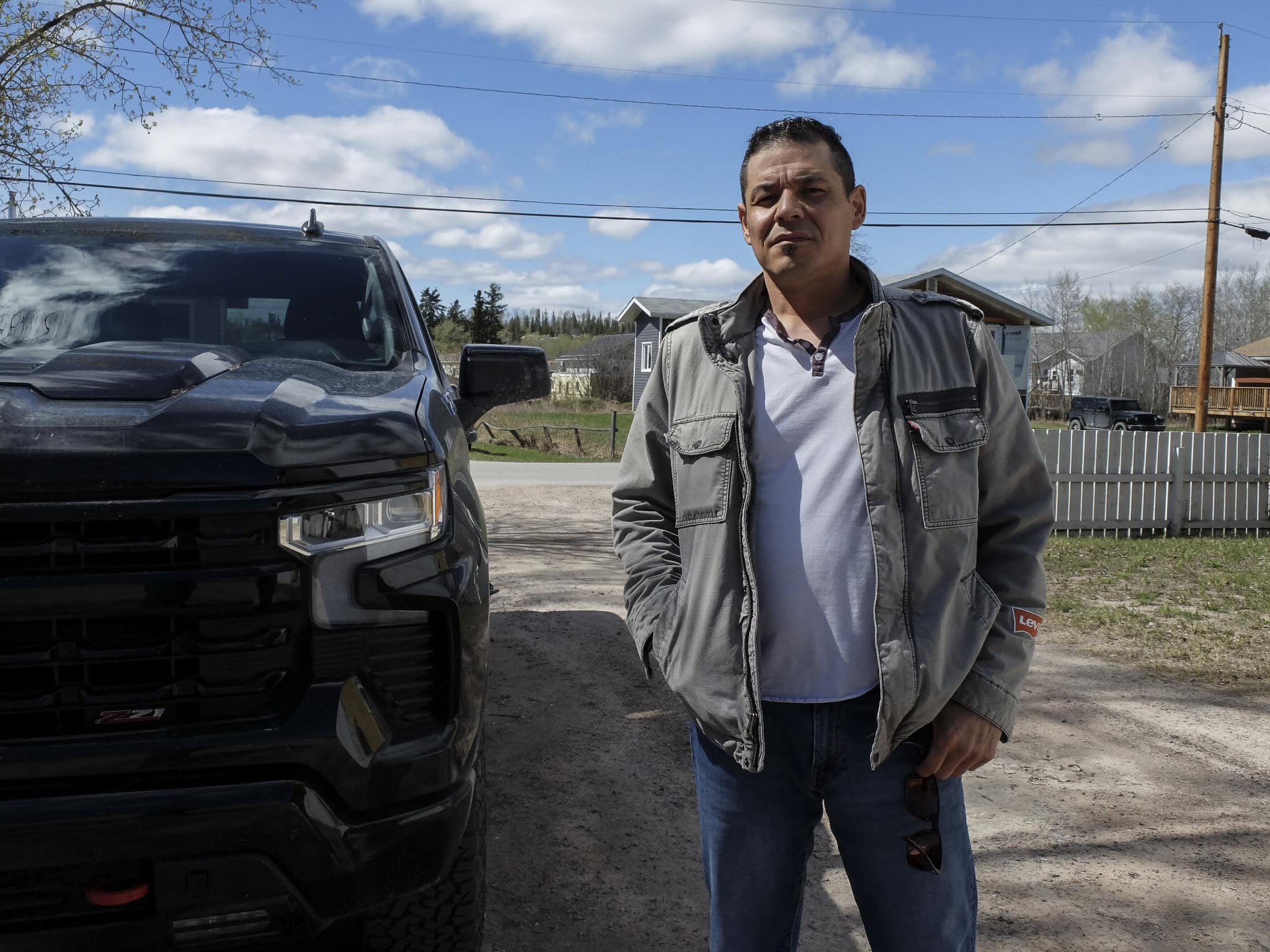
Chief Billy-Joe Tuccaro has been raising concerns about high cancer rates in his community of Mikisew Cree First Nation in Fort Chipewyan, Alta. He believes the cumulative effects of oilsands mining have not been studied enough. Photo: Danielle Paradis / The Narwhal
The Alberta government’s oilsands mine water steering committee made recommendations in 2025 to speed up creating standards for treating and releasing the water generated as a by-product of the oil extraction process.
The liquid is a mixture of residual bitumen, heavy metals, clay and sand. Studies show that the “oilsands process-affected water,” as it is called in industry, also contains a toxic slurry of naphthenic acids, volatile organic compounds and polycyclic aromatic hydrocarbons. These can cause health effects including narcosis (cell poisoning) and disrupt the endocrine system, which can cause issues with diabetes, fertility, thyroid malfunction and increased cancer risk.
Tuccaro said there have not been enough studies into the cumulative effects of oilsands mining. While the focus on water safety tends to be on drinking water from the taps, he added there is also an effect from consuming traditional foods such as berries and fish from the area.
All three Indigenous communities in the Fort Chipewyan area — the Mikisew Cree, the Athabasca Chipewyan First Nation and the Fort Chipewyan Métis — have expressed concerns about the Alberta government’s plans to treat and release tailings pond water.
Tany Yao, the MLA for the area, did not respond to a media request about the birds in the tailings ponds nor about the Fort Chipewyan residents’ concerns about the plans to eventually treat and release tailings pond water.
The Narwhal’s reporters are telling environment stories you won’t read about anywhere else. Stay in the loop by signing up for our free weekly dose of independent journalism.
From The Narwhal | News on Climate Change, Environmental Issues in Canada via This RSS Feed.
24
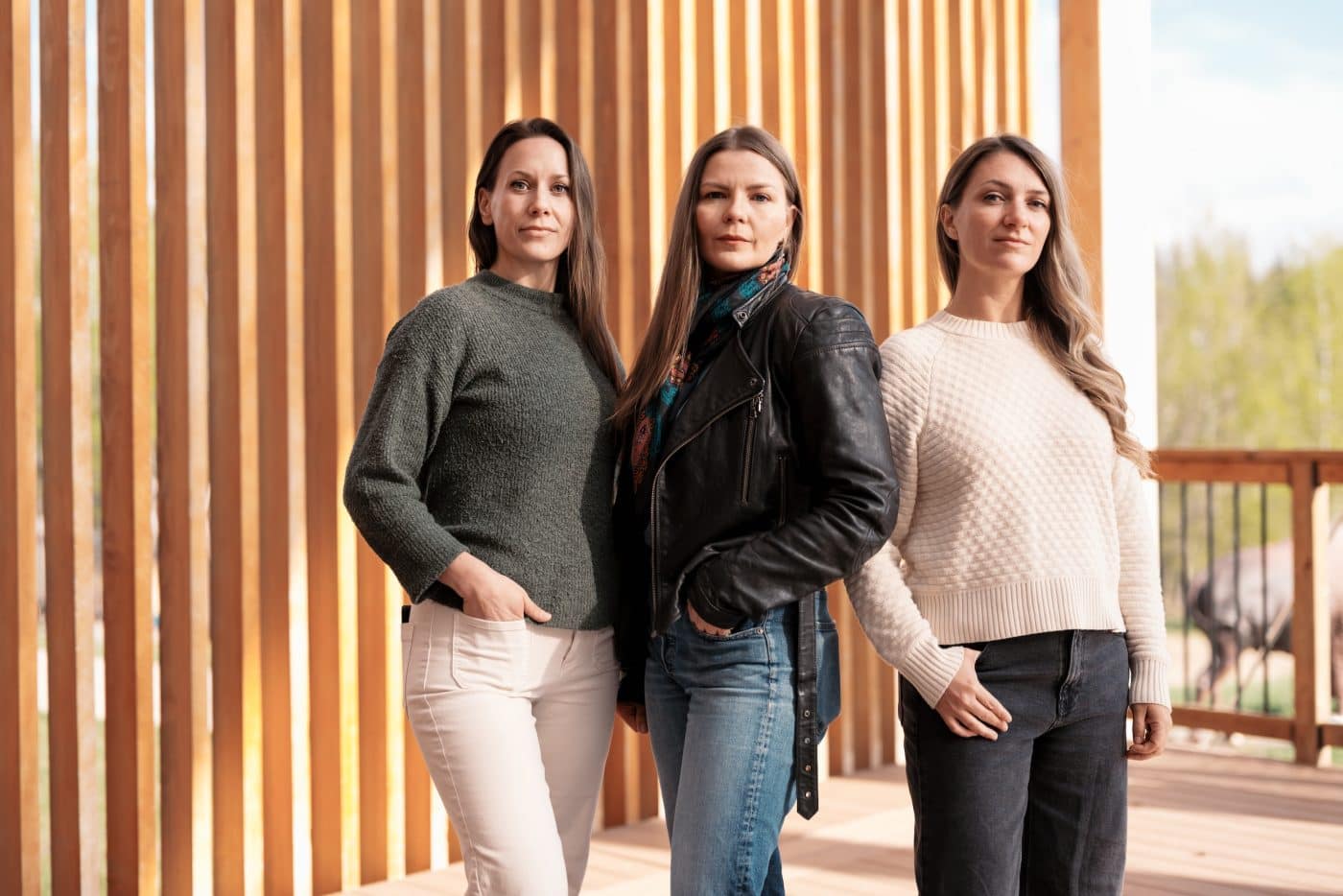
Photo: Jordon Hon / The Narwhal
“If you are any credible media person — they would have left.”
I’ve spent 39 days (and counting) of my life in a Vancouver courtroom this year — and I can’t stop thinking about this line from an audio recording played at The Narwhal’s press freedom trial against the RCMP.
These words, uttered by one of the officers who arrested photojournalist Amber Bracken while she was on assignment for us, strike at the very heart of what is at stake in this case: the right of journalists to report on behalf of the public without state interference.
The courtroom fell silent as the audio recording of their dialogue came out of the speakers. Despite Amber’s declarations of being with the media, her professional camera gear, a visible press pass on her bag and a letter of assignment, the officer had little concern for her constitutionally protected rights as a journalist.
Amber Bracken: “Your team has been notified that I’m here today. Your team … ”
Sergeant Jeffrey Milliard: “That’s fine, ma’am, right now you are under arrest for breach of a civil injunction. We’ll sort it out, okay, but right now we’re arresting everybody for breach of that civil injunction. As a press person you should have left the building long ago.”
From our perspective, these haunting lines belie a profound misunderstanding of Canadians’ right to a free press. They also highlight a fundamental misunderstanding of the work that The Narwhal does, that all journalists do — the work we are fighting so hard to protect.
Perhaps it’s an understandable mistake: this kind of journalism, the kind that makes big government institutions uneasy, is becoming an endangered species. It’s risky and expensive — and we need more people to stand with us so we can keep up the fight.
Will you help sustain this critical work by making a monthly or yearly donation to The Narwhal? Become a member today and, along with our undying gratitude, we’ll send you a pair of limited edition socks!
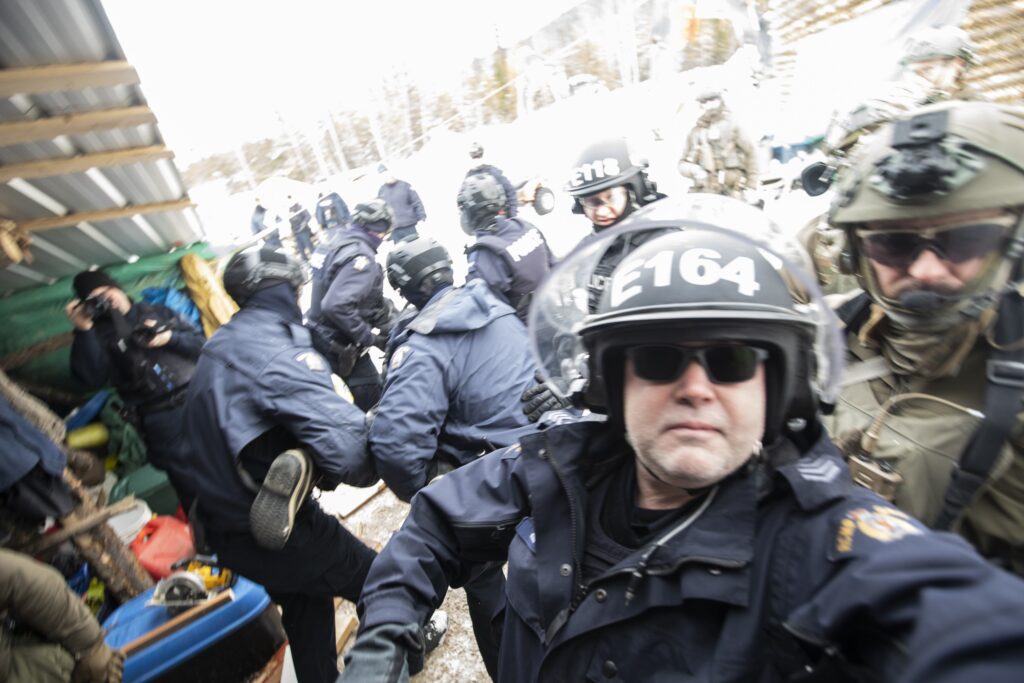
The last photo Amber took before her 2021 arrest.
Amber was arrested in a remote area in northern B.C., where she had travelled to do on-the-ground reporting about a major conflict between Indigenous land defenders and a powerful pipeline company. This kind of gritty, first-person journalism is increasingly rare, as newsrooms with dwindling teams and budgets are forced to report on the nation from the confines of their desks.
Not at The Narwhal. As public-interest journalism faces the compounding effects of dying newsrooms, AI-generated content and interference from tech barons, we know that sending humans out into the world to witness conflict and communities and ecosystems is more important than ever.
But we can’t do that from the backseat of a police car. Or from the confines of a cold, harshly lit jail cell. (The RCMP held Amber in one for three nights.)
We launched this lawsuit, in spite of the risks and the incredible costs, to fight for the right of every journalist in Canada to do their work without risk of police interference.
This fight is important. But what we really want, in the end, is to keep doing the work — the work of digging, investigating, telling stories that governments and powerful institutions would rather keep quiet. And publishing photographs the RCMP might rather you didn’t see, too.
Through this trial, the support from you, readers of The Narwhal, has been overwhelming. You’ve donated to our legal fund, sent words of encouragement, offered accommodations in Vancouver and showed up with smiles and affirming nods in the courtroom.
Your support has been the wind in our sails and the encouragement we need to keep going. So that’s what we’re going to do — and you can help.
I’m asking 233 people to become the newest members of The Narwhal by making a monthly or yearly donation this June. Can I count you in?
Your recurring support will help ensure we can keep sending reporters and photographers to the places where real stories are happening — even if the RCMP might prefer we didn’t. Join today and you’ll get these awesome socks.

From immediately after her arrest and through the beginning of this trial, the RCMP sought to undermine Amber’s reputation as a journalist. Now that we’re in the last days of this epic, nine-week trial, those criticisms have fallen away.
Turns out the evidentiary record shows something we’re incredibly proud of: The Narwhal and Amber Bracken represent the best of what journalism is and should be in Canada.
Consider us emboldened. And, with support from people like you, we can keep up those high standards of excellence and integrity.
We want you on our team — now with matching socks! Become a member today to support journalism that doesn’t flinch.
none
The Narwhal’s reporters are telling environment stories you won’t read about anywhere else. Stay in the loop by signing up for our free weekly dose of independent journalism.
From The Narwhal | News on Climate Change, Environmental Issues in Canada via This RSS Feed.
25
view more: next ›