this post was submitted on 15 Jul 2024
6 points (100.0% liked)
196
18705 readers
263 users here now
Be sure to follow the rule before you head out.
Rule: You must post before you leave.
Other rules
Behavior rules:
- No bigotry (transphobia, racism, etc…)
- No genocide denial
- No support for authoritarian behaviour (incl. Tankies)
- No namecalling
- Accounts from lemmygrad.ml, threads.net, or hexbear.net are held to higher standards
- Other things seen as cleary bad
Posting rules:
- No AI generated content (DALL-E etc…)
- No advertisements
- No gore / violence
- Mutual aid posts are not allowed
NSFW: NSFW content is permitted but it must be tagged and have content warnings. Anything that doesn't adhere to this will be removed. Content warnings should be added like: [penis], [explicit description of sex]. Non-sexualized breasts of any gender are not considered inappropriate and therefore do not need to be blurred/tagged.
If you have any questions, feel free to contact us on our matrix channel or email.
Other 196's:
founded 2 years ago
MODERATORS
you are viewing a single comment's thread
view the rest of the comments
view the rest of the comments
D/A and A/D | Digital Show and Tell (Monty Montgomery @ xiph.org)
There is no audible difference between an analog and digital audio signal.
Among other things, xiph.org maintains the .flac and .ogg vorbis audio formats - they know a little about audio encoding and reproduction.
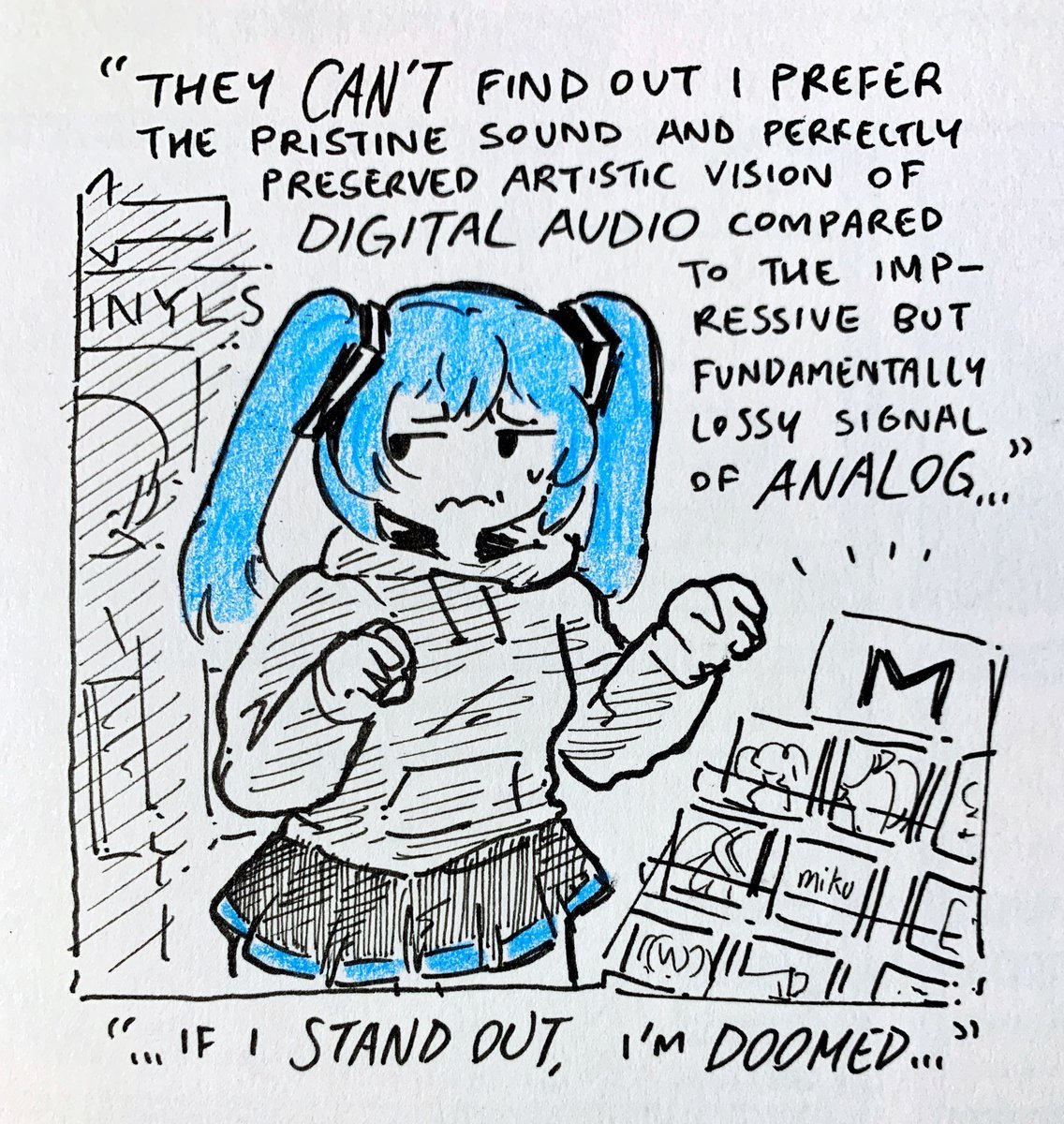
It's actually because of the limitations of analog media that analog audio might sound better. For example, you can't compress the signal as much when mastering for vinyl instead of digital, since you risk the needle jumping between adjacent grooves. As a result, the vinyl version of a song can sound more dynamic.
It’s the opposite, no? Vinyl can’t handle the explosive dynamics common in modern music (especially electronic) due to the skipping issue, so any sharp peaks like that need to be compressed to make the overall mix more mellow