Latin American Publications!

126 readers
18 users here now

A community for Latin American publications.

NOTE: All the publications in this feed are Latin American in origin; that does not mean they only report on Latin American news.

founded 5 months ago
MODERATORS
1


This article by Jared Laureles originally appeared in the April 10, 2026 edition of La Jornada, Mexico’s premier left wing daily newspaper.

Editor’s note: You can read our interview with Jaime Pulido León here, a mine worker and leader of the local chapter of the Los Mineros mineworkers’ union attacked in his home.

The threats from organized crime, perpetrated with the consent of the Camino Rojo mining company in Zacatecas, against the workers of section 335 of the National Mining Union, were exposed to various federal authorities, including security agencies, to whom the union organization requested support to safeguard the integrity of the workers, according to documents in the possession of La Jornada.

The acts of intimidation and violence were documented in the special collective procedure 758/2024 before the Federal Labor Court of Collective Affairs, which, like the union, requested the intervention of the National Defense and Navy Secretariats in November 2024 during a recount process to define the ownership of the collective labor contract (CCT) so that it would be carried out “without violence and without the intervention of drug trafficking criminals”.

Likewise, the court requested 10 officers from the State Public Security Secretariat for the vote that would take place on November 22 of that year, but responded that it was not possible because it did not have “available and sufficient personnel to cover said task”.

The ownership of the collective bargaining agreement was ratified by federal courts and the Federal Center for Conciliation and Labor Registration in favor of the National Mining Union, headed by Napoleón Gómez Urrutia; but the Canadian company Orla Mining has been reluctant to recognize it.

Furthermore, in its preliminary ruling, the panel of the USMCA’s Rapid Response Labor Mechanism considered that although the right to a secret and free vote was guaranteed on the day of the recount, a “deterrent effect of months of threats and silence from management” operated, which favored the employers’ union Beneficio de Minas.

In the document, the expert panelists explain that the Canadian company Orla Mining, the largest concession holder for gold and silver mining in Mexico, itself acknowledges that it does not have the capacity to address the risk of organized crime: “… the company’s policies, internal controls, security and training may not be sufficient to address the risk of such organizations infiltrating.”

In the letters addressed to the Defense and Navy, the National Mining Union stated that the events were reported to the Labor Court and the Ministry of Labor and Social Welfare (STPS), but the latter “has refused to order the company not to use drug cartel criminals, under the pretext that it is a criminal matter and not a labour matter.”

This is despite the fact that this agency “has been presented with videos, photos, recordings, facts and testimonies of the existence of the criminals, whom the company passes off as people who bring merchandise” to it.

One case publicly reported to the headquarters of the Orla Mining company in Vancouver, Canada, was that of Jaime Alberto Pulido León, a member of the local committee of section 335, who survived an apparent attack after an unknown person, carrying a weapon, tried to enter his home.

This newspaper requested an interview with the Secretary of Labour, Marath Bolaños, to delve deeper into the issue, but his office referred to the statement released more than two weeks ago by the agency, which expressed its disagreement with the panel’s resolution, since –in its opinion– it exceeded the scope of the mechanism, particularly “in matters of evidentiary standards, the analysis of facts linked to conduct of a possible criminal nature, the attribution of responsibilities to subjects other than the employer and the reference to standards not expressly provided for in the treaty.”

  • Orla Mining: Investigate & Clarify

    Analysis | Labor

    Orla Mining: Investigate & Clarify

    April 10, 2026April 10, 2026

    If it is confirmed that the Canadian mining company hired criminals to persecute its workers, the sanction cannot be limited to an administrative procedure, as this would allow companies to normalize fines as just another operating cost.

  • People’s Mañanera April 10

    Mañanera

    People’s Mañanera April 10

    April 10, 2026

    President Sheinbaum’s daily press conference, with comments on electoral reform, Barcelona reformist summit, electoral auditing, the economy, World Cup and former Michoacán governor Silvano Aureoles’ arrest warrant.

  • Mexico’s 2027 Preliminary General Economic Policy Guidelines: Out of Touch with Reality

    Analysis

    Mexico’s 2027 Preliminary General Economic Policy Guidelines: Out of Touch with Reality

    April 10, 2026April 10, 2026

    The government must abandon its policy of fiscal austerity and stop responding to international rating agencies and financial capital. It must act in favor of national production & employment.

The post Workers Requested Support from Mexico’s Army & Navy to Face a Mining Company & Narco Alliance, Authorities Ignored Them appeared first on Mexico Solidarity Media.


From Mexico Solidarity Media via This RSS Feed.

2


By Ben Norton – Apr 4, 2026

Iran is winning the war started by Trump. This is now admitted even in the Western media. Tehran has destroyed major US military bases in West Asia, expelling American troops to Europe.

More than a month has passed since the United States and Israel launched a war of aggression against Iran on February 28.

It is now clear that Iran is winning this war.

The Donald Trump administration has failed to carry out regime change or state collapse. The Iranian government has proven to be resilient.

Tehran has used asymmetric tactics to defend itself, targeting the weak points of the US empire and exacting a heavy price on its military, economy, and allies.

In fact, Iran has successfully destroyed the US military bases in West Asia, forcing many American troops out of the region. The Pentagon is primarily waging this war from bases in Europe.

Western media admits Iran is winning the war
The fact that Iran is winning the war is even being admitted by major Western media outlets.

The British newspaper The Independent printed an article titled “Iran is the clear winner as Trump’s desperate bid for peace shows he wants out of the war”.

Politico published an op-ed arguing that the “war against Iran is a far bigger strategic error” than the US invasion of Iraq in 2003.

Ironically, this article was written by the former US ambassador to NATO, Ivo Daalder, who had previously supported the war on Iraq.

Most US media outlets helped to promote the George W. Bush administration’s invasion of Iraq, which blatantly violated international law. In fact, the corporate press has supported every major US war for decades, including the wars in Korea, Vietnam, Yugoslavia, Iraq (twice), Afghanistan, Libya, Syria, Yemen, the list goes on and on.

This is the first major US war in decades that the Western media is criticizing from the very beginning.

So the writing is on the wall. It is clear to everyone that this conflict is a disaster, and Iran is winning.

Foreign Affairs is the official publication of the Council on Foreign Relations, whose members are a veritable Who’s Who of the US ruling class. Yet even Foreign Affairs published an article acknowledging that Iran is winning this war.

The author of the essay, Narges Bajoghli, is a professor at the prestigious Johns Hopkins University, which is a significant recruiting ground for the US State Department.

Bajoghli wrote the following in Foreign Affairs (all emphasis added):

Judging by the metrics of conventional conflict, Iran is not faring well against the United States and Israel. Its adversaries are destroying crucial targets in Iran, killing its commanders and degrading its military assets. But these are the wrong measures for assessing Iran’s position in the war. The right measure is not even an assessment of whether Iran is absorbing punishment well—which it is. The question that will matter when the fighting ends is whether Tehran is achieving its strategic objectives. And on that count, Iran is winning.

This outcome is not accidental. Tehran has been preparing for this war for nearly four decades, since the new revolutionary government faced its first major military test in the Iran-Iraq War, which lasted from 1980 to 1988. And it is now executing a strategy that has managed to neutralize key U.S. and Israeli air defense batteries, severely damage U.S. military bases in the Persian Gulf, inflict substantial economic pain, and drive a wedge between the United States and its Gulf allies. The Iranian regime, in other words, is not just surviving the U.S. and Israeli bombardment. The serious economic and political problems it is creating for its adversaries are, on a strategic level, giving Iran the upper hand.

Iran’s strategic objectives in the war
To assess if Iran is winning the war, it is necessary to analyze Tehran’s goals.

Iran strategic objectives goals war US Israel

The first and most obvious strategic objective of Iran has been to prevent regime change and state collapse.

The Trump administration initially thought it could overthrow the Iranian government by carrying out so-called decapitation strikes, assassinating its senior political and military leaders.

Nevertheless, Washington has failed to orchestrate regime change. In fact, the Iranian government has not only shown that it is resilient; it has probably become even stronger now, because it has more popular legitimacy.

Many Iranians who were critical of the Islamic Republic have rallied behind the flag and are supporting the state, to prevent the US from taking control of their country (and exploiting its oil, natural resources, and other lucrative natural resources).

More than 850 public demonstrations were held in Iran in support of the government in the first month of the US-Israeli war.

Iran destroyed US military bases
A longtime strategic goal of Iran has been to expel the US military from West Asia.

The US surrounded Iran with roughly two dozen military bases, which were developed over decades.

In response to the US-Israeli war of aggression, Iran has pummeled most of these bases in the Persian Gulf.

us military bases middle east map february 2026 al jazeera

Iran launched at least 5,471 missile and drone attacks against the US and its allies in the first month of the war, according to official data compiled by Turkish state media outlet the Anadolu Agency.

These Iranian attacks have been remarkably successful.

In fact, the New York Times reported that the US military has essentially been pushed out of West Asia (a more accurate term for the Middle East).

“Many of the 13 military bases in the region used by American troops are all but uninhabitable”, the Times wrote in an article titled “Iran’s Attacks Force U.S. Troops to Work Remotely”.

Among the US facilities that have been severely damaged is the Al-Udeid Air Base in Qatar, which is the biggest US base in West Asia; as well as the headquarters of the Navy’s Fifth Fleet in Bahrain.

Iran Declares ‘Historic Victory’ Over US, Says Enemy Forced to Accept Its Proposal

The major US newspaper reported the following:

Iran has bombed U.S. bases across the Middle East in retaliation for the U.S.-Israeli war, forcing many American troops to relocate to hotels and office spaces throughout the region, according to military personnel and American officials.

So now much of the land-based military is, in essence, fighting the war while working remotely, with the exception of fighter pilots and crews operating and maintaining warplanes and conducting strikes.

Before Trump launched this war of aggression on February 28, the US had approximately 40,000 troops in the region. In the first month of the war, thousands of these US forces were sent to Europe.

The American troops that remain in West Asia have been relocated to “makeshift” and “alternative” sites, off base, the Times reported.

Critics have pointed out that, given that US soldiers are waging war on Iran from hotels and office spaces, this means the Pentagon is essentially using civilians in these areas as human shields.

US military is waging war on Iran from bases in Europe
In short, Iran has largely succeeded in expelling the US military occupiers from West Asia.

This fact was further confirmed by an article in the Wall Street Journal titled “Europe Is Quietly Playing a Crucial Role in the Iran War”.

The newspaper reported:

While many European leaders have publicly decried the U.S. attacks on Iran, behind the scenes their military bases are facilitating one of the most logistically complex operations the U.S. military has been involved in for decades.

In recent weeks, U.S. bombers, drones and ships have been fueled, armed and launched via bases in the U.K., Germany, Portugal, Italy, France and Greece, officials say.

Attack drones are being directed from a sprawling U.S. base at Ramstein in Germany, the nerve center of America’s operations against Iran, according to German and U.S. officials. Heavy B-1 bombers have been photographed loading munitions and fuel at RAF Fairford in the U.K. The USS Gerald R. Ford, the world’s largest aircraft carrier, is currently docked at a naval base in Crete to undergo repairs after suffering damage from a fire.

U.S. Air Force Gen. Alexus Grynkewich, the North Atlantic Treaty Organization’s top military commander, said in recent Senate testimony that most European allies “have been extremely supportive.”

The continent, which is home to around 40 U.S. military bases and 80,000 U.S. service personnel, is a launchpad for U.S. operations in both the Middle East and Africa. “The distances are shorter, it’s less expensive, and it’s much easier to project power with our network of bases and allies,” he said.

There are two major takeaways from this report.

Firstly, some European governments have publicly criticized the US war on Iran, acknowledging that it violated international law and constitutes an illegal war of aggression. However, behind the scenes, most EU states and the UK are helping Washington wage this war, allowing the Pentagon to use their territory to attack Tehran. Europe is therefore a party to the conflict.

Secondly, Iran has succeeded in destroying the major US military bases in West Asia and expelling most American troops from the region.

This is one of several reasons why it is clear that Tehran is winning this war.

(Geopoliticla Economy)


From Orinoco Tribune via This RSS Feed.

3


This editorial by La Jornada’s editorial board originally appeared in the April 10, 2026 edition of La Jornada, Mexico’s premier left wing daily newspaper.

Editor’s note: You can read our interview with Jaime Pulido León here, a Camino Rojo mine worker and leader of the local chapter of the Los Mineros mineworkers’ union attacked in his home.

According to an investigation by the Rapid Response Mechanism (RRM) panel of the USMCA, the Camino Rojo mining company used organized crime to violate the labour rights of its workers and threaten them to desert the National Mining Union, to whose section 335 they are affiliated.

The panel’s preliminary ruling establishes that the mining company, located in Zacatecas, is “directly responsible for employer interference” in union activities due to documented acts of violence and death threats against workers, aimed at forcing them to hand over their collective bargaining agreement to a company-backed “protection” union affiliated with the National Federation of Independent Unions. The U.S. Department of Labor has corroborated that the owner of Camino Rojo, the Canadian company Orla Mining, “hired a drug trafficker to disrupt union meetings with armed individuals.”

However, in Mexico, the Secretariats of Labour and Social Welfare and of Economy deemed the evidence insufficient to link the company to the reported conduct, adding that the mechanism exceeded its scope by attempting to analyze criminal activity. For its part, the Attorney General’s Office of the State of Zacatecas stated that it has not yet received any formal complaint regarding the reported events.

The Rapid Response Mechanism panel’s allegations cannot be dismissed or minimized; rather, they compel the authorities to conduct a thorough investigation to determine whether or not Orla Mining or its local representatives colluded with organized crime.

Beyond the political and interventionist uses that Washington may give to the USMCA’s MRR, the fact is that neither anti-union practices nor relations with organized crime are foreign to the operations of mining companies.

For decades, Indigenous communities in the state of Guerrero have suffered forced displacement at the hands of criminal groups that, according to community leaders and human rights organizations, operate as shock troops for mining companies. Similar schemes have been detected in Veracruz, where organized crime has allegedly acted as a “security” or pressure force to silence social resistance against mining projects in exchange for protection money or control of transportation services associated with the mines.

A journalistic investigation links the Jalisco New Generation Cartel to the illegal extraction and export of mercury in the Sierra Gorda region of Querétaro. In Michoacán, since 2014 the federal government has acknowledged that the criminal group Los Caballeros Templarios (The Knights Templar) was earning millions of dollars by extorting protection money from iron ore miners, and some sources claim that this cartel came to control the entire mercury cycle.

Nor can it be ignored that transnational mining companies – whether locally or foreign-owned – cause devastating damage even when they have no connection to crime: they deliberately disregard minimum occupational and industrial safety standards in order to maximize their profits; they steal enormous volumes of water from nature and communities; they poison the land with the toxic substances used in their activities, rendering it unusable for any other purpose; they cause illnesses in people unfortunate enough to live near the mines; and they benefit from concessions and legal frameworks implemented during the neoliberal period with the express purpose of enriching private entities without leaving anything for the country.

In this context, the Rapid Response Mechanism panel’s allegations cannot be dismissed or minimized; rather, they compel the authorities to conduct a thorough investigation to determine whether or not Orla Mining or its local representatives colluded with organized crime. If it is confirmed that the company hired criminals to persecute its workers, it is clear that the sanction cannot be limited to an administrative procedure, as this would allow companies to normalize fines as just another operating cost to be recorded on their balance sheets. On the contrary, the seriousness of the case would require opening criminal cases against all mining company executives involved in dealings with organized crime and permanently prohibiting Orla Mining’s activities in the country.

  • Orla Mining: Investigate & Clarify

    Analysis | Labor

    Orla Mining: Investigate & Clarify

    April 10, 2026April 10, 2026

    If it is confirmed that the Canadian mining company hired criminals to persecute its workers, the sanction cannot be limited to an administrative procedure, as this would allow companies to normalize fines as just another operating cost.

  • People’s Mañanera April 10

    Mañanera

    People’s Mañanera April 10

    April 10, 2026

    President Sheinbaum’s daily press conference, with comments on electoral reform, Barcelona reformist summit, electoral auditing, the economy, World Cup and former Michoacán governor Silvano Aureoles’ arrest warrant.

  • Mexico’s 2027 Preliminary General Economic Policy Guidelines: Out of Touch with Reality

    Analysis

    Mexico’s 2027 Preliminary General Economic Policy Guidelines: Out of Touch with Reality

    April 10, 2026April 10, 2026

    The government must abandon its policy of fiscal austerity and stop responding to international rating agencies and financial capital. It must act in favor of national production & employment.

The post Orla Mining: Investigate & Clarify appeared first on Mexico Solidarity Media.


From Mexico Solidarity Media via This RSS Feed.

4


Iran’s official news agencies have firmly rejected fabricated reports spread by certain foreign media outlets claiming that senior Iranian officials have traveled to Pakistan.

Tasnim News Agency, quoting a well-informed source on Thursday night, stated that neither Foreign Minister Abbas Araghchi nor Parliament Speaker Mohammad Baqer Qalibaf has left the Islamic Republic.

Both senior officials remain in Tehran, actively carrying out their national duties amid ongoing regional developments.

The source told Tasnim, “The news from some media outlets that an Iranian negotiating team has arrived in Islamabad, Pakistan, to negotiate with the Americans is completely false.”

He emphasized, “As long as the United States does not fulfill its commitment to the ceasefire in Lebanon and the Zionist regime continues its attacks, the negotiations are on hold.”

‘Pause’ and ‘Progress,’ Says Trump as Aggression on Iran Continues

The Wall Street Journalhad claimed that an Iranian delegation arrived in Islamabad late on Thursday.

Iran’s Fars News Agency also categorically rejected the Wall Street Journal report, reaffirming that Iran has “no plans to attend peace talks with the American side until a ceasefire is established in Lebanon.”

Citing a knowledgeable source, Fars News Agency refuted claims of any Iranian negotiating delegation traveling to Islamabad, emphasizing that no such visit has taken place. This position fully aligns with Tasnim’s statement.

These unfounded rumors appear designed to sow confusion and undermine Iran’s principled stance. The Islamic Republic has repeatedly expressed appreciation for Pakistan’s constructive mediation efforts in the region, while making it clear that any engagement must fully align with Tehran’s firm conditions for a just and lasting resolution to the imposed conflicts, rather than with temporary measures that ignore the root causes.

(PressTV)


From Orinoco Tribune via This RSS Feed.

5


Every day, President Claudia Sheinbaum gives a morning presidential press conference and Mexico Solidarity Media posts English language summaries, translated by Mexico Solidarity’s Pedro Gellert. Previous press conference summaries are available here.

Political-electoral reform: end to privilegesThe Plan B electoral reform has already been approved in 20 states, bestowing it with constitutional status in the formalization process. This reform represents a fundamental change by establishing as its main points no reelection, no nepotism, reduction of resources to local congresses, decrease in the number of election board members, elimination of golden pensions (whereby the pensions of some board members exceed those of the country’s president), and cuts in salaries, bonuses, and privileges in electoral bodies.

International policy and progressive leadershipPresident Claudia Sheinbaum announced her participation on April 18 in Barcelona, where she will meet with progressive leaders such as Lula da Silva, Gustavo Petro, Yamandú Orsi, and Pedro Sánchez, as part of articulating a global alternative agenda.

In addition, for the 2026 World Cup, invitations have been extended to heads of state and government for the inauguration, reinforcing Mexico’s international projection as host of a global event with political, social, and cultural dimensions.

Democracy and electoral auditingAn agreement signed between the National Electoral Institute (INE) and the Financial Investigation Unit (UIF) was proposed in order to strengthen oversight and auditing of campaign resources, allowing more thorough monitoring at the INE’s request. The goal is to ensure democracy with transparency, legality, and no illicit financing, building trust in the country’s elections.

Economy: stability with well-beingMexico is posting positive indicators: 16.9 million international visitors (+9.3%), higher industrial growth, increased vehicle sales, and greater confidence on the part of foreign investors, with a stable exchange rate close to 17.26 pesos per dollar. Private investment is strengthening, such as Grupo Modelo’s announcement of $3.60 billion between 2025 and 2027 for modernization, local supply, and circular economy.

2026 World Cup: well-being and social developmentOrganization of the 2026 World Cup is advancing with the promotion of the “Social World Cup” with its focus on infrastructure, participation, and access for the population, with free Fan Fests, screens, and nationwide broadcasts at no cost. A total of 1,828 fields have been upgraded, thousands more in process, along with record participation of over 1 million girls and boys, consolidating a national talent pool.

Fight against corruption and justiceIt was confirmed that former Michoacán governor Silvano Aureoles has an outstanding arrest warrant and Interpol red notice, allowing his detention in any country. The case, linked to alleged organized crime support for his escape, reaffirms the 4T policy of zero impunity and a frontal fight against corruption, without exceptions.


  • Orla Mining: Investigate & Clarify

    Analysis | Labor

    Orla Mining: Investigate & Clarify

    April 10, 2026April 10, 2026

    If it is confirmed that the Canadian mining company hired criminals to persecute its workers, the sanction cannot be limited to an administrative procedure, as this would allow companies to normalize fines as just another operating cost.

  • People’s Mañanera April 10

    Mañanera

    People’s Mañanera April 10

    April 10, 2026

    President Sheinbaum’s daily press conference, with comments on electoral reform, Barcelona reformist summit, electoral auditing, the economy, World Cup and former Michoacán governor Silvano Aureoles’ arrest warrant.

  • Mexico’s 2027 Preliminary General Economic Policy Guidelines: Out of Touch with Reality

    Analysis

    Mexico’s 2027 Preliminary General Economic Policy Guidelines: Out of Touch with Reality

    April 10, 2026April 10, 2026

    The government must abandon its policy of fiscal austerity and stop responding to international rating agencies and financial capital. It must act in favor of national production & employment.

The post People’s Mañanera April 10 appeared first on Mexico Solidarity Media.


From Mexico Solidarity Media via This RSS Feed.

6


This article by Aníbal García Fernández originally appeared in the April 7, 2026 edition of Revista Contralínea.

In the context of the review of the United States-Mexico-Canada Agreement (USMCA), our main trading partner is pressuring the Mexican government in several economic areas, including digital payment services and intellectual property. Through Chapter 20 of the USMCA—which even regulates provisions related to health, pharmaceuticals, and trade liberalization for technology transfer and biotechnology—the Trump administration seeks to gain territory for U.S. companies.

Among the measures the United States is closely monitoring in Mexico is intellectual property. This was one of the issues included in the initial negotiations of the United States-Mexico-Canada Agreement (USMCA), which entered into force in 2021. Chapter 20 of the USMCA added most-favored-nation treatment for rights holders, which obligates all parties to create new, specific systems to protect rights and allows those involved to implement obligations in this area according to their own legal frameworks. And now, in the review process, the Trump administration is further pressuring the country to gain territory in favor of U.S. companies.

This chapter recognizes non-traditional trademarks, such as sound marks. Furthermore, the three countries committed to registering olfactory trademarks and creating an electronic system for trademark applications and maintenance, as well as an online database of applications and registrations. It also protects industrial designs.

However, there is one area that stands out, which is the protection of the health of the populations that make up the USMCA and, very specifically, the pharmaceutical sector.

The section on intellectual property is clear in its Article 20.3, which literally states: “A party, in formulating or amending its laws and regulations, may adopt the measures necessary to protect public health and nutrition and to promote the public interest in sectors of vital importance to its socio-economic and technological development, provided that such measures are compatible with the provisions of this chapter.”

It adds: “It may be necessary to apply appropriate measures, provided they are compatible with the provisions of this chapter, to prevent the abuse of intellectual property rights by their holders or the use of practices that unjustifiably restrict trade or adversely affect the international transfer of technology.”

This section links the establishment of national laws and measures on intellectual property and health to the USMCA; in addition to establishing practices for technology transfer, including those related to pharmaceuticals and those promoted by companies regarding fertilizers and genetic modifications of seeds.

In this regard, the Ministry of Economy highlighted in an Information Bulletin on April 29, 2025, that reforms had already been implemented in this area, including the Federal Copyright Law, the enactment of the Federal Law for the Protection of Industrial Property and a proposed amendment to it, regulations on the matter, and the ratification by the Supreme Court of Justice of the Nation, which confirmed the constitutionality of the Federal Copyright Law and the Federal Penal Code. These provisions also form part of point 15 of Plan Mexico, thus demonstrating the beginning of the integration of elements from this document with the USMCA.

In the pharmaceutical sector, the Ministry of Economy highlights the progress made in Mexican legislation in 2025. For example, the Cooperation Agreement on the Sanitary Registration Process between the Mexican Institute of Industrial Property (IMPI) and the Federal Commission for Protection against Sanitary Risks (COFEPRIS) guarantees transparency and efficiency in the regulation of medicines and industrial property .

This involves the creation of a portal that incorporates patents associated with medicines, where they can be easily located by generic name, validity, those about to expire and those already in the public domain, as well as the responses that IMPI gives to COFEPRIS within the framework of the linking system.

The aforementioned measures are significant, as they involve enacting Mexican legislation, even within the framework of Plan Mexico, to align with the USMCA. Strictly speaking, the USMCA is a treaty that must be complied with, as it forms part of the international commitments undertaken by Mexico. However, the question regarding this issue is whether the set of laws and regulations being created promotes the well-being of the population, including the accumulation of capital in national industry and not just that of large transnational corporations.

Several of these large companies have met with the Secretary of Economy, Marcelo Ebrard. Among them are members of the Global Companies Council (CEG): PepsiCo, General Motors, Nestlé, DHL, DuPont Mexico, Bayer, AT&T, ArcelorMittal, Schneider Electric, AXA Mexico, Airbus, British Petroleum, Citi Group, CPKC, Cargill, Exxon Mobil, and General Motors, to name a few of the most prominent, many of which are foreign-owned.

Some have even announced multi-year investments under Plan Mexico for around 61 billion dollars, representing about 40 percent of Foreign Direct Investment in Mexico; although it will be necessary to review whether they materialize in the following years.

The CEG Executive Committee is comprised of directors Manuel José Bravo Pereyra (Bayer Mexico), Fernanda Guarro (3M Mexico), Daniel Bandle (AXA Latin America), and Oscar del Cueto (CPKC Mexico), who joined the Advisory Council for Economic, Regional, and Relocation Development on November 27, 2024, despite openly criticizing judicial reform, which they claim deteriorates the “investment climate” in Mexico. This is an argument also used by the United States government regarding security, violence, and changes to autonomous bodies.

One of the most important companies in the CEG is Cox – a Spanish corporation that bought Iberdrola Mexico – which announced more than $10 billion between 2025 and 2030, and had the backing of financial capital: Citi, JP Morgan, Bank of America, BBVA and Santander.

US Insists on Glyphosate Issue

In the Trade Policy Agenda for 2026 and Annual Report for 2025 , published in February 2026 by the Office of the United States Trade Representative, it reiterates that on the issue of glyphosate, the panel had agreed with the neighbouring country that the seven claims were legal, “determining that Mexico’s measures were not based on science and undermined the market access that Mexico agreed to provide in the USMCA.”
In that document from the United States Trade Representative, it still alleges trade barriers in textiles, the automotive sector, small and medium-sized enterprises, and in labour and environmental issues.

On March 19, President Claudia Sheinbaum told Contralínea, regarding the USMCA review, that on the issue of glyphosate, “they won a panel on some issues. On the issue of genetically modified corn, it is very clear that genetically modified corn cannot be planted here,” so these are two separate issues, at least for Mexico.

This seminar explained it this way: “The United States argues that this is a non-tariff barrier and that, under Chapter 3 of the USMCA on agriculture, any measure restricting biotechnology products must be based on scientific principles. The final ruling in that case did not favour Mexico. Therefore, in 2025, the protection of native corn and the prohibition of genetically modified corn were elevated to constitutional status.”

And the scientific study that the companies used to establish that glyphosate did not present serious health problems, published in the journal Regulatory Toxicology and Pharmacology, was withdrawn due to an alleged conflict of interest.

However, discussions remain open regarding genetically modified organisms, payments to farmers for seeds—in relation to intellectual property—and strengthening food sovereignty without including them. The health of the Mexican people, as protected by the Biosafety Law for Genetically Modified Organisms, is at stake.

Secure Electronic Payments

The U.S. Trade Representative has received complaints from U.S. companies because Mexico’s Tax Administration Service has charged insurance companies retroactive Value Added Tax (VAT) on damage claims dating back to 2015.

With the 2026 Revenue Law, and following the decision of the Mexican Congress, the conflict with insurance companies has ended. Large companies, both domestic and foreign, will have to pay VAT, especially on repairs and compensation paid to their clients, to prevent them from deducting these expenses from their tax obligations. This debate began during López Obrador’s administration and requires companies to pay billions of pesos. However, insurance companies are now attempting to pass this tax on to policyholders.

Contralínea asked President Claudia Sheinbaum about this issue, to which she responded: “It shouldn’t be like that; they were consulted in the agreement that was reached. […] I’m going to ask the Ministry of Finance to keep an eye on this. […] The regulatory change shouldn’t be automatically passed on to the final price paid by users.”

In the realm of electronic payments, the United States has a particular interest in the regulatory framework for paying for services through this system. In 2021, Mexico issued regulations related to the use of cloud service providers by electronic payment institutions. The central point of discussion is the approval process for these companies seeking to utilize secure cloud computing services based in the United States or Mexico.

In 2023, the now defunct Federal Economic Competition Commission identified barriers to competition in the card payment processing market, and issued recommendations to the Bank of Mexico and the National Banking and Securities Commission.

Following the 89th Banking Convention of the Mexican Banking Association, President Claudia Sheinbaum announced that by 2026, fuel and toll payments at toll booths will be 100% digital, making the Digital Transformation Agency even more relevant.

The upcoming discussions will focus on possible structural and strategic reforms regarding the strengthening of rules of origin for key industrial goods, with likely collaboration on critical minerals.

President Claudia Sheinbaum has made it clear that cooperation and collaboration with the United States is sought, but without subordination of our economy and sovereignty.

  • Orla Mining: Investigate & Clarify

    Analysis | Labor

    Orla Mining: Investigate & Clarify

    April 10, 2026April 10, 2026

    If it is confirmed that the Canadian mining company hired criminals to persecute its workers, the sanction cannot be limited to an administrative procedure, as this would allow companies to normalize fines as just another operating cost.

  • People’s Mañanera April 10

    Mañanera

    People’s Mañanera April 10

    April 10, 2026

    President Sheinbaum’s daily press conference, with comments on electoral reform, Barcelona reformist summit, electoral auditing, the economy, World Cup and former Michoacán governor Silvano Aureoles’ arrest warrant.

  • Mexico’s 2027 Preliminary General Economic Policy Guidelines: Out of Touch with Reality

    Analysis

    Mexico’s 2027 Preliminary General Economic Policy Guidelines: Out of Touch with Reality

    April 10, 2026April 10, 2026

    The government must abandon its policy of fiscal austerity and stop responding to international rating agencies and financial capital. It must act in favor of national production & employment.

The post The USMCA Review: Big Pharma, Glyphosate, & Secure Electronic Payments appeared first on Mexico Solidarity Media.


From Mexico Solidarity Media via This RSS Feed.

7


On the occasion of the 20th anniversary of the enactment of the Organic Law of Communal Councils, Venezuelan revolutionary sectors carried out a major mobilization from Plaza Venezuela to Miraflores Palace in Caracas.

On Thursday, April 9, after two decades since the passage of this historic law, which is part of the legacy of Commander Hugo Chávez and foundational to Venezuela’s communal model, the organized people marched through the streets of Caracas, demanding the release of President Nicolás Maduro and National Assembly Deputy Cilia Flores from US captivity, and expressing support for Acting President Delcy Rodríguez.

Direct and participatory democracy
The mobilization culminated in a massive gathering near Miraflores Palace. Caracas Mayor Carmen Meléndez, participating in the march, stated that the Organic Law of Communal Councils forms part of the backbone of the Bolivarian Revolution. She emphasized that direct and participatory democracy through the communal model is the national government’s pathway to restoring the welfare state for the Venezuelan people.

“The Organized Popular Power of the communes, social movements, and community councils has taken to the streets today, as one, in perfect unity, to send a message to the world: here is the people of Venezuela, who remain in the streets in permanent struggle to achieve prosperity. The destiny of the country is decided by the organized people.”

View this post on Instagram

A post shared by Carmen Meléndez (@carmentmelendezr)

She added that with the strength of the Communal Power, “we continue to move forward for peace, for the liberation of President Nicolás Maduro and Deputy Cilia Flores, and in support of our President Delcy Rodríguez, who is leading battles to protect the people of Venezuela.”

PSUV leader Diosdado Cabello addresses the gathering
At the end of the event, the general secretary of the United Socialist Party of Venezuela (PSUV), Diosdado Cabello, urged the revolutionaries to remain more united than ever under all circumstances.

Cabello insisted on the necessity to prevent the counter-revolution from creating fissures in the structures of the Bolivarian Revolution. “May there be no room for doubt: we should all march forward, united. We are the only ones who can guarantee it, not just now, but for many years,” he said.

He added that the same far right that promoted the theft of social benefits from Venezuelans, now want to convince workers and farmers that it wishes to work for their well-being. In this regard, he quoted Commander Chávez, who used to say, “No matter how much you try to disguise it, the hypocrisy, and the immorality of those who are waiting to pounce on the people will always be evident.'” His comment was in response to failed attempts by right-wing sectors to disrupt public order in the country.

Cabello stated that the consciousness and dedication of the people are the greatest, most valuable traits that the Bolivarian Revolution has.

Diosdado Cabello highlighted that there are currently 5,306 communes in the country, with a goal of 6,000. Quoting Chávez again: “Commune or nothing.” He said that the communes “emerged not from the structures of power or bureaucracy, but from structures of true power, the people’s power.”

Venezuela to Celebrate 20 Years Since Creation of Communal Council Law

Far right attempt to incite chaos fails
Simultaneously on Bolívar Avenue, a very small opposition demonstration, which had no more than 500 attendees, attempted to stir chaos by breaching the police cordon. The opposition march began from the Santa Fe sector in the privileged center of Caracas.

Pero los de la oposición dicen que son el 91% ajajaja jajajajaja pic.twitter.com/PPRhRpruSm

— noelia perez (@noeliabp2023) April 9, 2026

Despite the destabilization attempts by far-right factions since January, when the United States bombed Venezuela, killing more than 100 people, and kidnapped President Nicolás Maduro and his wife, Cilia Flores, the Venezuelan opposition has not been able to mobilize any truly significant mass.

Moreover, despite the fact that outside of Venezuela, there are attempts—possibly originating from ignorance—to discredit the current Venezuelan government as “sold out” or traitorous, the reality is that it remains a Chavista government which the US imperialism will eventually try to overthrow, and it is simply waiting for the opportune moment to do so.

Special for Orinoco Tribune by staff

OT/SC/SH


From Orinoco Tribune via This RSS Feed.

8


By Misión Verdad  –  Apr 9, 2026

On April 8, Venezuela’s acting president, Delcy Rodríguez, presented to the country a statement containing data and announcements fundamentally related to the economy.

The presentation centered on a sincere and compelling assessment of recent years’ economic and political dynamics, highlighting key national account indicators regarding the effects of sanctions on national income, Social Security financing, and the status of public-sector salaries and pensions.

She announced a series of measures to address these challenges, indicating the need to avoid repeating past mistakes and establishing a shift in perspective in state administration, economic policy, and the approach to economic sectors beyond the government.

The loss of the resource base
The acting president highlighted a difficult truth that illustrates the dimensions of the country’s real Gross Domestic Product (GDP) compared to 2012.

It is essential to clarify that, although the annualized nominal GDP has recorded a significantly higher growth percentage, the real GDP figure she referenced was calculated relative to the size of the national economy in 2012.

She explained that by the end of 2025, the real GDP was only 35.7% of the GDP in 2012. This suggests that the Venezuelan economy is 64.3% smaller than in 2012, and thus generates less real net income.

The declining trend in real GDP has been clearly noticeable since 2016, the year when the US-imposed sanctions from 2014 and 2015 started to take shape, when the US government published its first laws and executive orders that have been the “legal” pillars of a list of more than 1000 unilateral coercive measures against Venezuela.

According to an image shown by the acting president, the year of the peak decline in real GDP was 2020, with a drop of 24.9%. Since then, moderate growth has been observed, which suggests that the economy is recovering, but it is still far from reaching its historical peak and point of greatest prosperity.

The current real GDP is less than 36% of the real GDP of 2012.

The current real GDP is less than 36% of the real GDP of 2012.

Rodríguez explained that the decline in real GDP is directly linked to the collapse in national export revenues. Between 2012 and 2020, export value dropped by 91%, meaning Venezuela earned only 9% in 2020 of what it earned in 2012. This is clearly tied to sanctions on the oil sector and the broader economic blockade.

Another image shown during the speech suggests that from 2022 to 2025, the total exports barely surpassed $93 billion, a figure still lower than 2012’s revenue alone.

The image shows that although the income from oil and derivative exports, which are the fundamental basis of the national budget, have recovered in recent years, they are overwhelmingly lower than in 2012, the year the current Organic Labor Law (LOTTT) was approved.

Inflation and loss of purchasing power of wages
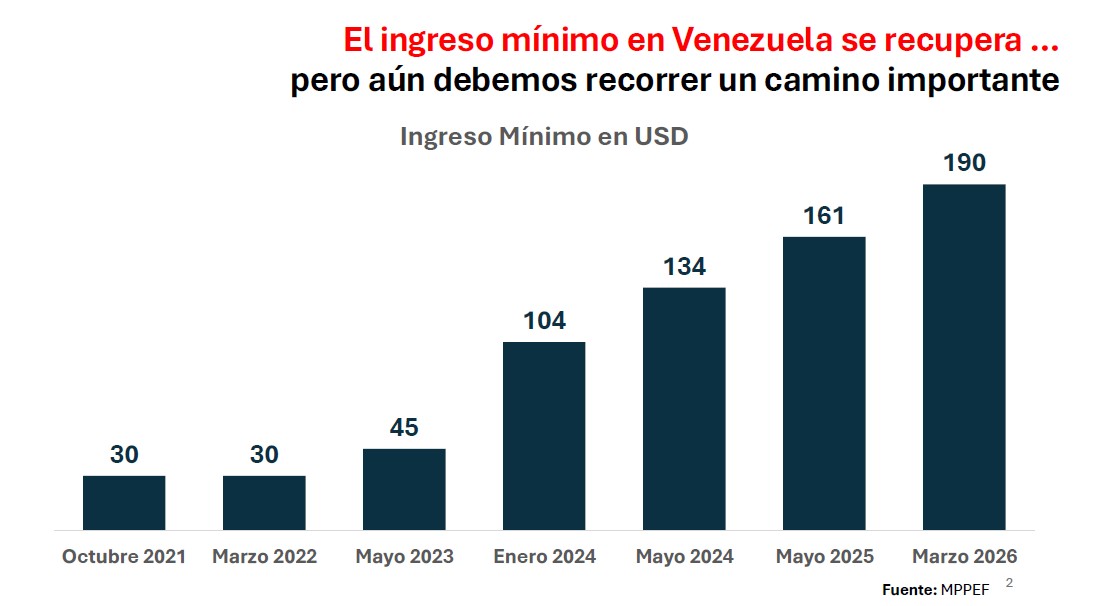
Delcy Rodríguez bluntly pointed out a paradox that exists in the minimum wage of the workers. On one hand, the national minimum wage has recovered to an equivalent value from $30 in October 2021 to its current value of $190. That recovery has been in nominal terms. But, simultaneously, the purchasing power of the minimum wage has severely deteriorated.

A graph that she presented illustrates that in June 2018, a comprehensive income increase was granted to workers, and subsequently, inflation pulverized the real purchasing power achieved in that adjustment, down to a dramatic 0.1% in less than a year, in April 2019.

She added that in 2022 another “unsupported” salary adjustment was made, which triggered monthly inflation.

The premise is very simple: in the case of the public sector, salary increases cannot be made without strengthening the state’s revenue base. Otherwise, the issuance of bolívars is resorted to as a mechanism for financing the fiscal deficit. This implies an increase in the money supply in the national currency, accelerating inflation.

Moreover, even substantial private-sector wages lose real value if the monetary issuance to finance public salaries intensifies. She pointed out that this was palpable in 2018 and 2022. There are lessons learned and practices that should not be repeated.

She stressed the urgent need to break this cycle and pursue structural correction.

The pension system
The acting president provided data on pressing situations in the pension system. Since the enactment of the Pension Protection Law, the private sector has increased its contribution, but it only represents 9% of the resource base to finance the system.

Meanwhile, the Venezuelan State pays 91% of the pension payments.

A clearly concerning fact is the number of contributors versus the number of retirees. In the country, there are 5.3 million active workers contributing and 6.2 million retirees and pensioners.

This illustrates several factors: firstly, the current system is structurally unviable as there are more dependents on the system than contributors to support it. Secondly, there is a clear gap left by the demographic loss (due to migration) of the economically active population. Thirdly, there is a significant workforce not reflected in this data, which is the workforce in the informal sector and which therefore does not contribute to Social Security.

Announcements and measures
Rodríguez indicated that on May 1, she will announce a “responsible” increase in the minimum wage for the workers.

Considering the data and reflections that she presented, this suggests that it will be a realistic increase, in line with the modest recovery of national revenues, without being leveraged through the issuance of bolívars.

She also stated that the current pension model “is not sustainable,” suggesting a future restructuring of the social protection system.

In that vein, she announced the establishment of the Labor Dialogue Commission that encompasses the ongoing Labor and Social Security Constituent Assembly, with participation from the state, the private sector, workers, and pensioners. The purpose of this is to move towards the construction of a new labor convention and a social security system based on national realities.

Furthermore, she signed the Organic Law for the Acceleration and Optimization of Administrative Procedures and Processes. This marks a milestone in the simplification of the bureaucracy. In her speech, she explained that the new regulation provides the government with direct legal tools to dismantle critical knots in public administration, aiming for greater efficiency of the state.

Regarding tax reform, she stated, “I am making arrangements to immediately launch the National Economic Council to receive proposals for a new tax model for Venezuela.”

She called for the model to be more efficient, as well as to promote technological platforms that would allow Venezuela to move to a “higher level.”

A reform of the tax system is expected to contribute to its modernization, reduction of evasion, targeting of levies in sectors that do not compromise growth and employment, and a higher efficiency of public finance.

The acting president stated that the recovery of blocked resources, which belong to the people of Venezuela, will be immediately allocated to rehabilitating basic infrastructure (electricity, water, roads, schools, hospitals) and to productive investment, “which would guarantee sufficient income for better pensions and workers’ earnings.”

She also indicated that there are 500,000 “frozen” or off-market homes in the country. These homes may be incorporated into the real estate market to facilitate access to rental housing, especially for young people and new families who do not have the immediate capacity to buy.

In this regard, she requested the National Assembly to reform the laws related to the real estate market, to provide for new guarantees to incentivize activities, including guarantees for proprietors and tenants.

Venezuela: Delcy Rodríguez Announces New Social Policies, Minimum Wage Increase (+National Pilgrimage)

The US sanctions
A central factor in Rodríguez’s speech was the issue of the unilateral coercive measures against the national economy. Once again, she addressed the government of the United States, highlighting the severity and impact that the illegal measures continue to have.

Rodríguez announced the launch of a social mobilization across the country, in the form of a “pilgrimage,” which gives a political profile to referring to the sanctions as an inertia that compromises the stabilization and improvement of major socioeconomic variables.

The mobilization is scheduled to begin on April 19, Venezuela’s Independence Day, and conclude on May 1, International Workers’ Day.

This pilgrimage has clear symbolic connotations. It will cross various parts of Venezuela before ending in Caracas.

From the perspective of the national government, the complete lifting of sanctions could mean an increase in the resource base to support the commitments of the Venezuelan state and leverage the new reforms that could arise in the labor convention and the country’s pension system.

(Misión Verdad)

Translation: Orinoco Tribune

OT/SC/SH


From Orinoco Tribune via This RSS Feed.

9


This editorial by Arturo Huerta González originally appeared in the April 7, 2026 issue of La Jornada de Oriente, the Puebla edition of La Jornada, Mexico’s premier left wing daily newspaper. The views expressed in this article are the authors’ own and do not necessarily reflect those ofMexico Solidarity Mediaor theMexico Solidarity Project*.*

By 2027, the Secretariat of Finance indicates that the country’s economic management will continue “preserving macroeconomic and fiscal stability.” Fiscal policy will continue to favor the financial sector at the expense of formal job creation, import substitution of gas and basic grains, and endogenous growth conditions that would reduce dependence on foreign sources.

The Preliminary Criteria reiterate the discourse of the previous six-year term that social policies strengthen household incomes, that they “have a redistributive dimension, that they boost domestic demand and generate conditions for sustained growth.” However, the facts demonstrate that this has not happened.

The Preliminary Budget Guidelines do not include policies to address the problems that will arise from the rise in international prices of gasoline, gas, and fertilizers, which will lead to increased prices for agricultural goods and all other goods. According to the Ministry of Finance, this situation will not affect prices in the country, nor the interest rate, the exchange rate, or economic growth. The Preliminary Budget Guidelines project inflation of 3.7% by the end of 2026 and 3.0% by the end of 2027; an interest rate of 6.3% by the end of 2026 and 5.5% by 2027; an exchange rate of 18.40 pesos per dollar by the end of 2026 and 18.60 pesos per dollar by 2027; and GDP growth between 1.8% and 2.8% in 2026 and between 1.9% and 2.9% in 2027.

By promoting import substitution in gasoline, gas, fertilizers, and food, economic activity and employment would increase, the foreign trade deficit would be reduced, and the external vulnerability we have fallen into would be mitigated.

According to the Pre-Criteria, growth will be supported by “a gradual rebound in private investment as companies adapt to the new regulatory environment and the USMCA review process progresses .” They have an optimistic view of this trade negotiation, and the problem is that despite numerous trade agreements, the economy has not grown and will grow even less given the slowdown in the global economy and trade resulting from the US and Israel’s war against Iran.

The Secretariat of Finance acknowledges that sources of volatility associated with geopolitical conflicts persist and that changes in US trade policy are possible, yet it maintains a restrictive fiscal policy. The Preliminary Budget Guidelines project a fiscal surplus (excluding debt payments) of 0.5% of GDP in 2026 and 1.1% in 2027. The Ministry believes there are strengths to face the adverse external environment. However, these strengths do not stem from fiscal austerity, high interest rates, or a weak dollar. These policies negatively impact investment and productive capacity, thus weakening the country’s ability to cope with the volatility associated with conflicts in the Middle East.

The preliminary budget guidelines report that public investment fell by 18.9% in 2025 and private investment by 4.0%, and this downward trend continued into the first two months of 2026, as productive investment in Mexico decreased by 44.9%. This demonstrates that the country lacks the productive capacity to withstand external shocks, both those stemming from the Middle East conflict and those resulting from the review of the USMCA, where the US is expected to take action against Mexico.

The interest rate differential with the US is being maintained to continue promoting capital inflows and further currency appreciation, supposedly to avoid “potential periods of volatility that could arise during the year due to the renegotiation of the USMCA.” The problem is that with high interest rates, there is less viability in advancing self-sufficiency and mitigating the negative impact of product shortages and international inflation.

The 2027 budget allocated by the Secretariat of Finance for railway infrastructure exceeds the amount earmarked for oil, gas, petroleum products, and petrochemicals, demonstrating a lack of vision for achieving self-sufficiency in energy products, which are experiencing rising prices and shortages due to the closure of the Strait of Hormuz in the Middle East. Furthermore, no significant allocations are proposed to boost the production of staple grains and fertilizers, whose international prices have increased by 70%, and whose exports have been restricted by major producing countries, impacting agriculture worldwide.

The government must abandon its policy of fiscal austerity and stop responding to international rating agencies and financial capital. It must act in favor of national production and employment, which will require increasing spending and investment, and ensuring that monetary policy aligns with fiscal policy. This would increase national income and tax revenue. Since the government collects what it spends, this would reduce the fiscal deficit, thus hindering growth and preventing an increase in public debt.

By promoting import substitution in gasoline, gas, fertilizers, and food, economic activity and employment would increase, the foreign trade deficit would be reduced, and the external vulnerability we have fallen into would be mitigated. Significant price increases, exchange rate fluctuations, and sharp declines in the capital markets would be avoided.

  • Orla Mining: Investigate & Clarify

    Analysis | Labor

    Orla Mining: Investigate & Clarify

    April 10, 2026April 10, 2026

    If it is confirmed that the Canadian mining company hired criminals to persecute its workers, the sanction cannot be limited to an administrative procedure, as this would allow companies to normalize fines as just another operating cost.

  • People’s Mañanera April 10

    Mañanera

    People’s Mañanera April 10

    April 10, 2026

    President Sheinbaum’s daily press conference, with comments on electoral reform, Barcelona reformist summit, electoral auditing, the economy, World Cup and former Michoacán governor Silvano Aureoles’ arrest warrant.

  • Mexico’s 2027 Preliminary General Economic Policy Guidelines: Out of Touch with Reality

    Analysis

    Mexico’s 2027 Preliminary General Economic Policy Guidelines: Out of Touch with Reality

    April 10, 2026April 10, 2026

    The government must abandon its policy of fiscal austerity and stop responding to international rating agencies and financial capital. It must act in favor of national production & employment.

The post Mexico’s 2027 Preliminary General Economic Policy Guidelines: Out of Touch with Reality appeared first on Mexico Solidarity Media.


From Mexico Solidarity Media via This RSS Feed.

10


The National Assembly of Venezuela approved the Organic Mining Law today, designed to modernize the sector, strengthen economic sovereignty and ensure mineral wealth.

After intense debate and public consultation, Venezuela’s National Assembly unanimously sanctioned the Organic Mining Law on April 9. This crucial legal instrument, consisting of 131 articles, is meticulously designed to modernize and comprehensively regulate Venezuelan mining activity.

The initiative, championed by the Acting President, Delcy Rodríguez, aims to bolster the nation’s economic sovereignty and ensure that its vast mineral wealth directly translates into sustainable development and well-being for the Venezuelan people.

This comprehensive legislation marks a pivotal moment for the country, establishing a robust framework that seeks to optimize resource management while promoting environmental protection and social responsibility, focusing on several key aspects, primarily defending Venezuela’s sovereignty over its strategic resources, as the President of the Assembly, Jorge Rodríguez, emphasized.

Resources As National Property
The recent law unequivocally reaffirms that all mineral deposits and resources within the national territory are the exclusive property of the Republic, classifying them as public domain assets that are inalienable and imprescriptible. This foundational principle ensures that the Nation retains ultimate control over its natural wealth, preventing its exploitation for purely private gain at the expense of national interests.

Furthermore, the legislation clearly stipulates that the management and control of these minerals fall strictly under the purview of the National Executive Power. This centralized and strategic planning approach is designed to guarantee optimal exploitation, aligning mining activities with broader national development goals and preventing uncoordinated or detrimental practices.

The law also establishes a clear framework for the participation of various entities in the mining sector. This includes state-owned companies, mixed enterprises (with a public majority shareholding), authorized private companies, and properly registered artisanal mining brigades. This inclusive approach aims to foster a diverse and dynamic mining industry, ensuring that both large-scale operations and smaller, community-based initiatives contribute to the sector’s growth.

On its Article 74 the new regulation prohibits state officials and their family members from obtaining mining titles until 5 years after the termination of his duties, preventing their participation as shareholders in cooperatives or companies of the sector.

The Central Bank of Venezuela holds the preferential right to purchase gold mined in the national territory according to the legal text. The new rule gives the financial institution priority to acquire ore resulting from any mining activity.

Crucially, the instrument does not overlook the vital aspect of preserving ecological balance and promoting sustainable development. It stipulates rigorous scientific and technical criteria that all mining operations must adhere to, reflecting a commitment to responsible resource extraction that minimizes environmental impact and safeguards Venezuela’s rich biodiversity for future generations.

The new rule tightens penalties for environmental crimes in areas under special administration on its Article 124, which provides for prison sentences of 10 to 15 years for those who carry out mining activities in protected areas.

Text reads: “I thank the Plenipotentiary National Assembly for the unanimous approval of the Organic Law of Mines, a fundamental instrument to modernize, regulate and enhance mining in our country. This law strengthens legal certainty, attracts new investment, and will boost mineral wealth for national development…”

National Assembly of Venezuela Approves Organic Law of Mines

Sovereignty Defended
In terms of royalties and taxes, the document introduces modern mechanisms for collection, guaranteeing that a fair portion of the mining revenue is reinvested in social projects and essential infrastructure. This ensures that the wealth generated from mineral extraction directly benefits communities and contributes to improving the quality of life for the Venezuelan people.

Such a redistributive approach is consistent with the perspective of using national resources for collective well-being rather than concentrating wealth among a few. Additionally, the Organic Mining Law directly combats illegal mining by introducing stricter institutional controls and enhanced fiscalization processes. These measures are designed to eradicate illicit practices that damage the environment, exploit workers, and deprive the state of legitimate revenue, thereby promoting a more transparent and ethical mining sector.

In summary, this legislative mechanism, which will be submitted to the Supreme Court of Justice to determine its organic and constitutional nature before its promulgation in the Official Gazette, seeks to attract both national and foreign investments.

The law is a testament to the Bolivarian Government’s commitment to transforming the mining sector into a powerful engine for national progress, attracting both domestic and foreign investment under transparent and equitable conditions. By guaranteeing transparency and establishing a clear regulatory framework, the law aims to consolidate the mining sector as one of the principal drivers of the national economy for the upcoming years.

The National Assembly’s unanimous approval of this law underscores a strong governmental consensus on the importance of strengthening economic sovereignty and promoting a model of development that is both sustainable and equitable.

(teleSUR)


From Orinoco Tribune via This RSS Feed.

11


This editorial by Simón Vargas Aguilar originally appeared in the April 10, 2026 edition of La Jornada, Mexico’s premier left wing daily newspaper. The views expressed in this article are the authors’ own and do not necessarily reflect those ofMexico Solidarity Mediaor theMexico Solidarity Project*.*

As we clearly saw during the [national farmers strike] blockade on April 6th, which paralyzed several highways in more than 20 states and exposed the profound deficiencies affecting various sectors, social demands persist in Mexico. Undoubtedly, these demands are justified; they reflect a widespread frustration with inequality, the lack of support, and the indifference of the authorities.

And while many sectors need help, today I would like to focus on one of the hardest hit and most systematically mistreated by various levels of government: education workers. Far from being valued as pillars of the nation, they have been made victims of chronic precarity that erodes not only their dignity but also the very quality of public education. For example, in Japan, teachers are considered fundamental pillars of society, enjoying very high social status, honor, and great respect. It is also one of the highest-paid professions in the country, to the point that they are publicly called sensei.

But, for our country, sadly, the problems are not new, but they have worsened into a structural crisis; thousands of teachers work under temporary contracts without any certainty of continuity; salaries are shamefully low, far below what inflation and the cost of living demand.

It is up to the current government to make the necessary changes, but, it must be said openly, all governments have failed teachers and for decades have used them as electoral pawns, stigmatized them as “lazy” or “troublemakers,” and abandoned them while boasting about “transformations.”

Added to the above is the excessive bureaucracy and workload, because, in addition to teaching large groups, teachers must complete endless reports, attend mandatory training without real support, and participate in unpaid extracurricular activities. A lack of material resources is another constant: broken blackboards, a lack of updated textbooks, inadequate laboratories, and, in many rural schools, not even internet access or basic teaching materials.

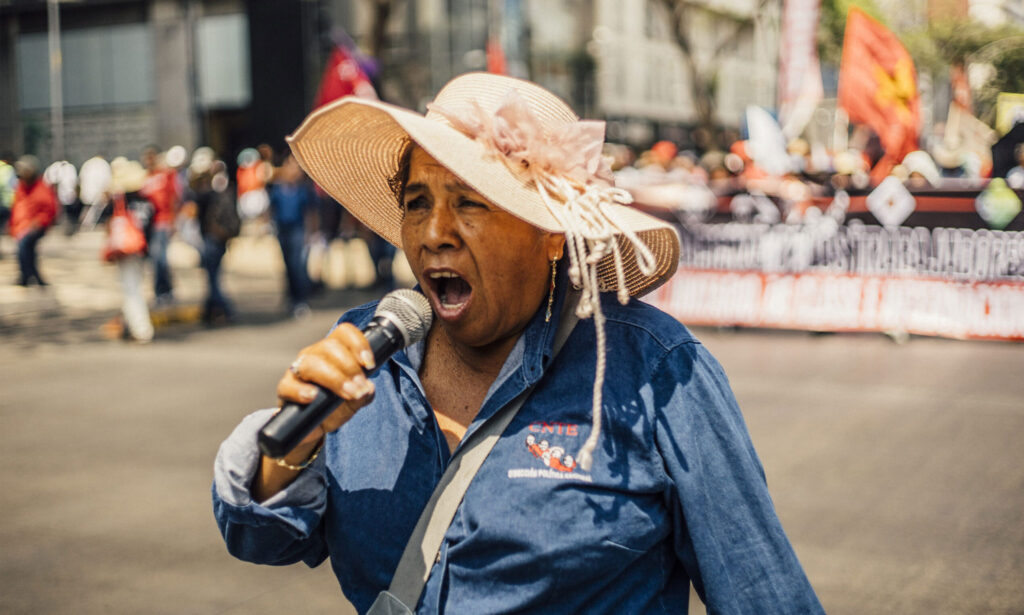
The professional development courses promised by federal and state education departments are usually virtual, generic, and lack follow-up, leaving teachers to fend for themselves. In this context, the National Coordinator of Education Workers (CNTE) has once again raised its voice and taken to the streets to continue demanding what it has been demanding for years. Today, among its many objectives, they aim to repeal the 2007 ISSSTE Law, which changed the pension system from a pay-as-you-go system to one of individual accounts managed by AFORES (privatized Retirement Fund Administrators).

This reform turned the right to retirement into a business for private financial capital, because teachers contribute for decades, but upon retirement they receive amounts that depend on market volatility, with pensions that can be up to 50 percent lower than those of the previous system. And what is most outrageous is the broken promises. Since Andrés Manuel López Obrador’s presidency, it was promised to end this law; it was said that the system would return to a solidarity-based one, which did not happen.

Sheinbaum campaigned on a promise to repeal the ISSSTE Law.

During her campaign, President Claudia Sheinbaum Pardo repeatedly declared at rallies, “We are going to repeal the ISSSTE Law,” but now, even after being elected, she has yet to fulfill that promise. Despite dialogue sessions and national strikes, the law remains intact. Even recently, contingents from the CNTE teachers’ union have led protests against the individual account model imposed by the 2007 ISSSTE Law, demonstrating in front of the AFORE pension fund administrators and demanding that the right to a dignified retirement cease to be merely a profit for the banks.

Education professionals have given compelling proof of their demands, with even the CNTE (National Coordinator of Education Workers) stating that if the Sheinbaum Pardo administration does not address their demands, including the immediate repeal of the aforementioned law, they could boycott the 2026 FIFA World Cup: “If there is no solution, the ball won’t roll.” Given this situation, even the National Union of Education Workers (SNTE), which until now had been an unconditional ally of Morena (the ruling party), is beginning to show signs of activity and voice its grievances. Its general secretary, Alfonso Cepeda Salas, delivered the 2026 National List of Demands (PND) to the Secretary of Public Education, Mario Delgado Carrillo, two months ago.

It demands, among other things, a salary increase of at least 13 percent, improvements in pensions, and the end of mechanisms like the USICAMM [Editor’s note: promised in February 2025]; what is significant is that the SNTE, which had almost unconditionally supported the federal government, is now joining, albeit timidly, the historical demands of the CNTE, and it is that the teachers are waking up and the leader fears losing credibility and base; but the signal is clear: the discontent is evident and can no longer be hidden or contained.

For now, it is up to the current government to make the necessary changes, but, it must be said openly, all governments have failed teachers and for decades have used them as electoral pawns, stigmatized them as “lazy” or “troublemakers,” and abandoned them while boasting about “transformations.” Today, with a mobilized CNTE and a SNTE beginning to make its presence felt, the message is clear: teachers will no longer accept mockery; they demand decent salaries, stability, real resources, and the fulfillment of promises that have been postponed for decades.

Until this crisis is addressed at its root, public education will remain the weakest link in a chain of inequalities that can no longer tolerate excuses. Mexico owes its teachers much more than applause in the Zócalo: it owes them justice.

The post Unresolved Issues with Teachers appeared first on Mexico Solidarity Media.


From Mexico Solidarity Media via This RSS Feed.

12


The Islamic Revolution Guard Corps (IRGC) has categorically denied carrying out reported drone and missile strikes on facilities in countries along the southern edge of the Persian Gulf, stressing that Iranian forces carried out no such operations during the ceasefire hours.

In an official statement on Thursday night, the IRGC stated, “The armed forces of the Islamic Republic of Iran have not launched any missiles at any country during the ceasefire hours until now.”

The IRGC was responding to a wave of unverified reports circulated by various news agencies over the past few hours alleging Iranian attacks on targets in the Persian Gulf region.

“We would like to inform you that the armed forces of the Islamic Republic of Iran have not launched any missiles at any country during the ceasefire hours until now,” the statement read.

The IRGC further stated that if the media reports prove accurate, “it is undoubtedly the work of the Zionist enemy or the United States,” entities notorious for staging provocations and false-flag operations to destabilize the region and undermine the ceasefire.

Highlighting the Islamic Republic’s policy of transparency and accountability, the IRGC added, “If the armed forces of the Islamic Republic of Iran hit any target, they will boldly announce it in an official statement, and any action that is not in the statements made by the Islamic Republic of Iran has nothing to do with us.”

Iran May Rise in ‘Full-Scale Defense’ Any Moment as Israel Violates Truce Agreement: Official

The IRGC’s decisive clarification exposes yet another attempt by hostile media networks to fabricate narratives against the Islamic Republic at a sensitive time. Iran has remained steadfast in honoring the ceasefire while the Zionist regime continues its aggressive policies across West Asia.

The IRGC reaffirmed the Iranian armed forces’ readiness to defend the country’s sovereignty and regional stability, while exposing the real instigators of any destabilizing actions in the Persian Gulf.

The US and Israel launched an unprovoked war against Iran on February 28, assassinating the Leader of the Islamic Revolution, Ayatollah Seyyed Ali Khamenei, along with several senior officials, military commanders, and hundreds of civilians.

In retaliation, Iran launched its decisive Operation True Promise 4. Hundreds of ballistic and hypersonic missiles and drones have pounded US military bases across West Asia and Israeli positions throughout the occupied territories.

Throughout the war, Iran continued to target Israeli and American assets in occupied Palestine and US military bases and interests in the Persian Gulf, maintaining its resilience even after about six weeks of fighting.

(PressTV)


From Orinoco Tribune via This RSS Feed.

13


Tehran has strongly condemned Costa Rica's decision to designate the Islamic Revolution Guards Corps (IRGC).


From Presstv via This RSS Feed.

14


By Robert Inlakesh – Apr 8, 2026

Behind The Headlines – The F-15E rescue Iran operation, sold by the Trump administration as a ‘biblical’ triumph, stands exposed as one of the most costly and contradictory failures in modern military history. Not only did it set back the US taxpayer over $300 million dollars, Iran now claims that they foiled an attempt to seize the nation’s highly enriched uranium – explains geopolitical analyst Robert Inlakesh in this week’s MintPress Livestream.

A triumphant success of biblical proportions, was the way US Secretary of War Pete Hegseth described his nation’s mission to evacuate two fighter pilots, whose F-15E fighter jet was downed over Iran’s Kohgiluyeh and Boyer-Ahmad province.

“You see, shot down on a Friday —Good Friday — hidden in a cave — a crevice — all of Saturday and rescued on Sunday. Flown out of Iran as the sun was rising on Easter Sunday, a pilot reborn. All home and accounted for. A nation rejoicing. God is good”, stated Hegseth.

Yet, the narrative presented in Washington appears to be covered in holes. On April 1, US President Donald Trump delivered an address to the nation, during which he claimed that Iran “have no anti-aircraft equipment, their radars 100 percent annihilated, we are unstoppable as a military force”. Only days later, news broke that Iran had downed the F-15 fighter jet.

During the first day of the American search and rescue mission, which took place around 30 miles from the Persian Gulf coast, two UH-60 Blackhawk Helicopters were damaged. An A-10 Warthog attack aircraft was also shot down, while another allegedly crash landed earlier around the time the F-15 was brought down.

The cost of an A-10 Wartog is said to be around $20 million, yet they are expensive to maintain parts for and some projections put their total estimated cost closer to $120 million. The UH-60 Blackhawk Helicopters usually cost around $20 million, but can range up to $80 million for more advanced versions.

After reclaiming the first pilot, the second rescue mission proved even more costly. A total of two C-130 transport aircraft were destroyed, totalling at $100 Million each. It was reported that four MH-6 Little Bird Helicopters were destroyed also, costing around 4.5 million each, in addition to at least one MQ-9 Reaper Drone worth $56.5 million. What makes this more devastating for the US is that it happened at a remote airstrip in the southern Isfahan Province, some 250 miles away from the pilot rescue zone.

Beyond Rescue: The Hidden Objectives Behind the US Mission in Isfahan

The location where the mass destruction of US aircraft occurred was a cause for various critical questions. The US President attempted to explain the situation away by declaring that the US landed in seven different locations in order to distract the Iranian military.

Trump’s bid to dismiss the inconsistencies in the narrative only worked as a cause for even greater speculation, as he claimed that 155 aircraft were deployed for the second rescue mission. According to the Wall Street Journal, only 21 planes were used during the operation to extract the first pilot.

Tehran provided a counter claim that they had indeed foiled a separate plot by American special forces teams, asserting that the aircraft which were destroyed were in fact involved in an attempt to go after nearby nuclear facilities.

Iranian State-broadcaster PressTV then released an exclusive report, providing details on what reportedly transpired, stating that “the real objective was to infiltrate and attack one of Iran’s nuclear facilities in Isfahan” and Iran’s security forces had prepared an ambush for the invading soldiers:

“The Iranian Armed Forces, including the Army, Law Enforcement (Faraja), the Islamic Revolution Guards Corps (IRGC), and local popular forces, initially did not show a serious reaction to the landing of the first C-130, which was carrying dozens of special forces commandos.”

The report then goes on to claim that “Evidence shows this aircraft veered somewhat off the runway while landing at the abandoned dirt airstrip. Minutes later, a second C-130 aircraft approached, carrying specialized vehicles, several MH-6 Little Bird helicopters, and other support equipment. At that moment, Iranian forces on the scene targeted the second aircraft before it could land, turning its normal landing into an emergency one. Two Black Hawk helicopters also arrived shortly after.”

It also details a clash having occurred between both sides, which turned the attempted landing, aimed at infiltrating a nearby nuclear facility, into an evacuation mission to save the special forces soldiers who were coming under Iranian fire.

Other inconsistencies appeared, like claims that the second airman was seriously injured, but still managed to trek countless miles through Iran’s mountainous terrain. It is unclear when this serious injury was inflicted and what condition the pilot is in today.

The official American account as to why they ended up losing such large transport aircraft in a location far away from the F-15 crash site, was that it was all part of the rescue mission and perhaps a distraction. They also claim that the C-130’s got “stuck in the mud”, thus had to be destroyed in order to prevent them falling into Iranian hands.

(MintPress News)


From Orinoco Tribune via This RSS Feed.

15


Caracas (OrinocoTribune.com)—Venezuelan Acting President Delcy Rodríguez arrived in Grenada on Thursday for her first state visit since being sworn in on January 5. Her presidency follows the criminal US military aggression against Venezuela on January 3, during which President Nicolás Maduro and Deputy Cilia Flores (his wife) were abducted by US forces in a cowardly attack that claimed over 100 lives.

Acting President Rodríguez was accompanied by a high-level ministerial delegation, including Foreign Minister Yván Gil, Information Minister Miguel Ángel Pérez Pirela, Presidency Minister Juan Escalona, Agriculture Minister Julio León Heredia, Hydrocarbons Minister Paula Henao, and Fisheries Minister Juan Carlos Loyo, among other Venezuelan officials, as well as the Venezuelan ambassador to Grenada, Jorge Guerrero Veloz.

Upon arrival at the Maurice Bishop International Airport in St. George’s, Grenada, the acting president was received with honors by Grenadian authorities, including Foreign Minister Joseph Andall and the Ambassador of Grenada to Venezuela, Hassan Hadeed.

Strengthening technical and political cooperation
Shortly after her arrival, Rodríguez met with Grenada’s Governor-General Cécile La Grenade. The meeting focused on establishing direct communication channels to strengthen technical and political cooperation in the coming years. The governor-general serves as the representative of the British monarch, King Charles III, and is appointed on the recommendation of the prime minister.

The visit, framed within Venezuela’s Bolivarian Diplomacy of Peace, seeks to reaffirm the bonds of cooperation and mutual respect that unite the two nations. It serves as a continuation of the fruitful roadmap signed in April 2025 during Prime Minister Dickon Mitchell’s visit to Caracas.

Later, the Chavista leader visited the Parliament building, where she held meetings with Prime Minister Mitchell and the nation’s top legislative authorities.

A shared vision of Caribbean sovereignty
Following their meeting, both leaders issued statements to the press. Prime Minister Mitchell thanked Rodríguez for choosing Grenada for her inaugural international state visit, noting that the discussions focused exclusively on bilateral cooperation.

“We have addressed a number of cross-cutting areas ranging from energy, agriculture, education, trade, tourism, transport, and logistics,” Mitchell stated. “We intend to put many of these points into practice by creating specific working groups,” he added.

ALBA-TCP Reaffirms Unwavering Support for Cuba, Denounces Aggression Against Its Sovereignty

In her remarks, Acting President Rodríguez described Grenada’s history as an example for Latin America and the Caribbean of a nation that “opted for sovereignty and self-determination” despite historical difficulties. She confirmed that the delegations discussed exchange programs in education, science, oil, energy, and transport. Significantly, Delcy Rodríguez added that both parties addressed pending maritime delimitation issues between the two countries.

Rodríguez, in her previous role as executive vice president, visited the ALBA-TCP member nation in April 2024 to join the 50th-anniversary commemorations of Grenada’s independence. Diplomatic relations, formally established in 1977, have seen a process of rapid acceleration and deepening mutual trust in recent years, especially following Grenada’s adhesion to the ALBA-TCP organization, a shield against imperialist interference that notably was not mentioned during the media coverage of the visit..

Special for Orinoco Tribune by staff

OT/JRE/SL


From Orinoco Tribune via This RSS Feed.

16


Caracas (OrinocoTribune.com)—During an ordinary session on Thursday, Venezuela’s National Assembly (AN) appointed Larry Devoe as the new attorney general and Eglée González Lobato as the ombudsperson. The appointments, approved by a qualified majority, come as the nation continues to consolidate its institutional stability following the bloody US air strikes on Venezuela and the abduction of President Nicolás Maduro and his wife, Deputy Cilia Flores, on January 3.

The voting process highlighted the stark contrast between the Bolivarian parliamentary bench—which holds 256 of the 285 seats—and the remnants of the pro-imperialist far-right. The final tally saw 275 votes in favor of the appointments, with only the 10 members of the “Libertad” bench, composed of far-right politicians, voting against the measure.

Chavista deputies have prioritized institutional consensus and the strengthening of the rule of law since the January 3 US aggression. While an AN extension was granted days ago to foster consensus, the final vote reflected the refusal of the most extremist sectors to participate in the nation’s attempts to strengthen political reconciliation.

Opposition discrepancies and the selection process
The session revealed significant fractures within the opposition. The far-right bench, with Henrique Capriles acting as spokesperson, proposed Magaly Vásquez, a legal expert described by analysts as opposition-leaning, as ombudsperson, In contrast, David Uzcátegui of the opposition party Fuerza Vecinal nominated Eglée González Lobato, noting her first-place ranking in the technical evaluation process. Meanwhile, Henri Falcón of the Libertad bench proposed Marialbert Barrios.

AN President Jorge Rodríguez reminded the plenary that Barrios had previously been a member of the Justice First party (PJ) before the chamber proceeded to the vote. Analysts suggest the outcome achieved a strategic institutional balance: securing the Attorney General’s Office for a figure committed to the revolutionary project while appointing an ombudsperson with no formal links to Chavismo. Upon González Lobato’s swearing in, Jorge Rodríguez remarked that it was only the second time in his life he had even seen her, emphasizing the impartiality of the selection.

The selection committee, headed by Deputy Giuseppe Alessandrello, processed 155 initial applications, with 69 candidates advancing to the second phase. Of these, 32 vied to head the Public Prosecutor’s Office and 37 to lead the Ombudsperson’s Office.

The final shortlists included high-profile figures:

• For attorney general: Magaly Vásquez, Nelson Chitty La Roche, Renée Moros Tróccoli, and Larry Devoe.
• For ombudsperson: Luis Daniel Álvarez, Julio César Pineda, Eglée González Lobato, Enrique Ochoa Antich, and Vladimir Villegas.

Who is Larry Devoe?
Larry Devoe, who has been serving as acting prosecutor since the resignation of Tarek William Saab in February, brings extensive experience in human rights law. A graduate of the Andrés Bello Catholic University (UCAB), Devoe holds two master’s degrees from Spanish universities in constitutional law and democracy, human rights, and the rule of law.

Devoe has been a close advisor to Acting President Delcy Rodríguez and currently serves as a member of the Program for Peace and Democratic Coexistence. Upon being sworn in, Devoe pledged to “work tirelessly until we achieve a new criminal justice” system consistent with a “new democratic state of law and justice.” Jorge Rodríguez praised Devoe’s academic standing and his consistent participation in all national dialogue processes.

Venezuela: Far-Right Politician Claims Constitutional Rules for Temporary or Absolute Presidential Absence do Not Apply to Delcy Rodríguez

Who is Eglée González Lobato?
The new ombudsperson, Eglée González Lobato, is a doctor of law and a respected political consultant. She specializes in administrative law and previously directed the Chair of Democracy and Elections at the Central University of Venezuela (UCV).

Widely recognized as an expert in electoral integrity, she is the author of Venezuelan Electoral Registry (2012) and co-author of Electoral Integrity (2014). During her swearing-in, González Lobato vowed that the doors of the Ombudsperson’s Office would remain “open to all.” Rodríguez urged her to act as a “defender and protector of all,” with a specific focus on the most vulnerable sectors of society.

Special for Orinoco Tribune by staff

OT/JRE/SL


From Orinoco Tribune via This RSS Feed.

17


By Nicholas Mwangi – April 8, 2026

Recent comments by Ibrahim Traoré on democracy have spread widely in Western media following an interview, but interpretations that he rejects democracy appear to misrepresent his position.

The recent interview by Ibrahim Traoré, president of Burkina Faso, has caused widespread debate after going viral across global media platforms. Headlines, particularly from mainstream outlets, quickly framed his remarks as a wholesale rejection of democracy, some even suggesting an intention to entrench permanent military rule.

But this interpretation, while sensational, is deeply misleading. It strips Traoré’s statements of their political, historical, and material context that is essential to understanding both his words and the broader trajectory of the Sahel region.

Democracy, but which democracy?
The remarks emerged not from an abstract discussion, but from a grounded conversation about security, sovereignty, and survival. For nearly half an hour, the interview focused on the ongoing insurgencies in the Sahel, particularly the threat posed by jihadist groups linked to al Qaeda and the broader crisis of state stability.

It was only when Traoré was asked about elections, specifically whether a newly adopted revolutionary charter could allow him to extend his rule, that the issue of democracy arose.

His response; elections, he argued, were not the immediate concern. Burkina Faso faces existential challenges, and the priority is confronting those threats and rebuilding the state. It is within this framework that his now widely quoted statement, “people need to forget about democracy” must be understood.

Saying, “we must tell the truth. Democracy is not for us, this kind of democracy that these people show us. That’s not what interests us.”

When Traoré states that “democracy is not for us,” he is not speaking in a vacuum. His critique is directed at a specific model; Western liberal democracy was historically exported to Africa through intervention, coercion, and conditional aid.

He gave the example of Libya, whose destruction following the NATO intervention in Libya remains as an example across the continent. For Traoré, Libya represents a warning; a state that, whatever its internal contradictions, was dismantled in the name of “democracy”, leaving behind chaos, displacement, and humanitarian catastrophe.

“We came to completely change the way things work, but above all to change mindsets so that people open their eyes, see the world, and so that we never fall into that trap again. People are here; democracy is slavery. There is no democracy in this world. They pretend there is. They do as they please. And to establish it, they kill. Democracy that kills. We do not want democracy. May God spare us from that kind of democracy. We are focused on our conquest, on our rebuilding, and on the revolution. It is the only path to development.”

Thus, when he says “democracy kills,” it can also be interpreted that he is condemning a geopolitical process whereby “democracy” becomes a justification for regime change, foreign domination, and violent restructuring. These narratives have been used recently in both Venezuela and Iran, where actions against leaders are framed as justified interventions.

Traoré’s position must be situated within the crisis of sovereignty in the Sahel. Countries like Mali, Niger, and Burkina Faso have experienced repeated cycles of instability, foreign military presence, and economic dependency.

The rise of military-led governments in the region, notwithstanding the challenges, has been tied to a popular rejection of neocolonial arrangements, particularly those associated with former colonial powers like France.

This is the political terrain from which Traoré speaks. His insistence on “revolution,” “rebuilding,” and “changing mindsets” reflects an attempt, however contested, to break from a model of governance seen as externally imposed and internally hollow.

Burkina Faso Launches 5-Year Plan

Misreading the Sahel
Many liberal democratic commentators have approached Traoré’s statements through a narrow, textbook definition of democracy. This framework struggles to account for situations where the state itself is under threat, where territorial control is fragmented, and where external actors play a decisive role in shaping internal politics.

The result is a recurring pattern of misinterpretation, complex political statements are reduced to authoritarian impulses, and debates about sovereignty are dismissed as anti-democratic rhetoric.

Interestingly, similar questions arise elsewhere. In Ukraine, President Volodymyr Zelenskyy has postponed elections, arguing that national survival in the face of war must take precedence.

While the contexts are vastly different, the underlying principle is comparable, the sequencing of political processes in times of crisis. But global reactions to these decisions are far from consistent.

None of this is to suggest that the Sahel’s current trajectory is without challenges. The region faces immense challenges; political, economic, and social.  However, reducing Traoré’s position to a rejection of democracy misses the point entirely. What is at stake is not simply “democracy versus authoritarianism”, but a deeper struggle over sovereignty, development, and the right of societies to define their own political paths.

Whether one agrees with his conclusions or not, the historical realities shaping the Sahel must be taken into context.

(Peoples Dispatch)


From Orinoco Tribune via This RSS Feed.

18


This article originally appeared in the April 7, 2026 edition of El Financiero.

The Workers Party’s (PT) parliamentary leadership in the Chamber of Deputies expressed a new clash with Morena, denouncing that the Culture Commission, chaired by Morena member Alma Lidia de la Vega Sánchez, yielded and bent to the millionaire interests of transnational music companies and betrayed national artists, creators and performers.

In a press conference, PT coordinator, Reginaldo Sandoval, and vice-coordinator Magdalena Núñez, denounced that, despite the fact that in various meetings with deputies and representatives of the artistic guild, various benefits for national creators were agreed upon in the reforms to the Federal Copyright Law and the Federal Labour Law, the commission and its president eliminated said agreements from the ruling.

“Let it be heard all the way to the National Palace: we are making a public complaint and denunciation against the president of the Culture Commission and we demand that the proposals of our creators be taken up again,” said Deputy Magdalena Núñez.

“There is a multi-million dollar dance, involving billions of pesos, that ends up in the hands of very few who are the ones who profit from the creativity, the interpretation and the voice of Mexican artists.”

Núñez recalled that the ruling was already sent to the Board of Directors of the chamber for discussion and voting in the plenary of the 500 legislators since last week, but that it was stopped by the disagreements and protests of the PT. Since the reform is not what the president Claudia Sheinbaum proposes, it was modified and the commission intends to approve a “regressive” reform.

She said that “modifications had been agreed upon, but the committee informed us that the proposals that had been agreed upon with the union will not be passed, and that alarms us.” Therefore, she said that the bill will be voted on this Tuesday and they will seek to change its content through amendments, primarily to Article 118 of the law.

The parliamentary coordinator of the PT, Reginaldo Sandoval, criticized the fact that “we must not leave artists, composers, and performers defenseless; this industry generates 4 trillion pesos in profits.”

“Think the worst and you’ll be right,” because “lobbyists for the mega-corporations kept circling the commission like vultures,” and President Alma Lidia de la Vega fell into the trap of the million-dollar dance of the giants Universal Music Group, Sony Music, and Warner Music, she stated.

“There is a multi-million dollar dance, involving billions of pesos, that ends up in the hands of very few who are the ones who profit from the creativity, the interpretation and the voice of Mexican artists,” she insisted.

In this regard, the parliamentary coordinator, Reginaldo Sandoval, also criticized the fact that “we cannot leave artists, composers, and performers defenseless; this industry generates 4 trillion pesos in profits, and they cannot be left defenseless against the transnational corporations that drive and operate this activity. We demand that the Secretariat of Culture listen to us as well,” he insisted.

The post Workers Party says Mexican Musicians Betrayed appeared first on Mexico Solidarity Media.


From Mexico Solidarity Media via This RSS Feed.

19


Elena Aranda and Jorge de Santiago are my paisanos — fellow citizens of Aztlán, the land of northern Mexico that was stolen by US military force and annexed in 1848. The tens of thousands of Mexicans who lived there — like my family in southern Colorado and northern New Mexico — were rooted in the land, in one of the most fertile and naturally beautiful areas of the world.

As Elena and Jorge so eloquently describe, that US conquest was followed by decades of land theft, labor super-exploitation (my grandfather Leandro worked in the Colorado coal mines at the age of 12), suppression of our language and culture (I grew up when we all felt the need to call ourselves “Spanish”), educational and housing segregation, and denial of the right to vote.

My familia was heavily involved in the movement to unionize the coal mines (the owners of the mine included the Rockefeller family), and their names — both Maés and Gallegos — are inscribed on a miners monument in Trinidad, Colorado. We had family members at the infamous “Ludlow Massacre” in 1918 when the Chicano and Italian miners went on strike and were thrown out of their dilapidated company housing. That didn’t stop them. They built a tent city and continued fighting. The mine owners then recruited an army of thugs who fired machine guns into the tent city, murdering more than two dozen people, mostly Chicano and mostly women and children.

I learned this history from family cuentos when I was growing up. From that horrible drama, a resistance movement for our liberation arose, and it’s the tradition I stand on today as a proud Chicano revolutionary and socialist. The wonderful organization, El Centro AMISTAD, also has roots in our nearly 200-year history. Gracias Elena, Gracias Jorge!

Jorge & Elena

Jorge de Santiago of Guadalajara Mexico, has been dedicated to advocacy, leadership development and community organizing in Mexican and Latino communities in Boulder, Colorado, since 1988. He has worked on local, state, and national legislation to create systems responsive to community needs. On the board of Boulder County Public Health, he elevated the voices of Latinos in public health decision-making. As the Executive Director of El Centro AMISTAD, he has overseen its growth as a community-rooted, culturally responsive organization.

Elena P. Aranda currently serves as AMISTAD’s Director of Education and Equity Programs. As a psychotherapist, she has created models of individual, family, group and community intervention that take into account her immigrant community’s barriers to mental and emotional well-being. She has collaborated with researchers focused on pregnant and postpartum women experiencing depression with the Reneé Crown Wellness Institute at the University of Colorado at Boulder.

In 1848, after the US annexed Colorado, what happened to the Mexican people who lived there?

Elena: Many of them lost everything — including the usefulness of their spoken language and the land that they tilled, and those two losses are connected. It was easy to transfer Mexicans’ property to Anglo settlers when all the documents were in English and there was no translation. After losing their farms, many moved farther north to earn a living. Annexation left a pain that continues into the present.

Jorge: Some small towns in southern Colorado were ignored — the Mexicans living there didn’t realize they now lived in a different country! I met a 100-year-old guy, and for him little has changed. Up to now, these towns have never lost Mexican culture and still use Spanish for everything.

The Mexican-American war ended with the Treaty of Guadalupe Hidalgo

How did you both decide to make Colorado your permanent home?

Elena: I’m originally from Guadalajara, Jalisco, and I hold a master’s degree in psychology. When I was visiting Boulder, their public health department offered me a position as a counselor specializing in substance abuse. I felt a commitment to stay and serve my community.

Moving forward professionally was painful — I was from another country, and I had a Spanish accent. I had to work harder to prove myself. I experienced hurtful microaggressions like, “You don’t look Mexican —you’re lucky to look white like us,” or “How can you work with people in the United States if you were trained in Mexico?” It was difficult, but I kept telling myself, “I’m going to stay the same Elena!” I won’t let anyone shame me or change who I am.

Jorge: I first came to Boulder 38 years ago, at 21, with a tourist visa and a dream to build something of my own. I brought the traditions that shaped me, and I shared my culture by teaching Mexican dance and folklore. I was on my own in the US, but I welcomed the challenge, determined to create my own path with courage, independence, and hope.

When Anglos heard me speaking Spanish, they looked at me with disapproval; I felt I didn’t belong. And honestly, not much has changed over the years. That hierarchy is still there; we still feel pushed to the margins. But instead of silencing me, it gave me clarity. So many in our community shared my experience, and so I felt a responsibility to show up for others. So, I worked with immigrant boys and parents — to support them and remind them that they are seen, valued and not alone.

El Centro AMISTAD

Why did you found El Centro AMISTAD?

Jorge: Carolyn Bininsky, Laurel Herndon and Ricardo García founded El Centro AMISTAD in 2001 — not me! — and hired me as a center administrator. A couple of months later they named me executive director. Sounds big, but it was a one-person operation for a decade! Elena and I had gotten married in 1998, and she joined me as a volunteer providing support for women. This April, AMISTAD will have supported our immigrant community in Boulder County for 25 years!

AMISTAD is the Alianza Multicultural de Inmigrantes Sirviendo a Todos con Ayuda para los Derechos, a center advocating for immigrant rights. In the beginning, we worked for legislation at the state and national levels — for example, to allow undocumented people to get driver’s licenses. But nothing was really happening on immigration reform; it was depressing! We had no funding, and I was sick from stress. We needed to regroup.

Elena: To get funding, we had to dump the raised fist in our logo. We couldn’t even say “social justice” to funders!

Our new logo had circles of people joining hands, and our mission was described as promoting “equity” in health, education and quality of life. The image and words are different — but the meaning to us is the same!

Since 2013, new programming has focused on health and wellness. We still advocate for immigration reform, but now we’re having a more direct impact on our Spanish-speaking community.

How do you work differently from traditional health providers?

We emphasize women — the bridge to everyone else! In diabetes prevention, it’s the mother who modifies the diet for the whole family, who takes the kids to play sports. Also, because they do all the housework plus go to a job every day, they need a space where they get support for themselves.

We’re bicultural, not just bilingual; providers who speak Spanish are not enough. For example, one woman asked me why her bilingual Anglo therapist “is pushing me to become a citizen,” as if that were the solution. In fact, becoming a citizen isn’t easy, and it doesn’t protect you from discrimination and exploitation — key factors that affect mental well-being.

In our new program, Compañeras, we gather women in one space where everyone is equal — PhDs, profesoras, lideres, comunitarias, amas de casa, new immigrants, everyone! Our principle is “sharing” — whether a PhD or a housewife, share what you know! We have an annual Women’s Summit where a huge diversity of women come together in that spirit of sharing.

We train women from the community in mental health; formal degrees aren’t required. No forms or red tape — just immediate support then and there.

Our methodology is based on Dialectical Behavior Therapy (DBT) and Behavioral Activation, not on formal diagnoses but on understanding root causes — how society hurts individuals who are different or without access to resources and healthcare. We emphasize building strong support networks and healing within the community.

Recently, on learning about the Mexico Solidarity Project (MSP), you decided to form a chapter. How does that relate to your programs?

You can’t have good mental health if you don’t know who you are and where you come from, and that’s where the MSP can make a difference.

We have so little good information about what’s going on in Mexico, and many Mexicans here have a deep-rooted mistrust of government. In the MSP we can provide clear and honest information about the recent changes in Mexico. We can discuss the government’s efforts to prioritize the well-being of the people — especially the historically underserved.

For Mexicans here, this can sound unfamiliar, even difficult to believe, given past experiences.

Our community also needs to know what resources Mexico will provide if they get deported or return home and to understand how US-Mexico relations affect them here in the US. Young people have to take back their culture. As we get older, we must pass the torch to future Mexican-American leaders.

MSP’s strength is that individuals from both countries are participating in it and can learn from each other, organize across the border, and appreciate our common heritage. An MSP chapter can help Boulder County Mexicans be proud of our history, proud of being Mexican and proud of the progress happening in Mexico today.

Voting in Mexico’s 2024 General Election

The post History, Culture & Mental Health appeared first on Mexico Solidarity Media.


From Mexico Solidarity Media via This RSS Feed.
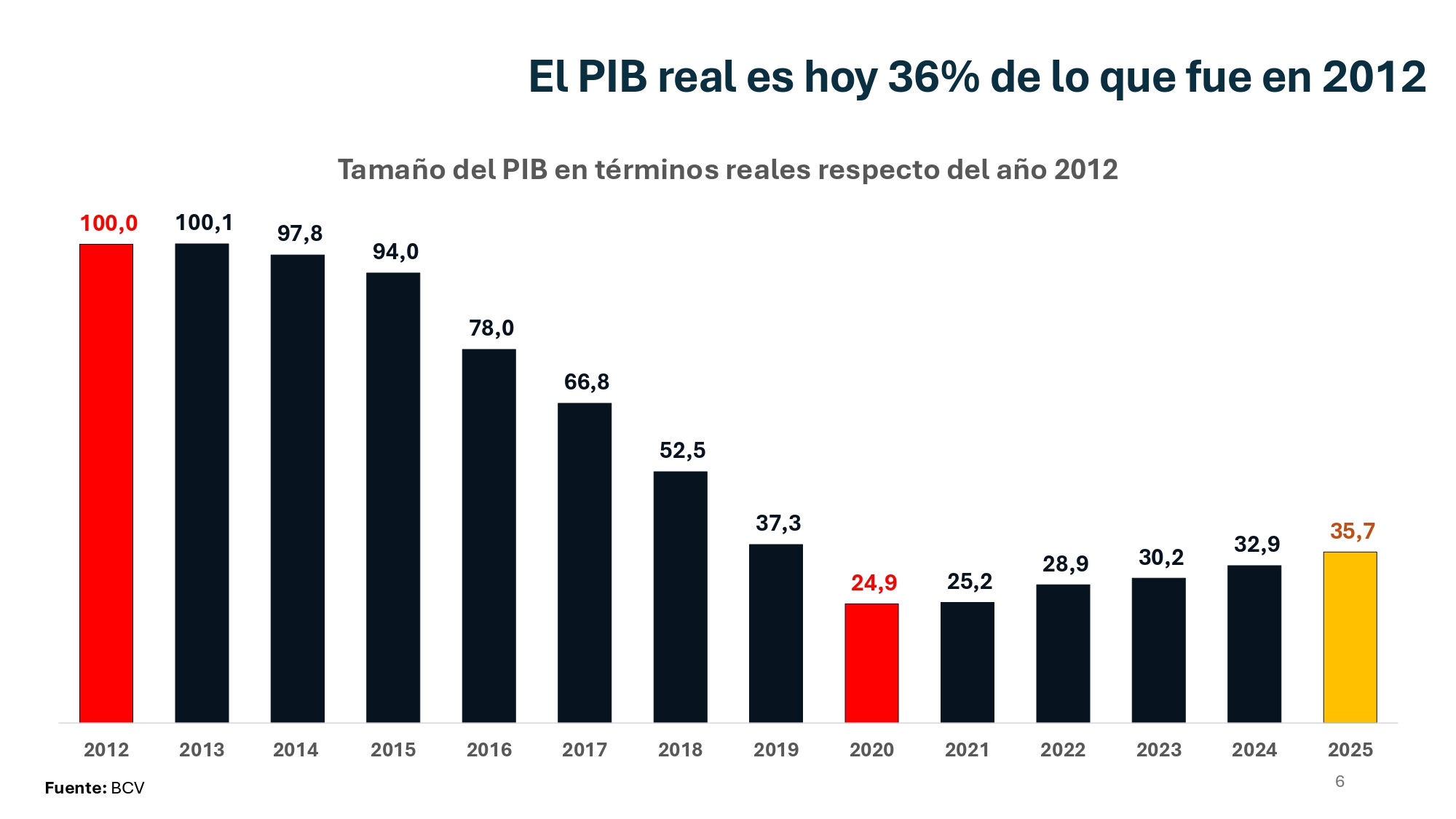
20


Cuba vehemently rejected on Wednesday, U.S. officials’ claims speculating Cuba’s involvement in Medicare fraud in Florida, labeling the accusations baseless and politically motivated.

The Ministry of Foreign Affairs of Cuba, led by Bruno Rodríguez, on April 8 strongly rejected recent declarations from United States officials, who speculated that the island’s Government could be involved in frauds targeting the U.S. Medicare health program in South Florida.

Cuban authorities characterized these statements as a calumny lacking evidence, driven by anti-Cuban sectors within the United States.

The Cuban Foreing Minister emphasized that the Caribbean nation maintains a firm stance against this and other transnational crimes, a fact which, they underlined, the U.S. Government is well aware of.

The official Cuban communique recalled previous collaborations between both Governments on joint actions concerning terrorism, judicial assistance, commercial security, illicit drug trafficking, migrant trafficking, migratory fraud, cybercrimes, asset laundering, and financial crimes. However, the statement highlighted that, as a rule, there has been no reciprocal conduct from U.S. authorities in these matters, underscoring an imbalance in bilateral cooperation efforts.

The Cuban Government has consistently expressed its willingness to engage in good faith on shared security concerns, provided there is genuine mutual respect and engagement.

📌 Comunicado del Ministerio de Relaciones Exteriores de la República de Cuba

Las acusaciones sobre el Medicare son una calumnia más contra Cuba 👇

🔗: https://t.co/QMoC1vtdbK pic.twitter.com/m3CNPSfixr

— Cancillería de Cuba (@CubaMINREX) April 8, 2026

Text reads: “Communiqué of the Ministry of Foreign Affairs of the Republic of Cuba. Medicare accusations are yet another smear against Cuba.”

Furthermore, the Ministry of Foreign Affairs reported that Cuba has judicially prosecuted individuals within its territory found to be involved in Medicare fraud. Through established bilateral mechanisms, the Cuban Government has shared information regarding financial crimes and has formally requested the return of its citizens residing in the United States who have evaded justice on the island for such transgressions.

In this sense, the Cuban Government reiterated its disposition to jointly confront transnational crimes originating in U.S. territory. To achieve this, Havana urged for a timely and truthful exchange of information, rejecting what they consider to be falsehoods issued by representatives of the United States administration.

Recientes declaraciones de funcionarios del Gobierno de Estados Unidos especulan, sin evidencia alguna, que el Gobierno de #Cuba podría estar involucrado en fraudes al programa estadounidense de salud #Medicare, en el sur de la Florida. Se trata de una calumnia más, promovida por… https://t.co/l1BBYqRcmU

— Bruno Rodríguez P (@BrunoRguezP) April 8, 2026

Text reads: “Recent statements by U.S. Government officials speculate, without any evidence, that the Cuban Government could be involved in scamming the U.S. health program Medicare in southern Florida. This is another slander promoted by anti-Cuban sectors in that country.

Cuba has a strong stance against this and other transnational crimes. This is well known to the U.S. Government, which has exchanged and coordinated with Cuba joint actions on terrorism, legal assistance, commercial security, illicit drug trafficking, migrant smuggling, and immigration fraud. cybercrime, money laundering and financial crimes; although, as a rule, there has been no reciprocal conduct on the part of U.S. authorities.”

Medicare Under Threat
The Cuban pronouncement occurs at a critical juncture for Medicare, a federal health insurance system designed to serve the population aged 65 years and older, as well as individuals with disabilities.

The program operates through four key structures: Part “A” for hospitalization, Part “B” for medical services, Part “C” as a private alternative (Medicare Advantage) and Part “D” for prescription medications.

Despite its vital role, Medicare’s sustainability faces significant challenges. The program is a cornerstone of U.S. healthcare, providing essential coverage to millions of vulnerable citizens.

Medicare is not a free service; it is sustained through payroll taxes and monthly premiums. Currently, the Centers for Medicare & Medicaid Services (CMS) estimate that fraud, waste, and abuse amount to 100 billion dollars annually. According to program authorities, eliminating this sum would effectively double the lifespan of the program’s trust fund, ensuring its long-term viability. This staggering figure underscores the immense financial pressure on the system, making accusations of external fraud particularly sensitive.

Cuba’s Díaz-Canel Outlines Key Points of Meeting with US Congress Members

However, the viability of Medicare is now situated within a broader budgetary dispute in Washington, D. C. Recently, President Donald Trump declared that his Government cannot continue to finance programs like Medicare, Medicaid, and childcare services, arguing that the country is “waging wars”.

Trump’s budget proposal for 2027 calls for up to $1.5 trillion in defense spending, prioritizing military spending over investment in issues like health, which has raised alarm about the future of the health program. The decision to potentially sacrifice social programs for increased military expenditure reflects a deeply contested political philosophy that could have far-reaching consequences for the most vulnerable segments of the U.S. population.

The Cuban statement thus not only defends its integrity but also highlights the internal struggles impacting U.S. social welfare programs.

(teleSUR)


From Orinoco Tribune via This RSS Feed.

21


Iran could rise up in full-scale defense at any moment as the Israeli regime is resorting to violation of a fragile and temporary ceasefire, a senior security official has warned.

Speaking exclusively to Press TV on Wednesday, the official said the entire world is currently witnessing the regime destabilize the already tenuous truce reached earlier in the day.

According to the official, the regime is raising the cost of the agreement for the United States by breaching the ceasefire while simultaneously carrying out aggression against Lebanon and attacking Iran.

The highly placed official called on mediating countries to intervene immediately, stating that the time has come to “put this aggressor regime in its place.”

He further warned that if the ceasefire collapses, the Zionist regime will be held solely responsible, vowing that Iran “will punish the aggressor.”

The official also cautioned that the current period of ease, which followed the controlled reopening of the Strait of Hormuz, would come to a swift end if the violations continue.

Apocalyptic scenes following Israeli airstrikes on residential areas across the Lebanese capital, Beirut.

Follow Press TV on Telegram: https://t.co/LWoNSpkc2J pic.twitter.com/eaENDRtbxM

— Press TV 🔻 (@PressTV) April 8, 2026

Earlier on Wednesday, Iran declared a “historic victory” following the war of aggression by the United States and the Israeli regime that lasted 40 days, announcing that Washington had been forced to accept a 10-point Iranian proposal.

One of the points in the proposal called for the immediate cessation of US-Israeli hostilities on all fronts, including in Lebanon.

However, hours after the ceasefire was announced, the Israeli regime targeted multiple locations in Lebanon, including the capital, Beirut, killing hundreds of civilians.

The Killing Fields of Lebanon as ‘Israel’ Lashes Out at Civilians

According to reports, Israel launched at least 100 airstrikes in under 10 minutes, targeting areas across the country. Local media said that at least 88 people were killed in Beirut alone.

It was described as the heaviest Israeli bombardment against Lebanon since the regime started fresh aggression on the Arab country in early March, concurrent with the war of aggression against the Islamic Republic of Iran.

(PressTV)


From Orinoco Tribune via This RSS Feed.

22


Caracas (OrinocoTribune.com)—Far-right leaning “human rights activist” Enrique Ochoa Antich has made claims that the letter of the Venezuelan Constitution does not account for a situation as “extraordinary” as the one currently facing the country. The politician addressed far-right claims regarding the alleged need for early elections following the US empire’s bombing of Venezuela and the kidnapping of President Nicolás Maduro and Deputy Cilia Flores on January 3.

“Regardless of what some may think, the person who held the presidency of the republic and the head of state until January 3 was illegally kidnapped, which in no way constitutes grounds for declaring his absence, either temporary or absolute,” he claimed this Monday, April 6, as reported by Punto de Corte. He attempted to state that there is not a single reference to such a scenario in the Constitution.

For Ochoa Antich, it would be a contradiction for the Venezuelan state to validate an “absence” that resulted from an act of imperialist coercion against the will of President Maduro.

“That is why the periods established in the Constitution of 90 and 180 days for an interim presidency by the vice president do not apply in the current case of Delcy Rodríguez’s acting presidency,” he said. He pointed out that this status was clearly established by the January 5 Supreme Court (TSJ) ruling.

Ochoa Antich is currently running for the post of Ombudsman, a position being selected by the National Assembly. He and opposition journalist Vladimir Villegas are considered to be in the top three list. Analysts suggest the Chavista majority may be willing to concede the Ombudsman post to the opposition; however, they emphasize that the post of Attorney General—also currently in a selection process—will under no circumstances be handed to opposition politicians.

Ochoa Antich noted that the Constitution establishes the TSJ as the only institution with the authority to interpret the law. The high court exercised this power when it ordered the then-vice president to assume the acting presidency as a precautionary measure.

“Ours is a sudden, unexpected, and extraordinary situation,” he stated.

Ochoa Antich emphasized that forces seeking democratic change must support the stability of the current government while promoting the political, economic, and social reforms necessary for Venezuela’s recovery.

“There will be elections, but not immediately—perhaps in two or three years, after the necessary reforms, including constitutional ones,” the politician added. He suggested a “bottom-up” electoral schedule, starting with municipal elections, followed by state and National Assembly contests, and culminating finally in a presidential election.

Delcy Rodríguez Sworn in as Venezuela’s Acting President Following US Military Aggression

Constitutional succession
Delcy Rodríguez assumed the role of acting president on January 6, following a January 3 ruling by the TSJ. The court appointed her to the position while evaluating Articles 234 and 239 of the Constitution regarding presidential succession under the extraordinary circumstances of President Maduro’s absence—a situation never contemplated during the document’s drafting. Legal experts note that the court’s decision effectively suspends the immediate call for presidential elections.

While the Venezuelan Constitution generally stipulates that the vice president fills a vacuum in the president’s absence and calls for elections within 30 days if the absence occurs early in the term, the TSJ ruling clarifies that the specific definitions of “temporary” or “absolute” absence described in the Constitution have not been met in this extraordinary case of international kidnapping by the US entity.

Special for Orinoco Tribune by staff

OT/JRE/AU


From Orinoco Tribune via This RSS Feed.

23


This editorial by Ana de Ita originally appeared in the April 8, 2026 edition of La Jornada, Mexico’s premier left wing daily newspaper. The views expressed in this article are the authors’ own and do not necessarily reflect those ofMexico Solidarity Mediaor theMexico Solidarity Project*.*

Once again, farmers from the National Front for the Rescue of the Mexican Countryside and the National Association of Transporters (ANTAC) demonstrated the day before yesterday at various points along highways in different states.

In late October and November, they staged the first simultaneous blockade in an unprecedented mobilization that paralyzed the country. After five months and dozens of meetings with officials from various ministries, they believe the government has failed to honour its commitments and that their situation is untenable.

This mobilization, like those of the past, demonstrates that the absence of agricultural policies and the dismantling of institutions undertaken by the previous government (2019-2024) has brought Mexican agriculture to the brink of collapse. The USMCA subjects farmers to open competition with US producers, who are indeed supported, subsidized, and protected by their government.

Farmers protesting in front of the Chamber of Deputies, December 2025. Photo: Alfredo Domínguez

The Rural Finance Corporation (FND), successor to Banrural and the Cárdenas-era Ejidal Credit Bank, was abruptly eliminated during the previous administration, leaving farmers without development banking, credit for planting, or machinery purchases. One of the demands of the National Rural Farmers’ Union (FNRC) is that the government reinstate the development bank, as farmers need credit to produce.

Commercial banks lend at very high interest rates and demand guarantees that farmers cannot provide. Commercial suppliers are currently the ones providing the resources for their crops, in exchange for purchasing inputs from them at very high prices. This represents a clear setback in the conditions necessary to maintain their competitiveness. It is the government’s responsibility to establish a financing system for agriculture, a first-tier development bank, which existed in Mexico since 1929.

They also demand guaranteed prices for all producers and all staple grains, prices that cover production costs and ensure the profitability of their work. The previous government dismantled the marketing systems established by neoliberal governments under pressure from farmers and transferred their resources to the guaranteed price program, which never functioned as intended and supported only a negligible number of producers.

On other occasions, they established target prices, but these were conditional on low production volumes and only applied to farmers identified as small or medium-sized. This excluded large production volumes of staple grains essential for feeding the population.

Until 2018, 9.75 billion pesos were allocated to the marketing programs operated by ASERCA. In its place, the previous administration established the guaranteed price program, which absorbed 12.534 billion pesos until 2024. Despite the protests at the end of 2025, which highlighted the marketing difficulties and the need for subsidies to support farmers’ incomes in the face of falling international grain prices, the Ministry of Agriculture’s 2026 budget eliminated the guaranteed price program and allocated only 1.5 billion pesos to a procurement program for welfare. This program is not designed to address the market for all grains, but rather to purchase from small producers. There is no other marketing program in the budget, even though it is urgently needed under the current circumstances.

The government announced in recent days that it has supported 31,768 corn producers with 1.9 billion pesos, representing only 1.2 percent of those who plant it, since 2.67 million farmers are dedicated to its cultivation.

Aftermath of the police breaking the farmers strike in Tlaxcala with tear gas.

The price supplement was granted for only 2.5 million tons of corn, representing 11 percent of the 22.5 million tons that Mexico still produces. The government claims this support demonstrates that farmers have been taken care of; however, a contrasting interpretation justifies the protests of April 6th.

Progress toward food sovereignty requires policies that protect, regulate, and promote the responsibility of the State. Maintaining the mistaken notion that these are goodwill aid packages given to farmers and agricultural producers only when budgetary resources are available will deepen the agricultural crisis and increase food dependency.

The repression of protests, such as the one that occurred in Tlaxcala, deeply calls into question the democratic nature of the government.

The post Mexican National Farmers Strike for Food Sovereignty appeared first on Mexico Solidarity Media.


From Mexico Solidarity Media via This RSS Feed.
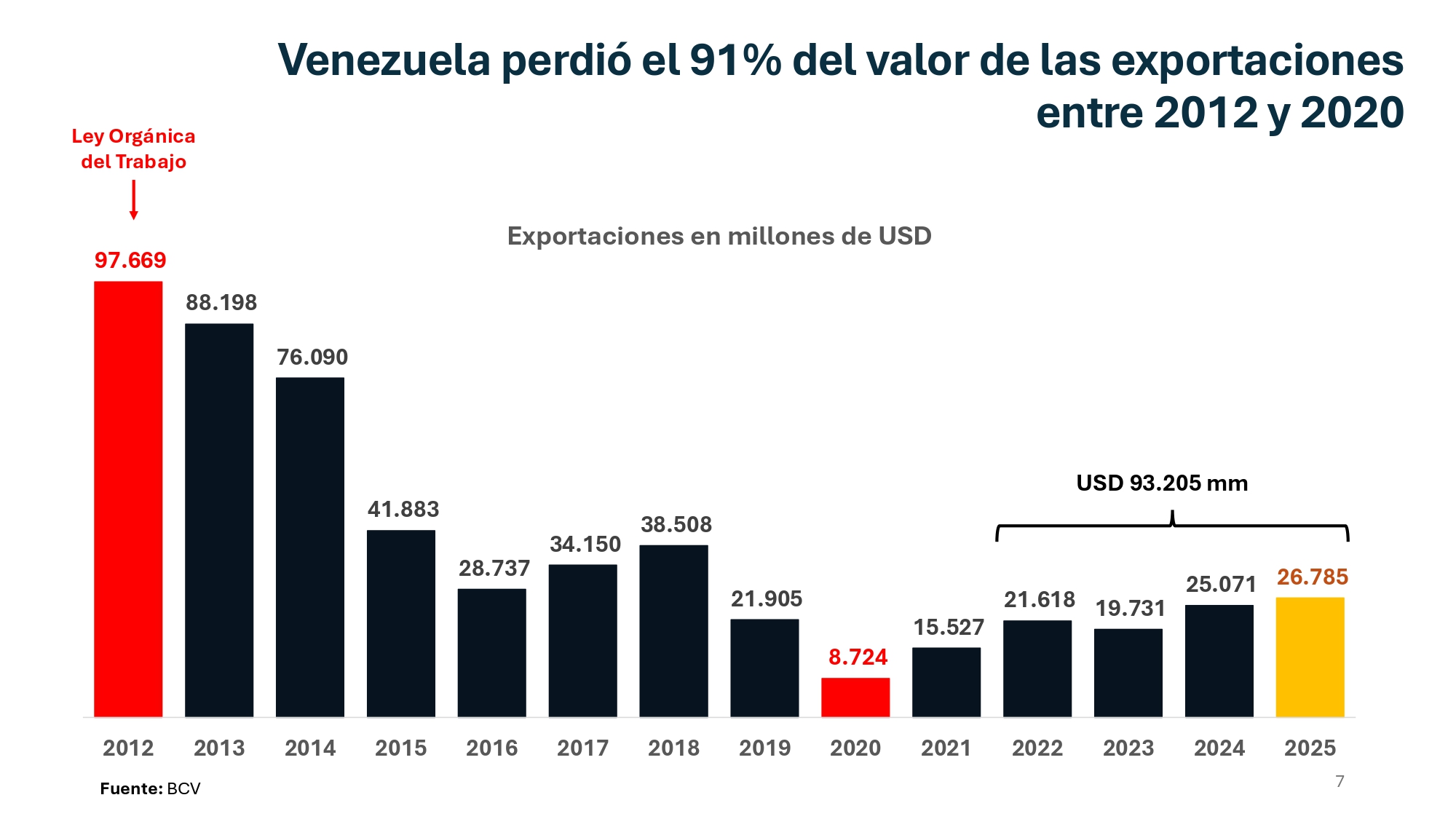
24


This article by Jared Laureles originally appeared in the April 9, 2026 edition of La Jornada, Mexico’s premier left wing daily newspaper.

The Camino Rojo mining company, located in Zacatecas, used organized crime to threaten its workers, affiliated with section 335 of the National Mining Union, and violate their labor rights, in addition to seeking to make them desert this union, warns the unprecedented investigation by the panel of the Rapid Response Mechanism (RRM) of the USMCA, which determined that the company is “directly responsible for employer interference” in union activities.

According to the preliminary resolution, the expert panelists documented evidence of acts of violence and death threats, in union assemblies and at their homes, against the workers of the union organization headed by Napoleón Gómez Urrutia, holder of the collective agreement, to force them to join a union of employer “protection” of the National Federation of Independent Unions.

“The panel’s findings corroborated that the mine hired a drug trafficker to disrupt union meetings with armed individuals, issue death threats, and force workers to accept the company’s preferred union,” the U.S. Department of Labor said of the ruling.

Canada’s Orla Mining: Silence & Tolerance

Faced with this situation, the panel points out that the Canadian company Orla Mining, owner of the gold and silver mine located in the municipality of Mazapil, “remained silent and showed tolerance”; it also did not act on the complaints of violations of freedom of association nor investigate them.

Therefore, the panel concluded that the intimidation came not only from a contractor, but also from company personnel.

Mexican Agencies Reject Ruling

In its defense, Mexico rejected the panel’s decision, arguing that the mechanism exceeded its scope, claiming that it sought to analyze conduct of a criminal nature and that the acts of “coercion” cannot be attributed to the mining company.

Through the Secretariats of Labour and Social Welfare and Economy, it also gathered evidence and testimonies from workers about the threats they were victims of; but the agencies considered that they were not sufficient to link the company to said conduct.

“Mexico requires that there must be a link between the perpetrator of the act and the person held responsible, and that the damage occurred while performing duties or services,” the document states.

In its arguments, the Mexican government sought to set a “very high threshold” to determine whether a violation should be considered a denial of rights, due to the “seriousness of an accusation that condemns the system… of a State.”

However, the panel clarified that this is not “a case in which charges are brought against a State,” but against the company under the MRR.

The document states that Chapter 31-A.2 defines “denial” as a restriction or impediment to exercising the right to freedom of association. However, the agencies considered that “a simple act violating the Federal Labour Law is not enough; rather, the violation must be of such a degree that it completely and absolutely prevents workers from exercising these rights.”

It will influence similar refereeing decisions: Nahir Velasco

Nahir Velasco, legal coordinator of the Mineros Union, stressed that this case sets a precedent within the MRR, by analyzing fundamental aspects, such as demonstrating that acts of violence do impact the denial of rights to freedom of association and collective bargaining.

In an interview, he noted that the case could influence other similar arbitrations and will be taken into account in the review of the USMCA.

“Clearly, there was an issue that went beyond union matters, and when you don’t have human rights or security, how can you carry out your union duties? This case sets a very strong precedent against Orla Mining,” he emphasized.

The main objective of the labor panel is to redress the violation of workers’ labor rights. This dispute resolution mechanism called for the reinstatement of those who were dismissed, the payment of compensation, and guaranteed access to the unit for the miners of section 335.

However, the parties must work on a remediation plan; in case of recidivism, the Canadian company would be subject to the application of tariffs.

The Camino Rojo case prompted a labor complaint in August 2024; subsequently, because the reparation measures were insufficient, the situation escalated to a panel, which is the third to be resolved under the USMCA.

The post Mining Company in Zacatecas Used Drug Traffickers Against Workers, Mineros Union appeared first on Mexico Solidarity Media.


From Mexico Solidarity Media via This RSS Feed.
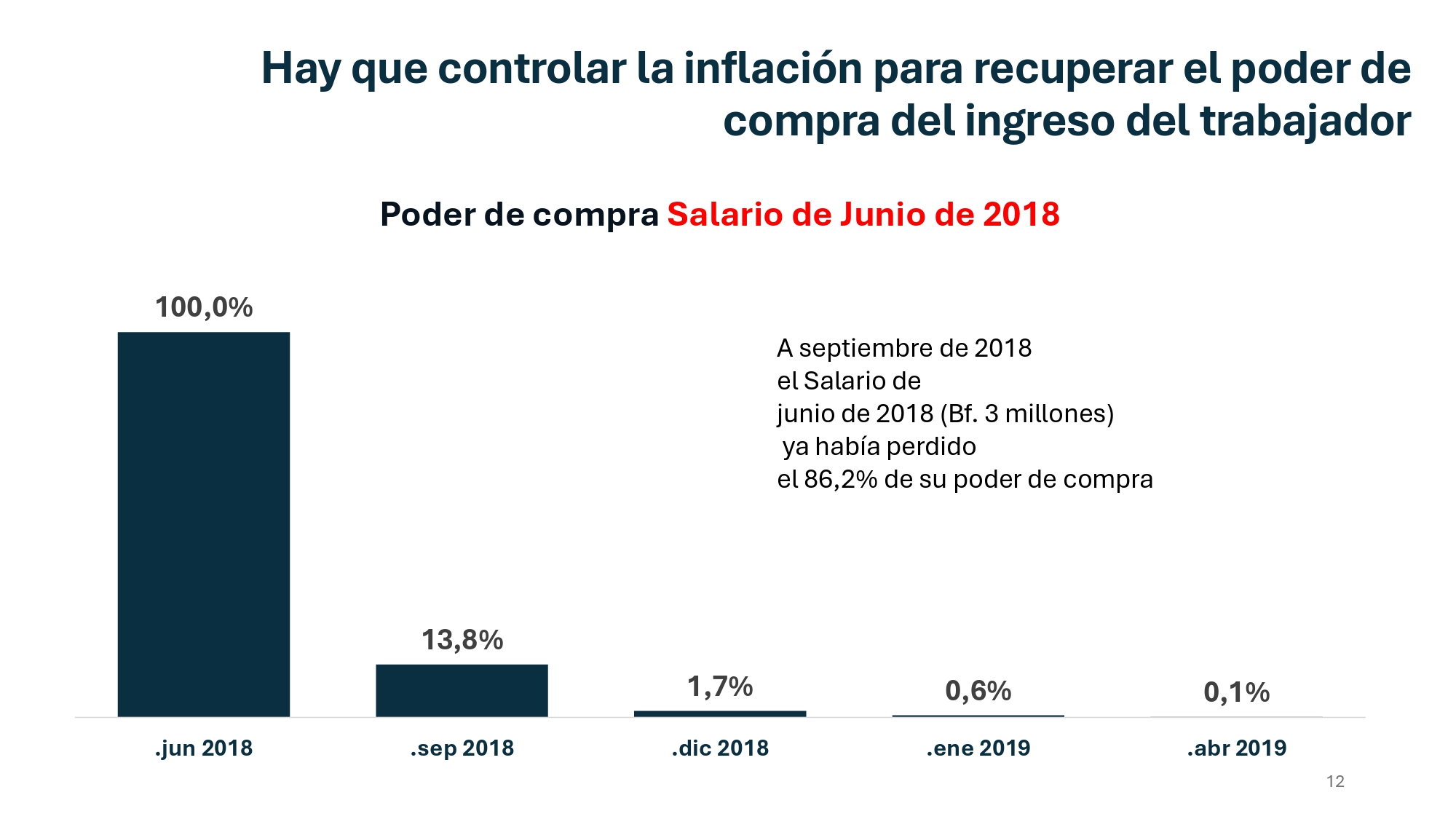
25


Caracas (OrinocoTribune.com)—In a comprehensive address to the nation from Miraflores Palace, Acting President Delcy Rodríguez reaffirmed Venezuela’s ten-year struggle against illegal US-led economic warfare and sanctions, and charted a course toward total economic recovery. Accompanied by the Council of Vice Presidents and the president of the National Assembly, Rodríguez emphasized that Venezuela is transitioning from a period of “induced migration” and hyperinflation toward a sustainable, worker-centered productive model.

The acting president highlighted the resilience of the Venezuelan people in the face of a decade of criminal sanctions that caused a seven-year collapse in GDP and, at its peak in 2019, an annualized inflation rate exceeding 344,000%. “We have defeated desupply and hyperinflation through our own effort,” Rodríguez stated this Tuesday, April 7, noting that the country has now seen 20 consecutive quarters of economic growth.

Recovery of the working class and social justice
A central theme of the address was the progressive recovery of the purchasing power of Venezuelan workers, which had been systematically undermined by US imperialist aggression. Rodríguez provided a timeline of the recovery of the minimum income of workers:

• October 2021: $30 equivalent.
• May 2024: $104 equivalent.
• March 2026: $190 equivalent (boosted by extraordinary oil revenues).

Rodríguez announced a new minimum salary increase would be enacted on May 1, warning that the “false increases” of the past that were not backed by productive revenues. “Every increase must be sustainable over time and must not generate inflation,” she explained. She also underscored the role of the “social income”—direct state subsidies for electricity (96%), gas (98%), water (92%), and the CLAP food program (97%)—as a vital shield for the most vulnerable against the blockade.

Structural reforms and the defense of PDVSA
The acting president made it clear that while Venezuela is open to investment, the nation’s strategic resources are not for sale and will never be privatized. She signed the Organic Law for the Celerity and Optimization of Administrative Procedures to modernize the state and eliminate “unnecessary hurdles” for citizens.

Additionally, she announced the creation of a commission to determine the strategic nature of state assets frozen by the recurring regime change operations attempted by the US empire, but explicitly excluded the hydrocarbon industry. “Those who dream of privatizing PDVSA to hand it over to transnational powers are mistaken,” Rodríguez declared. “The hydrocarbon industry belongs to the nation; it is what gives life and social justice to the people,” explaining that in major oil economies, the industry is under state control.

Challenges to the social security model
In a moment of candid reflection, Rodríguez noted that the current pension model—established by the late Comandante Hugo Chávez to provide universal justice—has been “perforated” by the illegal US-led blockade. She revealed that 91% of pensions are currently financed by the state, with only 9% of the resources coming from the private sector, creating an unsustainable ratio of retirees to active contributors.

To address this, she installed a Commission for Labor Dialogue and Social Security to build a new, formal labor model that prevents precariousness and guarantees the future of both active workers and pensioners.

Venezuelan Foreign Ministry Enables Online Visa Issuance for Foreigners

A call to the youth; a national pilgrimage
Rodríguez also issued an invitation to young Venezuelans, both at home and abroad, to incorporate themselves into the country’s professionalization. She announced a “Registry of Knowledge” to bridge the gap between skilled workers (including migrants and retirees) and the new jobs being created by national and international investment.

The Chavista leader called for, in essence, a “Great Pilgrimage,” to unite all sectors—social, economic, and political—in a single voice against the US blockade.

“I call on all political sectors to set aside differences and join a great pilgrimage to fight together against the blockade,” she stated. “This pilgrimage will begin on April 19, span all of Venezuela, and reach Caracas on May 1st.”

Invoking the spirit of Simón Bolívar’s Angostura Speech, Rodríguez mentioned that she envisions a Venezuela that serves as the “center of the universe,” providing healthcare and lifesaving measures to the world rather than suffering under imperialist intervention. “We must safeguard our peace and tranquility,” she concluded. “Intolerance is the seed of destruction; we must unite for the development of our country.”

Special for Orinoco Tribune by staff

OT/JRE/AU


From Orinoco Tribune via This RSS Feed.

view more: next ›